


 русский
 Español
 Français
Home / Author / Lu Xinzhi — Overseas Product Sales Specialist / High-Gloss Water-Based Dispersant for Efficient Pigment Wetting and Stable Color Development
Lu Xinzhi — Overseas Product Sales Specialist

Content
Modern water-borne coatings, inks, and adhesive systems require pigment dispersion technology that can deliver strong color, high gloss, low viscosity, and stable storage performance at the same time. As environmental regulations become stricter and formulators move away from solvent-heavy systems, the role of a high-performance water-based dispersant becomes even more important. DH-6190S Water-based Dispersant is designed for this demanding environment. It is a polymeric dispersant developed to help formulators disperse high-surface carbon black, difficult organic pigments, and inorganic pigments while maintaining excellent flow, high pigment loading, and reliable long-term stability.
In pigment dispersion, the final coating performance depends heavily on what happens at the earliest production stage. If pigment particles are not properly wetted, separated, and stabilized, defects may appear later as poor color strength, floating, flocculation, viscosity drift, gloss loss, sedimentation, or unstable storage. DH-6190S addresses these challenges by improving pigment wetting and stabilizing dispersed particles in water-borne systems. Its most notable advantage is excellent viscosity reduction, allowing high pigment concentration without sacrificing processability.
Suzhou Qingtian New Material Co., Ltd. has developed this product as part of its broader portfolio of coating, ink, and adhesive additives. Since its founding in 2012, the company has focused on practical chemical solutions for industrial applications, supported by research capability, experienced technical personnel, modern production facilities, and advanced testing equipment. The company’s product line covers dispersants, leveling agents, defoamers, adhesion promoters, anti-settling agents, texture powders, wax powders, and other specialty additives used in many industries, including coil coatings, plastic coatings, UV systems, anti-corrosion coatings, wood coatings, glass coatings, epoxy flooring, printing inks, batteries, and photovoltaic panels.
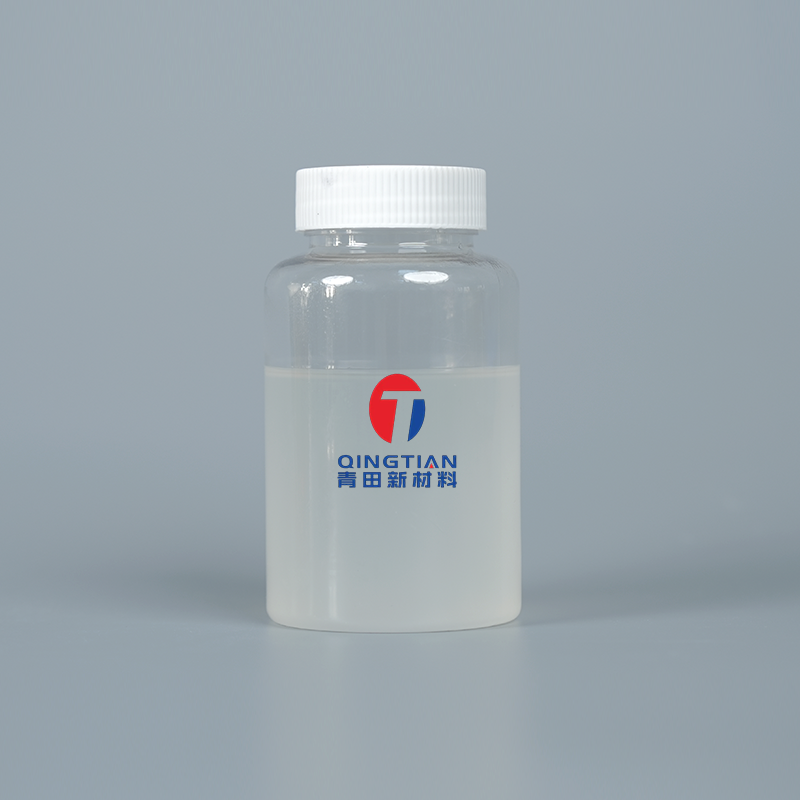
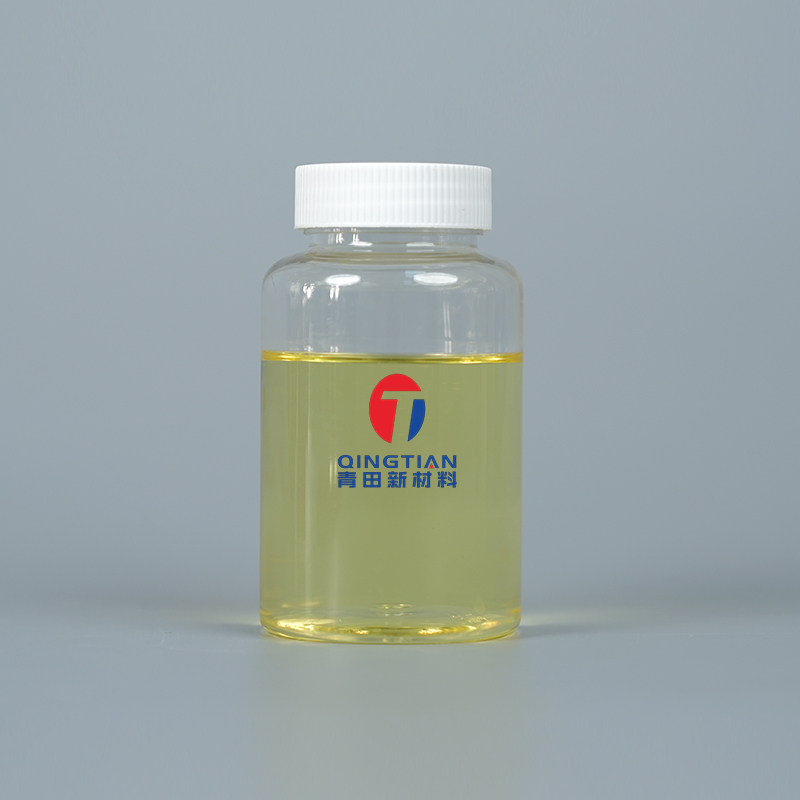
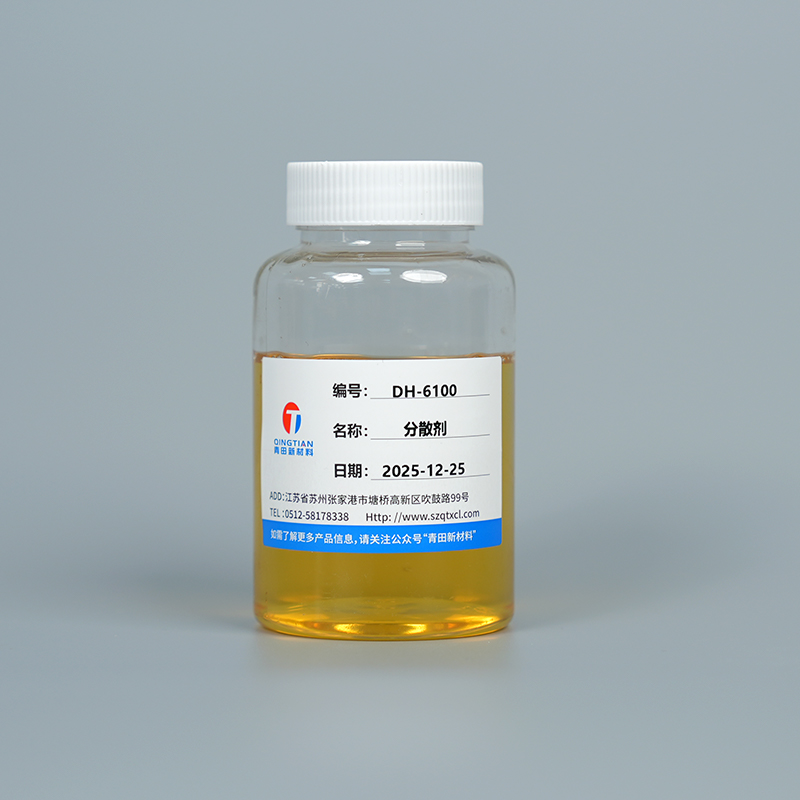
DH-6190S Water-based Dispersant
A dispersant is not simply a processing aid. It is a functional additive that influences the whole life cycle of a coating or ink, from pigment grinding to storage, application, film formation, and final appearance. Pigment particles naturally tend to agglomerate because of surface energy and attractive forces between particles. In water-borne systems, this problem can become more complex because pigments often have surfaces that are not naturally compatible with water. Without a suitable dispersant, pigments may remain as clusters, causing weak color strength, rough texture, unstable viscosity, and visible coating defects.
A polymeric dispersant such as DH-6190S works by adsorbing onto the pigment surface and creating a stabilizing layer around the particles. This layer helps separate pigment particles during grinding and prevents them from re-agglomerating after dispersion. Effective stabilization supports better color development, improved gloss, and lower grinding viscosity. In practical production, this can help manufacturers increase pigment loading, shorten dispersion time, improve batch consistency, and reduce quality variation.
Water-borne dispersants must also be compatible with a wide range of resins, pigments, and co-additives. A dispersant that works well with one pigment may fail with another if the adsorption strength or steric stabilization is insufficient. DH-6190S is positioned for difficult dispersion cases, including high-surface carbon black, organic pigments that resist wetting, and various inorganic pigments. These pigment classes are widely used but can create formulation problems if the dispersant is not strong enough.
Carbon black is particularly challenging because its high surface area requires more effective wetting and stabilization. Poorly dispersed carbon black may cause high viscosity, weak jetness, dull appearance, poor transparency in tinting systems, and unstable storage behavior. Organic pigments can also be difficult because many have hydrophobic surfaces and strong particle-particle attraction. Inorganic pigments may require stable viscosity and anti-settling support, especially in high-solids water-borne systems. DH-6190S helps meet these needs by combining pigment affinity with viscosity control and storage stability.
DH-6190S is a water-based polymeric dispersant developed for high color development and high gloss. Its key performance characteristic is excellent viscosity reduction, especially in pigment concentrates and water-borne color pastes where pigment loading is high. The product is suitable for high-surface carbon black, difficult-to-disperse organic pigments, and inorganic pigments. It helps increase pigment loading while keeping the system fluid and stable.
In many water-borne formulations, the formulator faces a difficult balance. Increasing pigment content can improve color strength and reduce transportation cost in pigment concentrates, but it often increases viscosity dramatically. High viscosity makes milling, pumping, filling, filtration, and final let-down more difficult. It may also reduce the efficiency of grinding equipment. DH-6190S supports higher pigment concentration while maintaining low viscosity and good fluidity, making it valuable for both production efficiency and formulation flexibility.
The product is also benchmarked against well-known market references such as BYK-190. This type of comparison is important because formulators often evaluate new dispersants against established alternatives in terms of color strength, viscosity reduction, gloss, compatibility, cost-performance balance, and storage stability. DH-6190S is intended to provide a competitive choice for manufacturers seeking strong performance in water-borne dispersion systems.
| Performance Area | DH-6190S Contribution | Practical Benefit for Formulators |
|---|---|---|
| Pigment wetting | Promotes efficient wetting of carbon black, organic pigments, and inorganic pigments | Improves grinding efficiency and helps reduce coarse particles |
| Viscosity reduction | Maintains low viscosity at higher pigment loading | Improves pumping, milling, filling, and application behavior |
| Color development | Supports stronger and cleaner pigment expression | Enhances tinting strength, jetness, brightness, and hiding contribution |
| Gloss enhancement | Helps form smoother pigment dispersion and coating appearance | Improves surface quality in high-gloss water-borne coatings and inks |
| Storage stability | Reduces re-agglomeration and viscosity drift | Helps maintain consistent quality during storage and transportation |
| Competitive positioning | Designed as a high-performance option benchmarked against established dispersants | Offers an alternative for manufacturers seeking performance and supply reliability |
Viscosity is one of the most important control points in pigment dispersion. A dispersion with excessive viscosity may be difficult to process and may not allow enough pigment to be incorporated. The result can be lower productivity and higher formulation cost. DH-6190S is designed to reduce viscosity effectively, helping pigment particles separate and remain mobile in the water-borne medium.
Excellent viscosity reduction can bring several direct manufacturing benefits. First, it can allow higher pigment loading in pigment concentrates. This means a smaller amount of water or carrier is needed to deliver the same pigment strength. Second, it can improve milling efficiency because the dispersion flows more easily through bead mills or other grinding equipment. Third, it can reduce energy consumption during processing. Fourth, it can improve filtration and filling because lower viscosity materials move more predictably through production lines.
For coating manufacturers, lower viscosity does not only mean easier production. It also supports better formulation design. A low-viscosity pigment concentrate can be added more easily to different base systems. It can improve color matching accuracy and reduce the risk of shock, seeding, or flocculation during let-down. In water-borne systems, where viscosity can be sensitive to pH, resin type, co-solvent level, and electrolyte content, a strong dispersant provides an important foundation for stable performance.
Compared with many conventional low-molecular dispersants, polymeric dispersants often provide stronger steric stabilization and improved long-term viscosity stability. Conventional dispersants may wet pigment initially but fail to maintain separation under storage or formulation stress. DH-6190S is designed to provide a more robust stabilizing effect, especially for pigments that are difficult to disperse. This makes it suitable for manufacturers that need consistent performance across multiple batches and multiple pigment grades.
Color development depends on how completely pigment particles are separated and distributed. When pigment agglomerates remain in the dispersion, the effective surface area is reduced and the pigment cannot express its full color strength. In transparent or deep-color systems, incomplete dispersion can reduce depth, brightness, and clarity. In black systems, poor dispersion of carbon black can reduce jetness and create a gray or dull appearance. DH-6190S supports excellent color development by improving pigment wetting and stabilization.
High gloss is closely related to surface smoothness and uniform pigment distribution. Large agglomerates or unstable pigment particles can disturb the coating surface, scatter light, and reduce gloss. By promoting fine and stable dispersion, DH-6190S helps coatings form smoother films. This is especially valuable for applications such as industrial coatings, plastic coatings, wood coatings, high-gloss inks, and decorative systems where visual appearance is a key quality factor.
In pigment concentrate production, color strength and gloss are often evaluated after let-down into a standard resin system. A dispersant that provides strong color in the mill base but causes flocculation after let-down may not be suitable for practical use. DH-6190S is developed for water-borne compatibility and storage stability, supporting reliable color expression beyond the grinding stage. This helps reduce the need for repeated correction during color matching and can improve production efficiency in tinting operations.
In comparison with competitor products, performance must be judged by the complete balance of properties. Some dispersants may provide good initial wetting but insufficient storage stability. Others may reduce viscosity but weaken gloss or create foam sensitivity. DH-6190S is designed to offer a balanced profile: strong viscosity reduction, high color development, high gloss, good fluidity, and stable storage. This combination is what makes it valuable for demanding water-borne pigment applications.
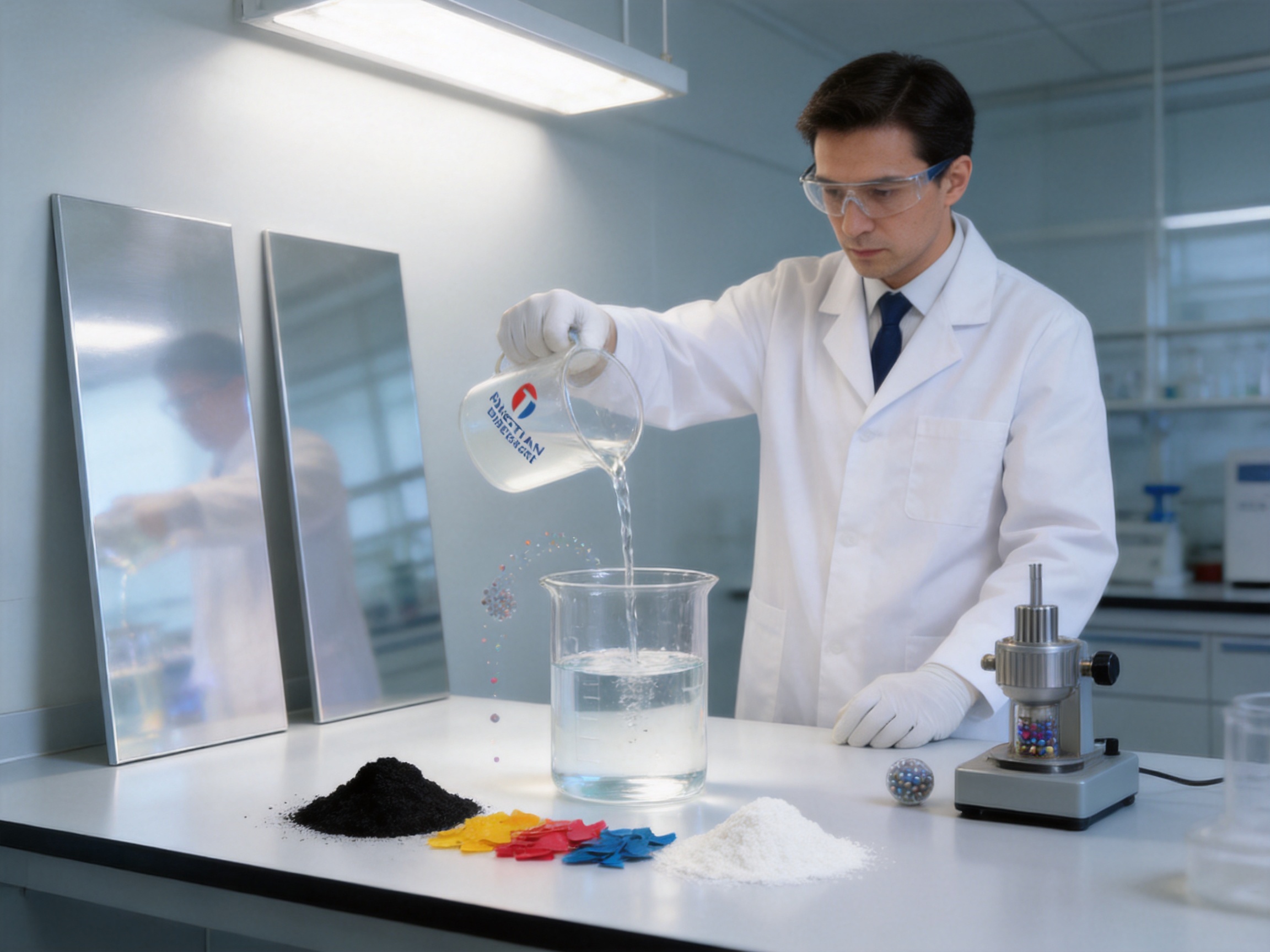
High pigment loading is a major target in pigment concentrate and color paste manufacturing. A higher pigment concentration can improve logistics efficiency, reduce packaging volume, and give formulators greater color strength per unit of concentrate. However, high pigment loading also creates challenges. Pigments increase surface area, absorb liquid, raise viscosity, and may lead to poor flow if not properly stabilized. DH-6190S helps overcome this challenge by allowing pigment loading to increase while maintaining low viscosity and good fluidity.
Good fluidity is essential in industrial production. A mill base must move through pipes, pumps, tanks, bead mills, filters, and filling equipment without blockage or unstable flow. A pigment concentrate must also remain pourable and mixable after storage. If a dispersion becomes too thick, gel-like, or thixotropic beyond the desired level, production becomes slower and less predictable. DH-6190S contributes to stable flow behavior, which supports more efficient production and easier handling.
For manufacturers that produce multiple pigment pastes, a dispersant with broad pigment suitability can simplify inventory and formulation work. Instead of using many specialized dispersants for different pigment types, a versatile polymeric dispersant can serve as a core product for carbon black, organic pigments, and inorganic pigments. DH-6190S offers this type of practical advantage, especially for water-borne systems where compatibility and viscosity control are both critical.
High pigment loading also helps downstream customers. When a color paste contains more pigment and less carrier, less paste is needed to achieve the same color strength. This can reduce the impact of the paste on the final coating formulation. For example, it may reduce unwanted changes in water content, binder ratio, or additive balance. A well-designed dispersant therefore contributes not only to the pigment concentrate but also to the final coating’s performance.
Storage stability is a major measure of dispersant quality. A dispersion may look good immediately after milling, but problems can appear after days or weeks of storage. These problems include viscosity increase, sediment formation, pigment flocculation, color drift, floating, flooding, or hard settling. DH-6190S is designed to provide stable pigment dispersion, reducing the tendency of particles to re-agglomerate over time.
Long-term stability is especially important for industrial supply chains. Pigment concentrates and coating additives may be stored in warehouses, transported across regions, or used in production after extended periods. If the dispersion quality changes during storage, manufacturers may face production delays, customer complaints, or waste. A dispersant that supports storage stability therefore provides economic value beyond its dosage cost.
In water-borne systems, stability can be influenced by pH, temperature, microbial control, resin compatibility, electrolyte concentration, and freeze-thaw conditions. While each formulation should be tested under its own conditions, a robust polymeric dispersant gives formulators a stronger starting point. DH-6190S can help maintain uniformity and reduce viscosity drift, supporting predictable use in commercial manufacturing.
Compared with less advanced dispersant systems, DH-6190S offers a more reliable balance between wetting and stabilization. Some products may reduce initial viscosity but allow pigment particles to approach each other again during storage. Others may stabilize well but require high dosage, causing cost or compatibility problems. DH-6190S is developed to address the practical needs of water-borne manufacturers who require both immediate processing benefits and long-term stability.
DH-6190S can be used in a wide variety of water-borne systems where pigment dispersion quality is essential. In industrial coatings, it can support strong color strength, smooth appearance, and stable processing. In plastic coatings, it can help maintain high gloss and uniform color. In wood coatings, fine pigment dispersion can contribute to clarity, decorative quality, and consistent tone. In anti-corrosion coatings, stable pigment distribution can support uniform film properties and reliable appearance.
In water-borne printing inks, pigment dispersion has a direct effect on color strength, gloss, print clarity, and transfer behavior. Poorly dispersed pigments can cause clogged printing components, inconsistent color, or surface defects. A dispersant that lowers viscosity while improving pigment stability can help ink manufacturers formulate higher-strength concentrates and more stable finished inks. DH-6190S is therefore relevant for printing ink applications where water-borne technology is increasingly important.
The product is also suitable for inorganic pigments, which are used in many protective and decorative systems. Inorganic pigments may include titanium dioxide, iron oxides, mineral pigments, and functional fillers, depending on the formulation. While each pigment type has its own surface chemistry, effective dispersant selection helps improve hiding power, color uniformity, and stability. DH-6190S provides a strong option for formulators who need water-borne dispersion performance across several pigment groups.
For carbon black systems, DH-6190S is particularly valuable because high-surface carbon black is one of the most difficult pigments to disperse. Effective carbon black dispersion can improve blackness, undertone control, gloss, and tinting strength. It can also help reduce the amount of pigment needed to reach target color performance. This combination of appearance and efficiency is important for premium black coatings, inks, and industrial finishes.
The dispersant market contains many different product types, including small-molecule wetting agents, anionic dispersants, nonionic dispersants, pigment-specific additives, and high-molecular polymeric dispersants. Each type has strengths and limitations. DH-6190S is positioned as a high-performance water-based polymeric dispersant for difficult pigments and high-gloss systems. Its advantages can be understood in terms of viscosity reduction, pigment loading, color development, gloss, and storage reliability.
Compared with basic wetting agents, DH-6190S offers stronger stabilization. Basic wetting agents may lower surface tension and help liquid enter pigment agglomerates, but they may not provide sufficient long-term particle separation. This can result in flocculation and viscosity increase during storage. DH-6190S, as a polymeric dispersant, is designed to adsorb and stabilize more effectively, especially where pigment surfaces are difficult.
Compared with some conventional dispersants that require high addition levels, DH-6190S can support efficient pigment dispersion with a performance-oriented dosage strategy. Lower or optimized dosage can reduce negative effects on water resistance, film hardness, foaming, or compatibility, depending on the system. While final dosage must always be determined by testing, a high-efficiency dispersant gives the formulator more flexibility.
Compared with established market benchmarks such as BYK-190, DH-6190S offers manufacturers an alternative option for technical evaluation and supply chain diversification. Many producers prefer to qualify more than one high-performance dispersant so that they can balance performance, cost, availability, and technical support. DH-6190S provides a competitive profile for users seeking excellent viscosity reduction, high gloss, and strong color development in water-borne pigment systems.
Another advantage is the support of a manufacturer focused on coating, ink, and adhesive raw materials. Product performance is not only about the chemical itself; it also depends on technical service, quality control, batch consistency, and production reliability. Suzhou Qingtian New Material Co., Ltd. combines product development with application understanding, making it better able to support customers in solving dispersion challenges.
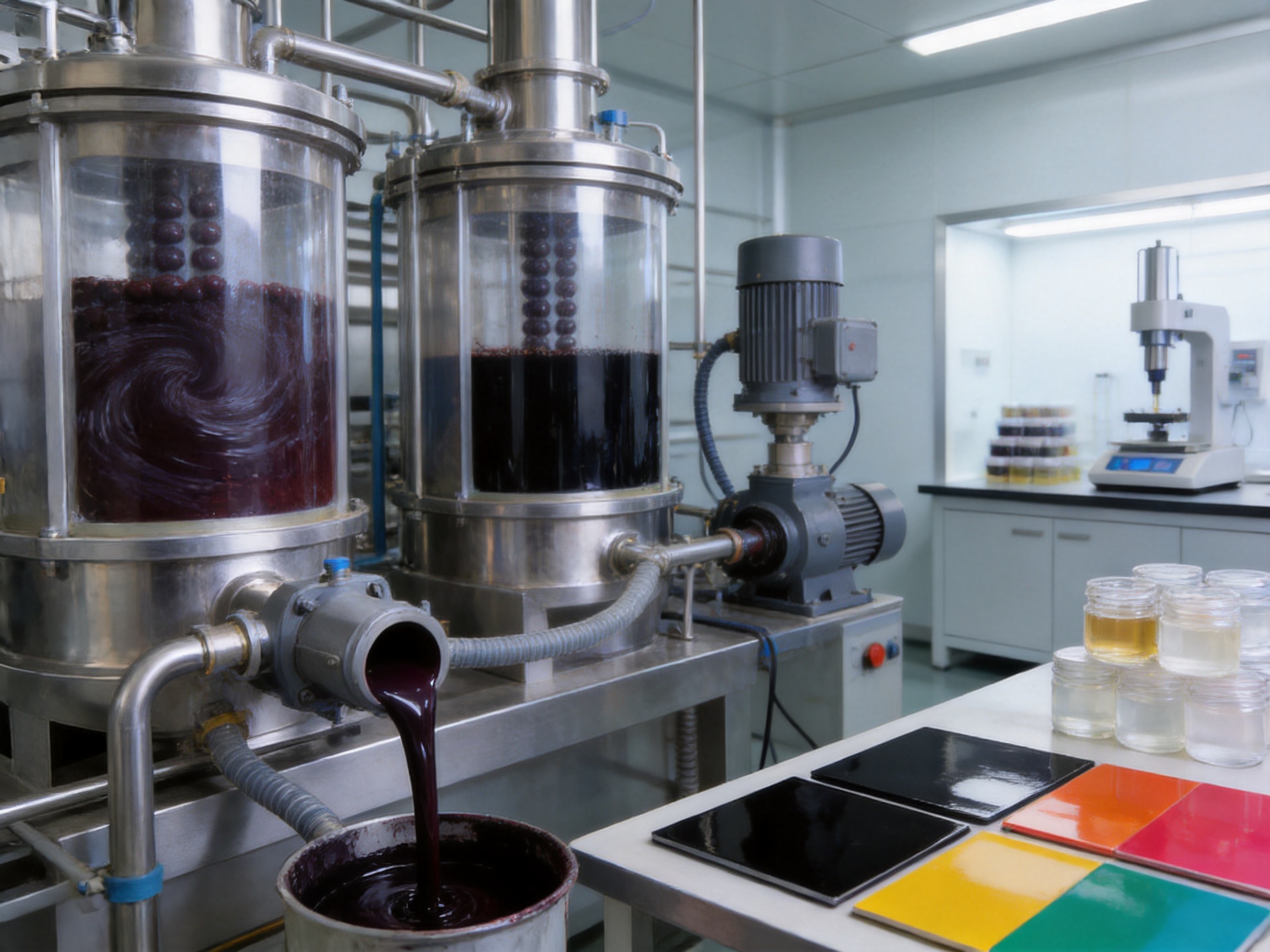
Reliable additive performance requires reliable manufacturing. A dispersant must be produced with controlled raw materials, stable reaction conditions, consistent molecular structure, and careful quality inspection. Suzhou Qingtian New Material Co., Ltd. has built its capabilities around modern production facilities, advanced testing equipment, and an experienced team covering research, production, sales, and technical support. These strengths help ensure that products such as DH-6190S meet practical industrial requirements.
Advanced manufacturing begins with raw material selection. For polymeric dispersants, raw material consistency can influence molecular weight, functional group distribution, compatibility, and adsorption behavior. A professional production system controls incoming materials and monitors key parameters before production. This helps reduce batch variation and supports predictable performance in customer formulations.
Process control is equally important. Polymeric dispersants require controlled synthesis and post-processing to achieve the intended balance of pigment affinity and water-borne compatibility. Temperature, feeding rate, mixing efficiency, reaction time, and purification or finishing steps can all influence final performance. A manufacturer with modern equipment and trained personnel can maintain tighter control over these factors, resulting in more consistent product quality.
Quality testing is a critical part of the manufacturing process. For a dispersant, useful testing may include appearance, active content, viscosity, pH, compatibility, dispersion viscosity, color strength evaluation, gloss testing, storage stability observation, and application trials with representative pigments. Advanced testing equipment allows the manufacturer to connect laboratory data with real customer performance. This is especially important for products used in coatings and inks, where small formulation changes can affect final results.
The company’s move to Lingrui Intelligent Manufacturing Park in Zhangjiagang High-Tech Zone strengthened its research and production capacity. A modern industrial location can support better process layout, improved production efficiency, environmental management, safety systems, and scale-up capability. For customers, this means a more stable supply base and stronger confidence in long-term cooperation.
Dispersant development is highly application-driven. It is not enough to create a product that performs well in a single laboratory test. The dispersant must work in real systems containing pigments, resins, neutralizers, defoamers, leveling agents, rheology modifiers, co-solvents, preservatives, fillers, and other additives. Suzhou Qingtian New Material Co., Ltd. has developed an experienced technical team capable of understanding these interactions and designing products for real industrial use.
The company’s history demonstrates its focus on innovation. In 2016, it created China’s first ice flower resin, showing its ability to develop specialty materials for coating effects. In 2020, it was recognized as a National High-Tech Enterprise, reflecting its technical strength and innovation-driven development. These milestones support customer confidence that the company can not only supply standard additives but also develop customized chemical solutions.
For DH-6190S, research capability is reflected in its balance of properties. Achieving excellent viscosity reduction while maintaining high gloss and storage stability requires careful molecular design. If a dispersant is too hydrophilic, it may not adsorb strongly enough onto hydrophobic pigments. If it is too pigment-affinitive without enough water compatibility, it may cause instability or poor handling. The correct balance allows the dispersant to wet pigment surfaces and remain compatible with the water-borne medium.
R&D strength also enables technical support during customer trials. When a customer evaluates DH-6190S, questions may arise about dosage, grinding procedure, pH adjustment, pigment concentration, let-down compatibility, or comparison with an existing additive. A knowledgeable technical team can help interpret test results and recommend optimization steps. This service can shorten development time and improve the chance of successful adoption.
Although DH-6190S is designed for broad water-borne pigment dispersion use, every formulation should be optimized through testing. Pigment type, pigment surface area, resin chemistry, water quality, pH, grinding equipment, and target viscosity can all influence the ideal dosage. High-surface carbon black usually requires more dispersant than lower-surface inorganic pigments because it presents much greater surface area for adsorption.
In a typical development process, the formulator may first prepare a pigment concentrate with several dispersant dosage levels. The samples can be evaluated for grinding viscosity, particle size, color strength, gloss after let-down, storage stability, and compatibility. The best dosage is usually the level that provides low viscosity, high color strength, and stable storage without unnecessary excess. Too little dispersant can cause flocculation, while too much may affect water resistance, foam, or cost.
Order of addition can also matter. In many systems, the dispersant is added to water or the aqueous grinding medium before pigment addition. This allows the dispersant to contact pigment surfaces during wetting and milling. Proper mixing before milling can reduce dry pigment clusters and improve grinding efficiency. The final process should be adjusted based on equipment and formulation design.
Because DH-6190S provides excellent viscosity reduction, it may allow formulators to redesign pigment concentrate recipes. Higher pigment loading may become possible, or the same pigment loading may be processed with lower energy and better flow. In some cases, the dispersant can help reduce the total amount of auxiliary wetting agent needed. However, all changes should be confirmed through application testing.
The global coatings and inks industries are moving toward lower volatile organic compound emissions, safer production environments, and more sustainable material choices. Water-borne systems play an important role in this transition, but they require high-performance additives to match the appearance and durability of solvent-borne systems. DH-6190S supports this movement by improving pigment dispersion in water-based formulations.
Efficient dispersion can contribute to sustainability in several ways. By allowing higher pigment loading, it can reduce transportation and packaging requirements for pigment concentrates. By lowering viscosity and improving grinding efficiency, it may reduce processing energy. By improving color strength, it can help achieve target shade with optimized pigment use. By improving storage stability, it can reduce waste from failed or unstable batches.
Water-borne additives also support safer handling compared with many solvent-heavy alternatives. Although every chemical product must be handled according to safety data and regulatory requirements, water-based technologies generally help reduce flammable solvent exposure and VOC emissions. A dispersant such as DH-6190S therefore contributes to the practical success of water-borne coating and ink systems.
Sustainability is not only environmental; it is also operational. A stable, efficient dispersant reduces production problems, rework, and rejected batches. It helps manufacturers deliver consistent quality to customers. This reliability supports more responsible resource use and strengthens long-term industrial competitiveness.
Suzhou Qingtian New Material Co., Ltd. is located at No. 99, Chuigu Road, Tangqiao High-tech Zone, Zhangjiagang City, Suzhou, Jiangsu Province, China. The company specializes in raw materials for coatings, inks, and adhesives, serving a wide range of industrial sectors. Its product categories include dispersing agents, leveling agents, adhesion promoters, anti-settling agents, defoamers, texture powder additives, micronized wax powder additives, resin series products, and other additives.
This broad product portfolio is a strategic advantage. Coating and ink performance depends on the interaction of many additives, not only one component. A manufacturer that understands dispersants, defoamers, leveling agents, anti-settling agents, and adhesion promoters can provide more complete formulation support. For example, improving pigment dispersion may change foam behavior or rheology, and a company with multiple additive technologies can help customers adjust the whole system.
The company’s application range is also broad. Its products are used in steel and aluminum coil coatings, plastic coatings, UV curing systems, anti-corrosion coatings, wood coatings, glass coatings, epoxy flooring, printing inks, power batteries, photovoltaic panels, and other industries. This cross-industry experience gives the technical team a wider understanding of performance requirements, production conditions, and customer expectations.
The company emphasizes innovation, quality, service, and win-win cooperation. For customers evaluating DH-6190S, this means they are not only purchasing a dispersant but also gaining access to a supplier with industry knowledge and technical service capability. In competitive coating markets, supplier support can make the difference between a laboratory idea and successful commercial production.
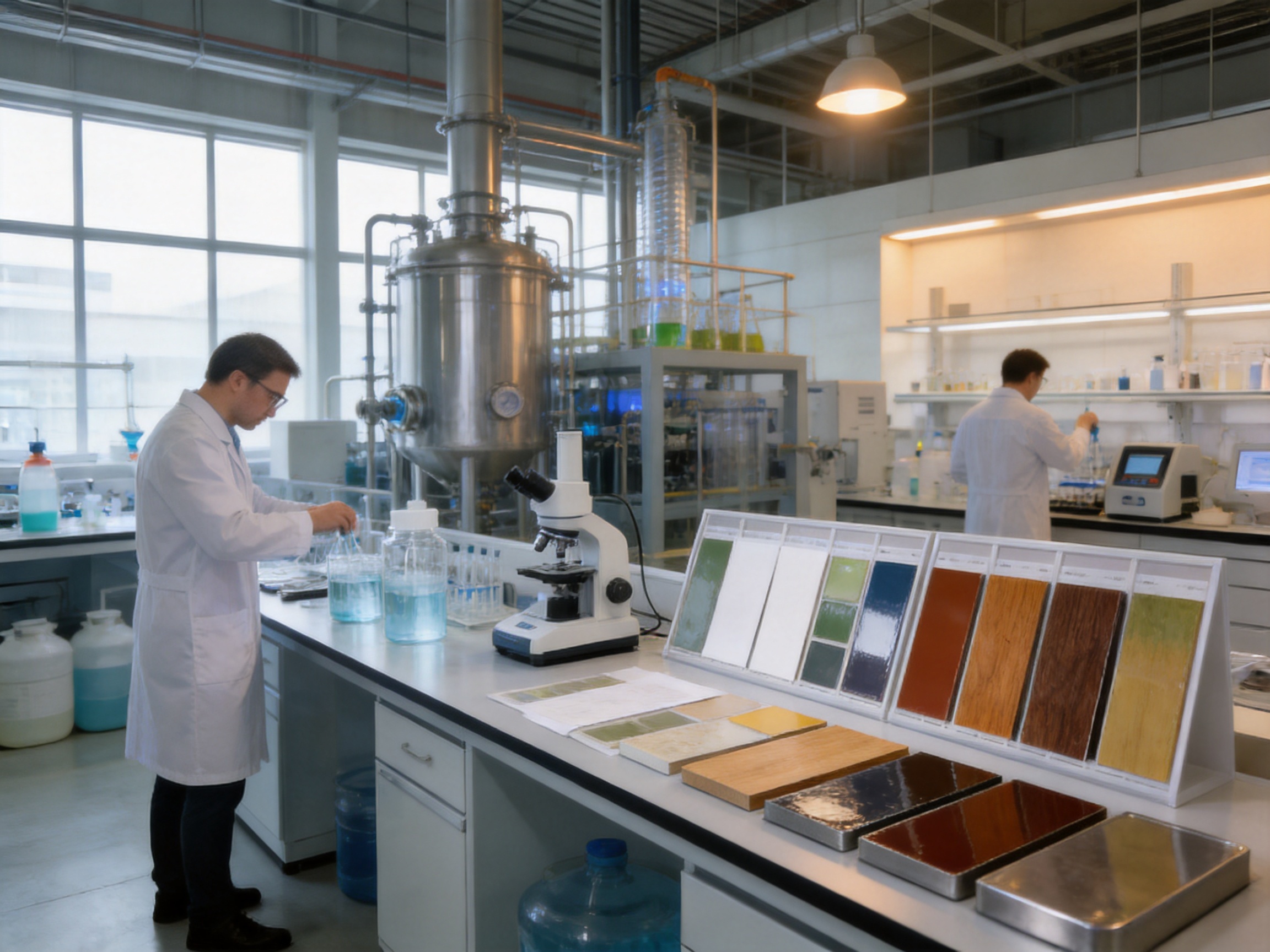
One of the main concerns when replacing or adding a dispersant is batch-to-batch consistency. Even if a product performs well in one trial, customers need confidence that future shipments will behave the same way. Quality control systems help ensure that DH-6190S maintains consistent performance from laboratory development through scaled production.
Quality control begins before production with raw material inspection. It continues during manufacturing through process monitoring and ends with finished product testing. For dispersants, finished product testing should not only confirm basic physical properties but also evaluate application performance. A dispersant is a functional additive, so its real value is measured by how it performs in pigment systems.
Application testing may include preparing standard pigment dispersions and checking viscosity reduction, color development, gloss, and storage behavior. Such tests help detect performance variation that might not appear in simple chemical analysis. By combining analytical control with application control, the manufacturer can provide a more reliable product to coating and ink producers.
Modern manufacturing also supports traceability. If a customer has a question about a batch, traceable production records can help investigate raw materials, process conditions, and test results. This creates transparency and supports continuous improvement. For industrial customers, traceability is especially important when additives are used in high-value coatings, automotive-related systems, electronics materials, or export products.
When evaluating DH-6190S, customers can follow a structured process. First, define the target pigment system and performance requirements. For example, a carbon black paste may require maximum jetness and low viscosity, while an inorganic pigment paste may require high loading and anti-settling support. Second, prepare test batches with different dispersant dosages. Third, compare these batches against the current dispersant or market benchmark under identical conditions.
Important evaluation indicators include mill base viscosity, grinding time, particle size or fineness, color strength, gloss, transparency or hiding power, storage stability, and compatibility with the final resin system. For high-surface carbon black, jetness and undertone may be important. For organic pigments, brightness and tinting strength may be key. For inorganic pigments, hiding contribution and viscosity stability may matter most.
Storage tests should be included because immediate results do not always predict long-term behavior. Samples can be stored at room temperature and elevated temperature, then checked for viscosity change, sediment, syneresis, flocculation, and color shift. Freeze-thaw stability may also be relevant depending on the market and transportation conditions.
Customers should also evaluate production practicality. A dispersant that performs well in a small laboratory sample should be tested in pilot or production-scale equipment. Milling speed, bead size, temperature, and batch size can influence results. The technical team of Suzhou Qingtian New Material Co., Ltd. can support customers in interpreting data and optimizing conditions for scale-up.
The value of a dispersant should not be judged only by its price per kilogram. A high-performance dispersant can create savings and performance improvements throughout the production chain. DH-6190S can help reduce viscosity, increase pigment loading, improve color strength, enhance gloss, and reduce instability. These advantages may lower total cost even if the additive itself is a specialty product.
For example, improved viscosity reduction can reduce milling time and energy consumption. Higher pigment loading can reduce water, packaging, storage, and transportation costs. Better color development can reduce pigment consumption or correction work. Improved storage stability can reduce waste and customer complaints. Better gloss and appearance can increase the value of the final coating or ink.
Cost-performance balance is also influenced by supply reliability. If a manufacturer depends on a single imported or difficult-to-source dispersant, production may be vulnerable to supply disruption. Qualifying DH-6190S as a competitive alternative can strengthen procurement flexibility. This is particularly relevant for manufacturers that benchmark against products such as BYK-190 and want additional high-performance options.
Technical service further improves economic value. Faster formulation troubleshooting, better dosage optimization, and more accurate additive selection can shorten development cycles. For coating and ink companies, time saved in development and production can be as important as raw material cost savings.
DH-6190S is used to disperse pigments in water-borne coating, ink, and related systems. It is especially suitable for high-surface carbon black, difficult-to-disperse organic pigments, and inorganic pigments. It helps improve pigment wetting, color development, gloss, viscosity reduction, pigment loading, and storage stability.
Viscosity reduction improves production efficiency and formulation flexibility. Low-viscosity pigment dispersions are easier to mill, pump, filter, fill, and mix into final coating systems. DH-6190S allows higher pigment loading while maintaining good fluidity, which can improve both productivity and cost-performance.
It helps wet and separate pigment particles more effectively. When pigment particles are finely dispersed and stabilized, they can express stronger color strength, cleaner tone, better jetness in black systems, and improved brightness in colored systems. This leads to better visual quality in the final coating or ink.
Yes. DH-6190S is positioned as a competitive water-based polymeric dispersant and can be evaluated against established market references such as BYK-190. Customers should compare viscosity, color strength, gloss, stability, compatibility, dosage, and total cost-performance under their own formulation conditions.
Yes. DH-6190S is designed for difficult pigments, including high-surface carbon black. It supports improved wetting, reduced viscosity, stronger blackness, better gloss, and more stable dispersion. Because carbon black has high surface area, dosage should be optimized through testing.
Yes. As a polymeric dispersant, it helps stabilize pigment particles after grinding and reduces the risk of re-agglomeration, viscosity drift, flocculation, and sedimentation. Storage testing is still recommended for each specific formulation.
Suzhou Qingtian New Material Co., Ltd. specializes in coating, ink, and adhesive raw materials. The company has an experienced R&D and production team, modern manufacturing facilities, advanced testing equipment, and a broad additive portfolio. Its recognition as a National High-Tech Enterprise and its expanded production capacity in Zhangjiagang High-Tech Zone support its reliability.
The correct dosage depends on pigment type, surface area, pigment loading, resin system, pH, and performance targets. Formulators should prepare several test batches at different dosage levels and evaluate viscosity, fineness, color strength, gloss, compatibility, and storage stability.
DH-6190S Water-based Dispersant is a high-performance polymeric dispersant designed for the practical challenges of modern water-borne pigment dispersion. Its key strengths include excellent viscosity reduction, strong color development, high gloss, increased pigment loading, good fluidity, and reliable storage stability. These properties make it especially useful for high-surface carbon black, difficult organic pigments, and inorganic pigments.
Compared with conventional dispersants and market benchmark products, DH-6190S offers a strong balance of performance and practical manufacturing value. It can help coating and ink manufacturers improve process efficiency, reduce viscosity-related problems, enhance final appearance, and build more stable pigment concentrates. Its value extends beyond laboratory performance because it supports real production needs such as milling efficiency, batch consistency, storage reliability, and formulation flexibility.
The product is strengthened by the manufacturing and technical capabilities of Suzhou Qingtian New Material Co., Ltd. With advanced production facilities, strong R&D capability, application testing support, and a broad understanding of coating, ink, and adhesive additives, the company is positioned to provide not only a dispersant but also a practical solution for customers seeking dependable water-borne technology.
As water-borne coatings and inks continue to expand across industrial markets, dispersant performance will remain a key factor in product quality. DH-6190S provides formulators with a competitive and technically capable option for achieving high pigment loading, low viscosity, strong color, and stable long-term performance.
1. Bieleman, J. Additives for Coatings. Wiley-VCH, 2000.
2. Lambourne, R., and Strivens, T. A. Paint and Surface Coatings: Theory and Practice. Woodhead Publishing, 1999.
3. Tadros, T. F. Dispersion of Powders in Liquids and Stabilization of Suspensions. Wiley-VCH, 2012.
4. Wicks, Z. W., Jones, F. N., Pappas, S. P., and Wicks, D. A. Organic Coatings: Science and Technology. Wiley-Interscience, 2007.
5. Braun, J. H. Pigments, Organic. Kirk-Othmer Encyclopedia of Chemical Technology. Wiley, 2005.
6. Technical literature on polymeric dispersants for water-borne coatings and inks, industry application notes.
 Wholesale Paint/ Coating Additives Manufacturers
Custom Industrial Chemical Solutions Suppliers
Wholesale Paint/ Coating Additives Manufacturers
Custom Industrial Chemical Solutions Suppliers