русский
 Español
 Français
Home / Author / Qiao Minshu — Key Account After-Sales Consultant / DH-7268 Adhesion Promoter for High-Performance Glass and Metal Coatings
Qiao Minshu — Key Account After-Sales Consultant

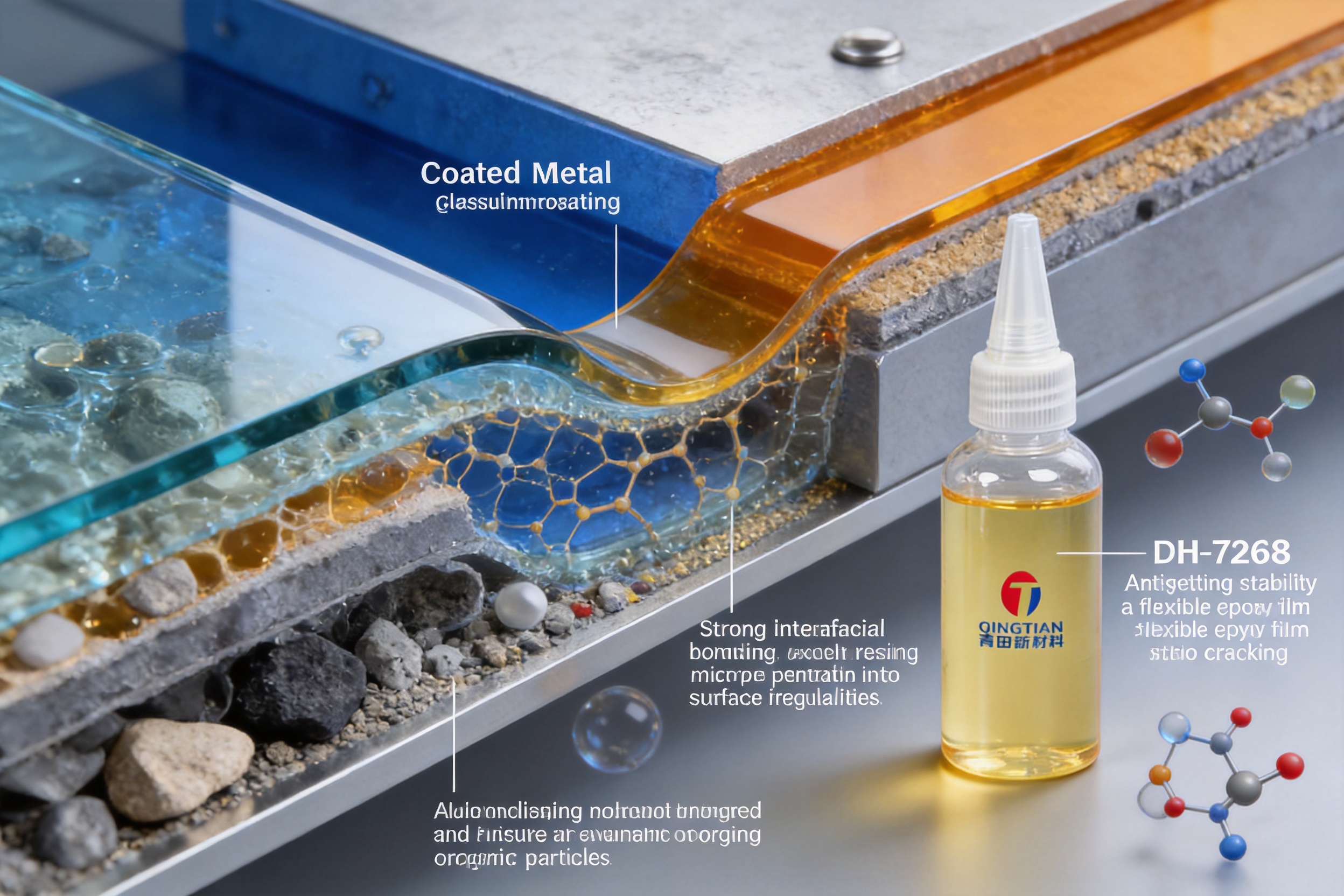
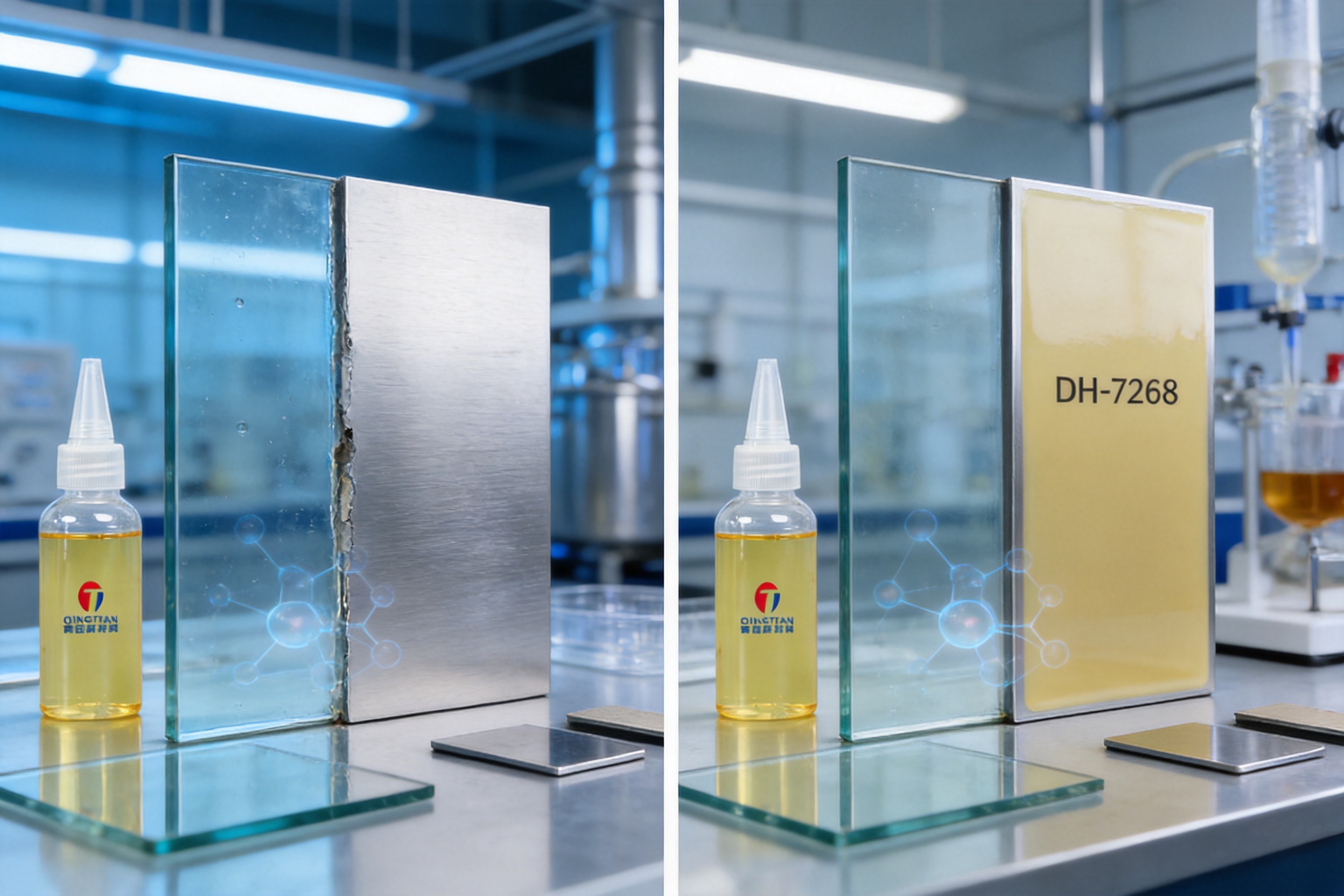
Modern coating systems must do more than create an attractive surface. They must adhere firmly to the substrate, remain stable during storage and application, resist environmental stress, and preserve their protective or decorative function throughout the service life of the finished product. These requirements become particularly demanding when coatings are applied to inorganic surfaces such as glass and metal. Unlike porous materials that may allow mechanical anchoring, glass and many smooth metal surfaces can provide limited opportunities for conventional binders to establish a durable bond. As a result, a coating may show poor wetting, edge lifting, delamination, blistering, or premature failure even when the resin itself has excellent film-forming properties.
DH-7268 Adhesion Promoter is designed to address these interfacial challenges. It is an adhesion promoter for glass substrates and other inorganic materials, including metal. The product significantly improves the adhesion of coating systems to inorganic surfaces while also contributing to wetting, dispersion, flexibility, and long-term performance. It can function as a cross-linking agent in many water-based and solvent-based coating systems, giving formulators additional flexibility when developing coatings for glass, metal, epoxy flooring, industrial equipment, architectural components, and related applications.
The value of DH-7268 is not limited to a single adhesion mechanism. Its performance is connected with several formulation benefits: improved contact between resin and substrate, better penetration of resin into the microscopic surface structure of inorganic materials, effective dispersion of inorganic components, reduced settling tendency, and increased flexibility in epoxy resin systems. These combined characteristics help formulators develop coatings that are more reliable in production and more durable in use.
Adhesion is the ability of a coating film to remain attached to a substrate under mechanical, chemical, and environmental stress. It depends on the interaction between the substrate, the coating resin, additives, pigments, fillers, curing agents, and application conditions. A coating may fail to adhere because of insufficient wetting, surface contamination, incompatibility between the binder and the substrate, internal stress during curing, or excessive brittleness in the cured film.
Glass presents a special set of challenges. Its surface is smooth, chemically stable, and generally nonporous. Although glass contains polar groups and can interact with certain chemical species, a conventional coating binder may not establish a sufficiently strong or durable interface without assistance. Poor wetting can leave microscopic voids between the coating and glass. These voids reduce the effective contact area and can become starting points for peeling or moisture ingress.
Metal substrates are equally diverse. Steel, aluminum, galvanized materials, and other alloys differ in surface chemistry, oxide-layer structure, roughness, and contamination sensitivity. Oils, processing residues, oxides, and corrosion products can influence the final bond. Even when surface preparation is carefully controlled, the coating must still form a stable interface capable of tolerating temperature changes, impact, bending, vibration, and chemical exposure.
An adhesion promoter helps bridge the difference between the coating phase and the inorganic substrate. It can improve interfacial wetting, support chemical or physical interaction, and promote a more continuous transition between the substrate and the cured film. In practical terms, this may result in better initial adhesion, improved coating integrity, and greater resistance to the stresses that cause delamination.
DH-7268 is an adhesion promoter intended for glass and other inorganic materials. It is particularly suitable for coating systems in which strong adhesion, reliable wetting, and stable dispersion are important. The product can be used in both water-based and solvent-based formulations, and it is miscible with alcohol solvents in any ratio.
This broad compatibility is important for formulators working across multiple coating technologies. A single product that can be incorporated into different solvent environments may simplify raw-material selection, reduce development complexity, and support more consistent production. It also allows manufacturers to evaluate the same adhesion-promotion concept in different resin platforms rather than beginning formulation development from the ground up for every system.
DH-7268 is also described as capable of acting as a cross-linking agent in many water-based and solvent-based coating systems. This characteristic makes it more than a passive interface modifier. Depending on the formulation chemistry and curing conditions, it may participate in the development of a more integrated coating network. The exact performance will depend on resin type, substrate condition, additive level, curing schedule, and other formulation variables, so laboratory validation remains essential.
Another important function is the improvement of epoxy resin flexibility. Epoxy systems are valued for hardness, chemical resistance, and strong adhesion, but some formulations can become relatively rigid or brittle after curing. Excessive internal stress may reduce durability when the coated article experiences impact, bending, thermal cycling, or substrate movement. By increasing flexibility, DH-7268 can help formulators balance the toughness and adhesion advantages of epoxy with the need for a less brittle coating film.
| Product characteristic | Formulation value | Potential application benefit |
|---|---|---|
| Adhesion promotion for glass | Improves interaction between coating and smooth inorganic surfaces | More reliable bonding of decorative and protective coatings |
| Adhesion promotion for metal | Supports stronger coating-substrate contact on inorganic metal surfaces | Reduced risk of peeling and delamination when properly formulated |
| Cross-linking capability | Can contribute to network formation in suitable systems | Potentially improved film integrity and durability |
| Excellent wetting | Helps the resin spread across the substrate | Fewer interfacial gaps and more uniform coverage |
| Excellent dispersion | Supports uniform distribution of inorganic components | More consistent coating performance and appearance |
| Anti-settling contribution | Helps maintain the distribution of inorganic materials in the resin | Improved storage stability and reduced remixing burden |
| Alcohol-solvent miscibility | Allows incorporation into alcohol-based solvent blends | Greater solvent-system flexibility during formulation |
| Epoxy flexibility improvement | Helps moderate excessive rigidity in epoxy films | Better tolerance of stress, impact, and movement |
The primary advantage of DH-7268 is its ability to improve adhesion to inorganic substrates. This is especially valuable when coating glass, metal, or other smooth, low-porosity materials. Improved adhesion may support stronger resistance to mechanical damage, moisture exposure, temperature variation, and handling during subsequent processing.
For glass coatings, the promoter can improve resin contact with the surface and support stronger interfacial interaction. This is relevant to architectural glass, decorative glass, functional glass, glass containers, lighting components, and other products that require a coating to remain firmly attached to a smooth substrate.
For metal coatings, DH-7268 can be used to improve bonding between the resin and the metal surface. The benefit may be relevant to steel and aluminum components, industrial equipment, metal panels, coil-coated materials, and protective systems. Performance will depend on proper cleaning, surface preparation, resin selection, and curing, but the adhesion promoter provides a useful tool for strengthening the formulation side of the interface.
Wetting is fundamental to coating quality. If a liquid coating does not spread evenly across the substrate, it can produce craters, pinholes, uneven film thickness, poor edge coverage, or localized adhesion defects. A coating may have excellent mechanical properties after curing, but those properties cannot compensate for insufficient contact at the substrate interface.
DH-7268 improves the wetting of the resin on inorganic materials. Better wetting allows the liquid coating to spread more uniformly and make closer contact with the substrate. It can also improve the penetration of the resin into microscopic irregularities or accessible surface features. This creates a more continuous interface and can support stronger physical anchoring.
Improved wetting is also beneficial during the early stages of application. It may help reduce the formation of small uncoated areas and assist the coating in covering complex or difficult surfaces. In systems containing pigments or inorganic fillers, consistent wetting can further contribute to uniform film appearance and reduced local defects.
Many coatings contain inorganic pigments, fillers, functional particles, or mineral components. These materials can be difficult to distribute uniformly because of differences in density, particle size, surface energy, and compatibility with the binder. Poor dispersion can lead to agglomeration, uneven color, reduced mechanical performance, surface roughness, and inconsistent protective properties.
DH-7268 possesses excellent dispersion properties. It can help inorganic materials become more uniformly distributed within the resin, improving the consistency of the coating system. Good dispersion is particularly important when the formula contains a high level of mineral or inorganic content, or when the final film must provide uniform appearance and stable performance across a large coated area.
Dispersion improvement may also reduce the tendency of particles to form concentrated regions during storage or application. This can make the coating easier to process and may support more predictable results from batch to batch. However, dispersion is affected by mixing energy, order of addition, temperature, resin polarity, particle surface treatment, and equipment design. DH-7268 should therefore be evaluated as part of the complete formulation rather than considered in isolation.
Inorganic materials are often denser than the surrounding resin. During storage, gravity can cause particles to settle, especially when the formulation has low viscosity or contains a high concentration of heavy pigments and fillers. Hard settling can create serious processing problems, including extended mixing time, uneven composition, blocked equipment, and inconsistent coating performance.
DH-7268 improves the anti-settling properties of inorganic materials within the resin. By helping maintain a more stable distribution, it can reduce the tendency of inorganic components to separate during storage. This supports better product uniformity and may reduce the need for intensive remixing before application.
Anti-settling performance is valuable for industrial coatings that may be stored, transported, or applied over an extended period. It can also help improve production efficiency by making the material easier to recondition before use. The final result will depend on the complete rheological profile of the formulation, so compatibility testing and storage trials are recommended.
Epoxy resins are widely used because of their strong adhesion, chemical resistance, hardness, and durability. Nevertheless, a highly cross-linked epoxy film can sometimes be too rigid for applications involving impact, vibration, thermal expansion, substrate deformation, or repeated mechanical stress. A brittle film may crack even when its initial adhesion is satisfactory.
DH-7268 increases the flexibility of epoxy resins. This makes it useful when a formulator needs to retain the protective benefits of an epoxy system while improving its ability to accommodate movement and stress. Improved flexibility can be relevant to metal components, industrial flooring, protective coatings, and other applications where the substrate and coating experience different expansion or contraction rates.
Flexibility must always be balanced with hardness, chemical resistance, blocking resistance, and cure speed. The appropriate use level should be determined through application-specific testing. Even so, the ability to address both adhesion and flexibility in one additive platform can simplify formulation development and help reduce the need to combine multiple corrective additives.
DH-7268 is miscible with alcohol solvents in any ratio. This characteristic supports the development of alcohol-based or alcohol-containing solvent systems. It can be especially useful when a coating formulation uses alcohols to adjust evaporation behavior, resin compatibility, viscosity, drying speed, or regulatory profile.
Solvent compatibility is a practical advantage because poor miscibility can produce haze, phase separation, precipitation, or inconsistent additive distribution. A fully miscible additive is easier to incorporate and may provide more uniform performance throughout the batch. Formulators should still verify compatibility with all resin components, pigments, cross-linkers, and other additives under actual production conditions.
DH-7268 Adhesion Promoter
Conventional adhesion improvement often relies on one of several approaches: roughening the substrate, applying a separate primer, increasing binder polarity, changing the curing system, or adding a conventional wetting agent. Each approach can be useful, but each may introduce limitations.
Mechanical roughening can improve anchoring, but it may change the appearance of glass or metal, generate dust, require additional equipment, and increase processing time. A separate primer can provide strong adhesion, but it adds another production step, consumes additional material, and may complicate quality control. Increasing binder polarity may improve substrate interaction but can affect water resistance, flexibility, solvent resistance, or compatibility with other components.
A conventional wetting agent may improve spreading without providing sufficient long-term adhesion. Similarly, a dispersant may improve particle distribution but have little effect on the bond between the resin and the inorganic substrate. DH-7268 offers a broader set of functions by combining adhesion promotion with wetting, dispersion, anti-settling support, and epoxy flexibility improvement.
This multifunctional profile can be an important advantage over single-purpose additives. It may allow formulators to reduce the number of separate ingredients, simplify the formulation structure, and improve the balance between interfacial performance and bulk-film properties. Fewer additives can also reduce the possibility of incompatibility, additive migration, surface defects, or unexpected interactions during curing.
Compared with adhesion promoters designed for only one resin family, DH-7268 offers flexibility across water-based and solvent-based coating systems. Its potential use as a cross-linking agent also gives it a role in film formation rather than limiting it to the liquid-stage interface. This broader applicability can benefit manufacturers that produce multiple coating grades or serve several end-use industries.
It is important to describe these advantages accurately. DH-7268 should not be considered a universal replacement for surface preparation, primer technology, or formulation testing. Surface cleanliness, substrate type, resin chemistry, curing conditions, additive concentration, and application method remain decisive factors. The product’s advantage is that it gives formulators a versatile tool for addressing several common causes of coating failure within a coordinated formulation strategy.
Glass coatings may be used for decoration, protection, privacy, identification, functional performance, or surface modification. The coating must adhere to a smooth, chemically stable substrate while maintaining a uniform appearance. DH-7268 can support these requirements by improving wetting and adhesion to glass.
Potential areas include architectural glass, interior glass panels, decorative glass, lighting components, glass containers, and specialty glass products. In each case, the formulation must be adapted to the required appearance, transparency, opacity, hardness, flexibility, chemical resistance, and curing method.
Metal coatings protect against corrosion, improve appearance, provide color, increase wear resistance, or create a specific functional surface. Strong adhesion is essential because failure at the metal-coating interface can expose the substrate to moisture and corrosive agents.
DH-7268 may be considered for steel, aluminum, and other inorganic metal surfaces. It can support coating systems used on industrial equipment, metal panels, fabricated components, appliances
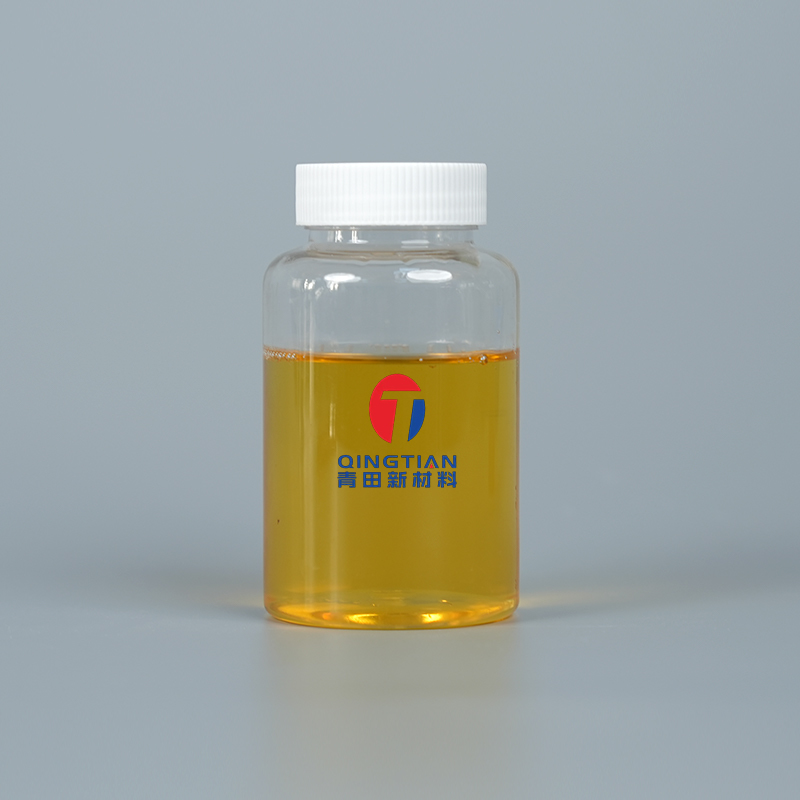
 Wholesale Paint/ Coating Additives Manufacturers
Custom Industrial Chemical Solutions Suppliers