русский
 Español
 Français
Home / Author / Qiao Minshu — Key Account After-Sales Consultant / Advanced Water-Based Thickener Technology for High-Performance Coatings
Qiao Minshu — Key Account After-Sales Consultant

Content
Water-based coatings continue to gain importance as manufacturers seek lower-emission, safer, and more sustainable alternatives to solvent-based systems. However, replacing solventborne technology with a waterborne formulation is not simply a matter of changing the carrier. Water-based coatings require careful control of viscosity, flow, pigment dispersion, sag resistance, leveling, storage stability, and application behavior. A thickener must therefore do more than increase viscosity. It must help the formulation maintain the right balance between application, appearance, stability, and final film performance.
DH-7216S Water-based Thickener is a polyurethane associative thickener developed for water-based coatings, adhesives, and related formulations. It is designed to provide high viscosity and strong pseudoplasticity at low shear while also contributing to pigment wetting and dispersion. Its thixotropic behavior supports improved application control, and its non-ionic character allows it to remain relatively unaffected by changes in system pH. In addition, the product is formulated to increase viscosity without adversely affecting coating film gloss.
These characteristics make DH-7216S a multifunctional rheology solution rather than a simple viscosity booster. It can support the formulator in addressing several common problems at the same time: insufficient low-shear viscosity, poor anti-sag behavior, weak storage stability, pigment dispersion difficulties, and loss of surface appearance caused by incompatible additives.
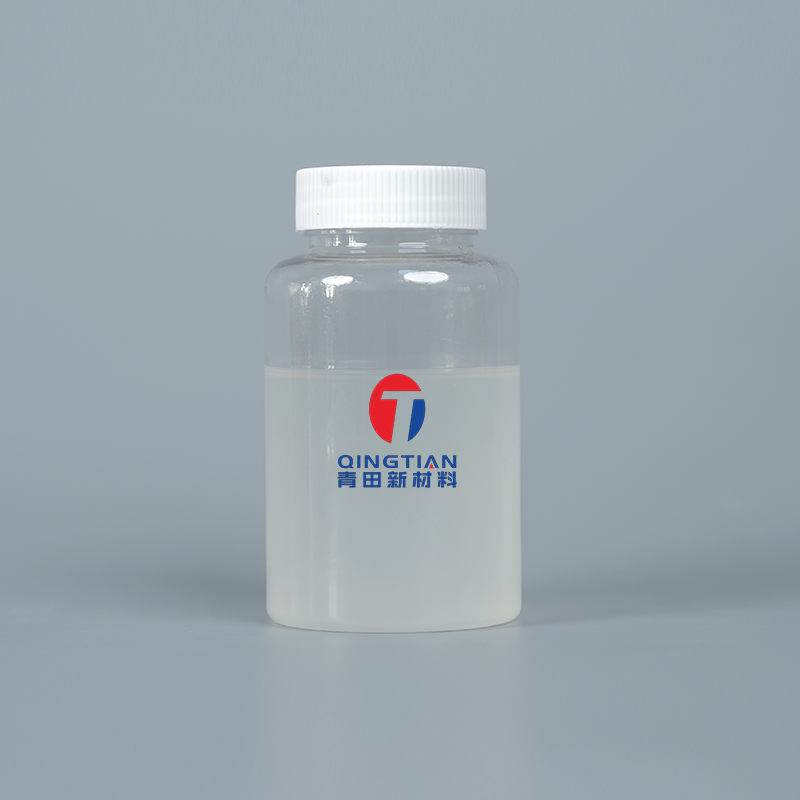
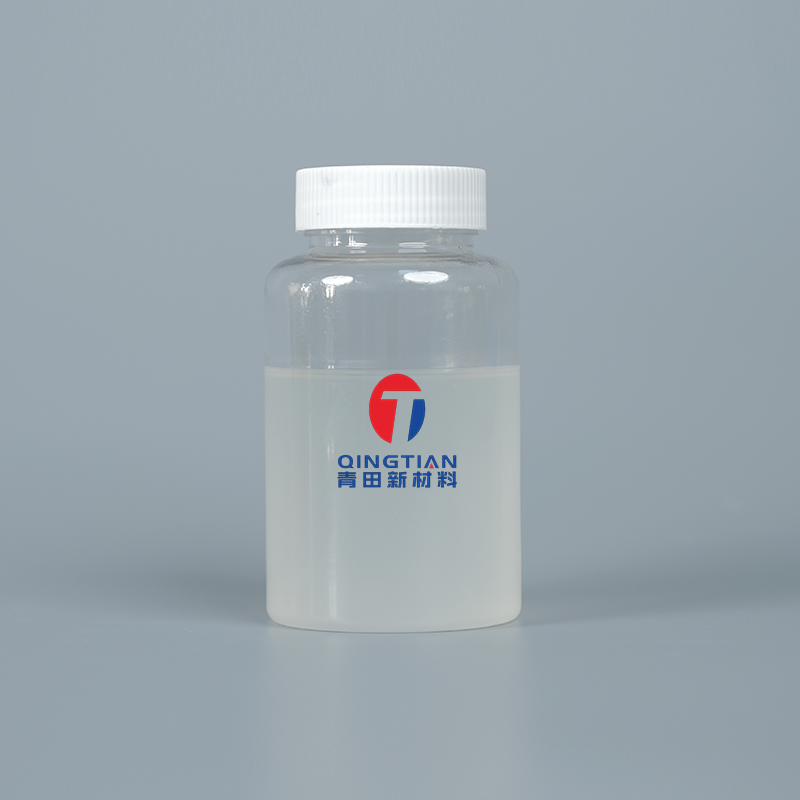
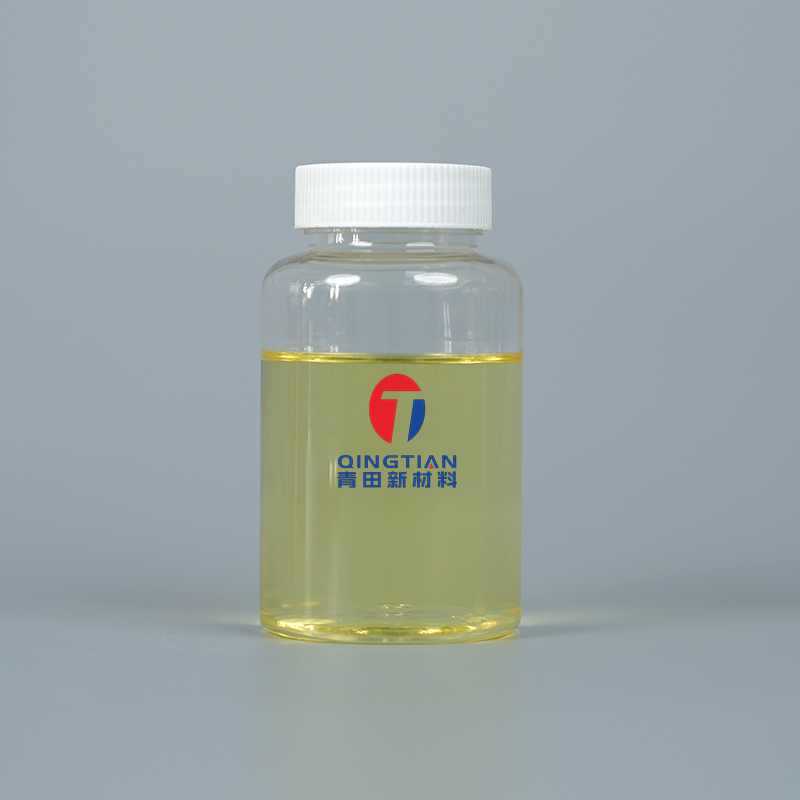
DH-7216S Water-based Thickener
Rheology describes how a material flows and deforms under applied force. In a water-based coating, rheology affects nearly every stage of the product life cycle. It influences how the coating is manufactured, pumped, stored, mixed, applied, and cured. It also affects the final appearance and durability of the coating film.
A coating with excessively low viscosity may show sedimentation, poor hiding, dripping, sagging, or inadequate film build. A coating with excessive viscosity may be difficult to pump, difficult to apply, or prone to brush drag and roller marks. The objective is not simply to make a coating thicker. The objective is to establish a controlled viscosity profile that responds appropriately to different shear conditions.
During manufacturing, coatings may experience high shear in dispersers, mixers, and circulation systems. During application, they may be subjected to moderate or high shear through spray equipment, rollers, brushes, or other application tools. After application, shear decreases sharply. At that stage, the coating must recover sufficient structure to resist sagging and to maintain uniform film thickness.
This is why a single viscosity measurement does not fully describe coating performance. A material may show acceptable viscosity in a laboratory container but still perform poorly during application. Effective rheology modification requires a balance between low-shear structure, high-shear processability, recovery behavior, leveling, and compatibility with the rest of the formulation.
Low-shear viscosity is particularly important when the coating is at rest or moving slowly. It helps reduce settling of pigments and fillers, limits separation during storage, and supports consistent product quality between manufacture and use. It also contributes to the ability of a wet film to remain on vertical or inclined surfaces without running.
DH-7216S is described as exhibiting high viscosity and strong pseudoplasticity at low shear. This combination is valuable because it can provide structure when the coating is at rest while allowing the material to become easier to move when force is applied. In practical terms, the coating can remain stable in the container and resist sagging after application, yet still flow under the action of a brush, roller, pump, or spray system.
Pseudoplasticity, commonly referred to as shear-thinning behavior, means that apparent viscosity decreases as shear increases. This property is desirable in many water-based coatings because it enables the coating to respond to the application process. A structured coating can become more fluid during brushing, rolling, pumping, or spraying, then regain viscosity when the applied force is removed.
Compared with a thickener that produces high viscosity without sufficient shear responsiveness, an associative polyurethane thickener can offer a more useful application profile. It can help reduce the conflict between storage stability and application ease. This is one of the important areas in which DH-7216S can provide an advantage over conventional viscosity modifiers that may produce a less balanced flow response.
DH-7216S Water-based Thickener belongs to the polyurethane associative thickener family. It is intended for water-based coatings and can also be considered for adhesives and other aqueous systems where controlled viscosity, pseudoplasticity, and thixotropy are required.
The primary product functions are to improve thixotropy and increase viscosity. At the same time, the product is reported to offer excellent dispersing performance, assisting the wetting and dispersion of pigments in a formulation. This combination expands its role beyond traditional thickening.
| Product Attribute | Functional Contribution | Potential Formulation Benefit |
|---|---|---|
| Polyurethane associative thickener | Builds viscosity through associative rheology modification | Controlled structure and improved application behavior |
| High viscosity at low shear | Supports structure when the coating is at rest | Improved anti-settling and anti-sag performance |
| Strong pseudoplasticity | Reduces apparent viscosity under applied shear | Easier pumping, brushing, rolling, and spraying |
| Good thixotropic performance | Promotes structure recovery after shear | Better wet-film stability and application control |
| Dispersing performance | Assists pigment wetting and dispersion | More uniform pigment distribution and formulation efficiency |
| Non-ionic character | Less dependent on system pH than ionic alternatives | Broader formulation flexibility and easier compatibility management |
| No impact on coating film gloss | Supports surface appearance | Better retention of intended gloss and visual quality |
The listed characteristics should be evaluated in the complete formulation because the final result depends on pigment type, binder chemistry, surfactants, coalescents, fillers, solvents, pH, application method, and processing conditions. Nevertheless, the product profile indicates a rheology modifier designed to address several performance requirements in one additive.
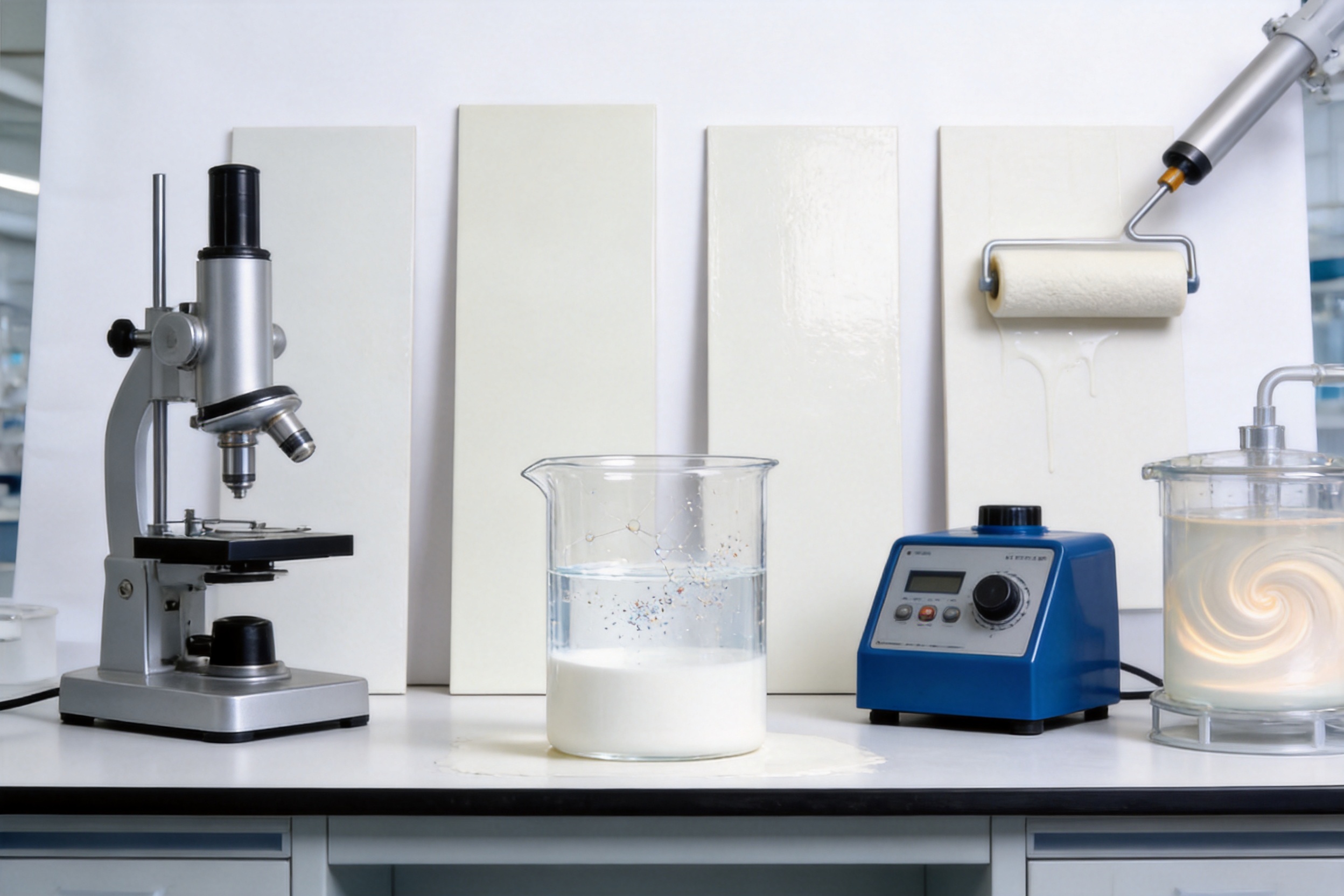
Associative thickeners operate through interactions between hydrophobic segments in the thickener structure and compatible components in the formulation. These associations create a temporary network that influences the movement of the liquid phase. Under low shear, the network contributes to viscosity and structure. Under higher shear, the associations can rearrange, allowing the system to flow more easily.
This behavior differs from a purely water-binding approach in which viscosity is increased mainly by immobilizing large quantities of water. The associative mechanism can provide a more responsive viscosity profile. It may also help formulators achieve useful rheology at an efficient dosage, although the optimum level must always be determined through laboratory testing.
In a coating formulation, associative behavior can influence both the continuous phase and the interaction between the thickener, binder particles, pigment surfaces, and other additives. The exact response depends on formulation design. For this reason, the use of DH-7216S should be considered as part of an integrated rheology strategy rather than as an isolated ingredient.
High low-shear viscosity can be important for architectural coatings, industrial finishes, primers, protective coatings, and other products that must remain stable between application events. When a coating has insufficient low-shear structure, pigments and fillers may settle quickly, especially when the formulation contains a high solids level or dense inorganic materials.
By supporting low-shear viscosity, DH-7216S may help maintain a more uniform distribution of dispersed ingredients during storage. This can reduce the risk of hard settling and improve the consistency of the coating from the top of the container to the bottom. It can also help the wet film resist downward movement after application.
Strong pseudoplasticity is valuable because coating systems are exposed to different shear conditions throughout their use. A product that is too resistant to flow at all shear rates can cause application difficulties. A product that flows too freely at low shear can suffer from sagging or poor storage stability.
DH-7216S is designed to provide a pronounced response to shear. During application, the coating can become more fluid, helping the user obtain coverage with less effort. When shear is removed, the viscosity can increase again, helping the wet film remain in place. This balance is especially relevant for vertical surfaces, spray-applied systems, and high-build coatings.
Thixotropy refers to the time-dependent decrease in viscosity under shear and the subsequent recovery of structure when the shear is removed. In coatings, good thixotropic performance can improve the relationship between application ease and film stability.
A thixotropic coating is structured at rest, becomes more fluid while being applied, and rebuilds its structure afterward. This behavior can help minimize dripping and sagging while maintaining satisfactory leveling. It may also assist in reducing the tendency of pigments and fillers to separate during storage.
The phrase “good thixotropic performance” should not be interpreted as a guarantee of identical results in every coating system. The final recovery rate and structural strength depend on formulation composition and processing. However, the product’s stated rheology profile makes it a suitable candidate for systems in which thixotropy is a central performance requirement.
Vertical application places a special demand on coating rheology. Gravity continuously pulls the wet film downward, while the film must still level sufficiently to minimize brush marks, roller texture, or spray irregularities. If the coating is too fluid after application, sagging can occur. If it is too structured, the surface may remain uneven.
DH-7216S can support this balance by combining low-shear viscosity with shear-thinning behavior. The coating can be applied with manageable force and then develop sufficient structure as the shear decreases. This is useful for walls, metal panels, equipment, doors, structural components, and other vertical or inclined substrates.
Spray systems require a coating to pass through equipment and atomize under pressure. Roller application involves repeated mechanical shear, while brushing creates localized shear and elongational flow. Each method creates a different rheological environment.
A versatile rheology modifier should not simply increase viscosity equally under all conditions. It should help the formulation respond appropriately to the selected application method. The strong pseudoplasticity of DH-7216S may support this requirement by allowing the coating to flow under application forces while retaining structure at rest.
For spray coatings, formulators should evaluate atomization, spray pattern, overspray behavior, film build, and sag resistance. For roller and brush coatings, they should assess drag, spatter, leveling, open time, and surface appearance. These tests help establish whether the product is delivering the desired balance in the target system.
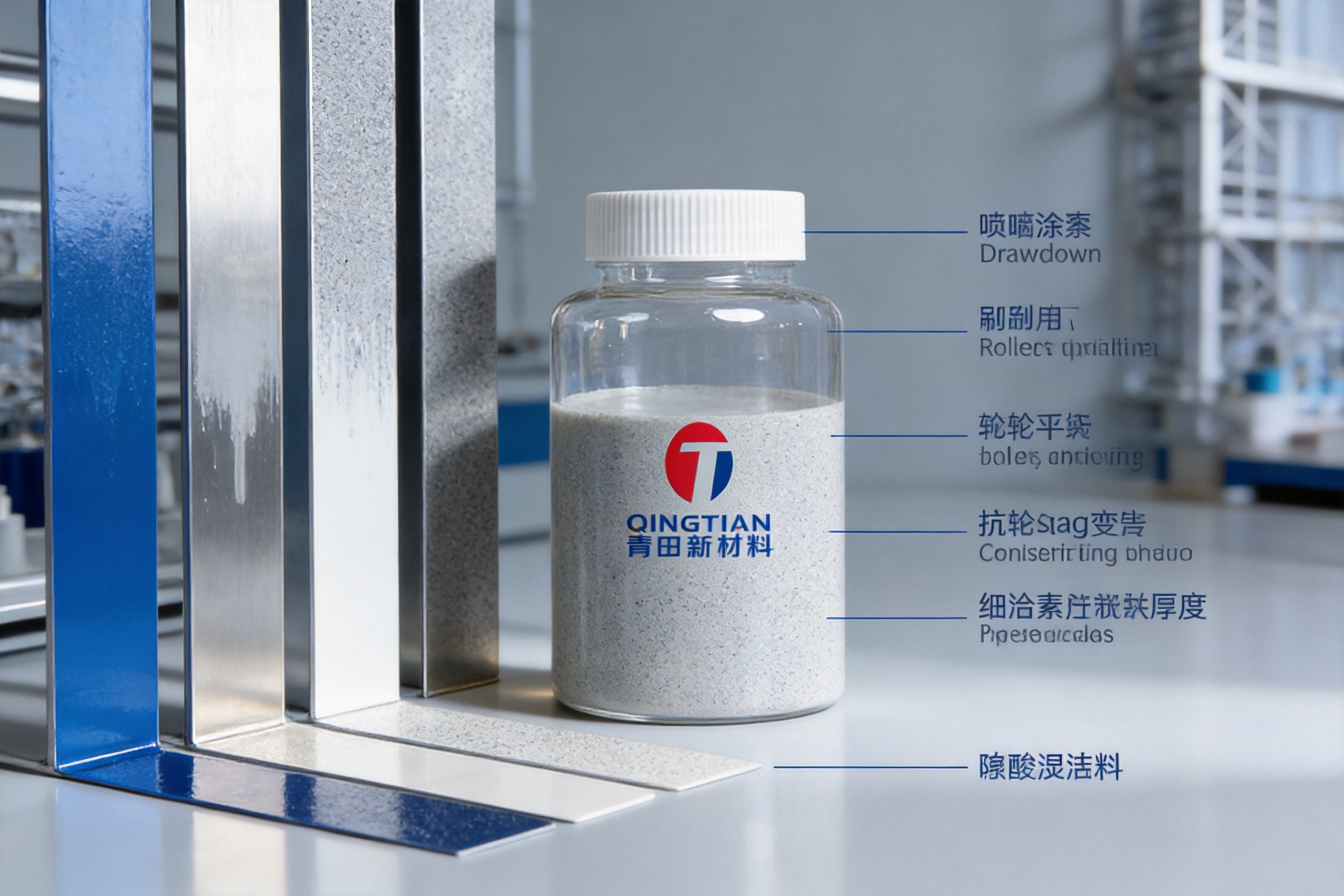
Pigment dispersion is one of the most important steps in the production of a coating. Poorly wetted or incompletely dispersed pigments can create agglomerates, color variation, reduced hiding, lower tinting strength, surface defects, and instability during storage.
DH-7216S is described as having excellent dispersing performance and assisting in the wetting and dispersion of pigments. This characteristic is significant because it means the product may contribute to formulation quality beyond viscosity adjustment. A thickener that also supports pigment distribution can help simplify additive selection and improve the overall efficiency of the formulation design.
Pigment wetting involves replacing air and other materials at the pigment surface with the liquid phase. Dispersion involves breaking down agglomerates and maintaining the resulting particles in a distributed state. These processes are influenced by pigment surface chemistry, binder selection, dispersant type, mixing energy, solids content, and processing sequence.
Although DH-7216S is not presented as a replacement for every dedicated pigment dispersant, its dispersing contribution may complement the action of other formulation components. This can be particularly helpful in systems where viscosity adjustment and pigment stabilization must be considered together.
Uniform pigment distribution supports consistent color and appearance across a coated surface. If pigment particles are poorly dispersed, the coating may show streaking, floating, flooding, shade variation, or inconsistent hiding. Such defects can increase production waste and require additional processing or adjustment.
By assisting pigment wetting and dispersion, DH-7216S may help the formulator develop a more homogeneous coating. A uniform system can also provide more predictable rheology because large agglomerates and unstable particle structures may otherwise interfere with flow behavior.
Water-based coatings often contain several additives, including dispersants, wetting agents, defoamers, preservatives, coalescents, leveling agents, and other rheology modifiers. These materials can interact in ways that are difficult to predict from individual product data alone.
The non-ionic character of DH-7216S can be advantageous in this environment. Because it is not primarily dependent on ionic charge for its functionality, it may provide greater flexibility when combined with different types of binders and additives. Compatibility testing remains necessary, but the non-ionic design can reduce one category of formulation sensitivity.
Many water-based formulations are sensitive to pH. Changes in pH may occur during raw material addition, pigment dispersion, storage, or interaction with the substrate. In systems containing ionic thickeners, a change in pH can alter ionization, chain expansion, viscosity, and compatibility.
DH-7216S is non-ionic and is described as unaffected by the pH value of the system. This makes it attractive for formulations in which pH may vary or where the formulator wants to reduce dependence on pH adjustment. It can also provide an alternative when an ionic thickener produces unpredictable viscosity or compatibility behavior.
Non-ionic performance does not mean that every formulation variable becomes irrelevant. The product can still be affected by surfactants, solvents, coalescents, resin composition, electrolyte concentration, temperature, and mixing conditions. Nevertheless, reduced pH sensitivity can simplify development and support more consistent performance across a broader formulation range.
Strongly pH-dependent thickeners can perform very well when the formulation is carefully controlled within a narrow pH window. However, they may require neutralization or pH adjustment during production. If the pH shifts during storage or when other raw materials are introduced, viscosity can change.
As a non-ionic polyurethane associative thickener, DH-7216S offers a different approach. Its viscosity-building mechanism is less reliant on pH-triggered ionization. This can improve development flexibility, especially for manufacturers working with multiple resin technologies or different production sequences.
In competitive comparisons, this is an important distinction. The most suitable thickener is not necessarily the one with the highest initial viscosity. It is the one that provides stable and predictable performance under the practical conditions of manufacture, storage, and application.
Gloss is a key visual property in many coating applications. It influences perceived quality, color depth, smoothness, and surface refinement. An additive that increases viscosity but disrupts film formation or surface leveling may reduce gloss or create an uneven appearance.
DH-7216S is described as having no impact on coating film gloss. This is a valuable feature for high-appearance systems in which rheology modification must be achieved without sacrificing surface quality. It may be particularly relevant to decorative coatings, industrial finishes, wood coatings, metal coatings, and other applications where gloss consistency is commercially important.
Gloss is affected by many variables, including pigment particle size, surface roughness, binder selection, curing, solvent or coalescent balance, application method, film thickness, and substrate condition. Therefore, gloss evaluation should be performed on the complete formulation rather than on the thickener alone.
A coating needs sufficient structure to resist sagging, but it also needs enough mobility to level before the film dries or cures. Poor leveling may result in orange peel, brush marks, roller marks, craters, pinholes, or uneven gloss.
The pseudoplastic and thixotropic characteristics of DH-7216S can help the formulator pursue this balance. The material can support structure at low shear while allowing flow under application conditions. When combined with suitable leveling and defoaming strategies, this may help maintain a smoother and more uniform surface.
Different thickener technologies have different strengths. Cellulosic thickeners can offer useful water retention and viscosity control. Alkali-swellable systems can provide strong thickening after pH adjustment. Clay-based rheology modifiers can contribute to suspension and thixotropy. Polyurethane associative thickeners offer a distinctive combination of associative viscosity, shear response, and formulation flexibility.
DH-7216S can be viewed as advantageous in several specific areas:
First, it combines high low-shear viscosity with strong pseudoplasticity. This allows the formulator to seek both storage stability and application ease instead of choosing one at the expense of the other.
Second, it provides thixotropic performance suitable for coatings and adhesives. This may help improve anti-sag behavior, film build, and structural recovery after application.
Third, it contributes to pigment wetting and dispersion. A product that supports both rheology and dispersion can reduce the need to solve these issues independently.
Fourth, its non-ionic character reduces dependence on system pH. This can be beneficial when the formulation includes components that make pH control difficult.
Fifth, it is designed not to affect coating film gloss. This is an important advantage over additives that may improve viscosity but compromise surface appearance.
These advantages should be understood as performance directions rather than universal claims that the product will outperform every competing thickener in every formula. The correct comparison requires standardized testing using the same binder, pigment package, additive level, application method, and conditioning procedure.
| Evaluation Area | Potential Limitation of a Less Balanced Thickener | DH-7216S Performance Direction |
|---|---|---|
| Low-shear viscosity | Insufficient structure and rapid settling | High viscosity at low shear |
| Application flow | Excessive resistance during brushing or spraying | Strong pseudoplastic response under shear |
| Film stability | Sagging or uneven film build | Good thixotropic performance |
| Pigment distribution | Incomplete wetting or unstable dispersion | Assistance with pigment wetting and dispersion |
| pH tolerance | Viscosity changes caused by pH variation | Non-ionic behavior with reduced pH dependence |
| Surface appearance | Loss of gloss or poor leveling | Designed not to impact coating film gloss |
DH-7216S is suitable for consideration in various water-based coating and adhesive systems. Its stated features are relevant to products that require controlled viscosity, pigment dispersion, thixotropy, and stable surface appearance.
Architectural coatings often require good brushability, roller application, spatter control, anti-sag performance, and storage stability. The coating must also maintain consistent color and appearance. DH-7216S may support these requirements by providing low-shear structure and shear-thinning behavior.
Industrial coatings may be applied to metal, plastic, wood, glass, or composite substrates. They often require specific film thickness, controlled flow, and consistent gloss. The product’s ability to increase viscosity without affecting gloss can be relevant in these systems.
Water-based adhesives need controlled viscosity for coating, spreading, pumping, and bonding. Excessively low viscosity may lead to poor application control, while excessive viscosity may reduce production efficiency. The product’s pseudoplastic and thixotropic properties may help adhesives maintain structure at rest and flow when applied.
High-solids systems and heavily pigmented coatings can be difficult to stabilize. Dense particles may settle, while high pigment loading can create viscosity and flow challenges. DH-7216S can be evaluated in these formulations as a rheology modifier that also supports pigment wetting and dispersion.
Successful use of a rheology modifier requires a controlled development process. The product should be evaluated in the intended binder system rather than judged only by a water dilution test. The formulator should first define the target properties, including low-shear viscosity, high-shear viscosity, thixotropic recovery, application method, gloss, leveling, and storage stability.
A reference formula should include the actual binder, pigments, fillers, water, coalescent, dispersant, defoamer, wetting agent, and other relevant additives. The thickener can then be evaluated at several dosage levels. This approach makes it possible to identify the point at which the desired rheological profile is achieved without creating excessive drag or poor flow.
Addition sequence can strongly influence thickener performance. The product may be introduced during the let-down stage or at another selected point, depending on the formulation design and manufacturing process. Each system should be assessed to determine whether early or late addition produces the best dispersion, viscosity development, and surface quality.
Testing should include more than one viscosity measurement. Low-shear testing can indicate storage and anti-sag behavior. Medium-shear testing can provide information about brush and roller application. High-shear testing can help assess pumping and spraying. Recovery testing can show how quickly the coating rebuilds structure after shear.
Drawdowns, spray panels, or applied films should be evaluated for gloss, leveling, color uniformity, hiding, sag resistance, cratering, pinholes, and surface texture. A thickener that gives excellent viscosity readings but causes poor appearance may not be suitable for the target application.
Storage testing should examine viscosity retention, settling, syneresis, separation, odor, color stability, and re-dispersibility. The formulation should be assessed at appropriate temperatures and storage intervals. The results will help determine whether the product provides reliable performance beyond the initial laboratory sample.
The performance of an additive depends not only on its chemical design but also on the consistency of its manufacture. Raw material control, production discipline, process monitoring, laboratory testing, packaging, and technical support all contribute to the reliability of the final product.
Suzhou Qingtian New Material Co., Ltd. is a professional supplier of raw materials for coatings, inks, and adhesives. Since its establishment in 2012, the company has developed an experienced team that includes research and development specialists and sales professionals. Its operations are supported by a modern production facility, advanced testing equipment, and strong research capabilities.
These resources are relevant to the production of specialized additives such as DH-7216S. Water-based rheology modifiers require consistency in chemical structure and performance. Variations in raw materials or production conditions can influence viscosity response, compatibility, dispersion behavior, and storage stability. A manufacturing organization with dedicated research and testing capabilities is better positioned to monitor these factors.
The company’s development model combines technical research with practical application support. This is important because additive performance must be understood in real formulations. A rheology modifier is not evaluated only as a standalone chemical; it must be examined in relation to resins, pigments, fillers, surfactants, defoamers, and application methods.
The company’s product range includes dispersants, leveling agents, defoamers, adhesion promoters, anti-settling agents, cooling agents, conductive agents, orange peel texture agents, texture powders, and wax powders. This broad portfolio gives the company experience across multiple coating and ink formulation challenges. It also supports a more integrated approach when customers require several additives for one system.
Advanced testing equipment supports the evaluation of viscosity, dispersion, appearance, and other technical properties. Although specific instrument models and testing parameters are not provided, the company states that it maintains advanced testing equipment and strong testing capabilities.
For a product such as DH-7216S, appropriate testing can include rheological profiling, pigment dispersion evaluation, storage stability, gloss measurement, leveling assessment, and compatibility screening. Consistent testing helps connect production quality with the performance requirements of customers.
The company operates a modern production facility and moved to Lingrui Intelligent Manufacturing Park in Zhangjiagang High-Tech Zone in 2021. This development strengthened its research and production capacity. A modern production environment can support improved process organization, equipment management, material handling, quality control, and production scalability.
For customers purchasing industrial additives, production capability is a significant consideration. Reliable supply depends on more than product design. It also depends on the manufacturer’s ability to manage production schedules, maintain consistency between batches, respond to technical requirements, and support long-term cooperation.
The company reports that it created China’s first ice flower resin in 2016 and was recognized as a National High-Tech Enterprise in 2020. These milestones reflect a focus on product innovation and technical development. The company’s move to a high-tech manufacturing park in 2021 further demonstrates its intention to expand research and production capabilities.
These achievements provide context for DH-7216S. The product is part of a broader technical platform serving coatings, inks, adhesives, and related industries. Customers can therefore evaluate the thickener not only as an individual product but also as part of a supplier relationship supported by research, manufacturing, and application knowledge.
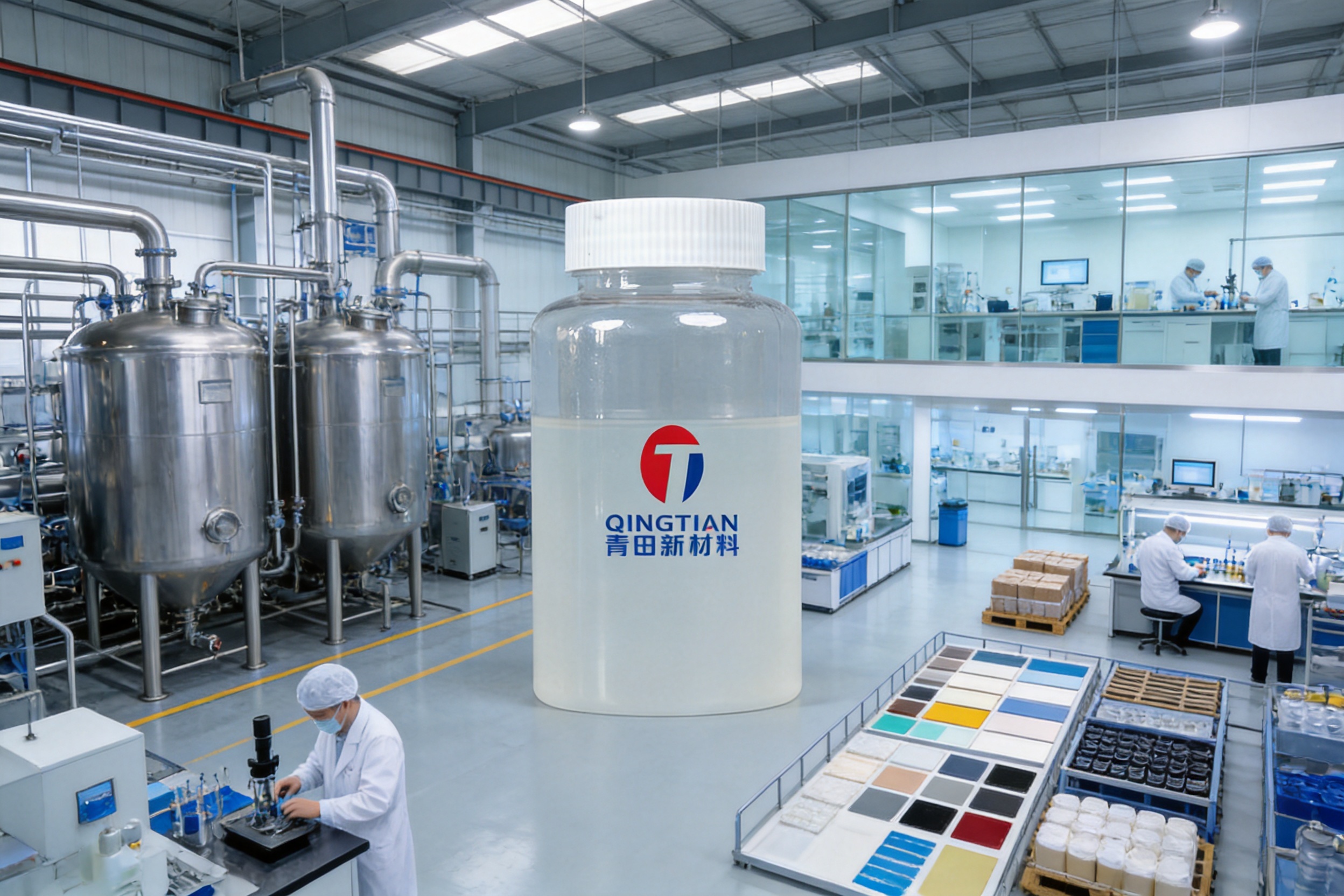
Industrial customers typically evaluate an additive supplier according to several criteria: product consistency, technical performance, application support, communication, delivery capability, and long-term reliability. A technically effective product can create difficulties if documentation, batch consistency, or support is inadequate.
Suzhou Qingtian New Material Co., Ltd. emphasizes innovation, quality, service, and win-win cooperation. Its business focuses on providing reliable solutions for coatings, inks, adhesives, and other specialized applications. This service orientation is useful when customers need support with product selection, formulation trials, performance troubleshooting, or alternative additive strategies.
For DH-7216S, technical cooperation may involve selecting an appropriate dosage range, determining the preferred addition method, comparing it with existing thickeners, and evaluating the effect on viscosity, gloss, dispersion, and storage. A structured communication process can reduce trial-and-error development and help customers reach production targets more efficiently.
Water-based coatings are increasingly used because they can help reduce reliance on organic solvents and support lower-emission formulation strategies. However, the move toward waterborne systems creates new technical requirements. A water-based product must be stable, processable, attractive, and durable under actual application conditions.
Rheology modifiers such as DH-7216S play an important role in making water-based systems practical. By improving viscosity control, thixotropy, and pigment dispersion, the product can help formulators develop coatings that are easier to apply and more stable during storage. Its non-ionic character may also provide flexibility when designing formulations with different pH and additive requirements.
Sustainability should be assessed across the complete formulation and production process. Important considerations may include raw material sourcing, manufacturing efficiency, packaging, transport, product dosage, coating service life, and end-use requirements. DH-7216S can contribute to water-based formulation development, but the overall environmental profile depends on the full system.
If the coating shows insufficient viscosity, the formulator should first verify the dosage, addition sequence, dispersion quality, and compatibility with the binder and other additives. Temperature and storage history should also be checked because they can affect viscosity measurements.
If the coating is difficult to apply, the system may have excessive low-shear structure or an unsuitable shear-response profile. The thickener level, pigment volume concentration, solvent balance, and application method should be reviewed. A reduction in thickener dosage or adjustment of complementary additives may improve flow.
If sagging occurs, the formulator should evaluate low-shear viscosity, thixotropic recovery, film thickness, substrate orientation, and application rate. A coating that is adequately viscous in a container may still require better structural recovery after application.
If pigment settling occurs, the complete dispersion process should be examined. The issue may be related to pigment wetting, particle size, density difference, dispersant selection, or insufficient low-shear structure. DH-7216S may assist the system, but it should be used together with an appropriate pigment dispersion strategy.
If gloss is lower than expected, the formulator should inspect leveling, foam, surface roughness, pigment dispersion, film formation, and substrate preparation. Since DH-7216S is designed not to impact coating film gloss, a gloss reduction should not automatically be attributed to the thickener. The complete formulation and application process must be investigated.
DH-7216S is a polyurethane associative thickener designed for water-based coatings and suitable for consideration in adhesives and other aqueous systems.
Its primary functions are to increase viscosity and improve thixotropy. It also provides strong pseudoplasticity at low shear and assists with pigment wetting and dispersion.
Strong pseudoplasticity means that the coating can become less viscous when subjected to shear, such as during brushing, rolling, pumping, or spraying. When the shear is reduced, the coating can regain structure and become more resistant to sagging or separation.
It can be considered for vertical applications because its low-shear viscosity and thixotropic behavior may help control sagging and wet-film movement. The final result depends on dosage, film thickness, substrate, and the complete formulation.
Yes. The product is described as having excellent dispersing performance and assisting in pigment wetting and dispersion. It should still be evaluated alongside the formulation’s dedicated dispersant and processing conditions.
It is a non-ionic thickener and is described as being unaffected by the pH value of the system. This can provide greater formulation flexibility than strongly pH-dependent thickener technologies, although compatibility testing remains recommended.
The product is described as having no impact on coating film gloss. Gloss should nevertheless be measured in the complete formulation because binder selection, pigment dispersion, leveling, film formation, and application conditions also influence the final surface.
DH-7216S assists pigment wetting and dispersion, but it should not automatically be considered a universal replacement for a dedicated pigment dispersant. The appropriate additive package depends on pigment type, resin chemistry, loading, and performance requirements.
The dosage should be established through laboratory testing in the intended formulation. Several levels should be compared for viscosity, application behavior, thixotropic recovery, storage stability, dispersion, gloss, and leveling.
The supplier has operated since 2012 and maintains an experienced R&D and sales team, a modern production facility, advanced testing equipment, and research capabilities. Its product portfolio covers multiple coating, ink, and adhesive additive categories, supporting integrated technical cooperation.
Potential users include manufacturers of water-based coatings, industrial finishes, architectural coatings, protective coatings, wood coatings, metal coatings, printing inks, and water-based adhesives. Suitability should be confirmed through application testing.
Customers should evaluate viscosity at different shear rates, thixotropic recovery, pigment dispersion, storage stability, sag resistance, leveling, gloss, compatibility, application feel, and batch-to-batch consistency in the target formulation.
DH-7216S Water-based Thickener is designed to address the complex rheology requirements of modern water-based coatings and adhesives. Its polyurethane associative structure provides high viscosity and strong pseudoplasticity at low shear, while its thixotropic behavior supports application control and film stability.
The product also offers a broader functional profile through assistance with pigment wetting and dispersion. Its non-ionic character provides reduced dependence on system pH, and its stated lack of impact on coating film gloss makes it suitable for formulations where appearance is a critical requirement.
Compared with less balanced thickening approaches, DH-7216S can help formulators pursue a more effective compromise between storage stability, application ease, anti-sag performance, pigment distribution, and surface quality. Its final performance should always be confirmed through testing in the complete formulation, but the product profile makes it a strong candidate for demanding water-based systems.
The manufacturing and technical capabilities of Suzhou Qingtian New Material Co., Ltd. further support the product’s industrial value. Since 2012, the company has developed expertise in coating, ink, and adhesive raw materials, supported by R&D personnel, advanced testing equipment, modern manufacturing resources, and a broad additive portfolio. Its innovation milestones, high-tech enterprise recognition, and expanded production base demonstrate a continuing commitment to technical development and reliable supply.
For formulators seeking a water-based thickener that combines viscosity building, pseudoplasticity, thixotropy, pigment dispersion support, pH flexibility, and gloss preservation, DH-7216S provides a comprehensive option for laboratory evaluation and industrial application development.
1. Product information supplied for DH-7216S Water-based Thickener, including product functions and performance characteristics.
2. Company information supplied for Suzhou Qingtian New Material Co., Ltd., including business history, manufacturing resources, product portfolio, and development milestones.
3. General principles of rheology in water-based coatings, including low-shear viscosity, pseudoplasticity, thixotropy, and structural recovery.
4. General formulation principles for pigment wetting, pigment dispersion, storage stability, leveling, and coating film appearance.
5. General technical considerations for evaluating associative polyurethane thickeners in coatings and adhesives.
 Wholesale Paint/ Coating Additives Manufacturers
Custom Industrial Chemical Solutions Suppliers