русский
 Español
 Français
Home / Author / Qiao Minshu — Key Account After-Sales Consultant / AA-8318 Electroplating Silver Resin for High-Performance Metallic Coatings and Inks
Qiao Minshu — Key Account After-Sales Consultant

Content
AA-8318 Electroplating Silver Resin is a 100% solid ketone-acetal polymer developed for liquid electroplating silver coatings, aluminum powder paints, imitation electroplating silver finishes, and mirror silver inks. It is designed to help formulators obtain a more uniform metallic appearance while maintaining the practical balance of viscosity, pigment orientation, hiding power, hardness, adhesion-related performance, scratch resistance, and abrasion resistance required by modern coating and ink applications.
Metallic coatings are visually demanding products. A conventional coating may provide sufficient color coverage, but it can still fail to achieve the bright, smooth, reflective, and highly oriented appearance expected from an electroplating silver finish. The final appearance depends on more than the metallic pigment itself. Resin selection, solvent compatibility, pigment wetting, flow, pigment alignment, drying behavior, film hardness, and resistance to mechanical damage all influence the result.
AA-8318 addresses these formulation challenges through a specialized ketone-acetal polymer structure. The resin is supplied as a translucent, flaky solid with 100% active content and a solid heat resistance of approximately 210°C. When dissolved at the recommended solid content of 7–12%, it can be used to prepare a high-viscosity, low-solid-content liquid suitable for metallic coating and ink systems that require strong pigment orientation and a refined silver appearance.
The product is manufactured and supplied by Suzhou Qingtian New Material Co., Ltd., a Chinese specialty materials company serving coatings, inks, adhesives, and related industrial markets. The company combines product development, application knowledge, manufacturing capability, testing resources, and technical service to support customers seeking consistent coating performance and customized chemical solutions.
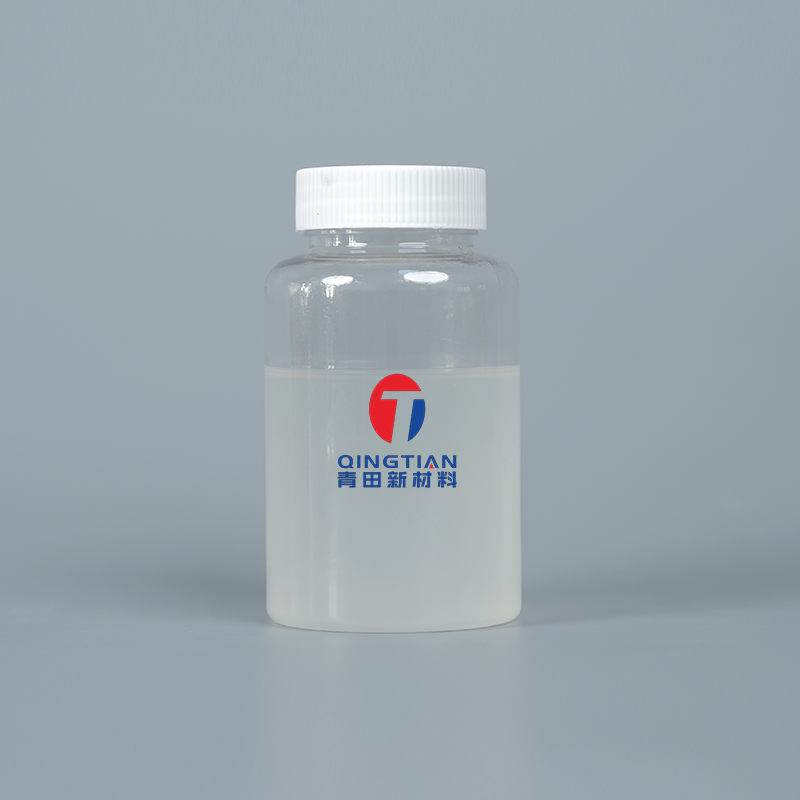
AA-8318 Electroplating Silver Resin
Electroplating silver coatings are formulated to imitate the visual effect of deposited metal while using a liquid coating process. They are commonly applied to plastic components, decorative parts, molded products, household articles, automotive trim, consumer goods, packaging materials, and other substrates where a reflective or chrome-like finish is required.
The term “electroplating silver” generally refers to the appearance rather than the actual electrochemical plating process. In a coating system, the metallic effect is created by highly reflective aluminum pigments or other metallic particles dispersed in a carefully selected resin and solvent system. The resin must allow the pigment particles to spread, orient, and settle into a visually continuous layer during application and drying.
If the pigment particles remain randomly distributed, the coating may appear gray, cloudy, dull, or uneven. If the particles are poorly wetted, the formulation may develop floating, flooding, flocculation, sedimentation, or surface defects. If the resin film is too soft, the surface can be easily scratched. If it is too brittle or incompatible with the substrate, the coating may crack or lose adhesion during handling.
For these reasons, an electroplating silver resin is not simply a binder used to hold pigment in place. It is a functional component that influences the entire appearance and durability profile of the coating. Its interaction with solvents and metallic pigments can determine whether the final coating has a bright silver appearance or an inconsistent, low-value visual effect.
AA-8318 is formulated specifically for this type of application. Its principal value lies in its ability to support aluminum pigment orientation while also contributing to the physical performance of the dried film. The resin helps formulators pursue a balance between visual brilliance and practical resistance properties without relying solely on a high concentration of resin solids.
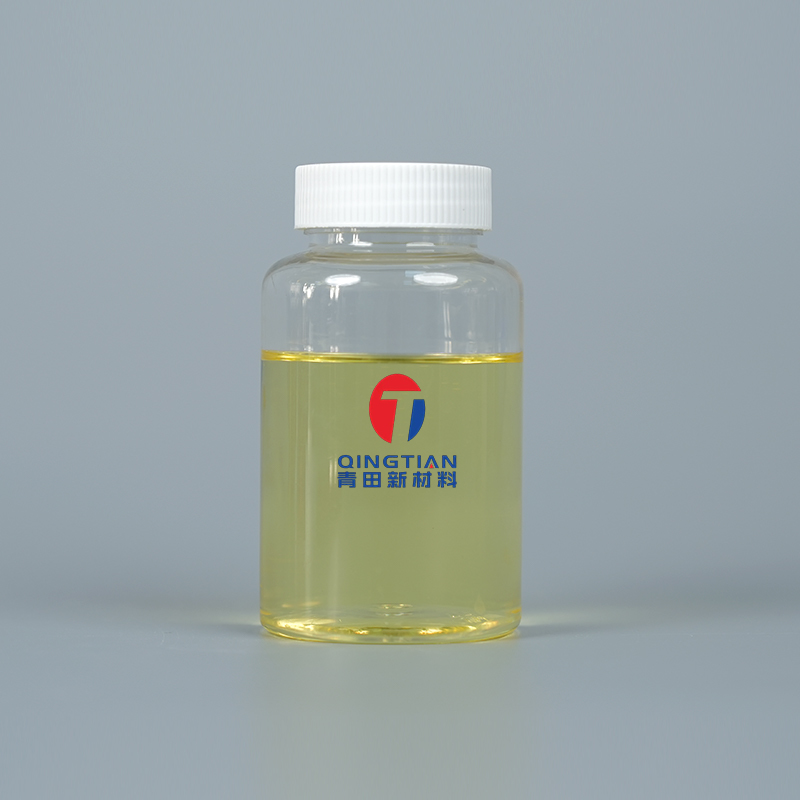
AA-8318 is a translucent, flaky, solid resin with 100% active content. Because the supplied material does not contain evaporative solvent, the user can select the solvent blend, working viscosity, drying rate, and application solid content according to the specific coating or ink system.
| Property | Typical Description | Formulation Significance |
|---|---|---|
| Product type | Electroplating silver resin | Designed for metallic coating and ink applications |
| Appearance | Translucent, flaky solid | Convenient for controlled addition into solvent systems |
| Active content | 100% | Supports flexible formulation and efficient transport |
| Chemical composition | Ketone-acetal polymer | Provides a specialized resin platform for metallic finishes |
| Solid heat resistance | Approximately 210°C | Useful for applications requiring elevated thermal stability |
| Recommended dissolution solid content | 7–12% | Helps create a high-viscosity, low-solid-content liquid |
| Recommended solvent families | Ketone, ester, and alcohol solvents | Offers flexibility in solvent selection and process design |
| Primary visual function | Aluminum pigment orientation | Improves brightness, whiteness, and metallic uniformity |
| Additional performance | Alcohol resistance, hardness, scratch resistance, and abrasion resistance | Supports more durable finished coatings and printed films |
The 100% active nature of AA-8318 is important for manufacturers who want to control the final composition accurately. A solvent-free resin can be dissolved at the required concentration instead of being restricted to a preselected carrier solvent. This can simplify inventory management and enable the formulator to adjust evaporation balance, application viscosity, drying time, and substrate compatibility.
The recommended dissolution range of 7–12% is also significant. A low resin solid content can help maintain the special visual characteristics of metallic coatings, where excessive binder may reduce brightness or interfere with the appearance of the pigment layer. At the same time, the resin must be present in sufficient quantity to provide cohesive strength and acceptable surface durability.
The product’s stated heat resistance of approximately 210°C for the solid resin provides an indication of its thermal stability. Actual performance will depend on the complete formulation, curing conditions, film thickness, substrate, and exposure time. Nevertheless, this property can be valuable in coating systems that experience elevated temperatures during processing, post-treatment, storage, or end use.
Aluminum pigments are thin, reflective particles. Their optical performance is strongest when they are arranged in a relatively parallel and uniform manner near the coating surface. This orientation allows incident light to reflect more consistently, producing a brighter and cleaner metallic appearance.
In an unoptimized system, aluminum particles can stand at different angles, form clusters, or become trapped in a poorly flowing resin layer. Such conditions scatter light and reduce the impression of brightness. The coating may then appear gray, hazy, coarse, or uneven even when the pigment itself is of high quality.
AA-8318 is designed to improve the orientation of silver and aluminum pigments. During application and drying, the resin helps support a coating environment in which pigment particles can move, spread, and settle into a more favorable arrangement. The result can be improved whiteness of aluminum powder, a more consistent metallic effect, and stronger visual similarity to an electroplated surface.
Orientation is influenced by multiple variables, including resin viscosity, solvent evaporation, surface tension, pigment concentration, application method, wet-film thickness, substrate energy, and drying conditions. A resin cannot eliminate the need for formulation optimization, but a resin specifically developed for metallic pigment orientation provides a stronger starting point than a general-purpose binder.
The orientation effect is especially useful in aluminum powder paints and imitation electroplating silver coatings. In these systems, the appearance of the finished film is often judged under multiple lighting conditions. A well-oriented pigment layer can show greater visual uniformity and a cleaner reflection across the coated surface.
In mirror silver inks, pigment arrangement is similarly important. Printed films must often deliver a bright reflective effect at a controlled film thickness. A resin that promotes pigment alignment may help improve the visual efficiency of the metallic pigment and reduce the need to compensate through excessive pigment loading.
The whitening effect described for AA-8318 relates to the visual improvement of aluminum powder. When aluminum particles are better aligned and more evenly distributed, the coating can display a cleaner silver-white appearance. This is particularly valuable in decorative finishes where grayness, yellowing, or visual cloudiness would reduce product quality.
Improved whiteness does not mean that the resin functions as a conventional white pigment. Instead, it helps the metallic pigment present its own reflective characteristics more effectively. The final color and brightness will still depend on the aluminum pigment grade, particle size, surface treatment, pigment concentration, solvent balance, film thickness, and substrate color.
AA-8318 can enhance the hiding power of metallic pigments. Better hiding means that the coating can cover or visually mask the underlying substrate more effectively at a given application thickness. In some cases, this may help reduce the quantity of pigment needed to achieve a target appearance, although the optimum dosage must be established through laboratory testing.
Improved hiding power is useful when the substrate has a contrasting color, minor surface variation, or a previous coating layer that must be concealed. It can also support more consistent production because small changes in film thickness may have a less dramatic effect on visual coverage when the metallic layer is well organized.
Many conventional coating resins can bind aluminum pigments, but binding capability alone does not guarantee an electroplating silver appearance. A general-purpose resin may be selected for hardness, adhesion, chemical resistance, or cost, while pigment orientation and mirror-like appearance receive less attention. Such a resin may therefore require significant formulation modification to achieve a bright metallic effect.
AA-8318 has a more focused design objective. It is intended for metallic systems in which pigment alignment, silver brightness, and visual uniformity are central performance requirements. This specialized positioning provides several potential advantages over a nonspecialized binder.
First, it is designed to promote aluminum pigment orientation. This can help formulators obtain a more organized metallic layer and a cleaner surface appearance. Second, it can improve the apparent whiteness and hiding power of aluminum powder. Third, the product provides a combination of high-viscosity, low-solid-content solution behavior and useful film properties. Fourth, its solvent compatibility with ketones, esters, and alcohols allows it to be incorporated into a range of solventborne formulation strategies.
A further advantage is the balance between optical performance and film durability. Some highly specialized metallic effect systems can produce strong brightness but lack sufficient hardness or scratch resistance. AA-8318 is described as offering good hardness, scratch resistance, and abrasion resistance, helping address the practical needs of finished parts and printed products that must withstand handling and routine use.
Alcohol resistance can also be important. Alcohols may be present in cleaning agents, processing environments, packaging operations, or consumer handling conditions. A resin with good alcohol resistance can help reduce the risk of film softening, whitening, or loss of appearance when the coating is exposed to suitable alcohol-based challenges.
These advantages should be evaluated against the complete formulation and the requirements of the intended application. No resin is universally superior in every system. However, AA-8318 offers a targeted combination of metallic appearance enhancement and physical performance that can make it a practical alternative to ordinary binders in electroplating silver applications.
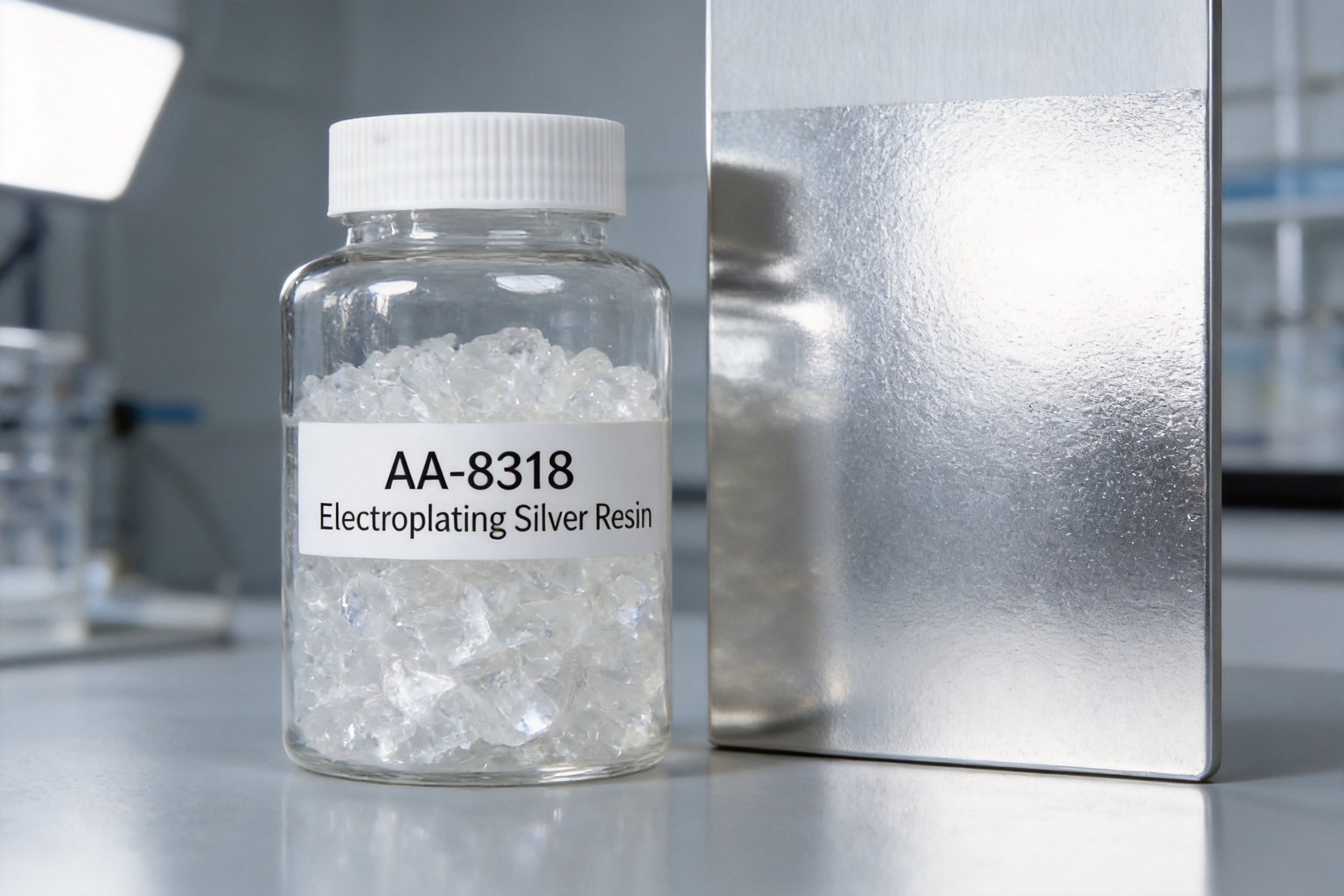
AA-8318 is described as soluble in ketone, ester, and alcohol solvents. Benzene, ether, and aromatic solvents are identified as poor solvents. The solvent selection should therefore begin with compatible solvent families and be confirmed through laboratory dissolution and stability testing.
Ketone solvents may provide strong solvency and fast to moderate evaporation, depending on the selected material. Ester solvents can help adjust evaporation rate, flow, leveling, and application behavior. Alcohol solvents may be useful when the broader formulation requires alcohol compatibility or when specific drying and solvency characteristics are needed. Mixed-solvent systems can be used to balance dissolution strength, open time, drying speed, and substrate wetting.
The recommended preparation method is to gradually add the flaky resin into the solvent while stirring at high speed. Slow addition is important because it allows the solvent to wet individual flakes and reduces the risk of forming large agglomerates. High-speed agitation helps distribute the resin and accelerate dissolution.
Operators should avoid adding the entire quantity of resin rapidly into a small volume of solvent. Such an approach can produce localized high concentrations, swollen resin masses, or incompletely dissolved particles that require extended mixing. Controlled addition generally provides a more stable and repeatable preparation process.
A typical dissolution procedure may include the following stages:
1. Confirm that the mixing vessel, impeller, transfer equipment, and storage container are clean and dry.
2. Charge the selected solvent or initial solvent blend into the vessel.
3. Begin agitation at a suitable high speed while maintaining safe operating conditions.
4. Add AA-8318 gradually and evenly to the vortex or high-shear mixing zone.
5. Continue mixing until the flakes are fully dissolved and the solution is visually uniform.
6. Allow the solution to stand or circulate as needed to release entrained air.
7. Check appearance, viscosity, solid content, and storage stability before incorporating the solution into the final coating or ink.
8. Filter the dissolved resin solution when appropriate for the application and equipment requirements.
The recommended dissolution solid content is 7–12%. The exact concentration can be selected according to the desired viscosity, pigment level, application method, and final film performance. A lower concentration may support a thinner, more appearance-oriented coating, while a higher concentration may provide greater binder contribution and viscosity. The correct point must be determined through practical trials.
Temperature control may also be relevant. Moderate warming can sometimes accelerate dissolution, but the chosen temperature should be compatible with the solvent flash point, equipment safety requirements, and product stability. Because solventborne systems can create flammable vapor, all preparation must be conducted with suitable ventilation, grounding, ignition-source control, and personal protective equipment.
AA-8318 is a specialized resin, but its final performance depends on the overall formulation architecture. A successful metallic coating normally requires coordination among resin concentration, aluminum pigment type, pigment loading, solvent blend, wetting behavior, application viscosity, drying profile, and substrate preparation.
The recommended 7–12% dissolution range provides a practical starting point. The formulator should prepare several concentrations within this range and evaluate solution clarity, viscosity, pigment compatibility, spray or print behavior, final gloss, metallic brightness, and resistance properties.
Too little resin may result in inadequate cohesion, weak film formation, poor pigment anchoring, or reduced resistance. Too much resin may bury the metallic pigment, reduce reflectivity, alter the surface profile, or create an appearance that is less similar to electroplated metal. The optimum level is therefore a balance between optical exposure and mechanical integrity.
Aluminum pigments vary in particle size, shape, surface treatment, brightness, leafing behavior, non-leafing behavior, and compatibility with solventborne systems. AA-8318 can be evaluated with the pigment grade selected for the target finish. Fine pigments may provide a smoother appearance, while different particle distributions may be chosen for a particular sparkle or reflectivity.
The pigment supplier’s recommendations should be reviewed before use. Pigment surface treatments can influence dispersion, orientation, storage stability, and compatibility with the resin solution. The resin and pigment should be tested together rather than judged independently.
The solvent blend controls more than dissolution. It also affects atomization, wetting, flow, leveling, drying speed, film formation, and pigment orientation. A solvent system that evaporates too quickly may freeze the pigment in a disordered arrangement. A system that evaporates too slowly may cause sagging, extended dust attraction, or poor production speed.
A balanced blend may include a strong solvent for resin dissolution, a medium-evaporation solvent for flow, and a slower solvent for leveling and orientation. The final choice must account for the application method and production environment. Temperature, humidity, ventilation, and coating line speed can all affect the result.
AA-8318 may be considered for spray coatings, decorative metallic coatings, and mirror silver ink systems. Spray application requires attention to atomization, nozzle selection, spray distance, overlap, flash time, and wet-film thickness. Printing applications require attention to ink viscosity, screen or gravure conditions, transfer behavior, drying, and substrate surface energy.
The resin solution should be evaluated using the same equipment and process conditions used in production. A formulation that performs well in a laboratory drawdown may behave differently during spraying or printing because of differences in shear, evaporation, film thickness, and drying airflow.
Substrate cleanliness is essential. Oils, mold-release agents, dust, moisture, and incompatible previous coatings can interfere with wetting and adhesion. Plastic substrates may require cleaning, surface treatment, primer application, or other preparation steps depending on the polymer type and end-use requirements.
AA-8318 contributes to the coating formulation, but substrate adhesion is a system property. Testing should include the exact substrate, pretreatment, primer, coating thickness, drying schedule, and environmental exposure expected in production.
The primary benefit of AA-8318 is the improvement of metallic appearance. The resin supports aluminum pigment orientation and can help create a bright, uniform, electroplating-like surface. This visual advantage can be important in markets where consumers compare coated products directly with more expensive plated components.
The product can also contribute to enhanced pigment hiding power. This may help create a more uniform finish over the substrate and reduce visible variation caused by minor differences in application thickness. Better hiding may be particularly useful for complex parts, decorative panels, and printed designs that require consistent coverage.
Hardness is another stated advantage. A harder film can help maintain surface integrity during handling, assembly, packaging, and service. Hardness should be balanced with flexibility because excessive hardness without sufficient flexibility can produce cracking or chipping when the substrate bends or experiences impact.
Scratch resistance helps preserve the metallic appearance. Silver finishes can show damage clearly because scratches disrupt the reflection and create visible contrast. A resin that supports scratch-resistant film formation can therefore improve the retained appearance of coated parts during transportation and use.
Abrasion resistance is valuable for products exposed to rubbing, contact, or repeated handling. Examples may include decorative components, consumer product housings, trim parts, printed surfaces, and industrial labels. Actual abrasion performance depends on coating thickness, curing or drying, pigment type, substrate, and test method.
Good alcohol resistance provides an additional durability benefit. The coating may be exposed to alcohol-containing cleaning solutions or handling environments. The resistance level should be confirmed with the exact alcohol type, concentration, contact time, temperature, and mechanical action relevant to the application.
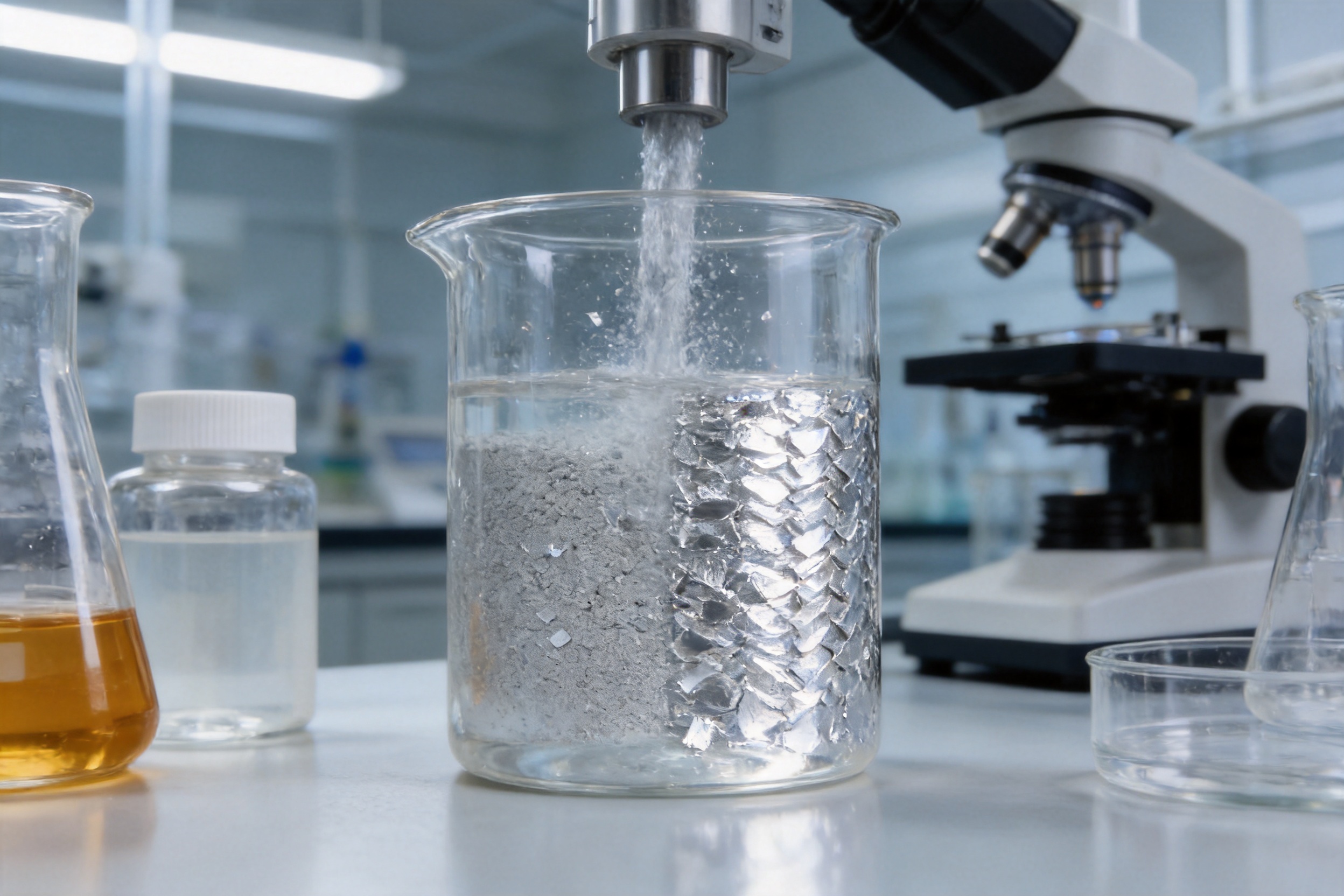
Aluminum powder paints are used when a bright metallic appearance is required without actual metal plating. AA-8318 can help orient the aluminum pigment and improve the visual whiteness and hiding power of the coating. It can be evaluated in decorative and industrial applications where the surface needs to combine a metallic effect with practical scratch and abrasion resistance.
Imitation electroplating silver coatings are used on substrates that are difficult, expensive, or impractical to electroplate. Plastic components are an important example, but the approach can also be applied to selected composite, ceramic, wood, or previously coated substrates when suitable preparation and adhesion systems are used.
The objective is usually a smooth, reflective, silver-white appearance. AA-8318 is suited to this objective because its formulation role is directly connected to aluminum pigment orientation and electroplating silver effects.
Mirror silver inks require a controlled combination of reflectivity, film formation, printability, and resistance. The metallic pigment must be distributed in a way that maximizes the reflective effect, while the binder must provide enough cohesion for the printed layer to remain intact.
AA-8318 can be evaluated in mirror silver ink systems where a high-visibility silver effect is required. The formulator should optimize ink viscosity, solvent evaporation, printing speed, drying conditions, substrate treatment, and any overprint or protective layer used after printing.
Potential end uses include decorative panels, household articles, consumer product parts, display components, packaging details, automotive-style trim, and other products where a reflective metallic appearance creates perceived value. The final suitability depends on regulatory requirements, substrate compatibility, mechanical testing, and environmental exposure.
Suzhou Qingtian New Material Co., Ltd. specializes in raw materials for coatings, inks, and adhesives. Its product portfolio includes dispersants, leveling agents, defoamers, adhesion promoters, anti-settling agents, cooling agents, conductive agents, orange peel texture agents, texture powders, and wax powders. This broad product range gives the company experience across multiple formulation functions rather than a narrow focus on one additive category.
Such portfolio breadth is valuable when developing metallic coating systems. Metallic appearance depends on the interaction of several formulation components. A supplier familiar with dispersing, leveling, defoaming, adhesion, anti-settling, and surface modification can better understand the broader technical environment in which an electroplating silver resin is used.
The company was founded in 2012 and has built a team that includes research and development specialists, sales professionals, and technical personnel. Its development history includes the creation of a China-made ice flower resin in 2016, recognition as a National High-Tech Enterprise in 2020, and relocation to Lingrui Intelligent Manufacturing Park in Zhangjiagang High-Tech Zone in 2021.
These milestones indicate a continuing investment in product development, manufacturing organization, and technical capability. The company also operates with advanced testing equipment and research resources. In specialty chemical manufacturing, testing capability is essential because the value of a resin is determined not only by its chemical identity but also by its consistency, dissolution behavior, compatibility, and performance in realistic formulations.
For AA-8318, manufacturing strength should be understood as a combination of raw material control, process control, mixing and dissolution expertise, quality inspection, packaging discipline, and application support. A metallic coating resin must be consistent from batch to batch because small changes in molecular characteristics, solid content, solvent compatibility, or physical form can influence viscosity and pigment orientation.
Modern specialty material production also requires controlled documentation and traceability. Batch identification, inspection records, sample retention, production records, and customer feedback help manufacturers monitor product quality and respond efficiently to technical questions. These practices support more reliable integration of the resin into industrial coating and ink production.
The company’s focus on coatings, inks, and adhesives provides a foundation for application-oriented research. Rather than treating the resin as an isolated chemical product, an application-oriented manufacturer can evaluate how it behaves with pigments, solvents, substrates, additives, and production processes.
This approach is particularly important for electroplating silver systems. A resin that performs well in one pigment and solvent combination may require adjustment in another. Research capability helps identify the operating window and provides customers with practical guidance on dissolution, dosage, mixing, and application.
Relevant quality evaluations for AA-8318 may include appearance inspection, active-content verification, dissolution behavior, solution clarity, viscosity, storage stability, heat-resistance assessment, and compatibility testing. Finished coating evaluations may include metallic brightness, whiteness, hiding power, hardness, scratch resistance, abrasion resistance, and alcohol resistance.
The exact test methods should be agreed upon according to the customer’s industry and application. A decorative coating manufacturer may prioritize visual uniformity and gloss, while an industrial component producer may place greater emphasis on abrasion, chemical resistance, and process stability.
Specialty resins often require technical communication during introduction. Customers may need guidance on solvent selection, dissolution order, recommended solid content, pigment compatibility, viscosity adjustment, and application conditions. Suzhou Qingtian New Material Co., Ltd. positions itself as a provider of chemical solutions rather than only a material seller, supporting customers in coatings, inks, and adhesive applications.
This service orientation can reduce development time and help customers avoid common formulation errors. It can also support customization when a standard product must be evaluated against a particular substrate, pigment, solvent system, or production process.
Consistency is a central consideration when selecting an electroplating silver resin. Metallic coatings are highly sensitive to changes in viscosity, drying, pigment distribution, and film thickness. A stable resin supply helps reduce variation during production and makes it easier to maintain a defined color and appearance standard.
Process control begins with raw material selection. The inputs used to produce the ketone-acetal polymer should be managed according to established specifications. Manufacturing conditions, reaction progress, mixing behavior, filtration, drying, and solid-state handling can all influence the final resin.
Physical form is also relevant. AA-8318 is supplied as a translucent, flaky solid. Consistent flake size and moisture control can support predictable charging and dissolution. Packaging should protect the product from contamination and unsuitable environmental exposure during storage and transportation.
At the customer’s facility, the resin should be stored in a dry, well-ventilated area according to the supplier’s safety and storage guidance. Containers should remain closed when not in use. Before production, the user should verify the batch number, appearance, and any applicable certificate or technical documentation.
Small-scale compatibility testing is recommended before full production. The customer can prepare a resin solution at several concentrations, incorporate the selected aluminum pigment, and compare appearance and physical properties after drying. This approach provides information about the best concentration and solvent blend while limiting material risk.
A structured development workflow can help customers obtain the best results from AA-8318.
Step one is to define the required appearance. The target may be bright silver, mirror silver, white aluminum, chrome-like reflection, or a more subdued metallic effect. Evaluation should be performed under consistent lighting and viewing conditions.
Step two is to select the substrate and establish the required pretreatment. The substrate’s surface energy, porosity, flexibility, heat resistance, and chemical sensitivity should be documented.
Step three is to prepare AA-8318 solutions at different solid contents within the recommended 7–12% range. Each solution should be checked for clarity, viscosity, storage stability, and dissolution completeness.
Step four is to select the aluminum pigment and prepare several pigment-to-resin ratios. The samples should be mixed carefully to avoid unnecessary damage to the pigment particles.
Step five is to optimize the solvent blend. The evaluation should consider atomization, flow, leveling, drying time, film appearance, and pigment orientation.
Step six is to apply the samples using the intended production method. Laboratory drawdowns, spray panels, or printed test pieces should be prepared at controlled film thicknesses.
Step seven is to evaluate optical properties, including brightness, whiteness, uniformity, hiding power, gloss, reflection, and visual defects.
Step eight is to evaluate practical durability, including hardness, scratch resistance, abrasion resistance, alcohol resistance, adhesion, and thermal exposure where relevant.
Step nine is to conduct storage stability and process repeatability trials. The formulation should be observed over time for sedimentation, viscosity drift, separation, flocculation, or changes in metallic appearance.
Step ten is to confirm the final formulation through pilot production before commercial scale-up. Production equipment, mixing energy, line speed, drying capacity, and environmental conditions should match the intended manufacturing process as closely as possible.
AA-8318 is a solventborne coating resin when dissolved for use. The resin itself and the selected solvents should be handled according to the applicable safety data sheets and local regulations. Solvent selection determines flammability, vapor exposure, storage requirements, waste handling, and workplace controls.
High-speed mixing can generate heat and vapor. Mixing vessels should be suitably designed, grounded, and ventilated. Operators should use appropriate protective clothing, gloves, eye protection, and respiratory protection where required by the workplace risk assessment.
Because benzene, ether, and aromatic solvents are identified as poor solvents for AA-8318, they should not be selected merely to increase formulation complexity or evaporation speed. Solvent compatibility and worker safety should both be considered when designing the system.
The final coating or ink may be subject to additional regulations depending on the substrate, market, application, and end use. Customers should review volatile organic compound requirements, restricted substances, packaging regulations, workplace exposure limits, and product-specific compliance obligations before commercialization.
Technical data provided for the resin should be treated as a formulation guide rather than a guarantee of final coating performance. The user is responsible for confirming suitability through application testing and for ensuring that the final product complies with all applicable requirements.
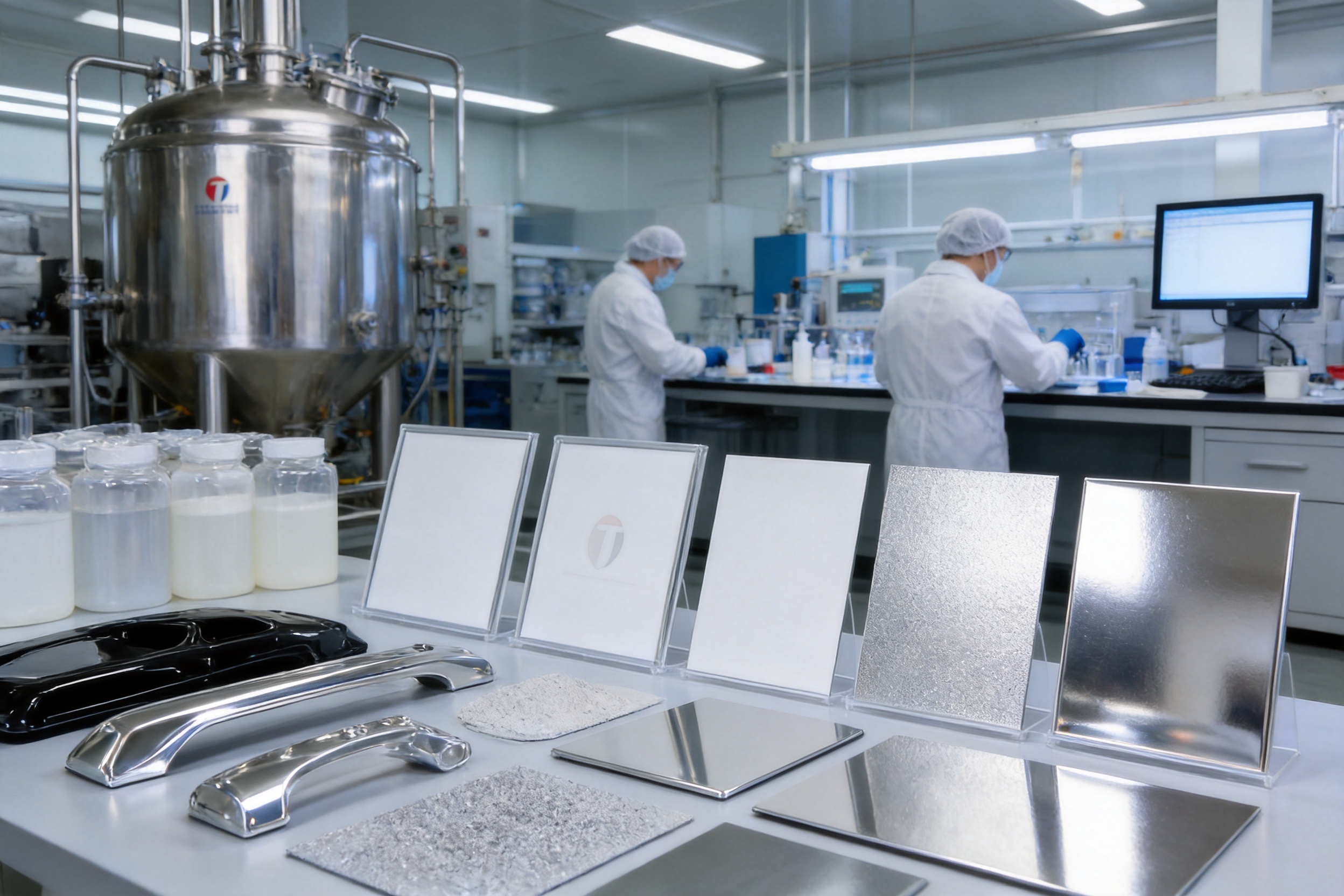
AA-8318 is a 100% solid ketone-acetal polymer supplied as a translucent, flaky solid. It is designed for solventborne electroplating silver coatings, aluminum powder paints, imitation electroplating silver finishes, and mirror silver inks.
Its main advantage is the ability to improve aluminum pigment orientation. This can help increase metallic brightness, whiteness, visual uniformity, and pigment hiding power while supporting useful hardness, scratch resistance, abrasion resistance, and alcohol resistance.
Ketone, ester, and alcohol solvents are described as good solvents for AA-8318. Benzene, ether, and aromatic solvents are described as poor solvents and should not be selected as the primary dissolution media without specific technical confirmation.
The recommended dissolution solid content is 7–12%. The best concentration depends on the desired viscosity, pigment loading, application method, film thickness, and final mechanical performance.
The resin should be added gradually into the selected solvent while stirring at high speed. Slow, controlled addition helps prevent agglomeration and supports more complete dissolution. The solution should be checked for uniformity before it is used in the final formulation.
Yes. The product is specifically described for aluminum powder paints and for improving the orientation and whiteness of aluminum pigment. Compatibility should still be confirmed with the exact aluminum pigment grade and solvent system selected by the customer.
It can be evaluated for mirror silver ink applications. The formulator should optimize ink viscosity, pigment concentration, solvent evaporation, printing conditions, drying, substrate treatment, and any protective overcoat used after printing.
Not necessarily. Primer requirements depend on the substrate, surface treatment, final durability target, and coating system. AA-8318 supports the metallic coating formulation, but adhesion must be verified on the actual substrate and under the intended service conditions.
The solid resin has a stated heat resistance of approximately 210°C. Final coating heat resistance depends on the complete formulation, film thickness, substrate, drying or curing conditions, exposure time, and test method.
A specialized metallic resin is developed with the optical behavior of metallic pigments in mind. AA-8318 is intended to support pigment orientation, whiteness, hiding power, and electroplating silver appearance while also contributing to film hardness and resistance properties.
Customers can discuss application requirements with Suzhou Qingtian New Material Co., Ltd. Product selection and formulation support may consider substrate type, pigment grade, solvent blend, application method, appearance target, and durability requirements.
Recommended evaluations include dissolution, viscosity, storage stability, pigment compatibility, brightness, whiteness, hiding power, film appearance, hardness, scratch resistance, abrasion resistance, alcohol resistance, adhesion, and thermal performance. Pilot-scale production should be completed before full commercialization.
Suzhou Qingtian New Material Co., Ltd. offers a combination of specialty product development, manufacturing resources, application knowledge, and technical service. Its focus on coatings, inks, adhesives, and functional additives gives it a broad understanding of the formulation challenges faced by industrial customers.
The company’s product portfolio covers multiple additive technologies, including dispersing agents, leveling agents, defoamers, adhesion promoters, anti-settling agents, texture additives, conductive agents, and wax powders. This allows customers to communicate with a supplier familiar with complete formulation systems rather than an isolated resin category.
Its development milestones demonstrate a long-term interest in specialty materials. The company’s research team, production facility, testing equipment, and high-tech enterprise recognition support its ability to develop and supply functional chemical products for demanding industries.
For customers evaluating AA-8318, supplier value includes more than the product specification. It also includes communication during trial work, assistance with dissolution, guidance on application variables, batch consistency, packaging, logistics coordination, and responsive technical support.
The company is located at No. 99, Chuigu Road, Tangqiao High-tech Zone, Zhangjiagang City, Suzhou, Jiangsu Province, China. Its commercial and technical teams serve domestic and international customers seeking coating, ink, adhesive, and industrial chemical solutions.
AA-8318 Electroplating Silver Resin is a specialized ketone-acetal polymer for metallic coating and ink applications. Its 100% solid content, translucent flaky form, approximately 210°C solid heat resistance, and compatibility with ketone, ester, and alcohol solvents provide a flexible platform for solventborne formulation development.
The product’s most important functional contribution is its ability to improve aluminum pigment orientation. Better orientation can support a brighter, whiter, more uniform metallic appearance and enhanced pigment hiding power. These properties are especially relevant to aluminum powder paints, imitation electroplating silver coatings, and mirror silver inks.
AA-8318 also offers a useful balance of optical and physical performance. Good alcohol resistance, hardness, scratch resistance, and abrasion resistance can help finished coatings and printed films retain their appearance during handling and service. The recommended 7–12% dissolution range gives formulators a practical starting point for adjusting viscosity, pigment exposure, film strength, and application behavior.
The product is supported by Suzhou Qingtian New Material Co., Ltd., a specialty materials manufacturer with experience in coatings, inks, adhesives, and functional additives. The company’s research resources, testing capabilities, manufacturing organization, broad portfolio, and application-oriented service provide a strong foundation for customers developing metallic coating systems.
As with all specialty resins, the best results depend on complete formulation optimization. Solvent selection, pigment grade, concentration, substrate preparation, application method, film thickness, and drying conditions must be evaluated together. When these variables are properly controlled, AA-8318 can help manufacturers create attractive, durable, and commercially valuable electroplating silver effects.
1. Product technical information for AA-8318 Electroplating Silver Resin, including appearance, active content, composition, heat resistance, solvent compatibility, and recommended dissolution solid content.
2. General principles of metallic pigment orientation in solventborne coatings and decorative ink systems.
3. Technical guidance on aluminum pigment handling, dispersion, leafing behavior, and reflective film formation.
4. General coating evaluation practices for hardness, scratch resistance, abrasion resistance, alcohol resistance, adhesion, hiding power, and thermal stability.
5. Company profile and manufacturing information supplied by Suzhou Qingtian New Material Co., Ltd.
 Wholesale Paint/ Coating Additives Manufacturers
Custom Industrial Chemical Solutions Suppliers