


 русский
 Español
 Français
Home / Author / Wei Lanqing — Regional Product Sales Manager / DH-4210 Silicone Leveling Agent: Cross-Linkable Surface Control for Advanced Coating, Ink, and Adhesive Systems
Wei Lanqing — Regional Product Sales Manager

Content
Modern coatings, printing inks, and adhesive systems are expected to deliver more than basic film formation and color coverage. They must spread evenly, wet difficult substrates, resist surface defects, support rapid curing, provide a smooth appearance, and remain suitable for subsequent coating, printing, or bonding operations. At the same time, formulators are under pressure to improve production efficiency, reduce defects, simplify formulation, and maintain consistent performance across different application conditions.
Surface additives play a central role in meeting these requirements. A small quantity of a properly selected leveling agent can influence surface tension, flow, wetting, slip, deaeration, gloss, scratch resistance, and recoatability. However, not all additives provide the same level of performance. Conventional physically blended additives may migrate, create compatibility problems, reduce intercoat adhesion, or lose effectiveness during curing. These limitations are especially important in radiation-cured coatings, where fast polymerization and demanding surface requirements can expose weaknesses in additive design.
DH-4210 Silicone Leveling Agent is developed to address these challenges. It is a cross-linkable polysiloxane acrylate designed particularly for radiation-cured systems. The product combines the surface-control characteristics of silicone chemistry with reactive functionality that can participate in the curing network. Its hydroxyl groups and ethylenic bonds enable interaction and cross-linking with various acrylic and polyurethane components, giving it advantages over additives that remain only physically blended into the coating film.
DH-4210 is designed to provide excellent leveling, substrate wetting, deaeration, and lubrication while also improving surface scratch resistance. It offers high compatibility, a low probability of turbidity, good recoatability, and good overprintability. These combined properties make it suitable for formulators seeking a multifunctional solution rather than a product that addresses only one isolated surface problem.
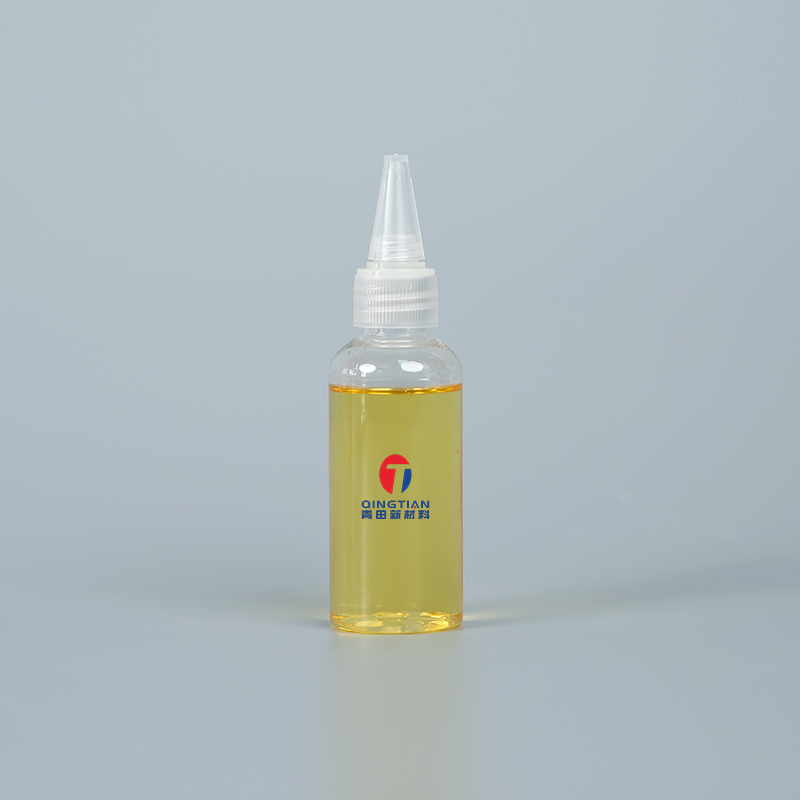
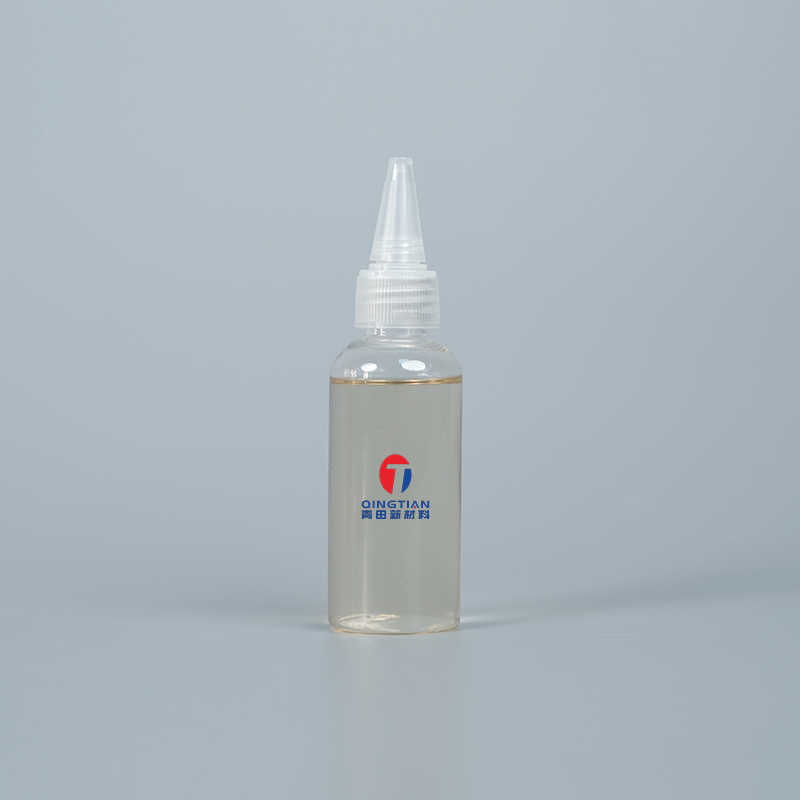
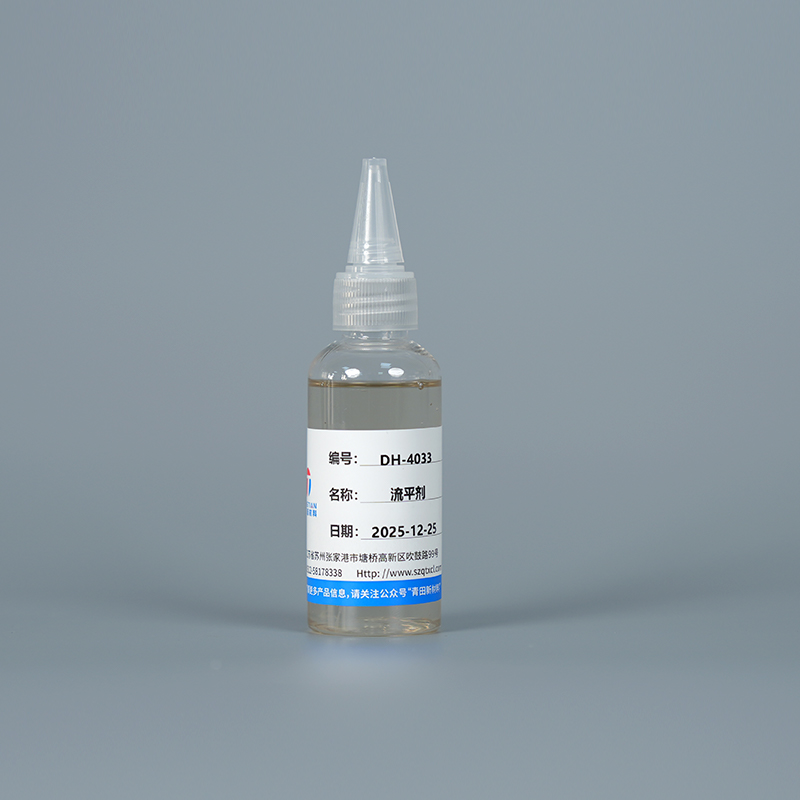
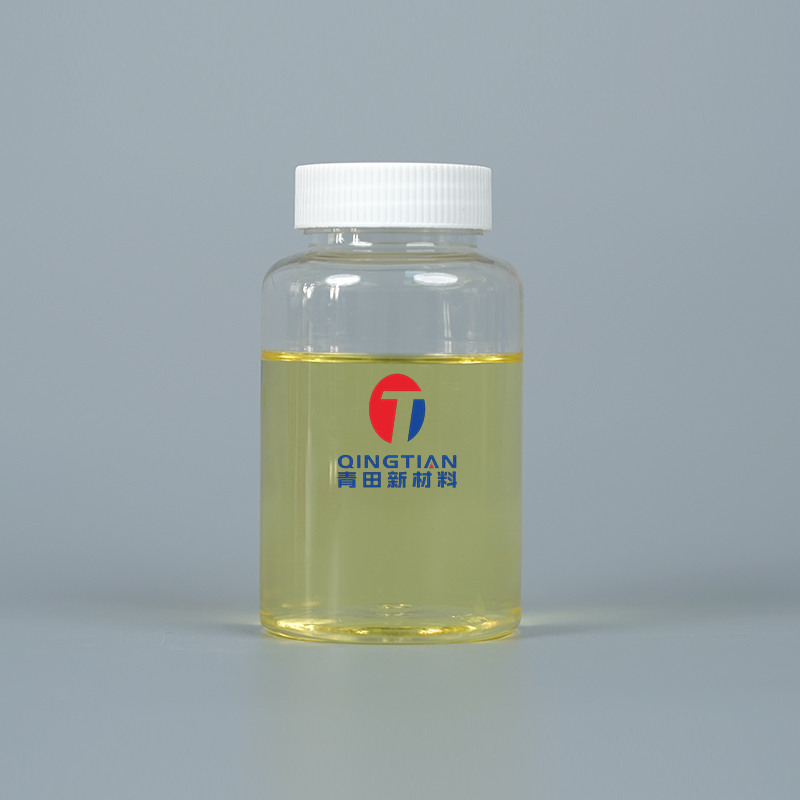
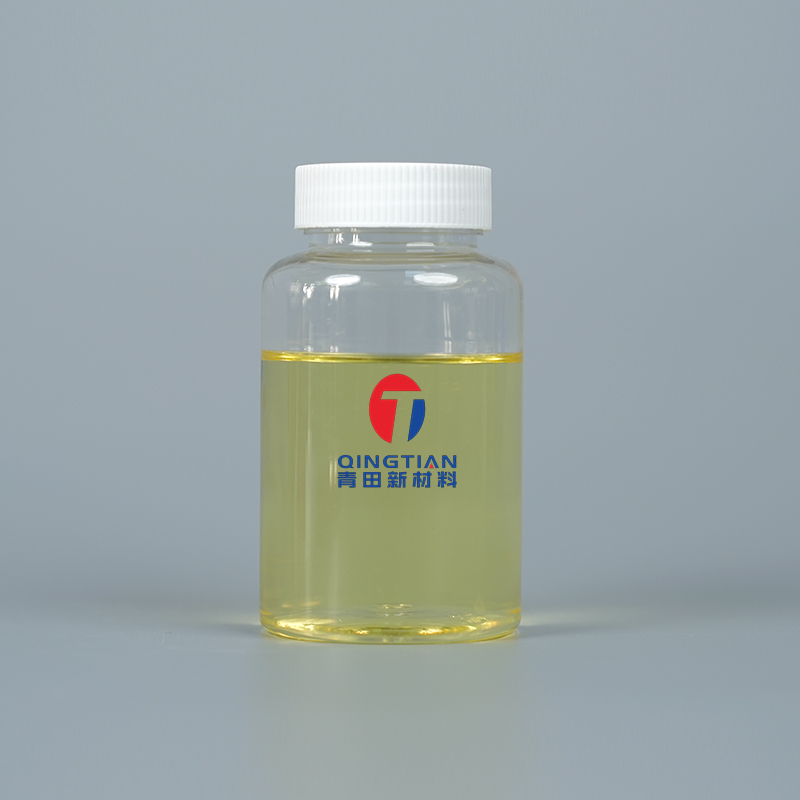
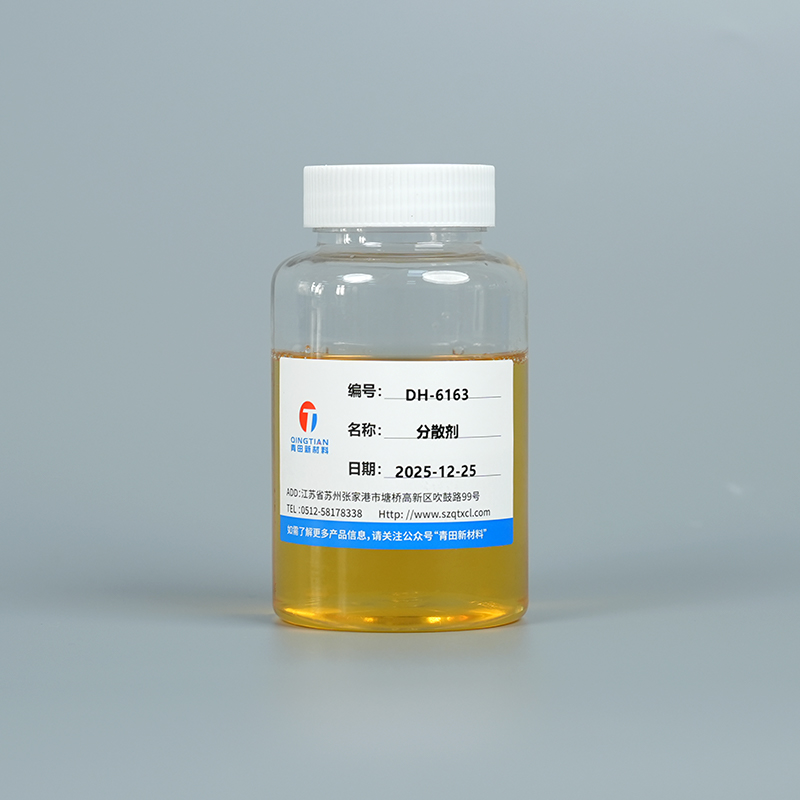
DH-4210 Silicone Leveling Agent
A coating or ink film begins to develop as soon as the liquid formulation contacts a substrate. At this stage, the formulation must spread across the surface, displace air, penetrate or anchor to the substrate where appropriate, and begin forming a uniform layer. If surface tension is poorly balanced, the liquid may retract, form craters, produce pinholes, create uneven gloss, or fail to cover microscopic surface irregularities.
During drying or curing, additional stresses develop. Solvent evaporation, water release, polymerization shrinkage, temperature changes, and differences in surface energy can all disturb the wet film. Pigments and fillers may affect flow, while the substrate may introduce contamination or localized differences in wetting. In radiation-cured systems, the formulation may cure rapidly, leaving limited time for defects to disappear before the film becomes fixed.
A leveling agent helps manage these surface and flow effects by influencing the interfacial behavior of the formulation. It can reduce localized surface-tension differences, promote more uniform spreading, and support the redistribution of material before the film is fully cured. The best product must accomplish this without causing excessive surface migration, intercoat adhesion loss, turbidity, recoatability problems, or printing defects.
For this reason, surface additives are not selected only by their ability to make a coating appear smooth. A commercially useful leveling agent must also be compatible with the resin system, pigment package, curing method, application equipment, and downstream process. It should provide consistent results at a practical dosage and remain effective under the intended production conditions.
Typical defects associated with poor surface control include craters, fish eyes, orange peel, pinholes, bubbles, foam marks, uneven gloss, poor substrate wetting, roughness, and localized shrinkage. Some defects originate during application, while others appear during drying or curing. In many cases, more than one mechanism is involved.
For example, poor deaeration may leave microbubbles in the wet film. If those bubbles cannot escape before curing, they may form pinholes or surface voids. Poor leveling can leave application marks and differences in film thickness. Inadequate wetting may produce discontinuous coverage, especially on low-energy plastic or previously coated substrates. Excessive surface activity, on the other hand, can encourage intercoat adhesion problems or interfere with overprinting.
DH-4210 is designed as a multifunctional surface additive that addresses several of these requirements together. Its stated functions include deaeration, leveling, lubrication, and substrate wetting. The combination is particularly valuable when a formulator wants to reduce the number of separate additives in a formulation and maintain better control over additive interactions.
Radiation-cured coatings and inks are cured by ultraviolet light, electron beam energy, or related radiation-based processes. These systems are valued for rapid curing, high production speed, efficient space utilization, and the ability to form durable films in a short period. They are used in applications such as wood coatings, plastic coatings, industrial finishes, printing inks, and specialty surface treatments.
The rapid curing speed that makes radiation curing attractive also increases the importance of wet-film behavior. The formulation may have only a short time to level, release entrapped air, wet the substrate, and eliminate application irregularities. A conventional additive that performs adequately in a slower-drying system may not provide the same results when the film is exposed to immediate radiation curing.
Radiation-cured systems can also be sensitive to surface inhibition, additive migration, cure balance, and compatibility with reactive oligomers and monomers. A surface additive that remains entirely separate from the polymer network may behave differently from one that can become incorporated into the cured film. DH-4210 is designed with cross-linkable functionality to support the requirements of these demanding systems.
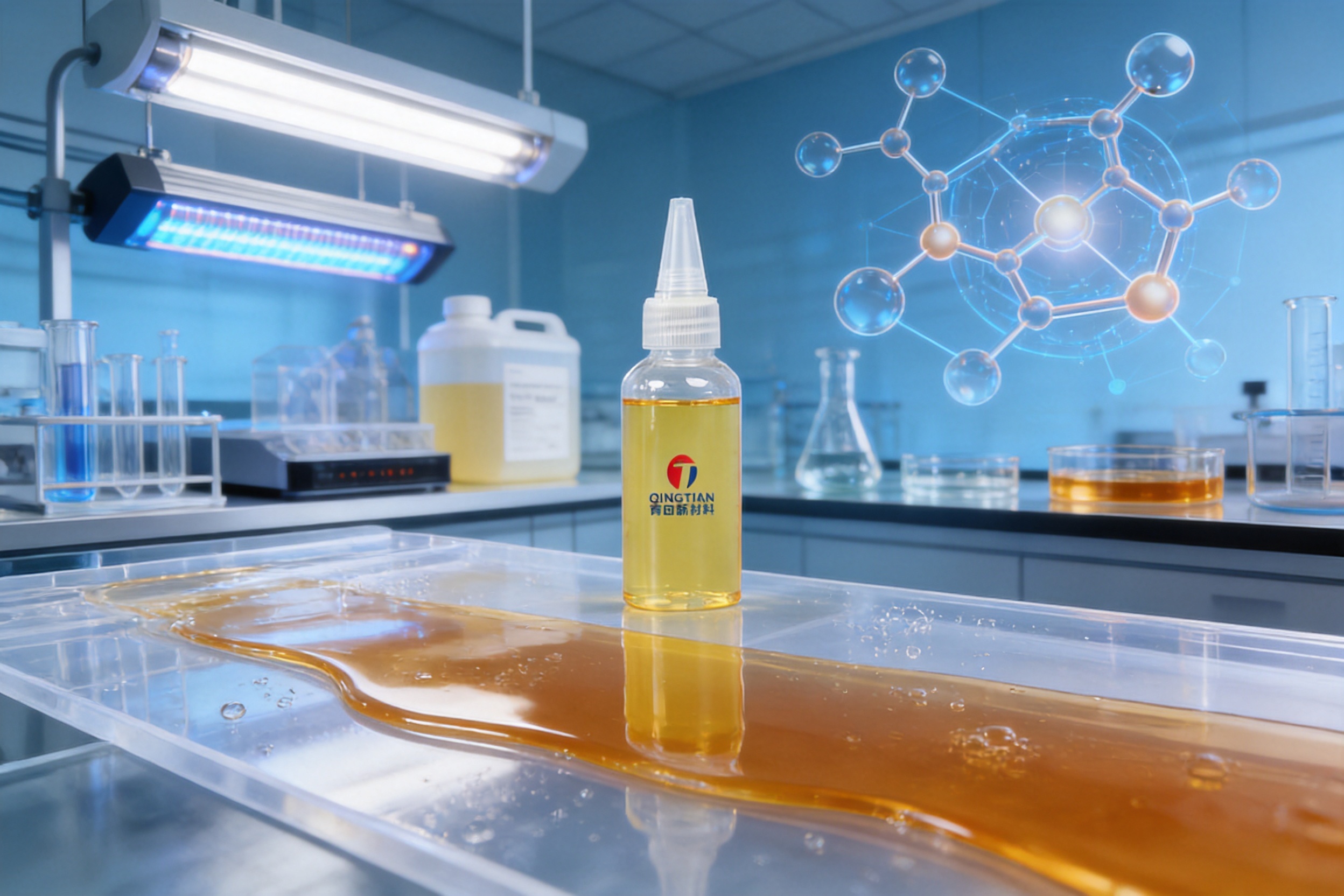
DH-4210 is described as a cross-linkable polysiloxane acrylate. This structure combines a polysiloxane segment, which contributes surface activity and slip, with acrylate-related reactive functionality that can participate in curing or cross-linking. The result is a surface additive intended to provide both immediate wet-film performance and improved integration into the final coating network.
Silicone-based materials are widely used in surface-control applications because of their low surface tension, spreading behavior, slip, and ability to reduce friction. However, a silicone additive must be carefully designed. Excessive surface activity can lead to recoatability problems, poor adhesion, surface contamination, or incompatibility with other components. The chemical architecture of a reactive polysiloxane acrylate is intended to balance strong surface performance with improved permanence and compatibility.
According to the product information, DH-4210 contains hydroxyl groups and ethylenic bonds. These functional groups enable it to cross-link with various acrylic and polyurethane materials. In a suitable formulation, the additive can therefore contribute to the cured structure instead of remaining only as a physically blended component.
This distinction is important. A physically blended additive is dispersed within the formulation and may move toward the air-film interface during drying or curing. That migration can be useful for surface activity, but uncontrolled migration may create side effects. It can affect subsequent coating adhesion, interfere with overprinting, or lead to inconsistent surface properties. A reactive additive provides an opportunity for greater fixation within the film after curing.
Cross-linkability does not mean that the additive eliminates the need for formulation development. The actual performance depends on resin chemistry, reactive groups, photoinitiator selection, radiation dose, film thickness, curing speed, substrate, and additive concentration. Nevertheless, reactive functionality gives the formulator a valuable design advantage compared with an additive that cannot participate in the network.
Compatibility is one of the most important properties of a surface additive. Poor compatibility may result in haze, turbidity, separation, surface defects, viscosity changes, or instability during storage. These problems can be especially visible in clear coats, high-gloss finishes, transparent inks, and decorative layers where optical clarity is part of the product specification.
DH-4210 is characterized by high compatibility and a very low probability of turbidity. This makes it attractive for formulations in which visual clarity and a clean appearance are important. It may also simplify formulation screening by reducing the likelihood that the additive will create immediate compatibility problems when combined with common acrylic or polyurethane components.
Compatibility should always be confirmed under actual conditions. Factors such as resin polarity, solids content, pigment concentration, solvent selection, temperature, storage time, and curing conditions can affect the final result. Practical testing should include both initial appearance and retained appearance after aging, curing, and recoat operations.
Many surface additives are selected for a specific primary function. One product may improve leveling, another may reduce foam, and another may provide slip or scratch resistance. Separate products can work well, but each additional component increases the possibility of interaction and formulation complexity.
DH-4210 combines several functions in one product. It supports deaeration, leveling, lubrication, and substrate wetting, while also contributing to surface scratch resistance. This multifunctional profile can help formulators reduce the number of additives required or use a more coordinated additive package. It may also support more consistent optimization because the same product influences several related surface phenomena.
The multifunctional nature of DH-4210 is particularly relevant in compact formulations, high-solids systems, radiation-cured coatings, and production environments where repeated adjustment of multiple additives is undesirable. The product can be evaluated as a single surface-control component before deciding whether additional specialized additives are necessary.
Leveling is the ability of a wet film to become more uniform after application. Good leveling can reduce visible brush marks, roller marks, spray irregularities, microtexture, and uneven gloss. In industrial finishing, a smooth appearance often contributes directly to perceived quality and can influence the acceptance of a coated part.
DH-4210 is identified as an excellent leveling agent. Its polysiloxane structure helps modify surface tension and promote smoother film development. When properly selected and dosed, it can help the wet film flow across small irregularities and reduce localized differences in surface behavior.
Leveling performance should be assessed in relation to application method. Spray application, roll coating, curtain coating, gravure printing, flexographic printing, and other processes create different shear and flow conditions. A product that performs strongly in one process may require adjustment in another. The practical advantage of DH-4210 is that its surface-control design provides a suitable starting point for a broad range of formulation and application studies.
Substrate wetting is essential for achieving continuous coverage and reliable adhesion. A coating must spread over the substrate rather than remain in isolated droplets or retract from low-energy areas. This challenge is common with plastics, previously coated surfaces, treated metals, glass, and substrates contaminated by trace oils or processing residues.
DH-4210 supports substrate wetting by helping reduce the interfacial barrier between the liquid formulation and the solid surface. Better wetting can improve visual uniformity, reduce discontinuities, and support more consistent film formation. In adhesive and primer applications, improved wetting may also increase the area of effective contact between the adhesive layer and the substrate.
Wetting improvement should not be confused with guaranteed adhesion to every substrate. Adhesion depends on surface preparation, chemical interaction, mechanical anchoring, film shrinkage, cure, and environmental exposure. DH-4210 can support the wetting part of this process, but substrate cleaning, pretreatment, and resin selection remain important.
Air can enter a formulation during mixing, pigment dispersion, pumping, filling, or application. High-speed mixing and high-shear processing may introduce significant quantities of entrapped air. If the bubbles remain in the applied film, they can produce pinholes, craters, voids, gloss variation, or reduced protective performance.
DH-4210 combines leveling with deaeration. This is valuable because surface flow and bubble release are closely related. A coating that flows effectively can allow small bubbles to move through the wet film and reach the surface, where they can break and disappear before curing. In fast-curing systems, this function can be especially important because the available release time is limited.
The final result depends on viscosity, film thickness, temperature, application speed, and curing interval. Formulators should evaluate bubble release in the actual production sequence rather than relying only on a drawdown test. The product’s deaeration capability nevertheless provides an important performance option for reducing surface defects in demanding formulations.
Lubrication affects the frictional behavior of a coating surface. Improved slip can reduce surface drag, support smoother handling, and improve resistance to scuffing caused by contact during processing or use. In printed materials and industrial finishes, controlled slip can influence blocking, stacking, winding, conveying, and surface feel.
The polysiloxane component of DH-4210 contributes lubrication and surface slip. Unlike a product designed only to reduce friction, DH-4210 is intended to combine lubrication with leveling, wetting, and deaeration. This balance can be useful when surface feel and appearance must be improved without sacrificing coating uniformity.
Slip should be optimized rather than maximized. Excessive slip can sometimes affect interlayer adhesion, printability, or the ability of a subsequent coating to anchor. The cross-linkable design of DH-4210 gives formulators a pathway for evaluating surface lubrication together with cured-film integration.
Surface scratch resistance is increasingly important in decorative coatings, consumer products, industrial equipment, flooring, furniture, automotive components, and printed surfaces. Scratches may occur during manufacturing, assembly, transportation, cleaning, or everyday handling. Even when a scratch does not compromise the protective function, it can reduce the visual quality of the product.
DH-4210 is described as improving surface scratch resistance. Its contribution may be associated with the lubricating nature of the silicone segment, the smoothness of the film, and the ability of the reactive additive to become associated with the cured network. A smoother, lower-friction surface can reduce the severity of certain contact-related marks.
Scratch resistance is influenced by many variables, including resin hardness, cross-link density, pigment and filler selection, film thickness, cure conversion, substrate flexibility, and test method. DH-4210 should therefore be viewed as a performance-enhancing component within a complete formulation rather than as a replacement for a properly designed binder system.
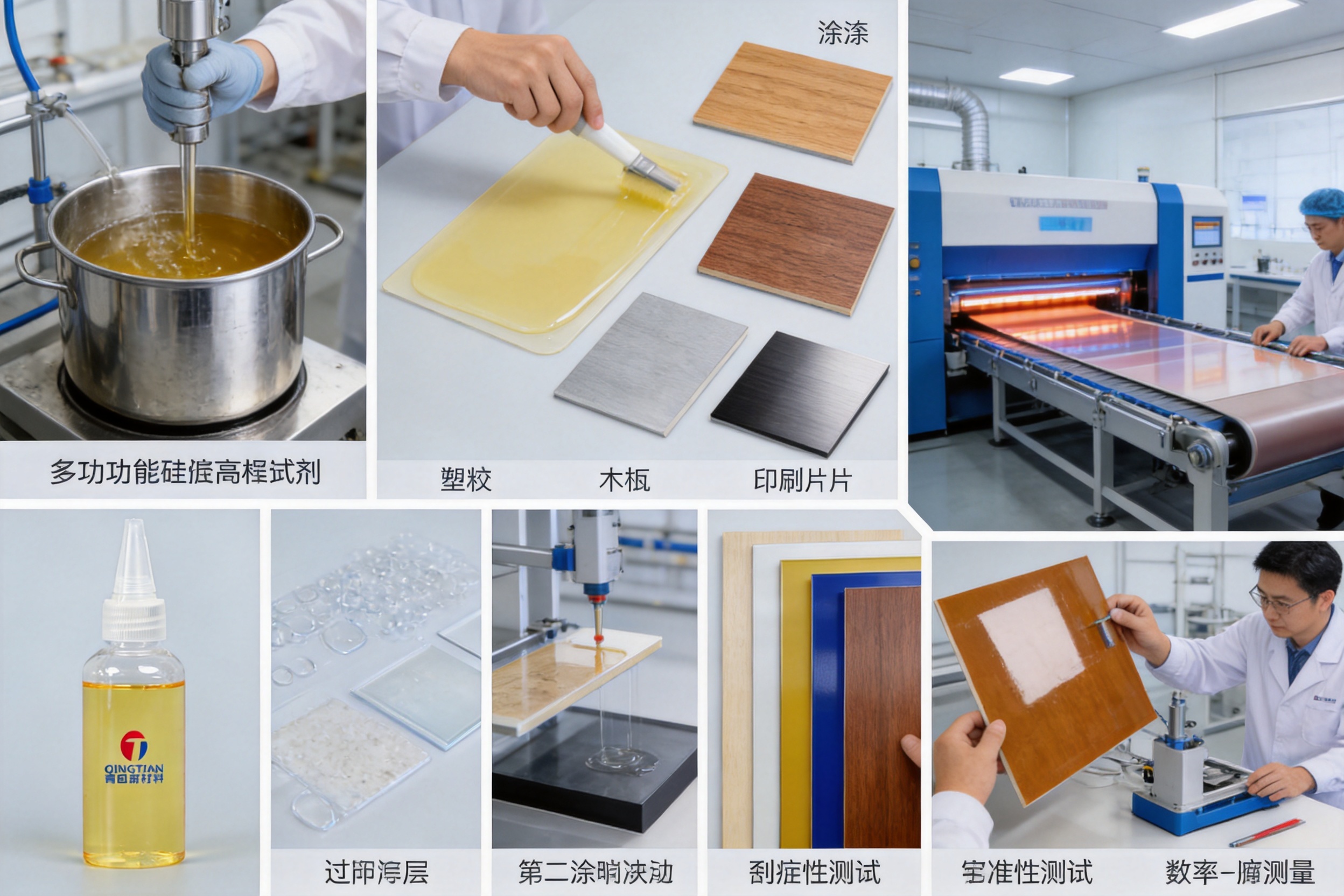
The most significant stated advantage of DH-4210 is its cross-linkability. Conventional surface additives may be blended into the formulation and remain physically distributed throughout the film. They can provide strong initial surface activity, but their long-term behavior may depend heavily on migration, compatibility, and the balance between surface concentration and bulk concentration.
Physically mixed additives can also create a trade-off between surface performance and downstream processing. A product that migrates strongly to the surface may improve slip and leveling but make recoating or overprinting more difficult. A product with insufficient surface mobility may provide limited leveling. Reactive functionality offers a way to manage this balance by allowing the additive to participate in the curing process.
Because DH-4210 contains hydroxyl groups and ethylenic bonds, it can cross-link with various acrylic and polyurethane materials under suitable formulation and curing conditions. This reactive behavior can improve the permanence of the additive and reduce the risk that it will behave as an entirely independent phase.
Integration into the film may support more stable surface properties after curing. It can also help reduce concerns associated with uncontrolled additive migration. The exact level of integration depends on the resin system and curing mechanism, so compatibility and reactivity should be confirmed through laboratory testing.
Recoatability is the ability to apply another layer over the cured or partially cured coating without adhesion failure, surface defects, or unacceptable appearance. Overprintability is similarly important in printed films, labels, packaging materials, and multi-layer decorative systems. A surface that is too slippery or too chemically inactive may resist the next layer.
DH-4210 is designed to provide good recoatability and overprintability. These properties are valuable because they address the complete production sequence rather than only the first applied layer. A coating may look excellent immediately after curing, but if it cannot accept an additional coating or print layer, its industrial value is limited.
The product’s reactive structure and high compatibility are relevant to this balance. A well-integrated additive can help deliver a controlled surface without creating an excessive barrier to subsequent layers. Nevertheless, the recoat interval, cure dose, surface cleanliness, and chemistry of the next layer should all be included in validation testing.
Compared with poorly matched physically blended additives, a high-compatibility reactive additive may reduce the risk of haze or turbidity. This is particularly important in clear coatings, transparent protective layers, and systems where gloss and optical depth are key selling points.
DH-4210 is characterized by a very low probability of turbidity. This does not eliminate the need for a compatibility test, but it provides a useful product advantage during formulation development. A lower risk of cloudiness can shorten screening time and help preserve the appearance of the final coating.
When one additive performs several functions, the formulator may be able to simplify the additive package. DH-4210 can be evaluated for leveling, deaeration, lubrication, wetting, and scratch-resistance support. Consolidation can reduce the number of interactions that must be studied and may make batch-to-batch adjustment easier.
A simplified additive strategy can also support production consistency. Each additional additive introduces its own dosage tolerance, storage behavior, and interaction profile. A multifunctional product does not automatically replace every other additive, but it can provide a more efficient starting point for formulation design.
Radiation-cured coatings are the primary target area for DH-4210. These systems require rapid surface development, strong leveling, controlled slip, and reliable curing. The cross-linkable design is appropriate for formulations based on acrylic and polyurethane chemistry, provided that the reactive groups and curing conditions are properly matched.
Potential uses include UV-cured wood coatings, plastic finishes, decorative coatings, protective topcoats, industrial coatings, and specialty surface treatments. The product can be assessed in clear coats, pigmented coatings, and textured or effect systems where uniform flow and surface appearance remain important.
In printing inks, leveling and wetting affect print uniformity, gloss, dot appearance, and coverage. Deaeration can help reduce pinholes and surface imperfections, while controlled lubrication may support handling and reduce scuffing. Overprintability is especially important where several colors, primers, varnishes, or protective layers are applied in sequence.
DH-4210 may be evaluated in radiation-cured printing inks and overprint varnishes where compatibility, surface smoothness, and rapid cure are required. The final selection should consider the printing process, ink viscosity, pigment concentration, substrate type, curing equipment, and the requirements of any subsequent print layer.
Plastic substrates often have relatively low surface energy and may be difficult to wet. Surface contamination, mold-release residues, and flexibility can further complicate coating adhesion. A leveling agent that improves wetting without causing excessive surface migration may support more uniform plastic coating performance.
DH-4210 can be considered for plastic coatings where smooth appearance, scratch resistance, and subsequent coating or printing are required. The substrate should be cleaned and, where necessary, treated by an appropriate method. Adhesion testing should include both initial adhesion and adhesion after humidity, heat, abrasion, and aging exposure.
Wood coatings must often balance appearance, smoothness, scratch resistance, and process speed. The natural variation of wood, porous areas, sanding marks, and changing absorbency can make leveling challenging. Radiation-cured wood coatings may benefit from a surface additive that supports rapid film development and a smooth finished appearance.
DH-4210 can be evaluated in UV-cured wood finishes, clear coats, pigmented systems, and decorative layers. Its lubrication and scratch-resistance support may be useful for furniture, flooring, panels, and other wood-based products that experience repeated handling or abrasion.
Adhesive systems require wetting, contact, flow, and reliable interfacial bonding. A surface-control additive must be carefully selected because excessive surface activity may be harmful if it weakens the adhesive interface. The cross-linkable nature and stated recoatability of DH-4210 make it a candidate for controlled evaluation in suitable adhesive and coating-adhesive systems.
In multi-layer systems, the performance of each layer affects the next. A primer must accept a topcoat, a coating must accept a print layer, and a protective varnish must maintain adhesion after curing. DH-4210 is particularly relevant where surface smoothness and downstream compatibility must be considered together.
Industrial coatings often require a combination of appearance, application reliability, surface durability, and processing efficiency. Steel and aluminum coil coatings, machinery finishes, appliance coatings, and general protective coatings can involve fast line speeds and demanding appearance standards. The product’s leveling, wetting, deaeration, lubrication, and scratch-resistance functions may help address several of these needs.
For protective applications, the additive should be tested for its effect on corrosion resistance, adhesion, hardness, flexibility, chemical resistance, and weathering. Surface performance is important, but it must remain compatible with the primary protective objectives of the coating.
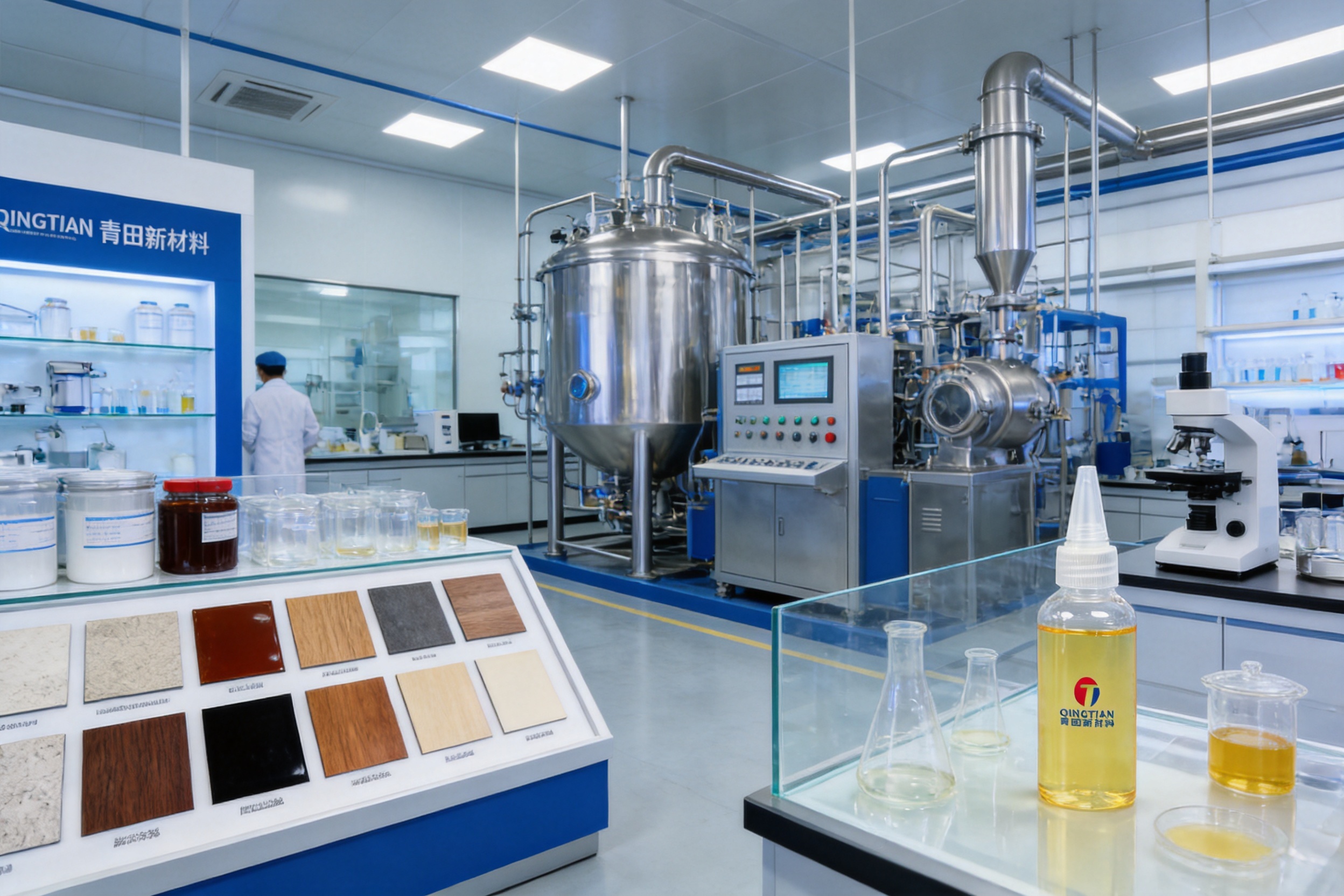
Before production use, DH-4210 should be screened in the intended resin system. The evaluation should include visual clarity, haze, viscosity, storage stability, surface appearance, and curing response. A simple compatibility study may compare the additive in the resin alone, in the complete formulation, and after accelerated storage.
Clear and high-gloss systems should receive particular attention because small changes in compatibility can become visually obvious. Pigmented systems should also be checked for color acceptance, gloss, flooding, floating, and any influence on pigment dispersion.
The appropriate addition method depends on the formulation and manufacturing process. In many systems, a leveling agent is added during the let-down stage after the main dispersion process. This can help minimize unnecessary exposure to high shear while allowing the additive to distribute effectively through the batch.
The product should be introduced gradually under controlled agitation. Excessive aeration during addition should be avoided, particularly when the formulation is already near its final viscosity. The best addition point, mixing time, and temperature should be established through plant-scale trials.
Surface additives generally require careful dosage optimization. Too little may provide insufficient leveling or wetting, while too much may cause surface defects, recoatability loss, excessive slip, or reduced intercoat adhesion. The optimum concentration depends on resin chemistry, solids level, pigment loading, film thickness, application method, and curing conditions.
A practical study can begin with a low, medium, and high dosage series. Each sample should be evaluated for wetting, leveling, foam release, gloss, haze, slip, scratch resistance, adhesion, recoatability, and overprintability. The preferred concentration is not necessarily the one with the strongest single effect; it is the one that provides the best overall balance.
The performance of a reactive polysiloxane acrylate is linked to curing conditions. Radiation intensity, exposure time, line speed, lamp condition, film thickness, photoinitiator concentration, oxygen exposure, and resin reactivity can all influence the final result.
If the coating is under-cured, the additive may not become sufficiently integrated into the film, and surface properties may be unstable. If the coating is over-cured or exposed to excessive energy, the film may become brittle or develop other defects unrelated to the additive. Curing should therefore be optimized alongside additive concentration rather than treated as an independent variable.
Substrate wetting and adhesion cannot be separated from substrate preparation. Dust, oil, mold release, fingerprints, moisture, and processing residues can significantly affect coating performance. Metals may require cleaning or pretreatment, while plastics may benefit from corona, plasma, flame, or chemical treatment depending on the application.
DH-4210 can support wetting, but it cannot compensate for every form of contamination or inadequate surface energy. A robust qualification program should include representative production substrates, not only laboratory panels with ideal cleanliness.
Visual appearance should be evaluated under consistent lighting and viewing conditions. Drawdowns or applied panels can be examined for craters, fish eyes, pinholes, orange peel, gloss uniformity, haze, leveling, and surface texture. Instrumental gloss and haze measurements can complement visual assessment.
Where the coating is used in a decorative or transparent application, color, clarity, and optical depth should be recorded. Where it is used in a textured finish, the evaluation should confirm that the additive improves surface uniformity without suppressing the intended texture or visual effect.
Wetting can be evaluated through drawdown observations, contact-angle measurements, coverage tests, or substrate-specific application trials. Leveling can be assessed by observing the disappearance of application marks and by comparing surface roughness or gloss uniformity after curing.
Testing should be conducted at the target viscosity and film thickness. A formulation that levels well at laboratory thickness may behave differently on a production line. Application speed and drying or curing delay should also be reproduced as closely as possible.
Deaeration should be tested after realistic mixing and application. The formulation can be subjected to the intended shear conditions, applied at the target thickness, and observed for bubble release before curing. A comparison with a control sample can show whether DH-4210 reduces visible pinholes, microbubbles, and surface voids.
For thick films, cast coatings, and flooring systems, bubble release may require longer observation and additional testing. Temperature and viscosity should be controlled because both strongly influence air movement and release.
Recoatability tests should apply a second layer after the intended first-layer cure and interval. The second layer can then be examined for adhesion, cratering, crawling, loss of gloss, and visual uniformity. Cross-hatch adhesion, pull-off adhesion, or other appropriate methods may be used depending on the system.
For overprintability, the test should reproduce the actual ink or varnish sequence. The evaluation should include ink transfer, dot or line quality, adhesion, smearing, blocking, gloss, and the appearance of the combined layers. The product is designed to support good overprintability, but the final result depends on the full multi-layer system.
Scratch resistance can be assessed through standardized scratch, mar, rub, or abrasion tests selected for the application. The test should reflect the expected use conditions. For example, a furniture coating may require resistance to repeated handling, while a printed film may require resistance to stacking and transport.
Slip can be measured using an appropriate coefficient-of-friction method or through process-specific handling trials. The goal is controlled lubrication that improves handling without causing unacceptable adhesion or printability problems.
The performance of a specialty additive depends not only on its chemical design but also on the supplier’s ability to manufacture it consistently. Small variations in reactive functionality, molecular distribution, residual content, or quality control can affect compatibility and surface performance. For customers purchasing industrial materials, technical support and production reliability are therefore as important as the product description.
Suzhou Qingtian New Material Co., Ltd. specializes in raw materials for coatings, inks, and adhesives. The company has operated since 2012 and has developed an experienced team that includes research and development specialists, sales professionals, and manufacturing personnel. Its product portfolio includes dispersants, leveling agents, defoamers, adhesion promoters, anti-settling agents, cooling agents, conductive agents, orange peel texture agents, texture powders, and wax powders.
This focused product scope is a practical advantage. A supplier concentrated on coatings, inks, and adhesives can develop a deeper understanding of resin compatibility, pigment behavior, film formation, curing, surface defects, and production requirements than a supplier with no application specialization. The knowledge gained from one additive category can also support development in related categories.
The company is supported by R&D expertise, advanced testing equipment, and research capabilities. For a cross-linkable silicone leveling agent, this type of technical foundation is important because product performance must be evaluated across multiple dimensions. A successful additive is not defined only by initial leveling; it must also demonstrate compatibility, stability, curing response, recoatability, overprintability, and surface durability.
Advanced testing supports comparative evaluation of raw materials, intermediate batches, and finished products. It can help identify changes in appearance, viscosity, functionality, particle or phase behavior, curing performance, and surface properties. Such testing is also useful when customizing a solution for a customer’s particular resin or application method.
The company operates a modern production facility and moved to Lingrui Intelligent Manufacturing Park in Zhangjiagang High-tech Zone in 2021. The move strengthened its R&D and production capacity. A modern manufacturing environment can support improved process organization, equipment management, quality control, material handling, and production scalability.
For specialty additives, manufacturing discipline is essential. The production process must control raw-material identity, charging sequence, reaction or blending conditions, temperature, mixing, processing time, filtration or finishing steps where applicable, and packaging. Although individual process parameters are product-specific, a structured manufacturing system helps support repeatable quality.
Intelligent manufacturing can provide a framework for improved batch traceability, process monitoring, documentation, and production control. These capabilities are valuable for customers who need predictable performance across repeated orders. Consistency is especially important for leveling agents because a small change in surface activity can influence gloss, wetting, slip, and recoatability.
A reliable supplier should be able to connect technical specifications with practical application performance. This includes maintaining appropriate raw-material controls, recording production information, conducting finished-product inspection, and responding to customer feedback. The company’s investment in manufacturing and testing infrastructure supports this type of quality-oriented approach.
The company’s development history includes creating China’s first ice flower resin in 2016 and being recognized as a National High-Tech Enterprise in 2020. These milestones indicate an emphasis on product innovation and technical development. While DH-4210 is a silicone leveling agent rather than an ice flower resin, the broader experience demonstrates the company’s involvement in specialty coating materials.
Innovation in coating additives often requires close attention to application problems that are not solved by standard raw materials. The ability to develop products for visual effects, surface control, conductivity, texture, adhesion, and other functions can create a stronger platform for custom chemical solutions.
Customers may require more than a standard product name. They may need help with dosage selection, resin compatibility, curing conditions, surface defects, recoatability, or substitution of an existing additive. A supplier that understands these practical issues can help reduce development time and improve the probability of successful scale-up.
Technical communication should include the customer’s resin type, solids content, application method, substrate, film thickness, curing equipment, performance targets, and known defects. With this information, DH-4210 can be evaluated more efficiently and compared against the customer’s current additive package using relevant criteria.
DH-4210 offers a combination of properties that is difficult to achieve with a single-function, physically blended additive. It is designed for radiation-cured systems, provides excellent leveling, supports substrate wetting, combines deaeration with lubrication, and improves surface scratch resistance. Its cross-linkable structure is intended to provide a stronger relationship with acrylic and polyurethane binder systems.
For formulators, this combination can create several strategic benefits. It may reduce the number of additive products required, simplify formulation screening, support a more uniform surface, and improve the balance between initial appearance and downstream processing. The high compatibility and low probability of turbidity are particularly valuable in clear and high-gloss applications.
For manufacturers, good recoatability and overprintability can support multi-layer production. This is important in industries where a primer, basecoat, ink, varnish, and protective topcoat are applied in sequence. A surface additive that improves the first layer but interferes with the next layer may create more problems than it solves. DH-4210 is designed with the complete coating sequence in mind.
For end users, improved leveling, surface feel, and scratch resistance can contribute to a more attractive and durable product. In industrial settings, better deaeration and wetting may also reduce rejects caused by visible surface defects. The commercial value of the additive therefore extends beyond laboratory performance to production efficiency, appearance consistency, and product reliability.
The first step is to identify the dominant problem. Is the formulation suffering from poor wetting, inadequate leveling, pinholes, foam marks, insufficient slip, scratches, or recoatability problems? Defining the objective helps establish the appropriate test plan and prevents overreliance on a single visual observation.
A control sample containing the current additive package or no surface additive should be prepared. DH-4210 can then be evaluated at several concentrations under identical application and curing conditions. A control is essential for measuring whether the product provides a meaningful improvement rather than simply producing a different appearance.
Initial screening in a clear resin may reveal compatibility, but the complete formulation must also be tested. Pigments, fillers, photoinitiators, solvents, reactive diluents, waxes, defoamers, and other additives can alter surface behavior. The full system should be applied to representative substrates and cured under production-relevant conditions.
Recoatability, overprintability, blocking, adhesion, and handling should be examined after the first layer has reached its intended cure state. A formulation should not be approved solely because it produces a smooth first surface. The entire manufacturing sequence must remain stable.
Laboratory results should be confirmed in pilot and production trials. Mixing energy, tank geometry, batch size, application speed, line temperature, radiation intensity, and film thickness may all change during scale-up. Close communication with the supplier can help identify the appropriate process controls and quality checks.
DH-4210 is a cross-linkable polysiloxane acrylate used as a silicone leveling agent. It is particularly suitable for radiation-cured systems and is designed to provide leveling, substrate wetting, deaeration, lubrication, and support for surface scratch resistance.
DH-4210 contains hydroxyl groups and ethylenic bonds that can enable cross-linking with various acrylic and polyurethane materials under suitable conditions. This reactive design can provide advantages over additives that remain only physically blended in the coating film.
The product is particularly suitable for radiation-cured systems, including UV-related applications, but its suitability should be determined by formulation testing. It may also be considered for compatible acrylic, polyurethane, ink, adhesive, and multi-layer coating systems where its surface-control functions are needed.
Yes. Substrate wetting is one of its stated functions. It can help the formulation spread more evenly over the substrate, although cleaning, pretreatment, substrate energy, and binder selection remain important for final adhesion.
Yes. DH-4210 combines deaeration with leveling, lubrication, and wetting. Its effectiveness should be confirmed under the actual mixing, application, film-thickness, and curing conditions used in production.
DH-4210 has high compatibility and a very low probability of turbidity, making it a candidate for clear and high-gloss systems. A laboratory compatibility and storage-stability test should still be performed before approval.
The product is designed to provide good recoatability. However, recoatability depends on cure level, dosage, surface cleanliness, the chemistry of the second layer, and the time between coats. A complete recoat test should be included in the formulation study.
It can be evaluated in suitable printing inks and overprint varnishes, especially radiation-cured systems. Testing should include print quality, transfer, gloss, adhesion, blocking, scuff resistance, and compatibility with subsequent print or protective layers.
The recommended dosage should be established by a concentration ladder in the target formulation. Start with low, medium, and high levels, then compare leveling, wetting, deaeration, gloss, haze, slip, scratch resistance, recoatability, and overprintability. The optimum level is the best overall balance rather than the maximum possible surface activity.
The supplier has experience in coating, ink, and adhesive raw materials, an R&D team, advanced testing equipment, and a modern production facility. Its move to an intelligent manufacturing park strengthened its research and production capacity. These resources support product development, quality control, and customer-specific technical evaluation.
The company focuses on coating, ink, and adhesive materials and offers a portfolio covering multiple additive functions. Customers can provide details about their resin, substrate, curing method, and performance requirements so that the most suitable product and development approach can be evaluated.
Useful information includes the resin type, reactive diluents, pigment or filler content, solids level, viscosity, current additive package, application method, substrate, target film thickness, curing equipment, cure speed, and the specific surface defects or performance targets.
DH-4210 Silicone Leveling Agent is designed for formulators who need more than basic surface smoothing. Its cross-linkable polysiloxane acrylate structure combines silicone-based surface activity with reactive functionality. The presence of hydroxyl groups and ethylenic bonds enables interaction with acrylic and polyurethane systems under suitable curing conditions, offering a technical advantage over additives that remain only physically blended.
The product’s performance profile includes excellent leveling, substrate wetting, deaeration, lubrication, improved surface scratch resistance, high compatibility, low turbidity risk, good recoatability, and good overprintability. These properties make it particularly relevant to radiation-cured coatings, inks, plastic finishes, wood coatings, industrial surfaces, and other applications in which appearance and downstream processing must be balanced.
The supplier’s experience in coatings, inks, and adhesives, together with its R&D resources, advanced testing equipment, and modern manufacturing infrastructure, provides an important foundation for consistent product development and technical service. Its broad additive portfolio also supports a system-level approach to formulation challenges.
As with any specialty additive, final performance depends on the complete formulation and process. Proper compatibility screening, dosage optimization, curing evaluation, substrate preparation, and downstream testing are essential. When evaluated systematically, DH-4210 can provide a practical route to smoother surfaces, better wetting, improved air release, controlled slip, stronger scratch performance, and more reliable multi-layer coating or printing results.
1. Product technical information for DH-4210 Silicone Leveling Agent, including stated structure, functionality, compatibility, and application characteristics.
2. Company information for Suzhou Qingtian New Material Co., Ltd., including product portfolio, research and development capabilities, manufacturing resources, and corporate development history.
3. General principles of silicone-based surface additives in coatings, inks, adhesives, and radiation-cured formulations.
4. General formulation practices for leveling, substrate wetting, deaeration, slip control, recoatability, and overprintability.
5. General evaluation methods for coating appearance, gloss, haze, adhesion, scratch resistance, coefficient of friction, and curing performance.
 Wholesale Paint/ Coating Additives Manufacturers
Custom Industrial Chemical Solutions Suppliers
Wholesale Paint/ Coating Additives Manufacturers
Custom Industrial Chemical Solutions Suppliers