


 русский
 Español
 Français
Home / Author / Wei Lanqing — Regional Product Sales Manager / Brightening Dispersants for High-Performance Coatings and Inks
Wei Lanqing — Regional Product Sales Manager

Content
Modern coatings and printing inks must deliver more than attractive color. They are expected to provide smooth application, stable storage, strong adhesion, durable appearance, reliable processing, and consistent performance across different production batches. These requirements become more demanding when formulations contain difficult-to-wet pigments such as titanium dioxide, lithopone, iron oxide pigments, and carbon black. Without suitable dispersion control, pigments may agglomerate, settle, float, flood, or produce unstable viscosity. Surface defects, loss of gloss, uneven color, craters, and poor film appearance can then affect the entire production process.
DH-5033 Brightening Dispersant is a solvent-borne dispersant developed to address these challenges. It is designed to improve pigment wetting and affinity with polymer systems while helping formulators obtain brilliant colors, uniform dispersion, stable viscosity, and a more consistent coating surface. In addition to its dispersing function, the product supports coating-film hardness, water resistance, adhesion, anti-aging performance, and processing efficiency. Its multifunctional profile makes it suitable for applications in solvent-borne coatings, industrial paints, printing inks, and related formulated systems.
The value of a dispersant should not be judged only by its ability to break down pigment agglomerates. A high-quality product must also support long-term storage stability, compatibility with the binder system, controlled rheology, efficient manufacturing, and reliable final-film performance. DH-5033 is positioned as a practical solution for formulators seeking to balance color development, surface quality, application stability, and production efficiency in solvent-borne systems.
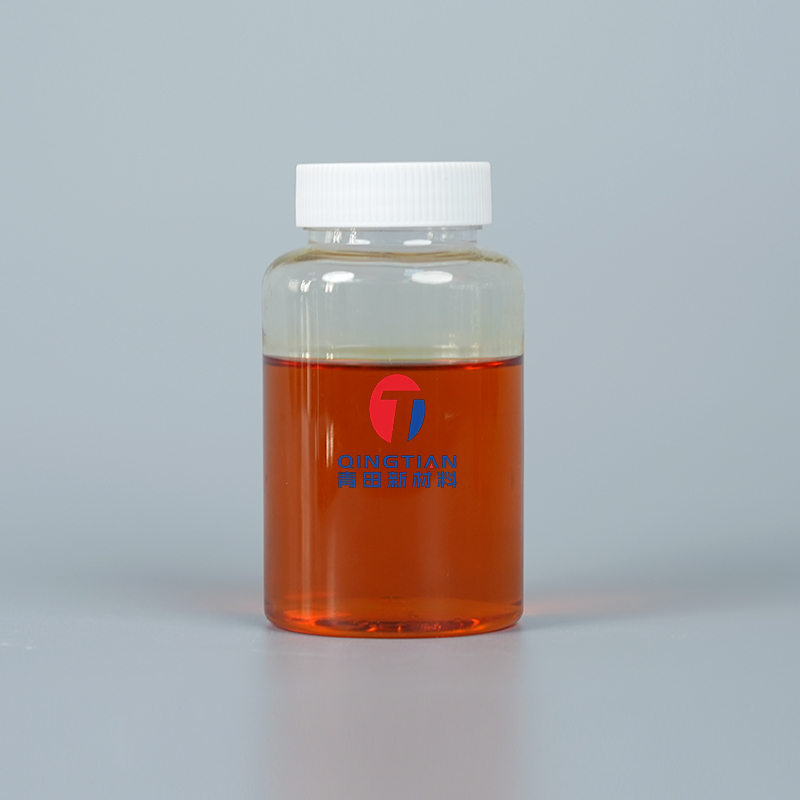
DH-5033 Brightening Dispersant
Pigments are solid particles that must be distributed throughout a liquid formulation and held in a stable state. Their behavior depends on particle size, surface chemistry, specific surface area, polarity, binder compatibility, solvent selection, and the mechanical energy applied during dispersion. A pigment may appear visually incorporated after mixing while still containing weakly bound agglomerates. These agglomerates can later re-form during storage or application, creating instability that may not be apparent during the initial production stage.
Inadequate dispersion often produces several connected problems. Large or partially wetted particles can reduce color strength and make the coating look dull. Pigment agglomerates may increase viscosity unpredictably, interfere with pumping, and cause inconsistent application. Density differences between pigment and liquid components can lead to sedimentation. Incompatible pigment surfaces may create flooding or floating, in which different pigments separate visually during drying and produce uneven color distribution.
Surface defects are another important concern. Poorly dispersed particles can contribute to craters, pinholes, roughness, orange-peel appearance, loss of gloss, and uneven leveling. In high-gloss coatings, even small variations in surface smoothness can become obvious. In printing inks, dispersion problems may affect color density, print sharpness, transfer behavior, and shade consistency. In industrial coatings, they may reduce the visual quality and protective reliability of the finished film.
A dispersant helps control these effects by promoting wetting of the pigment surface and improving compatibility between pigment particles and the surrounding binder or resin phase. Once the pigment is sufficiently wetted, the dispersant can help reduce particle-to-particle attraction and support a more uniform distribution. The result is not simply a smoother manufacturing step. It can influence color strength, viscosity, storage stability, surface appearance, adhesion, durability, and the reproducibility of the finished product.
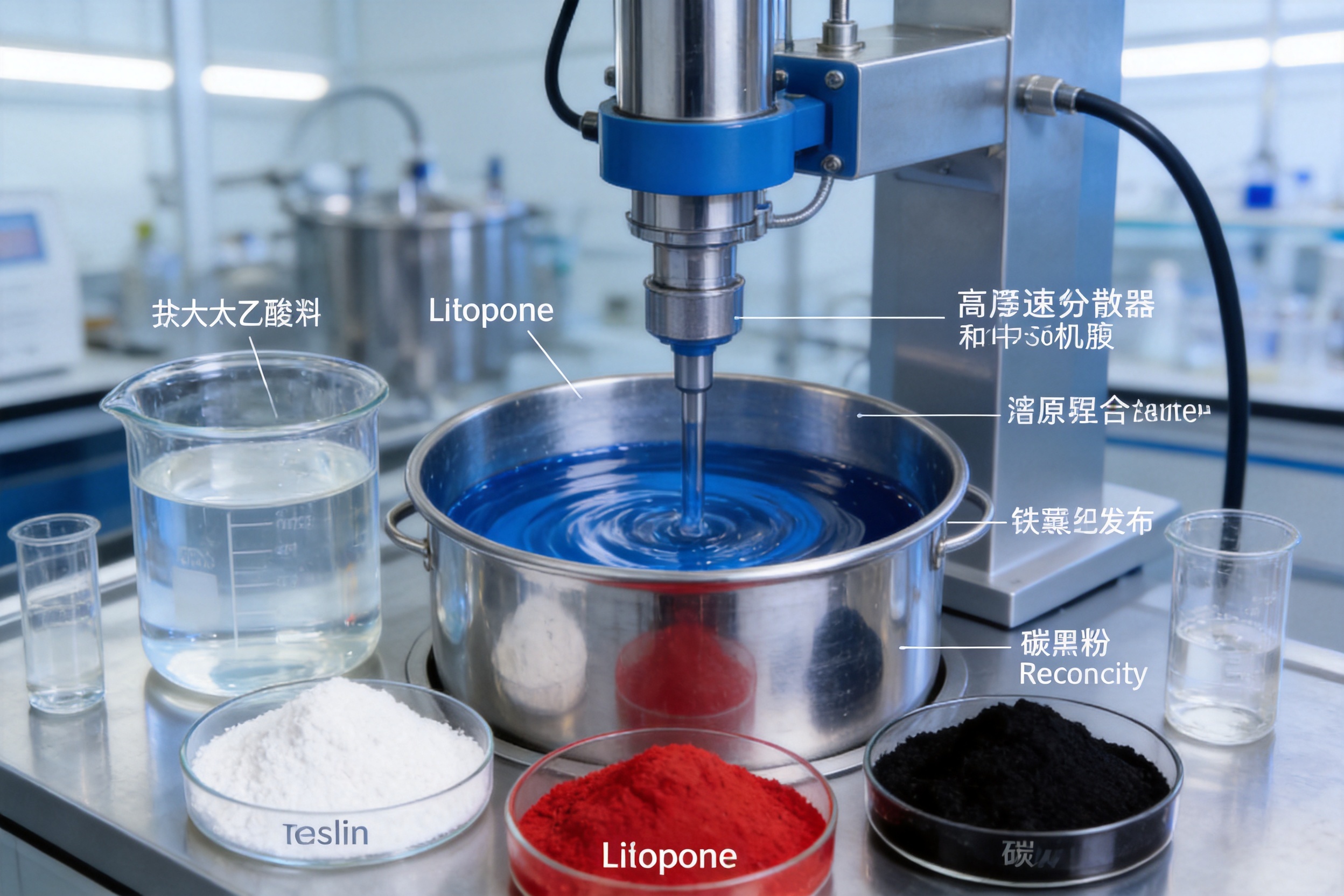
DH-5033 Brightening Dispersant belongs to the solvent-borne dispersant category. It is intended for use in coating and ink formulations where pigment wetting, color development, storage stability, and film appearance are critical. The product is particularly relevant to systems using domestic titanium dioxide, lithopone, iron red, carbon black, and other inorganic or organic colorants that require effective wetting and stabilization.
The product’s central function is to enhance the affinity between pigment particles and polymers. This affinity helps the pigment become more uniformly incorporated into the formulation and supports a stable dispersion during processing and storage. In practical terms, the product helps formulators reduce the risk of uneven pigment distribution, uncontrolled viscosity changes, sedimentation, floating, flooding, coarsening, and caking.
Its brightening effect is associated with improved pigment distribution and more effective development of the pigment’s optical properties. When pigment particles are properly separated and uniformly surrounded by the liquid or polymer phase, the formulation can display a cleaner, stronger, and more brilliant color. This is especially valuable in decorative coatings, industrial finishes, printing inks, and other applications where color appearance is a key measure of quality.
DH-5033 also contributes to coating-film performance. The product is described as helping reduce baking temperature, improve water resistance and hardness, and increase the adhesion of coatings and inks. These benefits are important because pigment dispersion and film formation are closely connected. A stable pigment distribution can support a more uniform film structure, while improved interaction among the formulation components may help the coating adhere more effectively to the substrate.
Pigment wetting is the first essential step in obtaining a stable dispersion. If the liquid phase cannot sufficiently contact and spread across the pigment surface, air and poorly compatible liquid regions may remain around the particles. This makes the particles difficult to break apart and encourages the formation of agglomerates.
DH-5033 is designed to improve the wetting and affinity of pigments with polymers. This is especially useful for pigments with strong surface energy or difficult compatibility characteristics. More effective wetting can help the grinding and dispersion stage work efficiently, reduce the persistence of coarse particles, and support the development of more uniform color.
Improved wetting also benefits formulation consistency. When pigment surfaces are efficiently incorporated into the liquid phase, the batch is less likely to contain localized pigment-rich or resin-rich regions. This supports more predictable viscosity, more uniform application, and reduced variation between production batches.
Color strength and brightness depend on pigment quality, particle size, dispersion state, film thickness, binder transparency, and surface smoothness. Even a high-quality pigment cannot display its full optical potential if it remains in large agglomerates or is distributed unevenly throughout the coating.
By promoting a more uniform dispersion, DH-5033 helps formulators obtain brilliant colors and consistent hues. The product can be particularly valuable in systems where color matching is important, including industrial finishes, metal coatings, printing inks, and decorative applications. Consistent dispersion also reduces the risk that a color will shift during storage or vary significantly between the first and last part of a production run.
For manufacturers, improved color development may provide an opportunity to optimize pigment efficiency. However, any change in pigment concentration or formulation design should be confirmed through laboratory testing. The correct use level depends on pigment type, pigment loading, resin chemistry, solvent blend, milling equipment, and the required performance of the final coating.
Viscosity stability affects mixing, pumping, filtration, application, and final film formation. A dispersion that becomes significantly thicker during storage can cause production delays and inconsistent application. Conversely, a system with uncontrolled thinning or separation may produce poor coverage and uneven film thickness.
DH-5033 supports stable viscosity by helping maintain a more uniform pigment distribution. This can make the formulation easier to process and may improve the repeatability of filling, transportation, and application operations. Stable viscosity is also valuable in printing inks, where precise flow and transfer properties are needed to maintain clear and consistent printed images.
The product does not replace the need for proper formulation design. Solvent selection, binder concentration, pigment loading, grinding energy, temperature, and storage conditions remain important. Nevertheless, a suitable dispersant can provide a more forgiving formulation window and help reduce the sensitivity of the system to normal production variation.
Storage stability is one of the most visible differences between a well-designed dispersion and an unstable one. Sedimentation occurs when pigment particles move downward because of density differences or insufficient stabilization. If the sediment becomes hard and compacted, the material may be difficult to redisperse. Caking can lead to waste, extended remixing time, and inconsistent color.
Floating and flooding occur when pigments migrate or separate during application and drying. These defects can produce color variations across the same coated surface. Coarsening refers to the development or return of larger particles or agglomerates, which may reduce smoothness and impair appearance.
DH-5033 is intended to help prevent these problems by improving pigment wetting and compatibility with the polymer phase. A stable dispersion can reduce the tendency of particles to associate excessively and can support more uniform behavior during storage and film formation. The final result depends on the complete formulation, but the dispersant provides an important tool for improving resistance to physical separation.
Coating appearance is influenced by leveling, surface tension, solvent evaporation, substrate condition, pigment dispersion, and film formation. Poor dispersion can cause roughness, craters, loss of gloss, and uneven surfaces. These defects are especially undesirable in high-gloss industrial coatings, automotive-related finishes, furniture coatings, and decorative products.
By reducing pigment agglomeration and promoting uniform distribution, DH-5033 can help create a more even coating surface. A stable pigment phase allows the liquid coating to flow and level more consistently before the film sets. This may support better gloss development and a cleaner visual finish.
It is important to distinguish the role of a dispersant from that of a dedicated leveling agent or defoamer. DH-5033 contributes to surface quality through dispersion control, but the complete surface result may also require appropriate selection of leveling additives, air-release agents, resin systems, solvents, and application conditions.
Some industrial coatings require baking or thermal curing to achieve the desired hardness, adhesion, and chemical resistance. Baking consumes energy and can place restrictions on substrates, production speed, and equipment design. A formulation that reaches its target performance at a lower baking temperature may help manufacturers improve energy efficiency and broaden the range of suitable substrates.
DH-5033 is described as helping reduce baking temperature. This benefit should be evaluated within the specific resin and curing system because curing behavior is influenced by crosslinker type, catalyst level, film thickness, substrate, oven conditions, and coating composition. Even so, the product’s contribution to pigment wetting and component compatibility may support more efficient film formation and curing.
Manufacturers should confirm this advantage through comparative bake studies. Useful evaluation points include minimum curing temperature, curing time, hardness development, adhesion, water resistance, gloss, color stability, and resistance to the chemicals relevant to the intended application.
Water resistance is important in coatings exposed to humidity, condensation, washing, outdoor weather, or intermittent immersion. A coating film with poor water resistance may develop whitening, blistering, softening, loss of adhesion, or other defects.
DH-5033 is designed to improve the water resistance of the coating film. A more uniform dispersion can reduce weak points and help produce a consistent film structure. Improved adhesion between the coating and substrate can also reduce the risk of moisture penetrating through interfacial defects.
Water resistance is a system property rather than the result of one additive alone. The resin backbone, curing chemistry, pigment selection, substrate preparation, film thickness, and exposure conditions all affect the final result. Accordingly, DH-5033 should be assessed as part of the complete formulation rather than in isolation.
Hardness influences scratch resistance, blocking resistance, handling, packaging, and the perceived durability of a coating. A coating that remains too soft may be damaged during stacking, transport, or assembly, while excessive hardness may reduce flexibility and increase the risk of cracking.
The product is described as helping improve coating-film hardness. Its ability to support uniform pigment distribution and effective compatibility with polymer systems may contribute to a more consistent film structure. The appropriate balance between hardness and flexibility should be selected according to the substrate and end-use requirements.
Adhesion determines whether a coating or ink remains attached to its substrate during handling and service. Poor adhesion may result from contamination, inadequate surface preparation, incompatible resin chemistry, internal stress, moisture, or pigment-related defects.
DH-5033 is intended to increase the adhesion of coatings and inks. Better pigment wetting and improved interaction between formulation components may help reduce discontinuities in the film and support a stronger coating-substrate interface. This is relevant to metal, plastic, wood, glass, and other substrates, although the exact performance must be validated for each substrate type.
Adhesion testing should include the methods relevant to the application, such as cross-cut testing, pull-off testing, bending, impact, abrasion, or tape evaluation. Results should be compared with a control formulation and interpreted alongside water resistance, hardness, flexibility, and aging performance.
Industrial coatings must often combine appearance with protection. They may be exposed to abrasion, moisture, chemicals, temperature changes, and outdoor weather. Consistent pigment dispersion is important for both visual quality and protective film integrity.
DH-5033 can be considered for solvent-borne systems used on steel and aluminum components, machinery, equipment, fabricated parts, and other industrial substrates. Its contribution to color consistency, storage stability, adhesion, hardness, and water resistance makes it relevant to formulations where dependable performance is required over the product’s service life.
Coil coatings are applied continuously to metal strip at high production speed. The formulation must provide stable viscosity, efficient application, consistent color, strong adhesion, and reliable curing. Small formulation changes can become visible over long production runs, so batch-to-batch consistency is essential.
A dispersant that helps control pigment distribution can support uniform coating appearance and reduce the risk of color variation. DH-5033 may be evaluated in solvent-borne systems for steel and aluminum coil applications, subject to compatibility testing with the resin, curing process, substrate treatment, and application equipment.
Printing inks require controlled viscosity, good pigment strength, clean transfer, rapid or appropriate drying, and stable color. Carbon black and other strongly colored pigments can be challenging because they often have high surface area and a strong tendency to form aggregates.
DH-5033 may help improve the wetting and stabilization of pigments in solvent-borne inks. Better dispersion can support strong color development, consistent print density, smooth ink flow, and reduced risk of settling during storage. The final ink properties depend on the printing process, including gravure, flexographic, screen, or other methods, as well as the selected resin and solvent system.
Wood coatings must often combine attractive color and gloss with adhesion, hardness, flexibility, and resistance to moisture. The porous and variable nature of wood can make film appearance difficult to control. A stable, well-dispersed coating can help provide a more uniform visual result.
DH-5033 may be useful in solvent-borne wood coating formulations where color consistency and surface quality are important. Formulators should also consider penetration, substrate preparation, sanding, drying time, and the interaction between the coating and wood extractives.
Plastic substrates may have low surface energy, flexibility, and sensitivity to solvents or heat. Adhesion can therefore be a major challenge. Pigment dispersion must be optimized without compromising flexibility or damaging the substrate.
The product’s contribution to adhesion and pigment-polymer affinity may be relevant to solvent-borne plastic coating systems. Testing should be performed on the actual plastic grade because surface treatment, molding conditions, additives, and substrate contamination can strongly affect coating performance.
Glass coatings and decorative finishes frequently require clean color, good adhesion, smooth appearance, and resistance to handling or washing. Surface defects are easily visible on transparent or glossy substrates.
DH-5033 may support these applications by helping maintain a uniform pigment dispersion and improving film appearance. Compatibility with the selected resin, curing temperature, substrate pretreatment, and application method should be established through controlled trials.
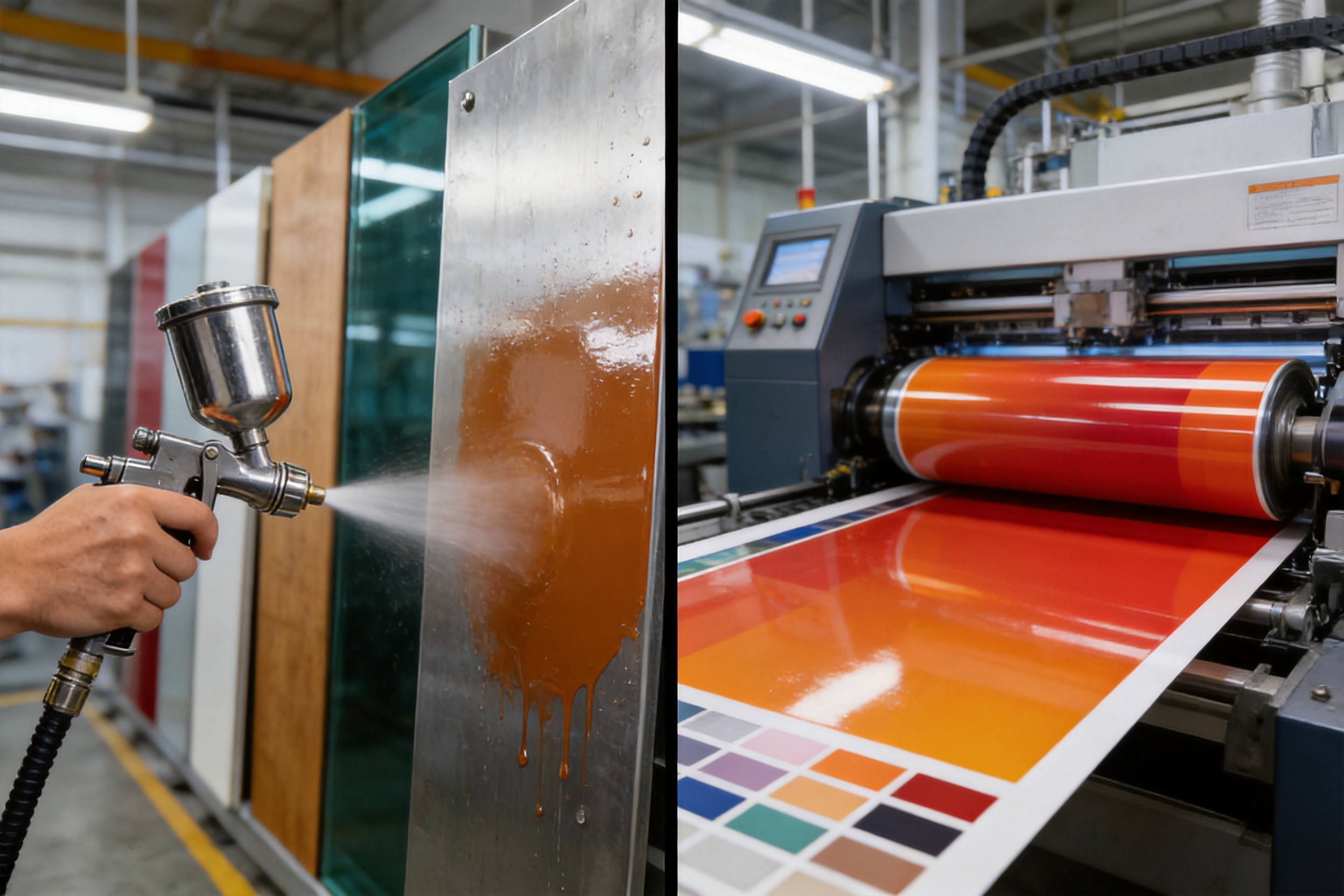
Product selection should always be based on comparative testing, but multifunctional dispersants can offer practical advantages over products that address only one narrow aspect of formulation behavior. A conventional dispersant may improve initial pigment wetting but provide limited support for long-term storage, film hardness, adhesion, or water resistance. Another product may stabilize viscosity but have little effect on color brightness or surface appearance.
DH-5033 is positioned as a broader performance solution. Its stated benefits cover pigment wetting, brilliant color, viscosity stability, resistance to sedimentation and separation, surface quality, adhesion, hardness, water resistance, anti-aging behavior, and baking efficiency. This range can simplify additive selection and reduce the need to combine multiple products that may compete for compatibility within the same formulation.
The product may also provide advantages when compared with an additive selected only by its initial color-strength result. Initial color development is important, but it does not fully represent storage stability, application behavior, or final-film durability. A dispersant that performs well immediately after milling may still allow viscosity drift, settling, flooding, or caking during storage. DH-5033 should therefore be evaluated across the full product lifecycle, including production, storage, application, curing, and service exposure.
Another potential advantage is formulation flexibility. Because the product is designed to improve the affinity of several commonly used pigments with polymer systems, it may help formulators address multiple pigment families within a broader product portfolio. This does not mean that one additive will be optimal for every resin or pigment. Rather, it offers a practical starting point for developing solvent-borne formulations with different colors and performance targets.
Competitor comparisons should be made using equal pigment loading, equal resin content, equivalent milling conditions, and the same evaluation methods. Important comparison criteria include color strength, shade, gloss, viscosity, fineness of grind, storage stability, redispersibility, sediment hardness, film hardness, adhesion, water resistance, and accelerated aging. Such testing allows the manufacturer to identify whether the product provides a meaningful total-cost and performance benefit in the intended system.
The manufacturer specializes in raw materials for coatings, inks, and adhesives. This focus allows the development process to remain closely connected to the practical requirements of formulators. Dispersants, leveling agents, defoamers, adhesion promoters, anti-settling agents, texture additives, and wax powders often interact within a formulation. Experience across these additive categories can help support more complete problem solving than a narrow focus on one material type.
Industry experience since 2012 has enabled the company to build a professional team covering research and development, technical service, sales, and production. Such a structure is important for additive manufacturing because product performance depends not only on laboratory design but also on process control, application knowledge, customer communication, and consistent delivery.
Advanced additive development requires more than blending raw materials. It involves understanding pigment surfaces, polymer compatibility, solvent behavior, dispersion mechanisms, film formation, and long-term stability. Research teams must be able to compare formulations, identify failure modes, and adjust product structures or manufacturing parameters according to application requirements.
The manufacturer has established research capabilities supported by experienced technical personnel and modern testing equipment. This foundation helps connect product development with measurable performance indicators. For a dispersant such as DH-5033, relevant development work may include pigment wetting studies, viscosity monitoring, fineness-of-grind evaluation, storage testing, color measurement, gloss testing, adhesion assessment, and accelerated aging comparisons.
Consistent additive quality depends on controlled manufacturing. Raw-material identity, feeding sequence, reaction or mixing conditions, temperature management, filtration, packaging, and storage can all affect the final product. Variations in these factors may alter viscosity, active content, compatibility, or performance in the customer’s formulation.
The company operates a modern production facility and has moved to an intelligent manufacturing park in Zhangjiagang High-Tech Zone to strengthen research and production capacity. A modern facility can support more systematic production planning, improved process organization, enhanced equipment management, and better integration between laboratory development and commercial manufacturing.
For customers, manufacturing strength is valuable because a dispersant must perform consistently from one delivery to the next. Stable quality reduces the need for repeated reformulation and lowers the risk of unexpected changes in color, viscosity, drying, or storage behavior. The production environment also provides a foundation for customized chemical solutions when customers have specific resin, pigment, or application requirements.
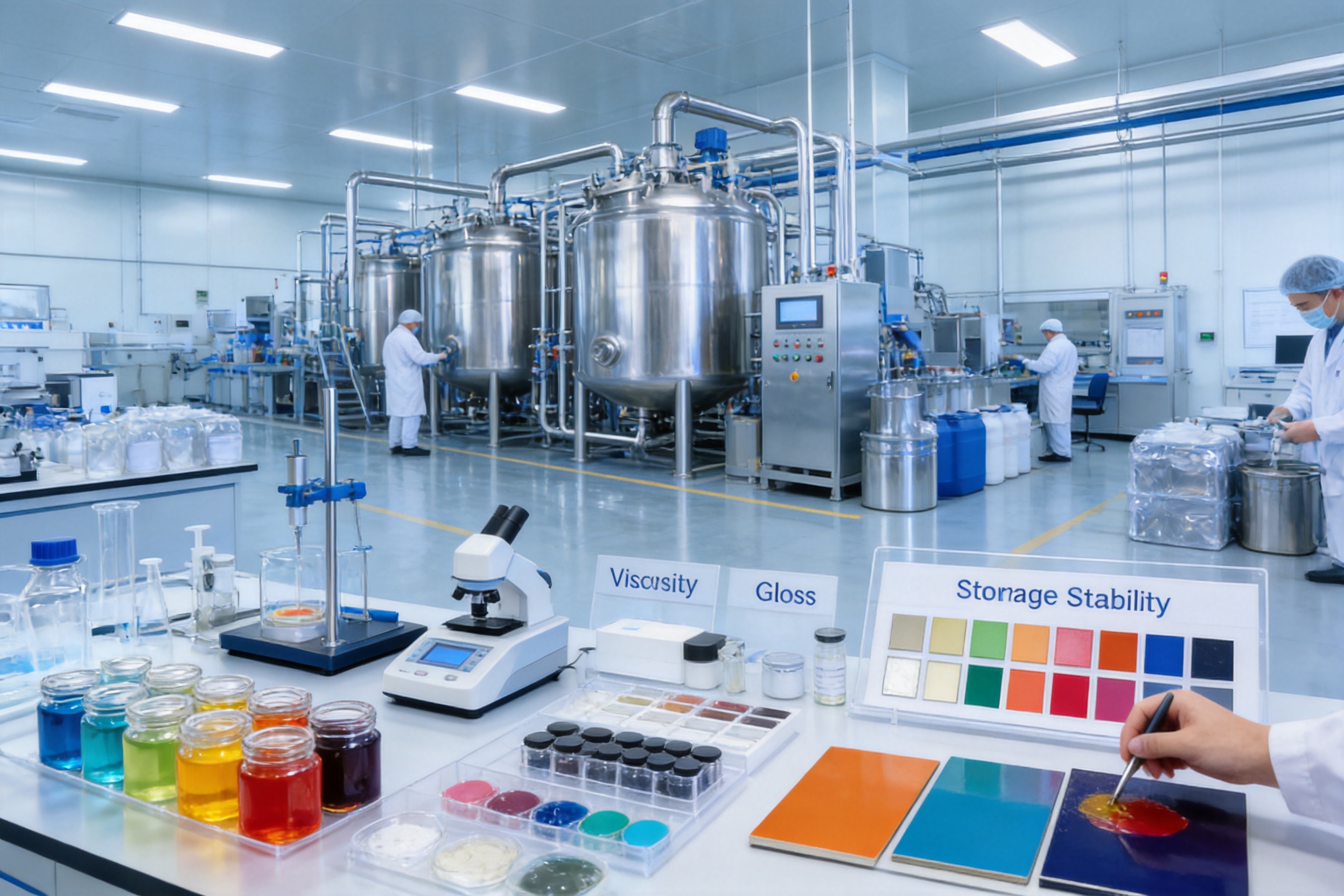
Testing equipment supports the evaluation of both raw materials and finished products. In a coating-additive manufacturing operation, quality control may include appearance inspection, viscosity measurement, density testing, compatibility checks, storage stability, and application trials. Product-specific testing can then be expanded to include pigment dispersion, color development, gloss, hardness, adhesion, water resistance, and aging behavior.
A strong quality program should compare every product against established internal specifications and verified application benchmarks. It should also monitor process trends rather than relying only on final inspection. Trend monitoring can identify gradual changes in raw materials or equipment before they become customer complaints.
The company’s testing resources and research capabilities strengthen its ability to develop reliable products and provide technical support. For customers evaluating DH-5033, this means that product selection can be supported by application-oriented discussions rather than by a specification sheet alone.
The company’s development history includes the creation of a domestic ice flower resin in 2016 and recognition as a National High-Tech Enterprise in 2020. These milestones indicate a continuing emphasis on technical development and specialized material solutions. Although an individual recognition does not replace application testing, it reflects the organization’s broader commitment to research, innovation, and industrial capability.
Its product portfolio covers a wide range of additives used in coatings, inks, adhesives, flooring, metal finishes, plastics, wood, glass, batteries, photovoltaic panels, and other fields. This cross-industry experience can help the technical team understand the different demands placed on additive systems, including appearance, conductivity, curing, weather resistance, adhesion, and processing stability.
Before introducing DH-5033 into commercial production, formulators should conduct a structured laboratory evaluation. The first step is to identify the principal problem: poor pigment wetting, low color strength, settling, viscosity drift, surface defects, weak adhesion, inadequate water resistance, or another formulation issue. A clear problem definition makes it easier to choose the correct test conditions and judge the results objectively.
Prepare a control formula using the current dispersant or the existing additive package. Record the pigment type, pigment loading, binder, solvent blend, additive concentration, mixing order, dispersion equipment, milling time, temperature, and final viscosity. The control formula should be produced under repeatable conditions so that comparisons are meaningful.
Evaluate a series of DH-5033 use levels rather than relying on a single dosage. The most suitable concentration depends on the pigment’s surface area, pigment loading, resin chemistry, and target properties. Too little dispersant may not provide sufficient stabilization, while too much may affect viscosity, water resistance, gloss, drying, or intercoat adhesion.
Screening should be performed separately for different pigment families. Titanium dioxide, lithopone, iron red, carbon black, and other pigments may require different additive levels. The optimal level for one pigment should not automatically be transferred to another.
Evaluate fineness of grind, color strength, shade, brightness, undertone, and gloss. Visual inspection is useful, but instrumental color measurement can provide more reliable comparisons. Observe whether the product produces a cleaner color, stronger development, or improved consistency after storage.
For printing inks, assess print density, transfer, clarity, rub resistance, and drying behavior using the intended printing process. For coatings, apply drawdowns or spray panels under controlled conditions and compare surface uniformity, gloss, and defect frequency.
Store samples under the conditions relevant to the product’s expected distribution and use. Observe settling, floating, flooding, viscosity change, skin formation, caking, and redispersibility. Samples should be inspected at defined intervals rather than only at the end of the test.
A useful storage assessment includes both visual observation and measurement. Record viscosity, color, fineness, and application behavior before and after storage. If sediment forms, evaluate whether it can be redispersed using practical mixing conditions. A soft, easily redispersed sediment may be acceptable in some systems, while hard caking is generally more problematic.
Apply the test formulations to the intended substrate and cure them under standard conditions. Assess hardness, adhesion, water resistance, gloss, flexibility, impact resistance, and appearance. If the product is being considered for exterior or demanding industrial use, include accelerated aging or weathering tests appropriate to the application.
Testing should include both freshly prepared material and material that has undergone storage. This helps determine whether dispersion stability is maintained throughout the product’s practical service cycle.
The order of addition can influence the effectiveness of a dispersant. In many systems, the dispersant is introduced into a portion of the resin and solvent phase before pigment addition so that the pigment surface can be wetted during the early stage of mixing. However, the correct procedure depends on the product design, pigment, binder, and equipment. Customers should establish the best addition sequence through laboratory trials.
Mechanical energy also affects dispersion quality. High-speed mixing, bead milling, three-roll milling, or other equipment may be used depending on the formulation. DH-5033 can support the dispersion process, but it cannot compensate completely for inadequate shear, unsuitable media, poor temperature control, or insufficient processing time.
Temperature should be controlled during dispersion because excessive heat may alter solvent evaporation, viscosity, resin behavior, and pigment stability. Excessive mechanical energy can also increase temperature or cause unwanted solvent loss. A stable process helps ensure that the benefit observed in the laboratory can be reproduced during scale-up.
Compatibility should be checked with the complete formulation. The dispersant must work with the selected resin, solvent blend, pigment, curing agent, leveling agent, defoamer, adhesion promoter, and other additives. A material that performs well in one resin family may behave differently in another. Compatibility testing should include clarity, viscosity, storage stability, color, gloss, and film properties.
Application equipment and substrate preparation should also be considered. Spray, roller, dip, gravure, flexographic, and other methods place different demands on flow, leveling, drying, and viscosity. Substrate cleanliness, surface energy, pretreatment, and roughness can influence adhesion and appearance independently of the dispersant.
A dispersant can affect cost in several ways. The most visible factor is the additive price per unit of formulation, but this is only one part of the economic evaluation. Other factors include pigment efficiency, grinding time, energy consumption, batch rework, filtration problems, storage losses, color correction, rejected material, and customer complaints.
If DH-5033 improves color development, a formulator may be able to examine whether the same color target can be achieved more efficiently. Any reduction in pigment loading must be validated carefully because pigment concentration also affects opacity, durability, rheology, and regulatory compliance. The potential benefit should be measured rather than assumed.
Improved dispersion may also shorten processing time or reduce the need for repeated milling. Faster production can increase equipment availability and reduce energy consumption. Better storage stability can lower the risk of discarded or reworked material. More consistent color can reduce shade adjustment during production and support more reliable delivery to end users.
The product’s possible contribution to lower baking temperature may provide an additional energy-saving opportunity. However, the economic result depends on oven design, line speed, curing conditions, substrate, and the performance target. A complete cost comparison should include the energy and productivity effects of the entire coating process.
| Evaluation Area | Potential Contribution of DH-5033 | Recommended Verification |
|---|---|---|
| Pigment wetting | Improves contact and affinity between pigments and polymer systems | Fineness of grind, microscopy, color development, and milling observation |
| Color appearance | Supports brilliant colors and consistent hue | Instrumental color measurement, drawdowns, print density, and visual comparison |
| Viscosity stability | Helps maintain more uniform dispersion behavior | Initial and stored viscosity measurements under defined conditions |
| Storage stability | Helps reduce sedimentation, flooding, floating, coarsening, and caking | Accelerated storage, redispersibility, sediment hardness, and appearance checks |
| Surface quality | Helps reduce uneven surfaces, craters, and loss of gloss | Coated-panel inspection, gloss measurement, and defect counting |
| Film performance | Supports hardness, water resistance, adhesion, and anti-aging performance | Hardness, adhesion, water exposure, and accelerated aging tests |
| Process efficiency | May support lower baking temperature or more efficient dispersion | Comparative curing studies, energy review, and production-time measurement |
Coating and ink manufacturers often need more than a standard additive. They may require help with a difficult pigment, a new resin, a special substrate, a storage problem, or a target performance that is not achieved by the current formula. A supplier with technical service and broad additive knowledge can help identify whether the problem is related to dispersion, leveling, defoaming, adhesion, settling, texture, or another formulation factor.
The manufacturer provides custom chemical solutions for paint and coating additives. This capability is supported by its R&D team, modern production facility, testing equipment, and experience across multiple additive categories. For customers evaluating DH-5033, technical communication can focus on the actual formulation rather than on a generic product description.
Useful information for a technical evaluation includes pigment identity and loading, resin type, solvent composition, current additive package, mixing equipment, milling conditions, target viscosity, application method, substrate, curing conditions, and observed defects. Sharing this information allows the supplier to provide more relevant guidance regarding use level, addition sequence, and compatibility testing.
Reliable service also includes consistency in packaging, documentation, production scheduling, and after-sales communication. These factors are important for industrial customers because additive changes can affect an entire product line. A supplier that understands the connection between laboratory performance and commercial manufacturing can help reduce transition risk.
DH-5033 is intended for solvent-borne systems, so customers must manage the safety and environmental requirements associated with the complete formulation. Solvents may be flammable or volatile, and coating production should follow applicable requirements for ventilation, ignition control, personal protective equipment, waste handling, and emissions management.
Before use, customers should review the current safety documentation and technical information supplied for the product. Storage containers should remain properly closed and be kept under suitable conditions. The material should be handled by trained personnel who understand the hazards of the additive, the solvent system, the pigments, and the other components in the formulation.
Waste and cleaning residues should be managed according to local regulations and the requirements of the complete coating system. Product performance benefits should always be balanced with responsible handling, safe production, and compliance with applicable environmental standards.
DH-5033 is a strong candidate when the formulation requires improved wetting of inorganic or carbon-based pigments, brighter color, better viscosity stability, or reduced risk of settling and separation. It is also relevant when the finished coating must provide improved adhesion, hardness, water resistance, anti-aging performance, and surface appearance.
The product is particularly suitable for development projects where several problems occur together. For example, a coating may show weak color, unstable viscosity, poor gloss, and sedimentation at the same time. These problems may share a common root in inadequate pigment wetting or stabilization. A multifunctional dispersant can then be evaluated as part of a broader corrective strategy.
DH-5033 should not be selected solely because it is described as a brightening product. Its broader value lies in the relationship between dispersion quality, process stability, and film performance. The best selection decision comes from testing the additive against the current formula and evaluating the complete life cycle of the coating or ink.
Customers should also consider supply continuity, technical support, production capability, quality control, and customization potential. These factors can be as important as the initial laboratory result when the product is intended for continuous industrial use.
DH-5033 is a solvent-borne dispersant for coatings and inks. It is designed to improve pigment wetting and affinity with polymers while supporting brilliant color, stable viscosity, storage stability, surface quality, adhesion, hardness, water resistance, and anti-aging performance.
The product is described as suitable for improving the wetting and polymer affinity of domestic titanium dioxide, lithopone, iron red, carbon black, and other pigments. The optimum use level and processing conditions should be determined separately for each pigment and resin system.
It is designed to help prevent sedimentation and related problems such as flooding, floating, coarsening, and caking. Actual storage performance depends on pigment density, particle size, formulation viscosity, resin compatibility, additive level, and storage conditions.
DH-5033 can help improve surface appearance by promoting uniform pigment dispersion and reducing agglomerates that contribute to roughness, craters, and loss of gloss. Final gloss also depends on leveling, defoaming, solvent evaporation, substrate preparation, film thickness, and curing.
Yes. The product is suitable for evaluation in solvent-borne printing inks where color strength, uniformity, viscosity stability, pigment dispersion, and storage behavior are important. Testing should be performed using the intended printing process and substrate.
The product is described as helping reduce baking temperature. This potential benefit must be confirmed in the specific coating system because curing depends on resin chemistry, crosslinker, catalyst, film thickness, oven conditions, and substrate.
Prepare a control formula and screen several use levels under controlled conditions. Evaluate dispersion, color, viscosity, storage stability, redispersibility, gloss, hardness, adhesion, water resistance, and aging. The optimum level varies according to pigment surface area, pigment loading, resin, solvent, and application method.
It should not automatically be considered a replacement for dedicated leveling agents or defoamers. It can improve surface appearance through better pigment dispersion, but leveling and air-release requirements may still require specialized additives.
The manufacturer has specialized in coating, ink, and adhesive raw materials since 2012. Its strengths include an experienced R&D and sales team, modern production facilities, advanced testing equipment, broad additive expertise, and a focus on customized chemical solutions.
Useful information includes the pigment type and loading, resin, solvent blend, current additives, mixing and milling equipment, application method, substrate, curing conditions, target viscosity, and observed defects. This information helps make product recommendations more relevant to the actual formulation.
No additive should be assumed to be universally compatible. DH-5033 should be tested in the intended resin, solvent, pigment, and additive system. Laboratory screening and application testing are necessary before commercial adoption.
DH-5033 Brightening Dispersant is designed to provide a balanced solution for pigment dispersion, color development, storage stability, surface quality, and coating-film performance. Its ability to improve pigment wetting and polymer affinity makes it relevant to systems containing titanium dioxide, lithopone, iron red, carbon black, and other pigments that can be difficult to stabilize.
The product’s advantages extend beyond initial dispersion. It is intended to help reduce sedimentation, flooding, floating, coarsening, and caking while supporting stable viscosity and consistent hue. In the finished film, it may contribute to improved adhesion, water resistance, hardness, anti-aging performance, gloss, and overall appearance. Its potential to support lower baking temperatures and more efficient processing adds another dimension to its value for industrial formulators.
Compared with a narrowly focused dispersant, a multifunctional product can offer a broader route to solving interconnected formulation problems. However, the most reliable comparison is always based on controlled testing against the current formulation and relevant alternatives. Pigment type, resin chemistry, solvent selection, processing conditions, application method, substrate, and curing must all be considered.
The manufacturer’s specialized industry focus, R&D capability, modern production facilities, testing resources, broad additive portfolio, and custom-solution approach provide important support for the product. These strengths help connect laboratory development with stable commercial production and responsive technical service.
For coating and ink manufacturers seeking brighter color, reliable dispersion, improved storage stability, and stronger overall formulation performance, DH-5033 provides a practical product platform for laboratory evaluation and industrial application development.
1. General principles of pigment wetting, dispersion, stabilization, and flocculation in coating formulations.
2. Technical literature on solvent-borne coating rheology, viscosity control, and storage stability.
3. Industry guidance on pigment selection, color development, gloss measurement, and shade consistency.
4. Standard methods for evaluating coating adhesion, hardness, water resistance, and accelerated aging.
5. Standard practices for testing fineness of grind, pigment dispersion, sedimentation, and redispersibility.
6. Technical references concerning resin compatibility, solvent selection, curing behavior, and film formation.
7. Industry studies on printing-ink formulation, pigment stabilization, transfer behavior, and print density.
8. Manufacturer-provided product information for DH-5033 Brightening Dispersant and related coating-additive technologies.
 Wholesale Paint/ Coating Additives Manufacturers
Custom Industrial Chemical Solutions Suppliers
Wholesale Paint/ Coating Additives Manufacturers
Custom Industrial Chemical Solutions Suppliers