русский
 Español
 Français
Home / Author / Wei Lanqing — Regional Product Sales Manager / Water-Based Hammer Tone Additives for Controlled Three-Dimensional Coating Effects
Wei Lanqing — Regional Product Sales Manager

Content
Modern coating manufacturers are increasingly expected to deliver more than corrosion protection, color, and durability. Decorative appearance has become an important part of product performance, particularly in industrial equipment, metal furniture, household appliances, architectural components, machinery housings, and specialty fabricated parts. Hammer tone, orange peel, and other textured finishes can provide a distinctive visual identity while also helping to reduce the visibility of minor substrate imperfections. To create these effects consistently, formulators need an additive that can work effectively in water-based coating systems without compromising application stability or production efficiency.
DH-8100S Water-based Hammer Tone Additive is designed for this purpose. It imparts three-dimensional patterns, including hammer tone and orange peel effects, to the dried paint film. The additive is suitable for water-based air-drying systems, water-based two-component polyurethane systems, and water-based amino baking paint systems. It can also be applied in aluminum paste alkyd baking paint systems and air-drying mixed paint systems where a delicate three-dimensional appearance is required.
A major advantage of this product is the relationship between dosage and visual effect. A lower dosage produces a coarser pattern, while a higher dosage produces a finer pattern. This gives formulators a practical method for adjusting the appearance according to customer expectations, coating thickness, spray conditions, substrate type, and the desired balance between decorative texture and surface uniformity.
The product is manufactured and supplied by Suzhou Qingtian New Material Co., Ltd., a company specializing in raw materials for coatings, inks, and adhesives. Since its establishment in 2012, the company has developed product lines covering dispersants, leveling agents, defoamers, adhesion promoters, anti-settling agents, cooling agents, conductive agents, orange peel texture agents, texture powders, wax powders, and related specialty additives. Its technical scope, testing capacity, and application experience support the development of coating solutions for demanding industrial markets.
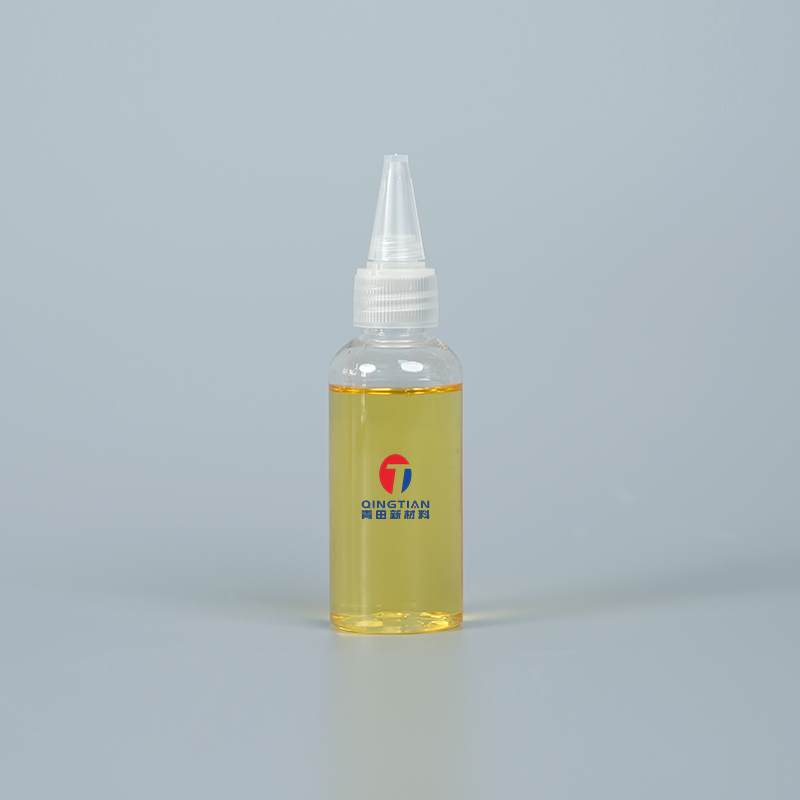
DH-8100S Water-based Hammer Tone Additive
A hammer tone additive is used to create a controlled, irregular surface pattern in a coating film. Unlike a conventional smooth coating, a hammer tone finish contains visible variations in reflection and surface profile. These variations can resemble the marks produced by a light hammering effect, while related formulations may generate orange peel or other structured patterns.
The final appearance is created through the interaction of several factors: resin compatibility, pigment distribution, surface tension, wet-film flow, drying or curing speed, coating thickness, solvent or water evaporation, and the additive’s influence on film formation. A suitable additive helps the coating develop a repeatable pattern rather than an accidental defect.
This distinction is important. Uncontrolled orange peel is generally considered a surface defect because it results from poor atomization, unsuitable viscosity, inadequate leveling, or unstable drying. A designed orange peel effect, by contrast, is intentionally formulated and adjusted to provide a decorative finish. The purpose of a dedicated hammer tone additive is to help move the appearance from random surface irregularity toward controlled visual texture.
In industrial production, textured coatings may be selected for several reasons. They can create a recognizable product appearance, add depth to a color, soften the visual impact of minor substrate marks, and offer a differentiated alternative to flat or high-gloss finishes. In some applications, a textured surface may also make handling marks or small scratches less noticeable than they would be on a perfectly smooth glossy film.
However, texture must be controlled carefully. Excessive pattern formation may reduce gloss uniformity, interfere with cleaning, or create a rough surface that does not meet the customer’s expectations. Insufficient additive may result in an appearance that is too smooth or lacks the intended three-dimensional character. DH-8100S is designed to give the formulator a dosage-based approach to controlling this balance.
DH-8100S Water-based Hammer Tone Additive is a specialty coating additive for creating hammer tone and orange peel patterns. Its stated application area includes several water-based systems as well as selected aluminum paste alkyd and air-drying mixed paint systems.
| Item | Details |
|---|---|
| Product | DH-8100S Water-based Hammer Tone Additive |
| Primary function | Formation of hammer tone, orange peel, and other three-dimensional paint-film effects |
| Main information | Hammertone effect; 3D effect |
| Suitable systems | Water-based air-drying systems, water-based two-component PU systems, and water-based amino baking paint systems |
| Additional applications | Aluminum paste alkyd baking paint systems and air-drying mixed paint systems |
| Pattern adjustment | Lower dosage generally produces a coarser pattern; higher dosage generally produces a finer pattern |
| Typical value | Controlled decorative texture with formulation flexibility |
The product should be understood as a formulation tool rather than a universal replacement for all texture technologies. Its value lies in its compatibility with multiple coating platforms and its ability to support a targeted three-dimensional appearance. Final results depend on the complete formulation and processing conditions, so laboratory evaluation is recommended before production approval.
The central benefit of DH-8100S is its ability to produce a visible three-dimensional effect in the paint film. A conventional leveling additive generally promotes a smoother surface, while a hammer tone additive is selected when the desired appearance requires controlled pattern formation. This makes DH-8100S particularly relevant to decorative industrial coatings where surface character is part of the product specification.
The additive can help create a visual contrast between highlights and recessed areas. Under different lighting angles, the resulting film may display depth and variation that are not achievable with a standard flat color alone. This effect can be used in equipment coatings, fabricated metal components, appliance parts, and other products where a distinctive finish is desirable.
Water-based coatings are gaining importance because manufacturers are seeking to reduce volatile organic compound emissions, improve workplace conditions, and comply with changing environmental requirements. At the same time, water-based systems can present technical challenges, including sensitivity to substrate wetting, water evaporation, coalescence, foam, flash rust, and drying conditions.
DH-8100S is positioned for use in water-based air-drying coatings, water-based two-component polyurethane coatings, and water-based amino baking systems. This broad application range gives formulators an option for developing textured finishes within different water-based production routes. It may be incorporated into systems that dry under ambient conditions as well as systems that undergo accelerated curing or baking.
Compatibility with more than one water-based technology is commercially valuable. A coating manufacturer may supply different products for air-drying applications, two-component systems, and baked finishes. A specialty additive that can be evaluated across these platforms may simplify development work and help create a more consistent decorative concept across product families.
The relationship between dosage and pattern is one of the most practical characteristics of this product. According to the supplied product information, a lower dosage results in a coarse pattern, while a higher dosage results in a fine pattern. This gives the formulator a direct way to tune the visual result instead of relying solely on changes to resin, pigment, or application conditions.
In practice, dosage adjustment should be performed through a controlled ladder study. Several addition levels can be prepared while keeping resin content, pigment loading, viscosity, application method, film thickness, and drying conditions as consistent as possible. The panels can then be compared for pattern size, pattern density, surface feel, gloss, color uniformity, and visual depth.
It is important not to interpret dosage as the only factor affecting pattern. The additive may respond differently in different binders and pigment systems. A level that produces a fine effect in one formulation may produce a different result in another. For this reason, the dosage relationship should be used as a starting principle, followed by application testing in the actual coating system.
The product can be used for aluminum powder paints as well as ordinary colored paints. This is a useful advantage because metallic and non-metallic systems often have different appearance requirements. Aluminum-containing coatings may be expected to display a textured metallic surface, while colored coatings may require a more uniform pattern that complements the selected pigment.
Metallic coatings can be sensitive to pigment orientation, flooding, floating, wetting, and surface flow. A texture additive must therefore be evaluated not only for pattern formation but also for its influence on the visual distribution of aluminum particles. In ordinary colored coatings, the main concerns may include color strength, hiding power, gloss, and the relationship between the pattern and the shade.
DH-8100S offers a common additive option for both categories, although each formulation must be optimized independently. The ability to work with aluminum powder paints and conventional colored paints expands the range of potential coating designs.
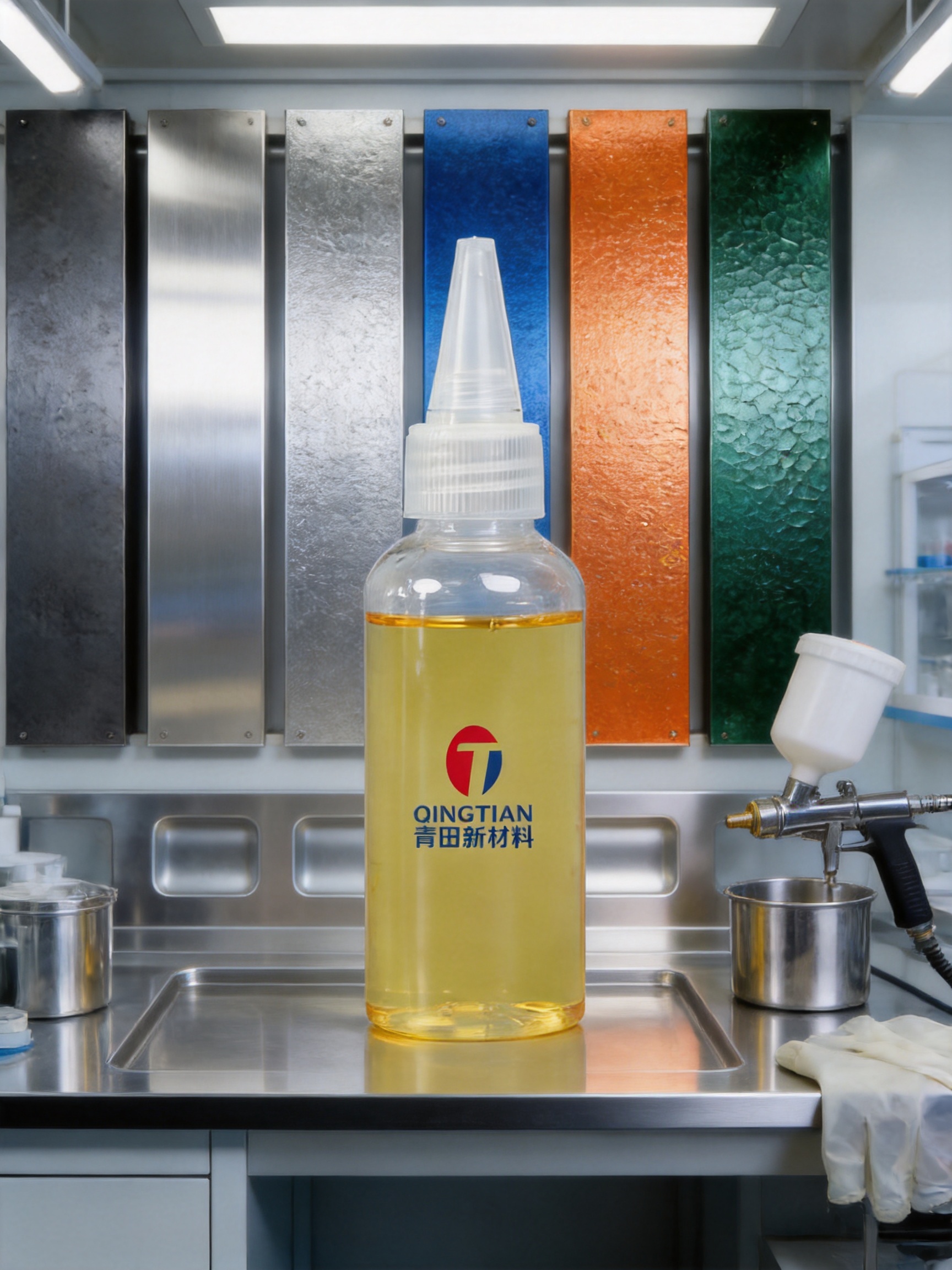
Water-based air-drying coatings are used where the film must develop under ambient or moderately assisted drying conditions. They may be selected for field applications, large components, maintenance coatings, general industrial products, and production lines without high-temperature ovens.
In these systems, the timing of water evaporation and film formation is especially important. If the film dries too quickly at the surface, the additive may not have enough time to develop the intended pattern. If the coating remains wet for too long, sagging, dust pickup, or pattern collapse may occur. Temperature, humidity, air movement, substrate temperature, and wet-film thickness should therefore be recorded during trials.
DH-8100S can be evaluated in air-drying systems where a hammer tone or orange peel appearance is needed without introducing a separate powder coating process. This may help manufacturers create a textured appearance using existing liquid-coating equipment, subject to suitable formulation and application testing.
Water-based two-component polyurethane systems normally combine a hydroxyl-functional water-based component with a suitable crosslinking component shortly before application. They are used when a balance of appearance, hardness, adhesion, and chemical resistance is required.
Adding a texture-forming material to a two-component system requires attention to pot life, mixing sequence, viscosity development, and the timing of application. The additive should be assessed for its influence on the base component, the crosslinker, and the mixed coating. The formulator should also confirm that the desired pattern remains stable as the film cures and that the additive does not create undesirable surface defects.
Because two-component polyurethane coatings may be used for demanding industrial finishes, performance testing should include adhesion, hardness, abrasion, water resistance, chemical resistance, and appearance retention. The textured surface should be evaluated as a complete coating rather than judged only by its initial visual effect.
Amino baking paints are cured with heat, commonly in industrial production lines. Their performance is influenced by bake temperature, bake time, resin selection, catalyst level, film thickness, and substrate preparation. A texture additive used in such a system must maintain the intended appearance during heating and crosslinking.
DH-8100S is identified as suitable for water-based amino baking paint systems. This creates opportunities for textured finishes in factory-applied coatings where controlled oven curing is available. Baking can provide strong process repeatability, but it can also magnify formulation differences. Small changes in film thickness, oven temperature, or line speed may alter the final appearance.
For production implementation, the formulator should verify the pattern at the beginning, middle, and end of an oven run. Panels from different line positions can reveal whether the effect is stable under actual manufacturing conditions. It is also advisable to compare the appearance after conditioning and after accelerated durability testing.
The product can also be applied in aluminum paste alkyd baking paint systems. Alkyd systems containing aluminum paste may be selected for their metallic appearance, application characteristics, or established production processes. A hammer tone effect can add depth and visual interest to the metallic finish.
Aluminum paste handling requires careful attention to dispersion and shear. The additive should be introduced according to a validated mixing sequence so that the metallic pigment is not damaged or undesirably reoriented. The final coating should be evaluated under multiple lighting conditions because metallic texture may appear different under direct, diffuse, and angled illumination.
Air-drying mixed paint systems may contain combinations of binders or other components designed to balance drying speed, adhesion, flexibility, and appearance. Such systems can vary significantly from one manufacturer to another. The additive’s performance should therefore be confirmed through small-scale trials rather than assumed solely from resin category.
The suitability of DH-8100S for air-drying mixed paint systems provides another route for developing decorative textures where baking is unavailable or undesirable. This can be relevant to large equipment, repair coatings, fabricated metal structures, and other products that cannot easily be placed in an oven.
The final pattern is produced during the transition from wet coating to dry or cured film. The coating initially spreads over the substrate as a liquid layer. As water and other volatile components leave the film, changes in viscosity, surface tension, pigment movement, and local flow cause the surface to develop its final structure. The additive helps guide this process toward a deliberate hammer tone or orange peel appearance.
Several formulation variables influence the outcome:
Binder selection affects compatibility, film formation, elasticity, and the speed at which the coating develops viscosity. Pigments and extenders influence solids content, surface structure, color, and rheology. Coalescents and other formulation aids affect drying and film formation. Defoamers and wetting agents may change the surface behavior. The hammer tone additive must function within this broader formulation environment.
Application conditions are equally important. Spray pressure, nozzle size, atomization quality, coating viscosity, wet-film thickness, flash-off time, and substrate orientation may all affect the pattern. Even when the additive level remains unchanged, a different spray gun or a different operator may produce a visibly different result.
For this reason, the product should not be evaluated in isolation. A meaningful test compares complete coating formulations under controlled conditions. The test record should include formulation composition, addition order, mixing speed, application equipment, film thickness, drying conditions, and visual observations.
The first stage should be a compatibility screening in the target resin system. Prepare a control formulation without the additive and several trial formulations with progressively adjusted levels. Observe whether the additive disperses uniformly, whether the coating remains stable during storage, and whether any separation, sedimentation, excessive foam, or viscosity drift occurs.
The screening should be conducted with the actual pigments and fillers intended for production. A clear or simplified laboratory formulation may not represent the behavior of a high-pigment or metallic coating. Both colored and aluminum-containing systems should be tested separately when both product types are under development.
The addition sequence should be established through laboratory trials. Depending on the formulation, the additive may be evaluated during the let-down stage or another controlled stage of production. It should be introduced under sufficient mixing to achieve uniform distribution, while avoiding unnecessary high shear if the coating contains sensitive metallic pigments or structured components.
Because the supplied information does not specify a universal addition percentage or mixing procedure, users should request technical guidance and establish a validated process for their own system. A documented addition sequence helps reduce batch-to-batch variation and makes scale-up more reliable.
Pattern evaluation should include both visual and, where possible, instrumental observations. Visual inspection under consistent lighting is essential, but photographs taken under only one light source may not fully represent the finish. Gloss measurements, surface roughness measurements, coating thickness readings, and image analysis may provide additional information.
| Evaluation area | Suggested observation | Why it matters |
|---|---|---|
| Pattern size | Coarse, medium, or fine appearance | Confirms whether the decorative target has been achieved |
| Pattern uniformity | Consistency across the panel and between panels | Indicates process stability |
| Surface profile | Visual depth and tactile roughness | Helps determine suitability for cleaning and handling |
| Gloss | Gloss level and variation across the film | Shows whether the texture fits the design specification |
| Color appearance | Shade, hiding power, and metallic orientation | Ensures that texture does not compromise color quality |
| Adhesion | Initial and post-aging adhesion | Confirms coating integrity on the selected substrate |
| Durability | Water, humidity, chemicals, abrasion, and weathering as applicable | Determines suitability for the intended end use |
Laboratory success does not automatically guarantee production success. Scale-up changes the mixing geometry, batch volume, shear history, heat transfer, filling procedure, and application environment. A production trial should therefore be performed before commercial release.
During scale-up, retain samples from the beginning, middle, and end of the batch. Apply each sample under the same conditions and compare pattern formation. This can identify settling, concentration gradients, or changes caused by mixing energy. For continuous production, panels should also be collected at different times during the coating run.
When compared with relying only on application defects to produce texture, a dedicated hammer tone additive offers a more deliberate development route. Uncontrolled orange peel caused by poor spray conditions can vary widely from one batch to another. It may also produce an appearance that is too coarse, too uneven, or unsuitable for the customer’s design specification. DH-8100S is intended specifically for creating decorative three-dimensional effects, giving the formulator a clearer starting point.
Compared with using a single fixed texture grade, the product’s dosage-based adjustment provides formulation flexibility. A manufacturer can investigate coarse and fine effects within the same product platform, subject to system compatibility and application conditions. This may reduce the need to maintain multiple texture additives for every appearance requirement.
Compared with a texture technology limited to one curing route, DH-8100S is identified for several water-based systems and selected alkyd-based systems. This wider system coverage can support product development across different factories or customer specifications. It may also help a coating supplier create related finishes for air-drying, two-component, and baking applications.
Compared with a purely decorative additive lacking broader technical support, the product is supplied by a company with experience in multiple coating-additive categories. This matters because texture formation often interacts with dispersion, leveling, defoaming, adhesion, and anti-settling behavior. A supplier with a wider additive portfolio may be better positioned to consider the complete formulation rather than a single isolated performance target.
These advantages should be treated as development benefits rather than absolute guarantees. Final performance depends on the coating system, substrate, equipment, environment, and process control. The most reliable comparison is a side-by-side test using the same resin, pigment, film thickness, and application conditions.
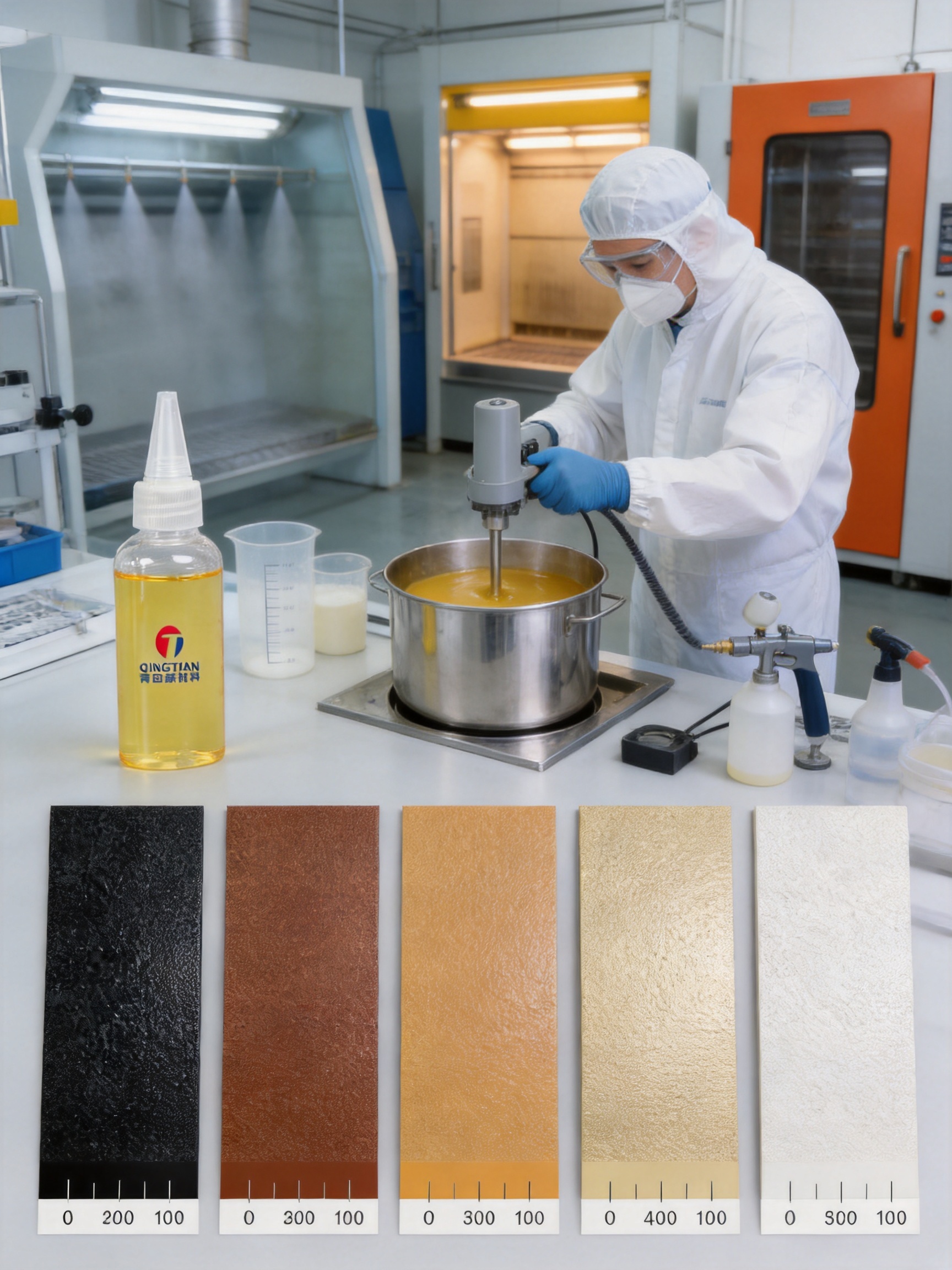
Suzhou Qingtian New Material Co., Ltd. specializes in raw materials for coatings, inks, and adhesives. This industry focus is relevant to DH-8100S because the performance of a texture additive is closely related to the behavior of other formulation ingredients. Experience with dispersants, leveling agents, defoamers, adhesion promoters, anti-settling agents, texture agents, and wax powders provides a broader technical context for product development.
Coatings, inks, and adhesives share many formulation principles, including wetting, dispersion, surface control, rheology, film formation, adhesion, and durability. Knowledge across these areas can support more effective troubleshooting when a textured coating shows foam, poor wetting, uneven distribution, insufficient adhesion, or unstable storage behavior.
The company has an experienced team that includes research and development specialists, sales professionals, and technical personnel. Its development structure is supported by testing equipment and research capabilities. For a specialty additive, this combination is important because customers often need more than a product name. They may need help evaluating addition sequence, dosage, system compatibility, appearance targets, and scale-up behavior.
Research capability also supports continuous product improvement. As water-based coatings evolve, additive suppliers must consider changing resin technologies, lower-emission requirements, new substrates, faster production lines, and more demanding appearance standards. A supplier with an established development function can respond more effectively to these changing conditions than a company focused only on distribution.
The company operates a modern production facility and has invested in advanced testing equipment. Although specific equipment models and process parameters are not provided, the existence of production and testing infrastructure supports the basic requirements of specialty additive manufacturing: controlled raw-material handling, repeatable processing, quality verification, batch management, and application evaluation.
For a product such as DH-8100S, manufacturing consistency is especially important. Small differences in active composition, particle or droplet distribution, residual moisture, or compatibility behavior can affect the final coating pattern. Controlled production and testing help reduce these variations and provide a more dependable material for downstream formulators.
Advanced manufacturing should not be defined only by machinery. It also includes process documentation, incoming-material controls, in-process checks, finished-product testing, packaging management, traceability, and customer feedback loops. These elements work together to create a stable supply system.
The company reports several development milestones, including the creation of China’s first ice flower resin in 2016, recognition as a National High-Tech Enterprise in 2020, and relocation to Lingrui Intelligent Manufacturing Park in Zhangjiagang High-Tech Zone in 2021 to strengthen research and production capacity.
These milestones indicate a long-term commitment to specialty materials and technical development. They also show that the company’s product strategy extends beyond a single additive. For customers, this broader platform may provide opportunities to source complementary materials or to seek coordinated solutions for complex coating formulations.
Texture additives are application-sensitive products. Customers may need to adjust pattern scale, surface roughness, gloss, metallic appearance, or coating process conditions. Technical service is therefore an important part of the supplier relationship.
A useful technical service program should help customers define the target appearance, select a suitable starting formulation, design comparative tests, analyze application results, and identify the source of variation. It should also distinguish between additive-related issues and problems caused by substrate preparation, spray settings, viscosity, drying, or oven conditions.
The company’s focus on innovation, quality, service, and win-win cooperation supports this type of application-oriented relationship. For industrial customers, dependable communication can be as important as the initial material selection, especially during product qualification and production transfer.
A professional evaluation of DH-8100S should consider both the additive itself and the finished coating. Incoming inspection may include appearance, packaging integrity, batch identification, and other supplier-defined quality parameters. Finished coating evaluation should include pattern development, storage stability, compatibility, and application behavior.
Batch-to-batch consistency is particularly important for decorative coatings. If the additive produces a different pattern from one delivery to the next, the coating manufacturer may experience customer complaints, production adjustments, or increased scrap. A retained-sample system and documented application test can help identify changes early.
Storage conditions should follow the supplier’s technical documentation and packaging instructions. Containers should be protected from contamination and handled in a way that preserves product uniformity. Before use, the material may require controlled mixing or conditioning, depending on the supplier’s recommendations and the product’s physical form.
Quality control should also include a change-management process. Any change to resin, pigment, defoamer, leveling agent, substrate, spray equipment, or curing conditions may affect the hammer tone effect. Production teams should review these changes through a controlled trial rather than assuming that the existing process will remain unchanged.
DH-8100S may be considered for industrial and decorative coating applications where a hammer tone or orange peel appearance is desired. Potential areas include metal equipment, machinery housings, electrical cabinets, fabricated components, household hardware, metal furniture, appliance parts, and other coated products requiring a distinctive surface design.
In aluminum and steel applications, the textured effect may help establish a recognizable product appearance. In colored coatings, the effect can add visual depth to black, white, gray, blue, green, red, and other shades, although each color should be tested because pigment type and concentration influence the result.
For architectural or consumer-facing products, appearance uniformity may be a primary concern. For industrial equipment, durability, adhesion, and chemical resistance may be more important. The same additive can be evaluated for different priorities, but the test program should be adapted to the intended end use.
For maintenance or air-drying coatings, the benefit may be the ability to create texture without using an oven. For factory-baked coatings, the benefit may be improved process control and the possibility of integrating a decorative effect into an existing production line.
Users should consult the current safety data sheet, technical data sheet, label information, and local regulations before handling or incorporating the product. Appropriate personal protective equipment should be selected based on the product’s composition and the work environment. Good industrial hygiene, ventilation, spill control, and container management should be maintained.
The product should be used only in formulations and processes that have been technically evaluated. A texture additive is not a substitute for correct substrate preparation, adequate ventilation, proper spray technique, or suitable curing conditions. Operators should be trained to recognize the difference between intentional texture and defects such as cratering, pinholes, crawling, blistering, or uneven drying.
Environmental compliance should be evaluated at the complete coating-system level. Water-based technology can help support lower-emission formulation goals, but the total coating may still contain coalescents, crosslinkers, additives, or other components that require assessment. Emissions, waste, cleaning water, overspray, and disposal practices should be managed according to applicable requirements.
If the pattern is too coarse, the formulator may investigate whether the additive level is too low, whether the coating viscosity is unsuitable, or whether the film thickness is excessive. Drying conditions and spray atomization should also be checked. Since the product information indicates that lower dosage produces a coarser pattern, a controlled increase in dosage may be one possible adjustment, provided that compatibility and other appearance properties remain acceptable.
If the pattern is too fine, the additive level may be higher than necessary for the target appearance. A controlled reduction can be evaluated. However, the formulator should also check whether the coating is being applied too thinly or whether rapid drying is changing the development of the film. The correct adjustment should be confirmed with comparative panels.
Uneven pattern formation may result from inadequate mixing, settling, inconsistent spray distance, variable film thickness, unstable viscosity, substrate temperature differences, or uneven drying. In metallic systems, aluminum pigment orientation may add another source of visual variation. A production investigation should examine both material and process factors.
Foam, craters, pinholes, and surface defects may be associated with the complete additive package rather than the hammer tone additive alone. Defoamer compatibility, substrate contamination, mixing conditions, and application equipment should be reviewed. A technically balanced formulation may require coordinated adjustment of the texture additive, defoamer, wetting agent, and leveling agent.
If the coating develops separation, settling, viscosity drift, or skin formation during storage, the formulation should be examined for resin compatibility, pigment stabilization, anti-settling support, and additive interactions. Accelerated storage tests can help identify potential issues, but real-time observation remains important before commercial release.
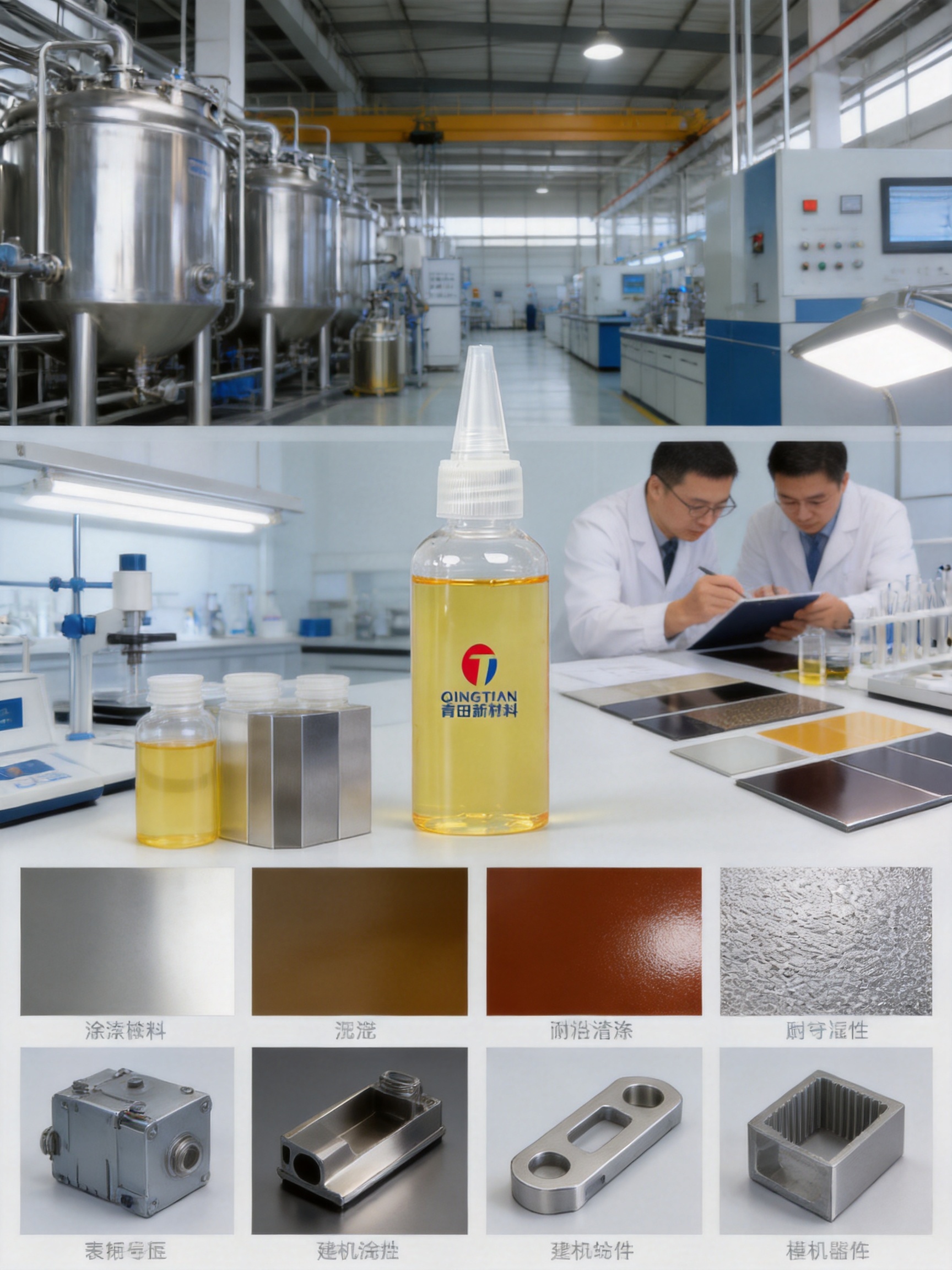
A disciplined workflow can shorten development time and reduce unnecessary production trials. First, define the desired appearance in clear terms, such as coarse hammer tone, fine hammer tone, subtle orange peel, or a stronger three-dimensional pattern. Second, select the intended coating system and substrate. Third, prepare a control formulation and a dosage ladder. Fourth, apply the samples under consistent conditions. Fifth, assess appearance and performance together.
The next step is to optimize the formulation around the selected additive level. This may include adjusting viscosity, solids, pigment concentration, drying balance, and the levels of other surface-control additives. After laboratory optimization, perform a pilot batch and compare it with the laboratory standard.
Finally, establish production specifications. These may include acceptable pattern range, gloss range, color tolerance, film thickness, drying or baking conditions, mixing time, spray settings, and inspection frequency. A clear specification converts a visual concept into a repeatable manufacturing process.
The following development sequence can be used as a practical guide:
| Stage | Main activity | Decision point |
|---|---|---|
| 1. Appearance definition | Describe the required hammer tone or orange peel effect | Target pattern is agreed |
| 2. System selection | Choose air-drying, two-component PU, amino baking, or another compatible system | Base formulation is selected |
| 3. Laboratory screening | Prepare control and dosage-variable samples | Compatibility and pattern response are acceptable |
| 4. Formulation optimization | Adjust viscosity, pigment, film thickness, and related additives | Appearance and basic performance meet requirements |
| 5. Pilot production | Evaluate larger-batch mixing and application | Scale-up behavior is consistent |
| 6. Durability testing | Conduct tests relevant to the end use | Coating performance is approved |
| 7. Production release | Define operating and inspection specifications | Process is ready for routine manufacturing |
It is used to create three-dimensional decorative patterns in paint films, especially hammer tone and orange peel effects. It can be considered for water-based air-drying systems, water-based two-component polyurethane systems, water-based amino baking paint systems, aluminum paste alkyd baking paint systems, and air-drying mixed paint systems.
Yes. The product information states that it can be used in aluminum powder paints as well as ordinary colored paints. The final result should be evaluated separately for each pigment and resin system.
Yes. It is identified for aluminum powder paints and aluminum paste alkyd baking paint systems. Metallic systems require careful evaluation of pigment orientation, surface flow, and lighting appearance.
According to the supplied information, a lower dosage produces a coarser pattern and a higher dosage produces a finer pattern. The exact dosage range should be established through laboratory testing because resin, pigment, viscosity, film thickness, and drying conditions also influence the result.
Yes. It is listed as suitable for water-based two-component PU systems. Users should evaluate pot life, mixing sequence, curing behavior, adhesion, hardness, chemical resistance, and appearance retention in the complete formulation.
Yes. The product is suitable for water-based air-drying systems and air-drying mixed paint systems. Application conditions should be controlled because temperature, humidity, air movement, and film thickness affect pattern formation.
No. A hammer tone additive is designed to create a structured decorative effect, while a leveling agent is generally used to improve surface flow and uniformity. Both may be required in a formulation, but their functions are different and must be balanced through testing.
A single universal dosage should not be assumed. Different binders, pigments, solids levels, and curing conditions can produce different results. A dosage ladder and application trial should be completed for each major system.
Recommended evaluation areas include compatibility, storage stability, pattern uniformity, gloss, color, adhesion, hardness, water resistance, chemical resistance, abrasion, and other durability requirements relevant to the application. Production-scale trials should also be performed.
The supplier specializes in coating, ink, and adhesive raw materials and offers a broader range of additives, including dispersants, leveling agents, defoamers, adhesion promoters, anti-settling agents, texture agents, texture powders, and wax powders. Its R&D team, testing equipment, production facility, and experience in specialty materials support application-oriented cooperation.
Customers should contact Suzhou Qingtian New Material Co., Ltd. for the latest technical data, safety information, recommended handling instructions, packaging details, sample availability, and system-specific guidance. Technical contact information supplied for the company includes inquiry@suzhouqingtianxcl.com and the telephone numbers +86-189 1262 7527 and +86-512 5817 8338.
DH-8100S Water-based Hammer Tone Additive is a specialized solution for coating manufacturers seeking controlled hammer tone, orange peel, and other three-dimensional paint-film effects. Its key value lies in its suitability for several water-based technologies, its use in aluminum powder and ordinary colored paints, and its dosage-based pattern adjustment.
The product can provide a more deliberate alternative to relying on uncontrolled application defects to create texture. It gives formulators a practical starting point for developing coarse or fine decorative effects, while allowing the coating system, substrate, application equipment, and curing process to be optimized around the target appearance.
The supplier’s experience in coating, ink, and adhesive materials strengthens the product proposition. Its R&D team, testing capabilities, modern production facility, specialty-additive portfolio, and reported development milestones support a comprehensive approach to material development and customer service.
For the best results, users should conduct controlled compatibility screening, establish a dosage-response curve, optimize the addition and application process, and verify performance at pilot and production scale. When these steps are followed, DH-8100S can become a useful component in the development of distinctive, repeatable, and commercially attractive textured coatings.
1. Product information supplied for DH-8100S Water-based Hammer Tone Additive, including application systems, pattern effects, and dosage-response guidance.
2. Company profile information supplied by Suzhou Qingtian New Material Co., Ltd., including product categories, research capabilities, production facilities, and development milestones.
3. General principles of water-based coating formulation, including film formation, wetting, surface tension, drying, curing, and application control.
4. General industrial coating evaluation practices covering adhesion, hardness, gloss, color, abrasion, water resistance, chemical resistance, and accelerated durability.
5. General guidance for laboratory screening, pilot-scale verification, batch consistency, process control, and quality assurance in specialty coating-additive applications.
 Wholesale Paint/ Coating Additives Manufacturers
Custom Industrial Chemical Solutions Suppliers