русский
 Español
 Français
Home / Author / Lu Xinzhi — Overseas Product Sales Specialist / Advanced Metal Adhesion Promotion for High-Performance Paint and Coating Systems
Lu Xinzhi — Overseas Product Sales Specialist

Content

Metal substrates are among the most demanding surfaces for modern paint and coating systems. Aluminum, zinc, stainless steel, electroplated components, and other nonferrous metals often combine smooth surfaces, low surface energy, passive oxide layers, residual processing oils, and limited chemical reactivity. These characteristics can make it difficult for a coating to establish a durable bond. Even when the initial appearance is excellent, inadequate adhesion may lead to peeling, blistering, cracking, edge lifting, or premature failure during forming, impact, solvent exposure, or outdoor service.
ADP Metal Adhesion Promoter is designed to address these challenges. It is an adhesion-promoting additive for coating systems applied to difficult-to-adhere metal substrates. Its primary purpose is to improve the attachment of the paint film to aluminum, zinc, stainless steel, electroplated surfaces, and related metal materials. In addition to supporting adhesion, the product can contribute to greater film ductility, improved impact resistance, enhanced solvent rub resistance, and lower baking-temperature requirements in suitable formulations.
The value of a metal adhesion promoter extends beyond one performance characteristic. A coating that adheres well but cracks during bending is not a complete solution. A film with good flexibility but weak solvent resistance may also be unsuitable for demanding industrial use. ADP Metal Adhesion Promoter is therefore positioned as a multifunctional formulation tool that helps coating manufacturers balance adhesion, mechanical durability, processing efficiency, and appearance.
For producers of industrial coatings, coil coatings, plastic-metal coating systems, transportation finishes, appliance coatings, protective coatings, and specialty paints, the additive can provide a practical route to improve performance without completely redesigning the coating platform. It can be incorporated into compatible coating formulations and evaluated through laboratory screening, adhesion testing, impact testing, flexibility testing, and solvent rub evaluation.
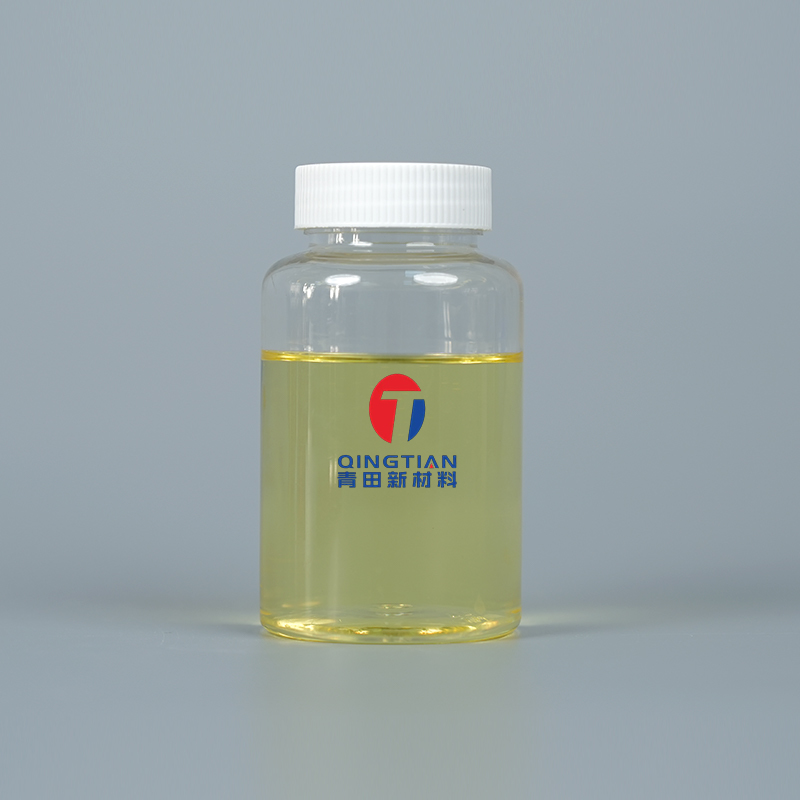
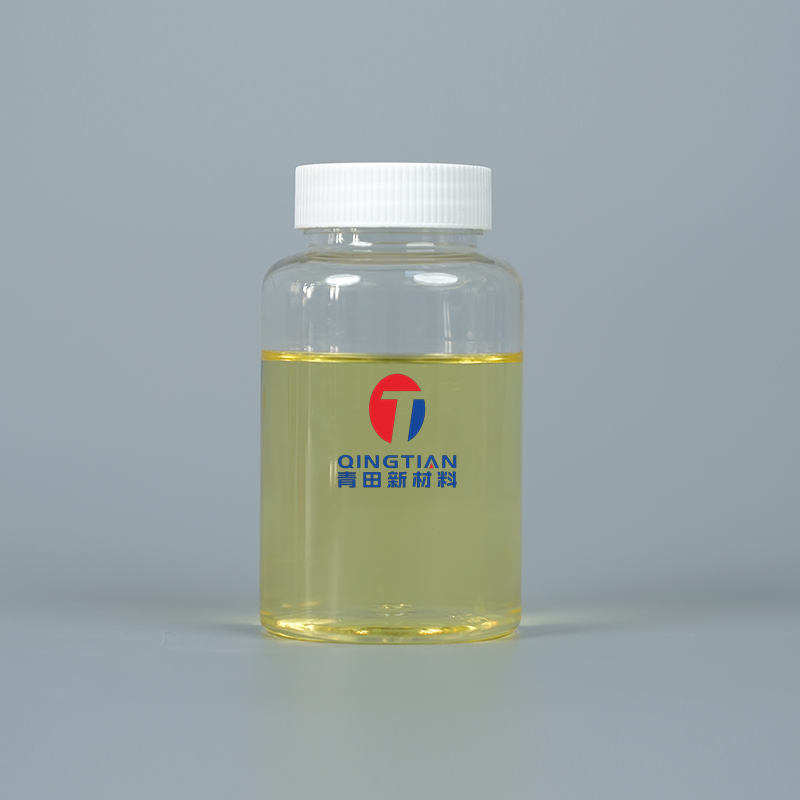
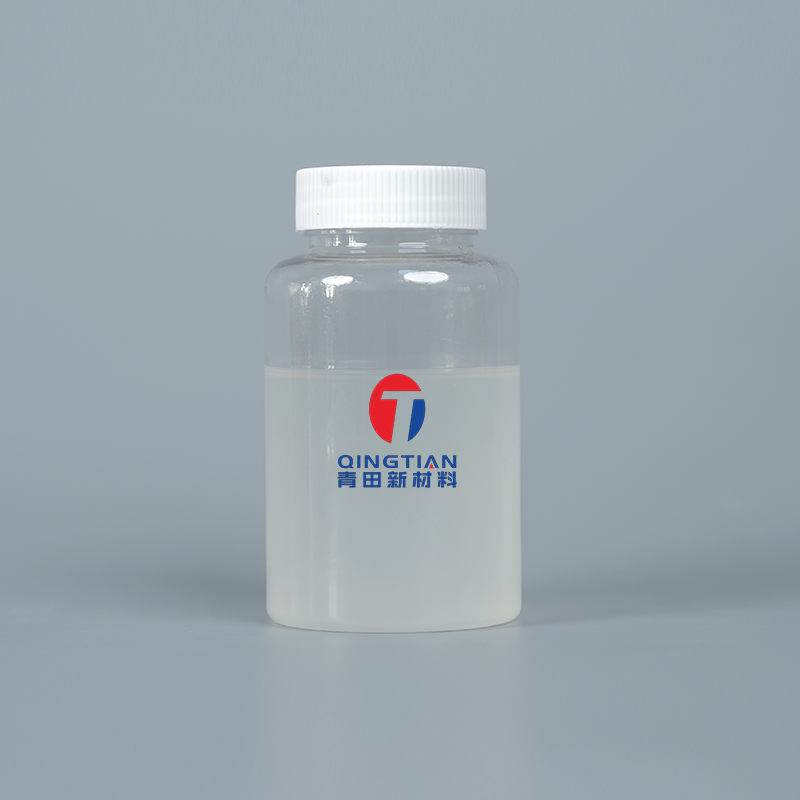
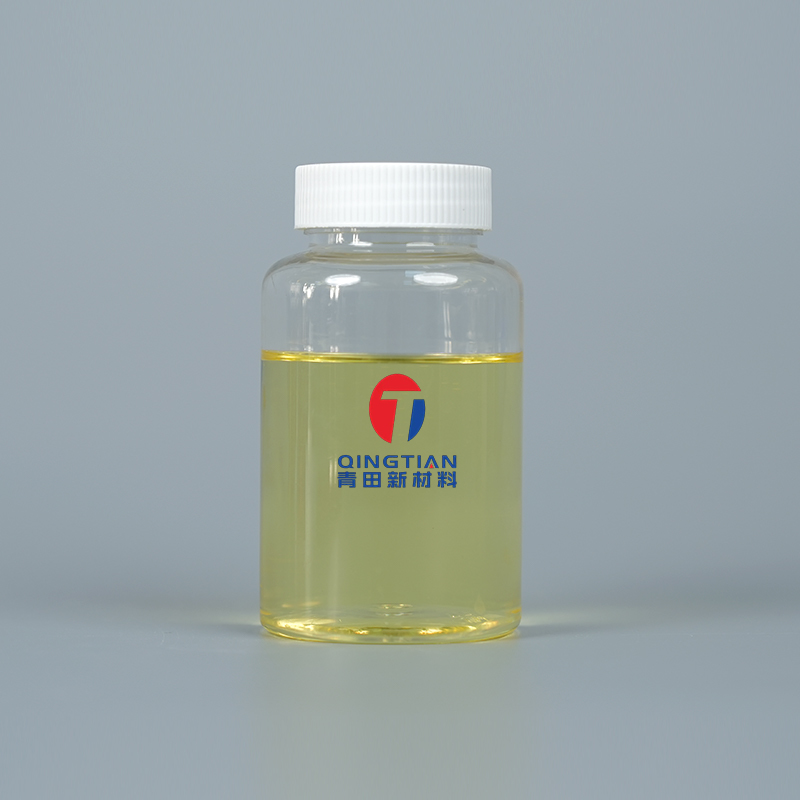
ADP Metal Adhesion Promoter
Metal is not a single, uniform coating substrate. Different metals possess different surface chemistries, oxide structures, roughness levels, thermal expansion behavior, and pretreatment histories. A coating formulation that performs well on cold-rolled steel may show weaker adhesion on aluminum. A system developed for aluminum may not deliver the same result on stainless steel or zinc-coated surfaces. This variability creates a continuous challenge for coating formulators.
Aluminum commonly develops a thin oxide layer when exposed to air. This layer protects the metal, but it can also affect the chemical interaction between the substrate and the coating. The surface may be smooth, relatively low in surface energy, and sensitive to rolling oils, cleaning residues, or forming lubricants. Without suitable preparation and formulation support, the coating may have difficulty achieving strong and consistent interfacial bonding.
Zinc and galvanized surfaces present another set of issues. Zinc can react differently from steel during pretreatment, storage, and coating application. Surface salts, oxides, oils, and variations in galvanizing quality can influence wetting and adhesion. The coating must remain attached during bending, impact, temperature cycling, and exposure to humidity or corrosive environments.
Stainless steel is particularly difficult because its corrosion-resistant oxide film is stable and chemically passive. Its smoothness and low surface reactivity can reduce the ability of conventional binders to form a strong interfacial relationship. Electroplated surfaces may also contain brighteners, process residues, or highly smooth finishes that complicate coating adhesion.
These problems are not solved by simply increasing resin content. A higher resin level may alter viscosity, gloss, hardness, drying speed, flexibility, and cost. Nor can adhesion always be improved by increasing coating thickness. Excessive film thickness can cause internal stress, slower solvent release, cracking, sagging, and poor appearance. A targeted adhesion promoter offers a more controlled approach by supporting the interaction between the coating and the substrate.
The central function of ADP Metal Adhesion Promoter is to improve coating adhesion to difficult metal substrates. It is intended for systems in which conventional binders, pigments, and standard surface preparation do not provide a sufficient level of adhesion. By improving the interfacial relationship between the coating film and the metal surface, the additive can help reduce the risk of delamination during service.
Improved adhesion is particularly important when the coated article will undergo forming, stamping, bending, impact, vibration, or repeated temperature changes. A film that remains bonded at the edges and around formed areas is more likely to retain its protective and decorative function. In industrial applications, this can help reduce rework, field complaints, premature coating replacement, and production losses caused by poor adhesion.
The product is suitable for evaluation on aluminum, zinc, stainless steel, electroplated metals, and other challenging surfaces. Actual performance depends on the resin chemistry, pigment package, pretreatment, curing conditions, substrate cleanliness, film thickness, and application method. For this reason, the additive should be assessed within the complete coating system rather than judged independently from a single raw-material test.
Metal parts are frequently bent, rolled, stamped, pressed, or mechanically assembled after coating. During these operations, the coating film must deform with the substrate. If the film is too brittle, it may crack, fracture, or detach from the metal even when the initial cross-hatch adhesion result appears acceptable.
ADP Metal Adhesion Promoter can increase the ductility of the paint film in suitable formulations. This benefit is important for coil coatings, formed metal panels, appliance components, construction materials, and other products exposed to mechanical deformation. Greater ductility helps the coating accommodate movement and reduces the likelihood of brittle failure during post-coating fabrication.
Ductility should be considered together with hardness. Excessively soft films may show poor block resistance, reduced scratch resistance, or lower resistance to handling damage. The purpose of a well-designed adhesion promoter is not simply to soften a coating, but to help create a more balanced film structure in which adhesion and flexibility are improved without sacrificing the main performance requirements of the application.
Coated metal products may experience impacts during transport, assembly, installation, or operation. An impact can create a local deformation of the metal and generate stress within the coating. If the film cannot absorb or distribute that stress, it may chip, crack, or lose adhesion around the impact site.
The use of an appropriate metal adhesion promoter can contribute to improved impact resistance by supporting the integrity of the film-substrate interface and increasing film toughness or ductility. This is particularly valuable for industrial finishes and protective coatings where the coated component must withstand handling and service-related mechanical stress.
Impact performance should be verified using the test method appropriate for the coating and end use. Common evaluations include direct impact, reverse impact, falling-weight, or application-specific impact procedures. Results should be compared against a control formulation prepared under the same application and curing conditions.
Many industrial coatings require thermal curing to develop their final adhesion, hardness, chemical resistance, and appearance. High baking temperatures increase energy consumption and may limit the choice of substrate, especially when the coated material includes heat-sensitive components or when production lines must operate under strict energy targets.
ADP Metal Adhesion Promoter can help improve coating performance at reduced baking temperatures in suitable systems. This potential benefit can expand the processing window and support more efficient manufacturing. Lower-temperature curing may also reduce thermal distortion, protect sensitive substrates, and help coating producers respond to energy-saving objectives.
Any reduction in baking temperature must be validated carefully. Cure response is influenced by resin type, crosslinker selection, catalyst level, film thickness, oven design, line speed, metal mass, substrate temperature, and time at peak metal temperature. A lower oven setting does not automatically mean that the coating has achieved complete cure. Film hardness, adhesion, solvent resistance, flexibility, and chemical resistance should all be confirmed after the adjusted bake schedule.
Solvent rub resistance is a useful indicator of coating cure, film integrity, and resistance to chemical attack. Coatings used on industrial components, metal panels, equipment, and appliances may contact cleaning agents, processing chemicals, fuels, oils, or other solvents during production and service.
ADP Metal Adhesion Promoter can improve the solvent rub resistance of the paint film in compatible formulations. This helps the coating maintain its integrity when exposed to repeated rubbing with a specified solvent. Better rub resistance may indicate a more coherent film structure and can support quality control during production.
Solvent rub testing should be performed with a clearly defined solvent, cloth or rubbing material, load, stroke count, and evaluation method. Because different coating chemistries respond differently to solvents, the result should be interpreted alongside cure testing, hardness, adhesion, and chemical-resistance data.
Coating formulators have several ways to address poor adhesion, including more aggressive pretreatment, mechanical abrasion, primer application, binder modification, increased cure temperature, or the use of a specialized adhesion promoter. Each method has advantages and limitations. ADP Metal Adhesion Promoter offers a formulation-centered approach that can complement existing preparation and coating technologies.
Increasing binder content may improve wetting in some systems, but it can also change viscosity, solids content, gloss, hardness, drying behavior, and raw-material cost. A targeted adhesion promoter is designed to address the interface more directly. This allows the formulator to seek improved adhesion without making a large change to the entire resin-to-pigment balance.
Mechanical roughening can increase surface area and create anchoring points, but it may be difficult to apply consistently across complex shapes or high-speed production lines. It can also generate dust, alter surface appearance, or increase preparation time. An adhesion promoter can reduce reliance on aggressive physical treatment when used with appropriate cleaning and pretreatment procedures.
When a coating has weak adhesion or incomplete cure, increasing the baking temperature may appear to be a simple solution. However, higher temperatures increase energy use and may affect color, gloss, substrate stability, or production-line capacity. A product that supports adhesion and solvent resistance at an appropriate lower-temperature cure can provide greater process flexibility.
Some adhesion solutions are designed for one specific substrate or resin family. ADP Metal Adhesion Promoter is intended for evaluation across several difficult metal surfaces, including aluminum, zinc, stainless steel, and electroplated materials. This broader application concept can simplify product development for manufacturers serving multiple metal markets.
Adhesion is only one requirement. Coatings used in real production must also tolerate bending, impact, handling, and solvent contact. The combination of adhesion improvement, increased ductility, impact resistance, and solvent rub resistance gives the product a broader performance profile than an additive focused only on initial substrate bonding.
| Performance requirement | Common formulation challenge | Potential contribution of ADP Metal Adhesion Promoter | Recommended verification |
|---|---|---|---|
| Metal adhesion | Smooth, passive, or contaminated metal surfaces | Supports stronger attachment of the film to difficult substrates | Cross-hatch, pull-off, peel, or application-specific adhesion testing |
| Film ductility | Cracking during bending or forming | Helps the film deform with the metal in suitable systems | Mandrel bend, T-bend, elongation, or forming tests |
| Impact resistance | Chipping or delamination after mechanical shock | Supports film integrity and interfacial durability | Direct or reverse impact testing |
| Low-temperature cure | High energy demand or heat-sensitive components | May support performance under a reduced bake schedule | Cure response, hardness, adhesion, and solvent rub testing |
| Solvent resistance | Film softening or removal during solvent contact | Improves solvent rub resistance in compatible formulations | Standardized solvent double-rub or equivalent test |
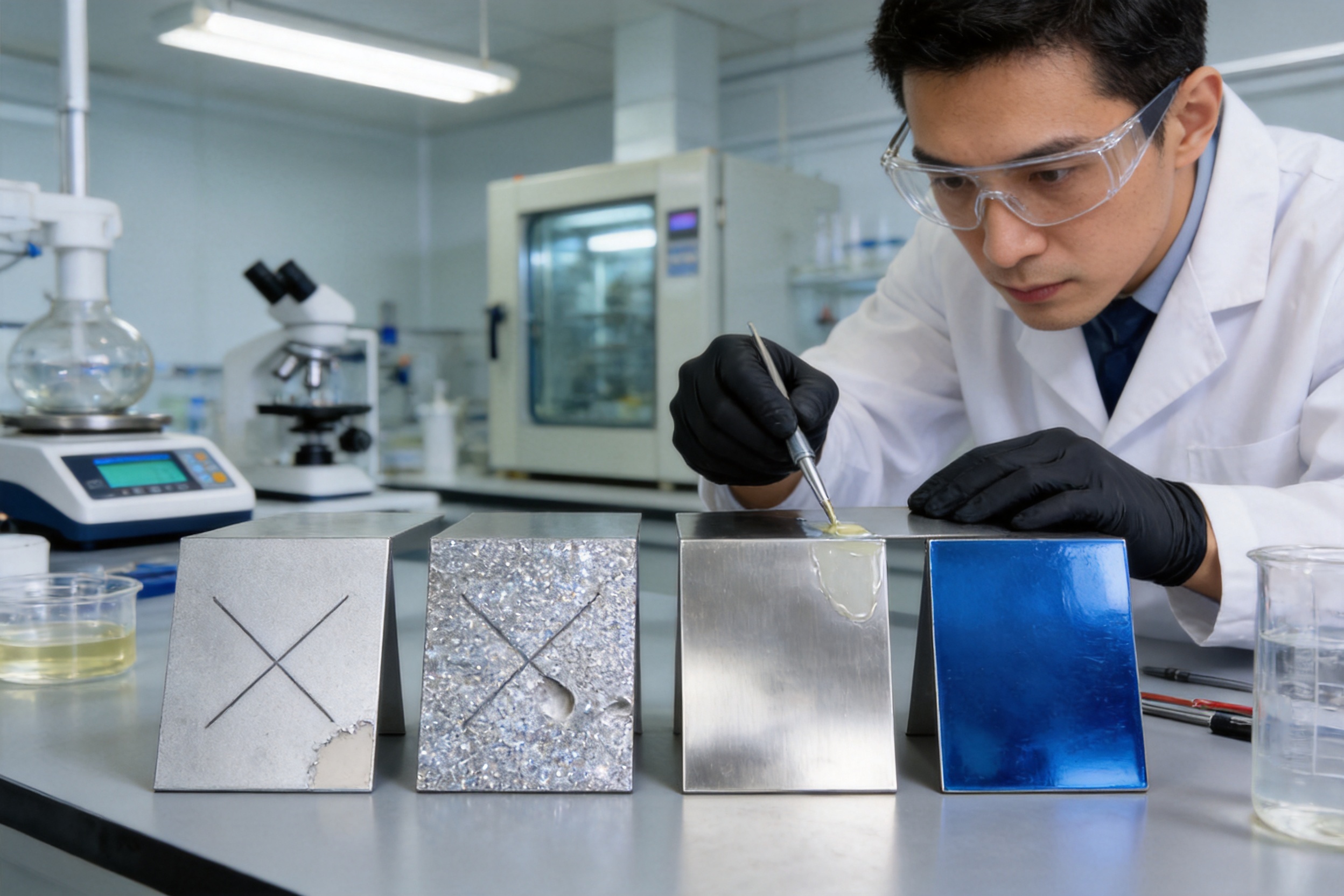
Coil coating lines operate at high speed and require reliable wetting, fast curing, consistent appearance, and strong adhesion. Aluminum and zinc-coated steel may be formed after coating, making flexibility and resistance to cracking especially important. An adhesion promoter can help improve the performance margin when the coating must withstand both continuous processing and subsequent fabrication.
In coil coating development, the additive should be tested at realistic line speeds and peak metal temperatures. Laboratory drawdowns are useful for screening, but pilot or production-line trials are necessary to confirm compatibility with cleaning, pretreatment, primer, topcoat, and forming conditions.
Industrial metal finishes are applied to equipment, housings, machinery, fabricated components, storage units, and structural parts. These products may be exposed to handling damage, chemicals, vibration, humidity, and temperature fluctuations. Strong adhesion and solvent rub resistance are important for both appearance retention and corrosion-protection performance.
ADP Metal Adhesion Promoter can be considered in solventborne, waterborne, or other compatible coating platforms after laboratory compatibility testing. The most suitable formulation level depends on resin chemistry and the performance target. Overuse of any additive may affect viscosity, gloss, recoatability, or storage stability, so optimization is essential.
Appliance panels and consumer metal products require attractive appearance as well as resistance to forming, handling, cleaning, and household chemicals. Aluminum, pretreated steel, galvanized metal, and electroplated components may all be encountered within a single product portfolio.
A coating additive that supports adhesion and flexibility can help reduce edge failure, chipping, and visible damage during assembly. Improved solvent rub resistance can also be useful during manufacturing, where parts may be wiped or cleaned before final packaging.
For protective coatings, adhesion is closely linked to long-term performance. A coating that loses contact with the substrate can allow moisture and corrosive species to move beneath the film. This may lead to underfilm corrosion, blistering, and progressive delamination.
An adhesion promoter does not replace appropriate substrate preparation, corrosion-inhibitive pigments, primers, or film-thickness control. Instead, it can be used as one element in a complete corrosion-protection strategy. Testing should include adhesion before and after humidity, salt spray, immersion, cyclic corrosion, or other relevant exposure procedures.
Electroplated parts often have smooth, decorative, or chemically passive surfaces. Their production history may include brighteners, rinsing agents, polishing compounds, and handling residues. These variables can make coating development difficult, especially where a transparent, colored, or thin decorative coating is required.
ADP Metal Adhesion Promoter can be screened for electroplated applications where conventional coating adhesion is insufficient. Cleaning, activation, and surface-energy measurement should be integrated into the development process to ensure that the additive is not being used to compensate for avoidable contamination or inadequate preparation.
Compatibility with the primary binder is the first consideration when evaluating an adhesion promoter. The resin may be acrylic, polyester, epoxy, polyurethane, alkyd, or another coating polymer. The additive should be assessed for clarity, phase stability, viscosity change, color impact, gloss, storage stability, and effect on cure.
Small laboratory additions can be prepared using a controlled mixing sequence. The additive may be incorporated into the grind, let-down, or final adjustment stage depending on its physical form and compatibility. The correct addition point should be determined through controlled comparison rather than assumed from a general procedure.
Even a high-performance adhesion promoter cannot reliably overcome heavy oil, grease, dust, salts, corrosion products, or incompatible pretreatment residues. Metal surfaces should be cleaned using a method suitable for the substrate and production environment. Cleaning must be consistent between control and modified formulations so that the effect of the additive can be measured accurately.
For aluminum, zinc, stainless steel, and electroplated surfaces, the formulator should record the substrate grade, surface finish, supplier, storage conditions, cleaning process, pretreatment chemistry, and time between preparation and coating. These factors can have a major influence on test repeatability.
Uniform distribution is essential. The additive should be introduced under mixing conditions that provide sufficient circulation without excessive air entrainment. If the product is added to a pigmented system, the formulator should observe changes in dispersion quality, grind, flooding, floating, viscosity, and color acceptance.
Mixing equipment, shear level, batch temperature, and addition sequence should be documented. A repeatable procedure helps prevent false conclusions caused by inconsistent laboratory preparation. Production-scale trials should confirm that the additive can be incorporated using available equipment and normal batch-processing time.
The effect of ADP Metal Adhesion Promoter should be evaluated over a cure matrix rather than at only one baking condition. For example, the study may compare nominal cure, reduced temperature, reduced time, and extended cure. Each condition should be tested for adhesion, hardness, solvent rub resistance, flexibility, impact, gloss, and appearance.
This approach helps identify whether the additive expands the processing window or simply shifts one performance result under a single condition. It also helps coating producers determine the safest operating range for commercial manufacturing.
A reliable evaluation program begins with a control coating. The control should use the same resin, pigments, solvents, additives, substrate, application method, film thickness, and cure schedule as the modified coating. Only the adhesion-promoter variable should be changed during the initial comparison.
Adhesion can be evaluated using cross-hatch or cross-cut testing, pull-off testing, peel testing, or a method specified by the end customer. For formed metal applications, adhesion should also be checked after bending or deformation. A coating that passes an initial dry adhesion test but fails after forming may not be suitable for the intended use.
Flexibility can be examined through mandrel bending, T-bend, reverse-impact deformation, elongation, or application-specific forming procedures. Impact resistance should be measured using a controlled instrument and a defined film thickness. Solvent rub resistance should be evaluated using a consistent solvent, number of double rubs, applied pressure, and failure criterion.
Additional testing may include hardness, gloss, color, recoat adhesion, water resistance, humidity resistance, salt spray, cyclic corrosion, chemical resistance, and accelerated weathering. The exact test package should reflect the final market and service environment.
| Evaluation stage | Purpose | Typical observations |
|---|---|---|
| Compatibility screening | Confirm that the additive can be incorporated into the coating | Clarity, viscosity, phase stability, color, gloss, and storage behavior |
| Adhesion screening | Compare the modified coating with the control | Cross-cut retention, pull-off strength, peel behavior, and edge lifting |
| Mechanical testing | Assess film response to deformation and impact | Bend cracking, chipping, delamination, and film flexibility |
| Cure evaluation | Determine the useful processing window | Hardness, solvent rub resistance, adhesion, and appearance at different bake schedules |
| Durability testing | Confirm performance under service-related exposure | Humidity resistance, corrosion behavior, chemical resistance, and weathering stability |
| Scale-up verification | Confirm manufacturing repeatability | Batch consistency, line performance, application stability, and quality-control results |
The performance of a coating additive depends not only on its chemical concept but also on manufacturing consistency. Variations in raw materials, reaction control, blending, filtration, filling, or packaging can affect the final product and the performance of the customer’s coating. A dependable supplier must therefore combine formulation expertise with disciplined production and testing.
Suzhou Qingtian New Material Co., Ltd. operates as a professional supplier of raw materials for coatings, inks, and adhesives. Since its establishment in 2012, the company has developed an experienced team that includes research and development specialists, technical personnel, and sales professionals. Its production capability is supported by modern facilities, testing equipment, and research resources.
The company’s product portfolio includes dispersants, leveling agents, defoamers, adhesion promoters, anti-settling agents, cooling agents, conductive agents, orange peel texture agents, texture powders, and wax powders. This broad product structure gives the technical team experience across multiple formulation problems, including wetting, dispersion, surface control, foam management, texture development, conductivity, sedimentation control, and substrate adhesion.
For customers evaluating a metal adhesion promoter, this broader additive background is valuable. Adhesion cannot always be separated from other coating properties. A dispersant may influence pigment distribution. A defoamer may affect surface defects. A leveling agent may change wetting and appearance. A wax additive may influence slip and recoatability. A supplier familiar with the full additive package can provide a more complete formulation discussion than a supplier focused on one isolated performance claim.
The company has emphasized research, innovation, and application development as part of its growth. Its development milestones include the creation of an ice flower resin in 2016, recognition as a National High-Tech Enterprise in 2020, and relocation to Lingrui Intelligent Manufacturing Park in Zhangjiagang High-Tech Zone in 2021. These developments reflect a continuing effort to strengthen research, production, and technical-support capabilities.
For ADP Metal Adhesion Promoter, research capability supports the evaluation of resin compatibility, substrate response, processing conditions, and performance trade-offs. It also helps the supplier respond to different customer requirements, such as improved adhesion on a particular metal grade, compatibility with a specific resin, reduced baking temperature, or improved flexibility after forming.
Modern production facilities are important for controlling batch consistency and maintaining reliable supply. Process control may include verified raw-material input, controlled addition sequences, temperature management, mixing-time control, filtration, packaging inspection, and retention-sample management. The specific manufacturing procedure should be confirmed through the supplier’s technical documentation and customer qualification process.
Testing equipment supports both product release and application development. A coating-additive supplier should be able to investigate changes in viscosity, appearance, compatibility, adhesion, mechanical behavior, and solvent resistance. Application testing also helps distinguish additive-related problems from substrate contamination, poor pretreatment, incomplete cure, or unsuitable coating design.
Technical service is particularly important for adhesion-promoter products because performance depends on the entire formulation and process. A customer may need support with addition level, mixing sequence, substrate preparation, resin selection, cure conditions, or troubleshooting. The company’s combined R&D and sales structure allows product discussions to include both technical and commercial considerations.
Customers can work with the supplier to define the substrate, coating type, application method, curing conditions, target properties, regulatory requirements, packaging needs, and expected production volume. This information provides a basis for sample selection and a more meaningful evaluation plan.
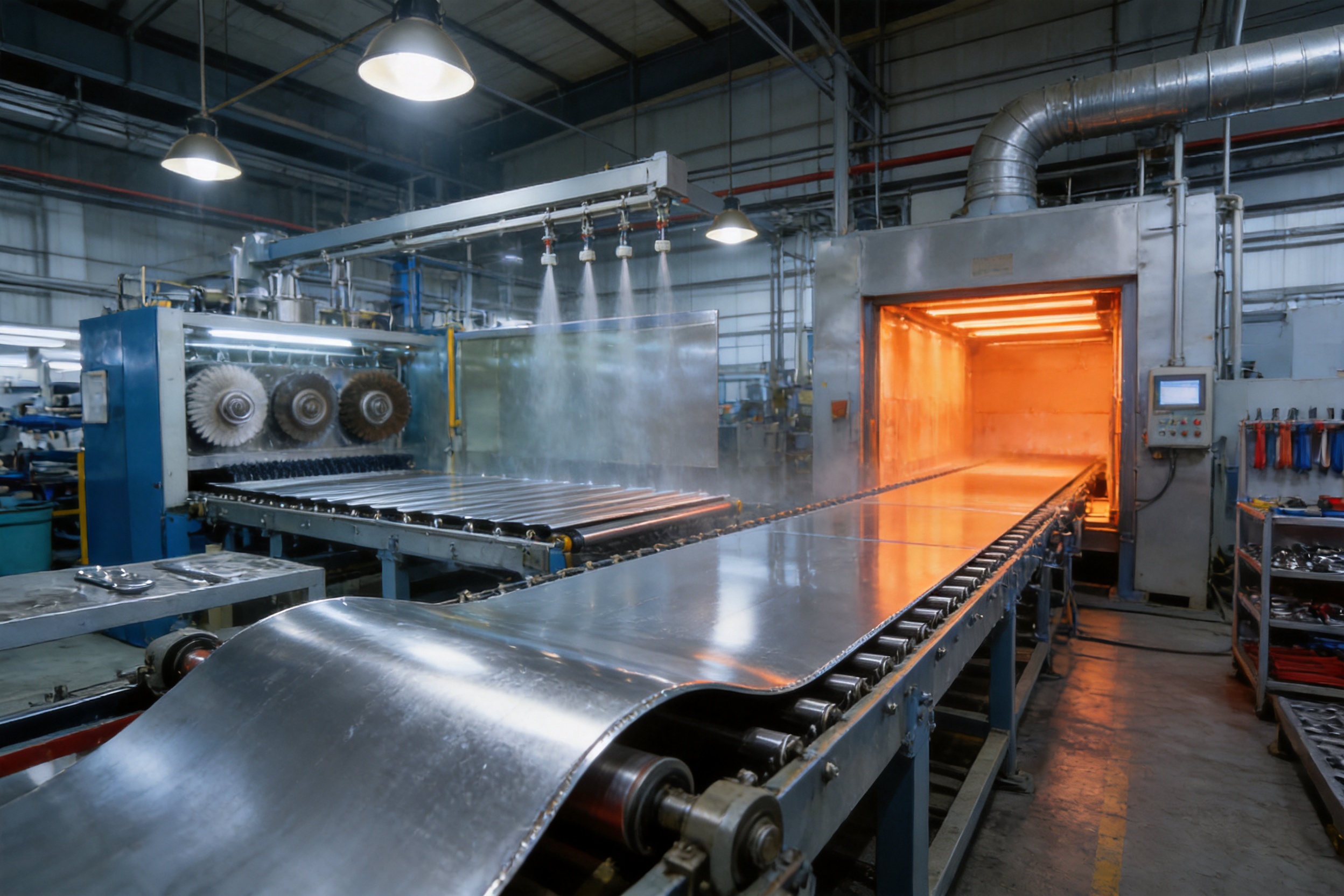
Coating development can become expensive when every substrate requires a completely different primer, pretreatment, or resin platform. A versatile adhesion promoter may help formulators explore a common coating architecture across several metal surfaces. While each substrate still requires validation, the ability to use a shared additive strategy can shorten screening work and simplify inventory planning.
The product may also help reduce the number of formulation compromises required to obtain acceptable performance. For example, a formulator may not need to increase film thickness solely to improve adhesion, or increase cure temperature solely to improve solvent resistance. Instead, the additive can be assessed as part of a balanced formulation designed around the actual production process.
Reducing development complexity does not mean eliminating testing. It means focusing testing on the variables most likely to affect performance. A structured screening program can compare a control and several addition levels across representative substrates, followed by optimization of cure and mechanical performance.
All coating additives should be handled according to the current safety data sheet, technical data sheet, and applicable local regulations. Personnel should use appropriate protective equipment, ventilation, storage controls, and spill-management procedures. The product should be stored in its original, properly closed container under the conditions specified by the supplier.
Before commercial use, customers should review regulatory status, transport classification, workplace exposure requirements, and compatibility with their own environmental, health, and safety procedures. The additive should not be treated as a substitute for adequate engineering controls or responsible chemical handling.
Responsible use also includes avoiding unnecessary overdosage. The optimum level is the lowest concentration that meets the required performance target while preserving appearance, stability, application behavior, and cost efficiency. A controlled dosage study is therefore recommended for each coating system.
A practical development workflow begins with a clear definition of the problem. The formulator should identify whether the primary failure is dry adhesion, wet adhesion, post-forming adhesion, impact chipping, solvent resistance, incomplete cure, or a combination of these issues. The metal type and surface history should be documented at the same time.
The next step is to prepare a control coating and a small series of modified formulations. The series should cover a sensible range of addition levels selected in consultation with the supplier. Each sample should be mixed under controlled conditions and applied at a consistent film thickness.
Testing should then proceed from basic compatibility and appearance to adhesion, flexibility, impact, cure response, and solvent rub resistance. The most promising formulations can be tested on additional metal grades and under more demanding exposure conditions. Pilot-scale production should follow only after laboratory results demonstrate a clear benefit.
During scale-up, the manufacturer should verify batch-mixing behavior, line speed, oven conditions, substrate cleaning, coating thickness, and inspection criteria. Any change in raw materials or production equipment should be recorded because such changes may influence the final result.
It is used to improve the adhesion of paint and coating films to difficult metal substrates, including aluminum, zinc, stainless steel, and electroplated surfaces. It can also support film ductility, impact resistance, reduced-temperature baking performance, and solvent rub resistance in suitable formulations.
Yes. Aluminum is one of the primary difficult substrates for which the product can be evaluated. The final result depends on aluminum grade, oxide condition, surface cleanliness, pretreatment, resin chemistry, film thickness, and curing conditions.
It can be evaluated on zinc and galvanized materials. Because zinc surfaces may contain oxides, salts, oils, and pretreatment residues, consistent cleaning and surface preparation are important for reliable results.
Yes, stainless steel is an appropriate substrate for evaluation. Its passive oxide layer and smooth surface can make adhesion difficult, so the additive should be tested together with a suitable cleaning and preparation process.
Not necessarily. The product is an adhesion-promoting additive and should be considered as part of the complete coating system. A primer may still be required for corrosion protection, appearance, build, or other performance objectives.
It may support performance at a reduced baking temperature in compatible systems. This must be confirmed through a controlled cure study because the actual result depends on resin, crosslinker, catalyst, film thickness, oven conditions, and line speed.
Prepare a control and modified coating under identical conditions. Compare adhesion, post-forming performance, impact resistance, solvent rub resistance, hardness, gloss, appearance, and storage stability. Testing should use representative metal substrates and the intended production cure schedule.
It can increase film ductility in suitable coating systems. The benefit should be confirmed through bending, forming, elongation, or other application-specific tests. Flexibility should be balanced with hardness, scratch resistance, block resistance, and chemical resistance.
Useful information includes the metal type and grade, surface condition, pretreatment, resin system, pigment package, solvent or water balance, application method, dry-film thickness, curing schedule, current failure mode, target performance, and test method.
No additive should be assumed to be universally compatible. Compatibility must be confirmed in the intended resin and formulation. Initial checks should include appearance, viscosity, storage stability, gloss, color, cure response, and recoat behavior.
Customers can contact Suzhou Qingtian New Material Co., Ltd. for product consultation, samples, technical documentation, and application discussions. The supplier can help define an evaluation program based on the customer’s substrate and coating requirements.
ADP Metal Adhesion Promoter is designed for coating manufacturers that need stronger and more reliable adhesion to difficult metal surfaces. Its principal advantages include improved bonding to aluminum, zinc, stainless steel, and electroplated substrates, along with potential gains in film ductility, impact resistance, solvent rub resistance, and reduced-temperature baking performance.
Its value is greatest when it is used as part of a complete formulation and process strategy. Proper substrate preparation, resin selection, mixing, application, curing, and testing remain essential. The product should be evaluated against a well-prepared control and tested under conditions that represent the actual production and service environment.
The supplier’s experience in coatings, inks, and adhesives, together with its broad additive portfolio, research team, modern production resources, testing capability, and application-oriented service, provides a strong foundation for customer development work. By combining a targeted adhesion solution with disciplined manufacturing and technical support, coating producers can pursue better performance, broader substrate compatibility, and more efficient product development.
For industrial users, the practical objective is not merely to obtain a higher laboratory adhesion value. The objective is to create a coating that remains attached, flexible, impact-resistant, solvent-resistant, and visually acceptable throughout manufacturing, forming, transport, installation, and service. A carefully selected metal adhesion promoter can be an important part of achieving that result.
1. Suzhou Qingtian New Material Co., Ltd., product information for ADP Metal Adhesion Promoter.
2. Suzhou Qingtian New Material Co., Ltd., corporate information and product portfolio overview.
3. ASTM International, standard practices for evaluating adhesion of coatings to metal substrates.
4. ASTM International, standard methods for measuring impact resistance of organic coatings.
5. ASTM International, standard methods for evaluating solvent resistance and cure of coating films.
6. International Organization for Standardization, coating adhesion, flexibility, corrosion, and surface-preparation testing standards.
7. General technical literature on coil coatings, metal pretreatment, polymer film formation, and industrial coating durability.
 Wholesale Paint/ Coating Additives Manufacturers
Custom Industrial Chemical Solutions Suppliers