русский
 Español
 Français
Home / Author / Lu Xinzhi — Overseas Product Sales Specialist / Micronized PE and PA Wax Powder Additive for High-Performance Metal Printing Coatings
Lu Xinzhi — Overseas Product Sales Specialist

Content
Metal printing coatings must perform under demanding conditions. A printed metal package, tinplate component, decorative metal panel, or formed metal part may experience rubbing, stacking, sliding, handling, deep drawing, recoating, and transportation before it reaches the final customer. The coating therefore needs more than attractive color and gloss. It must also provide a balanced combination of scratch resistance, slip, hardness, anti-blocking performance, wear resistance, transparency, flexibility, and process compatibility.
F-2315E is an environmentally friendly micronized wax powder additive developed for metal printing, especially tin printing. Based on a PE and PA wax system, it is designed to improve the surface performance of coating films while preserving important downstream properties such as recoatability and deep-drawing behavior. Its purpose is not simply to make a coating harder. Instead, it supports a carefully balanced surface-modification strategy in which lubricity, smooth hand feel, resistance to mechanical damage, and coating-process stability work together.
The product is supplied as a micronized powder with good dispersibility. It can be dispersed by manual stirring under suitable formulation conditions, which may simplify laboratory development, small-batch preparation, and production trials. Once incorporated into a compatible coating system, the additive can improve the film’s ability to resist scratches and rubbing while contributing to a smoother surface and reduced blocking tendency.
This article examines the working value of F-2315E, its main technical advantages, its relevance to metal printing, formulation considerations, quality expectations, and the manufacturing strengths supporting its development. It also explains why a PE and PA micronized wax powder can be preferable to less balanced alternatives when the coating must combine surface durability with transparency, formability, and recoatability.
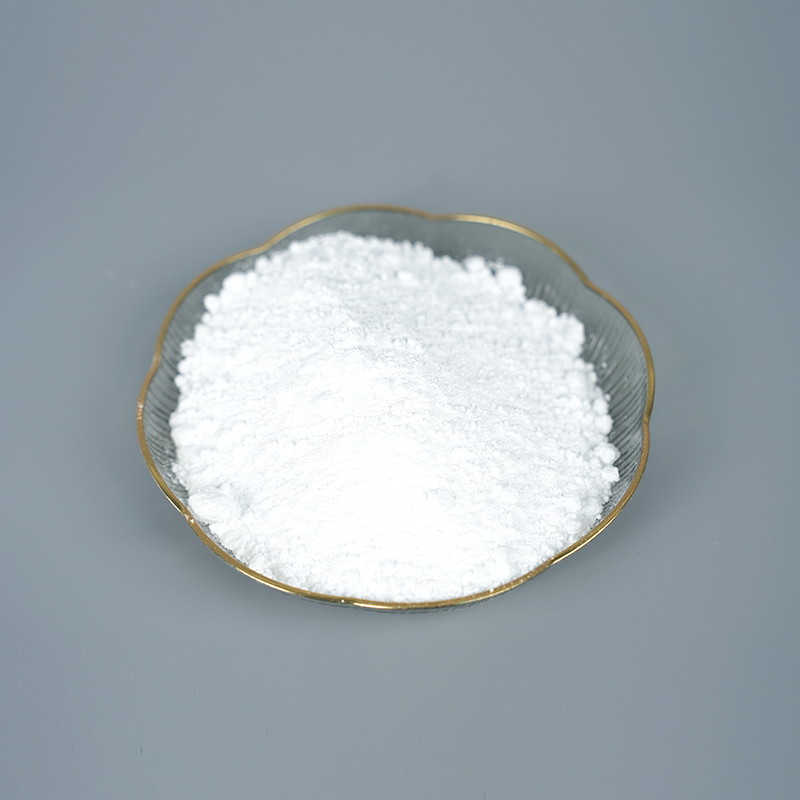
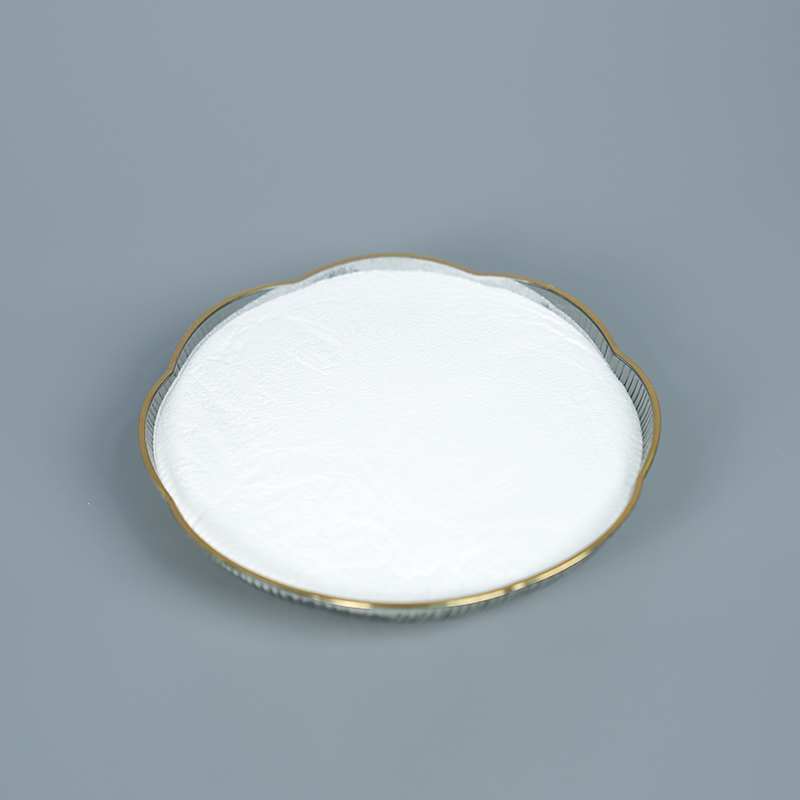
F-2315E Micronized Wax Powder Additive(PE&PA)
Wax additives are used in coatings to modify the surface rather than to replace the main film-forming resin. The resin supplies the primary structure, adhesion, chemical resistance, and film integrity. The wax powder contributes targeted surface properties, including slip, abrasion resistance, scratch resistance, anti-blocking behavior, and tactile feel.
In a metal printing coating, this surface contribution is particularly important because the coated substrate may be exposed to direct contact with tooling, rollers, guides, stacking surfaces, packaging materials, and other coated parts. Even when the underlying coating is chemically resistant, repeated friction can create visible scuffing or loss of appearance. A properly selected micronized wax powder can reduce the coefficient of friction at the surface and help the film withstand routine mechanical contact.
The additive must, however, be selected with care. Excessive wax migration, poor compatibility, large particles, inadequate dispersion, or excessive surface concentration may produce haze, gloss reduction, cratering, weak intercoat adhesion, or poor print appearance. Metal printing applications frequently require an attractive and uniform surface, so a wax powder needs to provide protection without creating an obvious visual defect.
F-2315E addresses this balance through a PE and PA wax composition in micronized powder form. The combination is intended to deliver a smooth hand feel, useful lubricity, and improved resistance to scratching and wear while maintaining good transparency. Its stated suitability for metal printing makes it especially relevant to tin printing coatings where both decorative quality and physical durability are essential.
F-2315E is a micronized wax powder additive based on polyethylene and polyamide wax technology. It is positioned as an environmentally friendly, fluorine-free anti-scratch additive for metal printing. The product is designed for incorporation into paint and coating systems where surface protection, slip, and film durability are required.
The central performance benefits can be summarized as follows:
Scratch resistance: The additive helps the cured coating film withstand marks caused by fingernails, metal contact, packaging contact, sliding, and other forms of mechanical abrasion.
Lubricity: The wax powder can create a smoother surface with lower friction, supporting easier movement between coated surfaces and reducing the severity of rubbing damage.
Hardness: The additive contributes to a harder and more durable surface feel when properly formulated, helping the film resist minor impressions and surface wear.
Anti-blocking performance: Coated surfaces are less likely to adhere to one another under pressure, stacking, or storage conditions when the formulation is correctly balanced.
Wear resistance: Repeated contact and handling can be managed more effectively, helping preserve the visual quality of the coating over time.
Recoatability: Unlike certain strongly surface-active or incompatible additives, F-2315E is designed to improve surface performance without preventing subsequent coating layers from bonding properly under suitable application conditions.
Transparency: The product offers good transparency, an important characteristic for clear coats, pigmented systems where color clarity matters, and decorative finishes in which the surface must remain visually clean.
Deep-drawing performance: The product is described as having excellent deep-drawing properties, supporting applications in which coated metal is formed after coating or subjected to substantial deformation.
Dispersibility: It can be dispersed by manual stirring under appropriate conditions, providing convenience during formulation development and evaluation.
Smooth hand feel: The wax system can produce a pleasant, low-friction tactile surface, which is valuable in decorative coatings and consumer-facing metal products.
Fluorine-free formulation: The product is presented as environmentally friendly and fluorine-free, helping formulators address growing interest in alternatives that avoid intentionally added fluorinated components.
Polyethylene wax and polyamide wax each contribute distinctive properties to a coating. Polyethylene wax is widely associated with slip, abrasion resistance, anti-blocking, and surface durability. Polyamide wax is often valued for its toughness, lubricity, and contribution to a smooth, robust surface. Combining the two types can support a broader performance profile than relying on only one wax chemistry.
The advantage of a PE and PA system is balance. A coating may need a surface that is hard enough to resist scratches but not so brittle that it cracks during forming. It may need low friction but also good intercoat adhesion. It may need anti-blocking performance while retaining clarity and acceptable gloss. It may need a dry, smooth feel without excessive wax bloom or visible surface defects.
F-2315E is designed around this type of balance. The polyethylene component supports the mechanical and friction-related requirements of the coating surface, while the polyamide component contributes to smoothness, toughness, and film robustness. The resulting additive is intended to improve several related properties without forcing the formulator to choose between scratch resistance and formability.
This balanced approach can be especially valuable in metal printing because the final coating may be processed in more than one stage. The film can be printed, dried or cured, stacked, handled, formed, overprinted, or recoated. An additive that performs well in only one stage may create problems later. F-2315E is positioned for applications where surface protection must remain compatible with the broader manufacturing sequence.
Product selection is not determined by one performance value. A wax powder that produces excellent slip may reduce recoatability. A highly hard wax may create brittleness or poor deep-drawing behavior. A coarse powder may increase surface roughness and reduce transparency. A strongly fluorinated additive may offer low friction but may not meet a customer’s environmental or material-preference requirements.
F-2315E offers several potential advantages over these less balanced approaches.
Many coating users want scratch resistance without a heavily altered appearance. F-2315E is designed to improve anti-scratch performance while also supporting good transparency. This can be advantageous in clear or lightly pigmented systems where haze, whitening, or visible particles would be unacceptable.
In industrial production, a coated metal surface may need an additional layer for decoration, protection, printing, or repair. If the first coating has excessive surface repellency, poor wetting, or wax migration, the second layer may suffer from cratering, fish eyes, weak adhesion, or uneven coverage. F-2315E is intended to improve surface durability without affecting recoatability when the formulation and application conditions are properly controlled.
Deep drawing places substantial stress on a coating. A film that performs well on a flat panel may crack, delaminate, or lose appearance when the metal is shaped. The stated excellent deep-drawing properties of F-2315E make it relevant to coated metal components that require post-coating forming or severe deformation.
Environmental requirements and customer specifications are increasingly influencing additive selection. A fluorine-free anti-scratch wax powder gives formulators an option for improving surface performance without intentionally introducing fluorinated chemistry into the coating formulation. This can support product development for markets that have restrictions, internal sustainability targets, or a preference for simplified material declarations.
Some wax powders require intensive processing, specialized equipment, or lengthy pre-dispersion steps. F-2315E is described as having good dispersibility and being capable of dispersion by manual stirring. This does not eliminate the need for proper mixing in commercial production, but it can reduce barriers during laboratory screening and make initial formulation work more efficient.
Surface feel is a practical indicator of coating quality in many applications. A smooth hand feel can reinforce the impression of durability, cleanliness, and premium finish. The PE and PA wax system supports a surface that is not only more resistant to mechanical damage but also pleasant to touch.
Tin printing and metal packaging coatings operate under a combination of decorative, mechanical, and processing demands. The coating must protect the metal, preserve printed graphics, and maintain an attractive appearance during converting, stacking, filling, transport, and use.
During production, sheets or components may come into contact with rollers, conveyors, guides, clamps, and other coated or uncoated surfaces. Small defects can become visible as scuff marks, dull patches, or scratches. When the product is stacked, pressure and heat may also increase the risk of blocking. A surface additive that improves slip and anti-blocking can reduce these risks.
At the same time, the coating cannot be so soft that it marks easily. It cannot be so brittle that it cracks during forming. It cannot lose transparency or interfere with the color and gloss of the printed design. It should also accept additional coatings or inks where the production process requires overprinting, varnishing, or recoating.
F-2315E is suited to this demanding combination because it targets multiple surface properties at once. Its anti-scratch function helps protect printed designs. Its lubricity can reduce friction during handling. Its hardness and wear resistance contribute to longer-lasting appearance. Its anti-blocking effect can support stacking and storage. Its transparency helps preserve visual quality. Its deep-drawing properties support forming operations. Its recoatability helps maintain process flexibility.
The additive may be considered for clear protective coatings, transparent overprint varnishes, pigmented metal coatings, and other compatible systems used on tinplate or related metal substrates. Final suitability should always be confirmed through application-specific testing, because coating resin, pigment load, curing method, film thickness, substrate treatment, and forming conditions all influence performance.
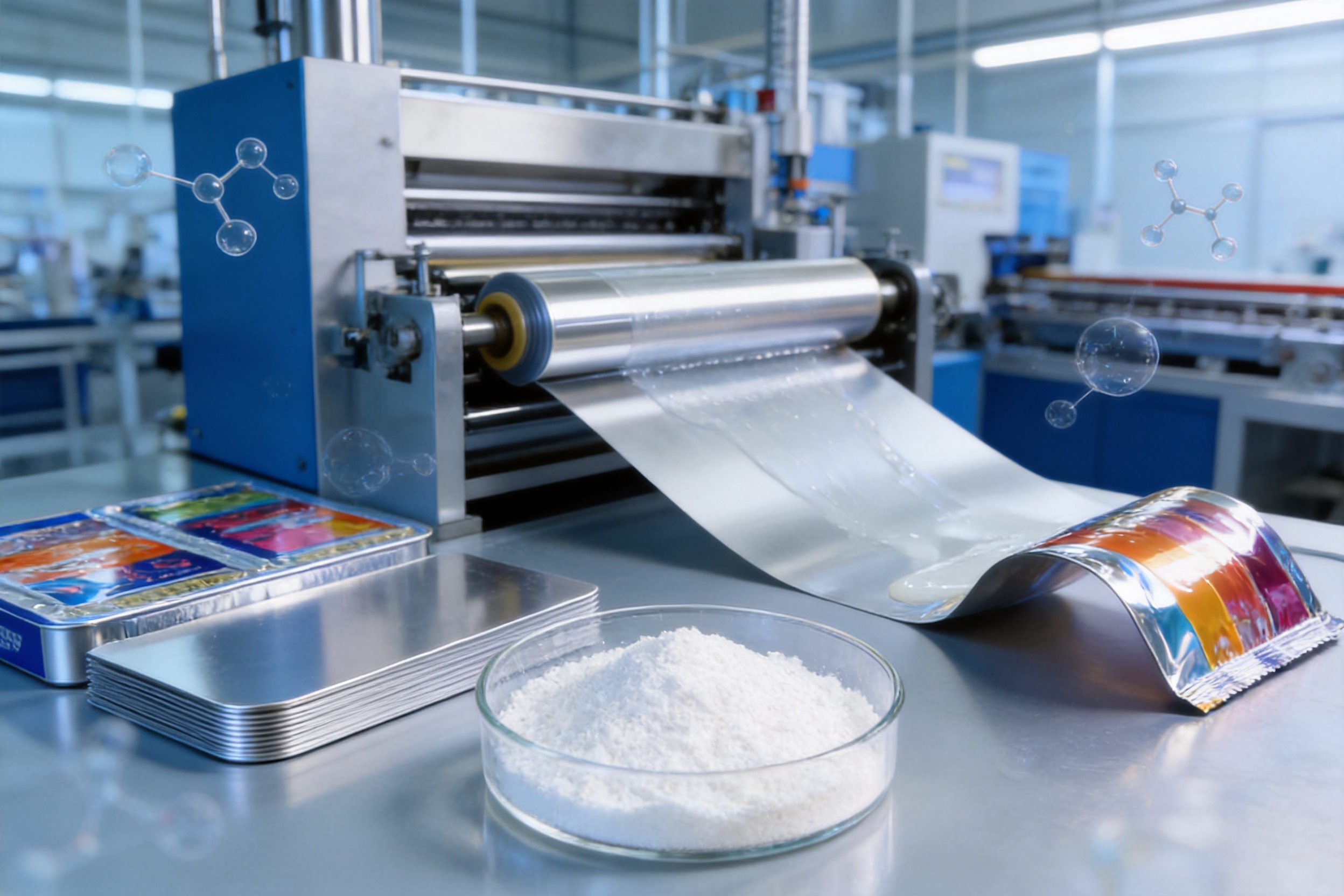
Particle size and particle-size distribution are important in wax powder additives. A micronized powder can be incorporated into a coating more uniformly than a coarse wax particle. Finer, well-controlled particles are generally better suited to applications requiring a smooth surface, good transparency, and limited visual disturbance.
Good dispersion helps distribute the wax throughout the coating or position it effectively near the coating surface during drying and curing. Poor dispersion may produce agglomerates, roughness, pinholes, haze, gloss variation, or inconsistent scratch resistance. It can also cause sedimentation or feeding problems during production.
F-2315E is described as having good dispersibility and being dispersible by manual stirring. For laboratory work, the powder can be introduced gradually into the selected coating while maintaining steady agitation. The exact sequence depends on the resin system and solvent or carrier package. In some formulations, adding the wax after the main resin has been dissolved may be appropriate. In others, a predispersed concentrate or controlled high-speed mixing step may provide better consistency.
Manual stirring can be useful for initial evaluations, but production scale-up should be based on reproducible mixing conditions. The formulator should monitor addition rate, mixing time, temperature, viscosity, and the potential for air entrainment. If the coating contains high levels of pigment or other particulate additives, the wax powder may need to be added at a stage that avoids competition for dispersion energy.
Compatibility testing is also important. A powder can disperse visibly while still producing unwanted effects on gloss, intercoat adhesion, or storage stability. Therefore, a complete evaluation should include both immediate appearance and aged performance. Samples should be examined after storage, curing, rubbing, forming, and recoating.
A practical evaluation can begin with a control coating containing no wax additive. Prepare a second coating with a low addition level of F-2315E and additional samples with progressively higher levels. Apply each formulation at a controlled wet-film or dry-film thickness to the intended metal substrate.
After the specified drying or curing process, compare the samples for gloss, haze, transparency, surface feel, coefficient of friction, scratch resistance, blocking, and wear resistance. The samples should then be subjected to the forming or deep-drawing operation relevant to the final application.
For recoatability testing, apply a second compatible coating over the cured first layer. Inspect wetting, leveling, intercoat adhesion, appearance, and resistance to delamination. If the final application includes printing, conduct printability and ink adhesion tests as well.
This staged approach helps identify the optimum addition level. More wax does not necessarily mean better performance. Excessive dosage can increase surface concentration, reduce gloss, alter flow, or interfere with adhesion. The ideal level is the smallest amount that delivers the desired improvement while maintaining all other specifications.
Scratch resistance is one of the primary reasons for using F-2315E. A wax-modified surface can reduce the force transmitted during contact and help the film recover from or resist minor mechanical damage. In metal printing, this can help maintain the clarity of graphics and reduce visible handling marks.
Scratch resistance should be evaluated using a method that reflects the actual application. A laboratory pencil test, stylus test, rub test, or reciprocal abrasion test may provide useful information, but no single method represents every real-world condition. The coating supplier and end user should agree on the relevant testing protocol.
Slip is closely connected to scratch resistance and handling. A smoother surface can slide more easily against another surface, reducing frictional drag. This may support more efficient movement through production equipment and reduce the energy of rubbing events.
Improved lubricity can also contribute to a smooth tactile impression. However, the target is controlled slip rather than maximum slipperiness. Excessive surface slip may affect stacking behavior, printing registration, or coating adhesion. F-2315E is therefore best evaluated as part of a complete formulation rather than as an isolated friction reducer.
A coating with better surface hardness is generally more resistant to indentation and repeated contact. F-2315E helps improve the hardness and wear resistance of the paint film, making it useful where the finish must retain its appearance through handling and service.
Hardness must be balanced with flexibility. A very hard but brittle film may fail during bending or deep drawing. The advantage of a PE and PA wax system is its potential to support a durable surface while retaining the flexibility needed for formed metal applications.
Blocking occurs when coated surfaces adhere to each other under pressure, heat, or prolonged contact. It can damage the finish when stacked sheets or components are separated. A wax additive can create a less adhesive surface and reduce the tendency of films to stick.
Anti-blocking performance depends on more than wax selection. Cure level, residual solvent, coating thickness, storage temperature, pressure, and surface roughness all have an effect. F-2315E can contribute to a better anti-blocking profile when incorporated into a coating with appropriate curing and storage conditions.
Good transparency is a significant advantage for a wax powder used in decorative coatings. If the additive causes visible whitening, haze, or excessive gloss reduction, it may undermine the appearance of the printed surface. F-2315E is designed to provide surface protection while maintaining good transparency.
Appearance should be measured after the coating reaches its final cure and after any relevant aging period. Transparency and gloss may change with film thickness, wax loading, resin polarity, pigment concentration, and drying conditions. The best formulation is the one that delivers the required protection without compromising the visual standard of the finished product.
Deep drawing and other forming operations place tensile and compressive stresses on the coating. A suitable wax additive can help the surface tolerate movement over tooling and reduce friction during deformation. F-2315E is identified as having excellent deep-drawing properties, which is important for metal packaging and shaped metal components.
Forming performance should be evaluated on the actual substrate and with the actual tooling geometry. The result may vary depending on metal grade, pretreatment, coating thickness, cure schedule, forming depth, drawing speed, and tooling lubrication. A successful laboratory flat-panel test is not sufficient by itself; formed samples should be inspected for cracking, whitening, delamination, loss of gloss, and visible scuffing.

F-2315E can be considered for solventborne, waterborne, or other compatible coating systems only after compatibility has been confirmed. The supplied information identifies the product as a PE and PA micronized wax powder additive but does not define a universal dosage or formulation window. The appropriate concentration must therefore be established by application testing.
The coating formulator should first identify the main performance priority. A clear overprint varnish may require maximum transparency and recoatability. A protective metal coating may prioritize scratch and wear resistance. A formed metal application may place deep-drawing performance above extreme surface hardness. These priorities influence the additive level and the choice of resin, solvent, pigment, and curing conditions.
Before use, the powder should be inspected for signs of moisture uptake, contamination, or agglomeration. Storage in a clean, dry, sealed container can help maintain consistent handling. The material should be introduced slowly into the coating under sufficient agitation. A gradual addition reduces the chance of localized agglomeration and makes it easier to observe viscosity or dispersion changes.
In a production setting, mixing equipment should provide consistent shear and circulation. The objective is not necessarily maximum shear, because excessive shear can introduce air, raise temperature, or affect other formulation components. Instead, the process should achieve uniform distribution with repeatable batch-to-batch conditions.
The finished coating should be checked for viscosity, fineness of dispersion, appearance, gloss, transparency, sedimentation, and storage stability. Coated panels should then be tested for scratch resistance, slip, hardness, anti-blocking, wear, recoatability, and deep-drawing behavior.
| Evaluation area | What to examine | Why it matters |
|---|---|---|
| Dispersion | Uniformity, agglomerates, fineness, settling | Confirms that the wax powder is distributed consistently |
| Appearance | Gloss, haze, transparency, surface smoothness | Protects the visual quality of printed and decorative metal |
| Mechanical durability | Scratch, rub, abrasion, and wear resistance | Measures resistance to handling and service damage |
| Slip and blocking | Surface friction and separation after stacking | Supports handling, storage, and production efficiency |
| Forming | Cracking, whitening, delamination, and gloss change after drawing | Confirms suitability for shaped metal applications |
| Recoatability | Wetting, adhesion, leveling, and intercoat compatibility | Preserves flexibility in multilayer coating processes |
| Storage stability | Viscosity drift, settling, separation, and appearance change | Helps ensure reliable commercial shelf and batch performance |
The performance of a specialty additive depends not only on its chemical concept but also on manufacturing discipline. Micronized wax powders require controlled raw-material selection, particle processing, blending, packaging, and quality inspection. Variations in particle structure, composition, or dispersion behavior can affect the finished coating.
The manufacturer of F-2315E operates as a professional supplier of raw materials for coatings, inks, and adhesives. Its product portfolio includes dispersants, leveling agents, defoamers, adhesion promoters, anti-settling agents, cooling agents, conductive agents, orange peel texture agents, texture powders, and wax powders. This broad portfolio indicates experience with the interconnected problems faced by coating formulators.
Because a coating rarely depends on one additive alone, knowledge across several additive categories can be valuable. A wax powder may need to work alongside a dispersant, leveling agent, defoamer, or adhesion promoter. Experience with these adjacent materials can help the supplier understand interactions involving wetting, surface tension, pigment stabilization, air release, and intercoat adhesion.
The company has an experienced team that includes research and development specialists and sales professionals, supported by a modern production facility, advanced testing equipment, and research capabilities. These resources provide a foundation for product development, application evaluation, and technical service.
Manufacturing strength is also reflected in the company’s development history. Since its founding in 2012, it has expanded its focus on coating, ink, and adhesive raw materials. In 2016, it developed China’s first ice flower resin according to its company history. In 2020, it was recognized as a National High-Tech Enterprise. In 2021, it moved to Lingrui Intelligent Manufacturing Park in Zhangjiagang High-Tech Zone to strengthen research and production capacity.
These milestones are relevant to F-2315E because specialty wax powder development requires more than basic blending. It involves understanding how material structure, particle size, compatibility, and surface behavior affect the final coating. A supplier with dedicated research capabilities can support product refinement and help customers identify the correct application conditions.
A reliable micronized wax powder manufacturing process normally begins with controlled raw-material qualification. The composition must be consistent enough to provide predictable melting behavior, hardness, lubricity, and compatibility. Incoming materials should be inspected according to established specifications before entering production.
Particle-size reduction and classification are central to micronized powder production. The powder must be processed to achieve an appropriate particle profile and then separated or controlled to limit oversized material. Consistency in particle size supports uniform dispersion and helps preserve the smooth appearance expected in a high-performance coating.
Blending is another important stage. PE and PA components must be combined consistently so that one batch does not behave substantially differently from another. Controlled blending can help maintain stable surface properties and reduce variation in scratch resistance, slip, and transparency.
Packaging and handling also affect powder quality. Moisture, contamination, and compaction can influence dispersibility. Clean handling areas, suitable packaging, and controlled storage support the product’s performance during transportation and customer use.
The supplied company information does not specify individual machine models, processing temperatures, particle-size values, or formal certification details. Such information should be requested directly when a project requires a detailed process audit or technical qualification. Nevertheless, the stated modern production facility, advanced testing equipment, and research infrastructure provide important support for consistent specialty-additive manufacturing.
Advanced testing equipment allows the supplier to evaluate more than the appearance of the raw powder. The relevant question is how the powder behaves inside a real coating. Application testing may include dispersion assessment, coating drawdown, gloss and transparency measurement, scratch testing, rub resistance, friction evaluation, blocking tests, and forming trials.
Testing also supports product comparison. A wax powder should be compared against a control and, where appropriate, against alternative wax chemistries. The most meaningful comparison measures the complete performance package rather than one isolated value. F-2315E’s value lies in combining anti-scratch behavior with lubricity, anti-blocking, transparency, deep-drawing performance, recoatability, and fluorine-free positioning.
Technical cooperation between the supplier and customer can shorten development time. The customer can provide substrate information, resin type, application method, curing conditions, target gloss, forming requirements, and test standards. The supplier can then help design a more relevant evaluation plan and recommend formulation adjustments based on observed behavior.
Environmental expectations are influencing decisions throughout the coatings industry. Customers increasingly request lower-emission systems, safer material profiles, simplified declarations, and alternatives to substances that may create regulatory or market concerns.
F-2315E is presented as an environmentally friendly and fluorine-free product. The fluorine-free characteristic is particularly relevant to companies seeking anti-scratch and low-friction performance without intentionally added fluorinated components. It may support internal sustainability programs or customer specifications that favor non-fluorinated additive packages.
Environmental suitability should be evaluated as part of the complete coating system. A fluorine-free additive does not by itself determine the total environmental profile of a coating. Resin chemistry, solvent content, pigments, curing energy, packaging, waste handling, and application emissions must also be considered. Users should obtain the applicable safety data sheet, technical data, regulatory declarations, and product-specific compliance documents before commercial adoption.
The product’s environmental positioning nevertheless provides a practical advantage during early formulation screening. It gives coating developers an option that combines surface durability with a material profile aligned with the growing preference for fluorine-free technologies.
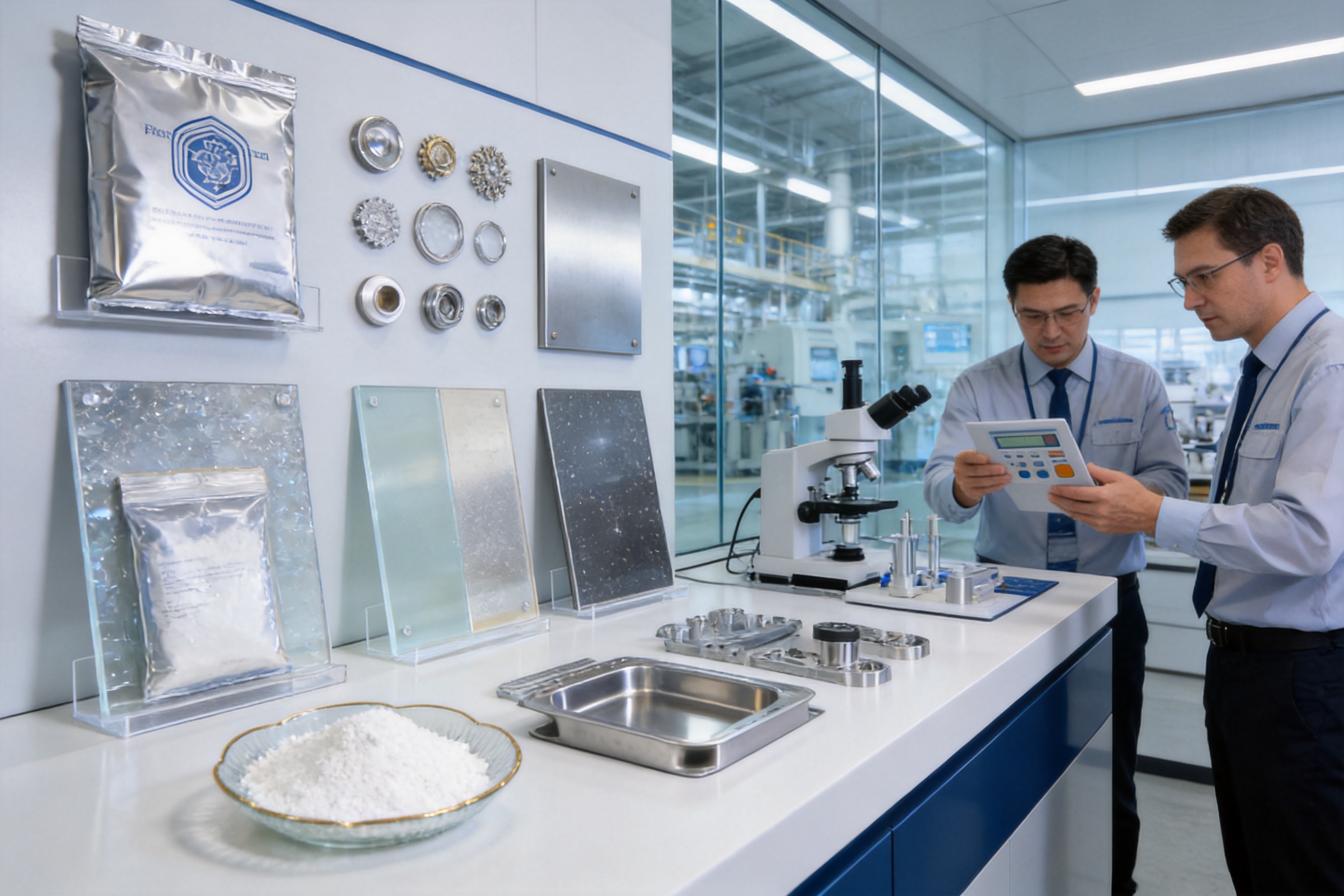
Although F-2315E is specifically developed for metal printing, its performance profile may be relevant to other compatible coating applications. Potential areas include clear protective coatings for steel and aluminum, decorative metal finishes, formed metal components, industrial printing varnishes, and selected packaging coatings.
In steel and aluminum coil coatings, scratch resistance and anti-blocking can help protect finished strip during coiling, uncoiling, transport, and fabrication. The product’s deep-drawing performance may be useful where the coated metal is subsequently stamped or formed.
In decorative metal coatings, transparency and smooth hand feel may help preserve the appearance of colored or printed surfaces. The wax powder can support a refined tactile finish while helping reduce visible marks caused by everyday handling.
In printing inks and overprint varnishes, surface slip and scratch resistance may help protect printed graphics. However, the formulator must confirm that the wax does not reduce ink adhesion, affect print receptivity, or interfere with subsequent lamination or coating.
In industrial coatings, improved wear and anti-blocking performance can be useful for components that are stacked, transported, or exposed to repeated contact. The specific resin and cure system will determine whether F-2315E provides the desired balance.
These potential applications should not be interpreted as a universal approval for every coating type. The product must be evaluated in the intended system, on the intended substrate, under the intended curing and forming conditions.
If visible particles or agglomerates appear, check the addition sequence, mixing energy, powder storage condition, and compatibility with the resin or carrier. Adding the powder too quickly can create localized concentrations that are difficult to break down. A controlled addition rate and longer mixing time may improve uniformity.
If the problem persists, a predispersed concentrate or alternative processing step may be considered. The formulator should also confirm that other additives are not causing flocculation or changing the viscosity in a way that limits mixing efficiency.
Gloss loss may result from excessive wax loading, large particles, surface incompatibility, or a change in film leveling. The first adjustment is usually to reduce the additive concentration and verify that the powder is fully dispersed. Film thickness and curing conditions should also be checked.
For high-gloss applications, the product should be evaluated in a clear coating and compared with a control. The objective is to achieve the required scratch and slip performance with the lowest dosage that maintains the visual target.
Insufficient improvement may occur when the additive level is too low, the wax is not distributed uniformly, the coating is under-cured, or the test method does not represent the intended contact condition. The interaction between the wax and the resin matrix should be reviewed.
It is also important to distinguish between scratch resistance, mar resistance, and abrasion resistance. A formulation may improve one property more strongly than another. Testing several types of mechanical damage can reveal whether the product is being evaluated against the correct performance requirement.
If a second coating shows poor wetting or adhesion, examine wax dosage, surface cure, cleaning, and the compatibility of the recoat. The first layer may require a defined curing period before recoating. Surface energy and intercoat adhesion should be tested rather than assumed.
F-2315E is intended not to affect recoatability, but this benefit depends on correct formulation and processing. Any additive can behave differently in different resin systems, so application-specific confirmation remains necessary.
Blocking can be influenced by residual solvent, insufficient cure, excessive film thickness, storage pressure, humidity, and temperature. Confirm the cure schedule and allow the coating to reach its intended final properties before stacking tests. F-2315E can contribute to anti-blocking performance, but it should be used together with appropriate process control.
A professional qualification program should begin with a clear product specification. The customer should define the substrate, coating type, application method, target film thickness, curing process, surface appearance, forming operation, storage conditions, and required mechanical tests.
The next step is laboratory screening. Prepare a control and several F-2315E formulations. Maintain consistent pigment, resin, solvent, application, and curing conditions so that the wax additive is the principal variable. Record all observations, including viscosity, dispersion time, appearance, and surface feel.
After initial testing, select the most promising formulations for pilot-scale preparation. Pilot batches can reveal issues that are not visible in laboratory quantities, including feeding behavior, mixing time, temperature rise, sedimentation, and production-line application characteristics.
Formed samples should be inspected under appropriate lighting. A coating can pass a flat scratch test but fail after drawing because deformation exposes weaknesses in adhesion or flexibility. Recoatability should also be tested after aging, since surface behavior may change as the coating fully cures or as wax components reach equilibrium.
Finally, the customer should establish an incoming-quality plan. This may include powder appearance, packaging condition, batch identification, dispersion check, and periodic performance verification. A consistent testing routine helps maintain confidence after the product moves from development into regular production.
Coating additives are often used at relatively low levels, yet small changes can have a large effect on surface performance. For this reason, technical communication with the supplier is important. A supplier that understands coatings, inks, and adhesives can provide more useful guidance than a company that only sells a generic powder.
The manufacturer behind F-2315E focuses on coating raw materials and maintains a portfolio covering dispersion, leveling, foam control, adhesion, anti-settling, conductivity, texture, and wax modification. This range reflects the practical reality that coating performance is created by an additive package rather than one ingredient alone.
The company’s research team, testing equipment, and modern production facility support product development and customer service. Its history of investment in research and manufacturing capacity indicates a long-term approach to specialty materials. The National High-Tech Enterprise recognition and relocation to an intelligent manufacturing park further demonstrate its emphasis on technical development and production capability, according to the provided company information.
For customers, this means that supplier evaluation can include more than price and availability. Technical responsiveness, batch consistency, application support, documentation, production capacity, and willingness to conduct joint trials are also important. These factors can reduce formulation risk and help bring a coating improvement to market more efficiently.
Before placing a commercial order, customers should request the current technical data sheet and safety data sheet for F-2315E. The documents should confirm recommended storage conditions, packaging, handling precautions, typical particle-size information, suggested addition range, and any application limitations.
Customers should also confirm whether the product is suitable for their specific regulatory market and end use. Packaging coatings may require additional declarations, migration testing, or customer approvals. The fact that a product is fluorine-free and described as environmentally friendly is valuable, but formal compliance must be confirmed through current documentation.
Commercial discussions should cover sample availability, minimum order quantity, lead time, production capacity, batch traceability, quality-control procedures, and technical support. For a high-volume metal printing application, reliable supply is as important as initial laboratory performance.
The supplier can be contacted through its commercial inquiry channels for product samples, technical documents, formulation consultation, and customized chemical solutions. Customers should provide as much information as possible about their coating system so that recommendations are based on actual requirements rather than general assumptions.
F-2315E is a micronized PE and PA wax powder additive developed for coatings, with a specific focus on metal printing and tin printing applications. It is designed to improve scratch resistance, slip, hardness, anti-blocking, wear resistance, transparency, and surface feel.
Its main advantage is the balanced improvement of surface durability and processing performance. It can help protect printed surfaces from scratches and wear while supporting lubricity, anti-blocking, transparency, recoatability, and deep-drawing behavior.
Yes. F-2315E is presented as a fluorine-free product. This gives formulators an option for anti-scratch and slip improvement when they prefer to avoid intentionally added fluorinated components.
The product is described as having good dispersibility and being dispersible by manual stirring. Manual stirring may be suitable for laboratory screening or small-scale trials. Commercial production should use a controlled mixing process that provides repeatable dispersion.
F-2315E is described as having good transparency. Actual results depend on the resin, pigment, film thickness, additive level, particle dispersion, and curing process. Clear and pigmented formulations should be tested under the customer’s specific conditions.
It is designed to improve surface performance without affecting recoatability. Nevertheless, recoatability must be confirmed in the complete coating system because resin chemistry, curing, surface preparation, and the second coating all influence intercoat adhesion.
The product is described as having excellent deep-drawing properties, making it relevant to formed metal applications. Customers should conduct forming trials on the actual substrate using their production tooling or a representative laboratory method.
No. The optimum dosage depends on the coating system and target performance. Excessive wax may reduce gloss, affect transparency, change surface energy, or influence adhesion. A controlled dosage study is recommended.
It may be considered for compatible metal printing coatings, protective coatings, clear coats, overprint varnishes, and other industrial coating systems. Suitability should be confirmed through dispersion, appearance, mechanical, forming, and recoatability tests.
The supplier specializes in raw materials for coatings, inks, and adhesives and offers a broad portfolio of performance additives. It has an experienced research and development team, modern production facilities, advanced testing equipment, and a history of investment in technical and manufacturing capabilities.
Useful information includes the resin type, solvent or carrier, pigment level, application method, curing conditions, substrate, film thickness, desired gloss, forming process, scratch test, recoat requirements, and regulatory market. This allows the supplier to provide more relevant guidance.
Customers should follow the current product documentation. In general, micronized powders should be kept sealed in a clean, dry environment and protected from contamination, moisture, excessive heat, and compaction. The packaging should remain closed until the material is ready for use.
F-2315E is a specialized micronized PE and PA wax powder additive for metal printing coatings, particularly tin printing. Its value comes from a broad and balanced performance profile rather than a single isolated feature. The additive is designed to improve scratch resistance, lubricity, hardness, anti-blocking, wear resistance, transparency, surface feel, and deep-drawing performance while maintaining recoatability.
Compared with less balanced wax technologies, F-2315E offers a practical combination of surface durability, visual quality, processing flexibility, and fluorine-free positioning. Its good dispersibility can simplify laboratory development, while its suitability for formed metal supports applications that extend beyond flat printed panels.
The strength of the product is supported by a company focused on coating, ink, and adhesive raw materials. Its experienced research team, modern production facility, advanced testing equipment, broad additive portfolio, and continued investment in technical development provide a foundation for consistent manufacturing and application support.
For customers seeking a reliable anti-scratch and slip additive for metal printing, the recommended approach is to evaluate F-2315E in the complete coating system. A structured trial should measure dispersion, appearance, scratch resistance, wear, blocking, slip, recoatability, and forming performance. When properly matched with the resin and process, F-2315E can help produce metal coatings that remain attractive, smooth, durable, and functional throughout manufacturing, handling, and service.
1. Product information supplied for F-2315E Micronized Wax Powder Additive, PE and PA grade.
2. Company information supplied for Suzhou Qingtian New Material Co., Ltd., including product portfolio, research capabilities, production development, and company milestones.
3. General principles of wax additives in coatings, including slip, abrasion resistance, anti-blocking, surface hardness, and dispersion behavior.
4. General technical guidance for evaluating scratch resistance, rub resistance, blocking, transparency, recoatability, and deep-drawing performance in coated metal systems.
5. General formulation and process-control practices for micronized powder additives used in industrial coatings, printing inks, and protective finishes.
 Wholesale Paint/ Coating Additives Manufacturers
Custom Industrial Chemical Solutions Suppliers
Wholesale Paint/ Coating Additives Manufacturers
Custom Industrial Chemical Solutions Suppliers