русский
 Español
 Français
Home / Author / Lu Xinzhi — Overseas Product Sales Specialist / Water-Based Polyether Silicone Defoamers for High-Performance Coatings, Inks, and Adhesives
Lu Xinzhi — Overseas Product Sales Specialist

Content
Foam control is one of the most important requirements in modern water-based formulations. During mixing, grinding, pumping, filling, coating, printing, spraying, and application, air can become entrained in a liquid system. If the foam is not controlled effectively, it can reduce production efficiency, create volume instability, cause coating defects, interfere with color development, and compromise the final appearance and performance of the finished product.
DH-2270S Water-based Polyether Silicone Defoamer is designed to address these challenges through a combination of rapid migration, dynamic wetting, foam suppression, and long-term compatibility. It is a silicone-based additive developed for water-based coatings, water-based pressure-sensitive adhesives, fount solutions, inkjet inks, latex dipping systems, electroplating solutions, and stable universal pigment concentrates.
Unlike conventional defoamers that may work strongly in one processing stage but create surface defects or compatibility problems in another, DH-2270S is formulated to provide a balanced performance profile. It reduces both dynamic and static surface tension, assists substrate wetting, suppresses foam during processing, and minimizes the risk of defects after drying. Its low water sensitivity, broad temperature stability, and resistance to acidic and alkaline conditions make it suitable for demanding industrial formulations.
The product is manufactured and supplied by Suzhou Qingtian New Material Co., Ltd., a professional producer of raw materials for coatings, inks, adhesives, and related industrial applications. The company combines application-oriented research, modern production resources, advanced testing equipment, and technical service capabilities to develop additive solutions for different formulation requirements.
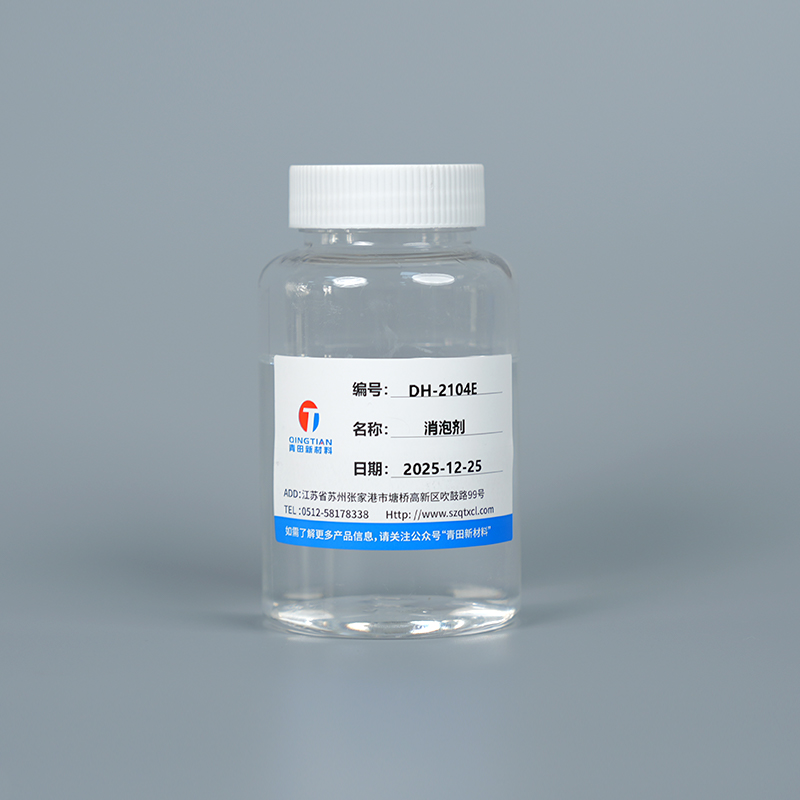
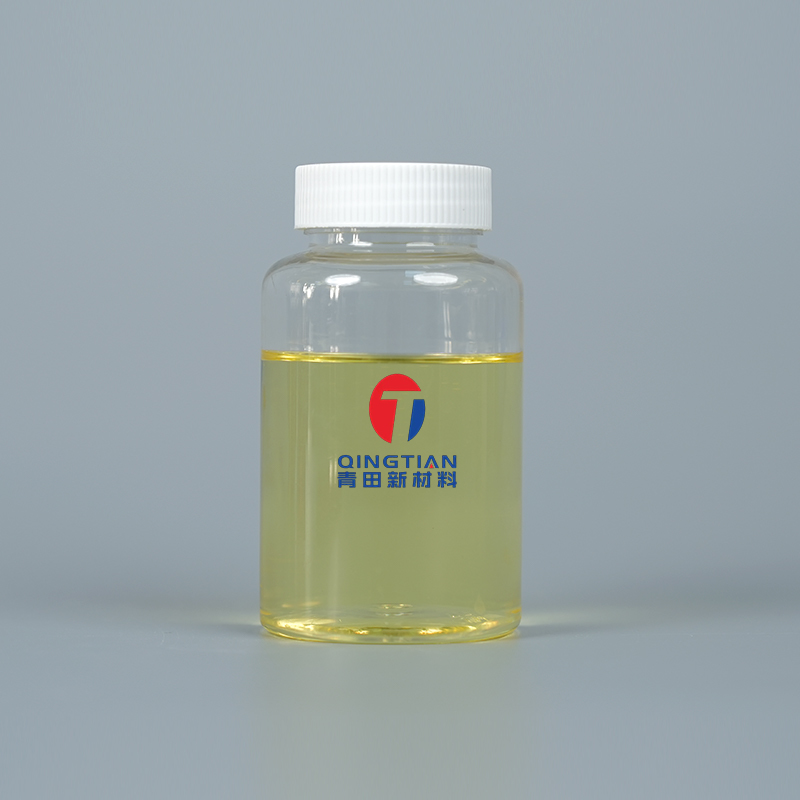
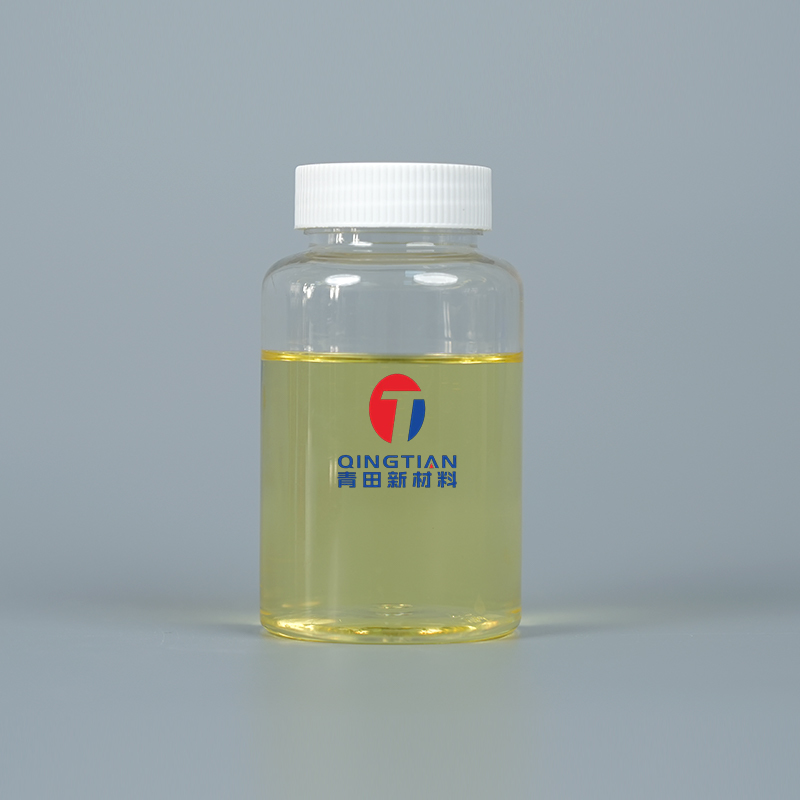
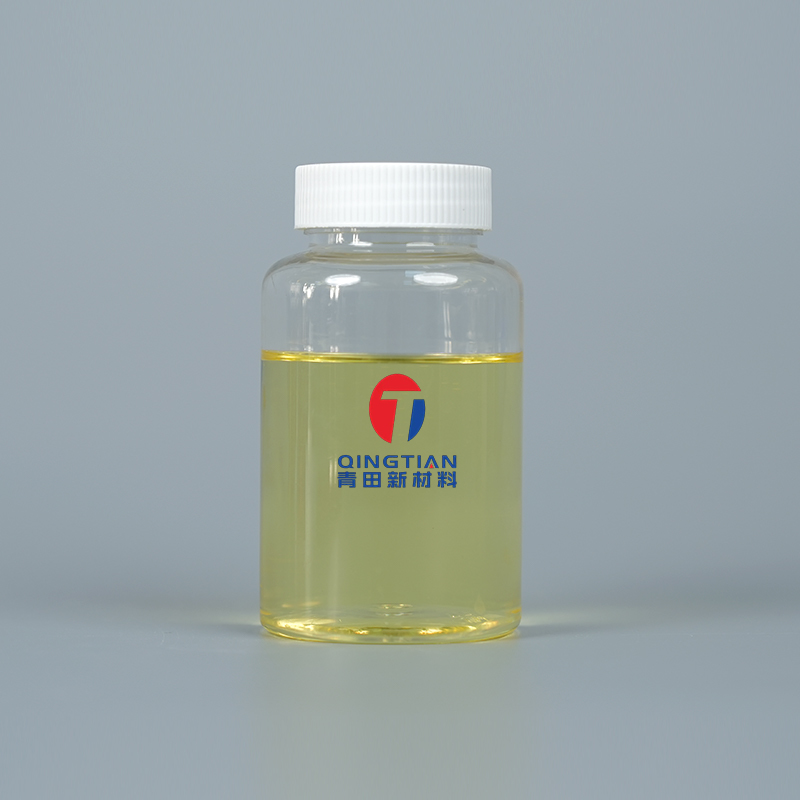
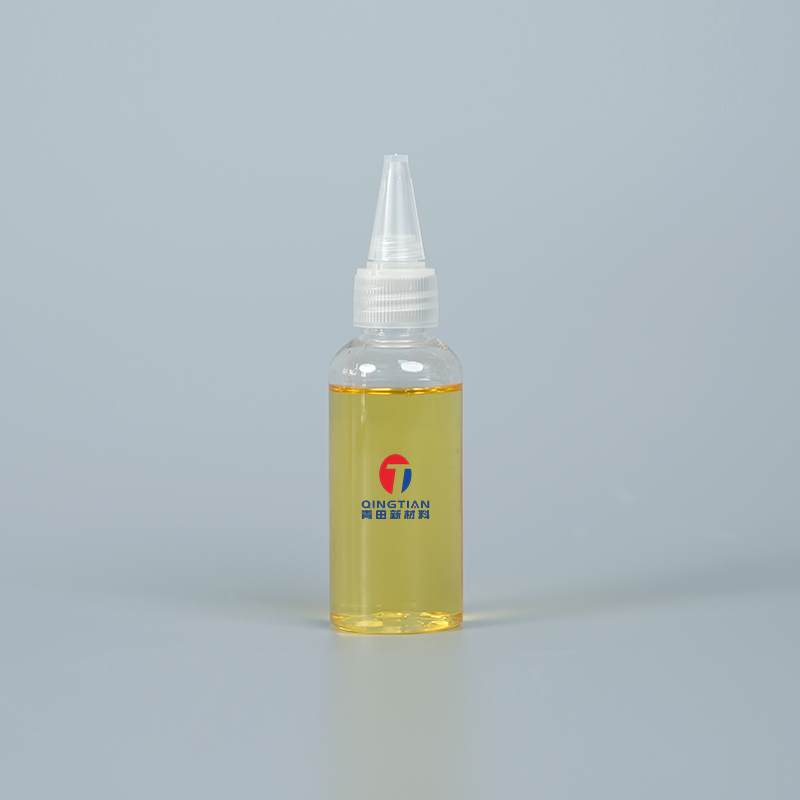
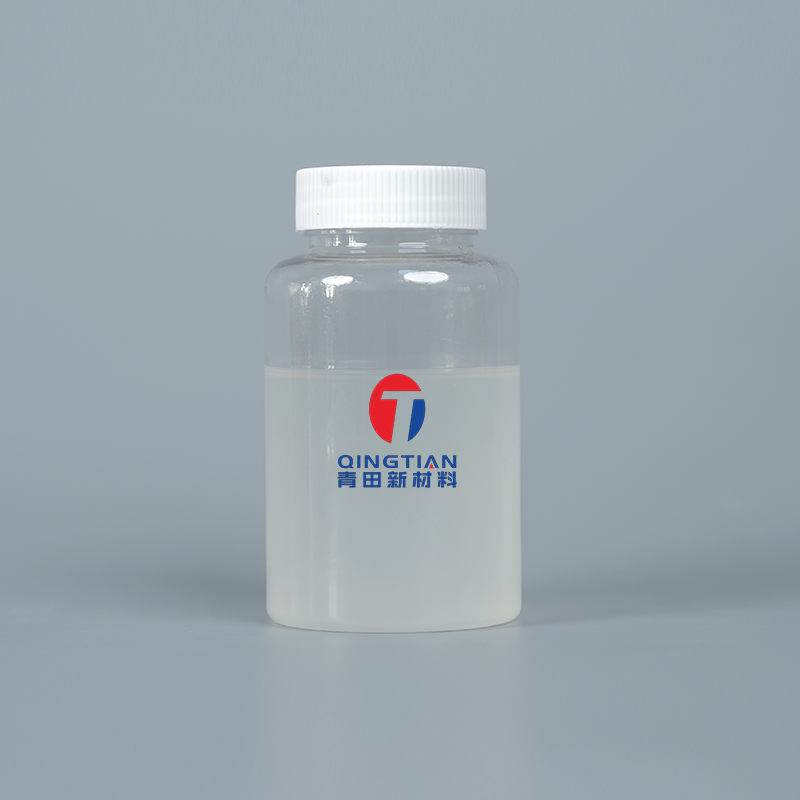
DH-2270S Water-based Polyether Silicone Defoamer
Water-based systems are increasingly used because of their lower volatile organic compound content, improved workplace characteristics, regulatory advantages, and suitability for many modern manufacturing processes. However, the use of water as a continuous phase can make foam management more complex. Water has relatively high surface tension, and many water-based binders, surfactants, dispersants, pigments, and rheology modifiers can stabilize air bubbles once they are introduced into the formulation.
Foam may form during high-speed dispersing, pigment grinding, circulation through pipes, pumping, filtration, filling, or application. Even when the formulation appears acceptable in the mixing vessel, the same product may generate additional foam during spraying, roll coating, gravure printing, flexographic printing, or high-speed application.
Entrained air can lead to inaccurate filling volumes, interrupted production, reduced pump efficiency, and unstable processing conditions. In a coating, foam may remain as pinholes, craters, blisters, voids, or uneven areas after drying. In an ink, foam can interfere with print density, dot definition, color consistency, and inkjet jetting behavior. In an adhesive, bubbles can reduce contact area and cause weak or uneven bonding.
Foam control therefore requires more than simply eliminating visible bubbles at the surface. An effective additive must work under dynamic conditions while maintaining compatibility with the formulation. It should provide rapid action during processing, suppress recurring foam, support surface wetting, and avoid creating new defects in the dried film or printed layer.
Dynamic foam is generated while a formulation is being mixed, circulated, pumped, sprayed, printed, or otherwise subjected to mechanical energy. The foam can develop rapidly and may be continuously renewed. A defoamer used in such a system must migrate quickly to the air-liquid interface and destabilize the bubble film before the foam grows.
Static foam remains after agitation has stopped. It may appear as a stable layer on the surface of a storage vessel, intermediate tank, or packaged product. Static foam can be especially problematic when the product must be filled accurately or stored for extended periods.
DH-2270S is designed to provide both defoaming and foam suppression. Its performance is not limited to breaking existing foam. It also helps reduce the tendency of the formulation to generate and maintain foam during subsequent processing. This dual function is important for production lines where a product may pass through several stages of mechanical stress.
DH-2270S is a water-based polyether silicone defoamer. Its functional design combines the low surface tension characteristics of silicone chemistry with the water compatibility and wetting behavior associated with polyether-modified structures.
The silicone component helps the additive spread rapidly across air-liquid interfaces. The polyether-related structure supports dispersion in water-based systems and contributes to balanced compatibility. This combination is intended to provide effective foam control without the excessive incompatibility that can occur when a highly hydrophobic defoaming material is introduced into a sensitive water-based formulation.
The product offers several interconnected functions:
It migrates rapidly toward foam interfaces, allowing fast response during dynamic processing.
It reduces dynamic and static surface tension, helping improve surface wetting and reduce bubble stability.
It provides both visible foam break and long-term foam suppression.
It supports wetting of various substrates, which can improve surface coverage and reduce defects related to poor substrate contact.
It has low water sensitivity, allowing it to maintain performance in water-rich formulations and under changing moisture conditions.
It does not easily form micelles, supporting consistent interfacial behavior and reducing the likelihood of certain compatibility problems.
It demonstrates thermal, acid, and alkali stability, making it suitable for a range of processing environments.
It is formulated to reduce the risk of dried-film defects such as stickiness, whitening, atomization, and poor water resistance.
Effective defoaming depends heavily on the speed at which an additive reaches the air-liquid interface. If the additive migrates too slowly, foam may continue to grow before the defoamer becomes active. If the additive is poorly distributed, foam control may vary from one part of the batch to another.
DH-2270S is designed for rapid migration. Once introduced into a water-based formulation, it can move toward bubble surfaces and lower the interfacial forces that support stable foam. This rapid response is valuable in high-speed dispersing and circulation systems, where foam may be generated within seconds.
Rapid migration also supports more efficient use of the additive. In a well-designed formulation, the defoamer can become active where it is needed rather than remaining inactive in the bulk liquid. Actual dosage should always be established through laboratory screening and pilot production trials because the optimal level depends on binder chemistry, pigment concentration, surfactant package, viscosity, shear history, and application method.
Surface tension influences how a liquid spreads, wets a substrate, forms a film, and stabilizes air bubbles. Dynamic surface tension is particularly important during fast application, when a liquid must wet a moving or rapidly changing surface. Static surface tension becomes more relevant when the system is at rest or when a droplet has time to equilibrate.
DH-2270S reduces both dynamic and static surface tension. This gives the product a broader performance range than an additive that only affects one surface-tension condition. In coatings, lower dynamic surface tension can support improved substrate wetting during spraying, roller application, or high-speed coating. In printing inks, it can help the ink spread consistently across the intended surface. In adhesives, it can support more uniform contact with films, foils, papers, plastics, or other substrates.
The reduction in surface tension also contributes to foam control. When the surface properties of a bubble film are altered, the film may become less resistant to rupture. The result can be faster foam collapse and improved resistance to renewed foam formation.
Water sensitivity is a major consideration in water-based coatings and adhesives. An additive that causes the dried film to become more sensitive to moisture may reduce water resistance, create whitening, or produce surface tack. These effects can be especially serious in outdoor coatings, industrial finishes, packaging adhesives, and products exposed to humidity or washing.
DH-2270S is designed to provide low water sensitivity. This means that its use is intended to support foam control without easily compromising the moisture resistance of the final film. The product can therefore be evaluated for formulations in which both processing efficiency and finished-film durability are important.
Low water sensitivity does not mean that every formulation will behave identically. The final result depends on the binder, crosslinking mechanism, additive concentration, drying conditions, film thickness, and substrate. For this reason, water resistance should be checked through application-specific testing, including immersion, water-drop, humidity, or other relevant methods.
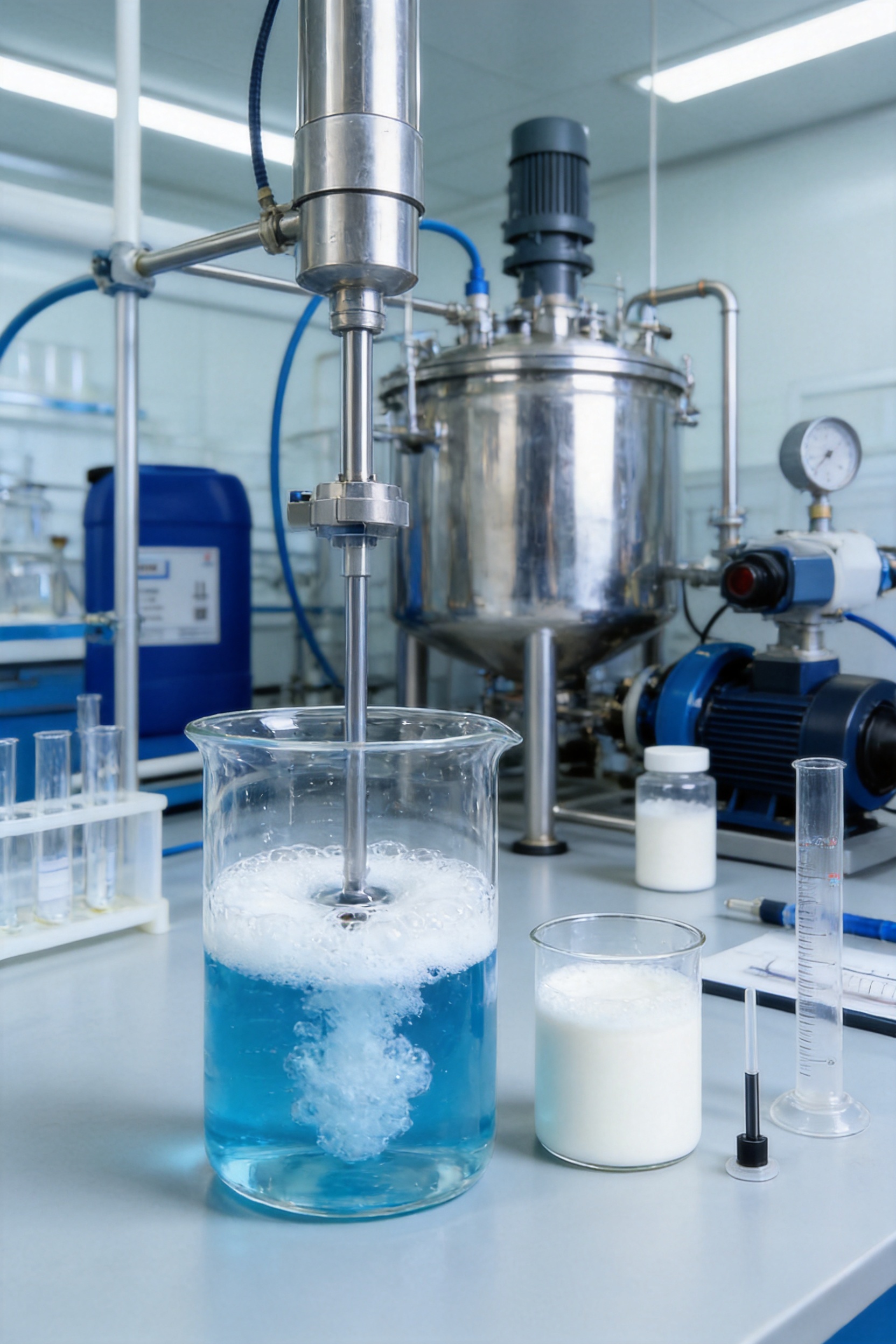
Many traditional defoamers can provide visible foam break, but their performance may be limited by compatibility, storage stability, surface appearance, or application conditions. In some cases, a defoamer that is very effective at a high dosage may cause craters, fisheyes, surface slip, adhesion loss, or recoat problems. In other cases, a product may control foam in the mixing vessel but provide limited performance during application.
DH-2270S is positioned as a multifunctional solution that combines defoaming, foam suppression, surface-tension reduction, and wetting support. Its advantages can be summarized as follows.
Traditional surfactant-based approaches may provide some surface-tension reduction but may not offer sufficient foam collapse during high-speed processing. DH-2270S is designed to perform under dynamic conditions, where the formulation is continually exposed to agitation, pumping, or application stress.
This characteristic is especially valuable in modern manufacturing environments that use automated dispersion equipment, high-speed coating lines, continuous circulation, and rapid filling. A defoamer that responds under these conditions can help reduce production interruptions and improve process consistency.
Some additives are selected primarily for foam breaking, while others are selected for leveling or wetting. The use of multiple additives can increase formulation complexity and create interactions that are difficult to predict. DH-2270S contributes both foam control and substrate wetting, allowing formulators to evaluate whether one additive can support several performance targets.
This multifunctional behavior may help simplify additive packages in selected systems. It can also reduce the need to compensate for poor wetting with excessive surfactant levels, although the final formulation must be optimized through testing.
One of the most important distinctions between a useful defoamer and a problematic one is its effect after drying. Excessive incompatibility can cause surface craters, pinholes, stickiness, whitening, atomization, uneven gloss, or reduced water resistance.
DH-2270S is designed not to easily cause these defects in dried coatings. Its balanced structure is intended to provide foam control without creating excessive surface separation or disrupting film formation. This feature is important for decorative and industrial coatings in which appearance, adhesion, gloss, and durability are all evaluated.
A cloud point is a temperature-related phenomenon in which a surfactant-containing system becomes cloudy or undergoes a noticeable change in appearance and behavior. In a manufacturing or storage environment with changing temperatures, this can create uncertainty in appearance, dispersion, and performance.
DH-2270S is described as having no cloud point within the relevant application context. This supports more stable behavior over a wide temperature range and can be advantageous for products that are transported, stored, or applied under varying environmental conditions.
Water-based formulations may range from mildly acidic to alkaline, depending on the binder, neutralizing agent, pigment treatment, preservative system, or processing chemistry. An additive with limited pH stability may lose effectiveness or become incompatible when the formulation environment changes.
DH-2270S provides thermal, acid, and alkali stability. This broad stability expands the range of systems in which the product can be evaluated, including coatings, inks, electroplating solutions, and other industrial liquids with demanding chemical conditions.
Water-based coatings are used in architectural, industrial, metal, plastic, wood, flooring, and specialty applications. Foam control is important throughout the manufacturing and application process, from pigment dispersion to final film formation.
During pigment grinding, mechanical energy can introduce large amounts of air. Foam may reduce the effective capacity of the mill or let-down vessel and can interfere with accurate pigment concentrate preparation. DH-2270S is particularly recommended for the manufacture of stable universal pigment concentrates, where broad compatibility and reliable foam control are important.
In the let-down stage, the formulation may combine resin, pigment concentrate, water, rheology modifiers, coalescents, preservatives, and other additives. These ingredients can create new foam behavior even if the individual components were previously stable. A rapidly migrating defoamer can help control foam as the final coating is adjusted.
During application, the coating may be subjected to atomization, roller shear, brush movement, or high-speed curtain and spray processes. DH-2270S is suitable for evaluation in these systems because it is intended to suppress foam under dynamic conditions while supporting wetting of different substrates.
The product can be considered for steel and aluminum coil coatings, plastic coatings, wood coatings, anti-corrosion coatings, glass coatings, epoxy flooring, and other water-based coating systems. The correct dosage and addition stage should be determined according to the specific resin and pigment package.
Metal coatings require consistent surface appearance, strong adhesion, controlled gloss, and dependable corrosion protection. Foam can lead to pinholes and incomplete coverage, which may expose the substrate or create visible defects after curing.
In coil coating operations, the line speed can be high and the application window may be narrow. The coating must wet the metal surface quickly and form a uniform film. By reducing dynamic surface tension and assisting foam suppression, DH-2270S can be evaluated as part of a formulation strategy for improved processing stability.
Because metal coatings may also encounter acidic or alkaline components during pretreatment and formulation, the product’s chemical stability can be useful when compatibility is confirmed through testing.
Wood substrates vary in porosity, grain structure, resin content, and surface energy. Poor wetting may lead to uneven appearance, craters, or incomplete coverage. At the same time, foam can remain visible in transparent or lightly pigmented finishes.
DH-2270S supports wetting of various substrates and is designed to reduce the risk of dried-film surface defects. It can therefore be considered for water-based wood coatings, furniture finishes, sealers, primers, and clear coats where appearance is critical.
Floor coatings often require smooth application, uniform thickness, good adhesion, and resistance to water and chemicals. Foam trapped in an epoxy or hybrid water-based system may create voids or weak points. A defoamer with low water sensitivity can be advantageous when the cured or dried film must retain moisture resistance.
Testing should include application at the intended film thickness, drying under representative temperature and humidity, and evaluation of appearance, adhesion, hardness, water resistance, and chemical resistance.
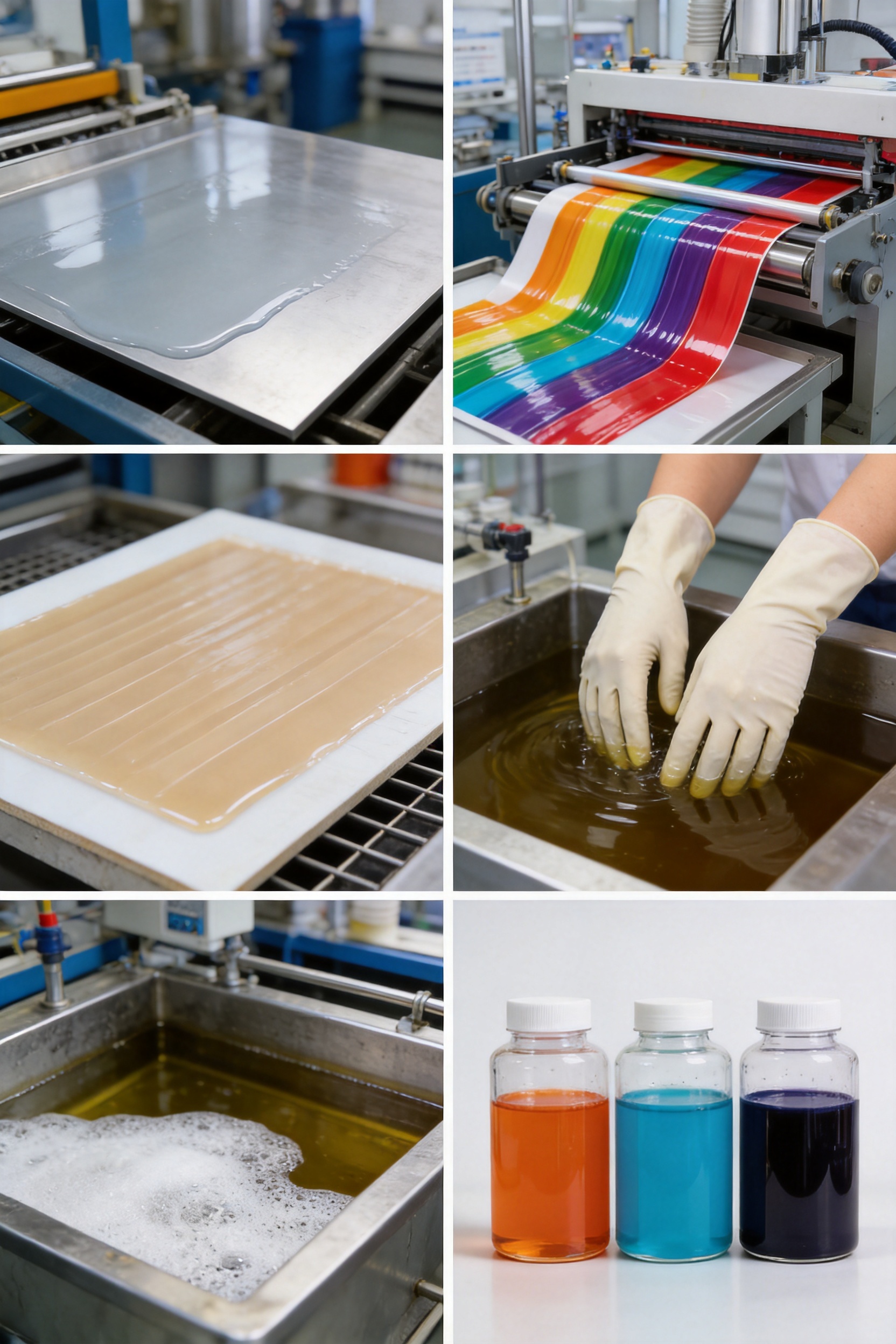
Water-based inks require careful control of foam, surface tension, viscosity, wetting, color strength, and drying. Foam can affect ink transfer, print density, dot structure, and equipment cleanliness. In digital systems, unstable foam may also interfere with filtration, recirculation, and printhead operation.
DH-2270S is suitable for evaluation in water-based printing inks and inkjet inks. Its ability to reduce dynamic surface tension can support rapid wetting of paper, film, plastic, and other printing substrates. Its foam suppression function can help maintain stable circulation and reduce bubbles during mixing and filling.
Inkjet systems are particularly sensitive to formulation balance. Surface tension must be controlled within a suitable range, but excessive additive levels may affect drop formation, nozzle wetting, print quality, or substrate spreading. For this reason, DH-2270S should be evaluated at low dosage increments with measurements of surface tension, viscosity, drop behavior, print uniformity, drying, and adhesion.
In conventional water-based inks, foam control can improve the consistency of color preparation, filtration, filling, and printing. The additive may be considered for flexographic, gravure, screen, or other water-based ink technologies after compatibility testing.
Water-based pressure-sensitive adhesives must provide uniform coating, stable adhesion, controlled tack, and consistent drying. Foam generated during mixing or coating can create discontinuities in the adhesive layer. These defects may reduce peel strength, shear resistance, and visual quality.
DH-2270S can be evaluated in water-based pressure-sensitive adhesives where foam control and substrate wetting are required. Its low water sensitivity is relevant when the dried adhesive must maintain performance in humid conditions or during contact with moisture-sensitive substrates.
The product is also suitable for latex dipping systems. Latex compounds may be exposed to agitation, circulation, air entrainment, and dipping-related movement. Uncontrolled foam can produce uneven deposited films, pinholes, or surface irregularities. A compatible defoamer can help reduce these issues while preserving the required dipping behavior.
Adhesive formulators should assess the effect of the additive on tack, peel adhesion, shear strength, aging, water resistance, film clarity, and substrate compatibility. The optimal balance may differ substantially between acrylic, polyurethane, vinyl, rubber, and hybrid adhesive systems.
Electroplating solutions may contain water, salts, acids, alkalis, wetting agents, brighteners, complexing agents, and other functional components. Gas evolution and mechanical circulation can create foam, especially when wetting agents are present. Excess foam can complicate tank operation, filtration, monitoring, and workplace cleanliness.
DH-2270S provides acid and alkali stability and can be evaluated in electroplating solutions where controlled foam suppression is needed. The selection process should include compatibility checks with the plating chemistry and careful assessment of any potential influence on deposit appearance, thickness distribution, adhesion, surface roughness, and bath life.
Because electroplating systems are highly application-specific, technical evaluation should be conducted under actual or representative operating conditions. Parameters such as temperature, current density, agitation, immersion time, bath composition, and replenishment frequency should be considered.
Universal pigment concentrates are designed for broad compatibility with different water-based coating systems. They commonly contain high pigment levels, dispersants, wetting agents, binders, and water. Their concentrated nature can increase viscosity and make foam control more difficult.
DH-2270S is particularly recommended for manufacturing stable universal pigment concentrates. Its rapid migration, surface-tension reduction, and foam-suppression properties can support smoother production of concentrated colorants. By reducing foam during dispersion and let-down, the additive may help improve batch consistency and reduce the risk of air-related filling errors.
The concentrate should be evaluated for color strength, tinting strength, viscosity, storage stability, compatibility with different bases, gloss, transparency, hiding power, and final coating appearance. Because a universal pigment concentrate must work across multiple resin systems, the additive should be tested not only in the concentrate itself but also in representative finished formulations.
The performance of a specialty additive depends not only on its chemical design but also on manufacturing consistency. Small changes in active composition, dispersion state, purity, moisture level, or batch processing can influence foam control and compatibility. Reliable production therefore requires controlled raw-material selection, repeatable processing, suitable equipment, and thorough testing.
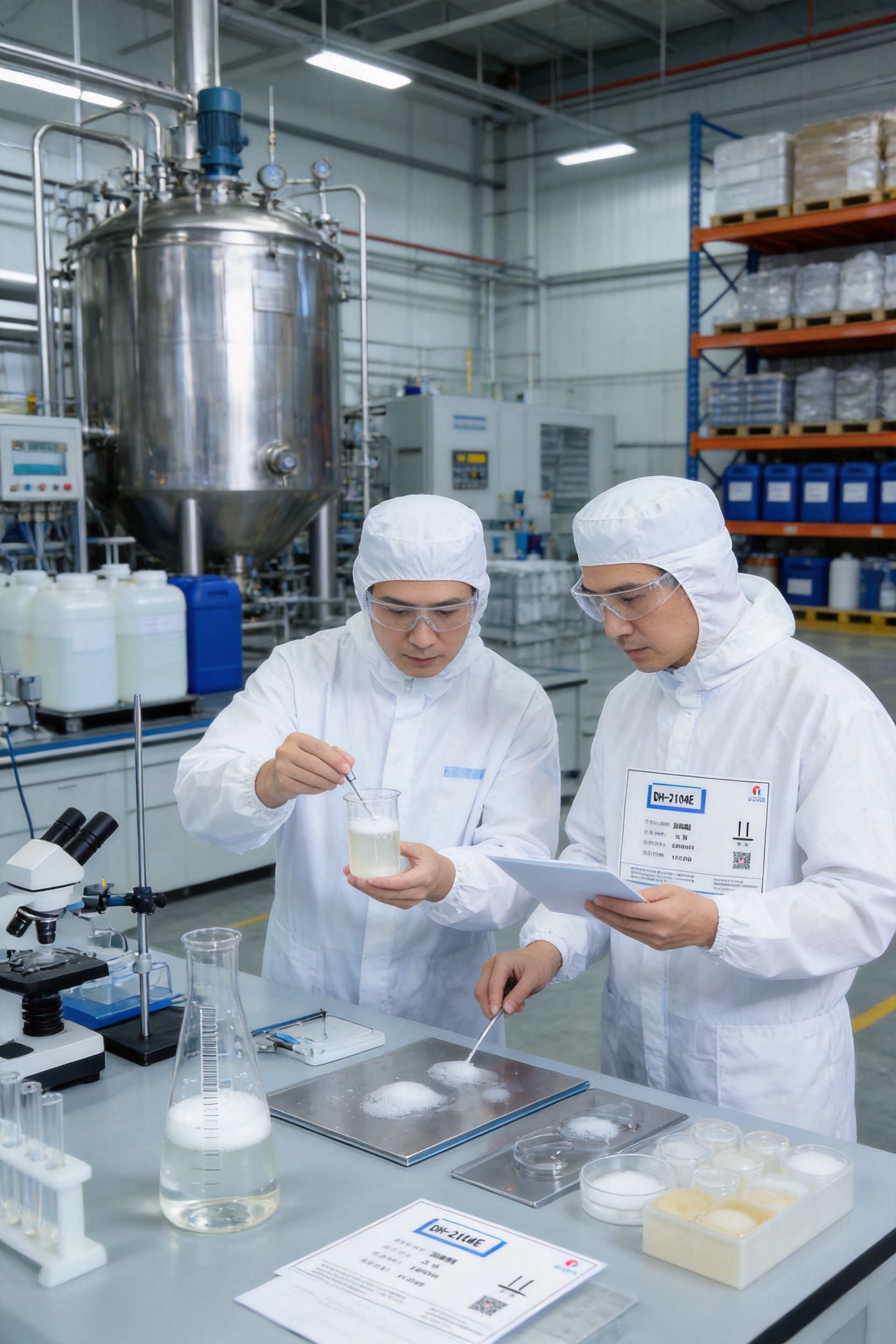
Suzhou Qingtian New Material Co., Ltd. focuses on raw materials for coatings, inks, adhesives, and related industries. The company operates with a modern production facility, advanced testing equipment, and research capabilities intended to support product development and quality control.
The company’s product portfolio includes dispersants, leveling agents, defoamers, adhesion promoters, anti-settling agents, cooling agents, conductive agents, orange peel texture agents, texture powders, and wax powders. This broad product range gives the company experience across the major functional requirements of coatings and ink formulations.
For customers evaluating DH-2270S, this broader formulation knowledge can be valuable. Foam control is rarely an isolated issue. A defoamer interacts with dispersants, wetting agents, leveling agents, binders, pigments, rheology modifiers, and curing components. A supplier with experience across several additive categories can provide a more complete perspective when troubleshooting compatibility or application problems.
Consistent manufacturing requires stable production procedures and equipment capable of handling specialty chemical materials. The company’s modern production facility supports the preparation, processing, packaging, and quality evaluation of additive products for industrial customers.
Production control should cover raw-material verification, batch formulation, mixing conditions, temperature management, dispersion or homogenization, filtration where applicable, filling, and packaging. These controls help maintain consistent product behavior from one batch to another.
For a water-based silicone defoamer, physical appearance, storage stability, dispersion behavior, active content, viscosity, and foam performance are all relevant quality considerations. Product testing can be aligned with customer requirements and application conditions.
Advanced testing equipment allows performance to be evaluated more systematically than visual inspection alone. Surface tension measurements, foam height and collapse tests, dynamic foam tests, compatibility evaluations, storage stability studies, and application trials can provide useful evidence for formulation decisions.
Coating evaluations may include drawdown appearance, gloss, leveling, cratering, pinholes, adhesion, water resistance, and recoat behavior. Ink evaluations may include print uniformity, color strength, drying, substrate wetting, and circulation stability. Adhesive evaluations may include tack, peel, shear, and moisture resistance.
By connecting laboratory measurements with actual application performance, the company can help customers select appropriate dosage levels and addition points. This application-oriented approach is especially important because the strongest foam break in a beaker does not always produce the best overall coating or ink result.
Specialty additive customers often require more than a standard product. They may need a different balance of foam breaking, compatibility, surface tension, storage stability, or application performance. A technical supplier should be able to discuss the formulation environment, production process, target substrate, and final performance requirements.
Suzhou Qingtian New Material Co., Ltd. emphasizes innovation, quality, service, and win-win cooperation. Its technical and commercial teams can support customers during product selection, sample evaluation, formulation optimization, and scale-up discussions.
Customization should be based on clearly defined technical objectives. These may include lower dosage, improved compatibility with a specific resin, reduced influence on gloss, stronger dynamic foam suppression, enhanced wetting, or improved storage stability. Any customized solution should be confirmed through laboratory and production trials before commercial adoption.
A structured evaluation helps formulators determine whether DH-2270S is suitable for a specific system. The following process can be adapted to different applications.
Record the resin or binder type, pigment loading, surfactant package, pH, viscosity, solids content, processing temperature, shear conditions, and application method. Also identify whether the main problem is dynamic foam, static foam, poor wetting, surface defects, or a combination of these issues.
Prepare a series of samples using several dosage levels. Begin with a low concentration and increase gradually. Excessive defoamer may create surface defects or affect adhesion, so the optimum level is usually the lowest dosage that provides the required performance.
Evaluate addition during initial dispersion, during let-down, and after the main formulation is complete. The best addition point depends on the formulation and equipment. Pre-dilution may be useful in some systems, while direct addition may be preferred in others.
Use representative mixing or agitation conditions and measure foam height, foam collapse time, and foam recurrence. If possible, reproduce the shear rate, pumping conditions, or circulation pattern used in production.
Apply the formulation to representative substrates using the intended coating or printing method. Examine wetting, leveling, craters, pinholes, gloss, haze, surface smoothness, adhesion, drying, and water resistance.
Store samples under normal and accelerated conditions. Monitor separation, viscosity change, appearance, odor, foam behavior, and application performance. Compatibility should also be checked when the product is combined with other additives or transferred into a different resin system.
| Evaluation Area | Recommended Observation | Importance |
|---|---|---|
| Dynamic foam control | Foam height, collapse speed, and recurrence during agitation | Shows performance during mixing, pumping, and application |
| Static foam control | Surface foam after the system has rested | Supports filling, storage, and vessel management |
| Surface tension | Dynamic and static surface-tension values | Helps assess wetting and bubble stability |
| Coating appearance | Cratering, pinholes, gloss, haze, and leveling | Confirms dried-film quality |
| Water resistance | Whitening, tack, softening, or adhesion loss after water exposure | Measures moisture-related durability |
| Storage stability | Separation, viscosity change, sedimentation, and foam behavior | Indicates suitability for commercial handling |
| Substrate wetting | Coverage, edge flow, and contact with the substrate | Supports uniform coating or printing |
DH-2270S should be handled according to the supplier’s technical documentation and applicable industrial safety requirements. Containers should be kept properly closed and protected from contamination. Before use, the material should be checked for uniformity and any unusual change in appearance.
Mixing conditions should be selected to distribute the additive uniformly without introducing unnecessary air. If pre-dilution is used, the diluent and order of addition should be confirmed through compatibility testing. The product should not be combined with other materials in the original container unless such practice has been specifically validated.
The additive dosage should be optimized for each formulation. Too little may not provide adequate foam control, while too much may influence surface appearance, recoat adhesion, gloss, slip, or other properties. The correct dosage is therefore a technical decision rather than a universal fixed value.
Production operators should also distinguish between entrained air and generated foam. Entrained air may require changes in mixing speed, impeller design, filling method, or circulation conditions in addition to chemical foam control. The best result often comes from combining suitable equipment settings with an appropriately selected defoamer.
Improved foam control can support more efficient manufacturing. Reduced foam may shorten mixing and waiting times, improve filling accuracy, decrease material loss, and reduce the need for repeated processing. Better surface quality can also reduce rejects, rework, and disposal of defective products.
For water-based coating and adhesive manufacturers, these benefits complement the broader advantages of water-based technology. A well-designed additive package can help maintain production efficiency while supporting lower-emission formulation strategies.
However, sustainability should be evaluated across the complete formulation and manufacturing process. Important factors include dosage, product durability, production energy, waste reduction, packaging, storage stability, and the environmental profile of the final coating, ink, or adhesive. Technical performance and responsible use should be considered together.
DH-2270S is a silicone-based defoamer designed for water-based coatings, adhesives, inks, pigment concentrates, latex dipping systems, fount solutions, and electroplating solutions. It provides defoaming, foam suppression, surface-tension reduction, and substrate wetting.
DH-2270S is designed to provide stronger foam suppression and lower surface tension under dynamic conditions than traditional surfactant-based approaches. It also combines foam control with wetting support and is formulated to reduce the likelihood of several common dried-coating defects.
Yes. The product is designed to provide rapid foam break during agitation and longer-lasting foam suppression after processing has stopped. Performance should be confirmed under the actual conditions of the target formulation.
It is suitable for evaluation in inkjet inks. Because inkjet systems are highly sensitive to surface tension, viscosity, nozzle wetting, and drop formation, dosage and compatibility must be carefully tested before use in production.
Yes. The product is particularly recommended for manufacturing stable universal pigment concentrates. It can help control foam during high-pigment dispersion and support more consistent concentrate preparation.
DH-2270S is designed not to easily cause surface defects such as craters, stickiness, whitening, atomization, or poor water resistance in dried coatings. Nevertheless, compatibility depends on the complete formulation, so application testing is necessary.
The product is described as having no cloud point, supporting stable behavior across a wide temperature range. Storage and application testing should still be conducted under the specific conditions expected in commercial use.
DH-2270S provides thermal, acid, and alkali stability and can be evaluated in formulations with different pH conditions, including selected electroplating solutions. The final bath or formulation should always be checked for compatibility.
Dosage depends on the binder, pigment level, surfactant content, viscosity, shear conditions, application method, and desired foam-control performance. A low-to-high dosage ladder is recommended, followed by dynamic foam, application, and storage testing.
Potential applications include water-based coatings, pressure-sensitive adhesives, printing inks, inkjet inks, latex dipping, electroplating solutions, and pigment concentrates. The product may also be evaluated in metal, plastic, wood, glass, flooring, and anti-corrosion coating systems.
Suzhou Qingtian New Material Co., Ltd. provides product supply, technical communication, application guidance, and formulation-oriented support. Customers can discuss their resin system, processing conditions, substrate, and performance requirements with the company’s technical and sales teams.
DH-2270S Water-based Polyether Silicone Defoamer is a multifunctional additive for manufacturers seeking reliable foam control and improved wetting in water-based systems. Its rapid migration, low surface tension, dynamic foam suppression, low water sensitivity, and broad thermal and chemical stability make it suitable for a wide variety of industrial applications.
The product offers advantages over simpler defoamer or surfactant approaches by addressing both processing foam and final surface quality. It is designed to control dynamic and static foam, support substrate wetting, avoid micelle formation, and reduce the likelihood of stickiness, whitening, atomization, and poor water resistance in dried coatings.
Its recommended use in stable universal pigment concentrates is particularly important for formulators working with high-pigment systems and multiple compatible base formulations. At the same time, its application range extends to coatings, inks, adhesives, latex dipping, fount solutions, and electroplating systems.
The manufacturing strength behind the product is equally important. Suzhou Qingtian New Material Co., Ltd. combines a modern production facility, advanced testing equipment, application-oriented research, and a broad portfolio of coating and ink additives. This combination supports consistent product development and practical technical service.
As with all specialty additives, successful implementation requires application-specific optimization. By evaluating dosage, addition point, dynamic foam behavior, surface tension, coating appearance, water resistance, and storage stability, manufacturers can determine the most effective way to incorporate DH-2270S into their production systems.
1. General principles of foam formation and foam control in aqueous coating and ink systems.
2. Technical practices for evaluating dynamic and static surface tension in water-based formulations.
3. Industrial methods for testing defoamers in coatings, printing inks, adhesives, and pigment concentrates.
4. Application guidelines for water-based coatings, water-based pressure-sensitive adhesives, and latex dipping compounds.
5. Quality-control principles for specialty chemical manufacturing and batch-to-batch consistency.
6. Formulation considerations for universal pigment concentrates and high-pigment aqueous dispersions.
7. Industry testing methods for coating appearance, adhesion, water resistance, gloss, leveling, and storage stability.
8. Supplier technical information for DH-2270S Water-based Polyether Silicone Defoamer.
 Wholesale Paint/ Coating Additives Manufacturers
Custom Industrial Chemical Solutions Suppliers