русский
 Español
 Français
Home / Author / Lu Xinzhi — Overseas Product Sales Specialist / Water-Based Dispersant Technology for High-Performance Pigment Concentrates
Lu Xinzhi — Overseas Product Sales Specialist

Content
Modern water-based coatings, inks, and pigment concentrates require more than simple pigment wetting. A successful formulation must control particle interaction, reduce grinding viscosity, support efficient color development, preserve gloss, limit foam, and remain stable during storage and application. These demands become especially challenging when formulators work with high pigment loading, inorganic pigments, transparent pigments, opaque pigments, organic pigments, or carbon black.
DH-5300S Water-based Dispersant is designed to address these challenges through steric hindrance stabilization. By helping prevent dispersed pigment particles from approaching and re-agglomerating, it supports a stable and finely distributed pigment system. Its principal performance advantages include strong viscosity reduction, low foaming, improved gloss, and effective color development. It is also suitable as a standard additive for resin-free pigment concentrates, giving manufacturers greater flexibility when developing concentrated color systems.
The product is manufactured and supplied by Suzhou Qingtian New Material Co., Ltd., a professional supplier of raw materials for coatings, inks, and adhesives. The company combines product development, application knowledge, testing capabilities, and modern production resources to serve industrial customers requiring reliable additive solutions.
This article examines the working principles, formulation benefits, application value, manufacturing strengths, quality considerations, and commercial advantages associated with DH-5300S. It also explains how the product can help formulators improve production efficiency while maintaining the appearance and stability demanded by modern coating and ink markets.
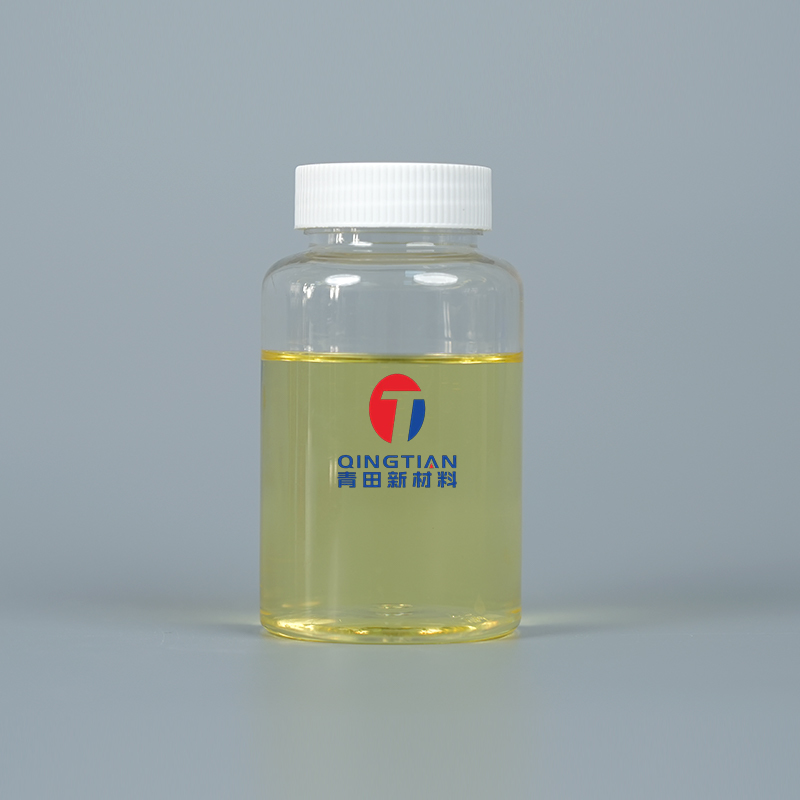
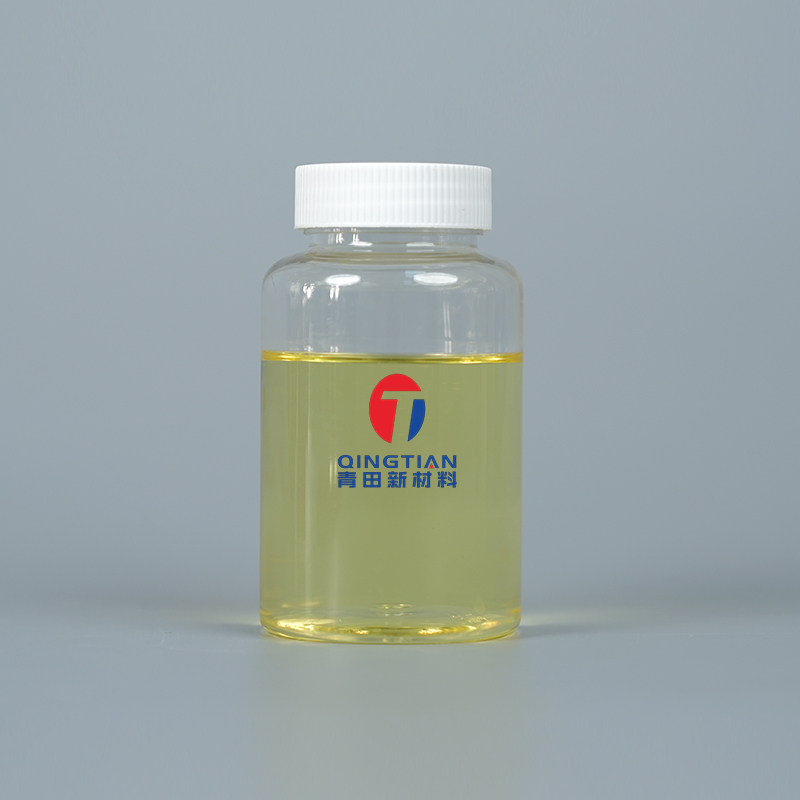
DH-5300S Water-based Dispersant
Pigments are solid particles that must be distributed throughout a liquid medium. Unlike soluble dyes, pigments do not dissolve in water or in most coating binders. They must be wetted, separated, reduced to an appropriate particle size, and stabilized against re-agglomeration. This process is commonly called dispersion.
In an untreated pigment system, individual particles tend to attract one another through van der Waals forces, electrostatic interactions, surface energy, and other forms of interparticle attraction. These forces can result in flocculation or agglomeration. The consequences may include increased viscosity, poor color strength, reduced transparency, insufficient hiding power, surface defects, sedimentation, loss of gloss, and inconsistent application performance.
A water-based dispersant supports the process by improving the interaction between the pigment surface and the surrounding aqueous phase. It can help wet pigment particles during mixing and grinding, reduce the energy required to break down agglomerates, and create a protective environment that limits the return of particles to a flocculated state.
For industrial formulators, dispersant selection is therefore a central formulation decision rather than a minor additive adjustment. The right dispersant can influence production speed, mill efficiency, final pigment concentration, viscosity, color development, surface appearance, storage stability, and compatibility with downstream coating systems.
Water has a high surface tension compared with many organic solvents. This makes it more difficult to wet certain pigment surfaces, especially hydrophobic organic pigments, carbon black, and treated mineral pigments. Water-based systems may also be sensitive to foam formation because surfactants, polymers, and high-speed mixing can stabilize air bubbles.
At the same time, environmental and regulatory pressures continue to encourage the use of water-based coatings and inks. Manufacturers want lower solvent emissions and safer production environments, but they must still achieve competitive appearance and processing performance. A dispersant that functions effectively in water-based systems can help bridge the gap between environmental objectives and technical requirements.
DH-5300S is positioned for this environment by combining pigment stabilization with strong viscosity reduction and low foaming behavior. These characteristics are particularly valuable when high pigment loading and efficient grinding are required.
DH-5300S is a water-based dispersant developed for pigment dispersion applications. It deflocculates pigments through steric hindrance stabilization. It is suitable for transparent and opaque pigments and can be applied to inorganic pigments, organic pigments, and carbon black systems, subject to formulation testing and appropriate dosage selection.
The product is described as a standard additive for resin-free pigment concentrates. This is important because resin-free concentrate technology can provide flexibility when a colorant must be incorporated into multiple final coating or ink systems. Instead of building the complete binder chemistry into the pigment concentrate, a formulator can focus on pigment wetting, dispersion, and storage stability.
| Performance area | Contribution of DH-5300S | Formulation value |
|---|---|---|
| Particle stabilization | Promotes steric hindrance stabilization and deflocculation | Helps limit re-agglomeration and supports uniform pigment distribution |
| Viscosity control | Provides strong viscosity reduction | Supports higher pigment loading, easier pumping, and efficient grinding |
| Foam behavior | Features low foaming during processing | May reduce the need for additional defoamer and simplify grinding |
| Appearance | Enhances gloss and color development | Helps improve visual quality in coatings and inks |
| Pigment compatibility | Suitable for transparent, opaque, inorganic, organic, and carbon black pigment systems | Provides a broad platform for color concentrate development |
| Concentrate design | Suitable for resin-free pigment concentrates | Offers flexibility when the concentrate will be used in different resin systems |
High viscosity is one of the most common limitations in concentrated pigment processing. As pigment content rises, particle contact becomes more frequent and the system can develop a dense network. This network increases resistance to flow, making it harder to pump, mix, mill, filter, or transfer the concentrate.
DH-5300S is designed to provide strong viscosity reduction by improving pigment dispersion and reducing uncontrolled particle-particle association. A lower-viscosity concentrate may be easier to process and may allow manufacturers to achieve a higher pigment loading without exceeding equipment or application limits.
Viscosity reduction can also improve production flexibility. A concentrate with manageable flow behavior can be transferred through pipes, metered more consistently, and combined with other components with less mechanical stress. In some systems, the ability to reduce viscosity can support smaller equipment, shorter processing cycles, or more efficient use of grinding energy.
Foam is a frequent problem in water-based pigment dispersion. High-speed dispersers and bead mills introduce air into the liquid, while surface-active ingredients can stabilize bubbles. Excessive foam may reduce effective equipment volume, interrupt production, complicate color evaluation, and create defects in the finished coating or ink.
DH-5300S features low foaming behavior. According to the product information, no defoamer is required during the grinding process under suitable formulation conditions. This can simplify the additive package and reduce the risk that a separate defoamer will interfere with gloss, intercoat adhesion, surface leveling, or color appearance.
The actual need for defoamer should always be confirmed through application testing because foam behavior depends on equipment design, mixing speed, water quality, pigment type, temperature, and the presence of other additives. Nevertheless, a low-foaming dispersant gives the formulator a useful starting advantage.
Poor dispersion often leads to rough or uneven surfaces. Large agglomerates can scatter light irregularly, lower gloss, weaken transparency, and create inconsistent color. Better particle distribution generally allows the coating film to form a more uniform surface.
DH-5300S is designed to enhance gloss by supporting finer and more stable pigment distribution. It also provides excellent color development for organic pigments and carbon black. Improved color development means that the formulation may achieve stronger visual intensity, more efficient use of pigment, and better consistency between production batches.
For carbon black, dispersion quality is especially important because carbon black particles are extremely fine and have a high surface area. They can create high viscosity and are prone to forming persistent agglomerates. The product information states that in medium-to-high pigment carbon black pastes, DH-5300S can achieve 35% solids with a particle size below 200 nanometers under appropriate conditions.
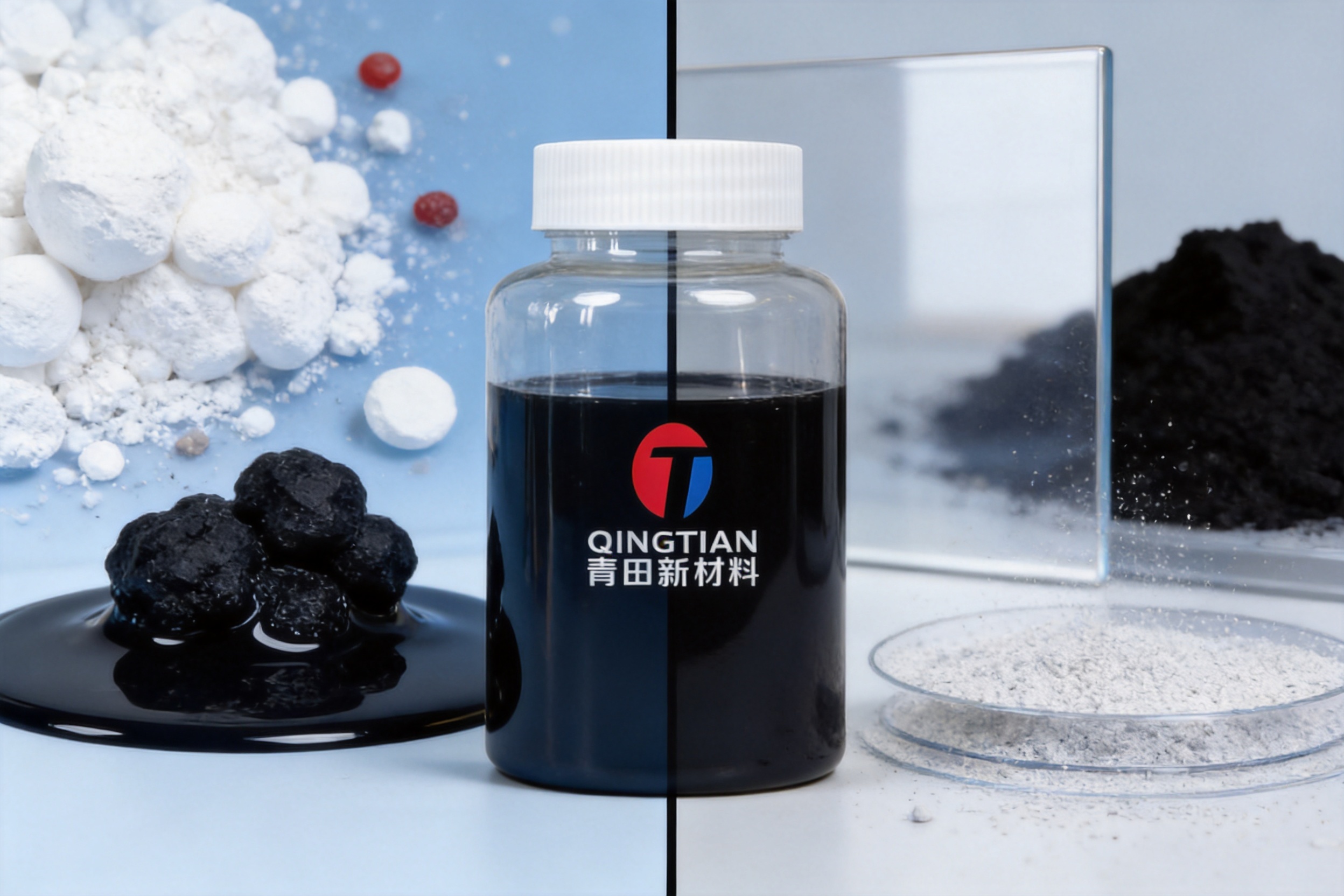
The central mechanism associated with DH-5300S is steric hindrance stabilization. In a sterically stabilized dispersion, the dispersant adsorbs or associates with the pigment surface and forms a stabilizing layer around the particles. When two treated particles approach one another, the layers resist close contact. This physical barrier helps reduce the tendency of particles to flocculate.
Steric stabilization differs from a mechanism that depends only on electrostatic repulsion. Electrostatic stabilization can be sensitive to ionic strength, pH, and the presence of dissolved salts. Steric stabilization can provide a different type of protection because it relies on the physical space and solvated structure created around the pigment surface.
The effectiveness of a steric dispersant depends on several factors, including the chemical nature of the pigment, surface treatment, dispersant demand, water quality, pH, temperature, mixing sequence, and final resin compatibility. For this reason, laboratory screening remains important. A dispersant that performs well with one pigment may require a different dosage or processing sequence with another.
Deflocculation means that pigment particles remain more individually separated instead of forming loose clusters or networks. When a pigment system is deflocculated, the liquid phase can flow more freely around the particles. This typically contributes to lower viscosity and improved leveling of the concentrate.
In a flocculated system, particles may form a three-dimensional structure that traps liquid and increases yield stress. The concentrate may appear thick even when the pigment concentration is not exceptionally high. Deflocculation can break down this structure and create a more fluid system without necessarily reducing the pigment content.
This behavior is valuable for manufacturers seeking high-strength concentrates. A more mobile dispersion can be processed with less resistance and may provide better reproducibility during letdown into a final coating or ink.
Grinding reduces pigment agglomerates and increases the accessible surface area of the pigment. The dispersant must protect the newly created surfaces during and after grinding. If stabilization is insufficient, particles can re-agglomerate after leaving the mill, causing the apparent particle size to increase again.
DH-5300S is intended to support the development of fine pigment dispersions. The stated carbon black performance of particle size below 200 nanometers at up to 35% solids illustrates the product’s potential in demanding high-loading applications. This value should be understood as a reported performance target under specified formulation and process conditions rather than an automatic result for every pigment or equipment configuration.
Pigment concentrate manufacturers often need to balance several objectives at the same time: high pigment loading, low viscosity, strong color, good storage stability, clean processing, low foam, and broad compatibility. An additive that addresses several of these objectives can reduce development complexity.
A resin-free pigment concentrate contains pigment, dispersant, water, and other necessary processing ingredients without relying on a complete resin binder package. This approach can be useful when the concentrate must be added to multiple end-use systems.
DH-5300S is described as a standard additive suitable for resin-free pigment concentrates. This gives formulators the option to develop versatile color concentrates that can later be incorporated into different water-based coatings, inks, or adhesive systems. The final compatibility of the concentrate must still be verified with the selected binder, coalescent, surfactant, preservative, and other formulation components.
Resin-free concentrate design can also support inventory simplification. A manufacturer may be able to produce a common pigment base and adapt it to several final products. This can reduce the number of colorant versions that must be maintained, although the suitability of this approach depends on the customer’s application and stability requirements.
Increasing pigment loading can improve the economic efficiency of a concentrate by reducing the amount of water and processing liquid transported per unit of pigment. However, higher loading increases the risk of viscosity growth, poor wetting, inadequate milling, and storage instability.
The strong viscosity reduction associated with DH-5300S can help formulators explore higher pigment levels while maintaining practical processing behavior. The reported carbon black example demonstrates the product’s suitability for medium-to-high pigment pastes. Higher loading is not simply a matter of adding more pigment; it requires proper dispersant demand, sufficient mechanical energy, appropriate grinding media, and controlled process conditions.
When a dispersant reduces viscosity and supports rapid wetting, the production process may become more efficient. The mill can process the pigment slurry with improved flow, and the operator may experience fewer interruptions caused by excessive torque, poor circulation, or difficult transfer.
Low foaming can further improve efficiency. Less foam can increase the useful working volume of the equipment and make it easier to judge the actual liquid level. It can also reduce the time required for deaeration before color testing or final packaging.
Every additional additive creates another compatibility variable. Defoamers, wetting agents, co-dispersants, leveling agents, and other surfactants can interact in ways that affect surface appearance and storage stability. If a dispersant already provides low foaming during grinding, the formulator may have less need for a separate defoamer at that stage.
A simpler additive package can make troubleshooting easier. When fewer ingredients influence the system, it may be easier to identify the source of viscosity drift, surface defects, color variation, or incompatibility. This does not mean that every formulation will require only one additive, but it highlights the potential value of a multifunctional dispersant.
Inorganic pigments are widely used when opacity, durability, weather resistance, heat resistance, and strong hiding power are required. Titanium dioxide, iron oxides, chromium oxide, and other mineral-based pigments can present significant dispersion challenges because of their density, surface chemistry, and tendency to form hard agglomerates.
DH-5300S is identified as suitable for inorganic pigments and is designed to help reduce viscosity while improving pigment distribution. In a water-based inorganic pigment concentrate, the dispersant can support wetting during the initial mixing stage and stabilization during grinding and storage.
Improved dispersion may enhance hiding power by distributing the pigment more evenly throughout the film. However, hiding power also depends on pigment refractive index, particle size distribution, film thickness, pigment volume concentration, and the properties of the binder. The dispersant supports these factors but does not replace the need for appropriate pigment selection and coating design.
Organic pigments are often selected for their bright color, high tinting strength, and broad shade range. Some organic pigments are difficult to wet in water because of hydrophobic surface characteristics. They may also form strong agglomerates that reduce color strength and increase viscosity.
DH-5300S provides excellent color development for organic pigments according to the supplied product information. This makes it relevant to high-chroma coatings, water-based printing inks, decorative finishes, and other applications where shade intensity and clarity are important.
For transparent organic pigments, a good dispersant can help preserve transparency by limiting large particles that scatter light. For opaque organic pigments, improved distribution can support more uniform color and film appearance. The most appropriate dosage should be determined through a ladder study using the selected pigment and the intended processing equipment.
Carbon black is among the most demanding pigments for dispersion. Its very fine primary particles form aggregates and agglomerates with high surface area. A poorly dispersed carbon black paste may show excessive viscosity, weak jetness, poor undertone, reduced gloss, and unstable storage behavior.
DH-5300S is specifically described as providing excellent color development for carbon black. In medium-to-high pigment carbon black pastes, the product can achieve 35% solid content with particle size below 200 nanometers under appropriate conditions. This combination of high solids and fine particle size is valuable for manufacturers seeking concentrated black colorants.
The benefits of an efficient carbon black dispersant may include stronger blackness, better tinting performance, lower mill resistance, improved surface smoothness, and greater reproducibility. The final result depends on carbon black grade, surface area, structure, pH, water quality, dispersant level, milling technology, and temperature management.
DH-5300S is suitable for both transparent and opaque pigments. Transparent pigments require careful control of particle size and agglomeration because larger particles can reduce clarity and increase haze. Opaque pigments require uniform distribution to achieve consistent hiding power and color density.
The broad pigment range makes the product useful for manufacturers who produce multiple color families. Instead of relying on unrelated dispersants for each pigment category, a company may use DH-5300S as a common starting point and optimize the dosage for individual pigments.
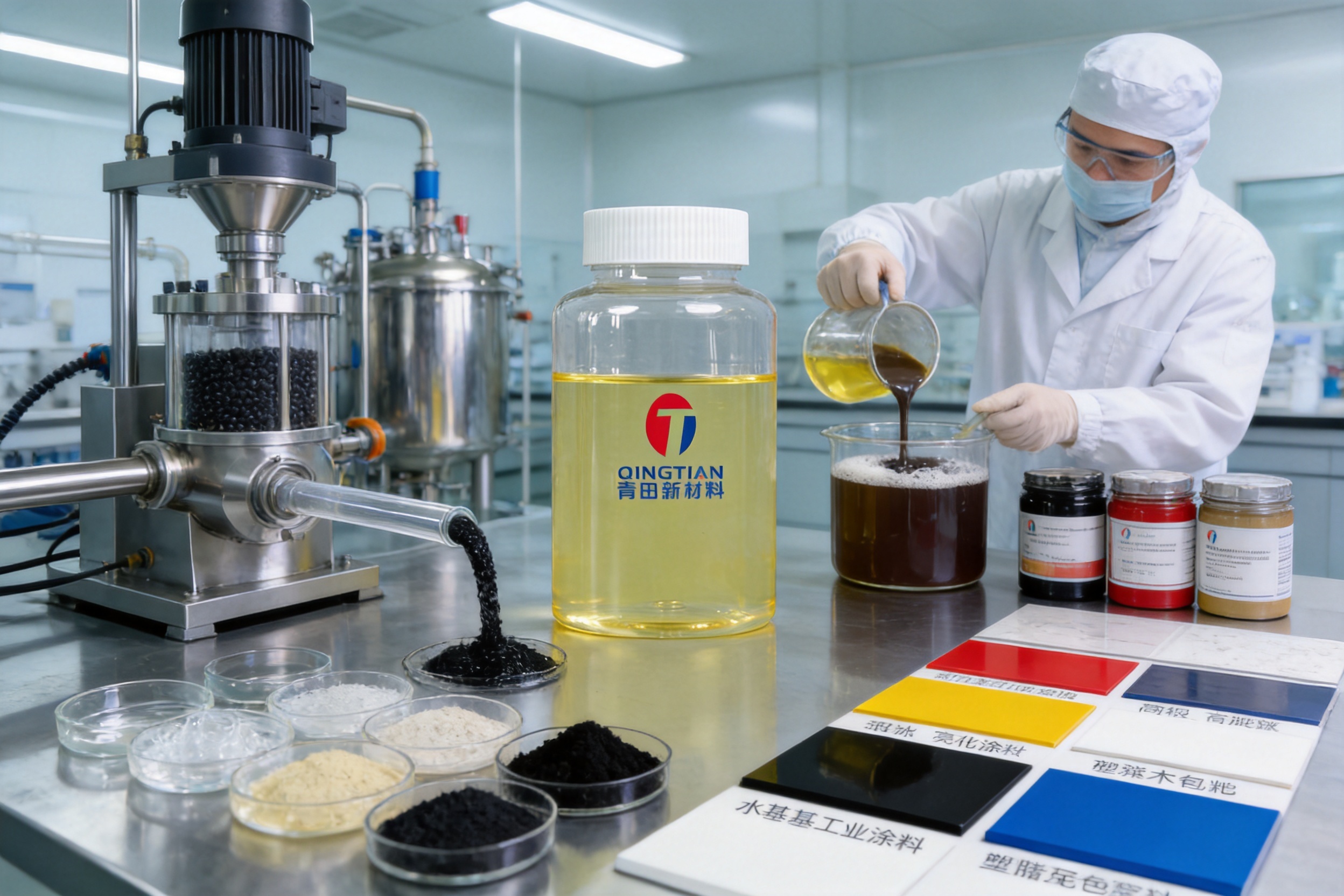
Although the correct formulation must be established through testing, a structured process can help formulators evaluate DH-5300S efficiently. The first step is to characterize the pigment, including oil absorption, surface treatment, particle size, density, color strength, and expected loading.
A typical development process begins by preparing the aqueous phase and adding DH-5300S under moderate agitation. The dispersant should be given sufficient time to distribute throughout the liquid before the pigment is introduced. This can improve the contact between the additive and the pigment surface during wetting.
The pigment is then added gradually to avoid localized overloading and excessive air entrainment. High-shear mixing may be used to create a uniform premix before the material enters a bead mill or other grinding equipment.
The exact order may vary depending on pigment type, water quality, equipment, and the presence of co-additives. Some pigments may require pH adjustment or a pre-wetting stage. The important principle is to ensure that the dispersant is available at the pigment surface before significant agglomeration develops.
Grinding conditions should be optimized according to the target particle size and the sensitivity of the pigment. Relevant variables include mill type, bead size, bead loading, residence time, circulation rate, temperature, and shear level.
Excessive grinding can waste energy or cause unnecessary temperature rise, while insufficient grinding may leave large agglomerates in the concentrate. DH-5300S can support the grinding process by helping maintain particle separation as new pigment surface is created.
Temperature control is important in water-based systems. Rising temperature can change viscosity, accelerate evaporation, alter additive performance, and affect storage stability. Consistent process conditions make it easier to compare laboratory and production results.
There is no universal dosage that produces the same result for every pigment. The dispersant demand is influenced by pigment surface area and surface chemistry. High-surface-area carbon black, for example, may require a greater amount of dispersant than a coarse inorganic pigment at the same weight percentage.
A practical evaluation can include several dispersant levels around a preliminary starting point. Each sample should be evaluated for initial viscosity, grind response, particle size, color strength, gloss, foam, storage stability, and compatibility after letdown.
| Evaluation stage | Key observations | Purpose |
|---|---|---|
| Premix | Wetting speed, lump formation, air entrainment | Determines whether the pigment can be incorporated efficiently |
| Grinding | Mill torque, temperature, foam, circulation behavior | Shows processing efficiency and mechanical demand |
| Fresh concentrate | Viscosity, particle size, color strength, gloss | Measures immediate dispersion quality |
| Letdown | Compatibility, shock, viscosity change, shade development | Confirms performance in the intended final system |
| Storage | Sedimentation, hard settling, viscosity drift, color change | Assesses practical shelf stability |
| Application film | Gloss, hiding power, transparency, leveling, surface defects | Links concentrate performance to end-use results |
Reliable dispersant performance depends on consistent raw materials, controlled production, and meaningful testing. A professional additive supplier must evaluate not only whether the product meets a specification, but also whether it performs consistently in real formulation environments.
Suzhou Qingtian New Material Co., Ltd. operates with advanced testing equipment and strong research capabilities. These resources support the development and evaluation of dispersants and other coating additives. Application testing is particularly important because dispersant performance cannot be judged solely by appearance or a single viscosity measurement.
Viscosity should be measured under controlled temperature and shear conditions. A single viscosity result may not fully describe a pigment concentrate because many systems show shear-thinning or thixotropic behavior. Measurements at different shear rates can provide a clearer picture of pumping, mixing, application, and storage behavior.
DH-5300S should be assessed both during grinding and after the concentrate has reached equilibrium. Some systems show a delayed viscosity change as the dispersant completes adsorption or as the pigment structure develops during storage.
Particle size analysis helps confirm whether the grinding process has achieved the intended level of dispersion. Laser diffraction, dynamic light scattering, or other suitable analytical methods may be used depending on the particle-size range and sample characteristics.
For carbon black and other fine pigments, the reported target of below 200 nanometers provides an example of the level of fineness that may be pursued. Measurement conditions should be standardized because dilution, sonication, refractive index assumptions, and sample preparation can influence results.
Color strength should be compared against a control prepared under the same pigment and processing conditions. Color development can be assessed by tint strength, optical density, undertone, transparency, or spectrophotometric measurements.
Gloss evaluation should be performed on films prepared at a controlled thickness and cured or dried under consistent conditions. Improved dispersion may contribute to higher gloss, but the final value also depends on resin selection, surface leveling, substrate, film formation, and curing.
A concentrate that performs well immediately after grinding may not remain stable during storage. Testing should include elevated-temperature aging when appropriate, freeze-thaw cycles for relevant markets, and observation of sedimentation, hard settling, viscosity drift, color change, and particle-size growth.
Steric hindrance stabilization is intended to help maintain separation between particles over time. However, long-term stability must be confirmed in the complete formulation because preservatives, salts, pH modifiers, resins, and other additives may influence dispersion behavior.
The value of a dispersant is determined not only by its laboratory performance but also by the reliability of its supplier. Industrial customers require consistent quality, responsive communication, technical understanding, and the ability to support product development across different applications.
Suzhou Qingtian New Material Co., Ltd. specializes in raw materials for coatings, inks, and adhesives. Since its founding in 2012, the company has developed an experienced team that includes research and development specialists, sales professionals, and technical personnel. Its modern production facility and advanced testing equipment provide a foundation for product quality and application service.
Dispersant development involves the relationship between polymer structure, pigment surface, water chemistry, and processing conditions. A strong R&D team can investigate these relationships and adapt additive technology to changing market demands.
The company’s broader product portfolio includes dispersants, leveling agents, defoamers, adhesion promoters, anti-settling agents, cooling agents, conductive agents, orange peel texture agents, texture powders, and wax powders. This range gives the company experience across multiple formulation functions. Such experience can be valuable when a customer’s problem involves more than one additive category.
For example, a customer may initially request a dispersant to reduce viscosity but later need assistance with surface leveling, storage stability, or substrate adhesion. A supplier with a broad product platform can evaluate the complete additive balance rather than treating each issue in isolation.
Advanced testing equipment supports repeatable product development and quality control. In practical terms, this may include the ability to study viscosity, particle size, gloss, color development, foam behavior, sedimentation, and compatibility.
Testing resources also help connect laboratory results with industrial manufacturing. A dispersant must perform under realistic shear, temperature, concentration, and storage conditions. The more closely the test method reflects the customer’s production process, the more useful the technical recommendation becomes.
The company has a modern production facility and has strengthened its R&D and production capacity through its move to Lingrui Intelligent Manufacturing Park in Zhangjiagang High-tech Zone in 2021. A modern production environment can support better material handling, process organization, equipment management, batch control, and production scalability.
Manufacturing consistency is essential for dispersants because small variations in active composition or physical properties can affect pigment demand, viscosity, foam, and color development. Well-organized production and testing procedures help reduce batch-to-batch variation and provide customers with greater confidence when they scale a formulation from laboratory to commercial production.
The company’s development milestones include the creation of China’s first ice flower resin in 2016 and recognition as a National High-Tech Enterprise in 2020. These achievements indicate a continuing focus on material innovation and technical development.
Although DH-5300S is a water-based dispersant rather than an ice flower resin, the company’s experience in coating raw materials provides a broader technical context. Knowledge gained from resins, surface effects, and coating performance can contribute to a more complete understanding of how additives function in real systems.
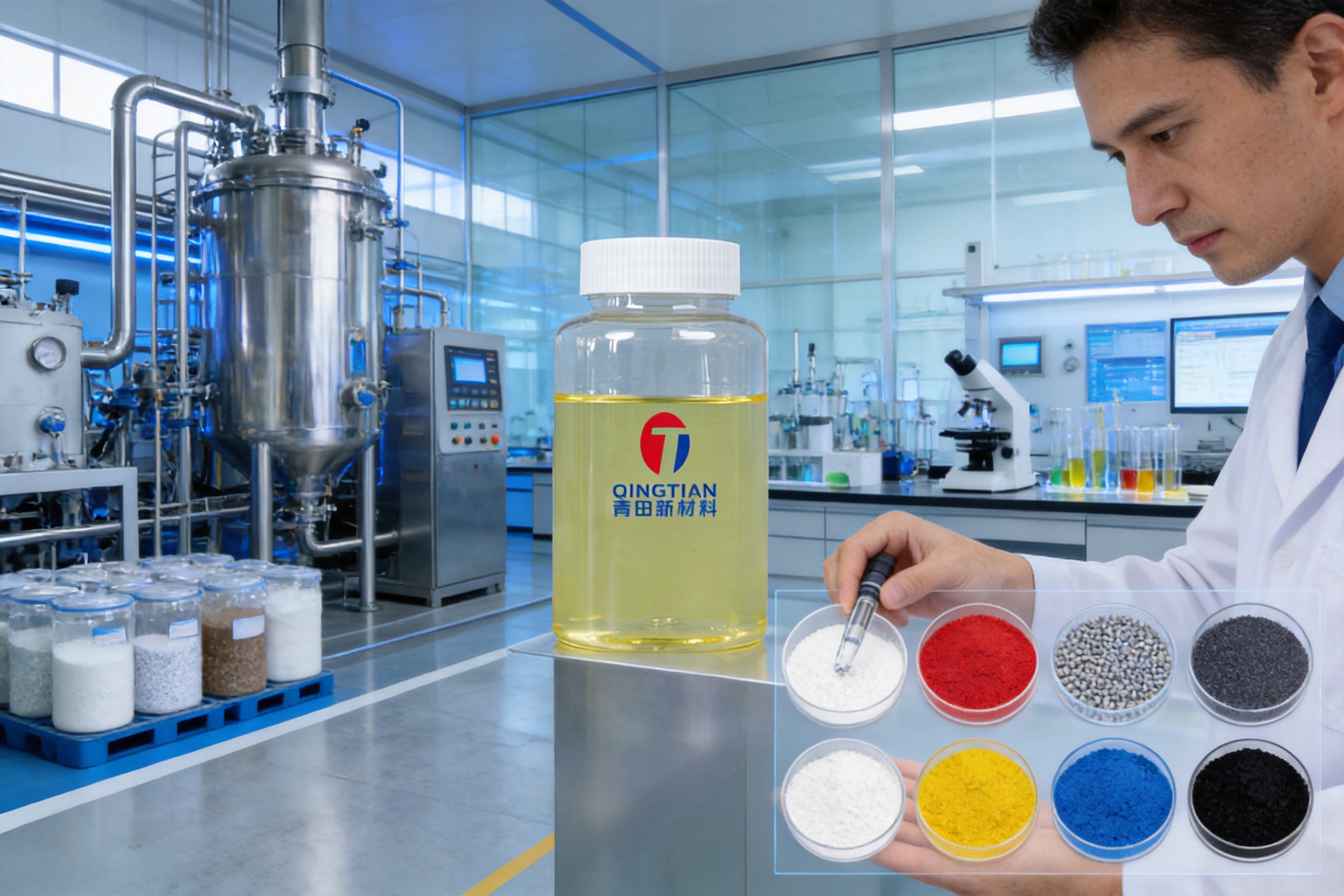
When comparing dispersants, customers usually evaluate more than one headline specification. The most useful comparison considers the complete cost and performance package: pigment loading, grinding time, viscosity, foam, color strength, gloss, storage stability, compatibility, and technical support.
DH-5300S is positioned for transparent and opaque pigments, with additional emphasis on inorganic pigments, organic pigments, and carbon black. This broad application range can be an advantage over highly specialized products that are optimized for only one pigment family.
A broad platform does not eliminate the need for testing, but it can reduce the number of dispersant products required across a color portfolio. It may also help standardize purchasing, inventory, training, and production procedures.
Some dispersants may reduce viscosity but create excessive foam, while some low-foaming products may not provide sufficient pigment stabilization. DH-5300S is designed to combine strong viscosity reduction with low foaming. This balance is one of its principal advantages for water-based grinding.
By reducing the dependence on a separate defoamer during grinding, the product may help lower formulation complexity. This can be particularly useful when the final coating requires high gloss or smooth appearance and the formulator wants to minimize the risk of defoamer-related surface defects.
The ability to develop a carbon black paste with 35% solids and particle size below 200 nanometers under suitable conditions is a significant technical reference point. High-strength black concentrates can reduce transportation and storage volume per unit of pigment and may provide strong tinting performance during letdown.
Carbon black systems are often difficult to optimize because they combine high surface area, strong agglomeration tendency, and substantial viscosity growth. A dispersant that addresses these issues can deliver value beyond a simple reduction in additive cost.
Coating customers increasingly expect smooth surfaces, consistent gloss, clear color, and attractive appearance. Dispersion quality has a direct influence on these properties. DH-5300S is intended to enhance gloss and color development, supporting the requirements of decorative, industrial, and functional coatings.
Compared with an additive that focuses only on initial wetting, a dispersant that also supports deflocculation and final appearance may provide more complete performance throughout the manufacturing and application cycle.
Supplier support can become a competitive advantage when a product must be adapted to different pigments, binders, or production scales. Suzhou Qingtian New Material Co., Ltd. focuses specifically on coating, ink, and adhesive raw materials, rather than treating additives as an unrelated commodity category.
The company’s R&D personnel, testing resources, production capabilities, and broad additive portfolio create opportunities for application-focused cooperation. Customers can evaluate not only the product itself but also the supplier’s ability to help solve formulation and manufacturing challenges.
DH-5300S may be considered for water-based pigment concentrates used in industrial coatings, architectural coatings, printing inks, wood coatings, plastic coatings, and other systems where pigment dispersion is required. It can also be relevant to colorant systems that are later introduced into adhesives or specialized surface treatments.
In steel and aluminum coil coatings, color uniformity, gloss, processing speed, and storage stability are important. In plastic coatings, wetting and surface appearance can influence the final visual effect. In wood coatings, transparent or semi-transparent color systems require control of clarity and particle distribution. In printing inks, color strength, viscosity, and foam management are essential for consistent press performance.
The company’s products are also used in sectors such as UV curing, anti-corrosion coatings, epoxy flooring, power batteries, and photovoltaic panels. The precise suitability of DH-5300S for any particular formulation should be established through compatibility and application testing.
| Potential application | Relevant product benefit | Typical evaluation focus |
|---|---|---|
| Water-based industrial coatings | Viscosity reduction, gloss, pigment stability | Hiding power, weathering, storage, film appearance |
| Printing inks | Color development, low foam, fine dispersion | Color strength, press viscosity, foam, rub resistance |
| Wood coatings | Transparent pigment dispersion and surface quality | Clarity, gloss, leveling, substrate appearance |
| Plastic coatings | Broad pigment compatibility and appearance support | Adhesion, gloss, color consistency, surface defects |
| Carbon black concentrates | High-solids potential and fine particle size | Jetness, undertone, particle size, viscosity, stability |
| Resin-free color concentrates | Formulation flexibility | Letdown compatibility and storage stability |
Water-based technology is increasingly important for manufacturers seeking to reduce reliance on solvent-rich systems. A well-designed water-based dispersant can contribute to this transition by helping pigment concentrates achieve the processing and appearance needed for industrial use.
DH-5300S supports water-based dispersion and can improve processing efficiency through viscosity reduction. If lower viscosity enables higher pigment loading, manufacturers may be able to reduce the amount of carrier liquid required for a given quantity of pigment. This can influence packaging, transport, storage, and production efficiency.
Low foaming may also reduce the need for additional defoamer. Fewer additives can simplify raw material management and reduce the number of interactions that must be monitored. These benefits should be evaluated as part of a complete life-cycle and formulation assessment rather than assumed automatically.
Efficient dispersion can reduce rework and rejected batches by improving color consistency and storage stability. It can also help reduce energy consumption associated with excessive grinding resistance, although the actual energy savings depend on the equipment, process time, pigment, and operating conditions.
Before selecting DH-5300S for commercial use, formulators should define the performance requirements of the target concentrate. Important questions include the pigment type, pigment loading, required particle size, acceptable viscosity range, storage period, final binder system, application method, and appearance target.
A control formulation using the currently selected dispersant or process should be prepared under the same conditions as the DH-5300S trial. Comparing samples under identical conditions is more meaningful than comparing results from different milling times or pigment concentrations.
The best dispersant is not always the one with the lowest initial viscosity. A complete evaluation should include color strength, gloss, foam, particle size, storage stability, letdown compatibility, and final film performance. A small advantage in one property may be offset by a serious weakness in another.
Laboratory dispersion results must be confirmed in pilot and production equipment. Scale-up can change shear history, heat transfer, residence time, and air entrainment. A dosage that works in a laboratory vessel may not be optimal in a large manufacturing batch.
Technical communication with the supplier can help identify suitable test conditions and interpret differences between laboratory and production results. The objective is not only to obtain a good laboratory sample but to establish a reliable commercial process.
DH-5300S is a water-based dispersant for pigment dispersion. It works through steric hindrance stabilization and is designed to provide strong viscosity reduction, low foaming, improved gloss, and good color development.
The product is suitable for various pigments, including transparent and opaque pigments. It is also identified for inorganic pigments, organic pigments, and carbon black. Because pigment surface chemistry varies, each formulation should be tested to determine the optimum dosage and process conditions.
Yes. DH-5300S is described as a standard additive suitable for resin-free pigment concentrates. This can provide flexibility when a color concentrate must be incorporated into different final resin systems.
Yes. Strong viscosity reduction is one of the product’s primary performance features. By helping deflocculate pigment particles, it can reduce the particle network that causes excessive viscosity in concentrated pigment pastes.
DH-5300S has low foaming characteristics, and the supplied information states that no defoamer is required during the grinding process under suitable conditions. The final decision should be based on the complete formulation and production equipment because foam is affected by many variables.
Yes. The product is designed to enhance gloss by supporting a more uniform pigment dispersion and smoother film formation. Final gloss also depends on binder chemistry, substrate, film thickness, leveling, curing, and application conditions.
In medium-to-high pigment carbon black pastes, DH-5300S can achieve 35% solids with a particle size below 200 nanometers under appropriate formulation and processing conditions. This result should be validated with the selected carbon black grade and equipment.
The dosage should be optimized through laboratory testing. A dosage ladder can be prepared and evaluated for viscosity, particle size, color strength, gloss, foam, storage stability, and compatibility after letdown. The optimum level depends on pigment surface area and formulation design.
Suzhou Qingtian New Material Co., Ltd. specializes in raw materials for coatings, inks, and adhesives. The company has an experienced R&D and sales team, a modern production facility, advanced testing equipment, and a broad portfolio of coating additives. These resources support both product supply and application-oriented technical cooperation.
No additive should be assumed to be universally compatible without testing. DH-5300S is designed for a broad range of pigment dispersion applications, but the final formulation must be checked for binder compatibility, storage stability, film properties, pH response, and application performance.
DH-5300S Water-based Dispersant is a versatile additive for manufacturers developing high-quality pigment concentrates and water-based color systems. Its steric hindrance stabilization mechanism helps deflocculate pigments and maintain particle separation. The resulting performance profile includes strong viscosity reduction, low foaming, improved gloss, and excellent color development for organic pigments and carbon black.
The product is suitable for transparent and opaque pigments and can be used with inorganic pigments, organic pigments, and carbon black systems. Its suitability for resin-free pigment concentrates adds formulation flexibility, while its reported ability to support 35% solids and particle size below 200 nanometers in medium-to-high pigment carbon black pastes demonstrates its potential in demanding applications.
Its advantages extend beyond individual laboratory properties. Lower viscosity can support higher pigment loading and easier processing. Low foaming can simplify grinding and reduce reliance on additional defoamer. Improved dispersion can contribute to better gloss, hiding power, transparency, color strength, and storage stability. Together, these benefits can help manufacturers improve production efficiency and final product consistency.
The product is supported by Suzhou Qingtian New Material Co., Ltd., a specialized supplier with experience in coating, ink, and adhesive raw materials. The company’s R&D team, modern production facility, advanced testing equipment, innovation history, and broad additive portfolio provide a strong foundation for industrial cooperation.
For the best results, customers should evaluate DH-5300S using their actual pigments, water quality, milling equipment, resin system, and application conditions. With appropriate formulation development and process control, the dispersant can serve as an effective platform for stable, concentrated, and visually attractive water-based pigment systems.
1. Product technical information for DH-5300S Water-based Dispersant, supplied by Suzhou Qingtian New Material Co., Ltd.
2. General principles of pigment wetting, dispersion, deflocculation, and steric stabilization in water-based coating systems.
3. General laboratory methods for evaluating pigment concentrate viscosity, particle size, color development, gloss, foam, and storage stability.
4. General formulation practices for water-based coatings, printing inks, adhesives, and resin-free pigment concentrates.
5. Company information and development milestones supplied by Suzhou Qingtian New Material Co., Ltd., including its R&D resources, manufacturing facility, testing capabilities, product portfolio, and technical development history.
 Wholesale Paint/ Coating Additives Manufacturers
Custom Industrial Chemical Solutions Suppliers
Wholesale Paint/ Coating Additives Manufacturers
Custom Industrial Chemical Solutions Suppliers