русский
 Español
 Français
Home / Author / Qiao Minshu — Key Account After-Sales Consultant / High-Performance Electroplating Silver Resin for Aluminum Pigment Orientation and Metallic Coating Effects
Qiao Minshu — Key Account After-Sales Consultant

Content
In modern coatings and printing applications, metallic appearance is closely connected with pigment orientation, surface smoothness, hiding power, solvent resistance, hardness, and abrasion performance. A coating may contain a high-quality aluminum pigment, yet still fail to deliver a bright and convincing silver appearance if the resin does not properly control pigment arrangement. The binder must wet the pigment, promote parallel alignment, maintain a stable film during drying, and provide sufficient mechanical resistance after curing. These requirements become especially demanding in aluminum powder paints, imitation electroplated silver coatings, and mirror silver inks.
AA-8317 Electroplating Silver Resin is a 100% active-content ketone-acetal polymer supplied as an off-white flaky solid. It is designed to help formulate low-solid, high-viscosity silver liquids with improved aluminum pigment orientation and a stronger electroplating silver effect. The resin supports the development of coatings and inks that combine whiteness, metallic brightness, hiding power, alcohol resistance, hardness, scratch resistance, and abrasion resistance.
Unlike a general-purpose binder that merely holds pigment in a film, AA-8317 is positioned as a functional resin for metallic appearance control. Its value is particularly apparent when formulators need to improve the visual uniformity of aluminum powder, obtain a cleaner silver-white appearance, and preserve the surface quality of the finished coating. The resin can be incorporated into solvent-based systems where ketone and ester solvents are used as the principal dissolution media.
This article examines the product’s composition, physical properties, application benefits, dissolution behavior, formulation considerations, quality advantages, and the manufacturing and technical strengths behind its development. It also explains how the resin compares with less specialized alternatives and provides practical answers to common formulation questions.
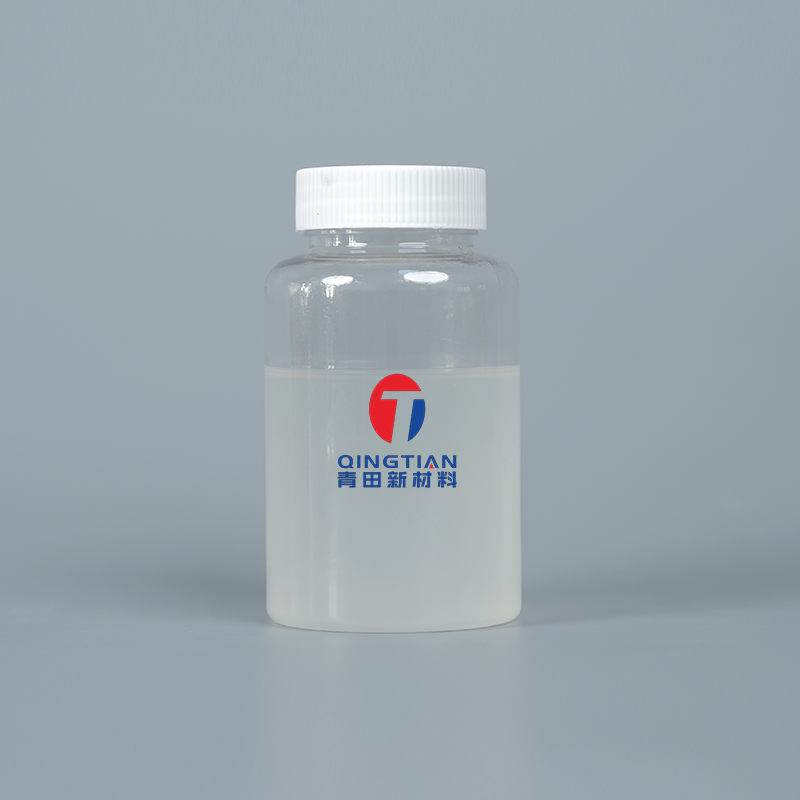
AA-8317 Electroplating Silver Resin
AA-8317 Electroplating Silver Resin is a specialized resin for metallic coatings and inks. It is supplied in an off-white flaky form and contains 100% active material before dissolution. The solid resin is based on a ketone-acetal polymer, a composition selected for its suitability in solvent-based silver liquid systems and its contribution to pigment orientation and film performance.
The resin is not supplied as a ready-to-use low-viscosity solution. Instead, the formulator dissolves the flakes in a compatible solvent blend and adjusts the final solids level according to the desired viscosity, application method, metallic effect, and film thickness. The prepared silver liquid generally features high viscosity and low solid content. A typical working range is approximately 8% to 10% solids, while the broader utilized solid-content range for an AA-8317 resin solution is generally 7% to 15%.
This low-solid, high-viscosity profile is important in metallic coating design. Metallic pigments often need a controlled resin environment so they can spread and orient without being buried under an excessive amount of binder. At the same time, the resin must provide enough cohesion to stabilize the pigment layer and protect the finished film. AA-8317 is intended to balance these two needs.
| Property | Typical Information | Formulation Significance |
|---|---|---|
| Product | AA-8317 Electroplating Silver Resin | Specialized binder for electroplating silver effects |
| Appearance | Off-white flaky solid | Convenient for controlled weighing, storage, and dissolution |
| Active content | 100% | Allows the formulator to determine final solids precisely |
| Polymer type | Ketone-acetal polymer | Suitable for solvent-based metallic coating and ink systems |
| Heat resistance of solid | 210°C | Supports applications requiring elevated solid-film temperature resistance |
| Recommended resin solution solids | Generally 7% to 15% | Enables adjustment of viscosity, flow, and pigment presentation |
| Common solvent compatibility | Ketone and ester solvents | Provides practical options for solvent selection |
| Primary functions | Aluminum pigment orientation, whiteness improvement, hiding-power enhancement | Helps develop a brighter and more uniform metallic appearance |
The phrase “electroplating silver effect” generally describes a bright, reflective, silver-colored appearance that resembles the visual quality of a plated metal surface. In many coating systems, the effect is created without actual electroplating. Instead, it is produced through a combination of aluminum or other metallic pigments, a carefully selected binder, controlled application conditions, and a suitable surface finish.
Aluminum pigments are typically plate-like particles. Their visual performance depends strongly on how these particles are distributed and oriented in the dried film. When the particles lie predominantly parallel to the substrate, light reflects more consistently from the coated surface. The result can be a smoother, whiter, brighter, and more continuous metallic appearance. If the particles are poorly oriented, the coating may appear gray, dull, cloudy, uneven, or less opaque.
AA-8317 is designed to improve this orientation process. Its resin environment helps support the movement and arrangement of aluminum pigment during application and film formation. The result is improved alignment, which can enhance the whiteness of aluminum powder and strengthen the hiding power of metallic pigments.
Binder selection also affects the visual contrast between metallic particles and the surrounding film. A resin with excessive color, insufficient flow, or poor compatibility may weaken the silver appearance. A resin system with appropriate optical cleanliness and suitable film formation can allow the aluminum pigment to express its reflective properties more effectively. AA-8317 is therefore more than a structural binder; it is an important formulation component for visual effect control.
In practical terms, the resin contributes to four connected outcomes:
First, it supports pigment alignment and helps aluminum flakes present a more orderly reflective surface.
Second, it can improve the apparent whiteness of aluminum powder, helping the coating move away from a dark, gray, or muddy metallic appearance.
Third, improved pigment presentation can increase hiding power, allowing the coating to cover the substrate more effectively at a controlled application weight.
Fourth, the resin provides a film with useful mechanical and chemical resistance, including alcohol resistance, hardness, scratch resistance, and abrasion resistance.
General-purpose resins may be capable of binding aluminum pigment, but they are not necessarily optimized for bright metallic effects. A resin developed specifically for electroplating silver applications offers a more focused solution when appearance and pigment orientation are major performance targets.
The most important advantage of AA-8317 is its application focus. It is designed for aluminum powder paint, imitation electroplated silver coatings, and mirror silver inks. This specialized orientation means that the resin is selected and presented around the needs of metallic pigment systems rather than around ordinary solid-color coatings.
For a formulator, using a specialized resin can reduce the need to compensate for poor pigment orientation through excessive pigment loading, unusual solvent combinations, or repeated additive adjustments. The resin does not eliminate the need for formulation optimization, but it provides a more suitable starting point for silver-effect development.
Aluminum pigment alignment is one of the clearest performance advantages associated with AA-8317. When aluminum particles are positioned more consistently, the coating can deliver a more uniform reflected-light response. This can help reduce visual variation across the coated surface and support a brighter, cleaner appearance.
In comparison, a non-specialized resin may allow pigment particles to remain randomly distributed or may immobilize them too quickly during film formation. Either condition can reduce reflectivity and weaken the electroplating silver effect. AA-8317 is intended to provide a resin environment that is more favorable to the orientation process.
The product information identifies improved whiteness of aluminum powder and enhanced hiding power of metallic pigments as key characteristics. These benefits are closely linked to pigment orientation and film uniformity. When the metallic particles are better aligned, they may reflect light more efficiently and create a more continuous visual layer.
Higher hiding power can help formulators manage the balance between appearance, coverage, and material consumption. The exact result depends on pigment type, particle size, substrate color, coating thickness, spray or printing conditions, and the final solvent balance. Nevertheless, a resin that supports more effective pigment presentation can provide a meaningful advantage over binders that produce a weaker or less uniform metallic film.
AA-8317 resin solutions are typically used at low solid content while maintaining relatively high viscosity. This combination can be useful in metallic systems where the formulator needs sufficient body and pigment control without adding a large amount of nonvolatile binder material.
A low-solid system may help preserve the visual openness and reflectivity of aluminum pigment. The high viscosity can help maintain pigment distribution and reduce excessive settling during processing, although final stability must still be evaluated with the selected pigment and solvent blend. By adjusting the solution between approximately 7% and 15% solids, the formulator can tailor the system for different application equipment and film requirements.
Visual appearance alone is not enough for a commercial coating. Silver-effect films may be exposed to handling, cleaning, rubbing, packaging, alcohol-containing materials, or repeated contact during use. AA-8317 provides good alcohol resistance, hardness, scratch resistance, and abrasion resistance according to the supplied product information.
These properties help connect decorative appearance with practical durability. A bright metallic coating that loses gloss or becomes visibly marked after light handling may not meet end-use expectations. The resin’s resistance profile can help formulators develop a more robust finish without abandoning the desired silver appearance.
The solid resin has a stated heat resistance of 210°C. This value indicates that the material can be considered for applications involving elevated temperatures during processing or service, subject to complete system evaluation. Heat resistance is influenced by film thickness, substrate, pigment loading, heating time, solvent removal, and the presence of other additives.
Compared with a resin that softens or loses film integrity at lower temperatures, a material with this level of solid-resin heat resistance can provide a stronger foundation for demanding applications. The stated value should be treated as a product reference rather than a universal finished-coating guarantee, because the complete formulation determines final behavior.
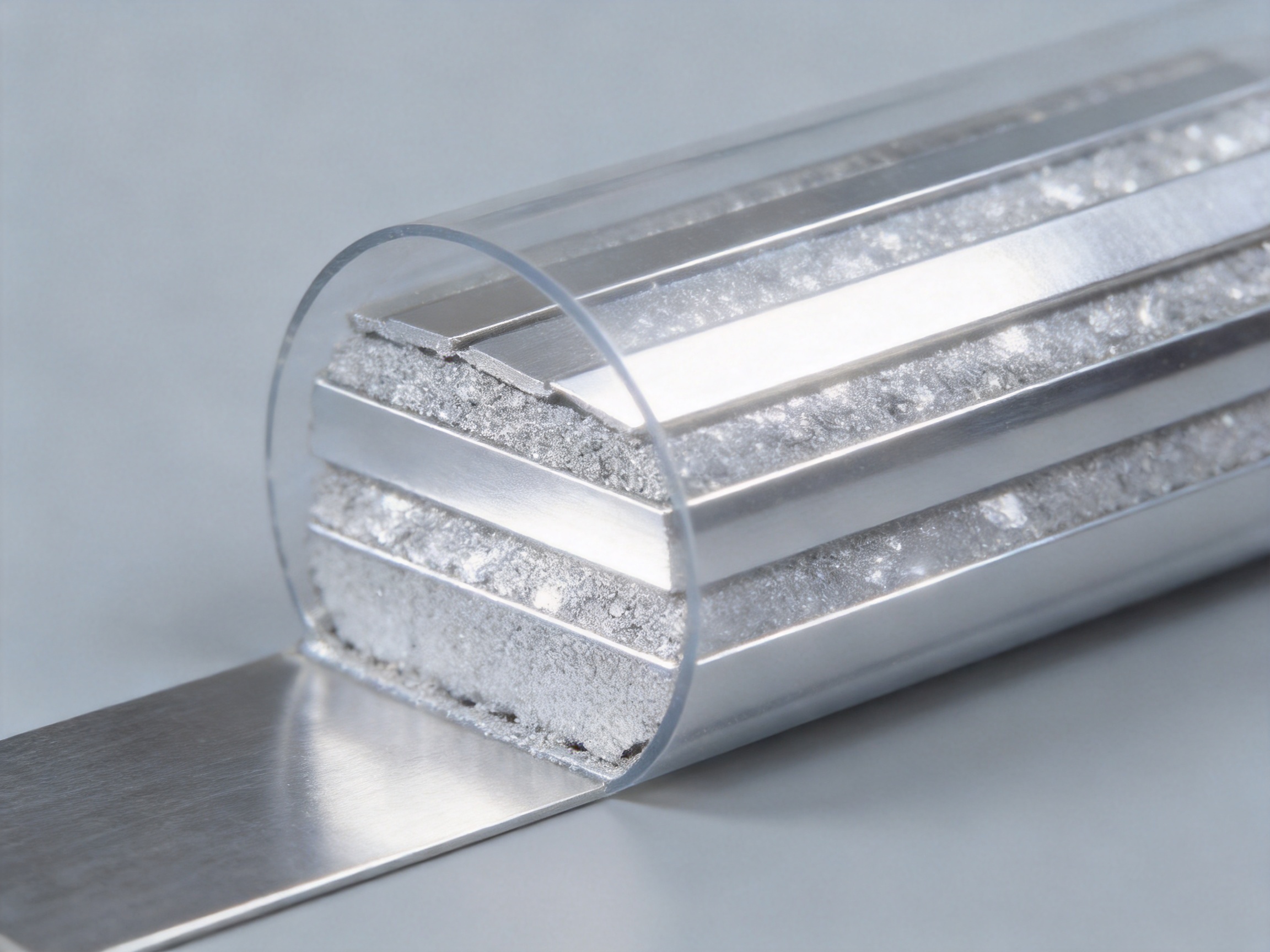
AA-8317 is supplied as an off-white flaky solid. This physical form offers several practical benefits for industrial formulation. A solid resin can be weighed accurately, stored before use, and dissolved only when required. It also allows the customer to prepare a resin solution at the concentration best suited to the target application.
Because the material is supplied at 100% active content, the formulator has direct control over the amount of polymer introduced into the system. There is no need to account for water or pre-existing solvent in the supplied resin. This can simplify material balance calculations and support more consistent batch-to-batch formulation.
The flakes should be handled in a clean and dry environment. Moisture, contamination, and improper storage may affect dissolution behavior or introduce defects into a metallic film. Containers should be closed after sampling, and the resin should be protected from conditions that could cause physical degradation or contamination.
Before large-scale use, customers should confirm packaging, storage life, transportation conditions, and safety information through the applicable technical and safety documentation. Production personnel should also follow plant procedures for solvent handling, ventilation, ignition control, personal protective equipment, and waste management.
Solvent selection is a central factor in using AA-8317 successfully. Ketone and ester solvents are identified as good solvents for the resin. Benzene, alcohol, ether, and aromatic solvents are identified as poor solvents. This distinction should guide both initial formulation design and troubleshooting.
A suitable solvent must dissolve the resin completely while also supporting the required pigment wetting, evaporation profile, application viscosity, and drying behavior. A solvent that dissolves the resin but evaporates too quickly may lead to poor leveling, dry spray, or premature surface skinning. A solvent that evaporates too slowly may extend drying time or affect pigment orientation. The best solvent blend is therefore determined not only by resin solubility but also by application conditions.
During dissolution, the resin should be cut into small pieces. Smaller pieces expose more surface area to the solvent and can reduce the time needed for complete incorporation. The recommended approach is to pre-dissolve the resin for approximately two to four hours, or to gradually add it into the solvent while stirring at high speed.
High-speed agitation can help distribute the flakes and promote contact between the solid resin and solvent. However, excessive shear, uncontrolled temperature rise, or air entrainment should be avoided. The objective is to achieve complete dissolution with a smooth, homogeneous solution rather than a foam-filled or overheated mixture.
Begin by confirming that the mixing vessel, impeller, lines, and transfer equipment are clean and dry. Metallic-effect systems can reveal very small contamination particles, so cleanliness is especially important.
Add the selected ketone or ester solvent, or the initial portion of the solvent blend, to the vessel. Start agitation before introducing the resin. Gradually add the AA-8317 flakes in small portions rather than charging the entire amount at once.
Maintain sufficient agitation to keep the flakes moving through the solvent. If necessary, use a controlled pre-dissolution period of two to four hours. The actual time may vary with batch size, solvent temperature, particle size, agitation efficiency, and resin concentration.
Inspect the solution for undissolved particles, gel-like material, haze, or sediment. If the solution is not uniform, continue mixing and evaluate whether the solvent blend is appropriate. Do not assume that simply increasing mixing speed will correct poor solvent compatibility.
After dissolution, allow entrained air to release before adding sensitive metallic pigment. Filtering the resin solution may be considered when the application requires a particularly clean film, provided the filter material is compatible and does not remove functional components.
The resin solution can generally be adjusted to approximately 7% to 15% solids, with 8% to 10% often used as a representative range for the prepared electroplating silver liquid. Lower solids may support a thinner, more reflective film, while higher solids may provide more body and film build. The correct choice depends on the target application and the performance balance required.
Solids should be calculated by mass. After the resin is fully dissolved, the solution can be adjusted gradually with compatible solvent. Viscosity should be checked after sufficient equilibration, since freshly mixed systems may not immediately represent their final flow behavior.
AA-8317 should be regarded as one part of a complete formulation. The final coating depends on the interaction between resin, aluminum pigment, solvent blend, substrate, application method, drying conditions, and optional additives. A carefully designed formulation program should evaluate both appearance and durability.
The type and morphology of aluminum pigment have a strong influence on the final silver effect. Particle size, shape, surface treatment, brightness, and compatibility with the binder should all be considered. Fine pigments may create a smoother visual appearance, while larger or more strongly reflective grades may produce a different brightness and texture.
The resin can improve pigment orientation, but it cannot completely correct a pigment that is unsuitable for the desired effect. Customers should therefore evaluate AA-8317 with the specific aluminum grade intended for production.
Metallic pigments should generally be incorporated using conditions that protect particle shape and surface quality. Excessive grinding or aggressive milling may damage plate-like aluminum particles and reduce reflectivity. A controlled let-down process is often preferable, with attention to shear, temperature, and mixing time.
The resin solution should be compatible with the pigment’s surface treatment. Incompatibility can lead to flocculation, floating, flooding, poor orientation, or loss of brightness. A small laboratory screening test can identify potential problems before production-scale trials.
The target viscosity depends on whether the system is applied by spraying, coating, gravure printing, screen printing, or another process. A high-viscosity resin solution may require solvent adjustment or equipment settings that promote even atomization and film distribution.
If viscosity is too low, the pigment may move excessively, settle rapidly, or produce weak film build. If viscosity is too high, the coating may show poor leveling, roughness, orange peel, or incomplete coverage. The appropriate range should be established using the actual application equipment and substrate.
Metallic appearance is sensitive to film thickness. A very thin film may lack coverage, while an excessively thick film may reduce visual brightness or disturb pigment orientation. The optimum thickness should be established through drawdown, spray panel, or print trials.
Because AA-8317 is commonly used in low-solid systems, the wet film may need to be controlled carefully to achieve the required dry film. The formulator should evaluate wet appearance, dry appearance, gloss or reflectivity, hiding power, adhesion, and resistance after conditioning.
A properly prepared substrate supports consistent metallic appearance. Oil, dust, moisture, release agents, and surface irregularities can interfere with adhesion and change the way light is reflected. Surface preparation should therefore be treated as part of the appearance-control system.
On smooth substrates, the resin’s pigment-orientation benefit may be more visible. On rough or porous substrates, the surface itself can scatter light and reduce the apparent electroplating effect. In these cases, primer selection and surface leveling may be necessary.
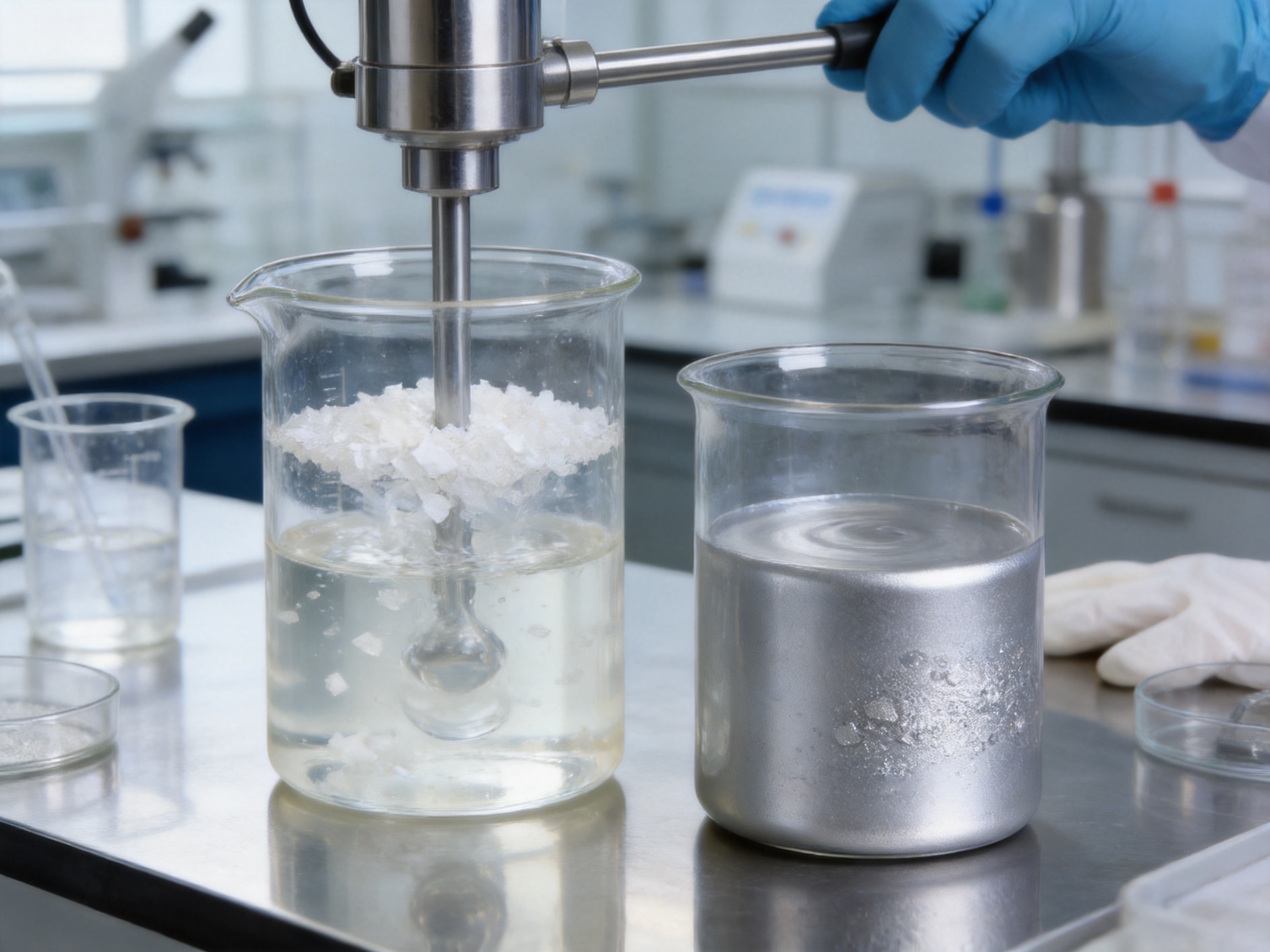
AA-8317 is suitable for aluminum powder paint systems where aluminum pigment orientation and metallic whiteness are important. The resin can help produce a more orderly pigment layer and improve the visual quality of the finished coating.
Aluminum powder paints may be used on metal, plastic, decorative components, and other substrates. The selected system must be evaluated for adhesion, flexibility, chemical resistance, and environmental exposure. AA-8317 can serve as a specialized binder component in the development of these finishes.
Imitation electroplated silver coatings seek to reproduce the bright, clean appearance associated with plated metal while using a coating process. Such systems require strong control of surface smoothness, pigment arrangement, color, reflection, and film integrity.
AA-8317 supports this objective through its pigment-orientation function and its contribution to hardness, scratch resistance, abrasion resistance, and alcohol resistance. The resin is especially relevant when the coated article must provide both decorative impact and reasonable handling durability.
Mirror silver inks require precise control of pigment distribution and surface film formation. Any haze, roughness, pigment aggregation, or poor solvent balance can reduce the mirror-like effect. AA-8317 can be evaluated as a resin for solvent-based mirror silver ink systems where a high-viscosity, low-solid resin solution is appropriate.
Printing trials should consider ink transfer, drying speed, print definition, substrate compatibility, recoat behavior, and final resistance. The resin’s suitability should be confirmed for the selected printing process and pigment grade.
The performance of a specialized resin depends not only on its chemical concept but also on manufacturing discipline. Consistent dissolution, appearance, viscosity, active content, and application performance require controlled raw materials, appropriate production equipment, effective testing, and experienced technical personnel.
The manufacturer behind AA-8317 is a professional supplier of raw materials for coatings, inks, and adhesives. Its product portfolio includes dispersants, leveling agents, defoamers, adhesion promoters, anti-settling agents, cooling agents, conductive agents, orange peel texture agents, texture powders, wax powders, and resin products. This broad portfolio provides a useful technical context because metallic coating performance often depends on the interaction of several additive and binder categories.
The company was founded in 2012 and has developed a team that includes research and development specialists, sales professionals, and production personnel. It operates a modern production facility supported by advanced testing equipment and research capabilities. These resources are important for a product such as AA-8317, where application performance cannot be judged only by basic appearance. Pigment orientation, dissolution behavior, coating resistance, and final visual effect all require practical evaluation.
The manufacturer’s development history also reflects a focus on specialized coating materials. It developed an ice flower resin in 2016, received recognition as a National High-Tech Enterprise in 2020, and moved to Lingrui Intelligent Manufacturing Park in Zhangjiagang High-Tech Zone in 2021. The move strengthened its research and production capacity and provided a foundation for continued product development.
Consistent polymer performance begins with controlled raw materials. Variations in monomer-derived components, reaction conditions, solvent residues, or solid content can affect dissolution and film formation. A professional manufacturing system should therefore evaluate incoming materials and maintain defined production specifications.
For a 100% active-content flaky resin, process control also includes solidification, flake formation, packaging, and protection from contamination. Uniform flake quality can assist weighing and dissolution. Clean handling is especially valuable for metallic coating resins because small particles or foreign matter may become visible in a bright silver film.
Ketone-acetal polymer production requires controlled reaction and finishing conditions. Temperature, mixing, reaction time, raw-material addition, and post-reaction treatment can influence molecular structure and final performance. Although detailed proprietary process parameters are not provided, the presence of an experienced R&D team and advanced testing equipment supports systematic product control.
Finishing operations should produce a resin with consistent appearance, active content, solubility, and heat-resistance characteristics. These factors directly affect customer processing and final coating performance.
Advanced testing equipment enables the manufacturer to evaluate both resin-level and application-level properties. Relevant testing may include appearance, active content, heat resistance, dissolution behavior, viscosity, film hardness, alcohol resistance, scratch resistance, abrasion resistance, and pigment orientation performance.
Application testing is particularly important for electroplating silver resin. A resin can meet a basic specification and still perform differently in a real aluminum pigment system. Laboratory drawdowns, controlled spray panels, ink prints, and comparative testing provide a more complete view of product quality.
The company’s stated focus includes custom chemical solutions for paints and coating additives. This is valuable when a customer needs more than a standard product. Metallic coating projects may involve a specific substrate, pigment grade, solvent restriction, drying condition, or resistance target. Technical discussion can help determine whether AA-8317 should be used alone or together with other components from the broader product range.
A supplier with knowledge of dispersants, leveling agents, defoamers, adhesion promoters, and anti-settling agents can support a more complete formulation approach. These additives may be needed to solve issues such as pigment floating, poor wetting, pinholes, foam, sedimentation, or substrate adhesion. The resin remains the core focus, but successful commercialization often depends on system-level cooperation.
Customers should evaluate AA-8317 through a structured laboratory and production trial program. The goal is not merely to confirm that the resin dissolves, but to determine whether it improves the complete coating or ink system.
The first stage should examine dissolution. Prepare resin solutions at several solids levels within the recommended range, such as approximately 7%, 10%, and 15%, using compatible ketone and ester solvent blends. Record dissolution time, clarity, viscosity, and storage stability.
The second stage should evaluate aluminum pigment incorporation. Use the intended pigment grade and compare pigment wetting, dispersion uniformity, settling tendency, and metallic appearance. Avoid making conclusions from resin solution appearance alone, because the final effect depends on the pigment-resin interaction.
The third stage should compare application performance. Prepare drawdowns or spray panels at different wet-film thicknesses. Examine whiteness, reflectivity, hiding power, leveling, surface smoothness, and visual uniformity under consistent lighting.
The fourth stage should evaluate resistance. After appropriate drying or curing, test hardness, scratch resistance, abrasion resistance, alcohol resistance, and adhesion. If the coating will encounter heat, evaluate the complete system at the expected exposure temperature rather than relying only on the 210°C solid-resin reference.
The fifth stage should assess aging and storage. Check the resin solution for viscosity change, sediment, haze, gel formation, and pigment separation. Evaluate finished panels after conditioning and, where relevant, after humidity, temperature, or chemical exposure.
Incomplete dissolution may result from unsuitable solvent selection, insufficient mixing time, overly large flakes, excessive concentration, or low temperature. Confirm that the formulation uses ketone or ester solvents identified as good solvents. Cut the flakes into smaller pieces and allow the recommended two-to-four-hour pre-dissolution period when appropriate.
If the resin remains hazy or contains particles, review the solvent blend before increasing agitation. Poor solvent compatibility cannot always be corrected through mechanical mixing.
Low brightness may be associated with pigment grade, pigment damage, excessive binder, rough substrate, unsuitable film thickness, or poor orientation. Review pigment incorporation conditions and avoid excessive grinding of aluminum flakes. Compare different resin-solution solids levels and application thicknesses.
Surface preparation should also be checked. A rough or contaminated substrate may scatter light and hide the benefit of improved pigment orientation.
Poor hiding may result from insufficient pigment loading, improper pigment orientation, inadequate film thickness, or an unsuitable substrate color. AA-8317 is intended to enhance the hiding power of metallic pigments, but the final result still depends on the complete formulation and application process.
Settling can be influenced by pigment density, particle size, solvent viscosity, resin concentration, storage time, and container movement. The high-viscosity nature of the prepared resin liquid may assist pigment control, but the complete system should still be tested. An appropriate anti-settling agent may be considered if required, provided it does not weaken brightness or interfere with orientation.
If the coating shows insufficient scratch or abrasion resistance, review film formation, resin solids, drying conditions, substrate adhesion, and pigment loading. A very high metallic pigment concentration can reduce binder coverage. Increasing the resin level may improve resistance but could also reduce reflectivity, so optimization is necessary.
Solvent-based metallic coatings must be developed with attention to solvent management, worker safety, emissions, and waste reduction. AA-8317 is a solid resin that can be dissolved at the customer’s chosen concentration, which may support more efficient transport and storage compared with shipping a pre-diluted solution. The customer can also adjust the solution according to actual production needs.
Material efficiency can be improved when pigment orientation and hiding power are optimized. If the coating achieves the required appearance at a controlled pigment and film thickness, unnecessary over-application may be reduced. However, these benefits must be confirmed through real production trials.
Responsible use requires suitable ventilation, ignition control, solvent recovery or emission-control practices where applicable, and compliance with local chemical regulations. Operators should consult the current safety documentation for the specific product and solvents used in the formulation.
A specialized coating-material supplier can provide advantages beyond the delivery of a single resin. The development of metallic coatings often involves several interconnected challenges: pigment orientation, wetting, leveling, foam control, adhesion, storage stability, and surface durability. A supplier with experience across multiple additive and resin categories can help customers address these issues more efficiently.
The manufacturer’s product range covers many of the functional materials used in industrial coatings, inks, and adhesives. This creates opportunities for coordinated technical evaluation. For example, AA-8317 may provide the principal metallic-effect resin, while a compatible dispersing or leveling solution can help refine application behavior. An adhesion promoter may be relevant for difficult substrates, and an anti-settling agent may be considered for storage stability.
The company’s history of investment in R&D, testing, and production capacity also supports consistent product development. Recognition as a National High-Tech Enterprise demonstrates an emphasis on technical capability, while the modern production facility and advanced testing equipment provide an industrial foundation for quality control.
For customers, the most meaningful advantage is the ability to combine product performance with technical communication. A resin supplier should be able to discuss solvent selection, dissolution procedures, solids adjustment, pigment compatibility, application conditions, and resistance testing. This type of cooperation can shorten the path from laboratory screening to commercial production.
AA-8317 creates value in several ways. It helps formulators begin with a resin specifically intended for metallic appearance rather than adapting a general-purpose binder. It offers a convenient solid form with 100% active content. It supports low-solid, high-viscosity silver liquids. It is compatible with ketone and ester solvents. It contributes to aluminum pigment alignment, whiteness, hiding power, and a distinctive electroplating silver effect.
The resin also supports performance requirements that extend beyond appearance. Good alcohol resistance, hardness, scratch resistance, and abrasion resistance can help finished products withstand practical handling and service conditions. The stated 210°C heat resistance of the solid resin adds another performance reference for applications involving elevated temperature exposure.
These advantages do not mean that the resin eliminates formulation work. Metallic systems remain sensitive to pigment selection, substrate quality, application technique, solvent evaporation, film thickness, and drying. The strength of AA-8317 is that it gives the formulator a technically appropriate foundation for addressing these variables.
AA-8317 is a specialized 100% active-content ketone-acetal polymer supplied as an off-white flaky solid. It is designed for aluminum powder paints, imitation electroplated silver coatings, and mirror silver inks.
Its main function is to improve aluminum pigment orientation. This can help enhance the whiteness of aluminum powder, improve the hiding power of metallic pigments, and create a stronger electroplating silver appearance.
Ketone and ester solvents are identified as good solvents for AA-8317. Benzene, alcohol, ether, and aromatic solvents are identified as poor solvents and should not be selected without careful compatibility testing.
Cut the flakes into small pieces and pre-dissolve them for approximately two to four hours, or gradually add them into the solvent while stirring at high speed. The resin should be fully dissolved before aluminum pigment is introduced.
The prepared resin solution is generally used at approximately 7% to 15% solids. A typical electroplating silver liquid may contain about 8% to 10% solids. The final level should be adjusted according to viscosity, application method, film thickness, and appearance requirements.
Yes. Mirror silver inks are listed as one of the principal application fields. Printing trials should still confirm pigment compatibility, transfer behavior, drying, film appearance, and final resistance on the selected substrate.
The product is described as enhancing the hiding power of metallic pigments. The actual result depends on pigment type, loading, film thickness, substrate, application conditions, and the complete formulation.
AA-8317 offers good alcohol resistance, hardness, scratch resistance, and abrasion resistance. These properties should be confirmed in the complete finished coating because final performance depends on all formulation components and processing conditions.
The stated value refers to the heat resistance of the solid resin. It provides a useful product reference, but the temperature resistance of a finished coating must be evaluated separately under the actual film thickness, substrate, pigment loading, and exposure conditions.
It is intended for aluminum pigment systems, but each pigment grade should be evaluated individually. Particle size, surface treatment, morphology, and compatibility can affect brightness, orientation, settling, and resistance.
Check pigment selection, solvent balance, resin solids, film thickness, surface preparation, and pigment incorporation conditions. Avoid excessive grinding that may damage aluminum flakes, and compare several controlled application conditions.
A specialized resin is designed around the specific requirements of metallic pigment orientation, silver appearance, and related film performance. It can provide a more suitable starting point than a general-purpose binder that has not been optimized for these objectives.
The manufacturer has an experienced R&D and production team, a modern production facility, advanced testing equipment, and a history of developing coating and ink materials. Its broader portfolio includes dispersants, leveling agents, defoamers, adhesion promoters, anti-settling agents, texture powders, wax powders, and other functional additives.
The company focuses on custom chemical solutions for paint and coating applications. Customers can discuss solvent systems, application methods, substrate requirements, metallic pigment selection, and performance targets during product evaluation.
AA-8317 Electroplating Silver Resin is a focused solution for formulators seeking a brighter, cleaner, and more durable metallic appearance. Its ketone-acetal polymer composition, 100% active-content solid form, compatibility with ketone and ester solvents, and low-solid, high-viscosity application profile make it suitable for specialized silver-effect systems.
The resin’s central advantage is its ability to support aluminum pigment alignment. Better orientation can improve whiteness, hiding power, visual uniformity, and the electroplating silver effect. At the same time, the product contributes useful alcohol resistance, hardness, scratch resistance, abrasion resistance, and a stated 210°C heat resistance for the solid resin.
Successful use depends on controlled dissolution, suitable solvent selection, compatible aluminum pigment, careful film-thickness management, and complete application testing. The manufacturer strengthens the product offering through R&D experience, advanced testing equipment, modern manufacturing resources, a broad additive portfolio, and a commitment to customized coating solutions.
For aluminum powder paints, imitation electroplated silver coatings, and mirror silver inks, AA-8317 provides a technically relevant foundation for combining metallic beauty with practical coating performance. It is especially valuable when the formulator needs to move beyond ordinary silver coloration and develop a more convincing, uniform, and resistant electroplating silver finish.
1. Product technical information for AA-8317 Electroplating Silver Resin, including appearance, active content, composition, heat resistance, solvent compatibility, and application guidance.
2. Manufacturer-provided information concerning aluminum pigment orientation, electroplating silver effects, whiteness, hiding power, alcohol resistance, hardness, scratch resistance, and abrasion resistance.
3. General principles of metallic pigment orientation and reflective-film formation in solvent-based coatings and printing inks.
4. General formulation practices for aluminum powder paints, imitation electroplated coatings, and mirror silver inks.
5. General industrial guidance on resin dissolution, solvent selection, viscosity adjustment, film-thickness control, and coating-performance evaluation.
6. Company information concerning research and development capabilities, manufacturing facilities, product portfolio, technical services, and organizational development milestones.
 Wholesale Paint/ Coating Additives Manufacturers
Custom Industrial Chemical Solutions Suppliers