


 русский
 Español
 Français
Home / Author / Qiao Minshu — Key Account After-Sales Consultant / Silicone Substrate Wetting Agent for High-Performance Coatings
Qiao Minshu — Key Account After-Sales Consultant

Content
In modern coating, ink, and adhesive production, substrate wetting is one of the most important factors affecting final surface quality. A formulation may contain a carefully selected resin, pigment, solvent, curing system, and additive package, yet still produce craters, fish eyes, poor edge coverage, uneven gloss, or insufficient adhesion if the coating does not spread properly across the substrate. These problems are especially common when coatings are applied to plastics, metals, glass, wood, and other surfaces with low or inconsistent surface energy.
DH-4072 Substrate Wetting Agent is a silicone-based leveling agent developed to improve wetting, spreading, flow, and surface appearance in a broad range of coating systems. It is designed to reduce coating surface tension while helping maintain a favorable liquid-solid interface. As a result, the product supports faster and more uniform substrate coverage, reduces surface defects, and contributes to excellent anti-cratering performance.
The product is suitable for two-component water-based formulations, solvent-based coatings, and ultraviolet-curing systems. Its versatility allows formulators to use one efficient additive solution across different technologies and application fields. It is particularly suitable for coatings applied to plastics, metals, glass, wood, and other difficult or variable substrates.
Beyond its wetting performance, DH-4072 is designed to provide good recoatability and promote coating flow. These characteristics are important for industrial manufacturers that require consistent appearance, reliable multilayer adhesion, and stable production efficiency. By addressing several surface-related challenges within one additive, the product can simplify formulation design and help reduce the risk of corrective work.
This article explains the working principles, major advantages, application value, formulation considerations, quality strengths, and manufacturing capabilities associated with DH-4072 Substrate Wetting Agent.
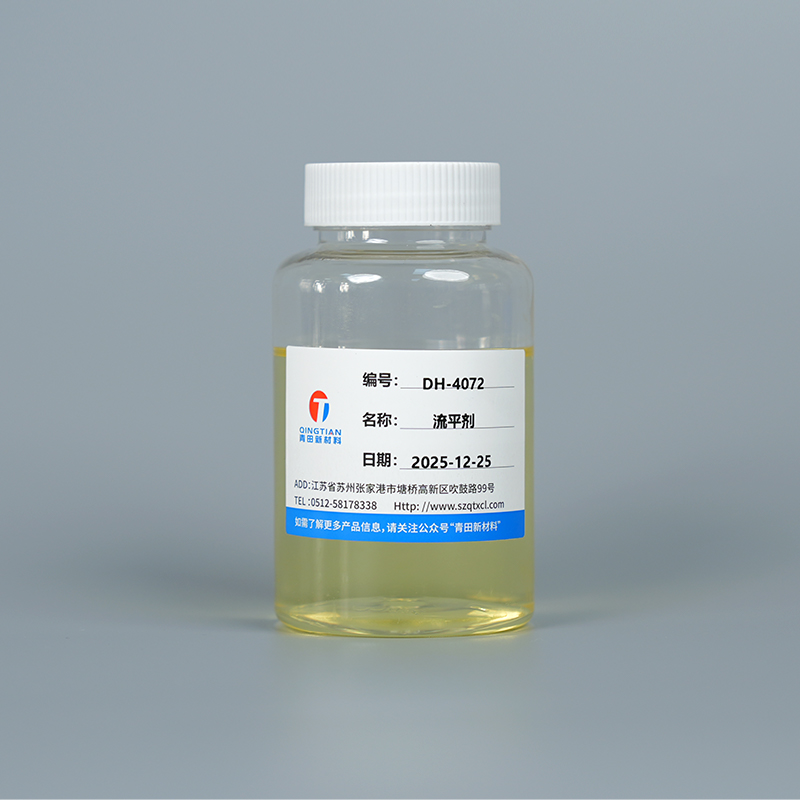
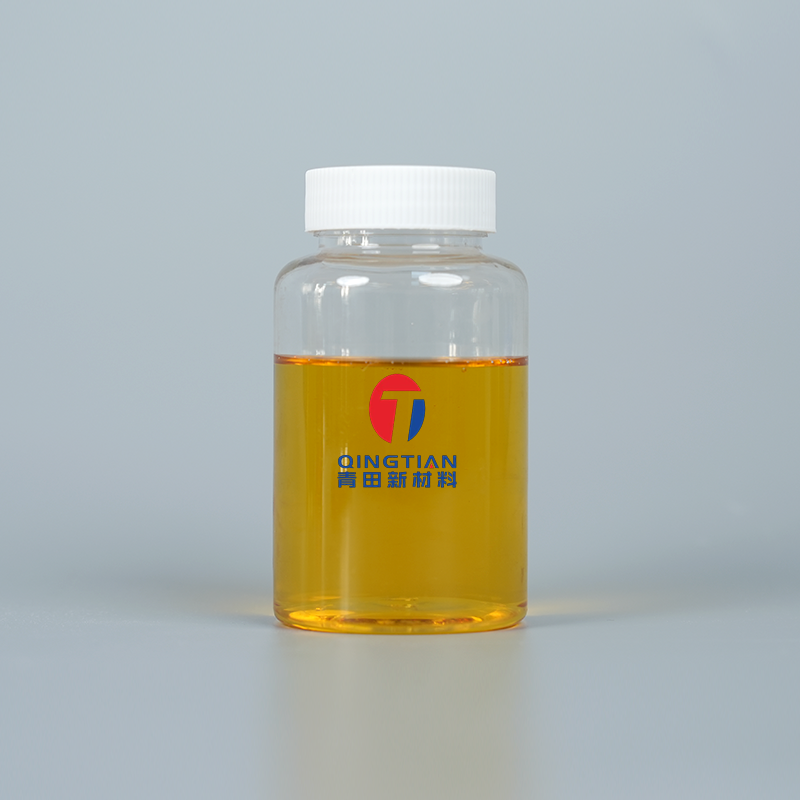
DH-4072 Substrate Wetting Agent
Substrate wetting describes the ability of a liquid coating to spread across and maintain contact with a solid surface. When wetting is good, the coating forms a continuous, uniform film. When wetting is poor, the liquid may retract, form isolated droplets, leave uncovered areas, or create visible surface defects during drying and curing.
Wetting is influenced by the relationship between coating surface tension, substrate surface energy, viscosity, temperature, application method, and drying or curing speed. A coating with excessive surface tension may fail to spread evenly, especially over low-energy substrates such as certain plastics. Contamination from oil, dust, release agents, moisture, or processing residues can further increase the difficulty of achieving a uniform film.
Surface defects caused by poor wetting may include craters, pinholes, fisheyes, crawling, uneven gloss, poor edge coverage, and local film discontinuity. These defects not only affect appearance; they can also create weak points that reduce corrosion resistance, chemical resistance, mechanical durability, and intercoat adhesion.
A substrate wetting agent helps control the surface behavior of the coating during application and film formation. By reducing surface tension and improving the balance between the liquid coating and the solid substrate, the additive encourages the coating to spread more uniformly. A suitable wetting agent must improve coverage without creating excessive side effects such as recoatability problems, surface slip instability, foam generation, or incompatibility with the binder system.
DH-4072 is formulated specifically for this balance. It combines excellent wetting with high-efficiency anti-cratering performance and flow promotion. This makes it more than a simple spreading additive. It is a surface-control solution intended to improve the overall appearance and processing reliability of finished coatings.
| Item | Product Information |
|---|---|
| Product name | DH-4072 Substrate Wetting Agent |
| Product category | Silicone leveling agent |
| Primary function | Substrate wetting, surface tension reduction, leveling, flow promotion, and anti-cratering support |
| Silicone type | Silicone-based surface additive |
| Key performance | Excellent wetting and high-efficiency anti-cratering performance |
| Recoatability | Provides good recoatability when properly formulated and applied |
| Compatible systems | Two-component water-based, solvent-based, and UV-curing formulations |
| Suitable substrates | Plastics, metals, glass, wood, and other industrial surfaces |
| Main formulation benefit | Improved spreading, flow, surface appearance, and coating uniformity |
The product’s silicone type is central to its surface-control function. Silicone-based additives are commonly selected when a formulator needs efficient reduction of surface tension and rapid improvement in spreading. However, performance depends on the specific additive structure, compatibility, dosage, and formulation environment. DH-4072 is positioned as a high-efficiency option for coating systems that require reliable substrate wetting without sacrificing practical recoatability.
When a coating is applied, the additive migrates toward the air-liquid and liquid-solid interfaces. This interfacial activity helps reduce the energy required for the coating to spread over the substrate. As the coating becomes more capable of maintaining contact with the surface, the risk of localized retraction is reduced.
Improved wetting is especially valuable on substrates that have low surface energy or a nonuniform surface condition. Plastics may contain mold-release residues or have naturally low surface polarity. Metals may carry traces of oil, oxide, or processing contamination. Glass can present a highly smooth surface on which local tension differences become visible. Wood is porous and structurally variable, making uniform penetration and film formation more difficult.
DH-4072 helps the coating establish more consistent contact across these surfaces. The result can be better coverage, fewer uncovered areas, and a more uniform visual appearance. In industrial production, this can reduce the need for excessive coating thickness or repeated application passes.
The product also supports the optimization of the liquid-solid interface. This is important because maximum surface tension reduction alone does not always guarantee the best coating result. If an additive reduces surface tension too aggressively or becomes incompatible with the binder, it may create new issues such as intercoat adhesion loss, surface instability, or recoatability limitations. A balanced interface helps the coating wet the substrate while maintaining a coherent film structure.
Coatings applied to low-energy plastics often show poor spreading or localized withdrawal. DH-4072 can help improve initial coverage and reduce the tendency of the liquid film to pull away from the surface. This is valuable for plastic components, molded parts, protective housings, consumer products, and industrial assemblies where appearance and adhesion must be maintained across complex shapes.
On metal substrates, better wetting can help the coating reach small surface irregularities and form a more continuous film. This is particularly relevant to steel and aluminum coil coatings, protective coatings, metal furniture, appliances, transportation parts, and industrial equipment.
For glass, the additive can support uniform spreading and reduce surface defects that become highly visible on smooth transparent or reflective surfaces. For wood, it can assist in achieving more even surface flow, especially when the coating must cover a substrate with variable porosity or grain structure.
Cratering occurs when part of the wet coating retracts from a localized region, often because of contamination or surface tension differences. The defect may remain visible after drying or curing as a circular depression with a raised perimeter. Craters can be difficult to repair and may require sanding, cleaning, and recoating.
DH-4072 provides high-efficiency anti-cratering effects. By improving surface tension balance and supporting more uniform flow, it helps the coating resist localized withdrawal. This is particularly useful in production environments where complete elimination of contamination is difficult despite good housekeeping and process control.
The additive may also help reduce other appearance problems associated with uneven spreading, including localized gloss variation, crawling, and incomplete coverage. The exact result depends on the formulation, substrate preparation, application conditions, and dosage, so laboratory evaluation remains essential.
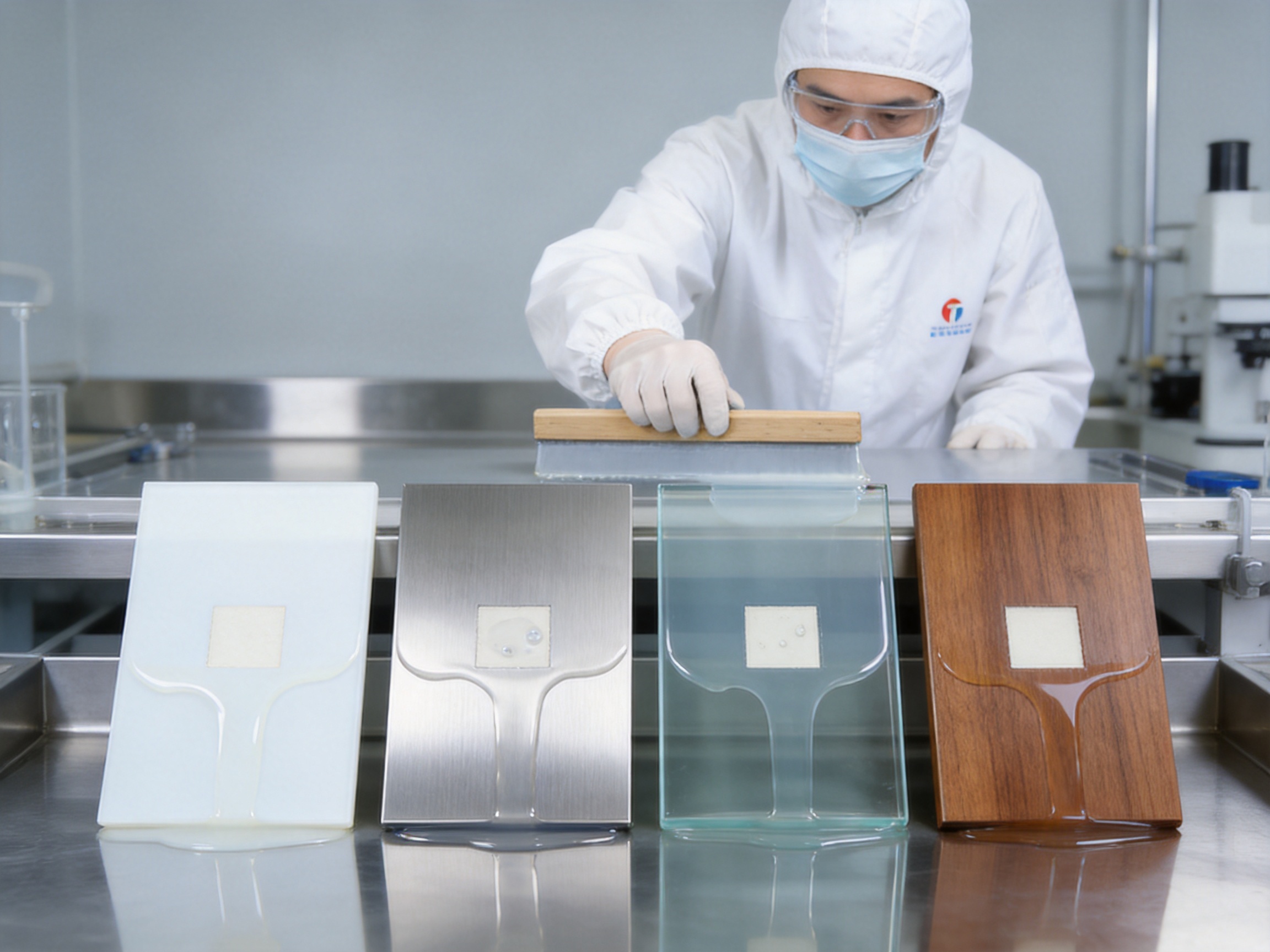
Wetting and leveling are related but distinct functions. Wetting determines whether the liquid can spread over the substrate, while leveling describes the ability of the wet film to become smooth and uniform after application. A coating may wet the substrate adequately but still show brush marks, spray texture, roller marks, orange peel, or surface undulations if flow is insufficient.
DH-4072 promotes flow and supports a smoother coating surface. This can be beneficial in applications where visual appearance is a key quality requirement. A more uniform film may display improved gloss consistency, reduced surface texture, and a cleaner finish after drying or UV curing.
Improved flow can also support more efficient film formation. When the coating distributes itself evenly, localized thick and thin areas are less likely to occur. This contributes to more consistent optical properties and may help reduce variation between production batches, provided that application parameters remain controlled.
The product is suitable for coating manufacturers that need to balance surface appearance with process practicality. A highly active leveling additive can sometimes produce excessive surface slip or create recoatability concerns. DH-4072 is described as providing good recoatability, making it suitable for multilayer systems in which a subsequent coating layer must adhere reliably to the first layer.
Many industrial coating systems are built in layers. A primer may be followed by a basecoat, color layer, clearcoat, protective topcoat, or repair layer. In these systems, the first layer must have a smooth and attractive surface while still allowing the next layer to bond effectively.
Some surface additives can migrate excessively to the coating surface or create a highly low-energy film that interferes with intercoat adhesion. This may lead to poor wetting of the subsequent layer, delamination, fisheyes, or inconsistent appearance. Consequently, an additive must be evaluated not only for immediate leveling performance but also for its effect on the complete coating stack.
DH-4072 provides good recoatability as part of its performance profile. This makes it a practical choice for formulations used in multilayer applications. It can help the first coat achieve improved flow and surface appearance without making the surface unnecessarily difficult to recoat.
For best results, recoatability should be tested under actual production conditions. Important variables include flash-off time, drying temperature, curing schedule, film thickness, additive concentration, and the chemistry of the subsequent layer. The compatibility of the first and second coating layers should always be confirmed through crosshatch adhesion, intercoat wetting, appearance evaluation, and relevant durability testing.
One of the main advantages of DH-4072 is its applicability to multiple coating technologies. The product is suitable for two-component water-based systems, solvent-based formulations, and UV-curing coatings. This broad compatibility gives formulators greater flexibility when developing or adjusting products for different customers and industrial processes.
Water-based coatings are increasingly used to reduce solvent emissions and meet changing environmental requirements. However, water-based systems may present wetting and flow challenges because water has relatively high surface tension and because the interaction between water, resin, pigment, coalescent, substrate, and additive can be complex.
In two-component water-based systems, the resin and curing component are mixed before application. The available working time may be limited, and the coating must maintain stable application properties while the crosslinking reaction proceeds. DH-4072 can support substrate wetting and flow during this period, helping the mixed coating spread uniformly before curing.
Formulators should assess the additive’s effect on pot life, viscosity, gloss, water resistance, chemical resistance, and final film adhesion. Compatibility testing should be performed both before and after the components are combined, because the additive may behave differently in the individual components and in the activated mixture.
Solvent-based coatings remain important in industrial applications that require rapid drying, high film build, strong appearance, or specific resistance properties. These systems may contain a wide range of solvent blends, resins, pigments, and functional additives. Changes in solvent evaporation rate can cause surface tension gradients that contribute to defects during drying.
DH-4072 can help improve spreading and flow in solvent-based coatings applied to metal, plastic, wood, glass, and other substrates. It may be particularly useful when the formulation must cover a difficult surface or achieve a smooth finish at a controlled film thickness.
Because solvent-based systems vary widely in polarity and resin structure, the best dosage should be established through a ladder study. Excessive additive may not provide additional benefit and could affect intercoat adhesion, overcoatability, gloss, or surface slip. Proper dispersion and compatibility evaluation are therefore important parts of the formulation process.
UV-curing coatings are designed to cure rapidly when exposed to suitable ultraviolet radiation. They are used in wood finishes, plastics, electronics, printing, decorative surfaces, and industrial applications where high throughput and rapid handling are required.
Because UV coatings can cure quickly, there may be limited time for the film to wet and level before the coating becomes highly viscous or crosslinked. An efficient substrate wetting agent can help the coating spread before cure, reducing the risk that surface defects will be permanently locked into the film.
DH-4072 is suitable for UV formulations and can support the balance between rapid curing and surface appearance. Evaluation should include cure response, gloss, haze, surface defects, chemical resistance, scratch resistance, and adhesion. The additive should be tested with the actual photoinitiator package and lamp conditions used in production.
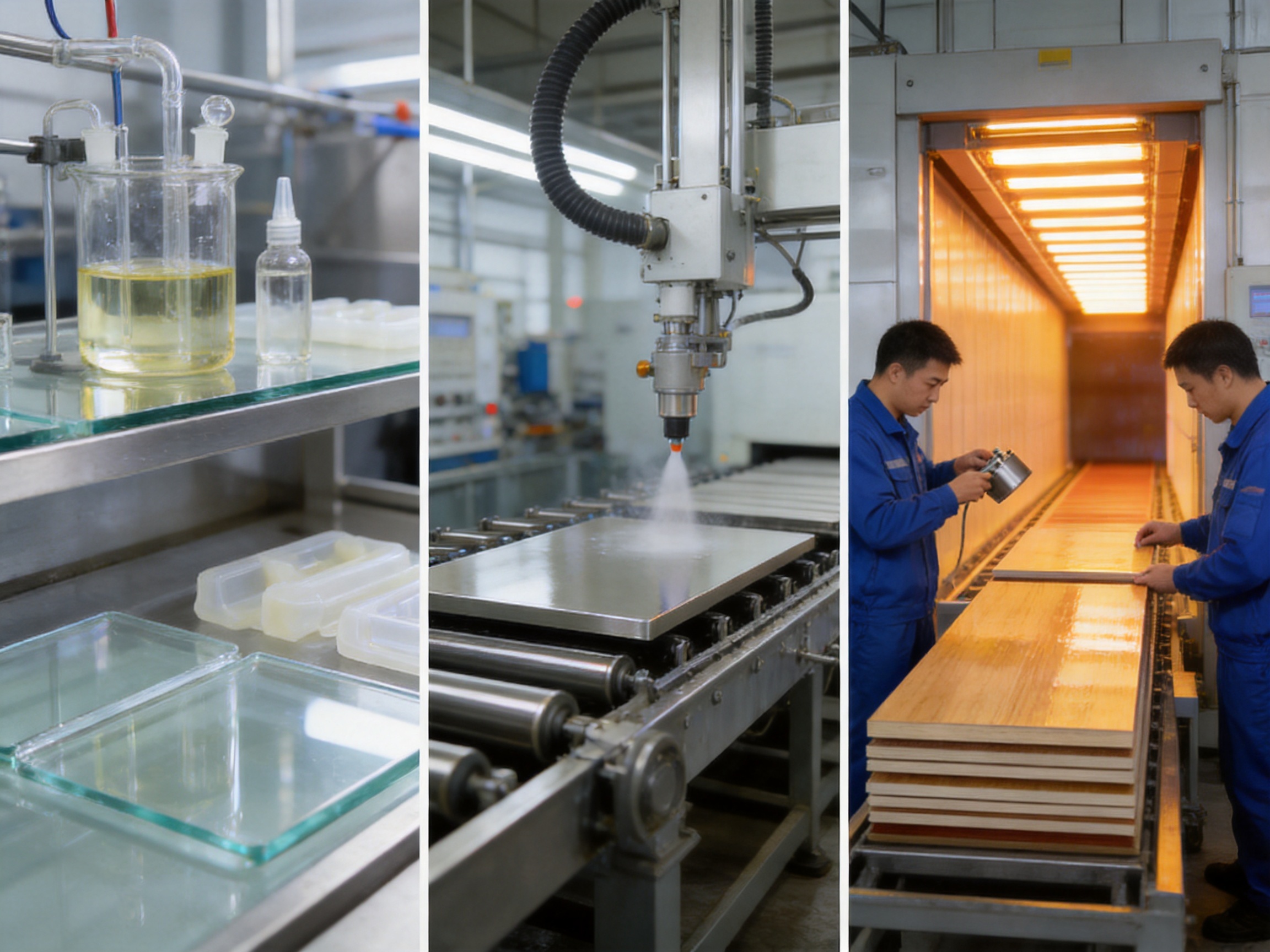
Conventional approaches to poor wetting often involve increasing solvent strength, changing the resin, modifying the substrate pretreatment, increasing coating thickness, or using multiple additives to address separate defects. These approaches may work in specific cases, but they can also increase cost, complicate the formulation, or introduce new performance problems.
A dedicated silicone substrate wetting agent offers a more direct approach. Instead of substantially changing the binder or application process, the formulator can adjust the interfacial behavior of the coating with a relatively small quantity of additive. This allows the existing formulation architecture to be preserved while improving spreading and surface appearance.
DH-4072 offers several advantages over less specialized approaches:
First, it combines wetting and leveling support. A product that only reduces surface tension may improve initial spreading but fail to provide adequate flow during drying. DH-4072 is intended to address both substrate coverage and surface smoothness.
Second, it provides high-efficiency anti-cratering effects. This can be more valuable than basic wetting improvement when production surfaces are exposed to contamination risks or when the coating must achieve a premium appearance.
Third, it is suitable for multiple formulation technologies. A broad application range reduces the need for manufacturers to maintain a separate additive for every resin and curing system.
Fourth, it offers good recoatability. This is an important differentiating feature for multilayer coatings, where an additive that creates a smooth first layer must not compromise bonding with the next layer.
Fifth, it is designed for use on many substrate types. The ability to address plastics, metals, glass, and wood makes the product relevant to diversified industrial coating manufacturers.
Plastic coatings often require excellent wetting because many plastic surfaces have low surface energy. A coating may show poor spreading, edge pullback, or localized defects if the substrate has not been properly prepared. DH-4072 can support more uniform coverage and improved appearance on plastic components and molded parts.
Potential uses include decorative plastic coatings, protective coatings, appliance components, automotive parts, electronic housings, consumer products, and industrial enclosures. Formulators should evaluate the additive together with the selected pretreatment, primer, and topcoat system.
Metal coatings must often combine appearance with corrosion resistance, flexibility, hardness, and adhesion. Steel and aluminum surfaces may have variations in roughness, oxide condition, and residual processing materials. In coil coating and fabricated metal applications, the coating must also be applied rapidly and uniformly.
DH-4072 can promote wetting and flow across metal surfaces, helping reduce visible craters and uneven appearance. Its suitability for multilayer systems is valuable where primers, color coats, and clear protective layers are applied sequentially.
Glass surfaces are smooth and visually unforgiving. Small defects can be easily observed, especially when the glass is transparent, glossy, or used for decorative purposes. A substrate wetting agent can help the coating spread consistently and reduce visible discontinuities.
Applications may include decorative glass, protective glass coatings, functional layers, architectural surfaces, and coated glass components. Testing should consider transparency, haze, adhesion, chemical resistance, and the effect of cleaning or abrasion.
Wood coatings must accommodate natural variation in grain, porosity, moisture, and surface preparation. The coating may need to level over a textured surface while maintaining a pleasing appearance and protecting the substrate.
DH-4072 can support flow and surface uniformity in water-based, solvent-based, and UV-curing wood coatings. It may be useful for furniture, flooring, cabinets, decorative panels, and other wood products where surface smoothness and consistent gloss are important.
Although DH-4072 is described primarily as a coating substrate wetting and leveling agent, the same interfacial principles are relevant to printing inks and adhesives. Inks must spread over films, foils, paper, plastics, and other print surfaces without producing voids or uneven coverage. Adhesives must wet the bonding surface sufficiently before setting or curing.
Any use in ink or adhesive formulations should be confirmed through dedicated compatibility and performance testing. Important evaluations include print clarity, rub resistance, blocking, adhesion, migration behavior, open time, bond strength, and the effect on subsequent layers.
The performance of a specialty additive depends not only on its chemical design but also on manufacturing consistency. Small changes in raw material quality, reaction control, blending, filtration, storage, or packaging can influence additive activity and formulation compatibility. For customers using the product in continuous industrial production, batch-to-batch stability is essential.
The manufacturer behind DH-4072 is a professional supplier of raw materials for coatings, inks, and adhesives. Since its founding in 2012, the company has developed an experienced team that includes research and development specialists and sales professionals. Its operations are supported by a modern production facility, advanced testing equipment, and research capabilities.
These resources provide a foundation for developing additives that address practical formulation problems rather than only theoretical performance targets. Surface additives must be evaluated across different resins, pigments, solvents, water-based systems, substrates, and curing conditions. Access to testing equipment and formulation expertise helps connect laboratory development with industrial application requirements.
The company’s product portfolio includes dispersants, leveling agents, defoamers, adhesion promoters, anti-settling agents, cooling agents, conductive agents, orange peel texture agents, texture powders, and wax powders. This broad portfolio is valuable because coating performance is usually controlled by an additive package rather than by one product alone.
For example, a coating may require a dispersant to stabilize pigments, a defoamer to control entrained air, a wetting agent to improve substrate coverage, an adhesion promoter to strengthen bonding, and a texture or wax additive to adjust surface feel and resistance. A supplier with knowledge across these categories can help customers evaluate interactions within the complete formulation.
Research and development is particularly important for silicone additives because small structural differences can influence wetting efficiency, leveling, slip, recoatability, compatibility, and surface migration. The manufacturer has built research capabilities supported by experienced personnel and advanced testing equipment.
This development approach allows the company to investigate formulation problems through performance testing. Instead of treating wetting, leveling, and anti-cratering as isolated properties, the development process can consider their effect on the final coating film and production workflow.
The company’s development milestones include creating China’s first ice flower resin in 2016 and being recognized as a National High-Tech Enterprise in 2020. These milestones indicate a continued focus on technical innovation and specialty material development. In 2021, the company moved to Lingrui Intelligent Manufacturing Park in Zhangjiagang High-Tech Zone to strengthen research and production capacity.
A modern production facility supports controlled manufacturing, standardized operating procedures, and scalable supply. Advanced testing equipment helps evaluate additive performance in realistic coating systems. For a product such as DH-4072, useful testing may include surface tension behavior, wetting performance, leveling appearance, crater resistance, gloss, recoatability, adhesion, and compatibility with different resin systems.
Production control should also include raw material inspection, process monitoring, batch sampling, finished-product testing, packaging inspection, and appropriate storage management. These steps help ensure that the material supplied to customers performs consistently from one delivery to the next.
For industrial buyers, manufacturing strength is an important advantage over suppliers that focus only on trading or limited laboratory blending. A technically capable manufacturer can provide more direct feedback on product selection, application conditions, and formulation adjustment. It can also respond more effectively when customers require customized chemical solutions.
The company’s broad range of coating and ink additives provides a further competitive advantage. Customers may be able to source several functional materials from one experienced supplier, simplifying communication, technical evaluation, and supply-chain management.
Although DH-4072 is designed for substrate wetting and leveling, its performance should be considered alongside other additives in the formulation. An effective dispersant can help pigment stability, while a suitable defoamer can reduce air-related surface defects. An adhesion promoter may support bonding to difficult substrates, and a texture or wax powder may adjust surface feel and abrasion resistance.
Having access to complementary materials can make it easier to build a balanced additive package. It also allows technical personnel to identify whether a coating defect originates from wetting, foam, pigment flocculation, poor adhesion, settling, or excessive surface modification.
DH-4072 should be incorporated according to the requirements of the specific formulation. The optimum level depends on resin chemistry, solids content, solvent or water composition, pigment loading, substrate type, application method, film thickness, and curing conditions.
A practical development method is to prepare a control sample without the additive and compare it with several samples containing gradually increasing levels. The evaluation should include initial wetting, appearance after flash-off, appearance after drying or curing, crater resistance, gloss, adhesion, recoatability, and final durability.
The additive should be added at a stage that promotes uniform distribution. Depending on the formulation, it may be incorporated during let-down, during final adjustment, or at another suitable mixing stage. The formulator should verify whether high-shear dispersion, premixing, or dilution is required. The selected addition method should be consistent across laboratory and production batches.
It is important to avoid assuming that a higher additive concentration will always create better performance. Surface additives are often highly active, and an excessive amount can cause unwanted effects. These may include reduced intercoat adhesion, altered gloss, excessive slip, surface defects after recoating, or incompatibility with the binder.
Temperature and storage conditions may also influence the material. The product should be stored according to the supplier’s technical documentation and protected from unsuitable conditions. Before use, the material should be checked for appearance, homogeneity, and any changes that could indicate improper storage.
Laboratory screening should reproduce the target application as closely as possible. The same substrate preparation, application tool, wet-film thickness, flash-off time, drying temperature, UV dose, and recoat interval should be used when comparing samples.
For anti-cratering evaluation, test panels may be prepared under controlled contamination or surface-challenge conditions when appropriate. Results should be compared visually and, where possible, through instrumental measurements. A coating that appears acceptable on a clean laboratory panel may behave differently in a factory environment with realistic contamination levels and application speeds.
Compatibility testing should include the complete formulation rather than only the resin and additive. Pigments, fillers, solvents, coalescents, curing agents, photoinitiators, defoamers, dispersants, and other additives can influence the behavior of a silicone leveling agent.
Useful observations include clarity or haze, storage stability, viscosity change, sedimentation, surface defects, gloss, adhesion, and recoatability. Accelerated storage may help identify problems that are not visible immediately after mixing.
After laboratory screening, the selected dosage and addition procedure should be validated in a pilot or production trial. The trial should assess mixing time, application speed, transfer efficiency, drying or curing behavior, defect frequency, and final inspection results.
Production validation is important because a small-scale laboratory process may not reproduce the shear, temperature, line speed, and environmental conditions of industrial coating. The final goal is not simply a good laboratory appearance but reliable performance under normal manufacturing conditions.
Coating manufacturers are increasingly focused on reducing waste, lowering emissions, improving energy efficiency, and increasing first-pass yield. A wetting and leveling additive can support these objectives indirectly by reducing surface defects and improving film uniformity.
When a coating spreads more effectively, manufacturers may be able to reduce rework, sanding, stripping, and recoating. Fewer defective panels or parts mean lower consumption of raw materials, labor, energy, and packaging. Improved flow can also help achieve the desired appearance at a controlled film thickness, although this must be confirmed through application testing.
DH-4072 is compatible with water-based and UV-curing systems as well as solvent-based coatings. This broad suitability allows manufacturers to evaluate surface performance while selecting technologies that meet their environmental and process requirements. In water-based systems, improved wetting may help address one of the common challenges associated with higher-surface-tension formulations. In UV systems, improved early-stage spreading can support rapid production and reduced handling time.
Environmental performance must be evaluated as part of the complete formulation. Factors such as volatile organic compound content, regulatory status, emissions, worker exposure, waste treatment, and end-use requirements should be considered. The additive should be used in compliance with applicable local regulations and the supplier’s safety documentation.
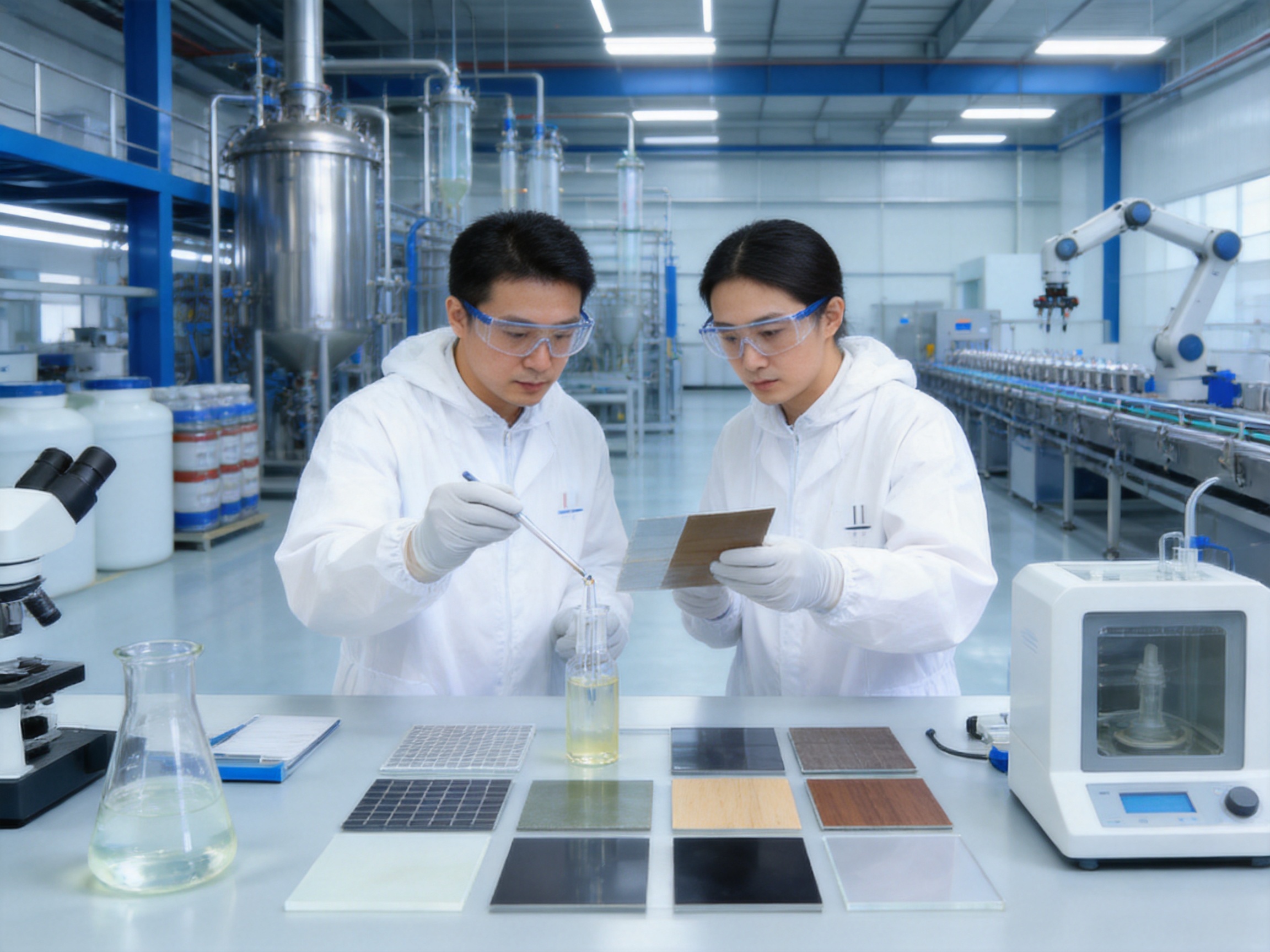
Specialty coating additives require more than basic chemical supply. Customers often need assistance with defect diagnosis, formulation adjustment, substrate selection, application conditions, and additive interaction. A specialized manufacturer can provide a more complete technical service model.
The company focuses on innovation, quality, service, and win-win cooperation. Its experience in coatings, inks, and adhesives allows it to understand the practical challenges faced by formulators and production teams. This is important because the best additive choice depends on the customer’s complete system rather than on one isolated performance specification.
Technical support may include product selection, comparative testing, dosage screening, application guidance, and troubleshooting. For example, if a customer experiences craters, the cause may be contamination, poor substrate preparation, incompatible additives, foam, solvent imbalance, or inadequate wetting. A supplier with a broad product portfolio and application knowledge can help distinguish among these causes.
The company’s modern production base and testing capabilities also support more consistent product development and supply. Its location in Zhangjiagang High-Tech Zone provides a base for research, manufacturing, and customer service. Combined with its experience since 2012, these strengths support the supply of performance-oriented additives for industrial applications.
DH-4072 competes through a combination of technical performance, formulation flexibility, and manufacturing support. Its value is not limited to one numerical property. Instead, it is based on how effectively it helps a coating manufacturer achieve a stable, attractive, and processable finished film.
The product’s major competitive strengths include:
High-efficiency anti-cratering: The product helps reduce localized film withdrawal and visible crater defects, which can improve first-pass yield and surface appearance.
Excellent substrate wetting: It supports coating spread across plastics, metals, glass, wood, and other industrial surfaces.
Surface tension control: It reduces coating surface tension while supporting a favorable liquid-solid interface.
Flow promotion: It helps the coating move and level after application, supporting smoother and more uniform films.
Good recoatability: It is suitable for multilayer coating structures where the next layer must wet and adhere to the previous film.
Broad formulation compatibility: It can be evaluated in two-component water-based, solvent-based, and UV-curing formulations.
Wide substrate range: It is relevant to diverse applications, reducing the need to use separate wetting solutions for every substrate category.
Manufacturer expertise: It is supported by a company with R&D personnel, advanced testing equipment, modern production facilities, and a portfolio of complementary coating additives.
These advantages can help manufacturers improve product consistency, reduce surface defects, simplify additive selection, and respond to different customer requirements more efficiently.
| Observed problem | Possible contributing factor | Potential role of DH-4072 |
|---|---|---|
| Cratering | Surface contamination or surface tension imbalance | Supports anti-cratering performance and improves interfacial balance |
| Poor spreading | High coating surface tension or low substrate energy | Reduces surface tension and improves substrate wetting |
| Uneven gloss | Irregular film formation or inconsistent leveling | Promotes flow and more uniform surface formation |
| Edge pullback | Insufficient wetting at edges or on complex shapes | Helps the coating maintain more consistent surface contact |
| Orange peel | Insufficient flow, viscosity imbalance, or rapid drying | May support leveling when used with suitable application control |
| Poor recoat wetting | Excessive surface modification or incompatible additive package | Offers good recoatability when correctly selected and dosed |
This table is intended as a formulation guide rather than a guarantee that one additive will solve every defect. Coating defects are often multifactorial. Surface preparation, contamination control, application equipment, viscosity, film thickness, drying profile, and additive compatibility should all be investigated.
Industrial customers require reliable supply, consistent quality, and clear communication. Specialty additives are often used at relatively low concentrations, which means small variations can have a noticeable effect on coating performance. Consistent manufacturing and testing are therefore essential.
The manufacturer’s quality approach is supported by a modern facility, research capabilities, and advanced testing equipment. A responsible quality system should cover incoming raw materials, production parameters, in-process checks, finished-product release, packaging, labeling, and traceability.
Technical documentation is also important. Customers may require product descriptions, safety information, storage recommendations, compatibility guidance, and application support. Clear documentation helps formulators evaluate DH-4072 responsibly and integrate it into their internal quality procedures.
For customized applications, technical communication between the customer and supplier can be especially valuable. Information about resin type, substrate, application method, curing conditions, target gloss, film thickness, defect pattern, and recoat requirements allows the supplier to recommend a more appropriate testing plan.
DH-4072 is a silicone-based substrate wetting and leveling agent for coatings. It is designed to improve substrate wetting, reduce coating surface tension, promote flow, and provide high-efficiency anti-cratering performance.
The product is suitable for evaluation in two-component water-based, solvent-based, and UV-curing formulations. The optimum dosage and addition procedure should be confirmed for each specific formulation.
DH-4072 is intended for coatings applied to plastics, metals, glass, wood, and other industrial substrates. Because substrate conditions vary, testing should be conducted using the actual surface preparation and production process.
Yes. The product is described as providing high-efficiency anti-cratering effects. It can help improve surface tension balance and reduce localized coating withdrawal. However, contamination, substrate preparation, viscosity, and application conditions must also be controlled.
Yes. DH-4072 promotes flow and supports leveling after application. This may contribute to smoother surfaces, more uniform gloss, and improved appearance when the formulation and application conditions are properly optimized.
Yes. DH-4072 provides good recoatability, making it suitable for systems in which a subsequent coating layer must be applied over the treated film. Recoat adhesion and wetting should still be verified using the actual topcoat and curing schedule.
It can be evaluated for plastic coatings, including applications where substrate wetting is difficult. The final result depends on plastic type, mold-release residues, cleaning, pretreatment, primer selection, and coating chemistry.
Not necessarily. Silicone additives are often highly active, and excessive dosage may affect gloss, recoatability, adhesion, or surface appearance. A dosage ladder and complete performance evaluation are recommended.
It should not automatically be treated as a replacement for other additive classes. DH-4072 focuses on substrate wetting, leveling, flow, and anti-cratering. A defoamer controls foam, while an adhesion promoter addresses bonding. The appropriate additive package depends on the formulation’s needs.
Compare a control formulation with samples containing several additive levels. Evaluate initial wetting, flow, crater resistance, gloss, film appearance, adhesion, recoatability, storage stability, and final durability under realistic application and curing conditions.
Manufacturing consistency affects additive activity and batch-to-batch performance. A supplier with research personnel, testing equipment, production infrastructure, and complementary additive expertise can provide more reliable technical support and supply continuity.
The manufacturer provides custom chemical solution support for paint and coating additives. Customers should share details about the formulation, substrate, application method, defect type, and performance targets so that an appropriate evaluation plan can be developed.
DH-4072 Substrate Wetting Agent is a silicone-based leveling additive designed to solve several important surface-performance challenges in modern coatings. It provides excellent wetting, reduces coating surface tension, promotes flow, supports anti-cratering performance, and offers good recoatability.
Its suitability for two-component water-based, solvent-based, and UV-curing formulations gives formulators flexibility across multiple technologies. Its application range includes plastics, metals, glass, wood, and other industrial substrates. These characteristics make it relevant to decorative, protective, functional, and multilayer coating systems.
The product’s value is strengthened by the manufacturer’s experience in coatings, inks, and adhesives, together with its research team, advanced testing equipment, modern production facility, and broad additive portfolio. The company’s technical development history, including its ice flower resin innovation, National High-Tech Enterprise recognition, and expansion into Lingrui Intelligent Manufacturing Park, reflects a continuing commitment to research and production capability.
For coating manufacturers, the most effective way to use DH-4072 is to evaluate it as part of the complete formulation and production process. Proper dosage screening, compatibility testing, substrate preparation, application control, and recoat evaluation will help reveal its full performance potential. When correctly selected and integrated, the product can contribute to cleaner surfaces, fewer defects, more consistent appearance, and greater manufacturing efficiency.
1. Product information for DH-4072 Substrate Wetting Agent, supplied by the manufacturer.
2. Company information concerning coating, ink, and adhesive additive development, production, and testing capabilities.
3. General principles of coating surface tension, substrate wetting, leveling, and liquid-solid interfacial behavior.
4. General formulation practices for water-based, solvent-based, two-component, and UV-curing coatings.
5. General industrial guidance on coating defect analysis, recoatability evaluation, adhesion testing, and process validation.
6. General technical literature on silicone-based surface additives for coatings, inks, and adhesives.
7. General quality-management practices for specialty chemical manufacturing and batch consistency control.
 Wholesale Paint/ Coating Additives Manufacturers
Custom Industrial Chemical Solutions Suppliers
Wholesale Paint/ Coating Additives Manufacturers
Custom Industrial Chemical Solutions Suppliers