русский
 Español
 Français
Home / Author / Qiao Minshu — Key Account After-Sales Consultant / Smooth-Feel Silicone Leveling Agent for Advanced Coating Performance
Qiao Minshu — Key Account After-Sales Consultant

Content
Modern coatings must do more than provide color and protection. They are expected to deliver a uniform appearance, smooth touch, reliable adhesion, controlled gloss, efficient application, and consistent performance across different production conditions. These requirements become increasingly difficult when a coating is applied at high film thickness, exposed to variable airflow, used on vertical surfaces, or combined with matting agents and other functional additives.
DH-4500 Smooth Feel Levelling Agent is a silicone-type additive developed for coatings, inks, and adhesive-related applications where surface quality and application stability are essential. Its primary function is to improve leveling and surface feel while supporting better dust and overspray acceptance. The product also helps coatings maintain a higher film thickness on vertical surfaces, reduces airflow sensitivity, prevents the formation of Bénard cells, and improves matting agent orientation.
These functions make DH-4500 suitable for water-based, radiation-cured, and solvent-based systems. Its broad compatibility provides formulators with a flexible solution for wood coatings, industrial coatings, and other surface-finishing applications. Rather than addressing only one visible defect, the additive is designed to influence several connected aspects of film formation, including wetting, flow, surface uniformity, matting behavior, and tactile properties.
The product is supplied by Suzhou Qingtian New Material Co., Ltd., a specialist manufacturer of raw materials for coatings, inks, and adhesives. The company has developed a broad portfolio that includes dispersants, leveling agents, defoamers, adhesion promoters, anti-settling agents, cooling agents, conductive agents, orange peel texture agents, texture powders, wax powders, and resin products. Its experience across these additive categories supports a system-oriented approach to formulation development.
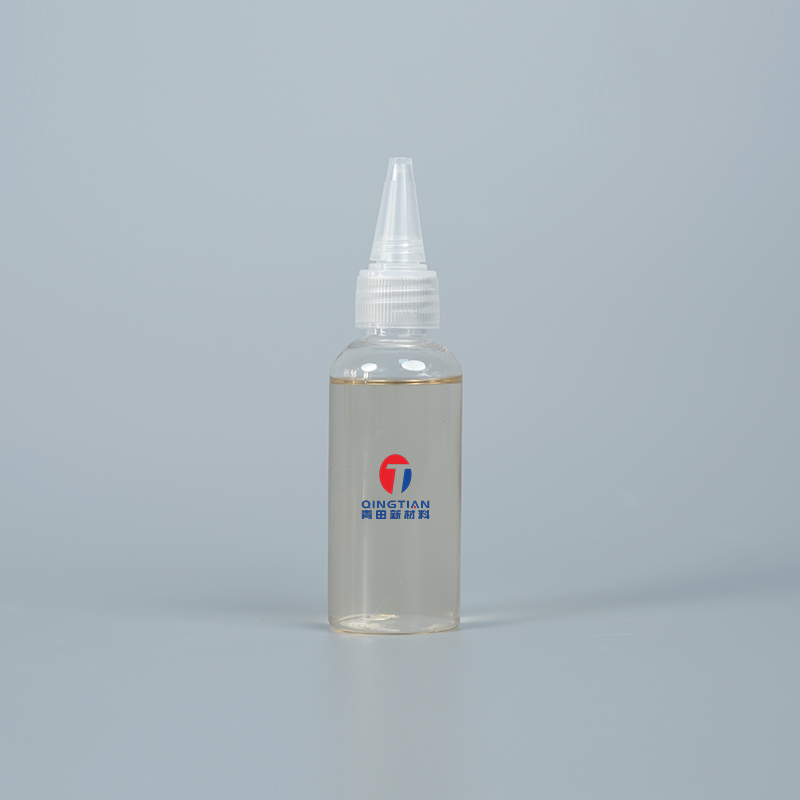
DH-4500 Smooth Feel Levelling agent
DH-4500 is classified as a silicone leveling agent with a smooth-feel function. It is intended to improve the appearance and tactile quality of cured or dried films while helping coatings remain more stable during application. The additive is especially relevant when a formulator needs to balance good flow with reliable recoating, high-build performance, controlled matting, and resistance to application-related surface defects.
| Product Attribute | Description |
|---|---|
| Product name | DH-4500 Smooth Feel Levelling Agent |
| Product category | Silicone leveling agent |
| Primary function | Improves leveling and smooth surface feel |
| Additional functions | Improves dust and overspray acceptance, supports high film thickness, reduces airflow sensitivity, prevents Bénard cells, and improves matting agent orientation |
| Suitable systems | Water-based, radiation-cured, and solvent-based systems |
| Key formulation value | Combines appearance improvement with application stability and tactile enhancement |
In practical terms, the additive can be considered a multifunctional surface-control component. A conventional leveling additive may primarily reduce surface tension and improve flow. DH-4500 is positioned more broadly: it also supports a smooth feel, helps the coating accept dust and overspray more evenly, and contributes to improved appearance under conditions where airflow or matting-agent distribution could otherwise create visible irregularities.
The exact dosage, incorporation sequence, and compatibility window should be established through laboratory testing because coating formulations vary significantly. Resin chemistry, solvent or water balance, pigment concentration, curing method, substrate energy, application equipment, and target gloss can all influence the final result. The value of DH-4500 is therefore best realized through controlled formulation optimization rather than by treating the product as a universal replacement for every other additive.
Surface leveling describes the ability of a liquid coating to flow after application and reduce small-scale irregularities before drying or curing. A well-leveled coating presents a more continuous surface, reflects light more uniformly, and generally feels smoother to the touch. Poor leveling may result in brush marks, roller texture, craters, orange peel, uneven gloss, pinholes, surface waviness, or other defects that reduce both visual and functional quality.
Leveling is affected by the relationship between surface tension, viscosity, solvent or water evaporation, substrate wetting, film thickness, and curing speed. If the coating loses mobility too quickly, it may freeze before surface irregularities are eliminated. If surface tension varies significantly across the wet film, local flows may create patterns or depressions. If the coating is applied too heavily to a vertical surface, gravity may cause sagging or uneven distribution.
A suitable silicone leveling agent can help manage these surface forces. By modifying interfacial behavior, it may promote more uniform wetting and flow, allowing the coating to spread more evenly over the substrate. The desired result is not simply maximum flow. Excessive surface mobility can create problems such as recoat difficulty, intercoat adhesion loss, cratering, or unwanted migration. A high-quality additive must therefore provide effective surface control while remaining suitable for the intended coating system.
DH-4500 is designed around this balance. It supports a smooth surface and pleasant feel while addressing specific application challenges that are often associated with industrial and wood coatings. Its stated functions indicate that it is intended for real production conditions, where dust, overspray, airflow, film build, and matting-agent distribution may affect the final appearance.
Dust and overspray acceptance are important considerations in coating operations. In a controlled laboratory environment, the coating may be applied under ideal conditions with clean air, stable temperature, and carefully timed recoating. Industrial production environments are often less predictable. Airborne particles may settle on the wet surface, and overspray from adjacent application zones may reach areas that have already received a coating layer.
If the surface does not accept dust or overspray properly, the result may be visible roughness, dry spray, patchy gloss, poor interlayer integration, or localized surface defects. These problems can cause extra sanding, recoating, material consumption, and production delays. They can also become more obvious on dark colors, high-gloss surfaces, and smooth decorative finishes.
DH-4500 is described as improving dust and overspray acceptance. This means the additive can help the wet coating accommodate small amounts of airborne contamination or adjacent spray material more evenly, reducing the risk that these particles or droplets remain sharply visible in the final film. The benefit is particularly relevant where coating lines operate continuously or where manual and automated spraying take place in the same production area.
Better acceptance does not eliminate the need for suitable ventilation, filtration, booth maintenance, and process control. Instead, it provides an additional layer of formulation support. When used correctly, the additive can help make the coating less sensitive to minor variations in the application environment. This may improve first-pass yield and reduce the frequency of cosmetic rework.
Coating vertical surfaces presents a difficult balance. The applicator may need sufficient film thickness to achieve hiding, corrosion protection, chemical resistance, durability, or the desired decorative effect. However, excessive wet film can move downward under gravity and create runs, sags, curtains, or uneven edges.
DH-4500 helps allow a higher film thickness to remain on vertical surfaces. This function is valuable because it gives formulators and applicators greater flexibility when building a protective or decorative layer. A coating that retains its distribution more effectively can reduce the need for multiple thin passes, provided that the overall formulation has been designed for the target viscosity, drying speed, and application method.
Higher build capability can support productivity in industrial coatings, wood finishing, equipment coatings, and other applications involving upright panels, doors, cabinets, metal structures, or assembled components. It may also help reduce the risk of insufficient coverage at edges, corners, and other areas where the coating film is difficult to control.
The product should not be understood as a substitute for sag-control technology, rheology modification, or correct application technique. Film retention depends on the complete formulation and process. Nevertheless, an additive that contributes to surface flow control and vertical film stability can help formulators reach a more useful performance balance between leveling and sag resistance.
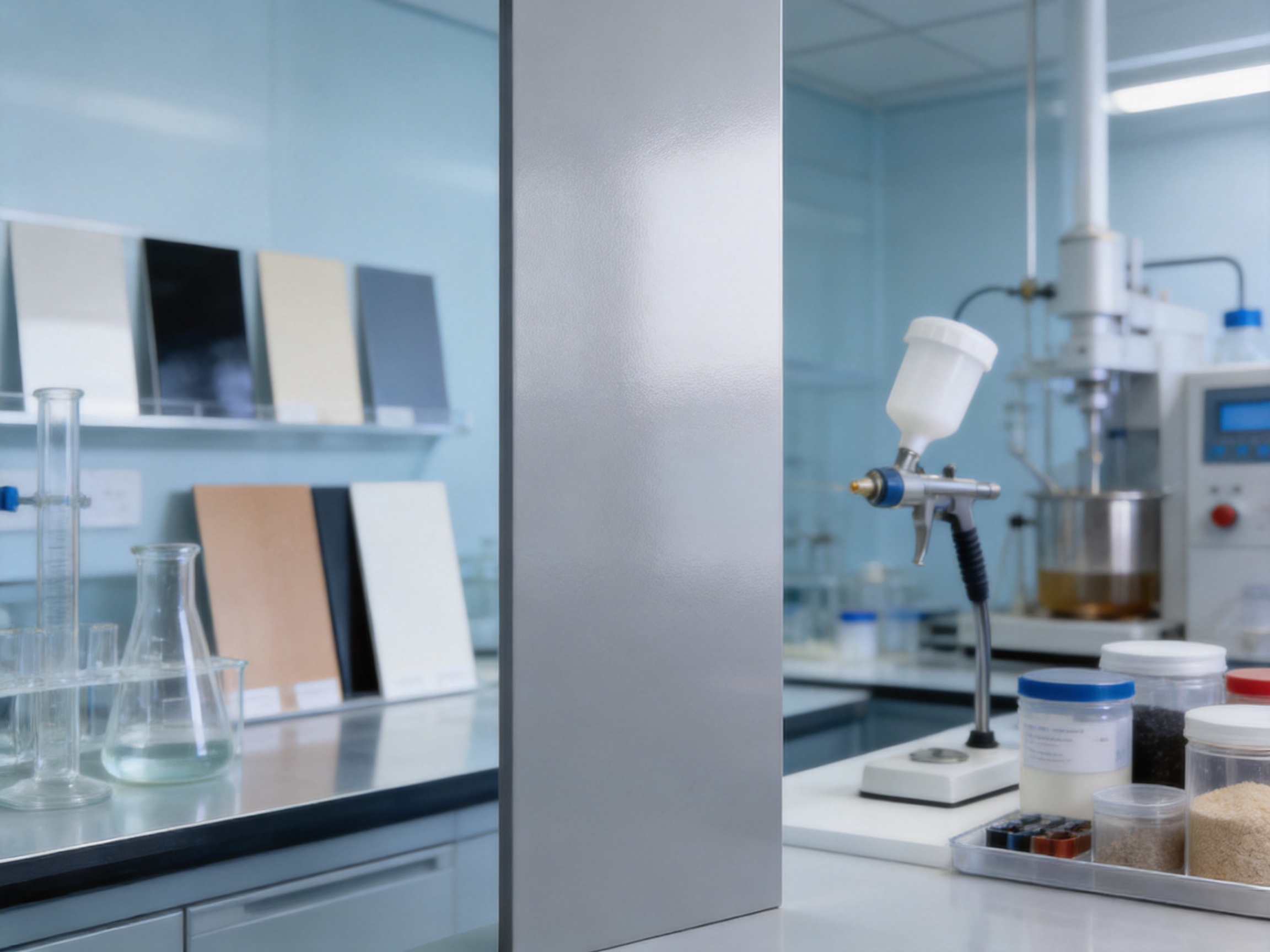
Airflow is a frequently overlooked factor in coating appearance. Air movement influences evaporation, surface cooling, drying gradients, and the distribution of volatile components. In wood and industrial coatings, changing airflow may cause one region of a coated panel to dry or cure differently from another. This can lead to variation in gloss, texture, color perception, or matting.
Airflow sensitivity is especially challenging in spray booths, drying tunnels, open production areas, and large components. The same formulation may produce different appearances depending on booth velocity, exhaust balance, temperature, humidity, and the position of the part relative to air movement. A coating additive that reduces this sensitivity can contribute to more consistent results across a broader process window.
DH-4500 is described as reducing airflow sensitivity in wood and industrial coatings. This feature may help stabilize surface flow and reduce the visual impact of uneven evaporation or localized air movement. For manufacturers, greater process tolerance can be as important as peak laboratory performance. A coating that remains attractive under normal production variation is often more valuable than one that performs well only under narrowly controlled conditions.
Reduced airflow sensitivity can also support faster troubleshooting. If a coating is highly sensitive to air movement, operators may need to adjust booth conditions, drying temperature, spray distance, atomization pressure, or line speed to correct appearance problems. A more forgiving surface-control package can simplify these adjustments and improve manufacturing consistency.
Bénard cells are surface patterns that can develop when differences in surface tension and temperature produce convective movement within a wet coating film. These cellular structures may appear as visible circular or polygonal patterns, uneven gloss, or irregular surface texture. The problem is often associated with unstable evaporation, surface-tension gradients, or interactions among solvents, resins, pigments, and additives.
Once Bénard-cell formation occurs, the defect can be difficult to correct through ordinary application adjustments. Sanding and recoating may be required, especially when the pattern becomes visible after drying or curing. The risk can be higher in coatings containing matting agents, high pigment concentrations, or combinations of raw materials with different evaporation and surface-energy characteristics.
DH-4500 is intended to prevent the generation of Bénard cells by supporting more stable surface behavior. Its silicone-based surface activity may help reduce problematic interfacial gradients and promote a more uniform wet film. The result can be a cleaner appearance with less irregularity in gloss and texture.
Because Bénard-cell formation is influenced by the entire formulation, product evaluation should include real application trials. A formulator should test the additive under different film thicknesses, drying conditions, substrate types, and pigment or matting-agent levels. This approach can identify the operating range in which the additive provides the strongest benefit without creating unrelated surface defects.
Matting agents are used to reduce gloss and create a specific visual or tactile effect. Their performance depends not only on particle size and concentration but also on how the particles distribute and orient within the coating film. Uneven distribution can produce irregular matting, patchy gloss, localized haze, or surface roughness.
Matting-agent orientation becomes particularly important in wood coatings, industrial finishes, and low-gloss decorative surfaces. A coating may achieve the correct average gloss value in a laboratory measurement while still appearing inconsistent to the eye if the matting particles are not distributed uniformly. Large panels and surfaces viewed under directional lighting can make these differences especially obvious.
DH-4500 improves matting agent orientation, helping prevent irregular matting and surface unevenness. This function gives the additive a distinct role beyond conventional flow improvement. It addresses the relationship between surface leveling and the final distribution of matting particles, supporting a more consistent appearance from one area of the coated surface to another.
Improved matting behavior may also support a smoother tactile result. A well-oriented matting package can provide a more uniform microtexture rather than a randomly rough surface. When combined with the product’s smooth-feel function, this can help formulators develop coatings that are visually even and pleasant to touch.
Touch is an increasingly important measure of coating quality. In furniture, cabinetry, interior panels, consumer products, and premium industrial finishes, users often evaluate a surface not only by color and gloss but also by the way it feels. A smooth, soft, or refined touch can communicate quality and improve the perceived value of the finished product.
Silicone-type additives are widely used to influence surface slip and tactile properties. However, smooth feel must be balanced with adhesion, recoatability, print resistance, blocking resistance, and compatibility with downstream operations. An additive that creates a very slippery surface but interferes with intercoat bonding may not be suitable for a multilayer coating system.
DH-4500 is identified as a smooth-feel leveling agent, combining surface appearance improvement with tactile enhancement. This combination can reduce the need to use separate materials for leveling and feel modification, potentially simplifying the additive package. It may also help formulators achieve a more integrated surface profile rather than combining products that act independently or compete at the coating interface.
The final feel depends on resin type, matting level, film thickness, curing conditions, substrate roughness, and the use of other slip or wax additives. For this reason, a sensory evaluation should be conducted alongside instrumental testing. Gloss, haze, coefficient of friction, surface roughness, adhesion, blocking, and recoat performance may all be relevant depending on the application.
A significant advantage of DH-4500 is its stated suitability for water-based, radiation-cured, and solvent-based systems. These technologies have different drying and curing mechanisms, and each creates unique challenges for surface additives.
Water-based coatings are valued for reduced solvent emissions and broad regulatory advantages, but they can be sensitive to coalescence, humidity, drying conditions, substrate wetting, and surfactant balance. Water evaporation can create gradients in concentration and surface tension, while poor wetting may lead to craters or uneven flow.
In water-based wood and industrial coatings, DH-4500 may support more uniform flow, improved smooth feel, and better control of matting-agent distribution. Its ability to reduce airflow sensitivity is also relevant because water evaporation can be strongly influenced by booth conditions and air movement.
Radiation-cured coatings, including ultraviolet-curable systems, can provide rapid processing and high productivity. Their fast cure rate, however, leaves a limited time for leveling and defect correction. If the film does not wet and level before radiation exposure, surface irregularities may become permanently fixed.
DH-4500 can be evaluated in radiation-cured formulations where rapid surface stabilization and smooth feel are needed. The product may be useful in systems requiring a clean appearance, controlled matting, and efficient production. Compatibility with photoinitiators, reactive diluents, oligomers, and other additives should be confirmed through application testing.
Solvent-based systems remain important in many industrial and wood-coating applications because of their established processing behavior, broad resin compatibility, and robust film performance. Their appearance can still be affected by evaporation rate, airflow, wet film movement, and interactions among solvents and additives.
In these systems, DH-4500 may help improve leveling, high-build behavior, overspray acceptance, and resistance to Bénard-cell formation. It can be incorporated into development work for protective finishes, decorative coatings, furniture coatings, and other solvent-based applications where surface quality is a major selling point.
| Coating System | Potential Value of DH-4500 | Important Evaluation Factors |
|---|---|---|
| Water-based | Improved flow, smooth feel, matting uniformity, and reduced airflow sensitivity | Coalescence, foam control, humidity, drying time, and substrate wetting |
| Radiation-cured | Rapid surface-quality support before curing and improved tactile finish | Reactive components, cure speed, photoinitiator compatibility, and surface inhibition |
| Solvent-based | Enhanced leveling, overspray acceptance, high-film-thickness behavior, and defect control | Solvent balance, evaporation profile, resin compatibility, and recoat performance |
Every coating additive must be evaluated against the alternatives available to a formulator. Competitive comparison should focus on practical performance rather than on a single headline claim. DH-4500 offers several potential advantages because it combines multiple surface-related functions in one product.
Some leveling additives primarily improve flow but provide limited support for tactile properties, matting uniformity, or overspray acceptance. Other products focus on slip or smooth feel without addressing high-build application and airflow sensitivity. DH-4500 is positioned to influence several of these areas at the same time. This multifunctional approach may reduce the number of separate additives required in the formulation.
The ability to use the product in water-based, radiation-cured, and solvent-based systems gives product developers more flexibility when adapting a coating platform. A supplier that can support several technologies may also simplify raw-material evaluation for manufacturers producing multiple product families.
Visual smoothness and tactile smoothness are related but not identical. A film can have good gloss uniformity and still feel rough, or it can feel slippery while showing uneven matting. DH-4500 is designed to address both appearance and feel, giving it a useful position in premium surface-finishing applications.
Dust acceptance, overspray acceptance, reduced airflow sensitivity, and prevention of Bénard cells all contribute to process tolerance. These functions can help reduce the impact of ordinary manufacturing variation. While no additive can replace good process control, a coating with a broader operating window may reduce waste and improve production reliability.
Using multiple surface additives can introduce compatibility risks. Products may compete for migration to the coating-air interface, alter surface energy unpredictably, or increase the chance of recoat and adhesion problems. A multifunctional additive may provide a simpler starting point for formulation development. The final additive package must still be optimized through testing, but the number of interacting variables may be reduced.
These advantages should be validated against competing products under identical conditions. Important comparison criteria include leveling, gloss uniformity, smooth feel, matting consistency, overspray acceptance, vertical film retention, recoatability, adhesion, blocking, chemical resistance, and long-term stability.
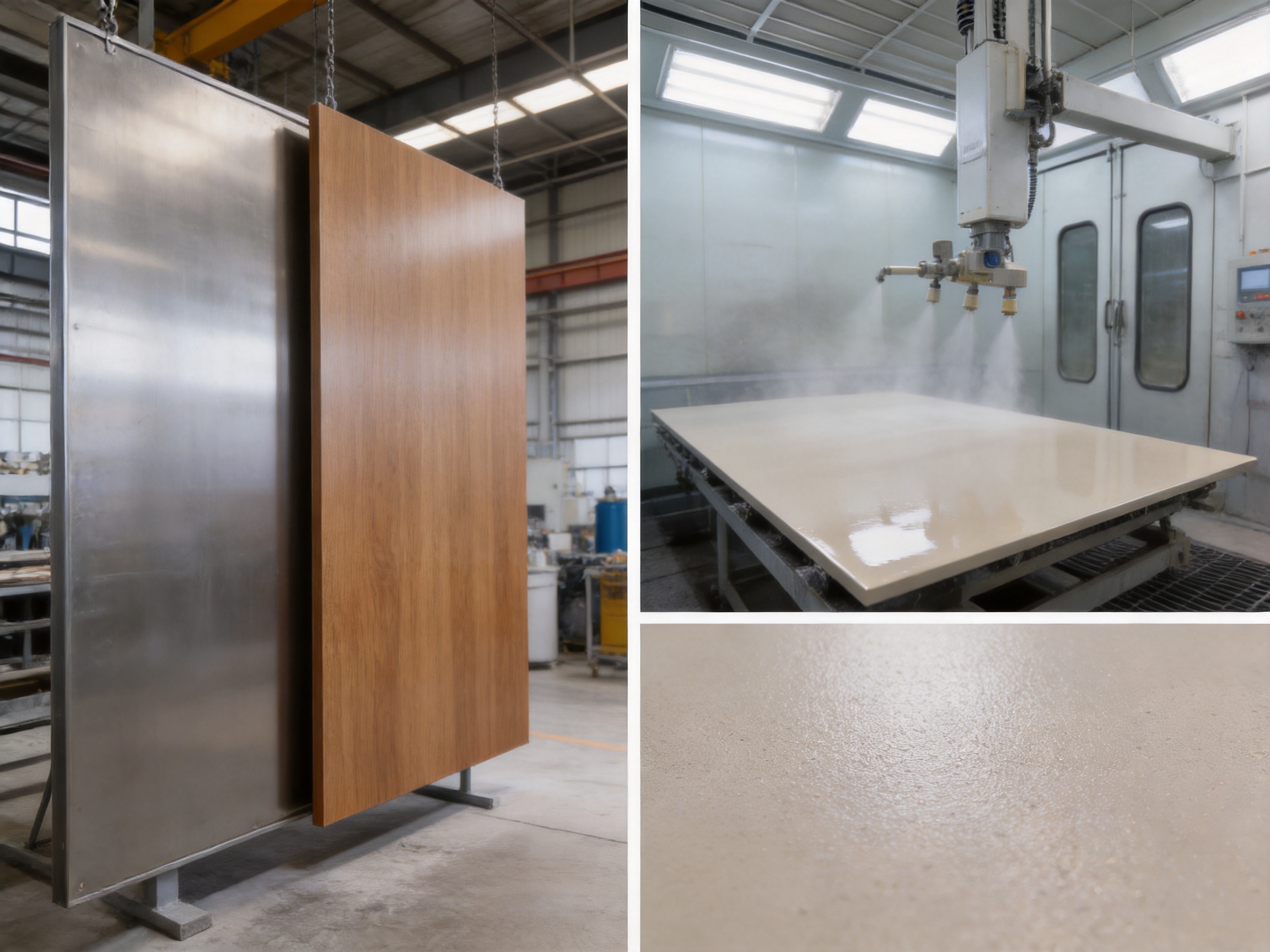
Wood coatings require a careful balance of appearance, feel, durability, and substrate accommodation. Natural wood surfaces can contain pores, fibers, joints, and variations in absorption. Furniture and interior panels often require a uniform low-gloss or satin appearance, while premium products may demand a smooth, refined touch.
DH-4500 can support wood-coating formulations by improving surface leveling, reducing airflow sensitivity, controlling matting-agent orientation, and enhancing smooth feel. Its dust and overspray acceptance may also be useful in spray-finishing operations where multiple components are coated in succession.
Industrial coatings are often applied to large parts, metal structures, machinery, equipment, panels, and fabricated components. These surfaces may be vertical, irregularly shaped, or difficult to move through a controlled coating environment. High-build performance, appearance consistency, and tolerance to application variation are important production requirements.
The ability of DH-4500 to help a higher film thickness remain on vertical surfaces may be valuable in these applications. Its support for airflow stability and Bénard-cell prevention can further improve the visual quality of large or highly visible components.
Decorative finishes may require a precisely controlled gloss, smooth touch, special texture, or visually uniform surface. Functional finishes may need to combine appearance with protection against wear, moisture, chemicals, or environmental exposure. In both cases, surface defects can reduce the perceived quality of the product.
DH-4500 can be considered when the coating must deliver a controlled appearance without sacrificing tactile quality. It may also contribute to more consistent results when matting agents or other particulate components are used to create the desired finish.
The company’s broader portfolio serves coatings, inks, and adhesives. Although the available product information specifically identifies DH-4500 as a leveling agent for coating systems, its surface-control principles may be relevant to selected ink or adhesive formulations. Any use outside the recommended coating applications should be confirmed through compatibility, adhesion, drying, and performance testing.
The performance of a specialty additive depends on more than its product description. Consistent raw-material control, process discipline, laboratory capability, technical knowledge, and quality management all influence whether a product performs reliably from batch to batch. Suzhou Qingtian New Material Co., Ltd. presents itself as a professional manufacturer and supplier specializing in raw materials for coatings, inks, and adhesives.
Founded in 2012, the company has built an experienced team that includes research and development specialists, sales professionals, and technical personnel. Its operations are supported by a modern production facility, advanced testing equipment, and strong research capabilities. These resources provide a foundation for developing and evaluating additives intended for demanding formulation environments.
Specialty additives often require close cooperation between synthesis, application testing, and customer technical service. A product may show acceptable results in a basic laboratory test but behave differently in a water-based, ultraviolet-curable, or solvent-based commercial formulation. An experienced research team can investigate these differences and improve product design through application-focused development.
The company’s portfolio covers multiple additive functions, including dispersion, leveling, defoaming, adhesion promotion, anti-settling, texture control, wax modification, and resin technology. This breadth allows technical teams to view a coating as a complete system rather than as a collection of isolated raw materials. Such knowledge can be valuable when a customer needs to solve several defects simultaneously.
Advanced testing equipment supports consistency evaluation and application development. Depending on the product and customer requirement, relevant tests may include viscosity, appearance, gloss, haze, leveling, adhesion, surface tension, particle distribution, compatibility, storage stability, curing response, and resistance to environmental exposure.
For a product such as DH-4500, testing should also consider smooth feel, matting uniformity, dust acceptance, overspray acceptance, vertical film behavior, and airflow sensitivity. These properties are application-dependent, so a strong technical program should include both instrumental measurements and practical panel evaluation.
A modern production facility can help improve process repeatability, material handling, batch control, and packaging reliability. Specialty chemical manufacturing requires attention to reaction conditions, mixing efficiency, temperature control, filtration, contamination prevention, and final-product homogeneity. Consistency in these areas is essential because small variations in surface-active additives can affect coating behavior.
The company’s move to Lingrui Intelligent Manufacturing Park in Zhangjiagang High-tech Zone in 2021 was intended to strengthen research and production capacity. This development reflects a commitment to supporting future growth while maintaining a manufacturing base suitable for technical chemical products.
A broad portfolio provides opportunities for coordinated formulation support. Coating manufacturers may need a leveling agent, dispersant, defoamer, adhesion promoter, and anti-settling agent that work together without creating incompatibility. A supplier with knowledge across these categories can help customers consider interactions within the complete additive package.
This system-level perspective is an important strength when compared with suppliers focused on only one narrow additive category. It does not remove the need for customer testing, but it can improve the efficiency of product selection and formulation troubleshooting.
The company reports several development milestones, including the creation of China’s first ice flower resin in 2016, recognition as a National High-Tech Enterprise in 2020, and relocation to a high-tech intelligent manufacturing park in 2021. These milestones indicate an emphasis on product innovation, technical development, and manufacturing expansion.
For customers evaluating a specialty additive supplier, long-term investment in research and production is a meaningful consideration. Coating technologies continue to evolve toward lower emissions, faster curing, improved durability, better tactile effects, and more efficient processing. Suppliers with established technical capabilities are better positioned to respond to these changing requirements.
Before commercial adoption, DH-4500 should be evaluated in the customer’s actual formulation and process. A systematic trial can identify the most effective concentration and confirm that the product meets the required balance of flow, surface feel, adhesion, and coating stability.
Prepare a control formulation without DH-4500 or with the current leveling additive. Record resin type, solids content, viscosity, pigment and matting-agent levels, application method, wet film thickness, drying conditions, and curing parameters. A detailed control formula makes later comparisons more meaningful.
Evaluate several addition levels rather than testing only one amount. The appropriate range depends on the coating system and the desired effect. Start with the supplier’s technical recommendation where available, then adjust around that level to identify the best balance of performance and compatibility.
Apply the control and modified formulas to representative substrates. Inspect leveling, gloss, haze, orange peel, craters, pinholes, edge coverage, and visible surface patterns. For low-gloss coatings, evaluate both measured gloss and visual uniformity under directional lighting.
Repeat the application under different airflow conditions, film thicknesses, drying times, and spray settings. Where relevant, deliberately evaluate overspray acceptance and dust tolerance under controlled conditions. Test vertical panels to determine whether the coating can maintain higher film build without unacceptable sagging.
Assess smooth feel by trained panel comparison or suitable friction and roughness measurements. Confirm adhesion, recoatability, blocking resistance, scratch resistance, chemical resistance, and flexibility as appropriate for the application. A surface additive should improve appearance without weakening the overall coating system.
Observe the coating during storage and after aging. Check for viscosity drift, separation, floating, flooding, sedimentation, surface defects, or changes in gloss. Test the additive alongside the complete formulation package, including defoamers, dispersants, matting agents, waxes, and adhesion promoters.
Technical performance is only one part of a successful raw-material partnership. Customers also need dependable communication, consistent supply, clear documentation, and responsive technical service. These factors are especially important when an additive is used in multiple product lines or incorporated into a high-volume manufacturing process.
Suzhou Qingtian New Material Co., Ltd. emphasizes quality, service, innovation, and win-win cooperation. Its experienced sales and technical teams are positioned to communicate with coating manufacturers about product selection, application requirements, and formulation challenges. A supplier with direct knowledge of coatings, inks, and adhesives can often respond more effectively than a general chemical distributor.
Customers should request the current technical data sheet, safety documentation, recommended storage conditions, packaging information, and applicable quality specifications before placing a production order. They should also confirm batch-to-batch consistency requirements, sample availability, lead time, export documentation, and technical support arrangements.
For international customers, direct communication with the supplier can help clarify the intended application, local regulatory expectations, and shipping requirements. The company provides telephone, email, and messaging contact channels for commercial and technical inquiries.
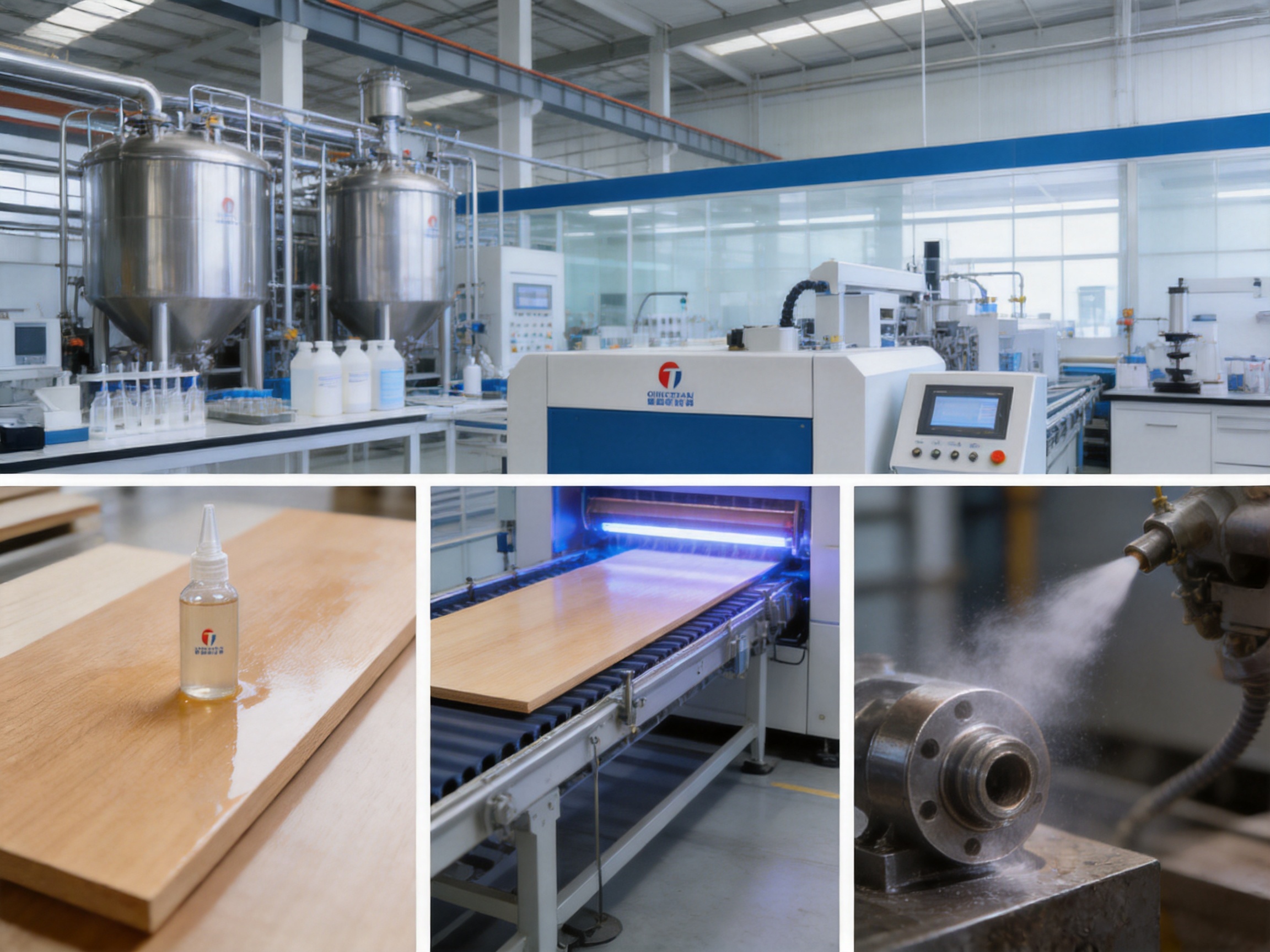
DH-4500 is a silicone-type leveling agent designed to improve surface smoothness and tactile feel in coating formulations. It also supports dust and overspray acceptance, higher film thickness on vertical surfaces, reduced airflow sensitivity, Bénard-cell prevention, and improved matting-agent orientation.
The product is stated to be suitable for water-based, radiation-cured, and solvent-based systems. Compatibility should be confirmed in the specific resin, pigment, solvent, water, curing, and additive package used by the customer.
Yes. The product is particularly relevant to wood coatings because it can support smooth feel, controlled matting, improved leveling, and reduced sensitivity to airflow. These benefits should be verified on the intended wood species, primer system, topcoat, and application equipment.
DH-4500 is described as allowing a higher film thickness to remain on vertical surfaces. This may help improve coverage and productivity, but final sag resistance still depends on the complete formulation, viscosity profile, application method, and drying conditions.
No. DH-4500 is a leveling agent, not a general-purpose defoamer. It may influence surface appearance, but foam control should be handled with a suitable defoamer selected for the specific coating system.
No. The product can improve matting-agent orientation and surface uniformity, but it does not replace the function of a pigment dispersant or the physical matting agent itself. The complete additive package must be optimized together.
Its potential differentiation is the combination of leveling, smooth feel, dust and overspray acceptance, airflow-sensitivity reduction, Bénard-cell prevention, vertical film support, and matting-agent orientation. Comparative testing under identical conditions is recommended before making a final selection.
The available product information does not specify a universal dosage. The correct level depends on the formulation and application target. A concentration ladder should be prepared using the supplier’s current technical guidance as the starting point.
Any surface-active additive may influence intercoat adhesion if it migrates excessively or is incompatible with the subsequent layer. Recoat adhesion should therefore be tested, especially in multilayer systems, low-surface-energy applications, and formulations that also contain slip or wax additives.
Recommended tests include leveling, gloss uniformity, haze, smooth feel, dust acceptance, overspray acceptance, airflow sensitivity, Bénard-cell formation, vertical film retention, matting consistency, adhesion, recoatability, blocking, storage stability, and resistance properties relevant to the end use.
DH-4500 is supplied by Suzhou Qingtian New Material Co., Ltd., a China-based company specializing in raw materials for coatings, inks, and adhesives. The company operates a modern production facility and maintains research, testing, and technical service capabilities.
The product is intended for industrial formulation use, but every customer should complete a scale-up evaluation. Laboratory panels, pilot batches, and production trials can reveal differences caused by mixing energy, batch size, application equipment, drying conditions, and line speed.
DH-4500 Smooth Feel Levelling Agent is a multifunctional silicone-type additive for formulators seeking improved coating appearance, tactile quality, and process stability. Its stated performance includes better dust and overspray acceptance, support for higher film thickness on vertical surfaces, reduced airflow sensitivity, prevention of Bénard cells, and improved matting-agent orientation.
These functions give the product a broader value proposition than a single-purpose leveling additive. It can help address several common causes of uneven appearance at the same time, including unstable wet-film flow, airborne contamination, airflow variation, cellular surface patterns, and irregular matting. Its suitability for water-based, radiation-cured, and solvent-based systems further expands its potential use across different coating technologies.
The product is backed by a manufacturer with experience in coating, ink, and adhesive raw materials. Since its establishment in 2012, Suzhou Qingtian New Material Co., Ltd. has developed a diversified additive portfolio, invested in research and testing, expanded modern production capacity, and pursued innovation in specialty resin and coating materials. These capabilities support a technical and system-oriented approach to customer requirements.
As with any specialty additive, the final result depends on formulation design and process conditions. Customers should conduct structured testing, compare the product with existing and competing alternatives, and verify all appearance, adhesion, durability, storage, and regulatory requirements before commercial use. When properly selected and optimized, DH-4500 can be a valuable component in coatings that require smooth feel, consistent matting, high-build performance, and reliable surface quality.
1. Product information supplied for DH-4500 Smooth Feel Levelling Agent.
2. Company information supplied for Suzhou Qingtian New Material Co., Ltd.
3. General principles of coating formulation, wetting, leveling, surface tension, and film formation.
4. General technical guidance for evaluating silicone additives in water-based, radiation-cured, and solvent-based coatings.
5. General industry practices for testing gloss, matting uniformity, adhesion, recoatability, film build, and coating surface defects.
6. General principles of additive compatibility, coating process control, and scale-up evaluation.
 Wholesale Paint/ Coating Additives Manufacturers
Custom Industrial Chemical Solutions Suppliers
Wholesale Paint/ Coating Additives Manufacturers
Custom Industrial Chemical Solutions Suppliers