русский
 Español
 Français
Home / Author / Tang Yuxi — Senior After-Sales Service Engineer / AA-9017AS Crystallizing Coating Resin for Water-Based Ice Flower Finishes
Tang Yuxi — Senior After-Sales Service Engineer

Content
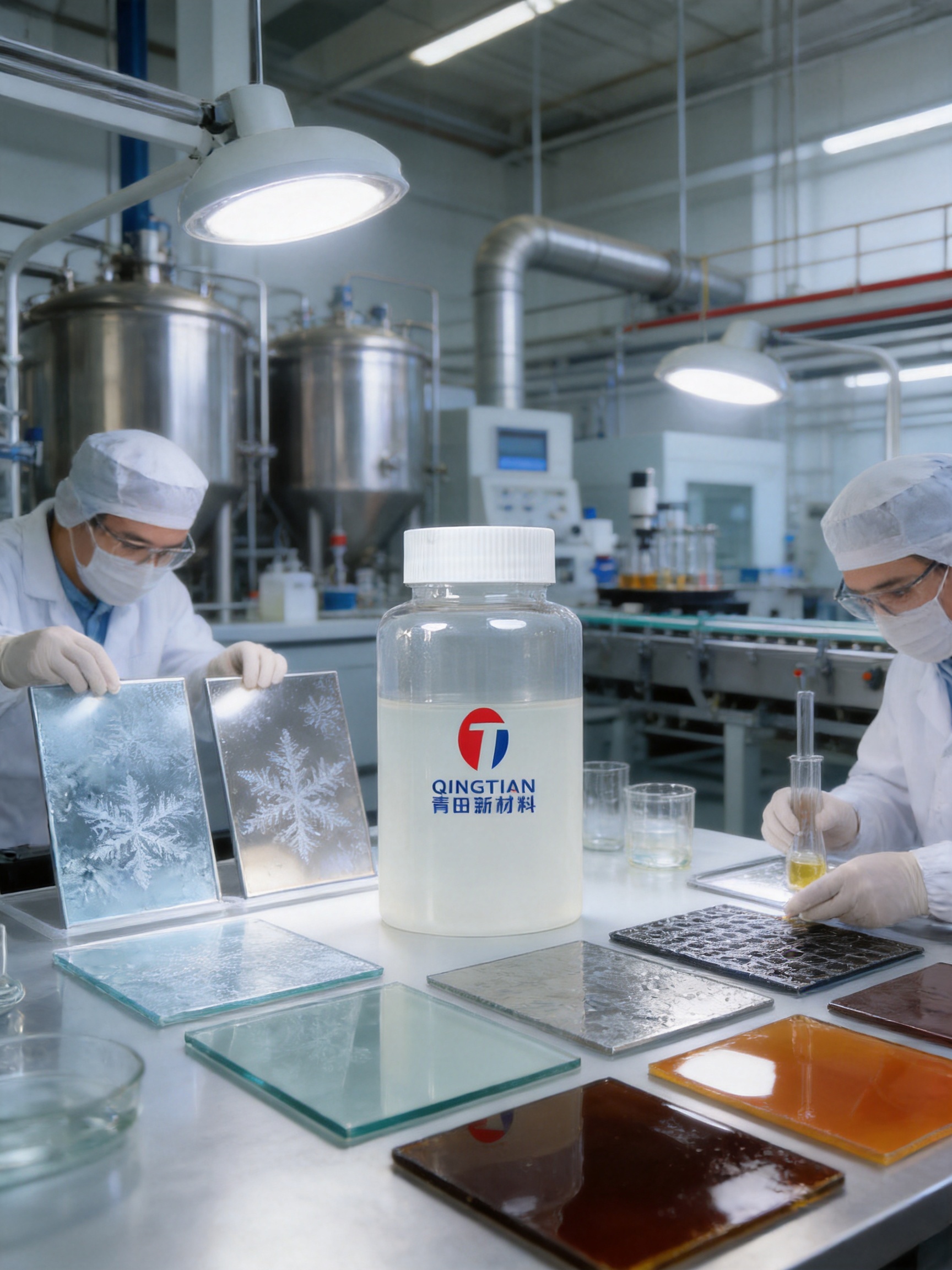
AA-9017AS Crystallizing Coating Resin is a thermosetting hydroxy acrylic organic copolymer developed for decorative and protective coating systems that require an ice flower, or crystallizing, appearance. Designed for water-based industrial applications, the resin combines visual pattern development with practical performance properties, including adhesion, corrosion resistance, heat resistance, and weatherability.
The product is particularly suitable for metallic baking coatings and glass baking coatings. Its formulation profile makes it relevant to manufacturers seeking a resin that can support attractive surface effects without sacrificing the durability expected from industrial finishes. The resin is supplied as a transparent to slightly turbid viscous liquid with a solid content of 55% ± 2%, a Ford Cup No. 4 viscosity of 30 to 60, and a solvent system based on propylene glycol monomethyl ether and n-propanol.
In modern coating production, decorative appearance and functional protection increasingly need to be achieved in the same film. A coating must look distinctive, adhere securely to the substrate, resist environmental exposure, tolerate elevated temperatures, and maintain consistent processing behavior. AA-9017AS addresses this combination through a hydroxyl-functional acrylic resin structure intended for thermosetting applications.
The resin is manufactured and supplied by Suzhou Qingtian New Material Co., Ltd., a specialist company focused on raw materials for coatings, inks, and adhesives. The company has developed product expertise across dispersants, leveling agents, defoamers, adhesion promoters, anti-settling agents, texture additives, wax powders, and resin systems. This broad formulation background supports a practical understanding of how a crystallizing resin must interact with pigments, substrates, additives, curing agents, and application equipment.
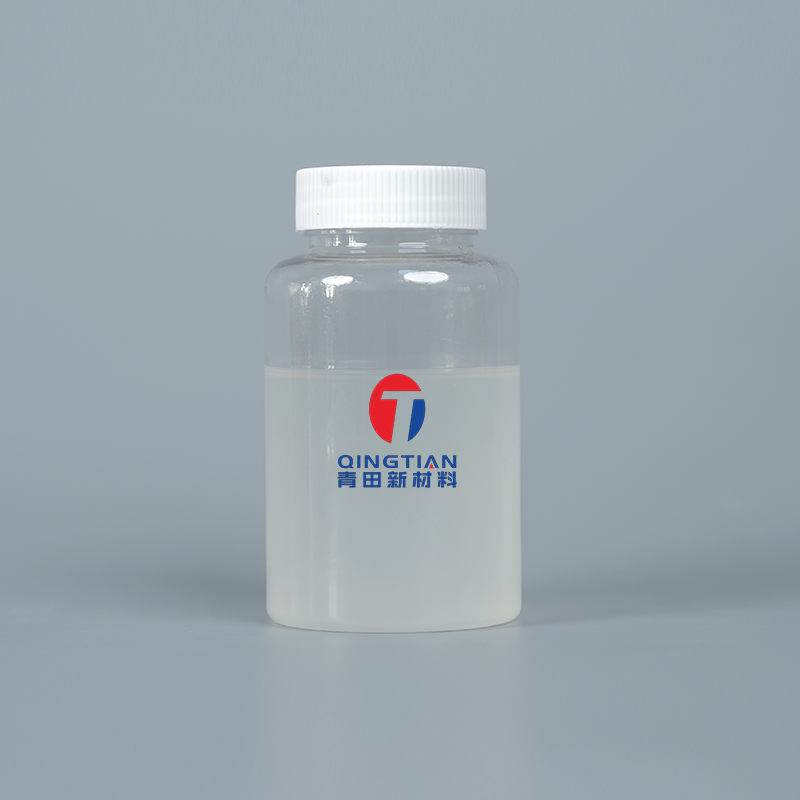
AA-9017AS Crystallizing Coating Resin
An ice flower coating resin is a resin system used to create a crystalline, frost-like, or flower-shaped surface pattern after application and curing. The pattern may resemble snowflakes, frozen glass, crystalline branches, or irregular natural ice formations. Unlike a simple smooth gloss coating, an ice flower finish is designed to provide visual depth and decorative variation across the coated surface.
The final appearance depends on several factors. These include resin chemistry, coating viscosity, film thickness, substrate temperature, curing conditions, pigment or effect-pigment selection, ambient conditions, and the compatibility of other formulation components. A resin intended for this type of coating must therefore provide more than basic film formation. It must offer controlled flow, suitable reactivity, stable adhesion, and enough formulation flexibility to support the desired crystallizing effect.
AA-9017AS is categorized as an Ice Flower Paint Resin because it is designed specifically for this decorative coating direction. Its hydroxy acrylic organic copolymer structure provides reactive hydroxyl groups for thermosetting chemistry. During the curing process, the resin can form a durable crosslinked film when properly combined with a compatible curing system and processed under suitable conditions.
The transparent to slightly turbid appearance of the supplied resin is consistent with its role as a clear or effect-supporting binder component. The resin can provide the film-forming foundation while the ice flower visual effect develops through the coating formulation and curing process. Depending on the target finish, formulators may adjust pigments, effect materials, additives, film thickness, and baking parameters.
Because ice flower finishes are highly sensitive to processing, production consistency is important. A resin with a manageable viscosity range and defined solids content can help manufacturers establish a repeatable application window. Repeatability is especially valuable in industrial production, where inconsistent crystallization can lead to differences in pattern size, density, gloss, transparency, and overall appearance.
AA-9017AS is supplied as a transparent to slightly turbid viscous liquid. Its nominal solid content is 55% ± 2% when tested at 105°C for 180 minutes. This solids level represents the nonvolatile portion remaining after the specified test procedure and provides a useful reference for formulation calculations, coating weight estimates, and production control.
The listed Ford Cup No. 4 viscosity is 30 to 60. This range indicates a practical liquid handling profile for blending and application development. Actual application viscosity may be adjusted according to the selected coating equipment, substrate, desired film thickness, pigment concentration, curing process, and environmental conditions. Any adjustment should be evaluated through laboratory and pilot-scale trials.
The solvent system consists of propylene glycol monomethyl ether and n-propanol. These solvents support the liquid handling characteristics of the resin and can influence drying, flow, wetting, leveling, and film formation. Because solvent balance affects the final coating result, formulators should consider evaporation rate, application temperature, ventilation, substrate condition, and compatibility with other raw materials.
| Property | AA-9017AS Typical Information | Importance in Formulation |
|---|---|---|
| Product type | Thermosetting hydroxy acrylic organic copolymer | Provides a reactive film-forming resin for baking systems |
| Recommended finish | Ice flower or crystallizing pattern | Supports decorative surface effects with visual depth |
| Appearance | Transparent to slightly turbid viscous liquid | Useful for clear, translucent, or effect-oriented formulations |
| Solid content | 55% ± 2% at 105°C for 180 minutes | Supports solids calculations and quality control |
| Viscosity | Ford Cup No. 4: 30 to 60 | Provides a reference for blending and application adjustment |
| Solvent | Propylene glycol monomethyl ether and n-propanol | Influences flow, evaporation, wetting, and film formation |
| Primary applications | Industrial metallic baking coatings and glass baking coatings | Targets substrates requiring appearance and durability |
| System direction | Water-based coating systems | Supports development of lower-solvent coating formulations |
The values above should be understood as product reference information rather than a replacement for a project-specific technical data sheet. Before commercial use, customers should confirm batch specifications, compatibility, application parameters, curing conditions, and regulatory requirements with the supplier.
The most visible advantage of AA-9017AS is its suitability for ice flower pattern coatings. A crystallizing finish can help products stand apart from conventional smooth, solid-color, metallic, or transparent coatings. The resulting pattern may be used to create a premium appearance on decorative metal components, glass articles, architectural elements, appliances, furniture parts, and other industrial products.
Decorative differentiation is increasingly important in markets where many products have similar shapes or functions. Surface appearance can communicate quality, technology, craftsmanship, or luxury. An ice flower coating provides a visual identity that is difficult to reproduce with an ordinary flat coating. By using a specialized resin, manufacturers can develop a recognizable finish while retaining the protective function of a baked coating system.
Adhesion is a fundamental requirement for any industrial coating. If the film does not bond adequately to the substrate, it may peel, blister, crack, or delaminate during handling or service. AA-9017AS is characterized by excellent adhesion, making it suitable for applications in which the coating must remain attached to metallic or glass surfaces after curing.
Good adhesion also supports downstream processing. Coated parts may be cut, bent, assembled, cleaned, packaged, or exposed to temperature changes. A well-adhered film is better positioned to withstand these operations than a film that depends primarily on mechanical anchoring or weak surface attraction.
Actual adhesion performance depends on substrate preparation, pretreatment, contamination control, coating thickness, curing, and formulation compatibility. Aluminum, steel, coated metal, and glass each present different surface characteristics. Therefore, adhesion should be verified using the customer’s actual substrate and process conditions.
Metallic substrates can be vulnerable to moisture, salts, oxygen, chemicals, and other environmental influences. A properly formulated and cured coating can act as a barrier that limits contact between the substrate and corrosive conditions. AA-9017AS is described as offering excellent corrosion resistance, supporting its use in industrial metallic baking coatings.
Corrosion protection is especially important when decorative appearance must remain intact over time. Rust formation, underfilm corrosion, and staining can damage both product performance and visual quality. A resin that contributes to a continuous, adherent, and durable film can help coating manufacturers address these risks.
Corrosion resistance is not determined by the resin alone. Pretreatment, primer selection, pigment type, film thickness, curing, edge coverage, and exposure conditions also contribute significantly. For demanding applications, performance should be assessed through appropriate laboratory testing, including humidity, salt spray, immersion, cyclic corrosion, or other methods selected for the end use.
AA-9017AS is also characterized by excellent heat resistance. This is important because the intended coating systems are baking coatings, meaning that the wet or partially dried film is exposed to elevated temperature during curing. A resin must retain its structural integrity during the bake and provide a stable film after crosslinking.
Heat resistance can also matter during the service life of coated components. Industrial parts may experience warm operating environments, intermittent heating, thermal cycling, or proximity to heat-generating equipment. A resin with suitable thermal stability can help preserve coating adhesion, appearance, and protective function under these conditions.
The exact temperature capability of a finished coating depends on the complete formulation and the substrate. Customers should establish a temperature profile through controlled testing rather than relying on resin classification alone. Cure schedule, film thickness, pigment package, crosslinker selection, and substrate expansion can all affect results.
Outdoor or semi-outdoor products may be exposed to ultraviolet radiation, rain, humidity, temperature variation, dust, and atmospheric pollutants. AA-9017AS is described as having excellent weatherability, making it relevant to coatings where long-term appearance and protection are important.
Weatherability may be reflected in gloss retention, color stability, resistance to chalking, adhesion retention, and resistance to surface deterioration. For an ice flower finish, maintaining the pattern and contrast is particularly important because the decorative effect is part of the product value. A resin with good weathering performance can support the development of finishes intended for more demanding service environments.
As with other performance characteristics, the final result depends on the entire coating system. Outdoor exposure testing, accelerated weathering, and color or gloss measurements should be selected according to the product’s intended market and service conditions.

General-purpose acrylic or alkyd resins may provide acceptable film formation for ordinary coatings, but they may not be optimized for crystallizing decorative effects. AA-9017AS is differentiated by its combination of ice flower pattern suitability and industrial performance properties. This combination can reduce the need to build a decorative system from several unrelated resin technologies.
A conventional smooth coating may deliver color and gloss but lack the controlled visual character required for an ice flower effect. A resin designed only for appearance may not provide sufficient adhesion, corrosion protection, or resistance to heat and outdoor exposure. AA-9017AS is positioned between these requirements, helping formulators develop a finish that is both visually distinctive and functionally durable.
Another advantage is its relevance to water-based systems. Many coating manufacturers are seeking to reduce solvent emissions, improve workplace conditions, and respond to environmental expectations. A resin intended for water-based applications can support this transition, although the full formulation must still be evaluated for volatile organic compound content, solvent contribution, application conditions, and applicable regulations.
The product’s defined solid content and viscosity range also provide a useful starting point for process design. Formulators can use these parameters to calculate resin contribution, estimate wet and dry film relationships, and establish blending procedures. Defined reference values help reduce trial-and-error during laboratory development and support better communication between resin suppliers, coating manufacturers, and end users.
| Development Requirement | Potential Contribution of AA-9017AS | Formulation Consideration |
|---|---|---|
| Ice flower appearance | Resin developed for crystallizing decorative patterns | Optimize film thickness, curing, additives, and effect components |
| Metal adhesion | Hydroxy acrylic resin with strong adhesion characteristics | Prepare and pretreat the substrate properly |
| Glass adhesion | Suitable for glass baking coating development | Confirm surface cleanliness, pretreatment, and thermal compatibility |
| Corrosion protection | Supports industrial protective coating systems | Evaluate with the selected pigments, pretreatment, and film build |
| Heat exposure | Designed for thermosetting baking systems | Establish a complete time-temperature curing profile |
| Outdoor durability | Weatherability is a stated product characteristic | Perform accelerated and natural exposure testing as appropriate |
| Water-based development | Positioned for water-based coating systems | Check dispersion, storage stability, drying, and emissions |
Hydroxy acrylic resins are widely used in thermosetting coatings because hydroxyl groups can participate in crosslinking reactions with compatible curing agents. During baking, the resin and crosslinker react to form a more durable network. This network can improve hardness, adhesion, chemical resistance, heat resistance, and general film integrity when the formulation is correctly balanced.
For an ice flower coating, the resin must also support the development of the desired surface pattern. A coating that flows too freely may lose pattern definition, while a coating that sets too rapidly may produce uneven distribution or poor leveling. The resin therefore needs to be considered as both a reactive binder and a pattern-supporting component.
The hydroxyl acrylic structure may also provide flexibility in formulation design. Depending on the application, the resin can be evaluated with compatible crosslinkers, pigments, effect materials, wetting agents, leveling agents, defoamers, and other additives. These components must be selected carefully because incompatibility can result in haze, craters, pinholes, poor storage stability, loss of pattern, or reduced adhesion.
Crosslinker selection is particularly important. The curing agent influences baking temperature, reaction speed, hardness, flexibility, chemical resistance, gloss, and final appearance. The optimum combination should be selected through laboratory screening and confirmed on the intended substrate. The supplier’s technical service team can help customers establish a suitable starting point, but final responsibility for the finished coating remains with the formulator and applicator.
Suzhou Qingtian New Material Co., Ltd. has operated in the coatings, inks, and adhesives raw-material sector since 2012. Its development has included product research, sales support, modern production facilities, advanced testing equipment, and a team that includes research and development specialists. These capabilities are relevant to the production of specialized resins because crystallizing coatings require close attention to chemical consistency and application behavior.
The company’s experience covers multiple additive and resin categories. Its product portfolio includes dispersants, leveling agents, defoamers, adhesion promoters, anti-settling agents, cooling agents, conductive agents, orange peel texture agents, texture powders, wax powders, and resin series. This range gives the organization exposure to many of the interactions that affect coating performance.
For example, a crystallizing resin must often be evaluated alongside dispersing agents, defoamers, leveling agents, and adhesion promoters. A company familiar with these materials can assess not only the resin in isolation but also its behavior in a complete coating formulation. This broader formulation perspective may help customers solve problems more efficiently during development.
The company reports that it created China’s first ice flower resin in 2016. This milestone indicates an early focus on the specialized crystallizing resin category and suggests accumulated experience in the challenges associated with ice flower appearance, processing, and application. The company was recognized as a National High-Tech Enterprise in 2020, reflecting its stated emphasis on research, innovation, and technical development.
In 2021, the company moved to Lingrui Intelligent Manufacturing Park in Zhangjiagang High-Tech Zone. The move was intended to strengthen research and development and expand production capability. A modern manufacturing location can support improved process organization, equipment coordination, laboratory testing, material management, and production planning.
Advanced testing equipment is particularly important for resin quality control. Relevant evaluations may include solids content, viscosity, appearance, storage stability, compatibility, drying or curing behavior, adhesion, hardness, flexibility, gloss, chemical resistance, and weathering-related performance. While the specific internal test methods are not provided, the presence of testing capability supports a structured approach to product development and batch monitoring.
Specialty resins require consistency from batch to batch. Small changes in molecular structure, solids content, solvent balance, residual monomer, or viscosity can influence coating flow and pattern formation. A controlled manufacturing process helps minimize variation and makes it easier for customers to maintain stable production conditions.
Process consistency begins with raw-material selection and incoming inspection. It continues through reaction control, temperature management, mixing, solvent addition, filtration, filling, storage, and final testing. Each stage can affect the resin’s performance. For a product used in decorative coatings, appearance consistency is especially important because variation may be visible on the finished article.
Research capability is valuable when customers need to adapt a coating to a new substrate, color, film thickness, curing line, or surface effect. Ice flower patterns are sensitive to process conditions, so technical discussions may need to address more than a standard resin replacement. Application equipment, baking oven design, substrate temperature, coating speed, and environmental conditions may all be relevant.
A company with experience in coating additives and resin systems can help identify whether a problem is caused by the binder, additive package, substrate, application method, or curing process. This type of problem-solving approach can shorten development cycles and reduce unnecessary changes to the entire formulation.
AA-9017AS is suitable for development work involving steel, aluminum, and other metallic substrates used in industrial products. A baked metallic coating may need to provide a combination of decorative appearance, adhesion, corrosion resistance, heat resistance, and outdoor durability. The ice flower effect can create a premium surface that differentiates components from standard painted metal.
Potential product categories may include decorative panels, appliance components, hardware, furniture parts, lighting components, architectural elements, and specialty metal articles. Actual suitability must be confirmed for each substrate and end-use environment. Pretreatment, primer design, coating thickness, and curing conditions should be selected according to the metal type and required performance.
Glass is a smooth, chemically resistant, and relatively nonporous substrate. Coatings applied to glass therefore require careful attention to surface cleanliness and adhesion. AA-9017AS is identified for glass baking coating applications, where the combination of a decorative ice flower pattern and durable baked film may create an attractive finish.
Glass products may be exposed to washing, handling, temperature variation, humidity, and light. The coating must be evaluated for adhesion before and after these stresses. Thermal expansion differences between glass and the cured film should also be considered when selecting the curing schedule and film thickness.
The resin may be considered for industrial decorative finishes where a textured or crystallized appearance is desired without using a conventional embossed surface. The pattern is created by the coating system rather than by permanently changing the shape of the substrate. This can offer design flexibility and may be suitable for products with complex geometries.
Manufacturers can explore variations in transparency, color, contrast, gloss, and pattern density. The final appearance will depend on the formulation and process, so development should include a systematic study rather than relying on a single trial. Sample panels can help compare resin levels, additive combinations, film builds, and bake conditions.
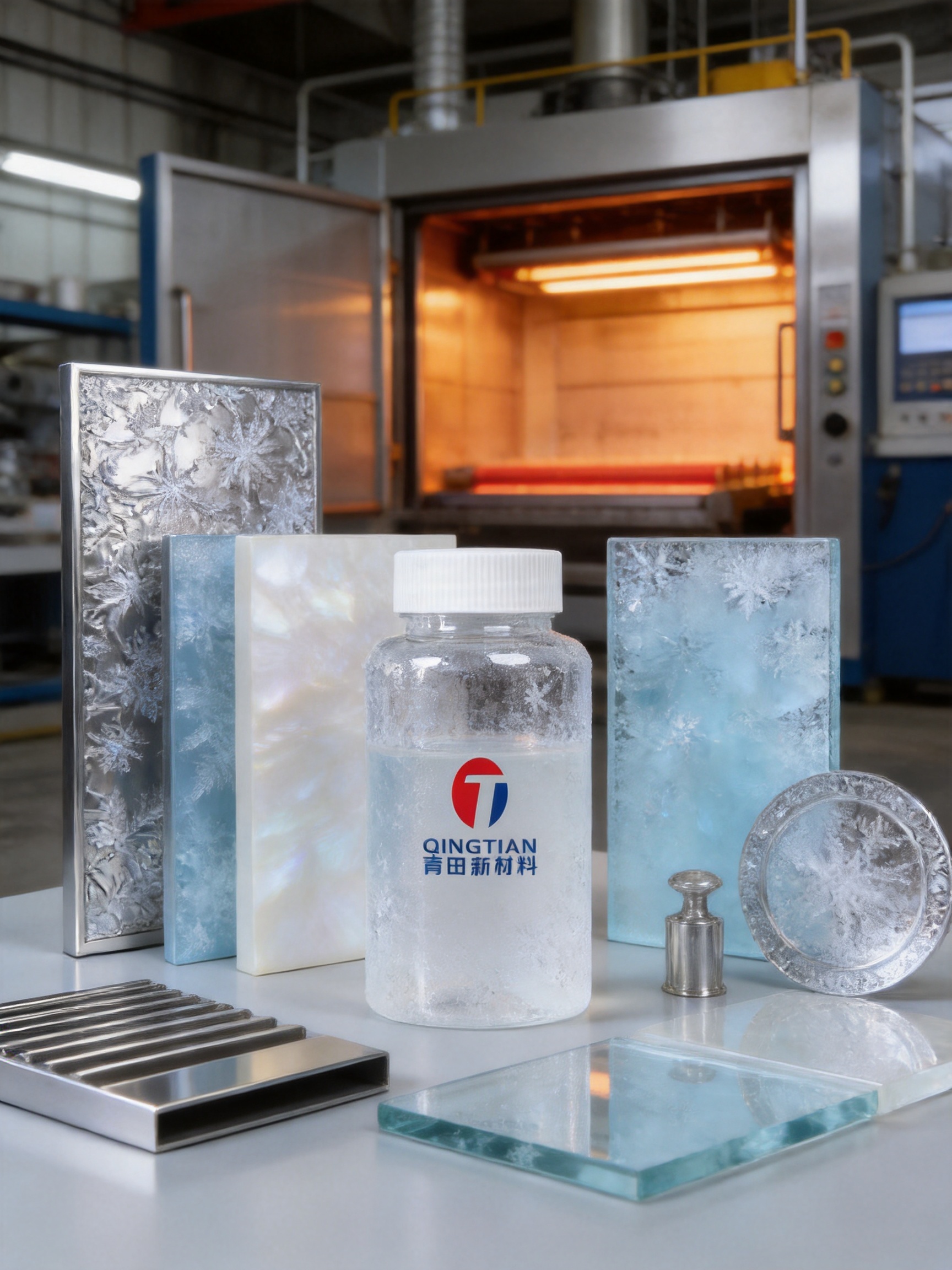
Substrate preparation is one of the most important factors in coating performance. Metal surfaces should be free from oil, grease, dust, rust, loose scale, and other contaminants. Depending on the substrate and end use, chemical pretreatment or primer application may be required. Glass surfaces should be thoroughly cleaned and handled in a way that prevents fingerprints, silicone contamination, and residual cleaning agents.
A resin with excellent adhesion cannot compensate for a contaminated or poorly prepared surface. For this reason, customers should establish cleaning, pretreatment, and handling procedures before comparing resin performance. Adhesion testing should be performed after the complete coating process, not only on laboratory drawdowns prepared under ideal conditions.
The order in which resin, solvent, pigments, additives, crosslinker, and other components are added can influence dispersion, viscosity, foam generation, and stability. A typical development program may compare different addition sequences and mixing speeds. High shear may be useful for dispersing certain materials, while excessive shear can introduce air or affect sensitive effect components.
All raw materials should be checked for compatibility before large-scale production. A small laboratory mixture can be observed for haze, precipitation, viscosity drift, gel formation, color change, separation, and loss of crystallizing behavior. Storage stability should be assessed under conditions relevant to the customer’s distribution and production environment.
The listed Ford Cup No. 4 viscosity of 30 to 60 provides a reference range for the supplied resin. The working viscosity of a finished coating may be different because it includes pigments, additives, crosslinkers, water, solvents, and other components. Adjustment should be made gradually, with viscosity measured using a consistent method and temperature.
Viscosity affects atomization, spray pattern, film thickness, sag resistance, leveling, and ice flower formation. If the coating is too thin, the pattern may become weak or irregular. If it is too thick, the film may show poor leveling, excessive texture, runs, or incomplete curing. The appropriate range should therefore be established for each application method.
Film thickness has a direct effect on appearance and protection. A heavier film may provide stronger barrier properties and more pronounced visual effects, but it may also increase drying time, solvent entrapment, sagging, and curing demands. A thinner film may improve transparency and reduce material consumption, but it may not provide sufficient coverage or pattern development.
Customers should prepare a film-thickness matrix during development. Each sample should be evaluated for pattern definition, adhesion, gloss, hardness, flexibility, corrosion resistance, and appearance after heat or weather exposure. The optimum film thickness is usually a balance between decorative requirements and functional performance.
AA-9017AS is intended for thermosetting baking systems, so curing conditions are central to its performance. Oven temperature, metal temperature, residence time, airflow, and heating uniformity should be monitored. The displayed oven temperature may not equal the actual temperature of the coated substrate.
Underbaking may cause insufficient hardness, poor chemical resistance, reduced adhesion, residual solvent, or incomplete development of the intended surface. Overbaking may lead to discoloration, loss of gloss, embrittlement, yellowing, or changes in the ice flower pattern. A staged curing study can help identify a suitable processing window.
Although AA-9017AS is the primary film-forming component, additives often determine whether a coating runs smoothly and performs consistently. Dispersants can help stabilize pigments and effect materials. Leveling agents can influence surface smoothness and pattern development. Defoamers can reduce entrapped air, while adhesion promoters may be considered for difficult substrates.
These additives should not be selected independently of the resin. Excessive leveling can suppress a desired crystalline effect, while insufficient leveling can create uncontrolled defects. Too much defoamer may cause craters or surface separation. An adhesion promoter that is incompatible with the resin may reduce storage stability or change gloss.
The supplier’s broader portfolio in dispersants, leveling agents, defoamers, adhesion promoters, anti-settling agents, texture powders, and wax powders may be useful when customers need a coordinated formulation approach. A complete solution can be more effective than changing the resin alone, particularly when the issue involves pigment settling, surface defects, poor wetting, or insufficient substrate bonding.
Nevertheless, every additive combination must be validated. Compatibility can vary with concentration, pigment type, water content, solvent balance, crosslinker, pH, temperature, and storage time. Laboratory screening should be followed by pilot production before commercial approval.
Quality control should cover both the resin as supplied and the finished coating. For the resin, appearance, solids content, viscosity, color or clarity, packaging condition, and storage stability may be monitored. The stated solids and viscosity values provide important reference points for release and incoming inspection.
For the formulated coating, manufacturers may evaluate viscosity, density, fineness of grind, storage stability, drying or curing behavior, gloss, haze, color, pattern uniformity, adhesion, hardness, flexibility, impact resistance, chemical resistance, and corrosion performance. Test selection should reflect the final application.
Pattern evaluation deserves special attention. Visual assessment should be performed under consistent lighting, viewing angle, distance, and background. Where possible, digital image analysis or standardized visual panels can help compare batches. Because crystallizing patterns are naturally varied, manufacturers should define acceptable limits for pattern density, size, distribution, and overall appearance.
Retained samples can help investigate customer complaints or production variation. Each batch should be traceable to raw materials, manufacturing records, test results, packaging, and shipment information. Such documentation supports quality assurance and helps identify the source of any deviation.
AA-9017AS is a liquid resin supplied in a solvent-containing system. It should be stored and handled according to the supplier’s current safety data sheet, technical data sheet, and applicable local regulations. Containers should remain properly closed when not in use to limit contamination, solvent loss, and moisture uptake.
Storage conditions should protect the material from excessive heat, freezing, direct sunlight, and sources of ignition. The recommended shelf life, packaging format, and storage temperature should be confirmed with the supplier before purchase. Before use, the resin should be inspected for unusual gelation, sediment, skin formation, odor change, or other signs of deterioration.
Production areas should provide appropriate ventilation and control of ignition sources. Operators should use suitable personal protective equipment and follow site-specific procedures for solvent-containing materials. Spills should be managed according to the company’s emergency response plan and relevant safety documentation.
Because the product is intended for industrial coating development, customers should conduct a complete regulatory review before commercialization. This review may include volatile organic compound requirements, worker exposure limits, hazardous-material classification, waste handling, packaging rules, and market-specific chemical restrictions.
Specialized coating projects often require more than a standard resin shipment. Customers may need assistance with pattern development, substrate selection, curing optimization, additive compatibility, and troubleshooting. A specialist supplier with experience in coatings, inks, and adhesives can provide a broader technical context for these issues.
Suzhou Qingtian New Material Co., Ltd. focuses on raw materials for coatings, inks, and adhesives and has developed a portfolio covering multiple functional requirements. Its reported R&D team, testing equipment, production facilities, and experience with ice flower resin provide a foundation for technical cooperation.
The company’s stated development history also demonstrates a long-term emphasis on innovation. Creating an ice flower resin product in 2016, receiving National High-Tech Enterprise recognition in 2020, and expanding into a high-tech manufacturing park in 2021 are milestones that support its positioning as a research-oriented materials supplier.
For customers, the value of a specialist supplier may include more reliable product selection, clearer technical communication, faster formulation troubleshooting, and better coordination between resin and additive requirements. These advantages can be particularly important when the finished product must satisfy both aesthetic and performance specifications.
A practical development program for AA-9017AS should begin by defining the target appearance and performance requirements. The customer should specify the substrate, color or transparency, desired pattern, gloss level, film thickness, curing equipment, indoor or outdoor exposure, chemical contact, and expected service temperature.
The next step is a laboratory screening program. Small batches can be prepared with different resin levels, compatible crosslinkers, effect components, additives, and viscosity adjustments. Drawdowns or spray panels should be produced on the actual substrate whenever possible.
After initial screening, the most promising formulations should be tested for adhesion, hardness, flexibility, impact resistance, chemical resistance, humidity resistance, and appearance retention. Metallic applications may require corrosion testing, while glass applications may require washing, thermal cycling, and adhesion testing after exposure.
The third stage is pilot production. The coating should be applied using the intended equipment and process parameters. This stage can reveal issues that are not visible in laboratory work, such as spray pattern variation, oven nonuniformity, production-line contamination, insufficient flash-off, or differences in substrate temperature.
Commercial approval should be based on documented test results, process capability, batch-to-batch consistency, packaging performance, and customer acceptance. The final formulation and process should be recorded in a controlled specification so that future production can be compared with the approved standard.
AA-9017AS is used as a thermosetting hydroxy acrylic resin for ice flower or crystallizing coating systems. Its stated applications include water-based industrial heat-resistant and weather-resistant metallic baking coatings and glass baking coatings.
The supplied material is described as a transparent to slightly turbid viscous liquid. The finished coating may develop an ice flower or crystalline pattern when formulated and processed under suitable conditions.
Yes. The product information identifies it for water-based systems. However, the complete coating formulation must be evaluated for water compatibility, stability, drying, curing, emissions, and regulatory compliance.
The stated solid content is 55% ± 2%, measured at 105°C for 180 minutes. Customers should confirm the current batch specification and use their own quality-control procedure when necessary.
The listed viscosity is 30 to 60 using Ford Cup No. 4. The final working viscosity of a coating will depend on the complete formulation and application method.
The stated solvent system is propylene glycol monomethyl ether and n-propanol. Handling, ventilation, storage, and regulatory decisions should be based on the current safety data sheet.
The product is identified for metallic baking coatings and glass baking coatings. Adhesion and durability must be verified for each specific substrate, pretreatment, film thickness, and curing schedule.
Corrosion resistance is listed as one of the product’s characteristics. Final corrosion performance depends on the complete coating system, including substrate preparation, pretreatment, pigments, film build, curing, and exposure conditions.
AA-9017AS is a thermosetting resin intended for baking coating systems. The exact curing conditions should be established through formulation and application testing with a compatible crosslinking system.
Additives may be evaluated for use with AA-9017AS, but compatibility should not be assumed. Dispersants, leveling agents, defoamers, adhesion promoters, and other materials can affect pattern formation, storage stability, adhesion, and final appearance.
Pattern development can be influenced by resin level, crosslinker, additives, pigment or effect materials, viscosity, film thickness, flash-off, substrate temperature, oven conditions, and curing time. A controlled development matrix is recommended.
AA-9017AS is specifically positioned for crystallizing ice flower finishes while also offering adhesion, corrosion resistance, heat resistance, and weatherability. A standard acrylic resin may not be optimized for the same combination of appearance and industrial performance.
Technical and commercial inquiries may be directed to Suzhou Qingtian New Material Co., Ltd. Customers should request the latest technical data sheet, safety data sheet, packaging information, shelf-life details, and application guidance before placing a production order.
AA-9017AS Crystallizing Coating Resin is a specialized hydroxy acrylic resin for manufacturers seeking an ice flower appearance in durable industrial coating systems. Its combination of crystallizing pattern suitability, adhesion, corrosion resistance, heat resistance, and weatherability makes it a useful candidate for metallic and glass baking coatings.
The resin’s 55% ± 2% solid content, Ford Cup No. 4 viscosity of 30 to 60, and propylene glycol monomethyl ether and n-propanol solvent system provide a defined starting point for formulation development. Its water-based system direction also aligns with the continuing interest in lower-solvent coating technologies.
The product’s performance should be considered together with the supplier’s broader technical strengths. Suzhou Qingtian New Material Co., Ltd. offers experience in resins and coating additives, supported by research personnel, testing equipment, production facilities, and a history of development in ice flower resin technology. This combination can help customers address both material selection and complete coating-system performance.
Successful use depends on careful substrate preparation, compatible additives, controlled viscosity, suitable film thickness, and a verified baking schedule. Laboratory trials, pilot production, and application-specific testing remain essential. When these factors are managed systematically, AA-9017AS can help manufacturers create decorative surfaces that combine visual distinction with the protective characteristics required in demanding industrial markets.
1. Product information for AA-9017AS Crystallizing Coating Resin, including appearance, solid content, viscosity, solvent system, characteristics, and intended applications.
2. Technical information on hydroxy acrylic thermosetting resin chemistry and crosslinked coating film formation.
3. General industrial coating quality-control practices for adhesion, corrosion resistance, heat resistance, weatherability, viscosity, and solids content.
4. General formulation principles for water-based metallic coatings and glass baking coatings.
5. Company profile and development information for Suzhou Qingtian New Material Co., Ltd., including research, manufacturing, testing, product portfolio, and corporate milestones.
 Wholesale Paint/ Coating Additives Manufacturers
Custom Industrial Chemical Solutions Suppliers