русский
 Español
 Français
Home / Author / Tang Yuxi — Senior After-Sales Service Engineer / DH-6740S Water-Based Dispersant: Advanced Pigment Dispersion for High-Gloss Coatings and Color Pastes
Tang Yuxi — Senior After-Sales Service Engineer

Content
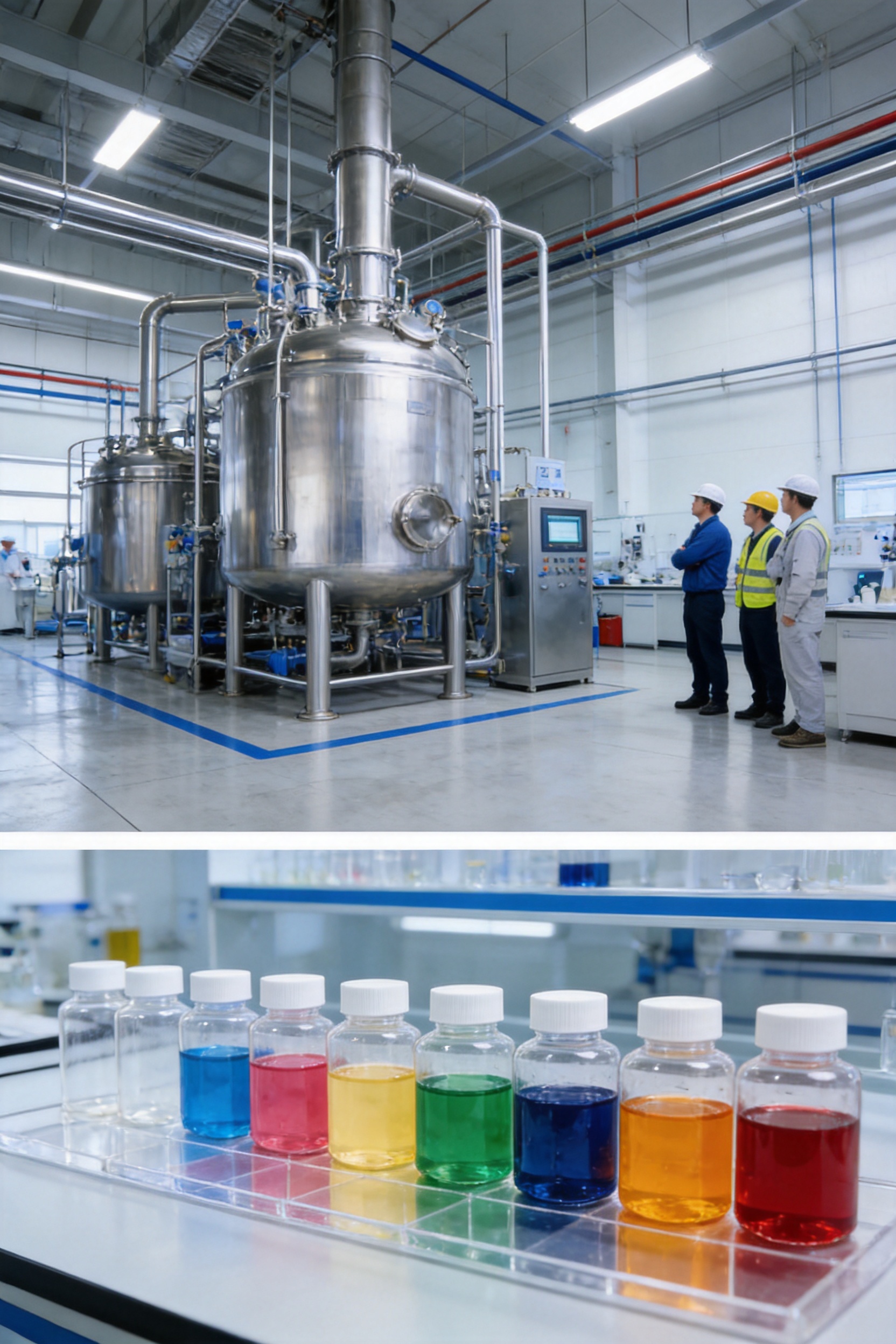
Modern water-based coatings, inks, and adhesive systems increasingly require additives that can deliver consistent pigment dispersion without compromising application performance, appearance, or production efficiency. As industries move toward lower-emission formulations and more environmentally responsible manufacturing, formulators need dispersants that work effectively in water-based systems while remaining adaptable to different resin technologies and pigment chemistries.
DH-6740S Water-Based Dispersant is a non-ionic wetting and dispersing agent developed for the grinding and dispersion of inorganic and organic pigments in water-based formulations. It is designed to support the preparation of low-viscosity color pastes with excellent color development and high-gloss visual results. Its compatibility with both resin-containing and resin-free color paste systems gives formulators greater flexibility when designing products for coatings, inks, adhesives, and related applications.
The product is supplied by Suzhou Qingtian New Material Co., Ltd., a professional manufacturer of raw materials for coatings, inks, and adhesives. The company has developed a product portfolio covering dispersants, leveling agents, defoamers, adhesion promoters, anti-settling agents, cooling agents, conductive agents, texture additives, texture powders, and micronized wax powders. Supported by an experienced technical team, modern production facilities, advanced testing equipment, and research capabilities, the company provides additive solutions for diverse industrial sectors.
This article examines the operating characteristics, formulation benefits, manufacturing strengths, application potential, and competitive positioning of DH-6740S. It also explains how a water-based dispersant can influence pigment wetting, grinding efficiency, viscosity, color development, gloss, storage stability, and production consistency.
Pigments are essential functional and visual components in coatings, inks, and color pastes. They provide color, opacity, hiding power, special effects, conductivity, corrosion protection, and other performance properties. However, pigment particles are not naturally easy to distribute uniformly in water. Their high surface energy encourages agglomeration, while differences in density and surface chemistry can make them difficult to stabilize during grinding and storage.
A dispersant helps address these challenges by promoting wetting and supporting the separation of pigment particles. During the initial mixing stage, the additive improves the contact between the liquid phase and the pigment surface. During grinding, it supports the breakdown of agglomerates and helps maintain a more uniform particle distribution. After grinding, the dispersant can contribute to the stabilization of the dispersed particles, reducing the tendency for them to come together again.
In a water-based color paste, dispersant selection affects several important properties at the same time. These properties include pigment acceptance, grinding time, mill-base viscosity, color strength, transparency or opacity, gloss, storage behavior, and compatibility with the final binder system. A product that performs well in one area but causes excessive viscosity or poor compatibility in another may not be suitable for demanding industrial formulations.
DH-6740S is designed to provide a balanced approach. As a non-ionic wetting and dispersing agent, it is intended to improve pigment wetting and dispersion in water-based systems while supporting low-viscosity color paste production. This combination is valuable because low viscosity can improve processing, pumping, mixing, and incorporation into the final formulation.
Effective wetting is the first stage of successful pigment dispersion. If the liquid phase cannot adequately wet the pigment surface, dry pockets, floating particles, and undispersed aggregates may remain in the mixture. Poor wetting can also increase the energy required during grinding and cause inconsistent color development.
DH-6740S is formulated to promote contact between water-based media and pigment particles. Better wetting can support more efficient incorporation of both organic and inorganic pigments. This is especially important when pigments have different surface properties or when a formulation contains a high pigment concentration.
Pigment powders frequently contain agglomerates formed during manufacturing, handling, and storage. These agglomerates must be broken down to release the desired primary or smaller pigment particles. A suitable dispersant helps the grinding equipment work more efficiently by improving the interaction between the pigment and the liquid medium.
The performance of DH-6740S during grinding is one of its principal advantages. The product is described as exhibiting excellent grinding and dispersion performance for inorganic and organic pigments in water-based systems. This makes it suitable for color paste preparation where consistent particle distribution and strong color development are important.
Grinding alone does not guarantee long-term dispersion stability. Once the equipment is stopped, pigment particles may re-agglomerate, settle, or flocculate if the system is not adequately stabilized. Re-agglomeration can result in color drift, reduced tinting strength, increased viscosity, sediment formation, or loss of gloss.
Dispersant selection must therefore consider the complete life cycle of the color paste, including preparation, storage, transportation, and final application. DH-6740S is intended for use in systems where stable pigment distribution and consistent appearance are required. The actual dosage and final performance should be determined through laboratory testing with the selected pigment, binder, solvent or co-solvent package, and production process.
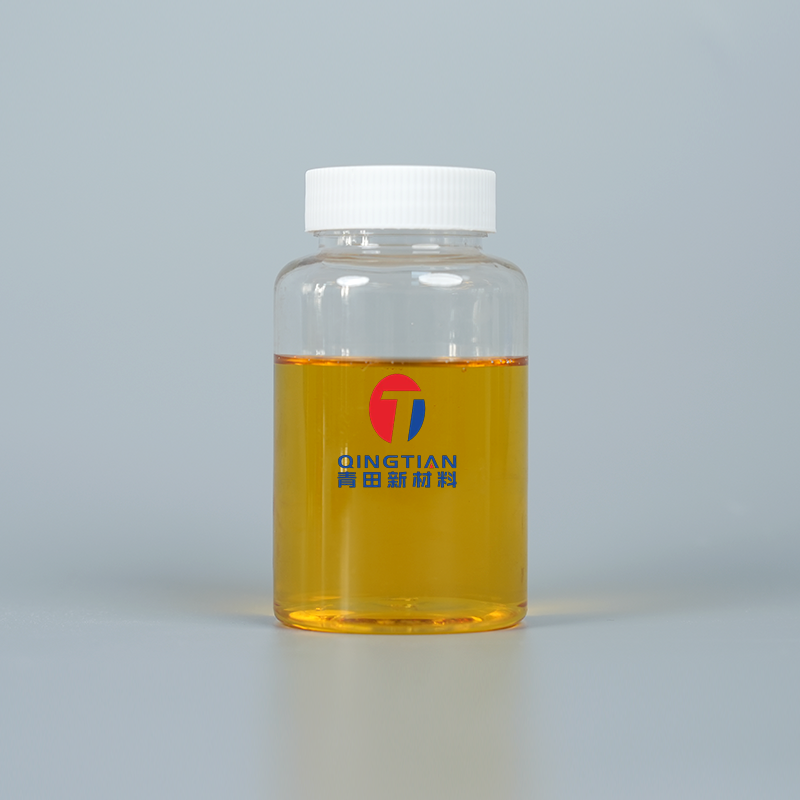
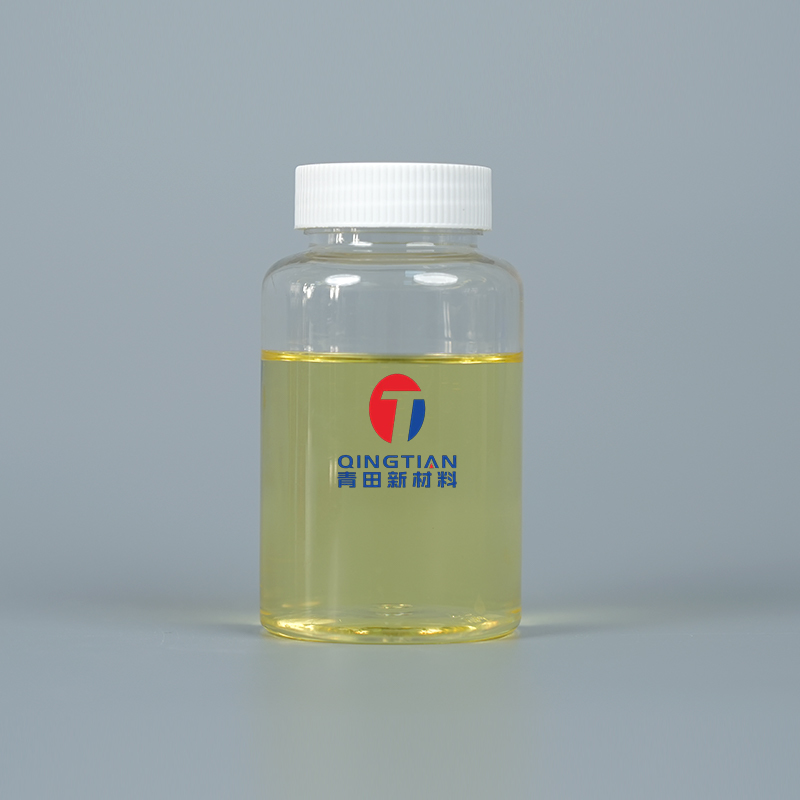
DH-6740S Water-based Dispersant
DH-6740S is a non-ionic wetting and dispersing agent for water-based formulations. Its primary function is to facilitate the wetting, grinding, and dispersion of organic and inorganic pigments. The product can be used to produce low-viscosity color pastes with excellent color development and is suitable for both resin-containing and resin-free color paste systems.
The product profile can be summarized as follows:
| Property | Description |
|---|---|
| Product type | Water-based wetting and dispersing agent |
| Ionic character | Non-ionic |
| Main function | Pigment wetting, grinding assistance, and dispersion |
| Pigment compatibility | Suitable for inorganic and organic pigments |
| Color paste benefit | Supports low-viscosity color paste production |
| Color performance | Excellent color development |
| System compatibility | Suitable for resin-containing and resin-free color paste systems |
| Appearance objective | Supports high-gloss water-based formulations |
| Comparable benchmark | Positioned as comparable to EFKA 7400 W |
The non-ionic character is particularly relevant for formulators who need flexibility across different water-based systems. Ionic interactions can sometimes create compatibility challenges when a dispersant is combined with resins, neutralizing agents, surfactants, pigments, fillers, or other additives. A non-ionic dispersant may offer a broader formulation window, although compatibility must always be confirmed in the specific formulation.
Organic and inorganic pigments can differ substantially in particle size, surface area, density, oil absorption, surface treatment, and interaction with water. Organic pigments may provide strong color intensity but can be difficult to wet and disperse because of their high surface area and strong particle interactions. Inorganic pigments may have higher density and can present settling challenges if the overall system is not properly designed.
A dispersant intended for both pigment categories gives the formulator a more versatile tool. DH-6740S can be evaluated in systems containing common organic color pigments as well as inorganic pigments used for opacity, earth tones, mineral effects, protective functions, or other performance requirements.
Because pigment behavior varies widely, the product should not be viewed as a universal substitute for formulation development. Instead, it provides a strong starting point for laboratory screening and production optimization. The appropriate dosage depends on pigment type, pigment surface area, pigment concentration, grinding equipment, target viscosity, binder composition, and application requirements.
Color pastes may be prepared in different ways. A resin-containing color paste includes part or all of the final binder system during pigment dispersion. A resin-free color paste is prepared primarily from pigment, water, dispersant, and selected auxiliary components, with the binder added later during final formulation.
Resin-containing systems can provide good compatibility with the final coating or ink because the color paste is prepared in a medium similar to the finished product. Resin-free systems may offer greater flexibility, especially when one color paste needs to be incorporated into multiple binder systems. However, resin-free pastes require careful attention to compatibility, storage stability, viscosity, and final color acceptance.
DH-6740S is suitable for both approaches. This feature can simplify product development for manufacturers serving multiple markets. It allows the same dispersant platform to be assessed in different production concepts rather than limiting the formulator to one specific color paste structure.
Low-viscosity color pastes can offer practical advantages in manufacturing and application. They are generally easier to pump, transfer, mix, meter, and incorporate into a finished coating or ink. Lower viscosity may also support higher pigment loading or more efficient processing, depending on the formulation design.
DH-6740S is specifically described as suitable for producing low-viscosity color pastes. This is an important advantage in industrial environments where high viscosity can cause equipment overload, inconsistent dosing, difficult cleaning, or poor homogenization. Lower viscosity can also improve the speed of color adjustment during production.
It is important to distinguish between low viscosity and inadequate pigment stabilization. A well-designed dispersant must help reduce processing resistance while still supporting stable pigment distribution. If viscosity is reduced only by excessive addition of liquid, the formulation may suffer from poor color strength or insufficient solids content. A dispersant-based approach can help achieve a more efficient balance between flow behavior and pigment concentration.
Color development refers to the ability of a pigment to display its intended color strength, hue, and visual character in the formulation. Inadequate dispersion can conceal part of the pigment surface, reduce tinting strength, create shade variation, or produce a dull appearance.
By supporting pigment wetting and grinding, DH-6740S helps the formulation make better use of the pigment. Improved dispersion can expose more pigment surface area and reduce large agglomerates that interfere with color development. In practical terms, this may support stronger and more consistent color results at a given pigment concentration.
Color development is also connected to production consistency. If one batch contains a different level of agglomeration from another, the final product may show shade variation even when the raw material quantities are identical. A dispersant that contributes to repeatable grinding and dispersion can help reduce this source of variability.
Gloss is a critical appearance property in many coatings, inks, and decorative finishes. A smooth, uniform surface reflects light more evenly, while surface defects, pigment flocculation, and large particles can scatter light and reduce gloss.
The product information identifies high gloss as an important performance characteristic of DH-6740S. Proper pigment dispersion can contribute to a more uniform coating surface and may reduce visual defects associated with poorly dispersed pigment. High-gloss performance is particularly relevant to automotive-related finishes, industrial coatings, furniture coatings, plastic coatings, metal coatings, and premium printing applications.
Final gloss depends on more than the dispersant alone. Film formation, resin selection, pigment volume concentration, surface tension, substrate preparation, curing conditions, and application method all influence the result. Nevertheless, effective dispersion is a fundamental requirement for achieving a smooth and visually attractive surface.
Non-ionic additives can be advantageous in formulations containing multiple functional ingredients. Since they do not rely primarily on ionic charge interactions, they may be less sensitive to certain changes in pH, neutralization, electrolyte content, or resin chemistry. This does not mean that compatibility concerns disappear, but it can provide a useful development advantage.
For manufacturers producing multiple grades of water-based coatings, a versatile non-ionic dispersant can reduce the number of additive platforms that need to be maintained. It may also simplify raw material evaluation and support more efficient technical service across several product lines.
DH-6740S can be considered for water-based coatings, water-based inks, pigment concentrates, industrial color pastes, and other systems where pigment wetting and dispersion are required. The company’s broader product portfolio serves steel and aluminum coil coatings, plastic coatings, ultraviolet-curing systems, anti-corrosion coatings, wood coatings, glass coatings, epoxy flooring, printing inks, power batteries, photovoltaic panels, and related industries.
The product should be evaluated according to the specific requirements of each application. For example, a high-gloss wood coating may prioritize surface appearance and transparency, while an industrial anti-corrosion coating may prioritize pigment stability, opacity, storage life, and compatibility with protective pigments. A printing ink may require a different balance of viscosity, color strength, drying, and substrate wetting.
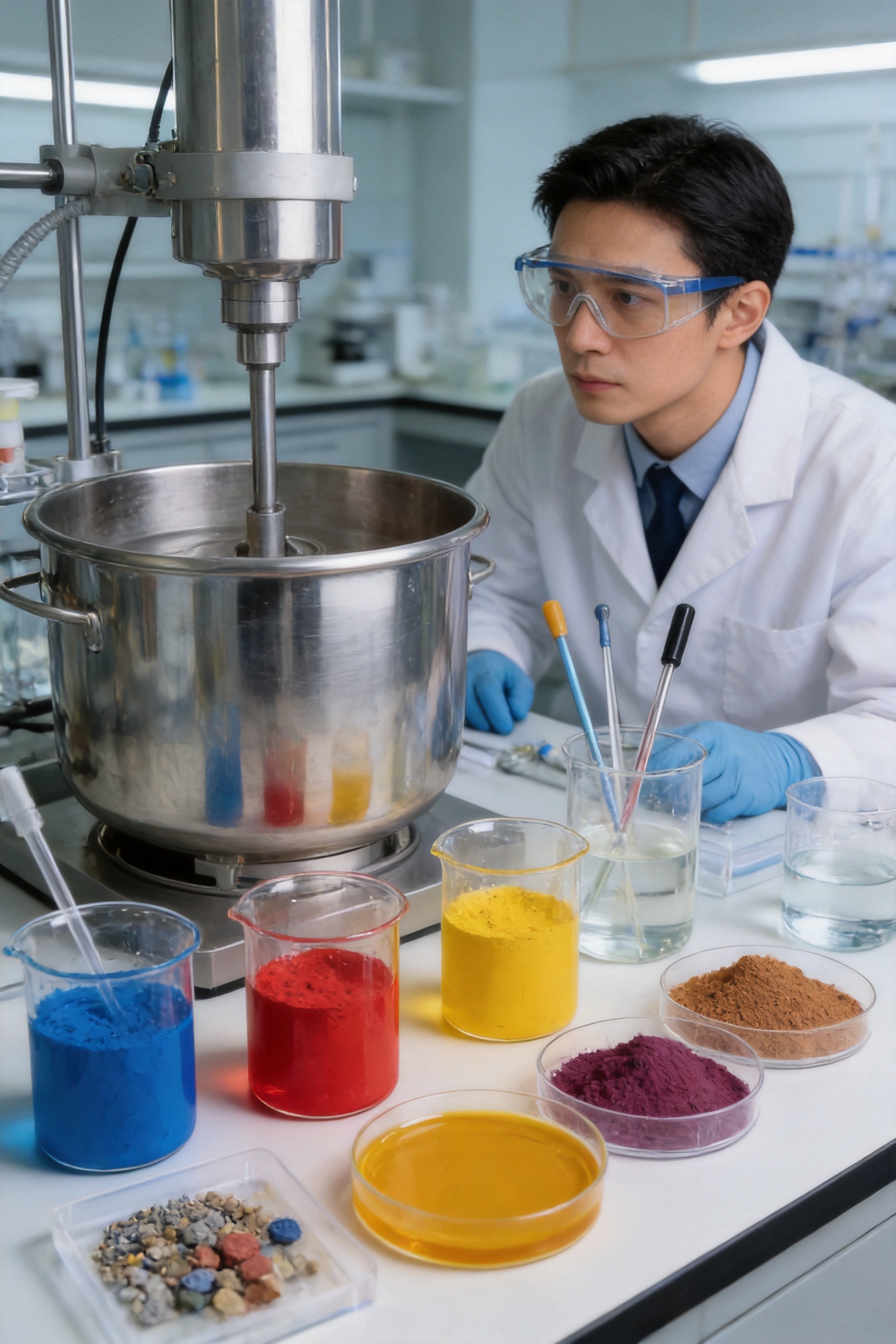
In the international additive market, formulators often compare new products with established commercial references. DH-6740S is identified as comparable to EFKA 7400 W. Such a reference gives technical teams a practical starting point for screening, especially when a manufacturer is seeking an alternative supply source or evaluating a product with a similar intended function.
A meaningful comparison should be conducted using the same pigment, resin, water quality, equipment, dosage range, grinding conditions, and testing methods. Comparing two dispersants under different conditions can create misleading conclusions. The most useful evaluation considers both immediate performance and total formulation value.
| Evaluation category | Questions for technical comparison | Potential significance |
|---|---|---|
| Wetting speed | How quickly is the pigment incorporated into the liquid phase? | Influences mixing time and production efficiency |
| Grinding efficiency | How effectively does the additive support particle size reduction and deagglomeration? | Affects energy use, throughput, and color development |
| Mill-base viscosity | Does the color paste remain sufficiently fluid at the target pigment loading? | Influences pumping, transfer, and equipment load |
| Color strength | Does the pigment show strong and consistent color development? | Can affect dosage, shade accuracy, and product appearance |
| Gloss | Does the finished film maintain the required surface reflectivity? | Important for premium decorative and industrial finishes |
| Storage stability | Does the color paste resist settling, flocculation, or viscosity drift? | Supports reliable shelf life and batch consistency |
| Compatibility | Does the additive work with the intended resin and auxiliary package? | Reduces formulation risk and rework |
| Supply and service | Can the supplier provide consistent quality and technical support? | Influences long-term production continuity |
The lowest unit price does not always represent the lowest formulation cost. An additive that requires a higher dosage, longer grinding time, or additional corrective ingredients may increase the total cost of production. Conversely, a dispersant that supports lower viscosity, improved color development, and reduced processing time may create value beyond its purchase price.
DH-6740S should therefore be evaluated using a total-cost approach. The assessment may include additive dosage, pigment utilization, grinding time, energy consumption, batch cycle time, rejected material, cleaning frequency, color adjustment, storage stability, and customer complaint risk.
Manufacturers increasingly seek reliable alternatives to reduce dependence on a single supplier or geographic source. A product comparable to an established benchmark can support dual sourcing, regional supply strategies, and more resilient procurement planning.
Suzhou Qingtian New Material Co., Ltd. offers a portfolio approach rather than a single-product approach. Since the company manufactures and supplies dispersants, leveling agents, defoamers, adhesion promoters, anti-settling agents, texture products, and wax powders, customers may be able to consolidate part of their additive evaluation and purchasing activities through one specialized partner.
The exact formulation procedure depends on the pigment and production equipment, but a disciplined development process can help obtain reliable results with DH-6740S. Laboratory screening should begin with a clear definition of the target properties, including pigment concentration, final viscosity, color strength, gloss, storage stability, and compatibility with the final binder.
The first step is to prepare a series of trial formulations using several dispersant levels. The purpose is to identify the point at which pigment wetting, viscosity reduction, and color development are satisfactory. Testing only one dosage may overlook the optimum range.
The dispersant can be evaluated in the aqueous phase before pigment addition, or according to the established production method used by the formulator. The order of addition should be controlled because addition sequence can influence wetting, foam generation, pigment incorporation, and grinding efficiency.
Water quality should also be controlled. Hardness, dissolved salts, pH, and contamination can affect the behavior of water-based additives. If the production plant uses different water sources, the product should be tested under representative conditions.
Pigment should be added gradually under sufficient agitation. Rapid addition can create dry lumps or localized high-solids zones that are difficult to wet. The mixing speed should be high enough to achieve effective incorporation without introducing excessive air.
For organic pigments with high surface area, the formulator may need to pay particular attention to the balance between dispersant dosage and pigment loading. For dense inorganic pigments, the formulation should also be checked for settling behavior. The objective is not simply to create a smooth initial mixture, but to produce a stable color paste that can be processed and stored.
Grinding equipment, media size, residence time, temperature, and circulation rate can all influence final dispersion quality. DH-6740S is intended to support grinding and dispersion, but the equipment must still be operated within suitable conditions for the pigment and binder system.
Temperature control can be important during high-energy grinding. Excessive heat may affect viscosity, water evaporation, resin stability, or additive performance. The product development team should record the temperature profile and compare results across batches.
After grinding, the color paste may require adjustment of water content, pH, viscosity, or other formulation parameters. Any post-addition should be performed gradually and followed by adequate mixing. Sudden dilution may produce localized incompatibility or pigment instability.
The final color paste should be allowed to equilibrate before complete evaluation. Some properties, such as viscosity or storage behavior, may change after several hours or days. Immediate testing is useful, but it should be supplemented with accelerated and real-time stability observations.
A comprehensive test program helps confirm whether DH-6740S meets the requirements of a particular formulation. The following tests are commonly relevant to water-based pigment dispersions and finished coatings.
Viscosity should be measured using a consistent instrument, spindle, shear rate, temperature, and conditioning time. Both initial viscosity and viscosity after storage should be recorded. A product that produces a low initial viscosity but shows rapid thickening may not be suitable for commercial use.
Fineness-of-grind measurements can help identify large particles and insufficiently dispersed agglomerates. Depending on the application, particle size analysis may provide additional information. Consistent results across multiple batches are particularly important for industrial production.
Color strength should be measured against a standard or reference formulation. Drawdowns, let-down panels, or printed samples can be used to compare shade, undertone, transparency, opacity, and uniformity. The test should account for both the color paste and the final binder system, since compatibility can influence the final appearance.
Gloss should be measured at the angle appropriate for the intended application. Film thickness, substrate, curing conditions, and surface preparation must be controlled. Visual inspection should be combined with instrumental measurement because a numerical gloss value alone may not reveal haze, surface texture, or localized defects.
Storage tests can include room-temperature observation, elevated-temperature aging, freeze-thaw evaluation where relevant, and repeated agitation tests. The color paste should be checked for sedimentation, hard settling, flocculation, viscosity changes, color shift, and ease of redispersion.
Ultimately, the dispersant must be evaluated in the finished product. Coating tests may include adhesion, leveling, gloss, appearance, water resistance, chemical resistance, hardness, and durability, depending on the application. Ink testing may include print quality, rub resistance, drying, substrate compatibility, and color density. The selected tests should reflect the customer’s actual performance requirements.
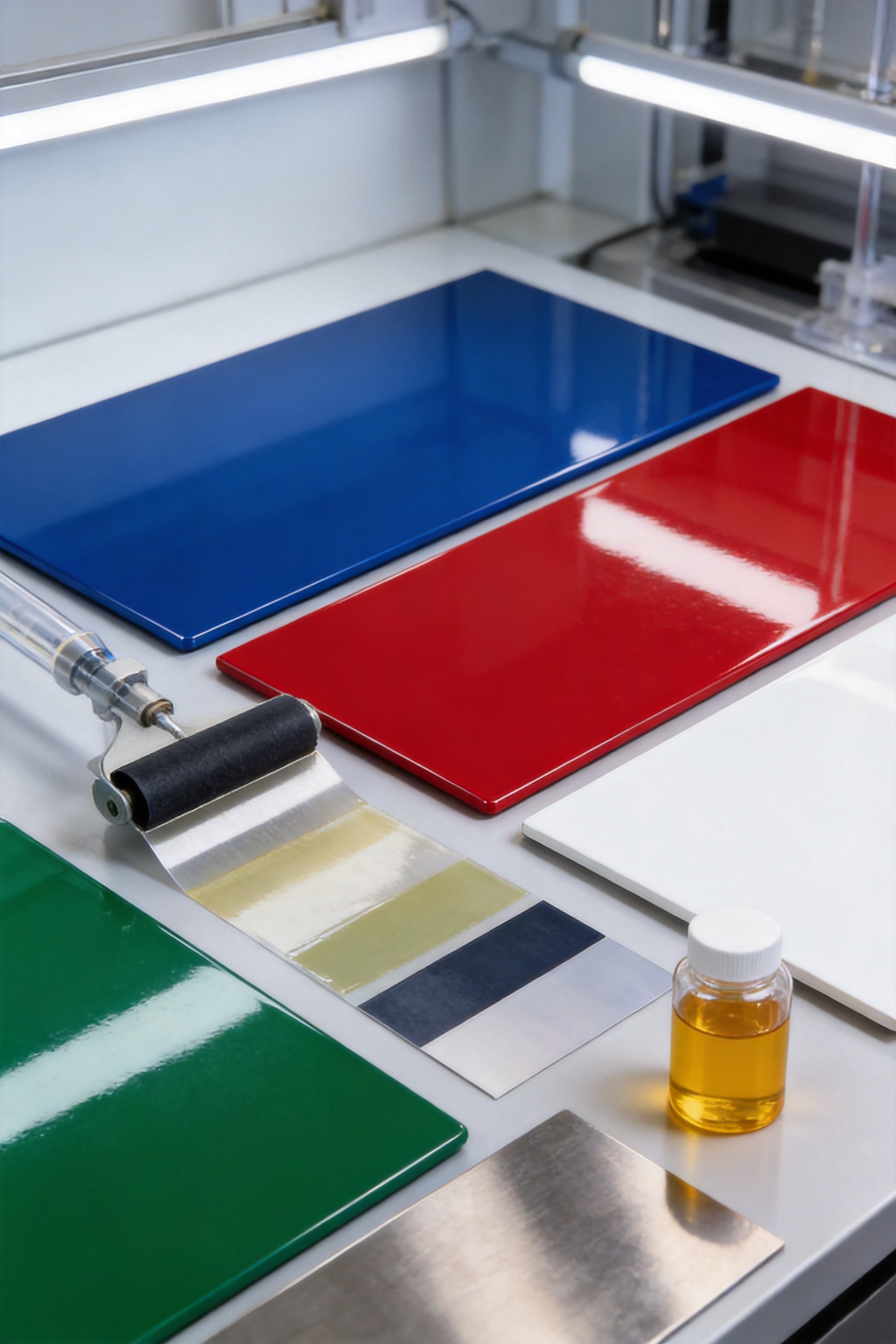
The performance of a specialty additive depends not only on its chemical design but also on manufacturing control, testing discipline, technical service, and supply reliability. Suzhou Qingtian New Material Co., Ltd. has developed its business around raw materials for coatings, inks, and adhesives and has built an experienced team that includes research and development specialists and sales professionals.
An experienced research and development team supports the continuous improvement of additive products and application solutions. In coatings and inks, product performance is strongly influenced by the interaction between the additive and the complete formulation. R and D capability therefore needs to include more than basic product synthesis or routine quality control. It must also include application testing, troubleshooting, and formulation adaptation.
The company’s technical background supports the development of dispersants, leveling agents, defoamers, adhesion promoters, anti-settling agents, texture products, and other specialty additives. This broad product knowledge is useful because many coating problems are interconnected. For example, changing a dispersant can influence foam, leveling, gloss, viscosity, settling, and adhesion. A supplier with experience across multiple additive categories can help evaluate these interactions more effectively.
The company operates a modern production facility supported by advanced testing equipment and research capabilities. Modern manufacturing infrastructure can contribute to more consistent raw material handling, controlled processing, batch repeatability, and product quality monitoring.
For a dispersant such as DH-6740S, manufacturing consistency is essential. Variations in active composition, residual materials, moisture, or physical properties may affect pigment dispersion and color paste behavior. A controlled facility with appropriate testing resources can help identify deviations before products are released to customers.
Testing equipment is a central part of additive manufacturing and application support. Laboratory instruments allow the technical team to evaluate viscosity, appearance, dispersion quality, gloss, color development, and compatibility under controlled conditions. These tools support both new product development and routine quality assurance.
Testing also enables the supplier to respond to customer-specific requirements. Different customers may use different pigment types, grinding equipment, resin systems, and production temperatures. An application laboratory can help reproduce these conditions and provide more relevant recommendations than a standard product data sheet alone.
The company was recognized as a National High-Tech Enterprise in 2020. This recognition reflects its focus on technological development and innovation. While certification or recognition does not replace product-specific testing, it indicates an organizational commitment to research, technical capability, and continued improvement.
In 2021, the company moved to Lingrui Intelligent Manufacturing Park in Zhangjiagang High-Tech Zone to strengthen research and production capacity. Intelligent manufacturing environments can support improved process monitoring, production planning, traceability, and operational efficiency.
For customers purchasing specialty additives, these capabilities can be valuable. Consistent delivery requires more than a functional product; it requires a supply partner able to manage production, quality, technical communication, and future demand. A modern manufacturing base provides a foundation for this long-term relationship.
Suzhou Qingtian New Material Co., Ltd. was founded in 2012 and has developed experience in the coatings, inks, and adhesives raw material sector. Its product range reflects the practical needs of industrial formulators, including pigment dispersion, surface control, foam management, adhesion, anti-settling performance, texture, conductivity, and wax modification.
The company’s development milestones include the creation of China’s first ice flower resin in 2016, recognition as a National High-Tech Enterprise in 2020, and relocation to an intelligent manufacturing park in 2021. These milestones show a progression from product development toward broader technical and production capabilities.
The company serves applications including steel and aluminum coil coatings, plastic coatings, ultraviolet-curing coatings, anti-corrosion coatings, wood coatings, glass coatings, epoxy flooring, printing inks, power batteries, photovoltaic panels, and other industrial sectors. This range of applications gives the company exposure to different performance requirements and formulation challenges.
Its stated business focus emphasizes innovation, quality, service, and win-win cooperation. For customers evaluating DH-6740S, this means that product selection can be supported by a broader technical relationship rather than treated as an isolated transaction.
Industrial coating manufacturers are increasingly developing water-based alternatives for metal, plastic, wood, and other substrates. These systems require careful management of pigment dispersion, surface appearance, drying, adhesion, and durability. DH-6740S may be considered for pigment concentrates and mill bases used in these formulations.
Water-based printing inks require uniform color, controlled viscosity, good substrate wetting, and reliable print quality. Pigment dispersion influences color density, gloss, rub resistance, and consistency during long production runs. The low-viscosity color paste capability of DH-6740S may be useful when preparing concentrated pigment bases for subsequent let-down.
Wood coatings often place strong emphasis on appearance, gloss, transparency, smoothness, and color uniformity. Poor dispersion can produce visible defects on large surfaces, especially in clear or lightly pigmented finishes. A dispersant that supports uniform pigment distribution can contribute to a more attractive finished appearance.
Plastic substrates may require coatings with good adhesion, smoothness, appearance, and resistance to handling. Pigment dispersion must be balanced with surface tension, leveling, and substrate wetting. DH-6740S can be evaluated as part of a broader additive package for water-based plastic coating systems.
Decorative color systems require accurate color matching, stable storage, and easy incorporation. Resin-free color pastes can be useful when one pigment concentrate must be used across multiple binder formulations. DH-6740S is suitable for evaluation in such systems because it can be used in resin-containing and resin-free color paste designs.
Some water-based systems contain functional pigments or fillers in addition to conventional color pigments. These may include pigments for opacity, corrosion protection, conductivity, or special visual effects. Each material must be tested individually because its surface chemistry and density can differ significantly from standard organic pigments.
From a production perspective, DH-6740S offers several potential advantages. Its use may help manufacturers develop low-viscosity color pastes, improve pigment incorporation, support efficient grinding, and obtain strong color development. These benefits can contribute to better process control and reduced variation between batches.
The product’s compatibility with resin-containing and resin-free systems can also simplify inventory planning. A manufacturer serving several customers or product lines may be able to use one dispersant platform across multiple color paste structures, subject to validation.
High-gloss performance is another important commercial advantage. Customers often judge coating quality by appearance before conducting more specialized tests. A smooth, glossy, uniform surface can improve product acceptance and support premium positioning.
The company’s broader additive portfolio may create additional value. If the formulator requires a dispersant, defoamer, leveling agent, adhesion promoter, or anti-settling additive, coordinated technical discussions can help prevent contradictory additive selection. For example, an additive that improves pigment dispersion but increases foam may require a compatible defoamer. A supplier familiar with both products can help address the complete formulation rather than focusing on one property in isolation.
Specialty additives are often small components by formulation weight, but their influence on product quality can be substantial. Customers therefore need reliable product identification, consistent packaging, clear technical communication, and responsive support.
Suzhou Qingtian New Material Co., Ltd. provides products for industrial customers and maintains contact channels for business and technical inquiries. Its location in Zhangjiagang, Suzhou, Jiangsu Province, places the company within an important manufacturing region with access to industrial infrastructure and supply networks.
A successful supplier relationship should include clear communication about the intended application, pigment type, resin system, dosage target, production equipment, storage requirements, and regulatory expectations. This information allows the supplier to provide more relevant recommendations and helps avoid inappropriate product substitution.
Customers should request current technical documentation, safety information, packaging details, recommended storage conditions, and batch-specific quality information before commercial adoption. They should also confirm the product’s suitability for their local regulatory and customer requirements.
A structured evaluation plan can reduce risk when introducing DH-6740S into an existing formulation. The following sequence provides a practical framework:
Compare DH-6740S with the current dispersant or benchmark product at several dosage levels. Use representative organic and inorganic pigments. Record wetting behavior, incorporation time, mill-base viscosity, fineness, color strength, and visual appearance.
Incorporate the color paste into the intended resin-containing or resin-free final system. Evaluate viscosity, shade, gloss, transparency, opacity, foam, leveling, and any signs of flocculation or incompatibility.
Store samples under controlled conditions and monitor viscosity, settling, redispersibility, color, and appearance. Compare the results with the existing product and internal acceptance criteria.
Prepare a pilot batch using production-representative equipment and process conditions. Monitor mixing time, grinding energy, temperature, batch cycle time, filtration, transfer, and cleaning requirements.
Apply the final coating or ink to representative substrates and conduct the required performance tests. Include customer-specific requirements wherever possible. A successful laboratory result should be confirmed under production and application conditions before full-scale adoption.
Assess the total cost, supply reliability, quality documentation, technical support, packaging, lead time, and future capacity. The final decision should consider both formulation performance and long-term business continuity.
DH-6740S is a non-ionic wetting and dispersing agent designed for water-based systems. It is used to support the grinding and dispersion of organic and inorganic pigments.
The product helps formulators produce low-viscosity color pastes with excellent color development. It is also associated with high-gloss performance in suitable water-based formulations.
Yes. The product is described as suitable for the grinding and dispersion of both inorganic and organic pigments. Because pigment properties vary, each application should still be tested individually.
Yes. DH-6740S can be used in both resin-containing and resin-free color paste systems. This flexibility allows formulators to select the color paste structure that best matches their production and product requirements.
The product information identifies EFKA 7400 W as a comparable benchmark. A direct comparison should be carried out using the same pigment, dosage basis, grinding conditions, resin system, and test methods.
No additive can be assumed to work universally. The non-ionic character of DH-6740S may provide useful formulation flexibility, but compatibility must be confirmed with the selected pigment, resin, pH, salts, co-additives, and processing conditions.
The dosage should be established through laboratory screening at several levels. The optimum depends on pigment surface area, pigment loading, surface treatment, grinding equipment, resin composition, and target viscosity.
It can support high-gloss appearance by promoting more uniform pigment dispersion and reducing defects associated with agglomeration or flocculation. Final gloss also depends on film formation, resin selection, pigment concentration, substrate, curing, and application conditions.
Recommended testing includes viscosity, fineness, color strength, shade, gloss, storage stability, redispersibility, compatibility, foam behavior, and final application performance. Pilot production is also recommended before full-scale conversion.
The supplier has an experienced R and D and sales team, a modern production facility, advanced testing equipment, and research capabilities. The company was recognized as a National High-Tech Enterprise in 2020 and moved to an intelligent manufacturing park in 2021 to strengthen research and production capacity.
Potential areas include water-based coatings, printing inks, color pastes, wood coatings, plastic coatings, metal coatings, industrial finishes, and other systems requiring pigment wetting and dispersion. The company also serves sectors such as coil coatings, anti-corrosion coatings, glass coatings, epoxy flooring, power batteries, and photovoltaic panels.
Technical and commercial inquiries can be directed to Suzhou Qingtian New Material Co., Ltd. through its published company contact channels. Customers should provide information about the pigment, resin, formulation type, production equipment, and target performance to support an efficient evaluation.
DH-6740S Water-Based Dispersant is a versatile non-ionic additive for pigment wetting, grinding, and dispersion in water-based systems. Its ability to support both organic and inorganic pigments, low-viscosity color paste production, excellent color development, and high-gloss appearance makes it a strong candidate for coatings, inks, adhesives, and related formulations.
The product’s suitability for resin-containing and resin-free color paste systems provides additional flexibility for manufacturers with diverse product architectures. Its positioning against EFKA 7400 W gives technical teams a recognizable benchmark for comparative evaluation, while the final selection should always be based on controlled testing under real formulation and production conditions.
The strengths of the supplier extend beyond the product itself. Suzhou Qingtian New Material Co., Ltd. combines an experienced technical team, a broad additive portfolio, modern manufacturing facilities, advanced testing equipment, research capabilities, and an intelligent manufacturing development strategy. These resources support product consistency, application development, and long-term customer service.
For formulators seeking improved pigment dispersion in water-based systems, DH-6740S offers a practical platform for development. By combining appropriate dosage selection, controlled grinding, compatibility testing, storage evaluation, and pilot production, manufacturers can determine how the product contributes to viscosity control, color development, gloss, processing efficiency, and finished-product quality.
As water-based technologies continue to expand, dispersants that provide reliable performance across different pigment and resin systems will remain essential. DH-6740S is designed to meet this need by helping manufacturers create efficient, attractive, and technically consistent water-based color formulations.
1. Product information for DH-6740S Water-Based Dispersant, supplied by Suzhou Qingtian New Material Co., Ltd.
2. Company information and product portfolio materials for Suzhou Qingtian New Material Co., Ltd.
3. General principles of pigment wetting, grinding, dispersion, and stabilization in water-based coatings and inks.
4. General laboratory methods for evaluating viscosity, fineness of grind, color development, gloss, storage stability, and coating appearance.
5. General formulation considerations for resin-containing and resin-free water-based color pastes.
6. Comparative product reference information identifying EFKA 7400 W as a benchmark for DH-6740S evaluation.
 Wholesale Paint/ Coating Additives Manufacturers
Custom Industrial Chemical Solutions Suppliers