русский
 Español
 Français
Home / Author / Tang Yuxi — Senior After-Sales Service Engineer / Water-Based Dispersants for High-Performance Pigment Concentrates
Tang Yuxi — Senior After-Sales Service Engineer

Content
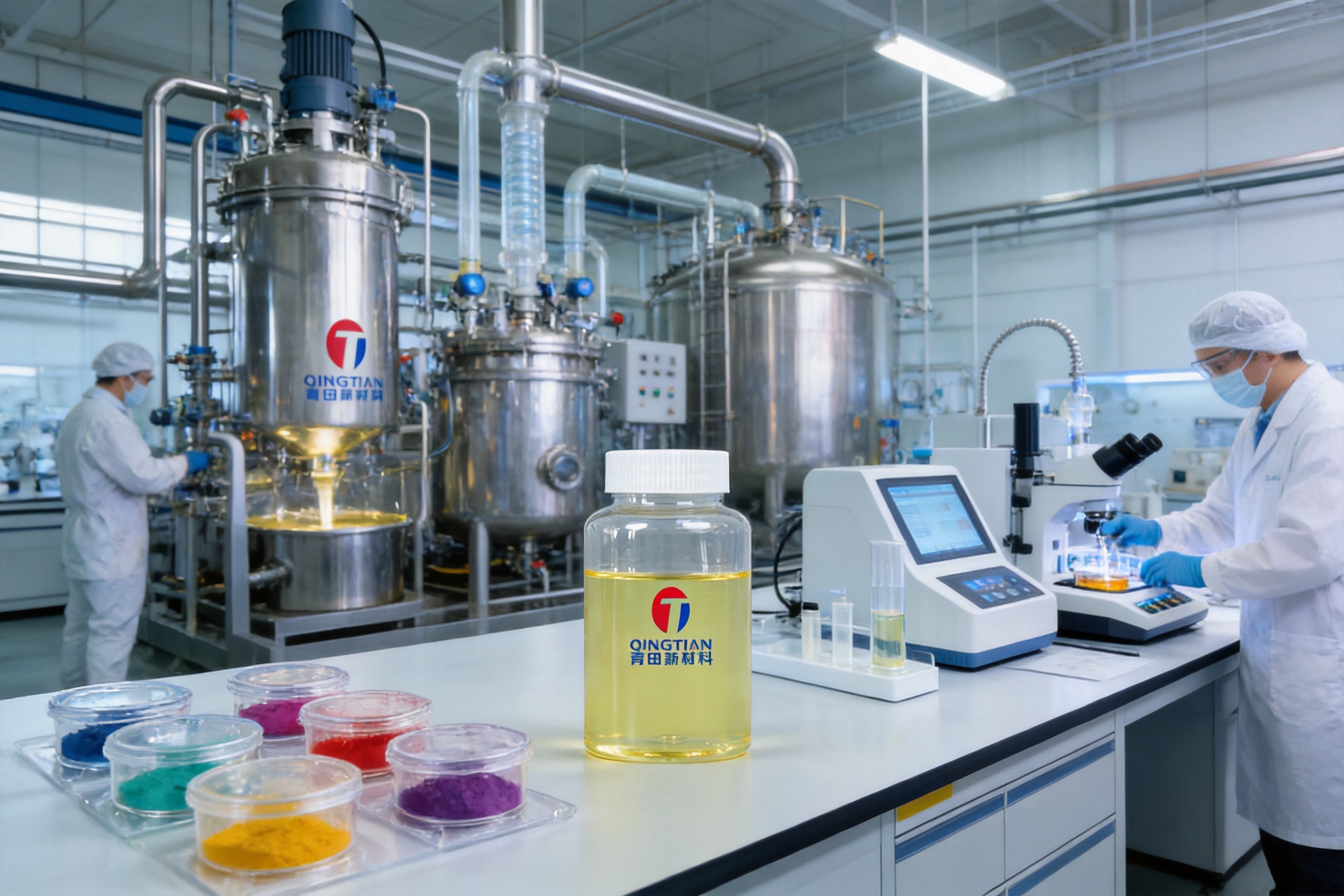
Modern coatings, printing inks, and adhesive systems increasingly depend on additives that can deliver stable dispersion, strong color development, controlled viscosity, and efficient manufacturing. As pigment loading rises and formulators seek lower-emission water-borne technologies, the dispersant becomes one of the most important components in the formulation. A suitable dispersant does more than keep pigment particles separated. It influences grinding efficiency, particle-size distribution, gloss, hiding power, tinting strength, storage stability, foam behavior, and the final appearance of the coated film.
DH-5300S is a water-based dispersant designed for demanding pigment dispersion applications. It stabilizes pigments through steric hindrance, reducing the tendency of particles to flocculate and form oversized agglomerates. The product is particularly suitable for resin-free pigment concentrates and can be used with a broad range of transparent and opaque pigments. Its strong viscosity reduction, low-foaming behavior, and ability to improve gloss make it a practical choice for manufacturers seeking more efficient grinding and more consistent color quality.
This article examines the technical role of DH-5300S, its performance advantages, its suitability for organic pigments, inorganic pigments, and carbon black, and the manufacturing and research strengths behind the product. It also considers formulation principles, quality control, application recommendations, sustainability considerations, and frequently asked questions for professional users.
Pigments are solid particles that must be distributed uniformly throughout a liquid medium. In their original form, pigment particles often exist as primary particles, aggregates, or agglomerates. During storage and processing, attractive forces such as van der Waals interactions, surface energy, and electrostatic effects can cause these particles to gather together. If the agglomerates are not adequately broken down and stabilized, the finished coating or ink may exhibit poor color strength, low gloss, sedimentation, flooding, floating, poor transparency, or inconsistent application behavior.
A dispersant helps overcome these problems by adsorbing onto the pigment surface. The dispersant molecule typically contains a pigment-affinic portion and a solvated or compatible chain that extends into the surrounding liquid. Once adsorbed, the molecules provide a barrier that reduces direct contact between pigment particles. In a steric stabilization mechanism, the solvated chains create physical resistance when two coated particles approach one another. This resistance helps prevent re-agglomeration after the grinding energy has separated the particles.
Water-borne systems present special challenges. Water has high surface tension and a strong hydrogen-bonding network. Many pigments are difficult to wet, and some surfaces may have limited compatibility with common aqueous binders. The formulator therefore needs an additive that can improve wetting, stabilize the pigment, reduce grinding viscosity, and remain compatible with the intended coating or ink system.
The performance of a dispersant cannot be judged by a single parameter. A dispersant that produces a low initial viscosity may not provide adequate storage stability. Another additive may stabilize one pigment effectively but perform poorly with carbon black or transparent organic pigments. A high-quality product must offer a balanced performance profile, allowing the user to achieve stable particle-size reduction without creating excessive foam or compromising final appearance.
DH-5300S is a water-based dispersant for pigment concentrates and water-borne coating, ink, and adhesive applications. It is designed to deflocculate pigment particles through steric hindrance stabilization. This mechanism supports efficient pigment separation and reduces the possibility of particle re-association during and after grinding.
The product is described as a standard additive for resin-free pigment concentrates. This characteristic is important for manufacturers that prepare concentrated pigment pastes separately from the final binder system. Resin-free concentrates can offer greater flexibility because one pigment paste may be incorporated into several compatible coating or ink systems. However, the absence of resin can also make stabilization more difficult. The dispersant must provide sufficient pigment affinity and steric protection without relying heavily on a polymeric binder to maintain the dispersion.
DH-5300S combines several performance features:
• Strong viscosity reduction during pigment grinding.
• Low foaming behavior that can reduce the need for additional defoamer during grinding.
• Improved gloss in the final coating or ink film.
• Broad suitability for transparent and opaque pigments.
• Strong color development with organic pigments and carbon black.
• Support for high-solid carbon black pastes.
• Capability of achieving carbon black paste particle sizes below 200 nanometers under suitable formulation and processing conditions.
• Suitability for inorganic pigments, including systems where viscosity control and stable pigment distribution are critical.
These characteristics position DH-5300S as a versatile additive for manufacturers that need a practical balance between dispersion efficiency, appearance, process control, and formulation flexibility.
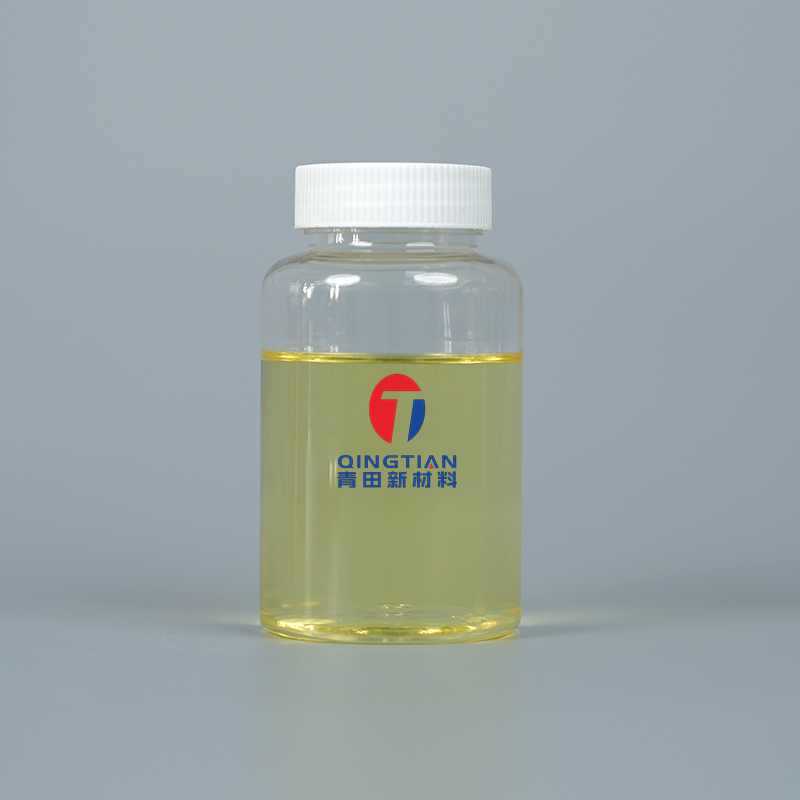
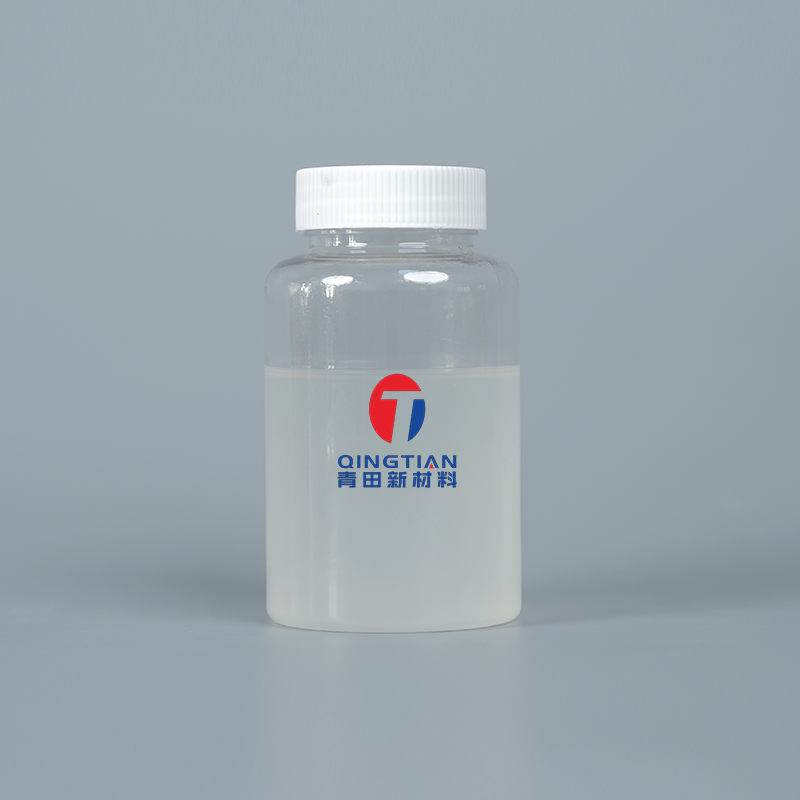
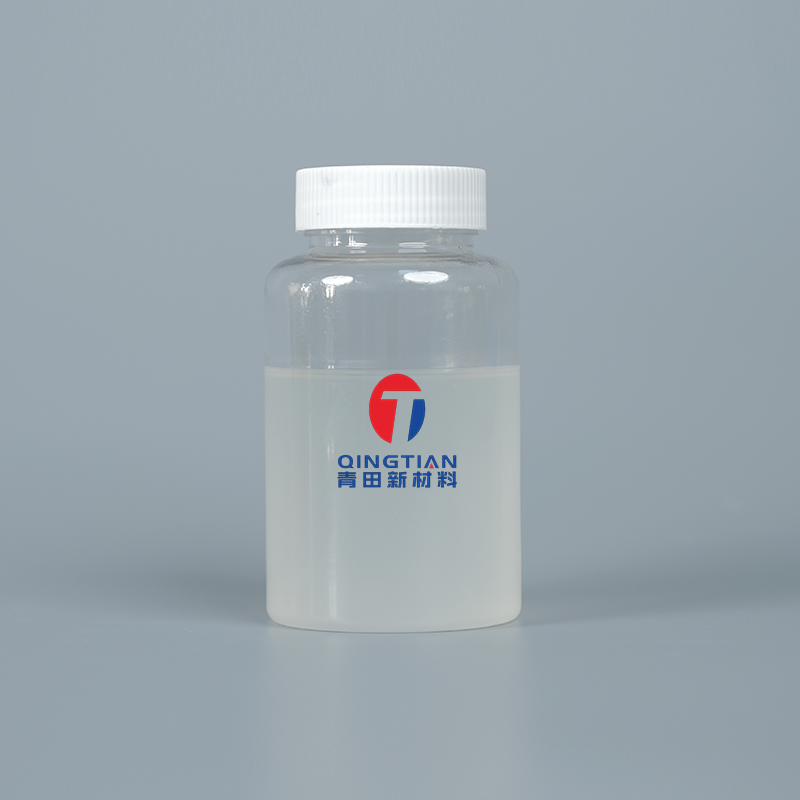
DH-5300S Water-based Dispersant
The central technical principle of DH-5300S is steric hindrance stabilization. When the dispersant adsorbs onto the surface of a pigment particle, its compatible molecular segments extend into the aqueous phase. If two pigment particles approach each other, the chains begin to overlap or become compressed. This creates an unfavorable condition that discourages the particles from coming into close contact.
Unlike stabilization methods that depend primarily on electrostatic repulsion, steric stabilization can provide advantages across a wider range of formulation conditions. Changes in pH, ionic strength, or the presence of other formulation ingredients may affect electrostatic systems significantly. A well-designed steric dispersant can offer more robust protection in complex water-borne formulations, although the final performance still depends on pigment surface chemistry, dosage, pH, temperature, binder compatibility, and processing conditions.
Deflocculation is especially important when the goal is to achieve maximum color strength and optical efficiency. In a flocculated system, pigment particles remain associated in loose clusters. These clusters may scatter light differently from well-separated particles and may reduce the effective surface area available for optical interaction. Deflocculation can improve the utilization of the pigment, supporting stronger color development and more consistent appearance.
For opaque pigments, improved dispersion can increase hiding power by distributing the pigment more uniformly throughout the film. For transparent pigments, it can help preserve clarity and color brilliance. For carbon black, which has a high surface area and strong tendency to form agglomerates, effective stabilization is particularly important for achieving deep blackness, high jetness, and a fine particle-size distribution.
Grinding viscosity affects nearly every stage of pigment concentrate production. A highly viscous paste may require greater mechanical energy, generate more heat, reduce mill throughput, and make transfer or filtration more difficult. High viscosity may also limit the achievable pigment loading or cause unstable flow during manufacturing.
By reducing the interaction between pigment particles, DH-5300S can lower the resistance to movement within the concentrate. This allows the grinding equipment to operate more efficiently and may help the manufacturer process higher pigment concentrations without an excessive increase in viscosity. Lower viscosity can also improve pumpability, simplify filling, and make the concentrate easier to incorporate into a final formulation.
Viscosity reduction should not be confused with simple dilution. Adding more water can reduce viscosity, but it also lowers solids content and may negatively affect drying, film properties, and color strength. A dispersant reduces viscosity by improving the state of pigment dispersion. This is a more valuable form of viscosity control because it can support both high solids and efficient pigment utilization.
Foam is a common issue in water-borne pigment grinding. High-speed dispersers, bead mills, pumps, and recirculation lines introduce air into the system. Surfactant-rich formulations may stabilize that air and create persistent foam. Excessive foam can reduce effective equipment volume, interfere with color evaluation, cause filling inaccuracies, and create surface defects in the finished film.
DH-5300S is characterized by low foaming behavior. This can reduce the amount of additional defoamer required during the grinding process. Avoiding unnecessary defoamer addition has several potential benefits. It can simplify the formulation, reduce the risk of surface craters or pinholes caused by incompatible defoamers, and make the production process easier to control.
Low foaming does not mean that foam will never occur. Foam depends on pigment type, surfactant package, mixing speed, equipment design, water quality, temperature, and filling conditions. Nevertheless, using a dispersant with naturally controlled foam behavior provides a stronger starting point for process optimization than relying on large quantities of corrective defoamer.
One of the practical strengths of DH-5300S is its suitability for a range of pigments, including transparent and opaque grades. Pigments differ substantially in surface polarity, particle morphology, oil absorption, specific surface area, and aggregation tendency. A dispersant that works with one pigment may not be equally effective with another. Broad pigment compatibility reduces the number of separate additive packages required by a manufacturer.
Organic pigments are widely used when bright shades, high chroma, and strong tinting strength are required. Many organic pigments have fine particle sizes and significant surface area. They can therefore create high viscosity during grinding and may be susceptible to flocculation after the grinding stage.
DH-5300S supports color development in organic pigment concentrates by promoting better particle separation and stabilization. Improved dispersion can help the pigment express its intended hue and chroma more effectively. It may also improve consistency between production batches because the pigment is less likely to form variable agglomerates during processing or storage.
In transparent organic pigment systems, maintaining a fine and uniform particle distribution is essential. Large agglomerates can create haze, reduce transparency, and produce a dull appearance. A sterically stabilizing dispersant can help preserve the optical characteristics of the pigment while supporting smooth processing.
Inorganic pigments are used extensively in architectural coatings, industrial coatings, protective systems, coil coatings, plastic coatings, and other applications requiring durability, opacity, weather resistance, or thermal stability. Examples include titanium dioxide, iron oxides, and other mineral-based colorants.
The information provided for DH-5300S identifies excellent viscosity reduction and suitability for inorganic pigments as important product attributes. This is valuable in systems containing high-density particles or pigments with high surface activity. Inadequate dispersion can lead to sedimentation, viscosity increase, poor hiding, and inconsistent color strength.
For inorganic pigments, the formulator should evaluate not only initial dispersion but also long-term settling behavior. Particle density, paste viscosity, storage temperature, and container geometry all influence sedimentation. DH-5300S can contribute to stable pigment distribution, but final anti-settling performance should be confirmed in the complete formulation using accelerated and real-time storage tests.
Carbon black is among the most technically demanding pigments to disperse. Its primary particles are extremely small, and the particles form complex chain-like aggregates. Carbon black also has a high surface area and can absorb substantial quantities of liquid and additive. These characteristics frequently result in high viscosity and strong agglomeration tendencies.
DH-5300S provides strong color development for carbon black and is suitable for medium-to-high pigment carbon black pastes. Under appropriate conditions, the product can support carbon black pastes with solid content up to 35 percent and a particle size below 200 nanometers. These results are highly relevant to manufacturers of black pigment concentrates, tinting systems, printing inks, and coatings that require deep color and fine dispersion.
Particle size below 200 nanometers should be understood as a performance target achieved under suitable pigment selection, additive dosage, premixing, grinding equipment, residence time, and measurement conditions. It should not be treated as an automatic result for every carbon black grade. Carbon black morphology, structure, surface treatment, and initial agglomeration state can strongly influence the final particle-size distribution.
Fine carbon black dispersion can improve jetness, undertone, gloss, and consistency. It can also reduce the risk of coarse particles creating specks, surface roughness, or filtration problems. At the same time, over-dispersion or excessive mechanical energy may not always be beneficial. The formulator should identify the point at which additional grinding produces limited improvement and may increase heat generation or equipment wear.
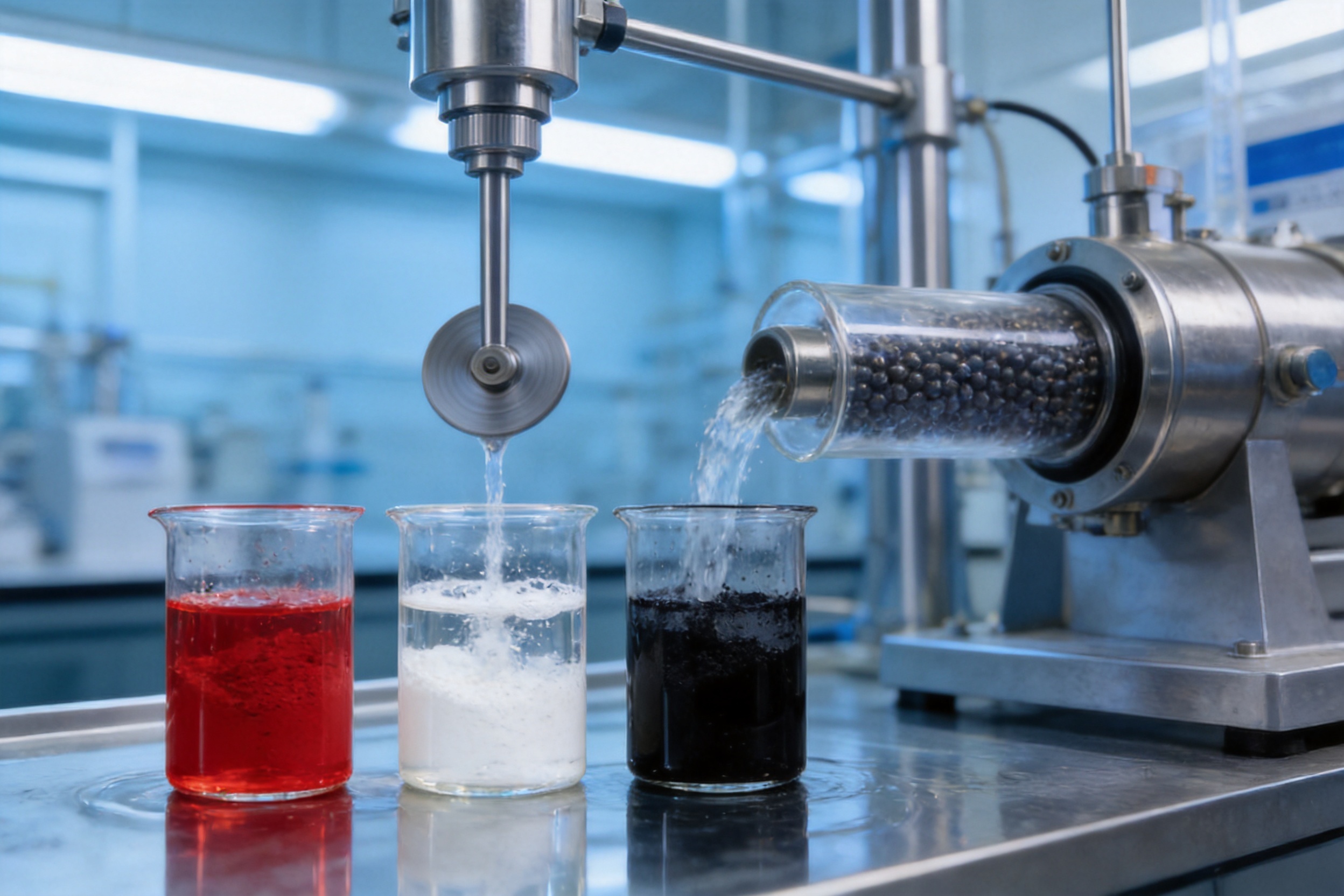
Product selection should be based on measurable performance rather than general claims. Compared with a conventional dispersant package that provides limited viscosity reduction or produces significant foam, DH-5300S offers several practical advantages for users seeking a more efficient process.
When a dispersant generates substantial foam, manufacturers may need to add a defoamer during grinding and possibly another defoamer during final formulation. This increases the number of variables in the system. Different defoamers can affect intercoat adhesion, recoatability, gloss, surface smoothness, cratering resistance, and compatibility with the binder.
The low-foaming behavior of DH-5300S can reduce this dependence. A simpler additive package may be easier to reproduce from batch to batch. It may also reduce the need for repeated adjustments when a concentrate is incorporated into different coating or ink systems.
Some dispersants function adequately at moderate pigment concentrations but become less effective as the solids content increases. High pigment loading increases particle interaction, viscosity, and the risk of incomplete wetting. DH-5300S is designed to support resin-free pigment concentrates and medium-to-high pigment carbon black pastes, making it suitable for manufacturers that want concentrated intermediates.
A high-strength pigment concentrate can improve logistics by reducing the volume of material that must be stored and transported. It can also provide greater flexibility at the point of use. The customer can adjust the final shade by dosing the concentrate into a compatible base rather than grinding each color separately.
Gloss is strongly influenced by surface smoothness, pigment distribution, particle size, binder compatibility, and film formation. Poorly dispersed pigments can create micro-roughness and uneven light scattering. DH-5300S supports a finer, more uniform dispersion that can contribute to improved gloss and a cleaner appearance.
Gloss improvement should be evaluated together with other appearance properties, including haze, transparency, hiding power, leveling, DOI, and surface defect frequency. In a complete coating formulation, the final result depends on resin selection, application thickness, curing conditions, substrate, and environmental conditions. The dispersant is an important contributor but not the only determinant.
A resin-free pigment concentrate can be used as a modular intermediate. This approach enables one production batch to serve multiple final formulations, provided that compatibility is confirmed. DH-5300S is therefore relevant to companies producing color concentrates for architectural coatings, industrial coatings, inks, plastics-related coatings, wood finishes, and specialty systems.
Broad pigment suitability can also reduce inventory complexity. Instead of maintaining separate dispersant technologies for each pigment family, a manufacturer may be able to standardize more of its formulation platform. This can simplify operator training, raw material purchasing, quality documentation, and troubleshooting.
The best results from any dispersant depend on correct processing. The following general sequence can help users evaluate DH-5300S in the laboratory or production environment. Final dosage and process parameters should be established through formulation trials.
Use clean, suitable-quality water and verify the condition of all raw materials before batching. Water hardness, dissolved salts, microbial contamination, and pH can affect water-borne dispersion stability. Pigments should be stored under conditions that prevent moisture uptake, contamination, and excessive compaction.
Review the pigment supplier’s technical information, including oil absorption, surface treatment, recommended wetting agents, particle-size distribution, and suggested additive levels. Carbon black grades with different structures can require notably different dispersant demand.
In many systems, DH-5300S should be introduced into a portion of the water before pigment addition. Premixing helps distribute the additive throughout the liquid phase and promotes early contact with the pigment surface. The exact order may vary depending on pigment type, equipment, and the presence of co-additives.
Begin agitation at a moderate speed sufficient to create circulation without unnecessarily entraining air. Add pigment gradually rather than dumping the entire amount into the vortex. Controlled addition can improve wetting and reduce the formation of dry agglomerates.
After premixing, the dispersion can be processed using a high-speed disperser, bead mill, basket mill, or other suitable equipment. Grinding conditions should be selected according to pigment hardness, target particle size, batch volume, and equipment capacity.
Monitor temperature during grinding. Excessive heat may alter viscosity, accelerate water loss, affect additive adsorption, or damage temperature-sensitive components. The user should also monitor viscosity at consistent shear conditions because pigment concentrates can show strong shear-thinning behavior.
After the target dispersion quality is achieved, the concentrate may be adjusted with water or incorporated into the final binder system. Additions should be made gradually to prevent localized incompatibility or sudden viscosity changes. If a defoamer, preservative, pH adjuster, or rheology modifier is required, each should be evaluated for compatibility with DH-5300S and the selected pigment.
Final adjustments should be made only after the concentrate has been thoroughly mixed. Color strength, viscosity, gloss, fineness of grind, storage stability, and application behavior should be measured before release.
Professional evaluation should include both laboratory screening and application testing. The following table summarizes useful criteria for comparing DH-5300S with alternative dispersant systems.
| Evaluation Area | What to Measure | Why It Matters |
|---|---|---|
| Wetting | Ease of pigment incorporation and absence of dry specks | Indicates whether the additive rapidly contacts and wets the pigment surface |
| Grinding viscosity | Viscosity at defined shear rates and temperatures | Shows processability, pumpability, and potential for higher pigment loading |
| Fineness of grind | Hegman value or equivalent particle-size method | Identifies coarse agglomerates that may affect appearance and filtration |
| Particle-size distribution | Average size, upper percentile, and stability over time | Helps evaluate deflocculation and resistance to re-agglomeration |
| Color development | Tinting strength, chroma, undertone, and shade consistency | Measures how effectively the pigment expresses its optical properties |
| Gloss | Gloss at the relevant measurement angle | Indicates surface uniformity and optical quality |
| Foam | Foam height, break time, and persistence during processing | Assesses the need for additional defoamer and process control |
| Storage stability | Viscosity, settling, syneresis, and particle size after aging | Confirms that the concentrate remains usable during its intended shelf life |
| Compatibility | Behavior after let-down into the target binder or coating | Prevents flocculation, flooding, floating, or film defects in the final product |
Comparisons should be conducted at equivalent pigment loading, similar total solids, matched processing energy, and controlled temperature. If one product is tested at a different dosage or under a different grinding protocol, the result may not represent a fair technical comparison.
The performance of a specialty additive depends not only on its chemical design but also on manufacturing consistency, quality control, research capability, and customer support. Suzhou Qingtian New Material Co., Ltd. specializes in raw materials for coatings, inks, and adhesives. Its product portfolio includes dispersants, leveling agents, defoamers, adhesion promoters, anti-settling agents, cooling agents, conductive agents, orange peel texture agents, texture powders, and wax powders.
This broad product range provides a useful platform for understanding the interactions among different coating additives. A dispersant does not operate in isolation. It must coexist with defoamers, rheology modifiers, leveling agents, resins, solvents or water, pigments, fillers, and functional additives. Experience across multiple additive categories can support more practical formulation recommendations and improve troubleshooting capability.
The company has built an experienced team that includes research and development specialists and technical personnel. Its development history includes the creation of an ice flower resin in 2016 and recognition as a National High-Tech Enterprise in 2020. These milestones indicate a continuing focus on material innovation and product development.
Research in coating additives requires more than synthesizing a new material. It involves studying adsorption behavior, compatibility, formulation stability, application performance, and scale-up. Additives must perform consistently across different pigments, production conditions, and end-use applications. Laboratory evaluation therefore needs to be connected to pilot and commercial manufacturing experience.
The company moved to Lingrui Intelligent Manufacturing Park in Zhangjiagang High-Tech Zone in 2021 to strengthen its research and production capacity. A modern production environment can support better process organization, material handling, batch traceability, equipment management, and quality control.
For water-based dispersants, manufacturing consistency is especially important. Small changes in molecular composition, solids content, neutralization, residual materials, or storage conditions can influence viscosity reduction, foam behavior, pigment affinity, and compatibility. Controlled production procedures help reduce batch-to-batch variation and support dependable customer results.
Advanced testing equipment supports the evaluation of both raw materials and finished additives. Depending on the product and application, useful testing may include viscosity measurement, solids determination, pH analysis, particle-size evaluation, fineness of grind, colorimetry, gloss measurement, foam testing, accelerated storage, and application-film assessment.
A strong quality system should connect incoming-material inspection, process monitoring, finished-product testing, retained samples, and customer feedback. This approach helps identify variation at an early stage and creates a technical basis for continuous improvement.
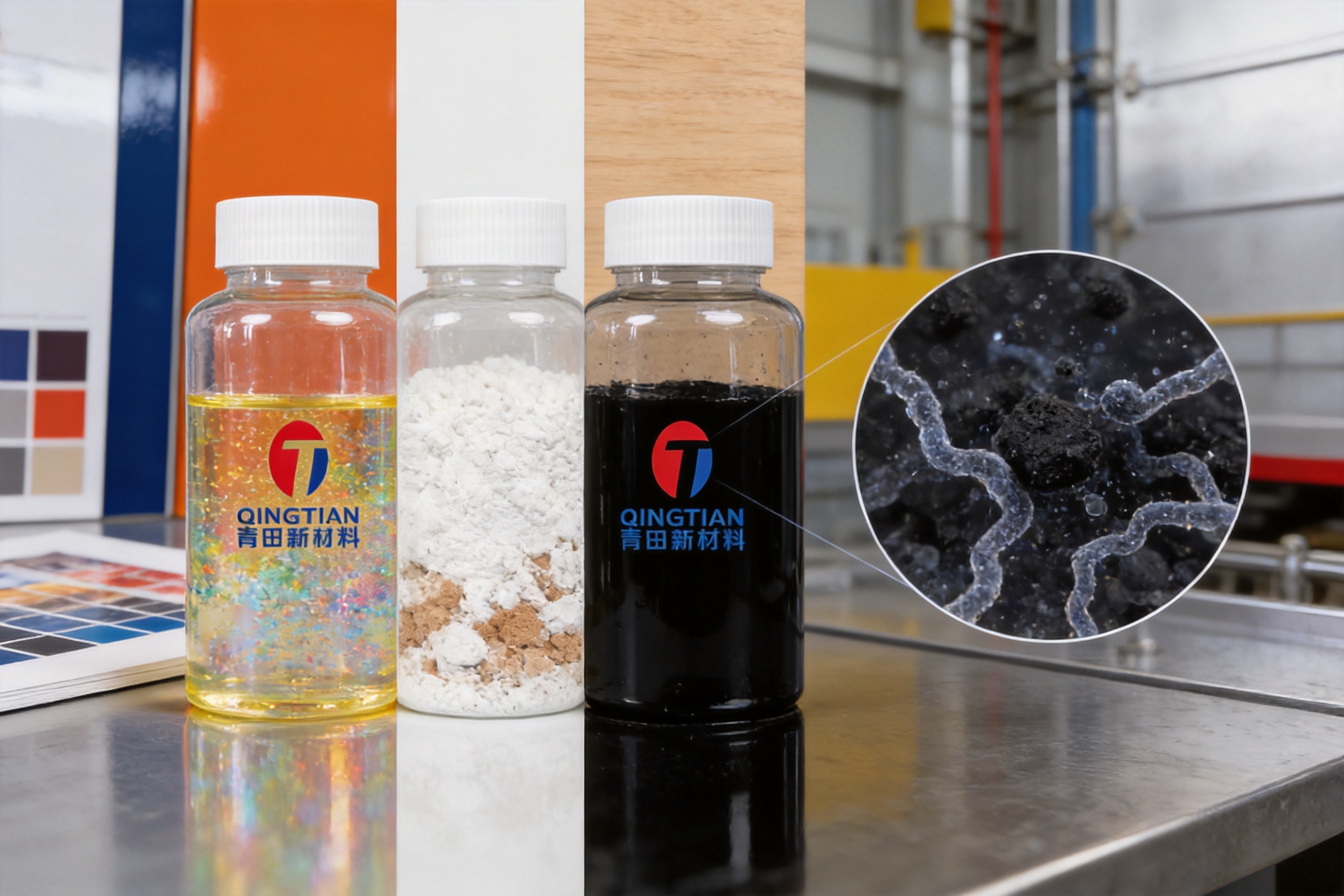
Industrial coatings require consistent color, smooth application, adhesion, durability, and reliable production throughput. DH-5300S can be used in pigment concentrates for metal coatings, machinery coatings, protective systems, and other industrial applications where stable dispersion and controlled viscosity are important.
In industrial environments, a stable pigment concentrate can support automated dosing and reduce manual color adjustment. Improved gloss and color development may also contribute to a more uniform appearance across large coated surfaces.
Steel and aluminum coil coatings are produced at high line speeds, making process consistency essential. Pigment dispersion quality affects viscosity, color uniformity, surface appearance, and coating performance. DH-5300S may be considered for water-borne or compatible pigment concentrate systems used in coil-coating formulations, subject to binder and curing compatibility testing.
Printing inks often require strong color development, fine particle size, stable viscosity, and low foam. Carbon black and organic pigments must be dispersed efficiently to achieve sharp images, strong density, and consistent print quality. The low-foaming behavior of DH-5300S can be valuable in high-speed ink manufacturing and application systems where air entrainment can create defects.
Wood coatings frequently place high demands on transparency, color clarity, surface smoothness, and gloss. Transparent organic pigments and finely dispersed colorants can help achieve a more attractive appearance while preserving the visual character of the substrate. A suitable dispersant can support uniform pigment distribution and reduce the risk of coarse particles affecting surface quality.
Glass and plastic substrates can reveal surface defects clearly. Poor dispersion may result in specks, haze, uneven color, or roughness. DH-5300S can be evaluated in water-borne coating systems for these substrates, with particular attention to adhesion, wetting, surface tension, and post-cure appearance.
Epoxy flooring and protective coatings often require strong pigment loading, smooth appearance, and resistance to settling during storage. Although the final performance depends on the complete resin and curing system, a well-dispersed pigment concentrate can improve color uniformity and simplify production.
The company’s broader product portfolio serves industries that include power batteries and photovoltaic panels. These fields often require high consistency, controlled particle size, and careful contamination management. When evaluating DH-5300S or related additives for advanced applications, users should conduct detailed compatibility, ionic contamination, electrical, thermal, and aging assessments appropriate to the specific system.
Water-borne technologies are increasingly important as manufacturers seek to reduce volatile organic compound emissions and improve workplace conditions. A water-based dispersant such as DH-5300S supports the development of aqueous pigment concentrates and coatings, although the overall environmental profile depends on the complete formulation, manufacturing process, packaging, transportation, and end-of-life behavior.
Process efficiency is another sustainability factor. Strong viscosity reduction can lower the energy required for mixing and grinding. Low foaming may reduce rework, filling interruptions, and the consumption of corrective defoamers. Higher pigment concentration can reduce the amount of water transported per unit of pigment and may improve warehouse utilization.
These benefits should be validated with actual production data. Energy consumption, batch time, waste generation, cleaning requirements, rejected batches, and additive dosage should be tracked before and after process changes. A technically effective dispersant can create meaningful operational benefits when its performance is integrated into a well-controlled manufacturing process.
Possible causes include insufficient dispersant dosage, poor pigment wetting, excessive pigment loading, unsuitable water quality, inadequate premixing, or incomplete grinding. The user should compare viscosity at controlled shear rates and verify whether the pigment has formed large agglomerates. Increasing additive dosage may help, but overdosing can sometimes reduce water resistance, alter foam behavior, or affect final film properties.
Persistent foam may result from high agitation speed, vortex formation, surfactant contamination, excessive air entrainment, or incompatible auxiliary additives. Check the mixing geometry and addition sequence before changing the chemistry. Since DH-5300S has low-foaming characteristics, it may reduce the baseline foam level, but the complete formulation and equipment must still be optimized.
Poor color development can be caused by flocculation, incomplete pigment wetting, excessive particle size, incorrect pigment dosage, or incompatibility after let-down. Compare the concentrate before and after incorporation into the final binder. If color strength declines after let-down, the pigment may be undergoing shock or flocculation in the final system.
Settling is influenced by pigment density, particle size, paste viscosity, storage temperature, and the balance between dispersant and rheology control. A concentrate that is well dispersed may still require an anti-settling strategy if the pigment is particularly dense. Evaluate both soft settling, which can be redispersed easily, and hard settling, which indicates a more serious stability problem.
Gloss loss may indicate coarse particles, flocculation, surface incompatibility, excessive defoamer, poor film formation, or application irregularities. Evaluate fineness of grind, particle-size distribution, surface defects, and the interaction between DH-5300S and the final binder. A dispersant can support gloss, but the complete coating must be optimized for leveling and curing.
Manufacturers considering DH-5300S should begin with a structured laboratory comparison. Select representative pigments from the intended product range, including at least one organic pigment, one inorganic pigment, and one carbon black if those materials are commercially important. Prepare concentrates at realistic pigment loadings rather than using only highly diluted screening systems.
Compare DH-5300S with the current dispersant under equal processing conditions. Record additive dosage, water content, pigment content, mixing speed, grinding time, temperature, and equipment type. Measure viscosity, fineness, particle size, color development, gloss, foam, and storage stability.
Following laboratory screening, conduct a pilot-scale trial. Scale-up can reveal issues that are not visible in a small laboratory batch, including heat transfer limitations, air entrainment, pump shear, residence time, and differences in grinding efficiency. The pilot trial should also evaluate filling, cleaning, and operator handling.
Finally, validate the concentrate in the customer’s actual coating, ink, or adhesive system. Confirm that the concentrate remains compatible after let-down and that the finished material meets application requirements. A successful dispersant is one that performs reliably from raw material addition through final use.
DH-5300S is a water-based dispersant that helps separate and stabilize pigment particles through steric hindrance. It is designed to reduce viscosity, limit re-agglomeration, improve color development, and support stable pigment concentrates.
Yes. It is described as a standard additive suitable for resin-free pigment concentrates. This makes it relevant to manufacturers that prepare concentrated pigment pastes for later incorporation into different binder systems.
Yes. Suitability for inorganic pigments and excellent viscosity reduction are identified as key product information. Final dosage and compatibility should be confirmed for each pigment grade and complete formulation.
Yes. DH-5300S is suitable for medium-to-high pigment carbon black pastes and supports strong color development. Under appropriate conditions, carbon black pastes with up to 35 percent solids and particle size below 200 nanometers can be achieved.
Its low-foaming behavior means that no defoamer is required during the grinding process in suitable systems, according to the product information. However, foam behavior depends on the entire formulation and equipment. Users should verify whether a defoamer is needed in the final application.
Yes. By supporting finer and more uniform pigment dispersion, DH-5300S can enhance gloss. The final result also depends on binder selection, pigment type, film thickness, leveling, curing, and application conditions.
Yes. The product is suitable for both transparent and opaque pigments. In transparent pigment systems, improved dispersion can help preserve clarity, color brilliance, and visual uniformity.
The product information indicates that a particle size below 200 nanometers can be achieved in medium-to-high pigment carbon black pastes under suitable conditions. The exact result depends on the carbon black grade, dosage, grinding equipment, processing time, temperature, and measurement method.
Dosage should be established through laboratory testing using the actual pigment and target solids content. Start with a reasonable screening range, then compare viscosity, particle size, color development, gloss, foam, and storage stability. Both underdosing and overdosing should be evaluated.
The supplier specializes in coating, ink, and adhesive raw materials and offers a broad portfolio of functional additives. Its experienced research team, modern production facility, testing capabilities, and application focus support product development and technical service for different industrial requirements.
No universal additive is suitable for every formulation without testing. DH-5300S is designed for a broad range of water-based pigment applications, but compatibility with the selected binder, resin, co-additives, pH range, and application conditions must be confirmed.
Recommended tests include viscosity, fineness of grind, particle-size distribution, color strength, gloss, foam, storage stability, freeze-thaw or temperature aging where relevant, compatibility after let-down, and final film performance. Pilot-scale and production trials are also recommended.
DH-5300S is a versatile water-based dispersant developed for efficient pigment stabilization and high-quality pigment concentrate production. Its steric hindrance mechanism supports deflocculation, while strong viscosity reduction helps improve grinding efficiency and processability. Low foaming can reduce dependence on additional defoamers, and improved dispersion can contribute to stronger color development, higher gloss, better hiding power, and more consistent appearance.
The product is suitable for transparent and opaque pigments, organic pigments, inorganic pigments, and carbon black. Its suitability for resin-free pigment concentrates provides formulation flexibility, while its performance in medium-to-high pigment carbon black pastes supports applications that demand high solids and fine particle size.
Behind the product is a company focused on coatings, inks, adhesives, and specialty additive technologies. Its experienced research team, broad product portfolio, modern manufacturing environment, advanced testing capabilities, and history of material innovation provide a foundation for consistent production and technical cooperation.
For manufacturers seeking to improve pigment dispersion, the most reliable approach is to evaluate DH-5300S under actual formulation and processing conditions. When properly selected and optimized, it can help reduce viscosity, simplify grinding, control foam, improve optical performance, and support the production of stable, high-quality water-borne pigment concentrates.
1. General principles of pigment wetting, dispersion, deflocculation, and steric stabilization in water-borne coating systems.
2. Technical literature on dispersant adsorption, pigment surface chemistry, and particle-size control.
3. Standard laboratory methods for measuring coating viscosity, fineness of grind, gloss, color strength, and storage stability.
4. Industry guidance on water-borne coatings, printing inks, pigment concentrates, and resin-free dispersion systems.
5. Product information for DH-5300S Water-Based Dispersant.
6. Technical information concerning coating, ink, adhesive, and specialty additive manufacturing processes.
7. Research and development practices for industrial dispersants and functional coating additives.
 Wholesale Paint/ Coating Additives Manufacturers
Custom Industrial Chemical Solutions Suppliers