русский
 Español
 Français
Home / Author / Tang Yuxi — Senior After-Sales Service Engineer / DH-3091S Water-Based Silicone-Free Leveling Agent for High-Performance Coatings
Tang Yuxi — Senior After-Sales Service Engineer

Content
Modern water-based coatings must satisfy increasingly demanding requirements for appearance, application control, recoatability, environmental performance, and mechanical durability. A coating may contain a carefully selected resin, high-quality pigments, and a well-designed additive package, yet still develop surface defects if the wet film does not spread evenly. Craters, pinholes, orange peel, uneven gloss, poor substrate wetting, and visible brush or spray marks can all reduce the perceived quality of the finished coating.
DH-3091S Water-Based Silicone-Free Leveling Agent is an acrylic-type, non-ionic additive designed to improve the surface behavior of water-based coating systems. It provides strong flow and leveling, supports pigment wetting and dispersion, reduces surface tension, and improves surface slip and scratch resistance. At the same time, it is formulated to maintain good compatibility with resins and to avoid negative effects on gloss and recoatability.
Its silicone-free composition makes it a useful option for formulators who need effective surface control without introducing the potential intercoat adhesion, recoating, or surface contamination concerns that may occur with certain silicone-based additives. The product is particularly suitable for high-viscosity water-based coatings where achieving a smooth, uniform, and mirror-like appearance can be difficult.
Developed for coatings, inks, adhesives, and related industrial formulations, DH-3091S combines application performance with formulation flexibility. Its performance remains stable across different system pH values, while its non-ionic nature helps it function in a broad range of water-based formulations. These characteristics allow formulators to improve film appearance and application quality without making major changes to the resin or pigment package.
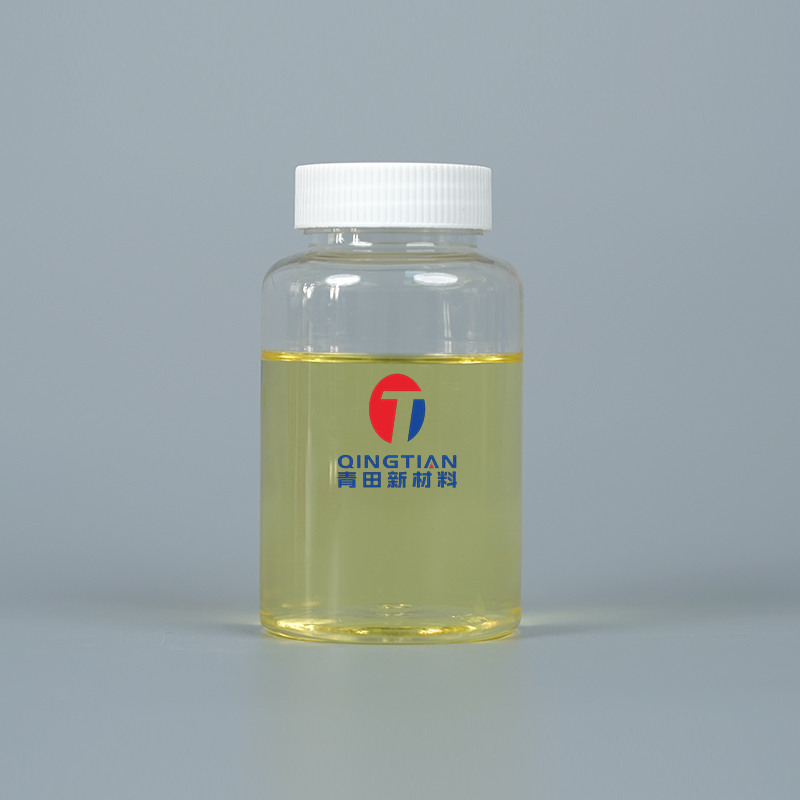
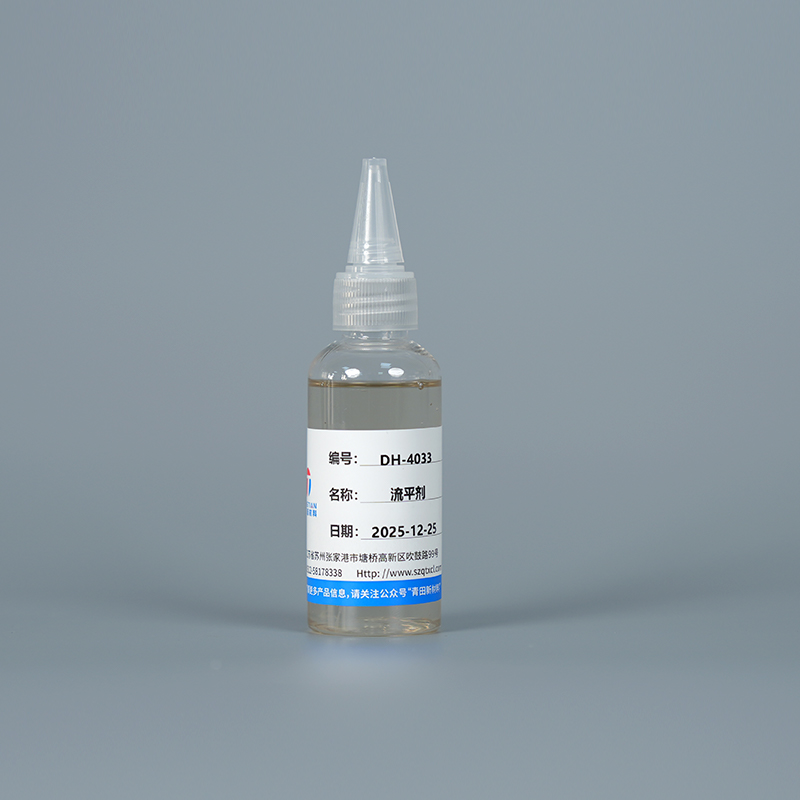
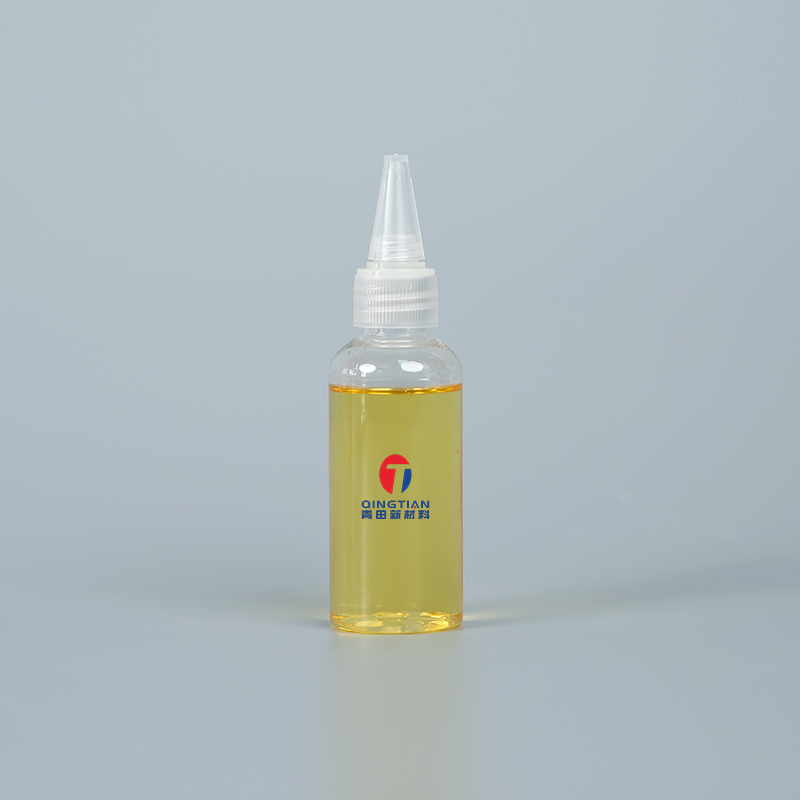
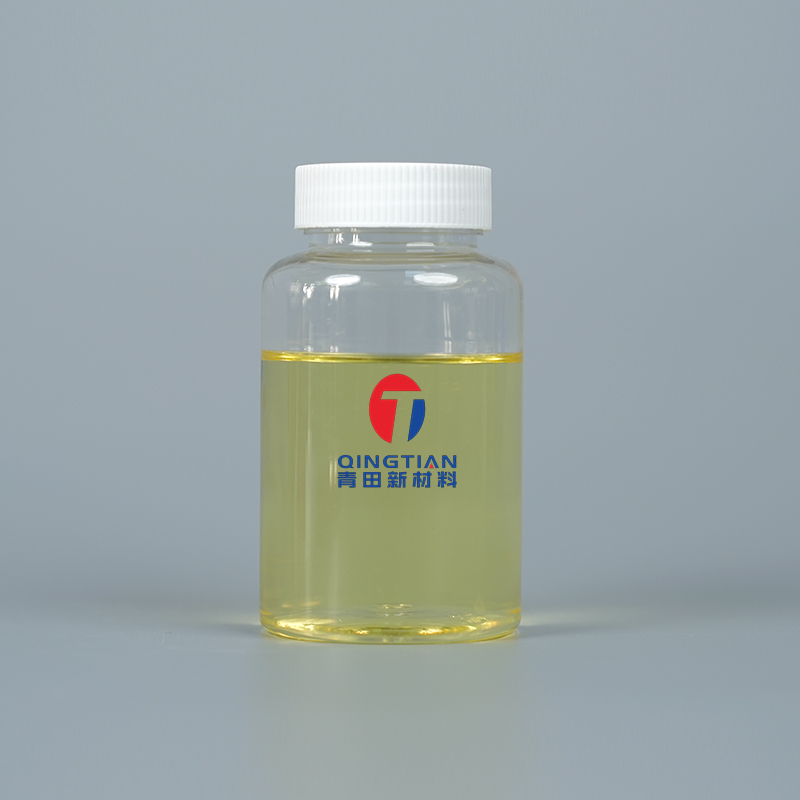
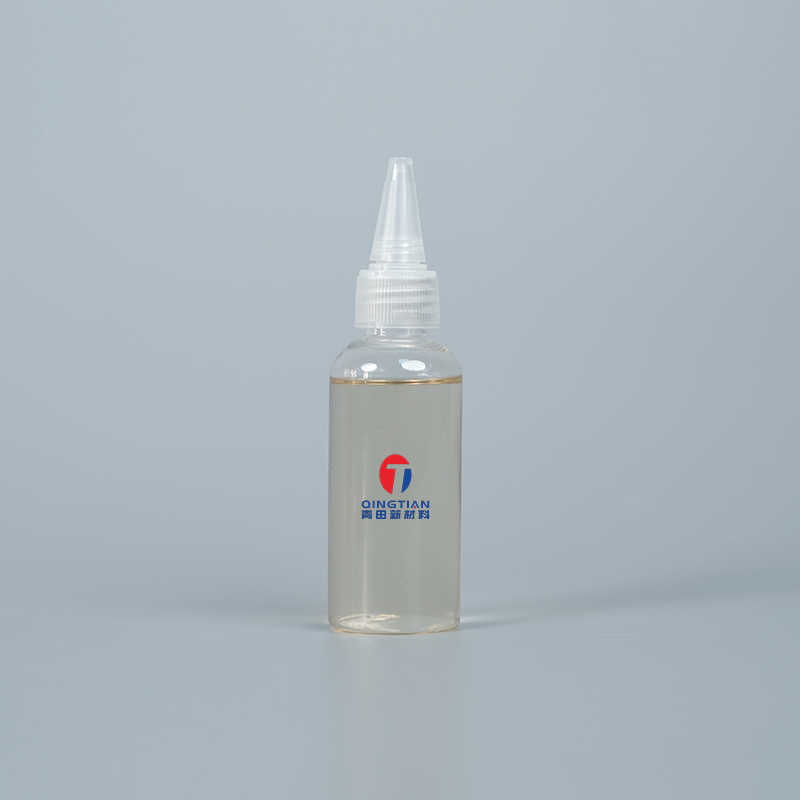
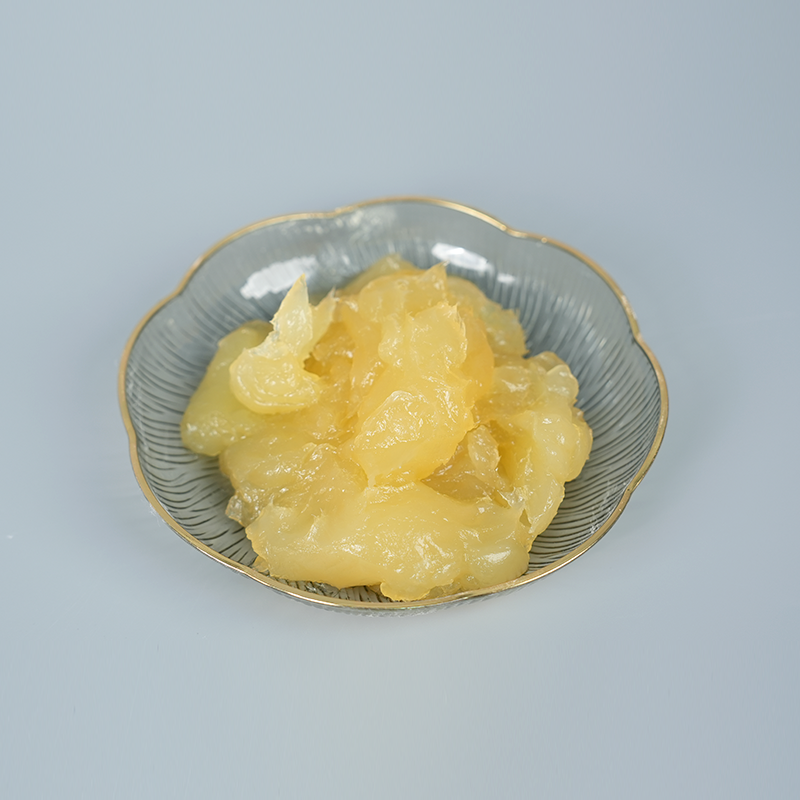
DH-3091S Water-based Silicone-free Leveling Agent
Leveling describes the ability of a wet coating film to flow after application and become smooth and uniform before drying or curing. Good leveling allows the coating to cover microscopic irregularities, reduce application marks, and produce consistent gloss. Poor leveling can leave ridges, brush marks, roller marks, spray texture, and other visual defects that remain visible after the film has dried.
Water-based coatings present several formulation challenges. Water evaporates differently from organic solvents, and the evaporation rate can change with temperature, humidity, airflow, and film thickness. In addition, water-based systems often contain polymer dispersions, surfactants, pigments, coalescents, rheology modifiers, and other ingredients that influence surface tension and viscosity. If these components are not balanced, the wet film may not flow sufficiently, or it may flow unevenly and create surface defects.
High-viscosity coatings are especially challenging. High viscosity may be required for sag resistance, edge coverage, build, vertical application, or special texture effects. However, the same high viscosity can restrict flow after application. A coating may remain in the shape created by the brush, roller, spray pattern, or applicator. In such cases, a suitable leveling agent can help the wet film relax and spread while maintaining the desired body of the formulation.
DH-3091S is designed for this type of application. It helps reduce the surface tension of the coating film and promotes controlled flow. By improving the balance between surface tension, viscosity, and interfacial movement, it supports a more uniform surface without requiring the complete reformulation of the coating.
DH-3091S is a water-based, silicone-free leveling agent based on acrylic technology. It is non-ionic and is intended for use in water-based coatings and related formulations. The product combines leveling performance with wetting and dispersing assistance, giving it a multifunctional role in a coating additive package.
The principal product characteristics include high viscosity and strong pseudoplasticity at low temperatures, outstanding flow and leveling, good compatibility with resins, excellent dispersing ability, stable performance across different pH values, and no adverse effect on formulation gloss when properly formulated and applied.
| Item | Product characteristic | Formulation value |
|---|---|---|
| Product name | DH-3091S Water-Based Silicone-Free Leveling Agent | Surface-control additive for water-based systems |
| Chemical type | Acrylic type | Supports broad compatibility with water-based resin systems |
| Ionic character | Non-ionic | Helps maintain flexibility across different formulation environments |
| Primary function | Leveling and flow improvement | Promotes smooth and uniform coating films |
| Additional functions | Wetting and dispersion assistance | Supports pigment incorporation and distribution |
| Surface behavior | Reduces surface tension | Improves wet-film spreading and surface uniformity |
| Compatibility | Good resin compatibility | Helps reduce the risk of gloss loss and surface defects |
| Application focus | Water-based coatings, especially high-viscosity systems | Suitable for demanding decorative and protective finishes |
The product should be evaluated within the complete formulation because performance depends on resin chemistry, pigment concentration, rheology, substrate energy, application method, film thickness, drying conditions, and the total additive package. Nevertheless, the combination of leveling, wetting, dispersion assistance, and silicone-free chemistry gives DH-3091S a useful position for formulators seeking more than a single-function additive.
The primary advantage of DH-3091S is its ability to improve coating flow and leveling. Once the coating is applied, the additive assists the wet film in spreading more evenly across the substrate. This can reduce visible brush marks, roller texture, spray irregularities, and local differences in film thickness.
Improved leveling is particularly important for coatings where appearance is a major part of product value. Furniture coatings, wood finishes, plastic coatings, metal finishes, glass coatings, decorative industrial coatings, and selected floor coating systems may all require a smooth and visually consistent surface. In these applications, a small difference in surface uniformity can significantly influence customer perception.
DH-3091S also supports leveling in high-viscosity water-based coatings. High-viscosity formulations often deliver useful application properties, but they can resist flow after application. The product helps the coating achieve a better balance between application body and final surface smoothness. This makes it possible to formulate for adequate build and sag resistance while still pursuing a refined appearance.
For applications requiring a highly smooth surface, DH-3091S can provide excellent leveling and help the coating achieve a mirror-like visual effect. This does not mean that the additive alone determines final appearance. Substrate preparation, film thickness, pigment selection, resin quality, spray technique, drying conditions, and filtration remain important. However, by improving the movement of the wet film, the additive can remove one of the major barriers to a smooth finish.
A mirror-like effect is valuable in high-gloss industrial coatings, decorative panels, selected plastic applications, premium furniture finishes, and other products where reflected light must remain uniform. Uneven flow creates distorted reflections and highlights surface defects. Effective leveling helps create a more continuous film surface, allowing the gloss potential of the resin and pigment system to be expressed more consistently.
Many formulators use silicone-based additives to reduce surface tension and improve slip. Silicone chemistry can be highly effective, but certain applications require a silicone-free solution. Concerns may include intercoat adhesion, recoating behavior, surface contamination, adhesion to subsequently applied layers, or compatibility with specific production processes.
DH-3091S provides surface-tension reduction and leveling without relying on silicone chemistry. This makes it an attractive alternative for water-based coating systems in which the formulator wants to minimize the potential complications associated with silicone-containing additives. The silicone-free approach can also simplify the design of coating systems that must be compatible with later printing, bonding, laminating, overcoating, or repair operations.
A silicone-free additive should not be considered automatically superior in every formulation. Different coating systems have different targets, and the final choice should be verified through laboratory and production testing. The advantage of DH-3091S is that it gives formulators an effective non-silicone route to surface control while retaining good compatibility and recoatability.
Recoatability is essential in multi-layer coating systems. A basecoat may need to receive a topcoat, clearcoat, printed layer, adhesive layer, or repair coat. If an additive migrates excessively to the surface or creates an incompatible interface, the next layer may exhibit poor wetting or reduced adhesion.
DH-3091S is designed to provide leveling without affecting recoatability. This characteristic is especially valuable in industrial production, where a coating may pass through several application and curing stages. Maintaining reliable intercoat behavior helps reduce the risk of delamination, fisheyes, uneven wetting, or unpredictable appearance changes during subsequent processing.
Recoatability must still be confirmed under the actual production conditions. Drying temperature, film age, surface preparation, overcoat chemistry, and additive dosage can all influence the result. The product’s good compatibility and silicone-free nature, however, provide a strong foundation for developing multilayer water-based systems.
In addition to surface leveling, DH-3091S assists the wetting and dispersion of pigments. Pigment dispersion affects color development, tinting strength, gloss, hiding power, storage stability, and surface appearance. Poorly wetted pigments may form agglomerates, increase viscosity, create color variation, and contribute to roughness or defects in the dried film.
The dispersing ability of DH-3091S can support more efficient pigment incorporation during manufacturing. When pigment particles are properly wetted and distributed, the formulation may show improved uniformity and more stable application behavior. Better pigment distribution can also contribute to a smoother film because large agglomerates and poorly dispersed particles are less likely to remain as visible surface irregularities.
DH-3091S is not a replacement for a dedicated pigment dispersant in every system. The need for a separate dispersant depends on pigment type, surface treatment, resin chemistry, pigment volume concentration, grinding equipment, and target storage stability. Its value lies in providing supplementary wetting and dispersion support while also performing the main leveling function.
Water-based coatings may be formulated at different pH values depending on resin stabilization, pigment treatment, preservative selection, neutralization, and rheology control. An additive that performs well only within a narrow pH window can create difficulties for manufacturers serving multiple product families.
DH-3091S is designed so that its performance is not significantly affected by the pH value of the system. This provides formulators with greater flexibility when adjusting pH for other formulation requirements. It can also reduce the need to maintain multiple leveling products for coating systems that differ moderately in pH.
Although the product is intended to provide stable behavior across different pH conditions, testing remains necessary when a formulation operates at an extreme pH or contains unusual ionic components. Compatibility should be evaluated after pH adjustment and again after storage, because some interactions appear only over time.
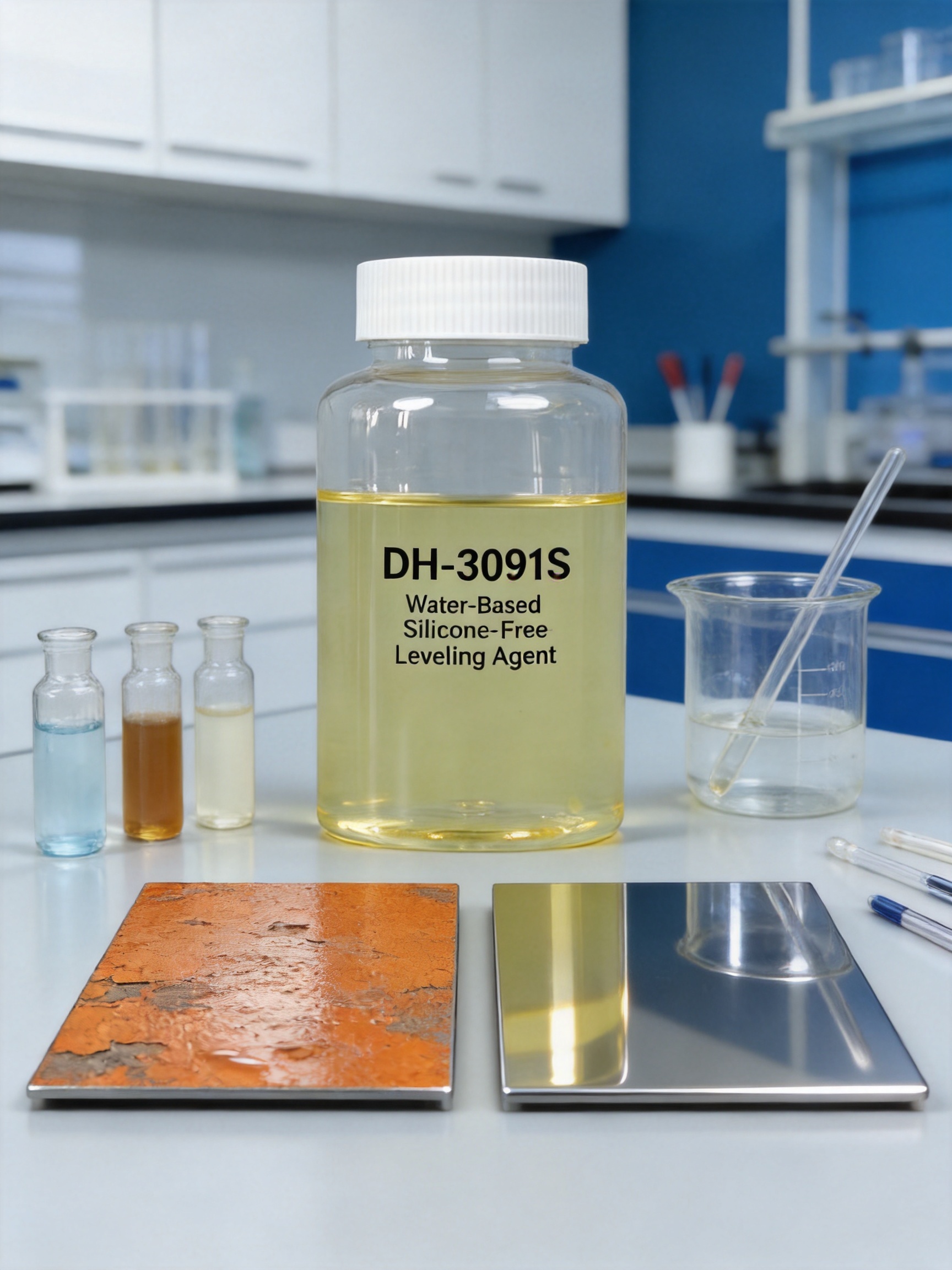
Acrylic-type additives are widely used in coating technology because their structure can be tailored for wetting, flow, compatibility, and surface modification. An acrylic leveling agent can be designed to interact favorably with water-based resins while still providing movement at the air-film and substrate-film interfaces.
For DH-3091S, acrylic chemistry supports the product’s good compatibility with resins. Compatibility is not only a question of whether an additive can be mixed into a coating without immediate separation. It also includes the effect on gloss, transparency, film formation, recoatability, drying, surface appearance, and storage stability. A compatible additive should improve the desired property without introducing new defects.
Non-ionic additives are not strongly dependent on the charge balance of the formulation. This can be helpful in water-based coatings containing anionic, cationic, or non-ionic components, although each system must still be tested. The non-ionic character of DH-3091S contributes to its formulation flexibility and supports its use across a range of water-based resin and pigment systems.
Non-ionic chemistry can also be advantageous when the formulation contains salts, neutralizing agents, or pH modifiers that might interact with strongly ionic additives. It does not eliminate all compatibility risks, but it provides a practical route to reducing charge-related interactions during development.
The silicone-free design is a central point of differentiation. Surface additives often migrate or orient at interfaces because their molecular structure is designed to influence surface tension. In some applications, excessive surface activity can contribute to problems during overcoating, printing, bonding, or adhesion testing.
DH-3091S is developed to deliver surface control while avoiding silicone-based chemistry. For manufacturers seeking a silicone-free product portfolio, this can simplify product positioning and support application requirements in which silicone is restricted or undesirable. It can also help formulators maintain a consistent surface strategy across coating layers.
The practical advantage should be assessed through a complete application test. A successful silicone-free formulation should be evaluated for initial gloss, leveling, slip, scratch resistance, recoating, intercoat adhesion, blocking, drying, and long-term appearance. DH-3091S is well suited to this evaluation because it combines several relevant surface properties in one additive.
Coating appearance is important, but the surface must also withstand handling and service conditions. DH-3091S enhances film surface slip, which can reduce friction during contact with equipment, packaging materials, or other coated surfaces. Improved slip may also support a smoother tactile impression and help the coating move more easily during processing.
Surface slip can contribute to improved scratch resistance by reducing the frictional forces created when another object contacts the film. The relationship is not automatic, because scratch resistance also depends on hardness, crosslink density, flexibility, cure, pigment volume concentration, and substrate adhesion. However, a surface with controlled slip may show better resistance to certain types of abrasion and marring.
For industrial applications, the combination of leveling, slip, and scratch resistance can provide a more balanced performance profile. The coating can look smoother, feel better, and tolerate routine handling more effectively. This is valuable for finished components, panels, furniture, plastic parts, metal products, and other surfaces that are inspected or handled frequently.
One of the most important advantages of DH-3091S is its good compatibility with resins. A leveling agent that produces a smooth surface but reduces gloss or creates haze may not be suitable for premium coatings. Similarly, an additive that improves wetting but causes craters, surface separation, or intercoat problems can increase manufacturing risk.
DH-3091S is intended to support leveling without causing gloss loss or surface defects when used appropriately. This is important for high-gloss coatings because gloss is strongly influenced by surface uniformity. The smoother and more continuous the dried film, the more consistently it reflects light.
Compatibility can be influenced by the type of emulsion or dispersion, molecular weight distribution, coalescent package, neutralization level, pigment surface treatment, defoamer, thickener, and preservative system. For that reason, the additive should be screened in the actual resin and pigment package rather than judged only in a simple water dilution.
Useful compatibility evaluations include visual inspection after mixing, drawdown comparison, gloss measurement, haze observation, storage stability, freeze-thaw testing when relevant, and recoat testing. Such testing helps determine the optimum dosage and confirms that the additive is supporting the total performance of the coating rather than only improving one laboratory observation.
DH-3091S exhibits high viscosity and strong pseudoplasticity at low temperatures. These rheological characteristics are relevant to production, storage, transport, and application. Water-based coatings may experience significant viscosity changes during seasonal temperature variation, warehouse storage, or transportation. An additive that behaves predictably under such conditions can help formulators maintain more consistent handling and application.
Pseudoplasticity means that viscosity decreases as shear increases. Under low shear, the material can retain body, while under higher shear caused by mixing, pumping, brushing, rolling, or spraying, it can flow more readily. This behavior can be useful in coatings because the formulation may need to remain stable in the container but spread effectively during application.
The contribution of DH-3091S should be considered together with the coating’s primary rheology modifier. The additive is not intended to replace all thickening or sag-control technologies. Instead, it can help improve the flow response of the system, especially where high viscosity and smooth application must coexist.
Low-temperature testing is recommended for products that will be used in winter conditions or transported through different climate zones. Evaluation may include viscosity at several temperatures, appearance after storage, ease of mixing, drawdown quality, spray behavior, and final film leveling. These tests can help determine whether the additive contributes to a more robust formulation window.
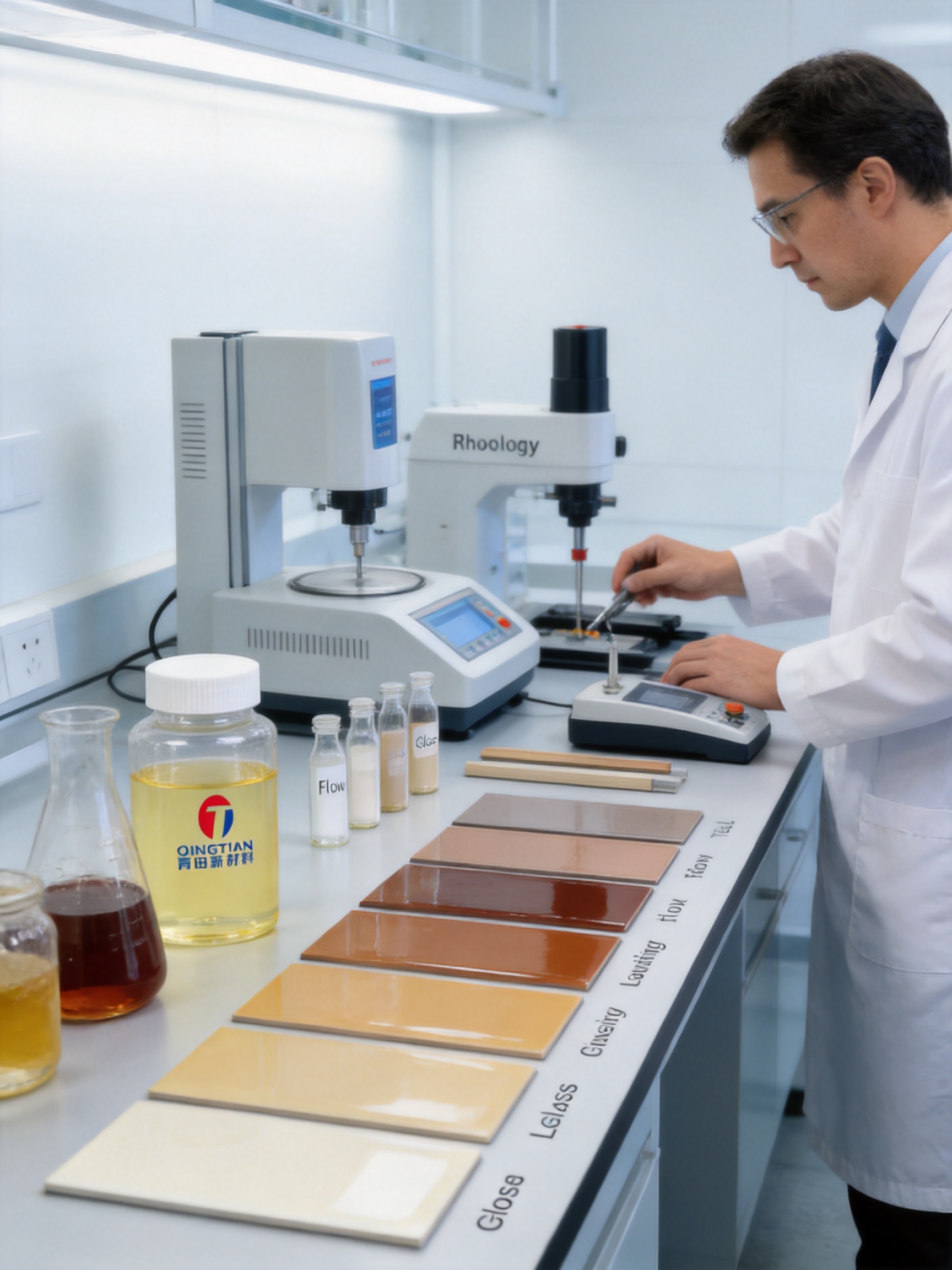
Industrial water-based coatings require a combination of productivity, appearance, adhesion, and durability. DH-3091S can help improve wet-film flow and produce a more uniform surface in protective and decorative industrial coatings. Its silicone-free chemistry may be useful where the coated component will later receive another layer or enter an adhesive or printing process.
Coil coating lines operate at high speed and require excellent control of wetting, film uniformity, drying, and surface appearance. A leveling agent can support the formation of a continuous film across metal substrates. DH-3091S may be considered for water-based coil coating formulations where gloss, smoothness, recoating, and efficient production are important.
Metal substrates often have different surface energies depending on pretreatment, alloy, roughness, and contamination. Laboratory drawdowns should therefore be supplemented with trials on representative steel or aluminum panels. The additive should be evaluated for wetting, edge behavior, gloss, adhesion, blocking, and compatibility with the complete coating stack.
Plastic surfaces may present low surface energy, molded-in stresses, release-agent residues, and irregular geometries. These factors can make wetting and leveling difficult. DH-3091S can assist the coating in spreading more evenly and may contribute to a smoother appearance on suitable plastic substrates.
Plastic coating development should include adhesion testing, because a smooth surface is not useful if adhesion is inadequate. Recoatability and resistance to handling should also be checked, particularly for consumer products and components that are assembled after coating.
Wood coatings often require a refined appearance, good touch, consistent gloss, and resistance to scratches caused by daily use. The leveling and slip properties of DH-3091S can support smooth water-based finishes for furniture, decorative wood panels, cabinets, and related products.
Wood is a variable substrate. Grain direction, porosity, sanding quality, moisture content, stain type, and sealer selection all affect the final appearance. DH-3091S can improve the coating’s surface behavior, but it should be integrated with suitable substrate preparation and a compatible primer or sealer system.
Glass has a smooth, relatively low-absorption surface that can reveal coating defects clearly. Uniform wetting and leveling are important for achieving consistent appearance. DH-3091S may be used in water-based glass coatings where surface smoothness, gloss, and subsequent layer compatibility are required.
Glass applications should be tested for adhesion, chemical resistance, water resistance, and cleaning resistance. The additive’s influence on surface slip and recoating may also be relevant in multilayer decorative or functional systems.
The company’s product portfolio serves UV-curing and other advanced coating applications. DH-3091S is identified as a water-based silicone-free leveling agent, so its suitability for a particular UV-related or hybrid system must be confirmed through testing. In waterborne UV-curable formulations, the additive may be considered when the system requires improved wet-film appearance before curing and good compatibility with subsequent processing.
Surface control is important in water-based printing inks and adhesives. Inks need uniform wetting, color development, and smooth film formation, while adhesives must spread consistently across the substrate without compromising bond performance. DH-3091S may provide useful flow and wetting support in suitable systems.
For adhesives, bond strength, open time, drying, substrate wetting, and aging must be prioritized. For inks, print quality, rub resistance, blocking, gloss, transfer, and overprinting should be evaluated. The appropriate dosage will depend heavily on the resin and application method.
A high-performance additive is not defined only by its chemical description. Consistent manufacturing, quality control, technical service, and application knowledge are equally important. DH-3091S is supplied by Suzhou Qingtian New Material Co., Ltd., a professional company specializing in raw materials for coatings, inks, and adhesives.
Founded in 2012, the company has developed an experienced team that includes research and development specialists and sales professionals. Its operations are supported by a modern production facility, advanced testing equipment, and research capabilities. These resources help connect product development with practical formulation requirements.
The company’s product portfolio includes dispersants, leveling agents, defoamers, adhesion promoters, anti-settling agents, cooling agents, conductive agents, orange peel texture agents, texture powders, and wax powders. This broad portfolio allows the company to understand additive interactions rather than viewing leveling as an isolated function.
For a coating formulator, this matters because a leveling agent is rarely used alone. Defoamers, dispersants, wetting agents, rheology modifiers, adhesion promoters, and surface additives can interact strongly. Experience across several additive categories can support more practical recommendations and help identify potential sources of incompatibility during formulation development.
The company’s development history also reflects a continuing investment in innovation. It created China’s first ice flower resin in 2016, received recognition as a National High-Tech Enterprise in 2020, and moved to Lingrui Intelligent Manufacturing Park in Zhangjiagang High-Tech Zone in 2021 to strengthen research and production capacity. These milestones indicate an emphasis on technical development, manufacturing expansion, and long-term product improvement.
The production of specialty coating additives requires more than simple blending. Raw material identity, purity, addition sequence, temperature control, mixing efficiency, reaction or modification conditions, filtration, filling, and storage all influence final performance. For a leveling agent, small changes in molecular distribution or active content may affect viscosity, compatibility, surface tension reduction, and coating appearance.
A modern production facility can help maintain controlled operating conditions and repeatable batch quality. Advanced testing equipment supports the measurement of physical and application-related properties. These capabilities are important for customers who need consistent performance from one delivery to the next, especially when products are used in automated industrial lines.
Manufacturing consistency is also important for scale-up. A formulation that works in a laboratory may behave differently when produced in hundreds or thousands of kilograms. Reliable process control helps reduce the gap between laboratory evaluation, pilot production, and commercial manufacturing.
Coating technology changes as customers seek lower emissions, water-based alternatives, higher productivity, better durability, and more specialized surface effects. Research and development capability enables an additive manufacturer to respond to these changing requirements.
For DH-3091S, development involves balancing several properties that can sometimes conflict. Strong surface activity may improve leveling but harm recoatability. High compatibility may reduce the strength of surface modification. Increased slip may affect adhesion or printability. A useful product must provide a practical balance rather than maximizing only one characteristic.
The company’s R&D orientation supports this type of balance. By working across coatings, inks, adhesives, and specialty additives, the technical team can consider the full application environment, including substrate, application method, film formation, and subsequent processing.
Advanced testing equipment supports objective evaluation of additive performance. Relevant tests may include viscosity measurement, surface tension assessment, gloss measurement, leveling observation, scratch resistance, slip behavior, pigment dispersion, storage stability, and recoatability. The exact test program should reflect the intended application.
Comparative testing is particularly valuable. DH-3091S should be compared with the customer’s current additive at equivalent active dosage or at optimized dosage, using the same resin, pigment, substrate, application method, and drying conditions. This helps identify whether the product provides better leveling, improved compatibility, a wider formulation window, or a more favorable balance of properties.
Technical evaluation should include both immediate and aged performance. Some surface defects appear only after storage, while certain intercoat problems become visible after the overcoat is applied. A complete evaluation therefore includes fresh formulation, accelerated storage where appropriate, production simulation, and final performance testing.
DH-3091S should be incorporated according to the requirements of the specific coating system. The optimal addition point may be during the let-down stage, during premix preparation, or at another stage determined by the resin and pigment package. The formulator should avoid assuming that one addition method is suitable for every formulation.
A practical development sequence begins with a small laboratory screening. Prepare a control formulation without the additive, then prepare several versions using gradually varied dosage levels. Compare wetting, flow, leveling, gloss, surface defects, drying, and recoatability. The objective is to determine the lowest effective dosage that delivers the required surface improvement without producing excessive slip or other unwanted changes.
High-shear dispersion should be monitored carefully. If the additive is added too early or exposed to unsuitable shear conditions, its performance may not be optimized. In some formulations, it may be more effective after pigment grinding, while in others it may be incorporated during the final adjustment stage. The supplier’s technical team can assist with system-specific evaluation.
Compatibility testing should be performed before commercial adoption. Observe the formulation immediately after addition and after storage. Check for haze, separation, viscosity drift, foam changes, settling, color variation, and gloss changes. Draw down the coating on the intended substrate and evaluate both appearance and final film properties.
| Development stage | Recommended evaluation | Purpose |
|---|---|---|
| Initial screening | Visual compatibility, viscosity, wetting, and drawdown | Identify suitable dosage range |
| Surface evaluation | Flow, leveling, gloss, slip, and defect inspection | Confirm surface-performance improvement |
| Recoat evaluation | Overcoat wetting, intercoat adhesion, and appearance | Verify multilayer compatibility |
| Storage evaluation | Viscosity, separation, settling, odor, and appearance | Assess formulation stability |
| Application simulation | Brush, roller, spray, or production-equivalent application | Confirm practical processing behavior |
| Final performance | Scratch resistance, adhesion, chemical resistance, and gloss retention | Validate end-use suitability |
The additive should be stored and handled according to the supplier’s technical documentation and applicable site procedures. Good manufacturing practice includes protecting the material from contamination, using clean equipment, recording batch information, and ensuring that all operators understand the addition sequence.
Competition in the leveling-agent market includes silicone-based additives, conventional acrylic additives, fluorinated surface modifiers, wetting agents used as secondary leveling aids, and multifunctional polymeric additives. DH-3091S offers a distinct balance of properties within this competitive landscape.
Compared with a conventional single-function wetting agent, DH-3091S provides stronger emphasis on final-film leveling, surface smoothness, slip, and scratch resistance. Compared with some silicone-based products, it offers a silicone-free route that may be better suited to applications requiring reliable recoating or subsequent adhesion. Compared with an additive that works only in a narrow pH or resin range, its non-ionic design and pH stability provide broader formulation flexibility.
These advantages should be understood as formulation benefits rather than universal claims that one product will outperform every competitor in every system. The strongest comparison is achieved through controlled testing under the customer’s actual conditions. In many cases, the value of DH-3091S will be demonstrated by its ability to simplify additive selection, reduce surface defects, maintain gloss, and preserve the performance of later coating layers.
Another competitive advantage is the supplier’s broader technical platform. A manufacturer offering dispersants, defoamers, adhesion promoters, anti-settling agents, texture products, and wax powders can help customers evaluate additive packages more systematically. This is useful when a surface defect has multiple causes, such as poor pigment dispersion combined with foam, unsuitable rheology, and inadequate leveling.
Industrial customers typically require more than a container of additive. They need stable supply, responsive communication, application guidance, documentation, and the ability to address formulation changes. A supplier’s service capability can directly influence the speed and reliability of product development.
Suzhou Qingtian New Material Co., Ltd. focuses on innovation, quality, service, and win-win cooperation. Its team structure combines R&D expertise with sales support, allowing technical requirements to be communicated from the customer to the development and production functions. This can be particularly valuable when the customer is converting from solvent-based technology to water-based technology or adapting a coating for a new substrate.
Customer cooperation may involve selecting a suitable dosage range, reviewing resin compatibility, comparing application methods, analyzing surface defects, or designing a test plan. In larger projects, it may also include production trials and performance confirmation under actual operating conditions.
Reliable communication is important because leveling performance is sensitive to the full formulation. A technical discussion should include the resin type, solids content, pigment package, pH, viscosity profile, application method, target gloss, film thickness, drying conditions, substrate, recoat requirements, and known defects. This information allows the additive to be evaluated in a meaningful context.
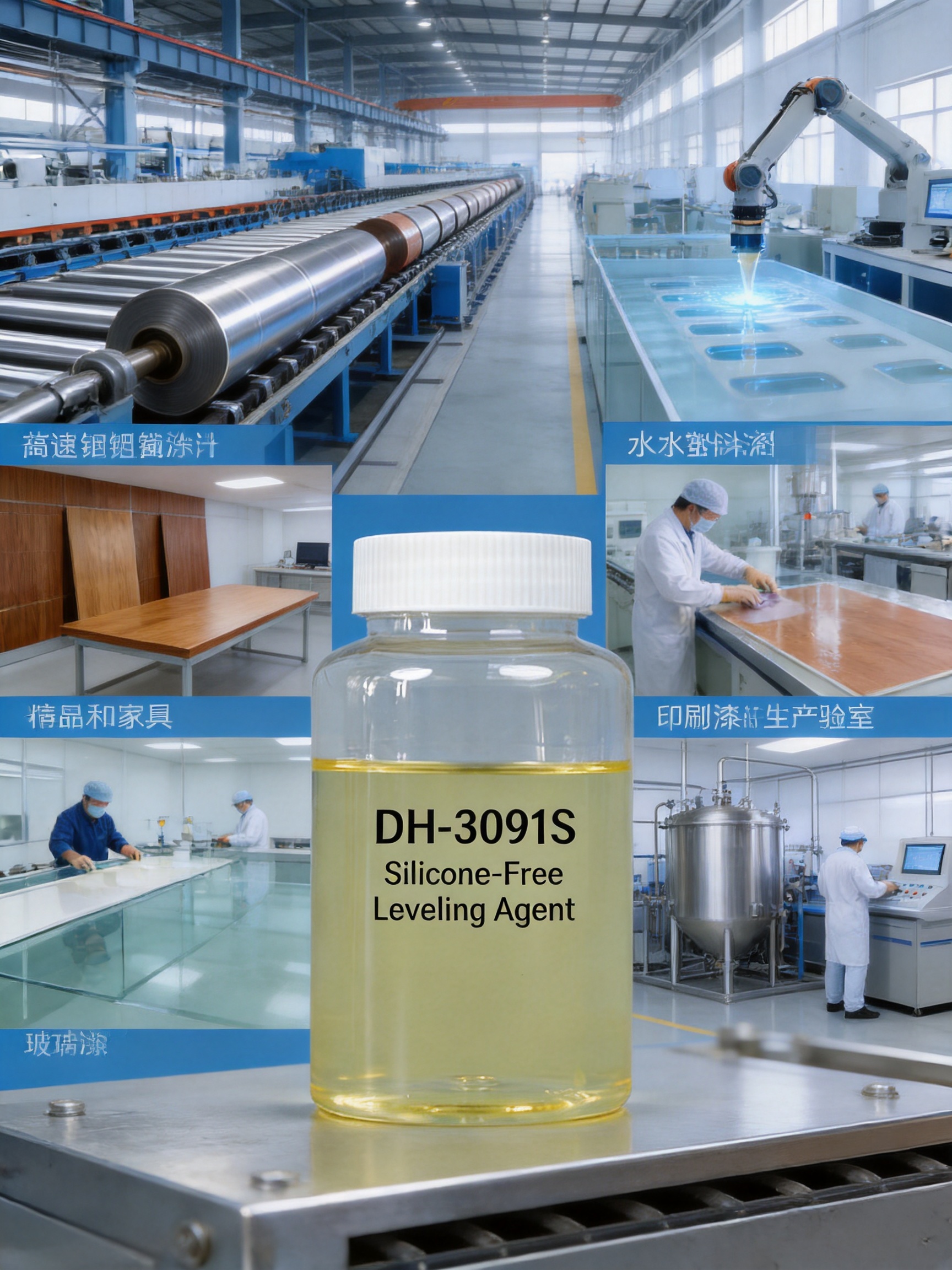
Water-based coatings are increasingly selected to reduce reliance on traditional solvent systems and to meet changing environmental and workplace requirements. However, replacing a solvent-based system with a water-based system is not simply a matter of adding water. The formulation must be redesigned to achieve suitable wetting, flow, drying, film formation, adhesion, and appearance.
Leveling additives play an important role in this transition. They help water-based films approach the smoothness and visual quality that users often associate with solvent-based coatings. DH-3091S supports this objective by improving flow, reducing surface tension, assisting pigment dispersion, and maintaining compatibility with water-based resins.
The silicone-free design may also support a more controlled material strategy for manufacturers who prefer to avoid silicone-containing surface modifiers. The environmental and regulatory profile of the final coating must be assessed as a complete system. Product compliance depends on all ingredients, manufacturing conditions, regional regulations, and the intended end use.
Responsible formulation development should consider not only initial appearance but also durability, service life, waste reduction, and production efficiency. A coating that levels more effectively may reduce rejects, rework, polishing, and material loss. These practical benefits can contribute to more efficient manufacturing.
Orange peel is a textured surface resembling the skin of an orange. It may result from inadequate flow, rapid drying, high viscosity, poor atomization, unsuitable film thickness, or surface-tension differences. DH-3091S can help improve flow and reduce surface-tension-related irregularity, but application settings and rheology must also be optimized.
Craters and fish eyes are often associated with contamination, incompatibility, silicone residues, oil, dust, or localized surface-tension gradients. A silicone-free leveling agent such as DH-3091S may be appropriate when the formulator wishes to avoid introducing additional silicone-related surface risks. Nevertheless, contamination control and substrate cleanliness remain essential.
Brush and roller marks can remain when the coating does not flow sufficiently after application. The additive may help the film relax and become more uniform. The result also depends on application viscosity, open time, substrate porosity, applicator selection, and drying speed.
Uneven gloss can be caused by variations in film thickness, pigment dispersion, drying rate, substrate absorption, or surface texture. DH-3091S supports surface uniformity and pigment wetting, which may help improve gloss consistency. Drawdowns should be compared under controlled lighting and measured with suitable gloss equipment.
Poor recoat wetting may occur when the first layer has excessive surface activity, insufficient surface energy, contamination, or incomplete coalescence. DH-3091S is designed not to adversely affect recoatability, but the complete multilayer system must be tested. Adjustments to dosage, drying conditions, surface preparation, or overcoat selection may be required.
DH-3091S is a strong candidate when a water-based coating requires improved leveling, reduced surface tension, good resin compatibility, and silicone-free chemistry. It is particularly relevant when the coating has high viscosity, requires a smooth or high-gloss finish, must be recoated, or needs supplementary pigment wetting and dispersion support.
It may be less suitable as a standalone solution when the main problem is severe substrate contamination, inadequate curing, extreme pigment flocculation, major foam instability, or insufficient adhesion. In such cases, the formulation must address the root cause rather than relying solely on a leveling additive.
Before selection, the formulator should answer several questions:
Is the coating water-based and compatible with an acrylic, non-ionic additive?
Does the coating require a silicone-free surface modifier?
Is the primary defect related to flow, leveling, surface tension, or film uniformity?
Must the coating be overcoated, printed, bonded, or repaired?
Is high viscosity required for application or sag control?
Are gloss retention, surface slip, and scratch resistance important?
Will the coating experience variable pH, temperature, or storage conditions?
If the answer to several of these questions is yes, DH-3091S should be included in the comparative screening program.
DH-3091S is a water-based, acrylic-type, silicone-free leveling agent. It is non-ionic and is designed to improve flow, leveling, surface wetting, pigment dispersion assistance, slip, and scratch resistance in suitable coating systems.
Yes. One of its key advantages is its ability to provide excellent leveling in high-viscosity water-based coating applications. It helps the coating flow more evenly after application while supporting the need for formulation body and application control.
No. The product is specifically designed as a silicone-free leveling agent. This makes it suitable for formulators seeking surface control without silicone-based chemistry.
DH-3091S provides excellent dispersing ability and assists the wetting and dispersion of pigments. It may supplement a dedicated dispersant, although the need for a separate dispersant depends on the pigment, resin, and formulation design.
The product is designed to improve leveling without adversely affecting formulation gloss. Actual gloss depends on the complete formulation, substrate, film thickness, drying conditions, and dosage, so confirmation through drawdown and gloss testing is recommended.
DH-3091S is designed to provide excellent leveling without affecting recoatability. Multilayer systems should still be tested under actual drying, aging, and overcoating conditions.
Its performance is designed to remain stable across different pH values of the system. Extreme pH conditions and unusual ionic ingredients should be evaluated in the customer’s specific formulation.
DH-3091S enhances surface slip and may improve resistance to certain types of scratching and marring. Final scratch resistance also depends on resin hardness, curing, crosslinking, film thickness, and substrate adhesion.
The product is described as having good compatibility with resins used in water-based formulations. Compatibility should be verified with the specific acrylic, polyurethane, epoxy, polyester, or hybrid resin system under consideration.
The optimum dosage should be established through a controlled ladder study. Compare a blank formulation with several dosage levels and examine leveling, gloss, wetting, surface defects, recoatability, slip, storage stability, and final film performance.
It is not automatically a replacement for a defoamer or dedicated dispersant. DH-3091S provides dispersion assistance, but the complete additive package should be selected according to the coating’s foam, pigment, rheology, and storage requirements.
Potential application areas include water-based industrial coatings, steel and aluminum coil coatings, plastic coatings, wood coatings, glass coatings, selected UV-related waterborne systems, printing inks, adhesives, and other coating-related formulations.
The company supplies several additive categories, including dispersants, leveling agents, defoamers, adhesion promoters, anti-settling agents, conductive agents, texture products, and wax powders. This broad experience can help customers evaluate additive interactions and develop more balanced formulations.
Customers can provide information about the resin, pigments, pH, viscosity, application method, substrate, gloss target, film thickness, and defects. This information supports a more relevant technical evaluation and helps establish a suitable test plan for DH-3091S.
DH-3091S Water-Based Silicone-Free Leveling Agent is designed to solve several common challenges in modern water-based coatings. Its acrylic, non-ionic chemistry provides a practical combination of compatibility and formulation flexibility. Its primary leveling function improves flow and surface uniformity, while its ability to reduce surface tension supports wetting and the development of smooth films.
The product is especially valuable for high-viscosity water-based coatings that require a refined, mirror-like appearance. It also assists pigment wetting and dispersion, maintains performance across different pH conditions, supports recoatability, avoids silicone chemistry, and enhances surface slip and scratch resistance.
Its advantages over conventional alternatives are based on balance. DH-3091S is not limited to one surface property; it combines leveling, wetting, dispersion assistance, compatibility, gloss retention, and silicone-free design. This balance can help formulators simplify product selection and improve the reliability of their coating systems.
The product is supported by Suzhou Qingtian New Material Co., Ltd., a company with experience in coating, ink, and adhesive raw materials. Since 2012, the company has built R&D, production, testing, and service capabilities around specialty additives. Its modern manufacturing facility, advanced testing equipment, broad product portfolio, and history of technical development provide a strong foundation for consistent product supply and application support.
For customers developing or upgrading water-based coatings, the recommended approach is to evaluate DH-3091S in the complete formulation. Controlled dosage screening, comparative drawdowns, storage testing, recoat evaluation, and application simulation will reveal its practical value. When properly selected and incorporated, DH-3091S can help manufacturers achieve smoother surfaces, more consistent gloss, better application appearance, and a more dependable route to high-performance silicone-free water-based coatings.
1. Internal product information for DH-3091S Water-Based Silicone-Free Leveling Agent.
2. Internal company information for Suzhou Qingtian New Material Co., Ltd., including product portfolio, development milestones, manufacturing resources, and technical capabilities.
3. General principles of coating formulation, wetting, surface tension, pigment dispersion, rheology, and film leveling.
4. General industrial practices for evaluating gloss, recoatability, adhesion, scratch resistance, storage stability, and coating surface defects.
5. General technical guidance for the development and comparative testing of water-based coatings, inks, adhesives, and specialty additive packages.
 Wholesale Paint/ Coating Additives Manufacturers
Custom Industrial Chemical Solutions Suppliers
Wholesale Paint/ Coating Additives Manufacturers
Custom Industrial Chemical Solutions Suppliers