русский
 Español
 Français
Home / Author / Tang Yuxi — Senior After-Sales Service Engineer / Fluorine-Modified Silicone-Free Leveling Agent for High-Performance Coatings
Tang Yuxi — Senior After-Sales Service Engineer

Content
Modern coating systems are expected to deliver far more than basic color coverage and surface protection. Industrial users increasingly require smooth appearance, reliable substrate wetting, strong intercoat adhesion, rapid leveling, controlled surface tension, and consistent recoatability. These requirements become more demanding when coatings are applied to difficult substrates, processed at high line speeds, cured under changing conditions, or formulated with environmentally preferred raw materials. A small surface defect can reduce visual quality, weaken protection, complicate subsequent coating steps, and increase production costs.
DH-3077 Fluorine-modified Leveling Agent is designed to address these challenges in coating, ink, and adhesive formulations. It is a silicone-free leveling agent based on fluorine modification, offering rapid leveling, excellent substrate wetting, strong defect control, and reliable recoatability. The product is developed for formulators that need efficient surface-control performance without relying on silicone-based chemistry.
Its performance profile combines several functions that are often difficult to balance: it helps coatings spread quickly, supports uniform film formation, reduces the risk of craters, pinholes, and fish-eyes, improves adhesion to substrates, and maintains the ability to apply subsequent coats. It also provides resistance to hydrolysis, light exposure, and aging while remaining non-volatile. In addition, DH-3077 provides a plasticizing effect that can contribute to film flexibility and surface continuity in suitable formulations.
Manufactured by Suzhou Qingtian New Material Co., Ltd., DH-3077 reflects the company’s focus on specialized additives for coatings, inks, and adhesives. The company combines product development, modern production facilities, testing equipment, and application-oriented technical support to provide practical chemical solutions for industrial customers.
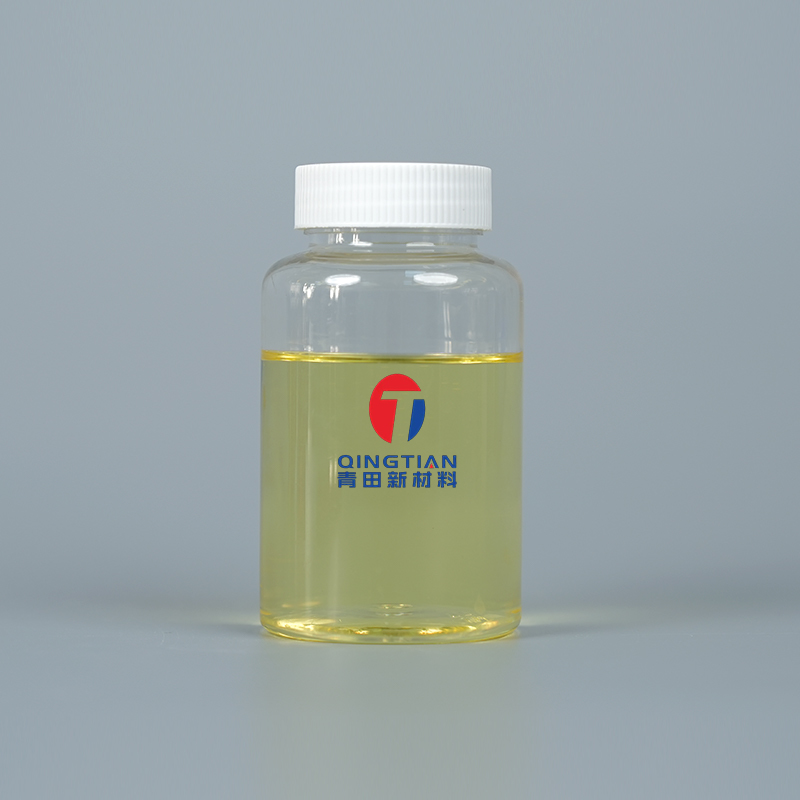
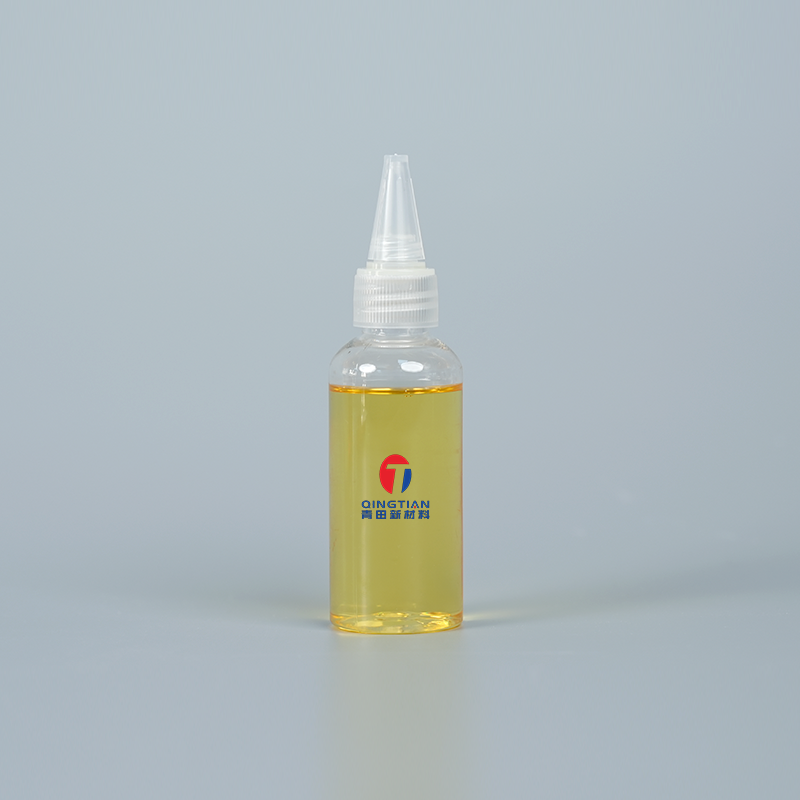
DH-3077 Fluorine-modified Leveling Agent
A coating must flow and level properly after application in order to form a visually uniform and technically reliable film. During spraying, rolling, curtain coating, printing, or other application processes, the wet film may contain uneven regions, microscopic depressions, air entrapment, or localized surface-tension differences. If these irregularities are not corrected before curing, they can become permanent defects.
Leveling agents help control the surface behavior of a coating while it is still wet. They can promote more uniform flow, reduce surface-tension gradients, improve substrate wetting, and assist the film in closing small irregularities. The correct additive can therefore influence both appearance and performance.
However, leveling is not simply a matter of creating the lowest possible surface tension. Excessive surface activity can lead to other problems, including intercoat adhesion loss, recoatability problems, surface migration, incompatibility, or uneven gloss. A high-performance leveling agent must therefore provide effective surface control while remaining compatible with the broader formulation and production process.
DH-3077 is designed around this balance. Its fluorine-modified chemistry provides strong surface activity, while its silicone-free design is intended for applications where silicone-related concerns may be undesirable. The result is an additive that supports rapid leveling and substrate wetting without sacrificing the practical recoatability required by multi-layer coating systems.
Craters are circular depressions that may appear when a coating cannot properly recover from a localized contamination or surface-tension difference. Pinholes are small openings or voids in the cured film, often associated with trapped air, insufficient flow, or poor wetting. Fish-eyes are distinctive circular defects caused by local incompatibility or inadequate wetting of the substrate or surrounding wet film.
These defects can be especially damaging in high-gloss finishes, protective coatings, automotive components, appliance coatings, metal finishing, wood coatings, and printed surfaces. Even when a defect is visually small, it may expose the substrate, reduce barrier performance, interrupt gloss uniformity, or require sanding and rework.
By improving wetting and supporting more uniform film flow, DH-3077 helps formulators reduce the conditions that contribute to these defects. The additive does not replace proper substrate preparation, filtration, mixing, or contamination control, but it can provide an important formulation-level tool for improving surface quality.
Many industrial coating systems depend on multiple layers. A primer may be followed by a basecoat, color coat, clearcoat, or protective topcoat. In these systems, the first layer must provide a smooth surface while still allowing the next layer to adhere properly.
Some highly active surface additives can migrate to the film surface and create a weak or overly low-energy interface. Although the first coat may appear smooth, the next coat may show poor wetting, cratering, intercoat adhesion loss, or uneven appearance. For this reason, formulators must evaluate leveling and recoatability together rather than treating them as separate properties.
DH-3077 is formulated to improve surface wetting and leveling without affecting the recoatability of the paint film when properly selected and dosed. This makes it suitable for coating structures in which appearance, adhesion, and subsequent processing must remain in balance.
DH-3077 is a fluorine-modified, silicone-free leveling agent for coatings and related formulations. It is intended to improve the way a liquid coating spreads across a substrate and forms a continuous film. The product can be considered for systems where rapid leveling, defect prevention, substrate wetting, and recoatability are important performance targets.
| Property | Product positioning | Formulation value |
|---|---|---|
| Chemical type | Fluorine-modified leveling agent | Provides strong surface-control activity |
| Silicone status | Silicone-free | Suitable for formulations where silicone-free additive design is preferred |
| Primary function | Leveling and wetting improvement | Supports smoother, more uniform coating films |
| Defect control | Helps prevent craters, pinholes, and fish-eyes | Improves visual appearance and production consistency |
| Film compatibility | Supports recoatability | Useful in multilayer coating systems |
| Durability profile | Resistant to hydrolysis, light exposure, and aging | Supports long-term performance in demanding applications |
| Volatility | Non-volatile | Helps maintain additive performance during film formation |
| Additional effect | Plasticizing effect | May support film flexibility and continuity in suitable systems |
The product is also identified as a fluorine-modified alternative associated with the performance positioning of EFKA 3777. This reference can help formulators understand the intended application category, but final suitability should always be verified through laboratory testing, because resin type, solvent package, pigment concentration, curing conditions, and substrate characteristics can significantly influence additive performance.
Fluorine-containing structures are widely recognized for their strong influence on surface energy and interfacial behavior. In an additive designed for leveling and wetting, fluorine modification can help the material migrate or orient at the coating-air or coating-substrate interface in a controlled way. This can promote spreading and reduce localized surface-tension differences.
The practical benefit is improved wetting of both the substrate and the surrounding wet film. Better wetting can help the coating close small discontinuities, spread over difficult areas, and form a more consistent surface before curing. This is especially valuable when the coating is applied to substrates with relatively low surface energy or when the formulation contains components that make flow behavior more difficult to control.
Fluorine modification does not mean that every coating system will respond identically. The final result depends on the compatibility of the additive with the resin and solvent system, the additive concentration, the application method, and the curing schedule. Nevertheless, fluorine modification provides a useful route to strong surface control in a silicone-free formulation.
Silicone-based additives are widely used because they can provide powerful slip, leveling, and surface-tension reduction. At the same time, some coating manufacturers prefer silicone-free systems because of concerns relating to intercoat adhesion, surface contamination, downstream processing, or the requirements of particular customers and industries.
A silicone-free leveling agent can give formulators another way to improve surface appearance without introducing silicone chemistry into the formulation. This may be valuable for applications involving subsequent bonding, printing, overcoating, lamination, or other processes that are sensitive to surface composition.
DH-3077 is therefore positioned as a practical solution for users seeking high surface activity while maintaining a silicone-free additive strategy. It does not imply that silicone-based products are unsuitable in all circumstances. Rather, it gives formulators an alternative when silicone-free design, recoatability, and adhesion are important selection criteria.
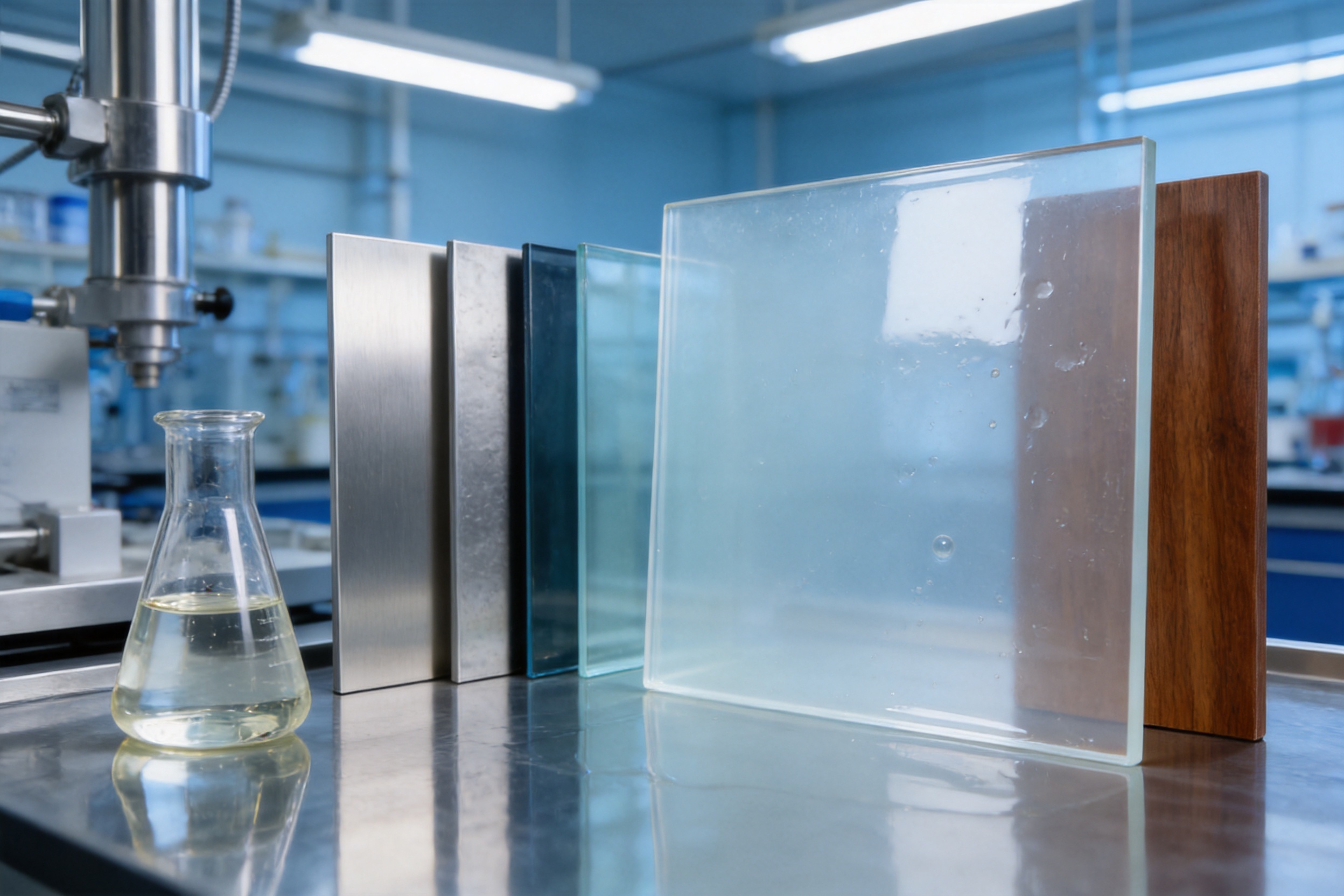
Rapid leveling is important when the available wet-film time is limited. Fast production lines, short flash-off periods, elevated coating viscosity, and quick curing can all reduce the time available for a coating to correct its own surface irregularities.
DH-3077 promotes rapid leveling so that the coating can develop a more uniform film before the resin system locks in the applied structure. Improved flow can reduce visible texture caused by application marks, localized thickness differences, and uneven wetting. In high-quality finishes, this can help support smoother appearance and more consistent gloss.
Rapid leveling may also improve process flexibility. A coating that spreads efficiently can be less sensitive to minor variations in application conditions, although it remains important to control spray pressure, atomization, viscosity, film thickness, temperature, and humidity. The additive is a formulation aid, not a substitute for process control.
Substrate wetting is the ability of a liquid coating to spread across and make intimate contact with the surface being coated. If wetting is poor, the coating may pull away from localized areas, form discontinuities, or create defects around contamination and surface-energy variations.
DH-3077 helps improve substrate wettability, allowing the coating to make more continuous contact with the surface. This can be particularly useful for metal, plastic, wood, glass, and previously coated substrates, provided the additive is compatible with the specific resin system and application conditions.
Improved wetting contributes to both appearance and adhesion. A coating cannot develop reliable adhesion over areas where it has failed to make proper contact. By supporting more uniform substrate coverage, DH-3077 can help create a better foundation for mechanical and chemical adhesion mechanisms.
Surface defects can originate from many sources, including contamination, incompatible raw materials, entrained air, substrate irregularities, and uneven evaporation. A leveling additive cannot eliminate every cause, but it can improve the coating’s ability to recover from local surface disturbances.
DH-3077 helps prevent common film defects such as craters, pinholes, and fish-eyes by improving wetting and promoting uniform flow. The effect is especially relevant in decorative and high-gloss applications, where small defects are easy to see and can result in rejected parts or additional finishing work.
Reduced defect formation can provide economic benefits. Less rework means lower labor consumption, reduced material waste, fewer rejected components, and more stable production throughput. In continuous coating operations, improved defect control may also reduce line interruptions and inspection-related delays.
One of the most important advantages of DH-3077 is its stated ability to improve leveling and wetting while preserving recoatability. This combination is valuable in primers, multilayer protective systems, wood coatings, industrial finishes, and other applications where a smooth first layer must accept a subsequent coat.
Recoatability depends on more than the additive. It is affected by curing level, surface energy, residual solvent, film hardness, additive dosage, and the chemical relationship between the layers. Nevertheless, the design of a silicone-free, fluorine-modified leveling agent can help reduce some of the concerns associated with excessively migratory or incompatible surface additives.
Formulators should evaluate both wet-on-dry and wet-on-wet recoat behavior when relevant. Testing should include intercoat adhesion, visual appearance, gloss, resistance to water or solvents, and any subsequent printing, bonding, or lamination steps.
Hydrolysis resistance is important in coating systems exposed to moisture, humidity, water, or water-containing environments. Hydrolytic degradation can alter the chemical structure of an additive, reduce performance, or generate undesirable byproducts.
DH-3077 offers resistance to hydrolysis, helping maintain its functional contribution over the expected service life of the coating. This property can be relevant to protective finishes, industrial coatings, exterior applications, and formulations exposed to humid processing or storage environments.
Actual durability depends on the full coating composition and exposure conditions. Resin chemistry, pigment volume concentration, film thickness, cure quality, substrate preparation, and environmental stress all influence long-term performance. Even so, hydrolysis resistance in the leveling agent is an important part of a durable additive package.
Coatings may experience prolonged exposure to light, temperature variation, oxygen, humidity, and mechanical stress. Over time, these factors can lead to yellowing, embrittlement, loss of gloss, surface changes, or reduced protective performance.
DH-3077 provides excellent light resistance and anti-aging properties according to its product profile. These characteristics help the additive remain functional in formulations where appearance retention and long-term consistency are important.
Light resistance is particularly relevant in exterior coatings, decorative finishes, automotive-related applications, appliance coatings, and products exposed to indoor lighting for extended periods. The additive should be evaluated as part of the complete system, since pigments, binders, stabilizers, and other components also affect weathering behavior.
A non-volatile additive remains in the coating rather than readily evaporating during application and curing. This can help maintain more consistent performance throughout film formation and reduce the risk of additive loss during flash-off.
Non-volatility can support reliable leveling when the coating passes through different stages of drying. It may also reduce odor or emissions associated with volatile additive components, although the total volatile content of the complete formulation must be assessed separately.
For formulators, non-volatility can improve dosage efficiency and process predictability. The additive remains available to influence the developing film instead of disappearing rapidly from the wet layer. Proper compatibility and dosage remain essential to avoid surface overconcentration or other undesirable effects.
DH-3077 also provides a plasticizing effect. In a suitable formulation, this may help improve flexibility, reduce brittleness, and support a more continuous film structure. The effect can be useful when a coating must balance hardness with flexibility or resist cracking during handling and service.
The plasticizing contribution should be considered together with the target hardness, chemical resistance, blocking resistance, and cure requirements of the coating. Excessive plasticization can reduce hardness or resistance in some systems, so laboratory optimization is essential. Used at an appropriate level, however, the effect can complement the product’s leveling and wetting functions.
Coating formulators typically choose between several additive strategies. They may use silicone-based leveling agents, conventional hydrocarbon-modified flow additives, fluorinated surface additives, or combinations of different products. Each approach has strengths and limitations.
DH-3077 is differentiated by combining fluorine modification with a silicone-free design. This provides strong surface activity while addressing the needs of users who want to reduce dependence on silicone chemistry. Its performance package also extends beyond simple leveling, including substrate wetting, defect control, recoatability, durability, non-volatility, and plasticizing behavior.
| Selection criterion | Conventional low-activity flow additive | Highly active silicone-based additive | DH-3077 positioning |
|---|---|---|---|
| Rapid leveling | May be moderate | Often strong | Designed for excellent rapid leveling |
| Substrate wetting | May be limited on difficult surfaces | Usually strong | Provides excellent substrate wettability |
| Silicone-free requirement | May be possible | Not applicable | Specifically designed as silicone-free |
| Recoatability | Often acceptable | Requires careful evaluation | Designed to support recoatability |
| Defect control | May require additional additives | Can be effective but system-dependent | Helps address craters, pinholes, and fish-eyes |
| Durability | Depends strongly on chemistry | Depends strongly on chemistry | Offers hydrolysis, light, and aging resistance |
| Volatility | Varies by product | Varies by product | Non-volatile product profile |
This comparison should be understood as a formulation-selection framework rather than a universal ranking. Product performance varies between suppliers and applications. The main advantage of DH-3077 is that it offers formulators a balanced option when high surface activity, silicone-free design, recoatability, and durability are all required.
Silicone-based products can provide excellent slip and leveling, but they may create concerns in applications requiring strong intercoat adhesion, printing, bonding, or surface cleanliness. Some users may also have internal silicone restrictions or customer specifications that discourage silicone-containing additives.
DH-3077 provides an alternative route. Its fluorine-modified structure can deliver effective surface control without using silicone chemistry. This may simplify qualification in products where silicone contamination or surface migration is a concern.
The correct choice still depends on the final performance target. If extreme slip is the main objective, a silicone-based product may be considered. If the target is a combination of rapid leveling, wetting, defect prevention, recoatability, and silicone-free design, DH-3077 may offer a more balanced solution.
Conventional flow additives may improve film smoothness but provide insufficient surface activity for difficult substrates or severe surface defects. Additional wetting agents may then be needed, increasing formulation complexity and the risk of incompatibility.
DH-3077 is designed to combine strong wetting and leveling in one additive. This may reduce the need to use multiple products for closely related surface-control functions. A simpler additive package can make formulation optimization easier, although compatibility testing remains necessary.
Volatile surface modifiers may provide short-term activity during application but lose effectiveness as the coating dries. This can create variability between early and late stages of film formation. DH-3077’s non-volatile profile supports more consistent participation in the developing film.
Non-volatility may also contribute to better process stability. When the additive remains in the film, its contribution is less dependent on evaporation rate. This can be useful when production conditions change or when the coating is applied in different climates and line configurations.
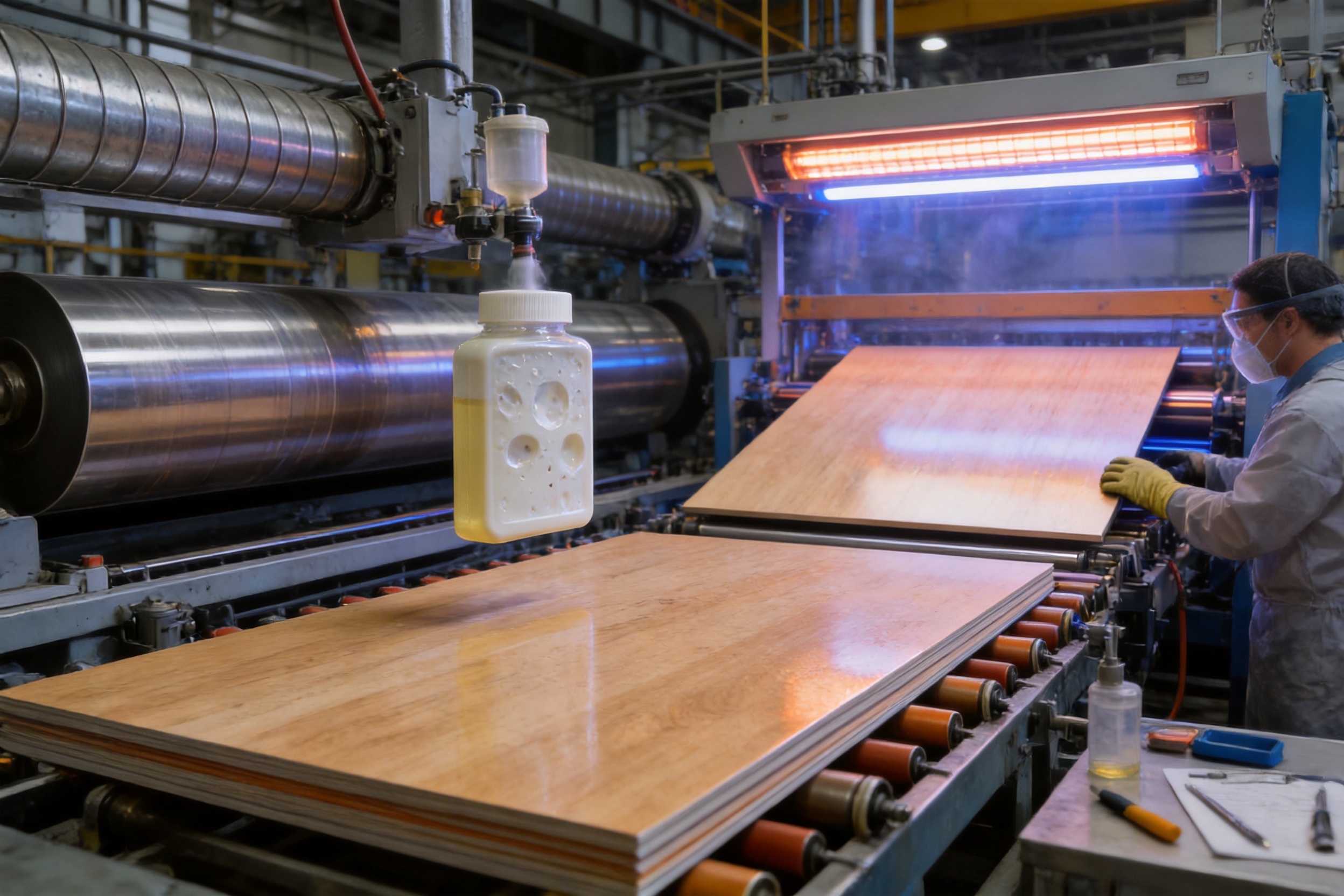
Industrial coatings require consistent appearance, adhesion, durability, and production efficiency. DH-3077 can be considered for metal, machinery, equipment, and general industrial finishes where the coating must spread uniformly and resist common surface defects.
Its rapid leveling can help improve the appearance of sprayed or applied films, while its substrate-wetting capability can support coverage on prepared metal and other industrial surfaces. The silicone-free design may also be useful where parts will later be bonded, printed, assembled, or overcoated.
Coil coating lines operate at high speed, making rapid wetting and leveling especially important. The coating must form a uniform film within a limited time while maintaining adhesion and appearance after curing and forming.
DH-3077 may support the smooth application of coatings on steel and aluminum substrates. Its non-volatile and durability-oriented profile can be valuable in systems that must maintain performance through processing, forming, storage, and service.
Many plastics have relatively low surface energy, making wetting and adhesion difficult. Coatings applied to plastic components can also be sensitive to defects caused by mold-release residues, additives migrating from the plastic, or uneven surface preparation.
By improving substrate wetting, DH-3077 can help coating formulators address the challenges of plastic surfaces. It should be evaluated alongside surface treatment, cleaning, primer selection, and adhesion testing. The additive can support the coating, but it cannot replace proper substrate preparation.
Wood surfaces are naturally variable and may contain pores, resinous areas, end grain, and differences in absorbency. A leveling agent can help produce a smoother appearance and reduce the visibility of application irregularities in clear and pigmented wood finishes.
DH-3077 may be considered for furniture coatings, flooring finishes, decorative wood products, and protective wood systems. Its plasticizing effect may also be relevant where the film must accommodate moderate movement without excessive brittleness.
UV-curing systems can cure rapidly, leaving limited time for flow and leveling. If the film does not wet and level before exposure, surface defects may become fixed quickly. A rapid-acting additive can therefore be important in UV coatings.
DH-3077 may help improve wetting and leveling before UV exposure. Compatibility with the reactive resin, photoinitiator package, pigments, and curing conditions should be confirmed through laboratory testing. Recoatability and surface cure should also be evaluated where multilayer UV systems are used.
Anti-corrosion coatings must provide continuous coverage and strong adhesion. Pinholes, craters, and incomplete wetting can create pathways for moisture and corrosive species to reach the substrate.
DH-3077 can support more uniform film formation and substrate contact in protective coating systems. Its contribution should be evaluated through adhesion testing, water resistance, salt spray or other relevant corrosion tests, and long-term exposure studies.
Glass and cured concrete or epoxy floors can present demanding wetting conditions. Smooth, low-porosity surfaces may require strong coating spreading to achieve uniform coverage and attractive appearance.
The wetting and leveling performance of DH-3077 can help formulators develop coatings that spread more evenly on these substrates. The additive may also assist in reducing visible surface defects in high-gloss or decorative flooring systems.
Printing inks require controlled wetting, smooth transfer, uniform appearance, and reliable adhesion to films, foils, paper, or other substrates. Adhesives also depend on intimate surface contact for effective bonding.
DH-3077 may be considered for selected ink and adhesive systems where silicone-free surface control and recoatability are important. Formulators should examine printability, blocking, coefficient of friction, bond strength, drying, curing, and downstream converting performance.
Before commercial use, DH-3077 should be screened in the actual resin, solvent, pigment, and additive system. A small-scale compatibility test can help identify haze, separation, viscosity change, foam, gloss variation, or unexpected surface migration.
Compatibility should be checked after mixing and after storage. Some problems may not appear immediately and can develop after heat exposure, freeze-thaw cycles, or extended storage. Both clear and pigmented versions of the coating should be evaluated when relevant.
The preferred addition sequence may vary according to the formulation. In some systems, the leveling agent can be added during let-down after pigment dispersion. In others, pre-dilution or addition during a controlled stage may provide better distribution.
The additive should be incorporated under sufficient mixing to ensure uniform dispersion without introducing unnecessary air. Excessive shear may not always be beneficial, especially in formulations that are sensitive to foam or temperature rise. The formulator should determine the best process through comparative trials.
Leveling agents are typically optimized rather than simply maximized. Too little additive may not provide sufficient wetting or defect control. Too much may cause excessive surface activity, gloss changes, adhesion problems, blocking, or other unwanted effects.
A practical dosage study should examine several concentrations around the expected use level. The evaluation should include wetting, leveling, crater resistance, fish-eye resistance, gloss, haze, intercoat adhesion, hardness, flexibility, chemical resistance, and recoatability.
Results can change significantly with application method, coating viscosity, film thickness, substrate temperature, humidity, flash-off time, oven profile, and curing speed. A product that performs well in laboratory drawdowns may behave differently in spray, roller, curtain, coil, or printing applications.
For this reason, DH-3077 should be validated under production-relevant conditions. The test plan should reproduce the actual substrate, application equipment, film build, drying or curing schedule, and inspection criteria as closely as possible.
Suzhou Qingtian New Material Co., Ltd. is a professional supplier of raw materials for coatings, inks, and adhesives. Since its establishment in 2012, the company has developed an experienced team that includes research and development specialists, sales professionals, and technical personnel. Its product portfolio includes dispersants, leveling agents, defoamers, adhesion promoters, anti-settling agents, cooling agents, conductive agents, orange-peel texture agents, texture powders, and wax powders.
This broad product range gives the company a practical understanding of formulation interactions. A coating rarely depends on one additive alone. Dispersion, wetting, defoaming, leveling, adhesion, settling control, texture, and surface protection must work together. Experience across multiple additive categories can help the supplier provide more integrated recommendations.
The company operates a modern production facility supported by advanced testing equipment and research capabilities. These resources are important for specialized additives because quality depends on more than the nominal chemical identity. Consistency of composition, purity, appearance, viscosity, storage stability, and functional performance all need to be controlled.
Modern manufacturing allows production parameters to be monitored and adjusted more systematically. Controlled processing can support batch-to-batch consistency, while testing equipment can help verify product quality before shipment. For customers, this translates into greater confidence when incorporating the additive into regular production.
Research and development is central to the company’s product strategy. The company has built technical experience in coating, ink, and adhesive raw materials and has continued to expand its ability to design application-oriented chemical solutions.
The development of specialized products such as fluorine-modified leveling agents requires an understanding of surface chemistry, resin compatibility, film formation, curing, and industrial application conditions. Product development must connect laboratory performance with practical manufacturing needs. This application-focused approach is reflected in DH-3077’s combined performance profile rather than a single-function design.
Quality assurance for a leveling agent should include both physical and application tests. Physical tests may cover appearance, viscosity, density, non-volatile content, storage stability, and other relevant parameters. Application tests should examine wetting, leveling, surface defects, recoatability, gloss, adhesion, and durability.
The company’s advanced testing equipment supports this type of evaluation. By using controlled testing procedures, manufacturers can compare batches, investigate customer feedback, and improve product consistency. A strong quality system also helps identify the relationship between manufacturing parameters and end-use performance.
The company reports several development milestones, including the creation of an ice flower resin in 2016, recognition as a National High-Tech Enterprise in 2020, and relocation to Lingrui Intelligent Manufacturing Park in Zhangjiagang High-Tech Zone in 2021. These milestones indicate continued investment in innovation, production capacity, and technical infrastructure.
The move to an intelligent manufacturing park provides a foundation for strengthening research and production capabilities. For customers sourcing specialty additives, manufacturing location and infrastructure matter because they influence production scalability, technical support, quality management, and supply continuity.
Specialty additives often require technical communication between the supplier and the formulator. The best product choice depends on the coating type, resin chemistry, substrate, application process, curing conditions, and performance targets. A supplier that understands these variables can help customers move more efficiently from initial screening to commercial validation.
Suzhou Qingtian New Material Co., Ltd. focuses on innovation, quality, service, and win-win cooperation. Its product portfolio and technical background support communication with customers in industries such as steel and aluminum coil coatings, plastic coatings, UV curing, anti-corrosion coatings, wood coatings, glass coatings, epoxy flooring, printing inks, power batteries, and photovoltaic panels.
The value of a leveling agent should be measured not only by its purchase price but also by its effect on total coating cost. A product that reduces rework, improves first-pass yield, decreases defect-related waste, and supports faster production may provide greater value than a lower-priced additive with inconsistent performance.
DH-3077 can create value in several ways. Improved substrate wetting may reduce localized defects and improve adhesion. Rapid leveling may support smoother appearance and reduce finishing operations. Recoatability may help preserve the efficiency of multilayer systems. Non-volatility and durability may contribute to process consistency and long-term film performance.
The silicone-free design can also reduce the need for special handling or qualification in applications where silicone chemistry is restricted. By combining surface control and compatibility-oriented performance, the product may help formulators simplify additive selection and reduce trial-and-error development.
Defects such as craters, pinholes, and fish-eyes can lead to sorting, rework, stripping, repainting, or scrapping. Their cost is often greater than the cost of the additive itself. Improving wetting and leveling at the formulation stage can therefore produce measurable savings.
Coating lines can be affected by small changes in temperature, humidity, substrate condition, viscosity, and application speed. An effective leveling agent can provide a wider operating window, helping the coating maintain acceptable appearance under normal process variation.
Manufacturers increasingly compete on surface finish, durability, sustainability-related claims, and processing efficiency. A silicone-free, fluorine-modified leveling solution can help coating producers develop differentiated products for customers with demanding appearance and adhesion requirements.
A structured evaluation program allows customers to understand the benefits and limitations of DH-3077 in their own system. The first stage should compare the additive with the current leveling agent in the same base formulation. This isolates the effect of the additive and avoids confusion caused by simultaneous changes to the resin or solvent package.
The second stage should evaluate several dosage levels. Drawdowns or sprayed panels should be inspected for wetting, craters, pinholes, fish-eyes, gloss, haze, orange peel, and overall surface smoothness. The coating should then be tested after complete curing.
The third stage should focus on recoatability and adhesion. A second coat should be applied after the intended interval, followed by cross-hatch adhesion, pull-off adhesion, or another appropriate method. If the coating will be printed, bonded, laminated, or formed, those downstream processes should be included.
The fourth stage should assess durability. Depending on the end use, this may include humidity exposure, water immersion, light exposure, heat aging, chemical resistance, abrasion, flexibility, and corrosion testing. The purpose is to confirm that the additive continues to support the required performance after environmental stress.
| Evaluation stage | Recommended observations | Purpose |
|---|---|---|
| Initial compatibility | Clarity, separation, viscosity, color, storage behavior | Confirm physical compatibility |
| Wet-film testing | Wetting, flow, craters, pinholes, fish-eyes | Measure immediate surface-control performance |
| Cured-film appearance | Gloss, haze, smoothness, orange peel, uniformity | Assess final visual quality |
| Recoat testing | Intercoat wetting, adhesion, appearance | Verify multilayer suitability |
| Mechanical testing | Hardness, flexibility, impact, abrasion | Understand the plasticizing effect and film balance |
| Durability testing | Humidity, water, light, heat, chemicals | Confirm long-term performance |
| Production trial | Line stability, defect rate, yield, operator feedback | Validate commercial practicality |
As with all specialty chemical additives, DH-3077 should be handled according to the supplier’s current technical data sheet, safety data sheet, and applicable workplace regulations. Personnel should use suitable protective equipment and follow site procedures for transfer, mixing, spill control, and waste management.
The product should be stored in a clean, dry, and appropriately controlled environment. Containers should remain closed when not in use to prevent contamination and unwanted changes caused by exposure to moisture or other materials. Storage temperature, shelf life, and packaging requirements should be confirmed with the supplier before large-scale purchasing.
Good handling practice protects both product quality and worker safety. Before use, the additive should be checked for any visible changes in appearance or consistency. If unusual conditions are observed, the material should be evaluated before incorporation into a production batch.
DH-3077 is a fluorine-modified, silicone-free leveling agent for coatings and related formulations. It improves rapid leveling and substrate wetting and helps reduce defects such as craters, pinholes, and fish-eyes.
Yes. The product is designed to improve leveling and wetting without affecting the recoatability of the paint film when properly formulated and dosed. Recoat testing should still be performed using the actual primer, intermediate coat, and topcoat system.
The silicone-free design provides an alternative for formulators who want strong surface control without introducing silicone chemistry. This may be beneficial in systems involving overcoating, printing, bonding, lamination, or customer specifications that restrict silicone-containing additives.
No additive can eliminate every defect under all conditions. Surface defects may also result from contamination, poor substrate preparation, entrained air, unsuitable viscosity, incorrect application, or incomplete curing. DH-3077 helps improve wetting and leveling, thereby reducing the formulation-related conditions that contribute to common defects.
The product offers resistance to hydrolysis, light exposure, and aging. These properties can help maintain additive performance over time, but total coating durability depends on the complete formulation, substrate, film thickness, curing quality, and service environment.
Yes. In addition to leveling and wetting improvement, DH-3077 provides a plasticizing effect. This may support flexibility and film continuity in suitable systems. The effect should be balanced against hardness, chemical resistance, blocking resistance, and other film requirements.
DH-3077 may be considered for UV-curing systems where rapid wetting and leveling are needed before the film cures. Compatibility with the reactive resin, photoinitiator, pigments, and curing conditions should be confirmed through application testing.
It can be considered for plastic coatings because it provides excellent substrate wetting. The specific plastic type, surface treatment, mold-release residue, primer, and coating chemistry must be evaluated to confirm adhesion and appearance.
The optimum dosage should be established through a concentration ladder in the intended formulation. Testing should include wetting, leveling, defect control, gloss, adhesion, recoatability, hardness, flexibility, and durability. The highest dosage is not necessarily the best dosage.
Suzhou Qingtian New Material Co., Ltd. specializes in raw materials for coatings, inks, and adhesives. The company has an experienced R&D and sales team, modern production facilities, advanced testing equipment, and a broad portfolio of related additives. These capabilities support product development, quality control, and application-oriented technical service.
DH-3077 Fluorine-modified Leveling Agent is a high-performance silicone-free solution for coating formulators who need rapid leveling, excellent substrate wetting, defect reduction, and reliable recoatability. Its fluorine-modified design provides strong surface-control capability, while its non-volatile profile and resistance to hydrolysis, light exposure, and aging support consistent performance in demanding applications.
The product is especially valuable when a coating must combine attractive appearance with strong adhesion and multilayer compatibility. It can be considered for industrial coatings, coil coatings, plastic coatings, UV-curing systems, anti-corrosion finishes, wood coatings, glass coatings, epoxy flooring, printing inks, and adhesives.
Its competitive advantage lies in the balance of properties rather than a single function. Compared with conventional low-activity flow additives, DH-3077 offers stronger wetting and leveling potential. Compared with silicone-based products, it provides a silicone-free alternative that may be better suited to sensitive downstream processes. Compared with volatile surface modifiers, its non-volatile profile supports continued participation during film formation.
The product is supported by the manufacturing, research, testing, and technical-service capabilities of Suzhou Qingtian New Material Co., Ltd. The company’s experience across dispersants, leveling agents, defoamers, adhesion promoters, anti-settling agents, texture additives, wax powders, and resin products allows it to understand the broader needs of coating, ink, and adhesive formulators.
For best results, DH-3077 should be evaluated in the complete target formulation under realistic processing conditions. With appropriate compatibility screening, dosage optimization, and production validation, it can help manufacturers achieve smoother films, fewer surface defects, improved substrate contact, and more reliable coating performance.
1. Product information for DH-3077 Fluorine-modified Leveling Agent, supplier-provided technical description.
2. General principles of coating formulation, surface tension control, wetting, and film leveling.
3. General methods for evaluating coating appearance, intercoat adhesion, recoatability, gloss, and surface defects.
4. General guidelines for the development and quality control of additives for coatings, inks, and adhesives.
5. Supplier-provided company information concerning research and development, manufacturing facilities, testing capabilities, and product portfolio.
 Wholesale Paint/ Coating Additives Manufacturers
Custom Industrial Chemical Solutions Suppliers