русский
 Español
 Français
Home / Author / Tang Yuxi — Senior After-Sales Service Engineer / Water-Borne Dispersants for High-Performance Conductive Carbon Nanomaterial Slurries
Tang Yuxi — Senior After-Sales Service Engineer

Content
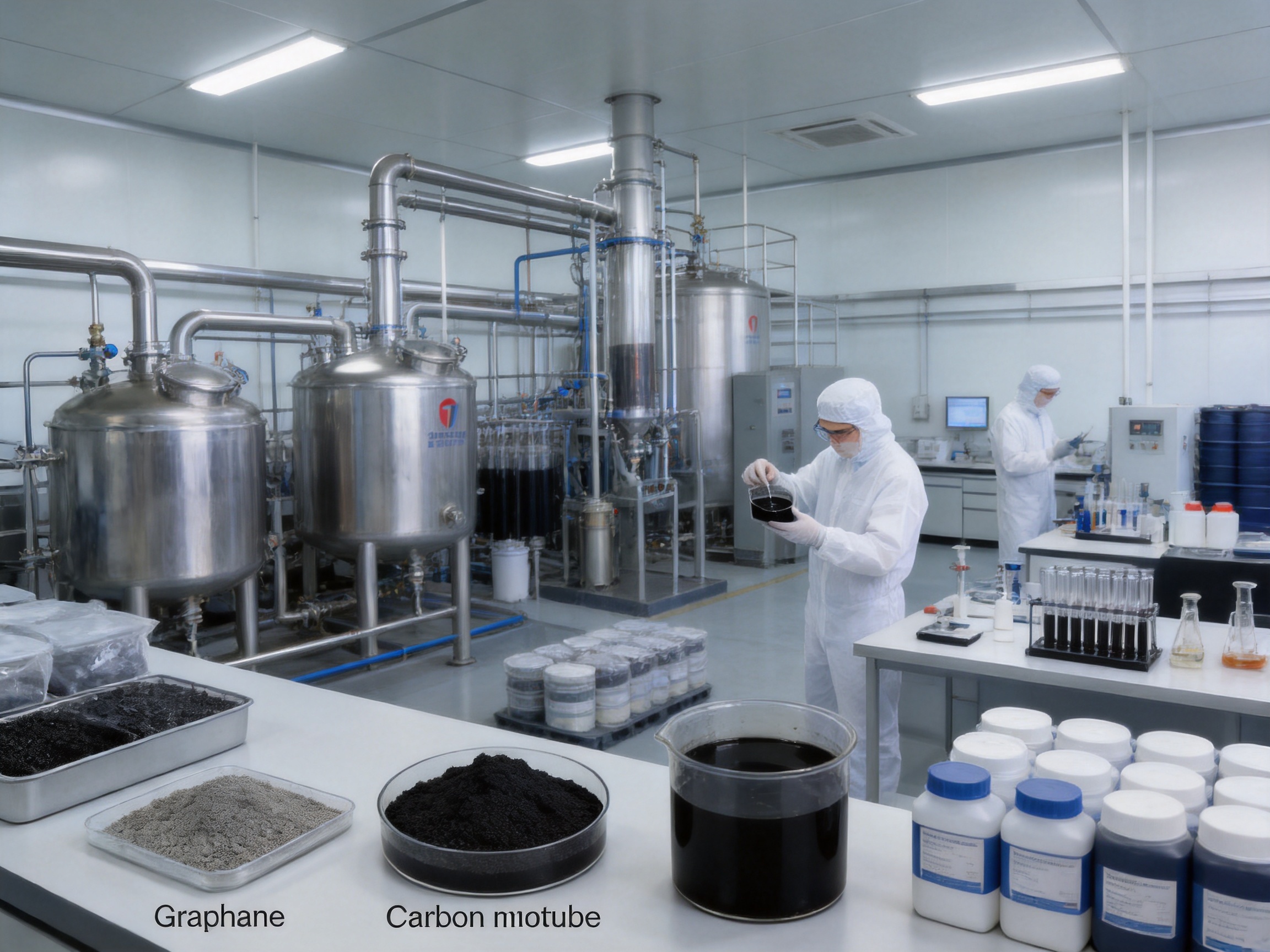
Conductive carbon nanomaterials have become essential in modern coatings, inks, adhesives, batteries, photovoltaic components, electronic materials, and antistatic systems. Graphene, carbon nanotubes, conductive carbon black, and other high-surface-area carbon materials can provide electrical conductivity, electromagnetic shielding, reinforcement, thermal management, and functional surface properties. However, the same characteristics that make these materials valuable also make them difficult to process.
Carbon nanoparticles usually possess extremely high specific surface areas, strong surface interactions, low bulk density, and a natural tendency to form hard agglomerates. When introduced into a water-borne formulation, they may float, form clusters, settle during storage, generate excessive foam, or produce inconsistent conductivity. A coating or ink may also show poor leveling, unstable viscosity, surface defects, and reduced mechanical performance if the carbon phase is not properly dispersed.
DH-6552W Conductive Carbon Black Dispersant is a water-borne dispersing additive developed for challenging carbon nanomaterial systems. It is particularly suitable for graphene, carbon nanotubes, conductive carbon black, and high-surface-area carbon black. By improving the wetting and stabilization of these materials, the dispersant helps formulators prepare concentrated carbon nanoslurries with better processing behavior, storage stability, and application performance.
The product is designed for use in water-borne systems and is compatible with acrylic, epoxy, alkyd, and related resin technologies. Its recommended dosage is 50% to 80% of the carbon nanomaterial weight. Within a properly optimized formulation, it can help increase the solid content of concentrated carbon slurries while supporting leveling, thixotropy, and long-term stability.
For manufacturers seeking a practical additive for conductive coatings, antistatic finishes, functional inks, battery-related materials, and other advanced formulations, the product combines broad carbon-material compatibility with formulation flexibility. Its value is not limited to dispersion alone; it also supports the rheological and application properties required for consistent industrial production.
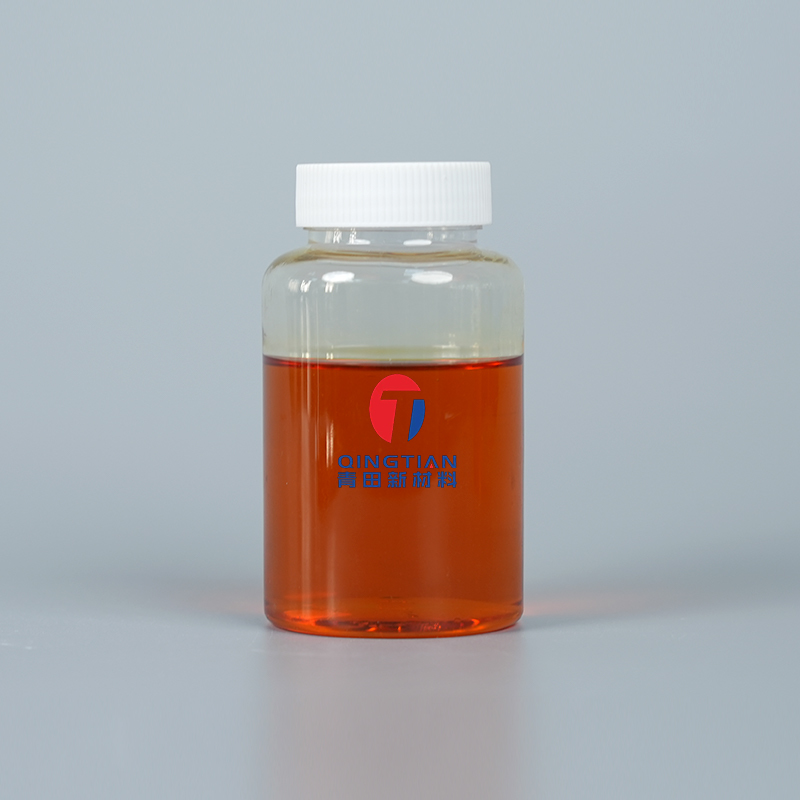
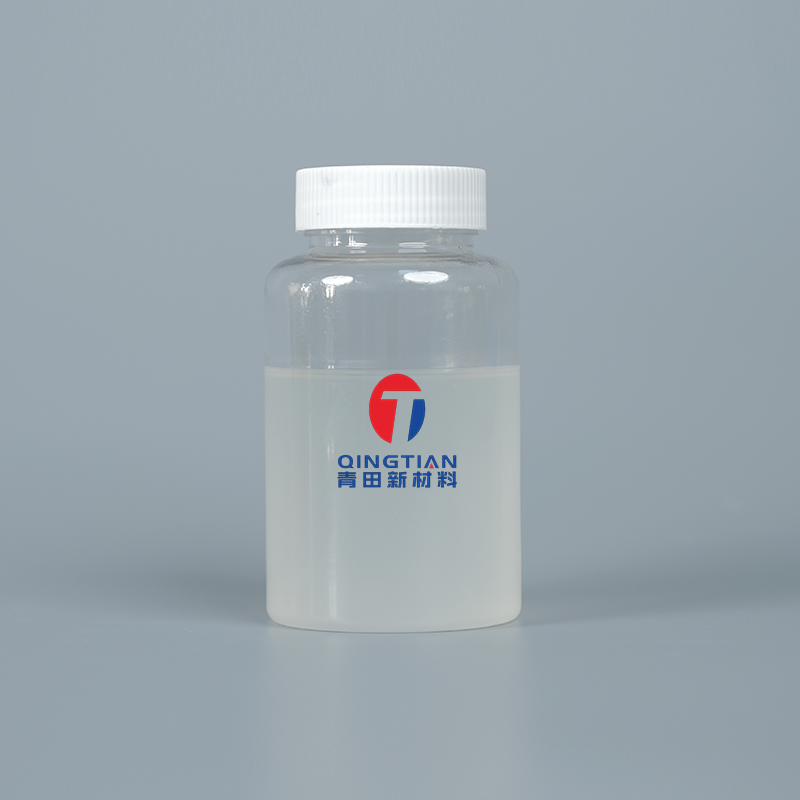
DH-6552W Conductive Carbon Black Dispersant
Effective dispersion begins with understanding the behavior of the solid phase. Carbon black, graphene, and carbon nanotubes are not ordinary mineral fillers. Their small particle size, irregular morphology, high surface energy, and large specific surface area create strong attractive forces between particles. These forces encourage agglomeration before and during incorporation into the liquid phase.
When a dry carbon material enters water, the liquid must first wet the particle surface. If wetting is incomplete, air remains trapped inside agglomerates. The material may then form floating islands, compact lumps, or a paste with unpredictable viscosity. Conventional mechanical mixing can break some of these agglomerates, but the newly separated particles may quickly come together again unless a suitable dispersant is present.
Graphene and carbon nanotubes present additional challenges because of their high aspect ratios and layered or fibrous structures. Carbon nanotubes can form an interconnected network that raises viscosity dramatically even at relatively low loading levels. Graphene sheets may restack through strong surface interactions. High-surface-area carbon black can absorb significant quantities of liquid and dispersant, creating a strong demand for formulation control.
In a coating or ink, poor dispersion may cause several visible and measurable problems. These include color or conductivity variation, blocked filters, unstable viscosity, poor transfer during printing, uneven film formation, pinholes, surface roughness, reduced gloss, poor adhesion, and sedimentation. In conductive applications, the electrical pathway may become discontinuous, causing higher resistance and inconsistent performance from one batch or coated panel to another.
A high-quality dispersant must therefore perform more than a simple wetting function. It should help separate agglomerates, stabilize the individual or partially separated particles, work efficiently in a water-borne medium, and remain compatible with the final binder system. It should also support manageable viscosity and avoid creating new defects during application or storage.
DH-6552W is a water-borne dispersant for conductive carbon materials and other difficult-to-disperse carbon nanomaterials. The product is especially suitable for graphene, carbon nanotubes, conductive carbon black, and high-surface-area carbon black. Its main purpose is to support the preparation of stable, concentrated carbon dispersions that can later be incorporated into coatings, inks, adhesives, or other resin-based formulations.
The recommended dosage range is 50% to 80% based on the weight of the carbon nanomaterial. This range recognizes that different carbon materials have different surface areas, structures, absorption characteristics, and dispersion requirements. A lower dosage may be suitable for a less demanding carbon black, while a higher dosage may be needed for a high-surface-area grade, a nanotube network, or a graphene material with strong restacking tendencies.
The product provides a practical starting point rather than a substitute for laboratory optimization. Final dosage should be determined through testing of the specific carbon grade, resin system, pigment concentration, milling conditions, and application method. Factors such as particle size, surface treatment, pH, ionic strength, equipment type, and target solid content may all affect the optimum level.
In addition to dispersion, the product is described as supporting good leveling, thixotropy, and storage stability. These properties are important because a carbon concentrate must often be handled, pumped, mixed, diluted, and applied under different shear conditions. A formulation that is stable at rest but flows readily during processing can offer substantial production advantages.
| Product characteristic | Practical significance | Typical formulation benefit |
|---|---|---|
| Water-borne dispersant | Designed for aqueous carbon-material systems | Supports lower-solvent and water-based formulation strategies |
| Carbon nanomaterial compatibility | Suitable for graphene, carbon nanotubes, conductive carbon black, and high-surface carbon black | Allows one additive platform to address several conductive materials |
| Recommended dosage | 50% to 80% of carbon nanomaterial weight | Provides a defined starting window for optimization |
| Rheology support | Contributes to useful thixotropic behavior | Helps balance storage stability with application flow |
| Application behavior | Supports leveling and film uniformity | Can reduce surface irregularities and improve appearance |
| Concentrated slurry performance | Helps enable higher carbon solids content | May reduce transport, handling, and dilution requirements |
| Resin compatibility | Compatible with acrylic, epoxy, alkyd, and related resin systems | Supports use across multiple coating and adhesive technologies |
The first stage of dispersion is wetting. A dispersant helps the liquid phase make more effective contact with the carbon surface, allowing the aqueous medium to penetrate agglomerates more efficiently. Better wetting reduces the amount of dry powder that remains suspended at the surface and can shorten the time required to achieve a uniform premix.
For carbon black and other porous materials, wetting is especially important because air can become trapped within the agglomerate structure. If that air is not displaced, mechanical energy is used inefficiently. A suitable dispersant improves the contact between liquid and solid so that subsequent mixing or milling can produce a more uniform dispersion.
Breaking an agglomerate is only part of the process. Once particles are separated, they need to remain sufficiently apart to prevent rapid reagglomeration. A dispersant can provide stabilization through interactions between its functional structure and the carbon surface, together with steric, electrostatic, or mixed stabilization effects depending on the formulation environment.
Stable particle separation can improve the consistency of conductivity, color strength, viscosity, and film appearance. It can also reduce the risk of coarse particles that may clog screens, filters, spray equipment, or printing plates. The exact stabilization mechanism depends on the carbon grade and the surrounding resin and water chemistry, so practical testing remains essential.
Many manufacturers prepare a carbon concentrate first and then let down that concentrate into a final coating, ink, or adhesive. This approach can improve production flexibility, reduce repeated milling, and make it easier to standardize the conductive component. However, a concentrate must maintain enough fluidity for pumping and mixing while containing a high amount of carbon solids.
DH-6552W is intended to help increase the solid content of concentrated carbon nanoslurries. A higher-solids concentrate can reduce the volume of material that must be stored and transported. It may also allow the formulator to add conductivity efficiently without introducing excessive water into the final product. This is useful when the final coating requires a controlled viscosity, rapid drying profile, or high functional-material loading.
Carbon nanomaterials often produce strong rheological effects. A dispersion that is too thin may settle rapidly, while a dispersion that is too thick may be difficult to pump, filter, or apply. Thixotropic behavior can provide a useful compromise: the material maintains structure under low shear but becomes easier to flow when stirred, pumped, sprayed, brushed, or printed.
The stated thixotropy benefit of DH-6552W can be valuable in systems where the carbon phase must remain suspended during storage but move smoothly during application. The ideal balance depends on the coating method. Spray coatings generally require atomization and flow, screen printing requires controlled transfer and recovery, and architectural or industrial coatings may require sag resistance combined with leveling after application.
Conductive fillers can create surface defects if they are poorly distributed or if the formulation develops excessive local viscosity. A dispersant that supports leveling can help the wet film form a more uniform surface after application. This is relevant to gloss, appearance, coating thickness, electrical continuity, and the consistency of subsequent layers.
Good leveling is particularly important in multilayer systems. A conductive primer or functional intermediate layer may need to receive a topcoat, adhesive, printed pattern, or protective layer. Uneven particles and rough agglomerates can interfere with intercoat contact. By supporting uniform dispersion and flow, the additive can contribute to a more predictable coating structure.
General-purpose dispersants may perform adequately with conventional inorganic pigments or medium-surface-area fillers, yet carbon nanomaterials often require a more specialized approach. The surface area, morphology, and network-forming behavior of conductive carbon materials create a higher additive demand and a narrower processing window.
The principal advantage of DH-6552W is its specific positioning for difficult carbon materials. It is not described merely as a universal pigment dispersant; it is intended for graphene, carbon nanotubes, conductive carbon black, and high-surface-area carbon black. This focus allows the product to address the dispersion challenges most relevant to conductive formulations.
A second advantage is the combination of dispersion and formulation behavior. Some additives can break agglomerates but leave the final slurry with poor storage stability, excessive foam, weak leveling, or an unsuitable viscosity profile. DH-6552W is designed to support dispersion while also contributing to thixotropy, leveling, and storage stability.
A third advantage is compatibility with several major resin families. Acrylic, epoxy, and alkyd systems are widely used in industrial coatings, protective coatings, wood finishes, metal coatings, adhesives, and specialty inks. Compatibility with these resin types can simplify raw-material qualification and reduce the need to maintain separate dispersant strategies for every product line.
A fourth advantage is its suitability for concentrated slurries. A dispersant that helps maintain high carbon solids can support more efficient manufacturing workflows. It may allow producers to separate the dispersion stage from the final letdown stage, prepare standardized concentrates, and adjust the final conductivity or color more efficiently.
| Evaluation area | Potential limitation of a nonspecialized additive | Value offered by a carbon-focused dispersant |
|---|---|---|
| High-surface-area carbon | Insufficient surface coverage or unstable viscosity | Designed for demanding carbon surfaces and higher additive requirements |
| Carbon nanotubes | Difficulty breaking network structures without excessive liquid addition | Supports controlled dispersion of fibrous, network-forming materials |
| Graphene | Restacking and inconsistent distribution | Helps promote more uniform separation and slurry consistency |
| Conductive carbon black | Floating, agglomeration, or coarse particles | Supports wetting, stabilization, and conductive uniformity |
| Storage stability | Rapid settling or hard sediment | Contributes to stable behavior during storage |
| Application appearance | Roughness, poor leveling, or surface defects | Supports leveling and more uniform film formation |
| Resin selection | Need for different additives in different binders | Broad compatibility with acrylic, epoxy, and alkyd systems |
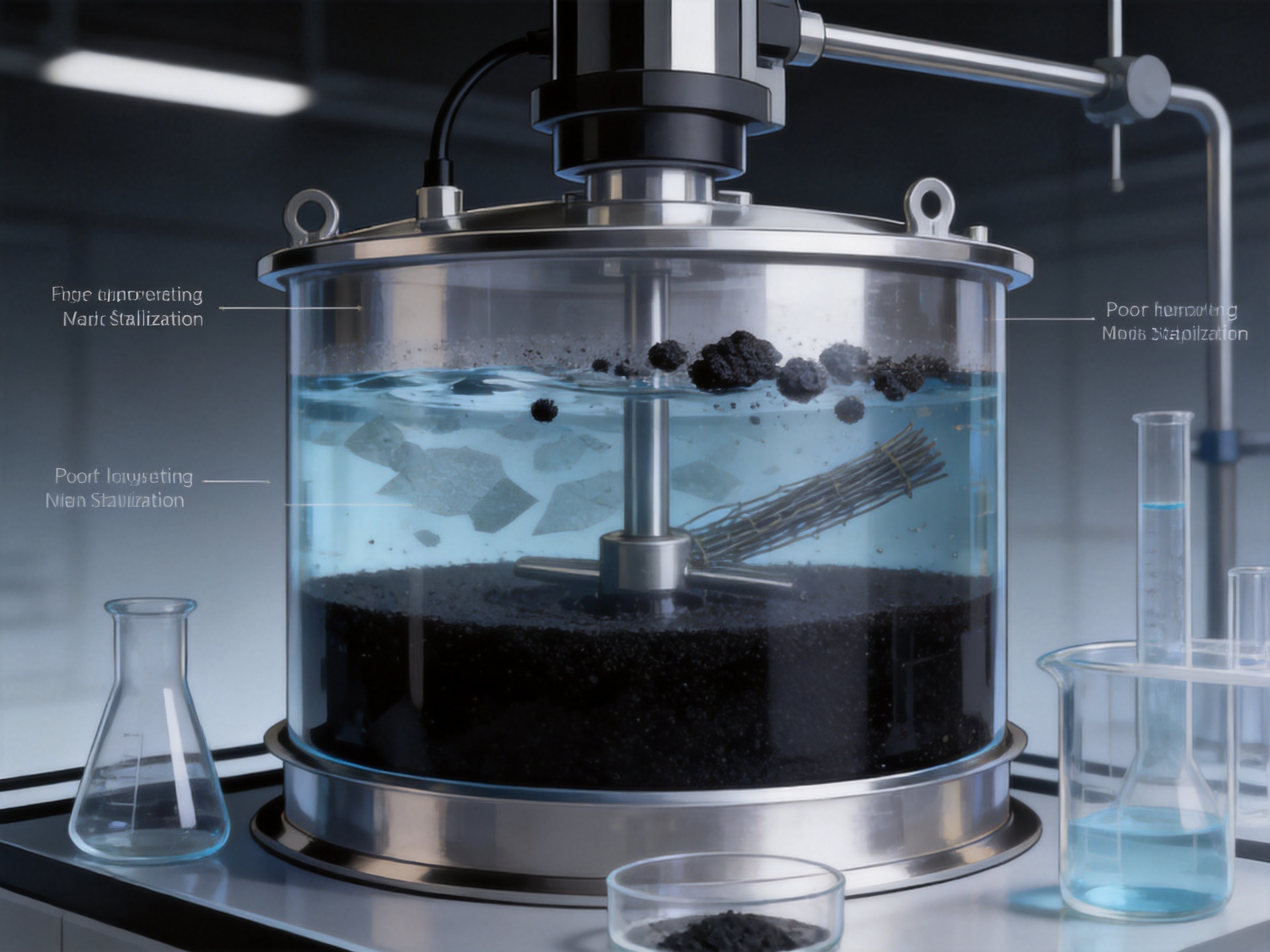
Before selecting the dosage, the formulator should record the carbon material’s type, specific surface area, morphology, moisture content, bulk density, surface treatment, and intended loading. Conductive carbon blacks with different structures can behave very differently even when their names appear similar. The same applies to graphene grades and carbon nanotubes with different lengths, diameters, purity levels, or functional groups.
High-surface-area products generally require more dispersant because there is more surface to cover. A porous or highly structured carbon black may absorb liquid and generate a substantial viscosity increase. Carbon nanotubes may require a process that gradually separates bundles rather than applying excessive energy at the beginning. These differences should be considered when establishing the starting formulation.
The aqueous phase should be prepared in a clean mixing vessel with sufficient working volume. Water quality, pH, conductivity, and temperature can influence dispersion behavior. If the final coating contains co-solvents, wetting agents, defoamers, or rheology modifiers, their order of addition should be evaluated because premature addition of incompatible components may interfere with carbon wetting.
DH-6552W should generally be incorporated into the liquid phase before or during the controlled addition of the carbon material. The exact sequence can be adjusted based on equipment and formulation design, but the objective is to allow the dispersant to contact the carbon surface during the earliest practical stage.
Carbon powders should be added slowly enough to avoid large dry agglomerates. Rapid addition may overload the mixer, trap air, or produce a partially wetted mass that is difficult to break. A controlled feed rate improves process reproducibility and makes it easier to monitor temperature, viscosity, and torque.
During incorporation, the operator should observe whether the powder wets quickly, forms floating islands, creates a vortex with excessive air entrainment, or causes a sudden rise in viscosity. These observations provide useful information for adjusting the addition rate, impeller design, dispersant level, or pre-wetting procedure.
High-speed dispersion, rotor-stator mixing, bead milling, three-roll milling, or other equipment may be selected according to the carbon material and target particle distribution. The purpose of shear is to break agglomerates and distribute the carbon phase uniformly, not simply to increase energy without control.
Excessive shear can raise temperature, introduce air, damage sensitive structures, or create unnecessary equipment wear. Insufficient shear can leave coarse particles and unstable conductivity. A staged process is often useful: low to moderate shear for wetting and incorporation, followed by controlled higher shear for deagglomeration and homogenization.
The concentrate should be checked for fineness, viscosity, density, pH, conductivity, sedimentation, and visual uniformity. If the intended use involves printing or spray application, filtration and application trials should be included. The concentrate should also be stored under defined conditions and periodically inspected for hard settling, viscosity drift, syneresis, color change, or loss of conductivity.
The 50% to 80% dosage range provides a practical screening window. A useful laboratory study may compare several levels across that range, followed by measurements of particle size, viscosity, storage stability, and film performance. The optimum level is not necessarily the highest dosage. Excess dispersant can alter water resistance, adhesion, foam behavior, drying, or the final resin balance.
Acrylic resins are widely used in water-borne industrial coatings, metal coatings, plastic coatings, architectural products, and functional finishes. Their formulation flexibility makes them suitable for conductive and antistatic applications. A carbon concentrate based on DH-6552W can be evaluated for compatibility with the selected acrylic resin, coalescent package, defoamer, rheology modifier, and crosslinking components.
Important testing areas include viscosity after letdown, storage stability, gloss, adhesion, water resistance, surface appearance, and electrical resistance. The carbon dispersion should remain uniform when added to the acrylic binder. Any incompatibility may appear as flocculation, floating, viscosity shock, loss of gloss, or poor film continuity.
Epoxy systems are used where chemical resistance, adhesion, mechanical strength, and durability are important. Conductive or antistatic epoxy coatings may be applied to floors, equipment, electronic components, industrial structures, and protective surfaces. A stable carbon dispersion can help distribute the conductive phase throughout the epoxy matrix.
For epoxy applications, the formulator should evaluate pot life, cure response, hardness development, adhesion, abrasion resistance, and chemical resistance. The carbon additive package should not interfere with the selected curing agent or cause unacceptable changes in the final crosslinked network. Laboratory panels can be used to compare electrical performance with mechanical and chemical properties.
Alkyd systems remain important in metal coatings, maintenance finishes, industrial paints, and certain solvent-modified or water-compatible technologies. Conductive carbon black may be used to modify surface resistance, reduce electrostatic charge accumulation, or provide functional coloration.
When evaluating DH-6552W in alkyd formulations, special attention should be paid to drying behavior, compatibility with the oil-modified binder, gloss, color development, and long-term storage. The product’s compatibility with acrylic, epoxy, and alkyd resins provides formulators with a broad starting platform, although each specific binder combination still requires validation.
Conductive coatings require a continuous or semi-continuous network of conductive particles. The required loading depends on the carbon material, binder, film thickness, substrate, and target resistance. A well-dispersed carbon phase can achieve more consistent conductivity at a lower or more efficient loading than a formulation containing large agglomerates.
Potential uses include conductive primers, antistatic coatings, industrial equipment finishes, flooring systems, plastic coatings, and specialty metal coatings. The final performance should be assessed using the appropriate resistance or conductivity method for the application.
Printing inks must balance pigment or carbon loading with viscosity, transfer, drying, adhesion, and print definition. Carbon nanotubes, graphene, and conductive carbon black can provide functional properties in printed patterns, sensors, antistatic markings, heating elements, and electronic components.
A stable carbon slurry can improve screen passage, reduce blocked mesh, support sharper printed edges, and help maintain consistent resistance across the printed area. The dispersant level must be optimized alongside the solvent or water balance, resin, humectant, defoamer, and rheology package.
Carbon materials are used in battery electrodes, conductive additives, current-collection layers, and other energy-related components. In these systems, uniform distribution is important because the carbon phase can influence electronic pathways, coating uniformity, electrode density, and mechanical integrity.
DH-6552W may serve as a dispersing component in water-borne carbon slurries used during development of such materials. However, battery formulations require specialized testing for electrochemical stability, residual impurities, drying behavior, binder interaction, and compatibility with active materials. The dispersant should therefore be qualified according to the performance and safety requirements of the relevant battery chemistry.
Photovoltaic panels, electronic components, and functional films may use carbon-containing coatings for conductive, protective, or processing-related purposes. Uniform dispersion can help reduce defects and improve reproducibility over large coated areas. The additive package must be evaluated for surface cleanliness, adhesion, thermal behavior, and any influence on optical or electrical performance.
Carbon nanomaterials can be incorporated into adhesives to provide antistatic behavior, electrical pathways, reinforcement, or thermal functionality. The challenge is to distribute the carbon phase without sacrificing bond strength, flexibility, cure, or storage stability. Compatibility with epoxy and acrylic technologies makes DH-6552W a useful candidate for initial adhesive screening.
The manufacturer is a professional supplier of raw materials for coatings, inks, and adhesives, with operations established in 2012. Its product portfolio includes dispersants, leveling agents, defoamers, adhesion promoters, anti-settling agents, cooling agents, conductive agents, orange-peel texture agents, texture powders, and wax powders. This portfolio provides a broad view of formulation challenges across multiple industrial applications.
The company has built an experienced team that includes research and development specialists and sales professionals. Its modern production facility and advanced testing equipment support product development, application evaluation, and customer service. For a specialized dispersant such as DH-6552W, these capabilities are important because performance depends on both additive design and real-world formulation testing.
A strong manufacturing process begins with controlled raw-material selection. Consistent incoming materials help maintain product-to-product uniformity. For a dispersant, relevant controls may include appearance, solids or active content, viscosity, density, pH, moisture, and compatibility behavior. The exact release specifications are determined by the manufacturer’s quality system, but the principle is clear: stable raw materials are necessary for stable formulation results.
Production control is equally important. Mixing order, temperature, residence time, filtration, filling, and container handling can influence the final additive. A modern facility can provide more reliable control of these variables than an improvised production environment. Reproducible processing helps customers avoid changes in wetting, viscosity, dispersion efficiency, or storage behavior from one batch to the next.
Advanced testing equipment provides an additional advantage. Dispersion products may be assessed through particle-size analysis, grind-gauge measurements, viscosity testing, accelerated storage, sedimentation observation, conductivity testing, and application-panel evaluation. The most valuable quality approach connects laboratory measurements with practical coating, ink, or adhesive performance.
The company’s development history also indicates a focus on specialized additive technology. It created an ice-flower resin in 2016, received recognition as a National High-Tech Enterprise in 2020, and moved to an intelligent manufacturing park in Zhangjiagang High-Tech Zone in 2021 to strengthen research and production capacity. These milestones reflect an effort to combine product innovation, manufacturing development, and technical support.
For customers, manufacturing strength is not only a question of equipment. It also includes technical communication, application guidance, sample evaluation, order consistency, and the ability to respond to changing formulation requirements. A supplier that understands coatings, inks, adhesives, conductive materials, and surface-performance additives can often provide more useful support than a supplier offering a single isolated chemical.
Raw materials should be inspected and documented before entering production. Identity, appearance, batch information, and storage condition are basic controls. Materials that are sensitive to moisture, temperature, or contamination require appropriate warehouse management.
Depending on the product manufacturing route, controlled blending or chemical processing may be necessary to achieve the intended additive structure and performance. Temperature, mixing intensity, addition speed, and hold time should be monitored. A controlled process reduces variation and supports predictable interaction with carbon surfaces.
Filtration can help remove unwanted coarse particles or processing contaminants before filling. Packaging should protect the additive from contamination and environmental exposure. Proper labeling, batch identification, and traceability are essential for industrial customers managing multiple raw materials.
Routine laboratory release testing should be supported by application verification when appropriate. A batch may meet basic physical specifications but still require confirmation in a representative carbon slurry or resin system. Application testing is especially valuable when the product is intended for demanding conductive nanomaterials.
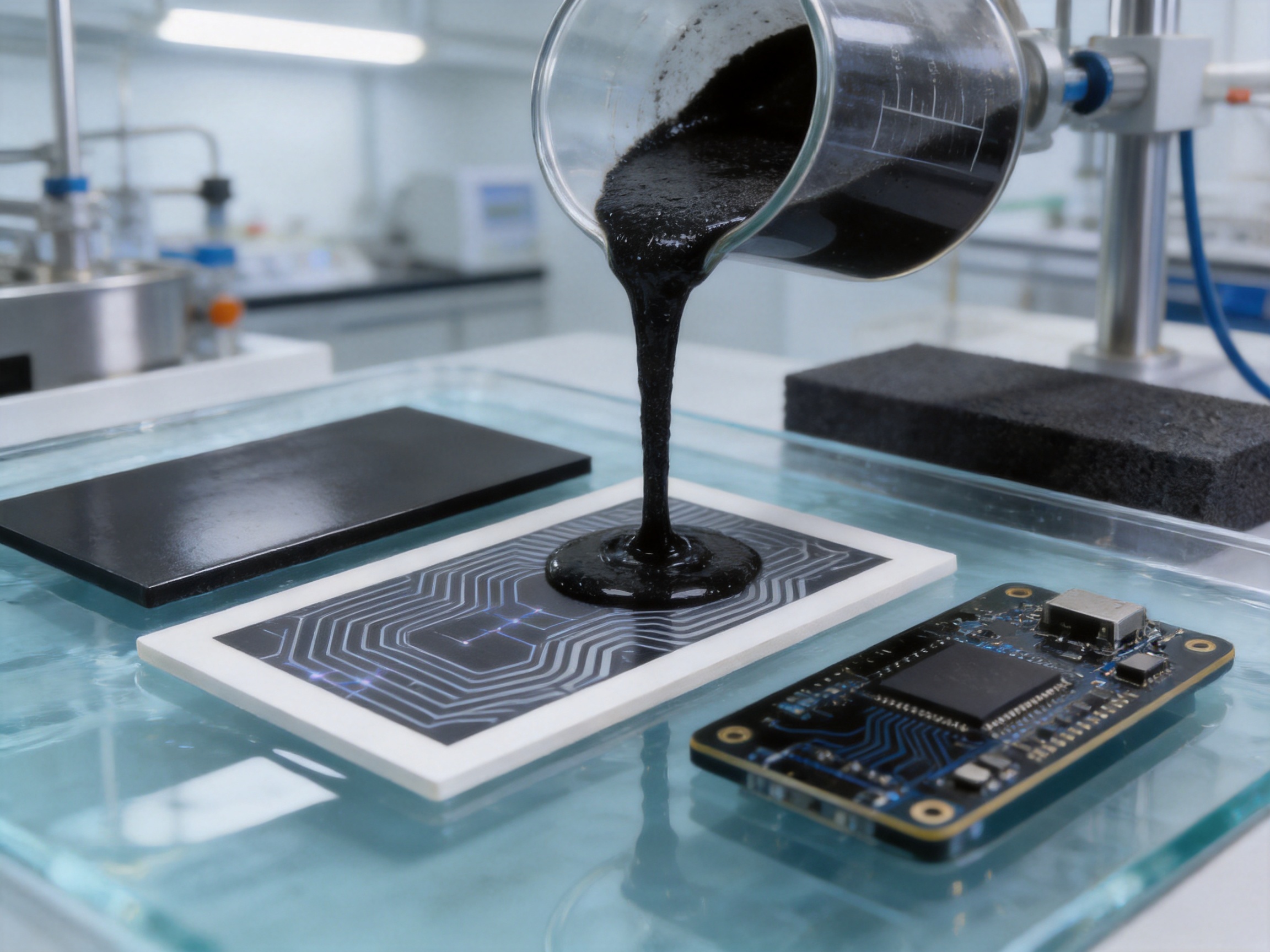
Customers can establish a focused qualification program using their own carbon materials and binders. The first stage should compare the recommended dosage range. For example, a formulator may prepare samples at 50%, 60%, 70%, and 80% of carbon weight, keeping all other variables constant. The samples can then be evaluated for incorporation time, viscosity, fineness, and visual uniformity.
The second stage should assess storage stability. Samples may be stored at room temperature and under accelerated conditions selected according to the product’s intended market. Testing can include visual inspection, viscosity measurement, redispersion behavior, sediment hardness, particle size, and conductivity. A successful sample should remain reasonably uniform and recover its intended performance after normal mixing.
The third stage should examine the final resin system. The concentrate should be let down into acrylic, epoxy, alkyd, or another relevant binder at the intended addition level. The formulator should check compatibility, film appearance, adhesion, drying or curing, hardness, flexibility, water resistance, and electrical properties.
The fourth stage should simulate production. Laboratory mixing does not always predict plant performance. The selected formulation should therefore be tested with the proposed production equipment, addition sequence, mixing time, filtration, pumping, filling, and application method. This step can reveal air entrainment, temperature rise, foam, filter blockage, or viscosity changes not observed in small-scale experiments.
| Test stage | Suggested observations | Decision purpose |
|---|---|---|
| Premix evaluation | Wetting speed, floating powder, foam, incorporation torque | Determine whether the additive and addition sequence are suitable |
| Dispersion evaluation | Fineness, particle-size distribution, viscosity, visual uniformity | Confirm deagglomeration and process efficiency |
| Concentrate stability | Settling, hard sediment, redispersion, viscosity drift | Assess storage and transport reliability |
| Resin compatibility | Flocculation, gloss, leveling, drying or curing, adhesion | Confirm suitability for the target binder |
| Electrical performance | Surface resistance, volume resistance, conductivity consistency | Verify that the carbon network meets the target |
| Application trial | Spray, brush, roll, screen, or other process behavior | Confirm production and end-use performance |
| Scale-up trial | Temperature, mixing time, filtration, pumping, batch repeatability | Reduce risk during commercial manufacturing |
DH-6552W should be stored in accordance with the supplier’s technical documentation and safety data. Containers should remain closed when not in use, and contamination by dust, water, or incompatible materials should be avoided. Storage temperature, shelf life, and freezing protection should be confirmed with the supplier before commercial use.
Carbon powders can generate dust during handling, especially when dry materials are transferred into a mixing vessel. Industrial operators should use suitable ventilation, dust-control equipment, personal protective equipment, and safe powder-addition procedures. The dispersant does not eliminate the need to manage the hazards associated with graphene, carbon nanotubes, or conductive carbon black.
Foam control should also be considered. High-speed mixing can entrain air, while carbon surfaces may stabilize bubbles. If a defoamer is needed, it should be selected and tested carefully because excessive defoamer can impair recoatability, adhesion, gloss, or conductivity. The company’s broader additive portfolio includes defoamers and leveling agents, which may support coordinated formulation development when required.
Water-borne dispersion technology can support the development of formulations with reduced reliance on organic solvents. The environmental profile of a finished product depends on the complete formulation, production process, drying conditions, and regulatory requirements, but an efficient water-borne carbon slurry can help manufacturers pursue lower-emission coating and ink strategies.
Higher-solids concentrates may also improve process efficiency. If more carbon material can be transported in a stable, manageable slurry, the manufacturer may reduce the number of handling steps and the amount of water that must later be removed. More efficient dispersion can reduce repeated milling, batch rejection, and waste caused by unstable or inconsistent material.
These potential benefits must be verified in the customer’s process. A high-solids slurry is valuable only if it can be pumped, filtered, mixed, stored, and applied reliably. The best formulation is therefore the one that combines functional performance with practical manufacturing efficiency.
Conductive carbon formulations are highly dependent on the selected raw materials and processing equipment. For that reason, technical service is an important part of additive supply. Customers may need support with dosage screening, order of addition, dispersion energy, resin compatibility, viscosity adjustment, storage evaluation, and scale-up.
The manufacturer positions itself as a provider of custom chemical solutions for paints, coatings, inks, and adhesives. Its wide range of additive products allows technical discussions to consider the complete formulation rather than one isolated performance issue. For example, a customer may need a conductive dispersant together with a leveling agent, defoamer, adhesion promoter, or anti-settling additive.
Application support can also help customers select the appropriate carbon material. The best dispersant dosage for conductive carbon black may not be the best dosage for carbon nanotubes or graphene. By combining product knowledge with customer test data, a supplier can help establish a more reliable formulation window.
It is particularly suitable for graphene, carbon nanotubes, conductive carbon black, and high-surface-area carbon black. These materials are difficult to disperse because of their high surface area, strong particle interactions, and tendency to form agglomerates or networks.
The recommended dosage is 50% to 80% of the carbon nanomaterial weight. This is a starting range. The optimum level should be determined through testing because different carbon grades can have significantly different surface areas, structures, and liquid absorption characteristics.
Yes. It is categorized as a water-borne dispersant and is intended for aqueous carbon-material systems. The complete formulation should still be checked for pH, resin compatibility, foam, storage stability, and application behavior.
Yes. The product is described as compatible with acrylic resins. Customers should confirm compatibility in their specific acrylic binder, including viscosity, gloss, adhesion, drying, water resistance, and electrical performance.
Yes. The product is also described as compatible with epoxy and alkyd resins. Each system should be evaluated separately because curing agents, oil modification, co-solvents, pigments, and other additives can influence the final result.
The dispersant does not replace the conductive carbon material. Its function is to help distribute and stabilize the carbon phase so that the carbon particles can form a more consistent conductive network. Final conductivity depends on the carbon type, loading, film thickness, binder, drying or curing, and application process.
Yes. One stated benefit is a significant increase in the solid content of concentrated carbon nanoslurries. The actual achievable solids level depends on the carbon material, equipment, dosage, water balance, and target viscosity.
Thixotropy can help a slurry maintain structure during storage while becoming easier to flow under mixing, pumping, spraying, printing, or other application shear. The desired degree of thixotropy depends on the application method and should be measured in the complete formulation.
A common starting approach is to introduce the dispersant into the aqueous phase before gradually adding the carbon material. The precise order should be optimized with the available equipment and formulation components. Controlled addition helps reduce dry agglomerates and air entrapment.
Appropriate shear is normally needed to break carbon agglomerates, but excessive shear can cause overheating, air entrainment, or unnecessary equipment wear. A staged process that combines controlled wetting, incorporation, and deagglomeration is often more effective than uncontrolled high-energy mixing.
Prepare a dosage ladder within the recommended 50% to 80% range and compare wetting, viscosity, fineness, storage stability, leveling, and final electrical performance. Select the lowest dosage that provides the required balance of stability and application performance, then verify it during scale-up.
It may be considered for water-borne carbon slurries used in battery-related development, but battery formulations require additional testing. Electrochemical stability, residual impurities, binder interaction, drying behavior, and compatibility with the active material must all be evaluated before commercial qualification.
Useful information includes the carbon material type and grade, specific surface area if available, target solids content, resin type, water quality, pH, mixing equipment, application method, desired conductivity, storage requirements, and current formulation problems. This information helps establish a more relevant testing plan.
DH-6552W Conductive Carbon Black Dispersant is a specialized water-borne additive for graphene, carbon nanotubes, conductive carbon black, and high-surface-area carbon black. Its core value lies in helping formulators manage the difficult combination of high surface area, strong agglomeration, complex rheology, and demanding storage requirements associated with conductive carbon nanomaterials.
The product offers a defined dosage range of 50% to 80% of carbon nanomaterial weight and supports the preparation of concentrated carbon nanoslurries. In addition to dispersion, it contributes to leveling, thixotropy, and storage stability. Its compatibility with acrylic, epoxy, and alkyd resins expands its usefulness across coatings, inks, adhesives, conductive films, industrial finishes, battery-related materials, and photovoltaic or electronic applications.
Compared with a general-purpose dispersant, its principal advantage is its focus on challenging carbon materials and its combination of dispersion with practical formulation properties. The product can help manufacturers improve slurry handling, reduce agglomeration-related defects, support more consistent conductivity, and develop higher-solids concentrates.
The manufacturer strengthens this product offering through research and development expertise, a modern production facility, advanced testing equipment, a broad additive portfolio, and experience serving the coatings, inks, and adhesives industries. Its manufacturing and technical capabilities provide a foundation for batch consistency, application evaluation, and custom chemical solutions.
Successful use still depends on disciplined formulation development. Carbon grade, dosage, addition sequence, shear conditions, resin compatibility, storage, and application must be evaluated together. When these variables are properly controlled, DH-6552W can serve as an effective tool for producing stable, high-performance water-borne carbon dispersions and conductive formulations.
1. Supplier product information for DH-6552W Conductive Carbon Black Dispersant.
2. Supplier company information and technical portfolio for coatings, inks, adhesives, and specialty additives.
3. Basic principles of pigment and filler dispersion in water-borne coating systems.
4. General formulation practices for conductive carbon black, graphene, and carbon nanotube slurries.
5. General laboratory methods for evaluating viscosity, particle-size distribution, sedimentation, leveling, adhesion, and electrical resistance.
6. General technical guidance for acrylic, epoxy, and alkyd coating formulation.
 Wholesale Paint/ Coating Additives Manufacturers
Custom Industrial Chemical Solutions Suppliers