русский
 Español
 Français
Home / Author / Wei Lanqing — Regional Product Sales Manager / Advanced Water-Based Thickening Technology for High-Performance Coatings
Wei Lanqing — Regional Product Sales Manager

Content
Modern coating manufacturers are under increasing pressure to improve application behavior, finish quality, durability, production efficiency, and environmental performance at the same time. A coating must often flow smoothly during application, resist sagging on vertical surfaces, maintain a stable viscosity during storage, tolerate shear during pumping and mixing, and develop a uniform film after drying. These requirements become even more demanding in water-based systems, where formulators must carefully balance rheology, surface appearance, electrolyte tolerance, microbial stability, and compatibility with other raw materials.
DH-7213S Water-based Thickener is designed to address these formulation challenges through a hydrophobically modified anionic acrylic thickener technology. It is intended for coating systems that require rapid viscosity development, improved thixotropy, smooth leveling, good fluidity, and reliable resistance to water, alkali, scrubbing, and staining. Its performance profile makes it suitable for manufacturers seeking a practical alternative to conventional thickening technologies that may provide viscosity but compromise application feel, high-shear performance, finish quality, or environmental objectives.
The product is supplied by Suzhou Qingtian New Material Co., Ltd., a professional manufacturer and supplier of raw materials for coatings, inks, and adhesives. The company combines formulation knowledge, research capability, production experience, testing resources, and application-oriented customer service. Since its establishment in 2012, it has developed a portfolio covering dispersants, leveling agents, defoamers, adhesion promoters, anti-settling agents, texture additives, wax powders, resins, and other specialty materials.
Within this broad product range, DH-7213S represents a focused solution for controlling the flow and viscosity of water-based coatings. Its value is not limited to increasing viscosity. It is designed to help formulators manage the complete rheological behavior of a coating, including low-shear structure, high-shear viscosity, recovery, surface leveling, and resistance to external conditions.
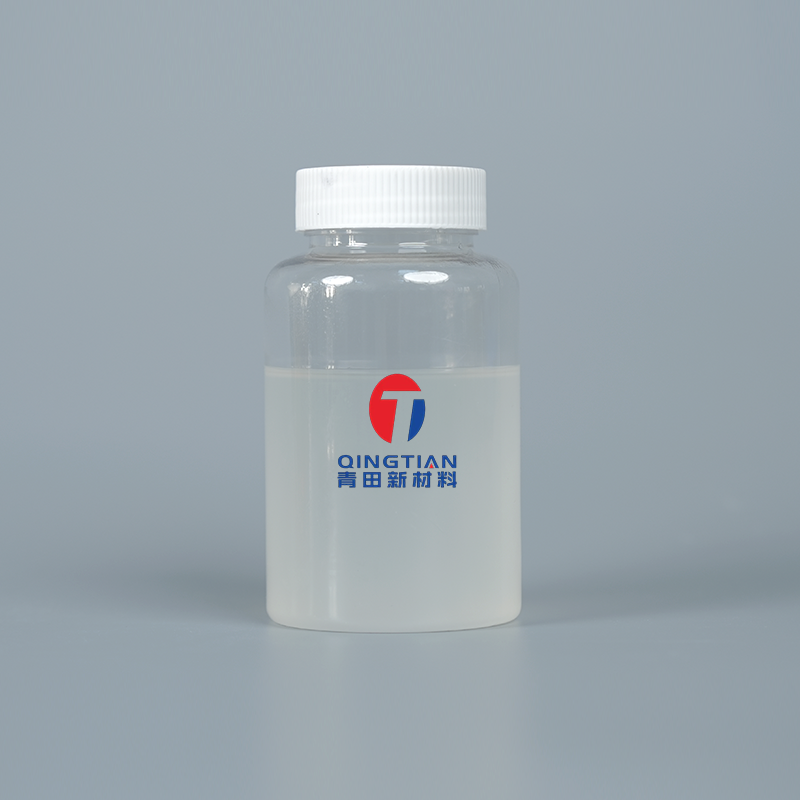
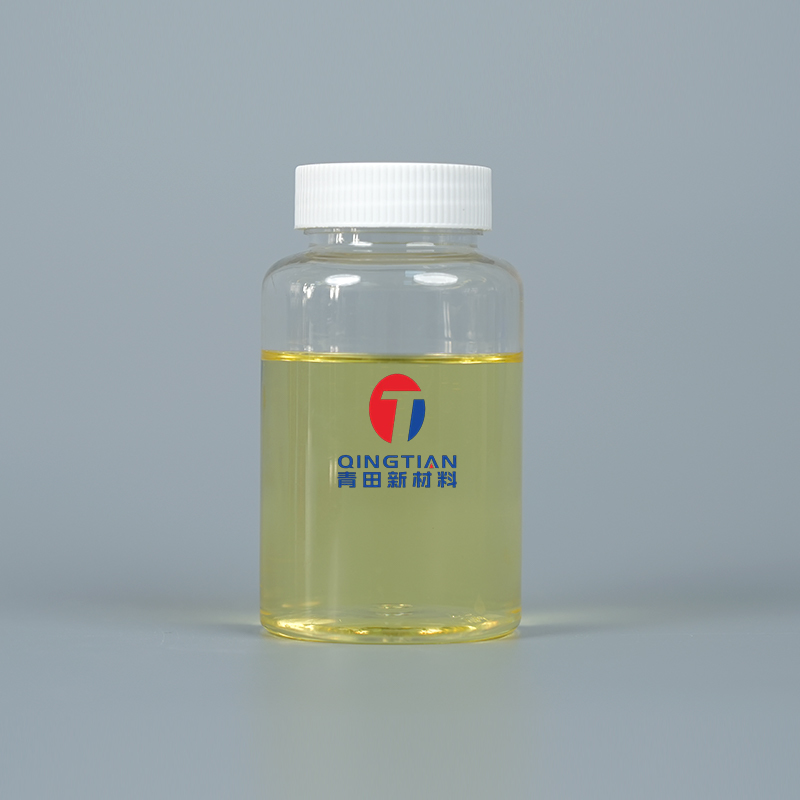
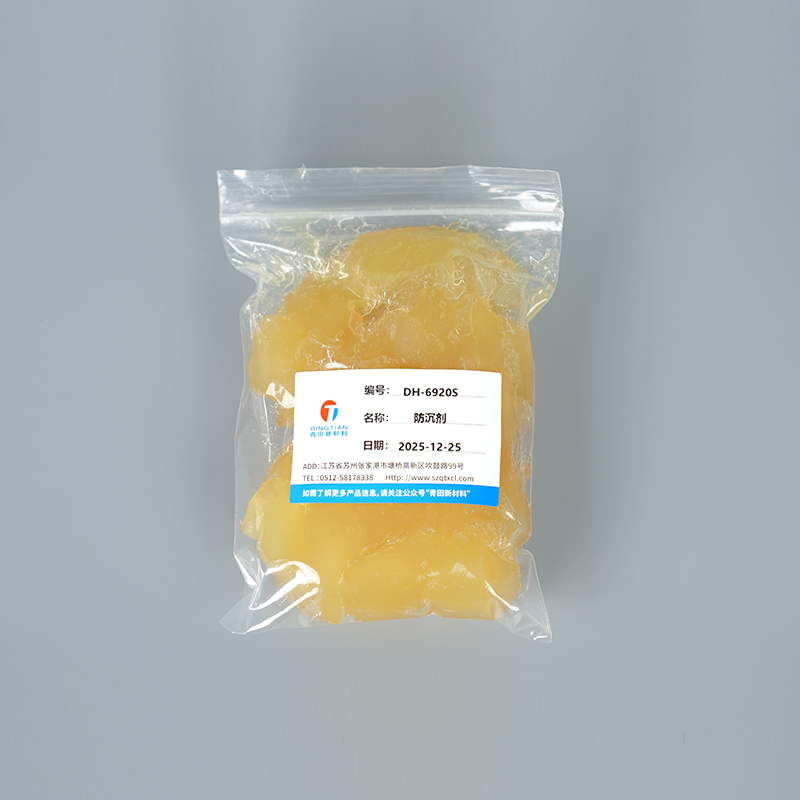
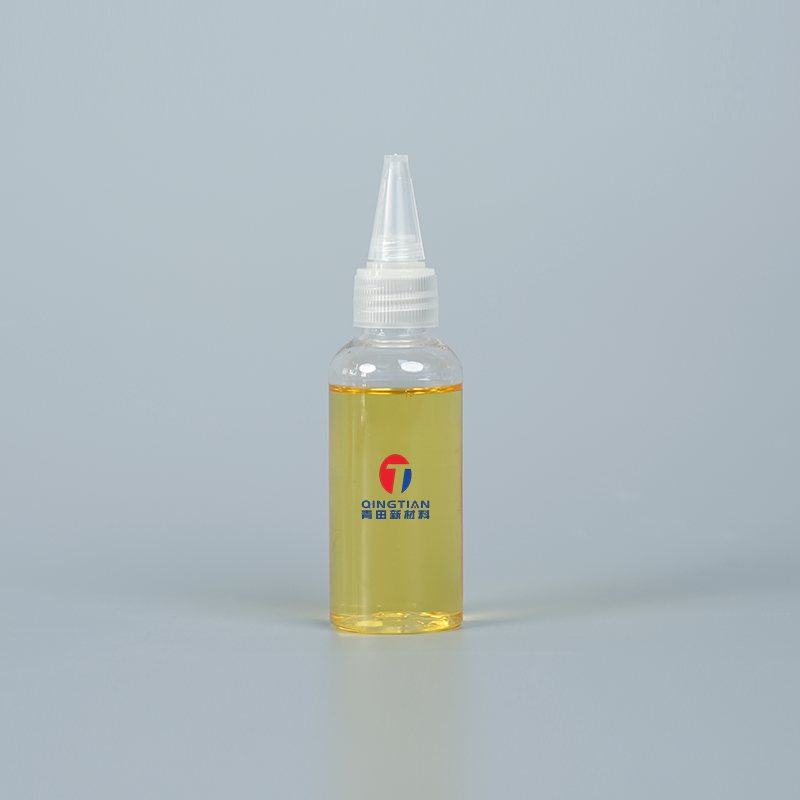
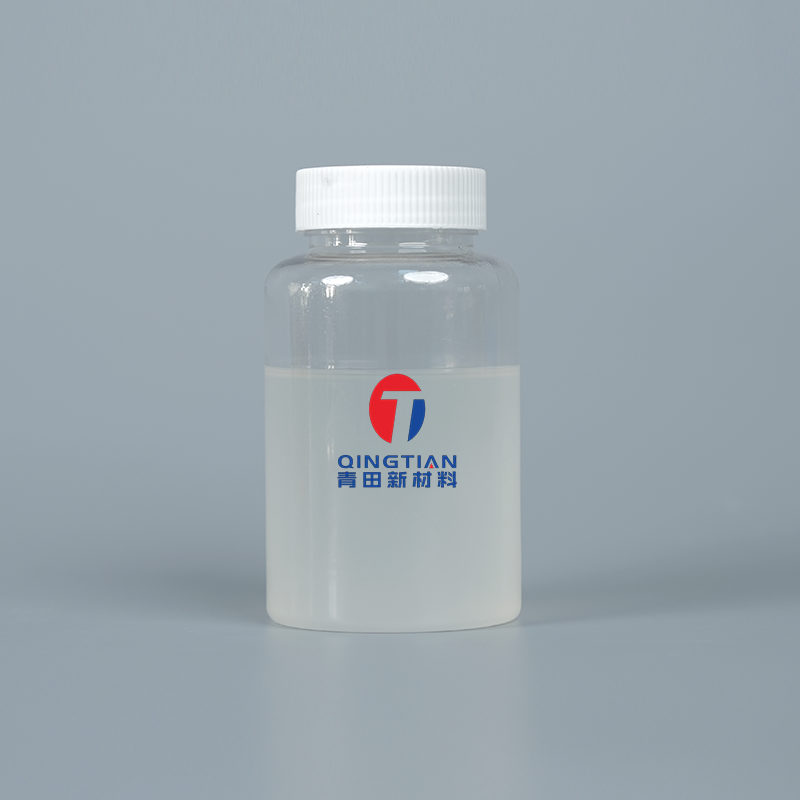
DH-7213S Water-based Thickener
Thickeners are essential functional additives in modern water-based coatings. They adjust the viscosity and flow profile of a formulation so that the product can be manufactured, packaged, transported, stored, applied, and cured with consistent performance. Without an effective rheology modifier, a coating may settle rapidly, run on vertical surfaces, splash during application, exhibit poor coverage, or produce an uneven film.
However, viscosity alone does not define a good thickener. Two products may produce a similar Brookfield viscosity while behaving very differently during brushing, rolling, spraying, pumping, or high-speed mixing. One may provide excellent low-shear structure but create poor leveling. Another may deliver good flow but fail to prevent sagging. A third may lose viscosity in the presence of salts, pigments, or alkaline ingredients. Therefore, the selection of a thickener should be based on the complete rheological profile of the coating rather than on a single viscosity value.
Water-based coatings are especially sensitive to these interactions. Their continuous phase is water, and their rheology may be affected by pH, surfactants, dispersants, pigments, fillers, coalescents, preservatives, salts, and other additives. The thickener must work within this complex environment while maintaining compatibility and predictable performance.
A well-designed thickener can provide several important benefits:
• Improved viscosity and application consistency.
• Better thixotropy and recovery after shear.
• Reduced sagging and improved film build.
• Enhanced pigment and filler suspension.
• Smoother brushing and rolling behavior.
• Better leveling and surface appearance.
• Improved resistance to water, alkali, scrubbing, and staining.
• More stable performance during storage and transportation.
DH-7213S is developed around these practical requirements. It is not simply a high-viscosity additive; it is a rheology-control material intended to help formulators achieve a better balance between structure and flow.
DH-7213S is described as an environmentally friendly anionic acrylic thickener modified with hydrophobic groups. This type of design is commonly associated with hydrophobically modified acrylic rheology technology, in which polymeric chains interact with one another and with selected components of the coating system to build a controlled three-dimensional structure.
The acrylic backbone contributes to the thickener’s ability to increase viscosity in aqueous systems. The anionic character supports water dispersibility and interaction with the formulation environment. Hydrophobic modification helps the polymer form associative structures that can respond to the presence of binder particles, surfactants, pigments, and other hydrophobic components. Through these interactions, the thickener can influence both low-shear and high-shear behavior.
This design is important because coating application involves changing shear conditions. During mixing, pumping, and spraying, the coating may experience substantial mechanical force. During storage, the system needs sufficient structure to prevent settling. During brushing or rolling, the coating must flow under shear and then recover its structure after application. The thickener must therefore support a dynamic balance rather than create a permanently rigid structure.
The hydrophobically modified acrylic approach can offer advantages over conventional water-soluble polymers or purely cellulosic thickeners in applications where smooth flow, high-shear viscosity, and surface appearance are important. It can also help formulators fine-tune the relationship between viscosity, leveling, sag resistance, and application feel.
In practical formulation work, the final performance depends on many factors, including polymer type, emulsion chemistry, pH, neutralization level, dosage, pigment volume concentration, surfactant selection, and order of addition. DH-7213S should therefore be evaluated within the complete target formulation. Nevertheless, its stated design provides a strong platform for water-based coatings that demand both rheological control and high-quality appearance.
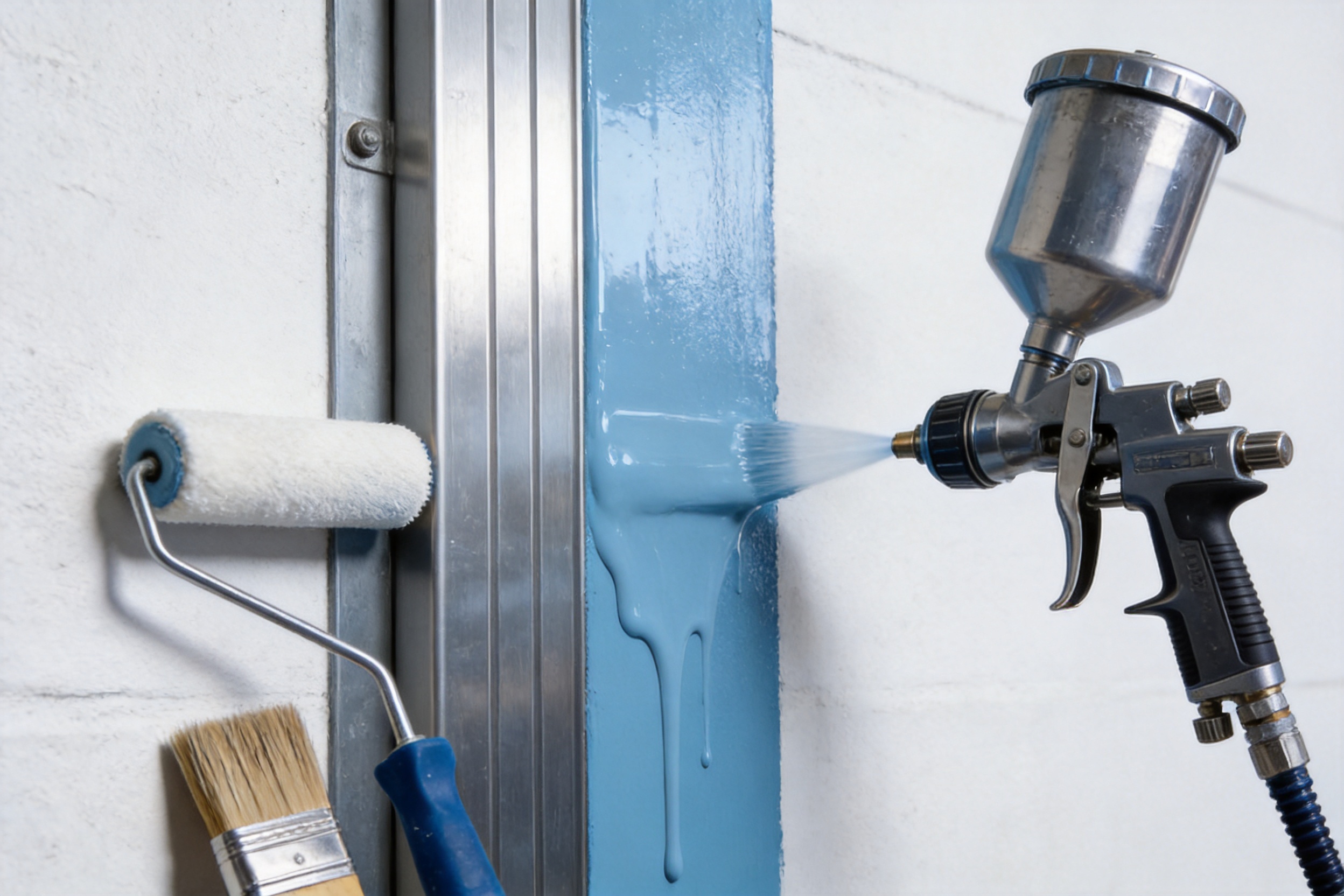
The primary function of DH-7213S is to increase viscosity efficiently. A strong thickening response allows formulators to reach the required application viscosity with an appropriate additive dosage. This may create greater formulation flexibility, especially when the coating contains high levels of pigments, extenders, or functional fillers.
Efficient thickening can also simplify production. When a thickener develops viscosity rapidly and predictably, manufacturers can reduce the time required for adjustment and minimize repeated corrections. This is valuable in large-scale production, where small variations in viscosity can affect filling, packaging, application, and customer acceptance.
Viscosity control also supports product consistency. A coating with stable and appropriate viscosity is easier to pump, transfer, mix, fill, and apply. It is less likely to produce excessive splashing during roller application or uneven spray patterns during application by equipment.
DH-7213S is characterized by fast paste-forming speed and rapid thickening. This feature can be especially useful for manufacturers that need efficient dispersion and short production cycles. A thickener that forms a uniform paste quickly can be easier to incorporate into a batch and may reduce the time spent waiting for viscosity development.
Fast paste formation also supports more responsive viscosity adjustment. During production, operators can determine the rheological direction of the formulation earlier in the process. This can help reduce the risk of over-thickening, under-thickening, or excessive correction with additional water or other additives.
Depending on the formulation method, the product may be incorporated as a prepared paste or according to a recommended addition procedure established through laboratory testing. The exact method should be determined by the formulator because different resin emulsions and pigment systems can respond differently to the order and rate of addition.
Many thickeners can increase viscosity but negatively affect flow. Excessive structure may produce brush marks, roller texture, orange peel, poor edge flow, or an uneven final appearance. DH-7213S is designed to provide thickening while retaining excellent leveling and fluidity.
This balance is important for decorative and protective coatings alike. A coating must remain sufficiently structured to resist sagging, but it must also flow enough to smooth out application marks and form a continuous film. Good leveling can improve gloss uniformity, visual smoothness, and the perceived quality of the finished surface.
In architectural coatings, good fluidity can improve brush and roller application. In industrial coatings, it can support uniform coverage over metal, plastic, wood, glass, or other substrates. In systems requiring a refined appearance, improved leveling may help reduce surface defects that would otherwise require sanding, recoating, or process adjustment.
The product information identifies improvement of thixotropy as one of the principal functions of DH-7213S. Thixotropy describes a time-dependent reduction in viscosity under shear and recovery after the shear is removed. This behavior is valuable because it allows a coating to flow during application while rebuilding structure afterward.
During brushing or rolling, the coating should become easier to move. Once applied, it should recover enough viscosity to resist sagging and excessive flow. In a container, it should maintain sufficient structure to help keep pigments and fillers suspended. A well-balanced thixotropic profile can therefore improve both application and storage stability.
Thixotropy is also important in vertical and overhead applications. A coating with inadequate recovery may run or sag before drying. A coating with excessive static structure may be difficult to spread. DH-7213S is intended to help formulators adjust this compromise more effectively.
One of the notable performance characteristics of DH-7213S is its excellent high-shear viscosity thickening effect. High-shear viscosity influences how a coating behaves during high-speed mixing, pumping, spraying, and application. It can affect atomization, transfer efficiency, roller loading, splashing, and film formation.
Some conventional thickeners provide strong low-shear viscosity but contribute less effectively to high-shear control. This may result in a coating that appears thick during static testing but becomes excessively thin during application. The resulting film may have poor coverage, insufficient wet thickness, or inconsistent appearance.
By supporting high-shear viscosity, DH-7213S can help maintain a more stable application profile. The coating may retain sufficient body during dynamic processing without becoming excessively resistant to movement. This characteristic is particularly relevant to industrial production environments where coatings are applied at high speed or through automated equipment.
Durability is a central requirement for many coatings. DH-7213S is reported to provide outstanding resistance to water, alkali, scrubbing, and staining. These properties can support the development of coatings that retain their appearance and protective function under demanding service conditions.
Water resistance is important for interior and exterior architectural coatings, industrial coatings, and systems exposed to humidity or intermittent contact with water. Alkali resistance can be relevant to mineral substrates, cement-based surfaces, masonry, concrete, and alkaline formulation environments.
Scrub resistance is a key performance criterion for wall paints and other surfaces subject to repeated cleaning. A coating with good scrub resistance can better retain its film integrity and appearance after mechanical cleaning. Stain resistance is also valuable in residential, commercial, institutional, and industrial environments where dirt, colored liquids, oils, or other contaminants may contact the surface.
The contribution of a thickener to these properties depends on the complete coating system. Binder selection, coalescence, pigment dispersion, film formation, curing conditions, and additive compatibility all influence final durability. Nevertheless, a thickener that supports formulation stability and film quality can make an important contribution to the overall performance of the finished coating.
Electrolytes can significantly influence the behavior of water-based coatings. Salts and ionic materials may alter polymer conformation, reduce viscosity, destabilize dispersions, or change the interaction between the thickener and other formulation ingredients. Poor electrolyte resistance can lead to inconsistent viscosity during production or storage.
DH-7213S is described as having good electrolyte resistance. This gives formulators greater flexibility when working with systems that contain ionic pigments, fillers, neutralizing agents, preservatives, or other electrolyte-sensitive ingredients. It may also help maintain more predictable viscosity across batches with normal raw-material variation.
Electrolyte resistance should still be confirmed with the specific formulation because the concentration and type of ions can vary widely. Laboratory screening is recommended when developing new products or modifying an existing formula.
Water-based products are naturally vulnerable to microbial contamination because water provides an environment in which microorganisms may grow. A thickener that is easily degraded by microbial or enzymatic activity can lose viscosity during storage and may create additional stability problems.
DH-7213S is described as having reliable biological stability and resistance to microbial and enzymatic degradation. This characteristic helps support consistent rheological performance over the intended shelf life. It may also reduce the risk that the thickener itself becomes a source of instability in the formulation.
Biological stability does not eliminate the need for an appropriate preservation strategy. The finished coating should still be protected through a suitable in-can preservation system, hygienic manufacturing practices, clean equipment, proper storage, and validated quality control procedures.
Environmental considerations are increasingly important in the selection of coating additives. Manufacturers are seeking solutions that support lower-emission, water-based, and more sustainable coating technologies without sacrificing performance. DH-7213S is presented as an environmentally friendly product that is free of formaldehyde, APEO, and kerosene.
The absence of formaldehyde is important for customers who are developing products for indoor use, regulated markets, or applications where low-emission raw materials are preferred. APEO-free chemistry is also relevant because alkylphenol ethoxylates have attracted regulatory and environmental attention in many regions. Avoiding kerosene supports the development of water-based systems that are less dependent on petroleum-derived solvent materials associated with odor and volatile emissions.
Environmental positioning should always be assessed together with the regulatory requirements of the target market. Product documentation, safety data, regional chemical inventories, labeling requirements, and customer-specific restricted-substance lists should be reviewed before commercial use. The stated composition advantages nevertheless make DH-7213S a relevant candidate for formulators seeking to improve the environmental profile of water-based coatings.
An environmentally considerate additive must also deliver reliable technical performance. If a low-emission coating requires excessive rework, high scrap rates, or frequent recoating, its overall resource efficiency may be reduced. By combining environmental features with rapid thickening, high-shear performance, leveling, durability, and biological stability, DH-7213S is positioned as a more complete solution rather than a single-attribute additive.
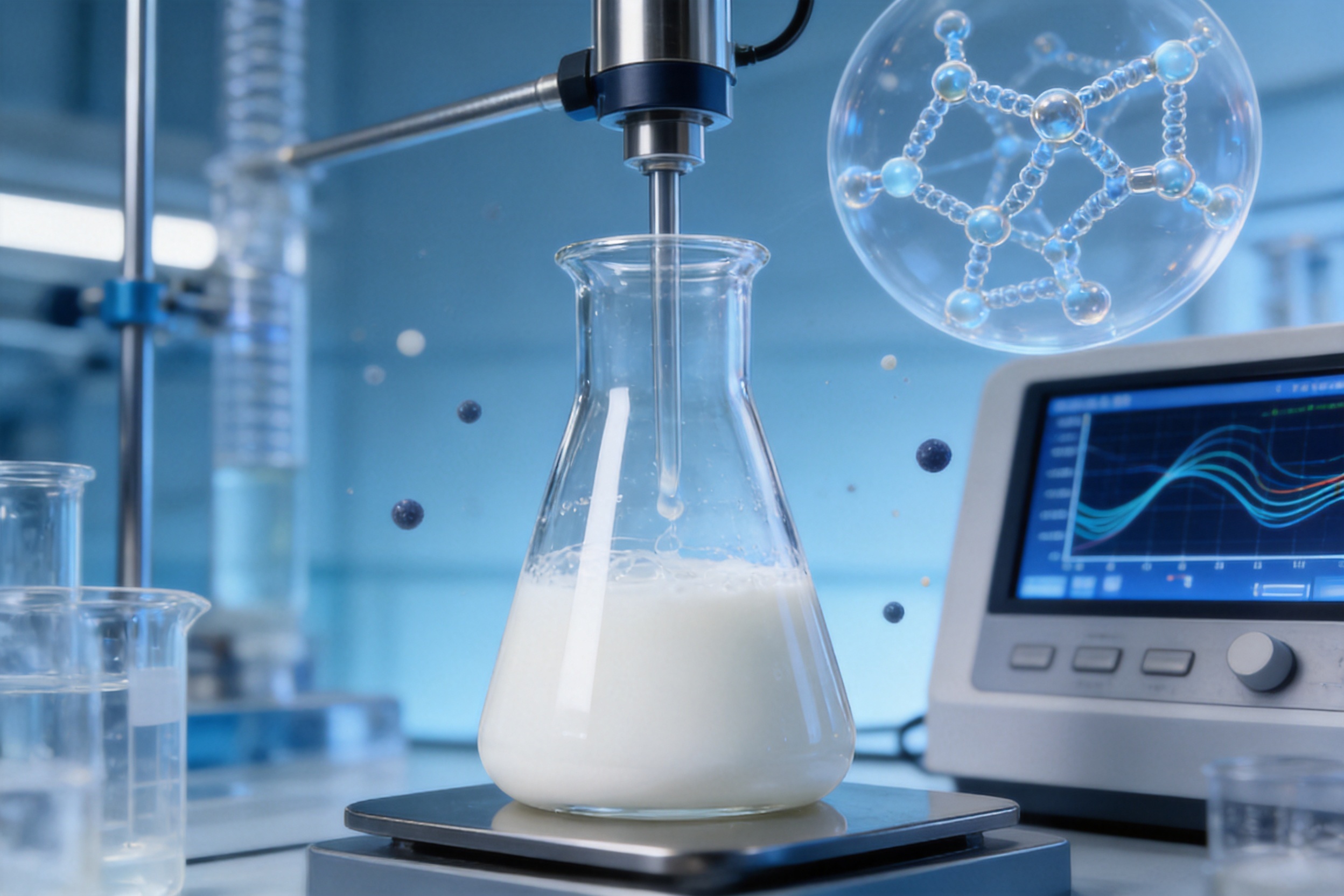
Different thickener families offer different benefits. Cellulosic thickeners may provide strong low-shear viscosity and useful water retention, while traditional acrylic thickeners may offer efficient thickening and a familiar formulation route. Polyurethane associative thickeners can provide attractive flow and leveling characteristics in selected systems. In practice, the best choice depends on the coating type, application method, resin chemistry, target viscosity, and performance requirements.
DH-7213S is differentiated by the combination of properties reported for the product. Its advantages are not based only on viscosity increase. The combination includes rapid paste formation, excellent leveling and fluidity, improved thixotropy, high-shear viscosity development, electrolyte resistance, biological stability, and resistance to water, alkali, scrubbing, and staining.
| Performance consideration | Potential limitation of a conventional approach | DH-7213S positioning |
|---|---|---|
| Viscosity development | Slow response may extend production and adjustment time | Fast paste-forming speed and rapid thickening |
| Application flow | High viscosity may be accompanied by poor leveling | Thickening combined with excellent fluidity and leveling |
| Dynamic application | Low high-shear viscosity may cause excessive thinning during application | Strong high-shear viscosity thickening effect |
| Storage structure | Insufficient structure may increase settling or sagging | Improved thixotropy and viscosity control |
| Electrolyte-containing systems | Salt sensitivity may cause viscosity loss or instability | Good electrolyte resistance |
| Durability requirements | Some systems may require additional optimization for water or scrub resistance | Reported resistance to water, alkali, scrubbing, and staining |
| Environmental goals | Some additive packages may contain restricted or undesirable substances | Free of formaldehyde, APEO, and kerosene |
| Long-term storage | Microbial or enzymatic degradation can affect viscosity | Reliable biological stability |
This comparison should not be interpreted as a universal claim that one thickener replaces every other rheology modifier in every formulation. Rather, it shows why DH-7213S may be attractive when a formulator needs several performance benefits in one additive platform. Product selection should be validated through side-by-side testing under the actual conditions of use.
Architectural coatings require a careful balance of ease of application, anti-sag behavior, leveling, hiding, stain resistance, and cleanability. DH-7213S can support these objectives by building viscosity quickly while maintaining fluidity. It may be considered for interior wall paints, exterior coatings, primers, masonry coatings, and other water-based decorative products.
In interior paints, leveling and scrub resistance are particularly important. The coating should spread smoothly, minimize brush or roller marks, and resist repeated cleaning. In exterior coatings, water and alkali resistance become more significant because the film may experience rain, humidity, alkaline substrates, and temperature changes.
Industrial coating lines frequently operate under demanding production conditions. Coatings may be mixed at high speed, pumped over long distances, applied by spray equipment, or used on complex shapes and vertical surfaces. Consistent high-shear viscosity and rapid rheology development can help improve process control.
DH-7213S may be considered for water-based metal coatings, machinery coatings, general industrial finishes, protective coatings, and other systems where application consistency and surface appearance are important. Its reported resistance profile may also support applications in which the cured film must tolerate cleaning, moisture, alkaline exposure, or staining.
Coil coating processes require carefully controlled viscosity, excellent film uniformity, and high production efficiency. Small rheological variations can affect coating weight, surface appearance, edge coverage, and line performance. A thickener with good dynamic behavior may help formulators maintain a more consistent coating response during high-speed application.
The company’s broader experience with raw materials for steel and aluminum coil coatings provides a relevant application context. DH-7213S can be evaluated in water-based coil coating systems where rapid thickening, high-shear viscosity, leveling, and resistance to water or alkaline conditions are required.
Wood coatings must often deliver smooth appearance, good flow, controlled penetration, and resistance to household use. Excessive viscosity can leave visible application marks, while inadequate structure can cause uneven coverage or sagging. DH-7213S may help formulators tune the balance between application smoothness and film build in water-based wood coatings.
For furniture and interior wood finishes, environmental positioning is also important. Formaldehyde-free and APEO-free additive selection may support product development for customers seeking lower-emission solutions and improved indoor-use credentials.
Coatings for glass and plastic often require careful control of wetting, leveling, adhesion, and film appearance. The thickener must be compatible with the binder and other surface-active components without causing excessive surface defects. DH-7213S can be screened in suitable water-based systems where viscosity control and smooth film formation are required.
The company serves coatings, inks, and adhesives markets, and rheology control is also important in water-based inks and adhesive formulations. Although the suitability of DH-7213S must be verified for each specific system, its fast thickening, high-shear response, and fluidity profile may be relevant to selected applications requiring controlled transfer and stable processing behavior.
Successful use of a thickener depends on both the product and the formulation process. Before full-scale production, formulators should evaluate the thickener in the presence of the intended binder, pigments, extenders, dispersants, defoamers, wetting agents, coalescents, preservatives, pH adjusters, and other additives.
pH is often an important variable for acrylic thickener systems. The viscosity response may depend on neutralization and the final pH range of the coating. A controlled addition of neutralizing agent can help the formulator reach the desired thickening profile without creating local over-neutralization or instability.
The order of addition is also significant. In some systems, the thickener is first diluted or prepared as a paste. In others, it may be incorporated during the let-down stage after pigment dispersion. The preferred method should be established through laboratory trials and then transferred carefully to production.
High-speed dispersion can introduce air into the coating. Although DH-7213S is not a defoamer, its influence on viscosity may affect bubble release and mixing behavior. Defoamer selection should therefore be optimized alongside thickener selection. A coating with excellent rheology can still exhibit surface defects if foam is not properly controlled.
Compatibility testing should include:
• Initial viscosity after manufacture.
• Viscosity after 24 hours and after full equilibration.
• Low-shear, medium-shear, and high-shear viscosity.
• Thixotropic recovery after defined shear conditions.
• Sag resistance on vertical panels.
• Leveling and brush or roller application behavior.
• Water resistance and alkali resistance.
• Scrub resistance and stain resistance.
• Storage stability under elevated and ambient temperatures.
• Freeze-thaw performance where relevant.
• Microbial stability in the complete formulation.
The recommended dosage should be determined by testing rather than assumed from another thickener system. The optimal level may vary with binder solids, pigment concentration, surfactant package, pH, and target application method. Overuse may produce excessive viscosity, poor flow, or undesirable texture, while underuse may provide insufficient structure.
The technical value of an additive is closely linked to the reliability of its manufacturing process. A coating producer needs stable performance from batch to batch, predictable delivery, responsive technical communication, and confidence that the product is supported by appropriate quality controls.
Suzhou Qingtian New Material Co., Ltd. was founded in 2012 and has developed an experienced team involving research and development specialists, sales professionals, and production personnel. The company operates a modern production facility supported by advanced testing equipment and strong research capabilities. This combination enables the company to connect laboratory development with practical manufacturing and customer application requirements.
For a specialty thickener such as DH-7213S, advanced manufacturing is not limited to mixing raw materials. It includes raw-material qualification, reaction and modification control, dispersion management, neutralization control, filtration, batch uniformity, packaging, and finished-product testing. Each stage can influence molecular distribution, activation behavior, viscosity response, storage stability, and compatibility.
Modern production of acrylic rheology modifiers typically requires close monitoring of process parameters. Temperature, pH, addition rate, agitation intensity, residence time, and solids concentration may affect the final product. Consistent control helps reduce batch variation and provides more predictable performance in customer formulations.
Quality testing is equally important. Depending on the product specification, relevant checks may include appearance, solids content, pH, viscosity, dispersion behavior, stability, microbial condition, and application performance. A manufacturer with strong testing resources can examine not only basic physical properties but also the practical behavior of the additive in representative coating systems.
The company’s modern production facility and research infrastructure support a development model in which new products can be evaluated, optimized, and scaled more systematically. This is important for customers requiring custom chemical solutions, because an additive supplier must understand both the chemistry of the product and the production realities of the customer’s coating line.
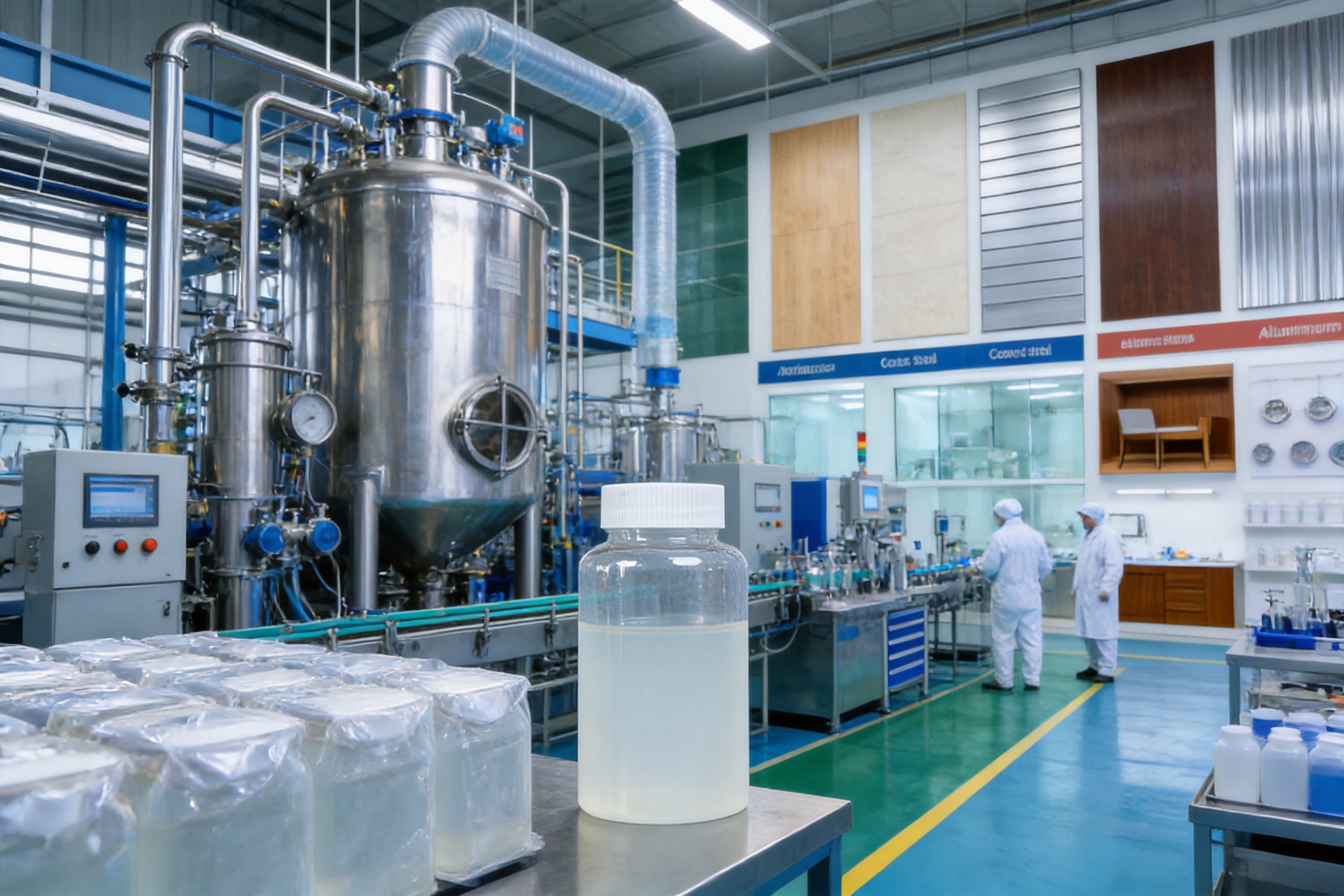
Specialty additive development requires sustained research rather than a single formulation effort. Coating technologies continue to evolve in response to environmental regulations, energy requirements, new substrates, automated application, and higher durability expectations. Additive manufacturers must therefore continue to improve molecular design, application performance, and production efficiency.
Suzhou Qingtian New Material Co., Ltd. has built its business around raw materials for coatings, inks, and adhesives. Its product portfolio includes dispersants, leveling agents, defoamers, adhesion promoters, anti-settling agents, cooling agents, conductive agents, orange peel texture agents, texture powders, wax powders, and resin products. This breadth is valuable because coating performance is usually determined by interactions among several additives rather than by one ingredient acting in isolation.
The company’s development milestones include the creation of a China-originated ice flower resin in 2016, recognition as a National High-Tech Enterprise in 2020, and relocation to Lingrui Intelligent Manufacturing Park in Zhangjiagang High-Tech Zone in 2021. These milestones indicate a continued emphasis on research, manufacturing capability, and infrastructure development.
For customers evaluating DH-7213S, the broader product portfolio can provide an additional technical advantage. A supplier familiar with dispersants, leveling agents, defoamers, adhesion promoters, and rheology modifiers may be better positioned to analyze formulation interactions. For example, a viscosity problem may originate from pigment dispersion, surfactant imbalance, foam, pH drift, or incompatibility rather than from the thickener alone.
An integrated additive perspective can help customers avoid isolated troubleshooting. Instead of treating each defect independently, the supplier can examine the coating as a complete system. This approach is particularly useful when customers are developing water-based products with multiple performance targets.
Technical service is an important differentiator in the specialty chemical industry. A product data sheet can describe the basic performance of an additive, but customers often need assistance with dosage, addition sequence, compatibility, viscosity adjustment, and performance testing.
Suzhou Qingtian New Material Co., Ltd. emphasizes innovation, quality, service, and win-win cooperation. Its experienced team can support communication between customer development personnel, purchasing departments, production operators, and quality managers. This cooperation is useful when a customer is transitioning from another thickener, optimizing a coating for a new substrate, or adjusting a product to meet environmental requirements.
Application support may involve comparing different dosage levels, studying the influence of pH, examining low-shear and high-shear viscosity, or testing the additive in a customer-supplied base formula. A practical development program should establish clear performance targets before testing begins. These targets may include viscosity ranges, sag limits, leveling scores, scrub cycles, storage stability, or application-speed requirements.
For international customers, reliable communication and documentation are also essential. Product information should be supported by appropriate technical data, safety documentation, packaging details, batch information, and shipping coordination. Consistent service can reduce the time required to move from laboratory evaluation to commercial adoption.
Sustainability in coatings involves more than reducing solvent content. It includes responsible raw-material selection, efficient manufacturing, long product life, reduced maintenance, lower waste, and stable processing. A high-performance water-based thickener can contribute to this broader objective when it enables a coating to meet performance requirements with efficient application and fewer defects.
The formaldehyde-free, APEO-free, and kerosene-free positioning of DH-7213S supports customers seeking additive packages aligned with modern environmental expectations. Water-based coatings can also reduce reliance on traditional solvent systems in suitable applications, although the complete formulation and production process must be assessed to determine the overall environmental profile.
Manufacturing responsibility includes process control, waste management, equipment maintenance, worker safety, and quality assurance. A modern facility with advanced testing equipment can help identify deviations earlier and reduce the risk of off-specification batches. Better batch consistency can lower material waste and reduce the number of rejected or reworked coating products.
Long-term durability also has an environmental dimension. Coatings that resist water, alkali, scrubbing, and staining may require less frequent repair or replacement. When the coating maintains its protective and decorative function for a longer period, the consumption of raw materials, packaging, transportation, and labor associated with recoating may be reduced.
Customers considering DH-7213S should conduct a structured evaluation that reflects the intended end use. The first step is to establish the target profile of the coating. This may include application method, substrate, gloss level, solids content, pigment volume concentration, desired viscosity, storage conditions, and durability requirements.
The next step is to prepare a control formula using the current thickener and one or more trial formulas using DH-7213S. Testing should be performed at several dosage levels so that the formulator can identify the most efficient balance between viscosity and application behavior.
Laboratory tests should include both instrumental measurements and practical application tests. Instrumental viscosity readings are useful, but they should be combined with brush, roller, spray, drawdown, and sag evaluations. The coating should be observed immediately after application and after drying because some differences become visible only during film formation.
Storage testing should be conducted under ambient and accelerated conditions. Samples can be evaluated for viscosity drift, syneresis, settling, skin formation, odor, microbial condition, and ease of remixing. If the coating is intended for cold climates, freeze-thaw testing should be included.
Durability testing should match the target market. Interior coatings may require scrub and stain testing. Exterior coatings may require water resistance, alkali resistance, weathering, and adhesion assessment. Industrial products may require chemical resistance, corrosion protection, hardness, flexibility, and substrate-specific testing.
Once the optimal formula is identified, scale-up trials are necessary. Mixing equipment, batch size, shear history, addition rates, and production temperature can change the final rheology. A formula that performs well in the laboratory may need minor process adjustments at plant scale. Close cooperation between the customer and additive supplier can help manage this transition.
Global coating manufacturers increasingly require suppliers that can provide more than basic raw materials. They need technical reliability, environmental awareness, stable production, flexible communication, and the ability to support different applications and regional requirements.
DH-7213S is well positioned for customers seeking a water-based thickener with a broad performance profile. Its rapid thickening response may support production efficiency. Its high-shear viscosity effect may improve dynamic application. Its leveling and fluidity may contribute to smoother surfaces. Its thixotropic behavior may improve storage structure and sag resistance. Its resistance properties may support durable coating development. Its environmental positioning may assist customers working toward restricted-substance and low-emission objectives.
The company’s location in Zhangjiagang, Suzhou, Jiangsu Province, provides access to an important manufacturing and logistics region. Its production and research infrastructure, combined with experience in specialty coating additives, supports both domestic and international business cooperation.
Customers can use DH-7213S as a standalone primary thickener in suitable systems or evaluate it as part of a broader rheology package. In some formulations, combining different rheology modifiers may provide a better balance of low-shear structure, high-shear viscosity, leveling, and application feel. Such combinations should be assessed carefully to avoid incompatibility or excessive viscosity.
A common limitation in additive purchasing is the separation between product supply and technical problem-solving. A supplier may offer a thickener but have limited knowledge of the customer’s dispersant, defoamer, resin, pigment, or application process. This can make troubleshooting slow and may lead to repeated reformulation.
The more integrated approach offered by a company with a broad coating-additive portfolio can provide practical advantages. Because the supplier works across several additive categories, it can consider how rheology interacts with dispersion, surface control, foam, adhesion, texture, and durability. This perspective can make product development more efficient.
Another advantage is manufacturing continuity. Customers often need assurance that a product will remain available and consistent as their usage grows. A supplier with its own modern production capabilities, research facilities, and quality systems may be better prepared to support commercial volumes than a company relying entirely on external sourcing.
Finally, application-oriented cooperation can help customers adapt the thickener to different regional raw materials and production conditions. Variations in local pigments, binders, water quality, equipment, and climate can influence coating behavior. Technical support and systematic testing are therefore important parts of the product value.
DH-7213S is a water-based coating thickener. It is an environmentally friendly anionic acrylic thickener modified with hydrophobic groups, designed to improve viscosity, thixotropy, flow behavior, and application performance in suitable water-based coating systems.
The main functions are increasing viscosity and improving thixotropy. The product also provides rapid thickening, good high-shear viscosity development, excellent leveling and fluidity, and support for resistance to water, alkali, scrubbing, and staining.
No single thickener is universally suitable for every coating. DH-7213S should be evaluated with the specific binder, pigments, fillers, pH, surfactants, preservatives, and other additives in the intended formulation. Laboratory compatibility and application testing are recommended before commercial use.
Its hydrophobically modified acrylic structure can build associative interactions in the coating. These interactions help the formulation maintain structure at rest, flow under shear, and recover viscosity after application. The final thixotropic response depends on dosage and the chemistry of the complete formulation.
DH-7213S is designed to combine thickening with excellent leveling and fluidity. This combination can help reduce application marks and support a smoother film. Actual leveling performance depends on resin selection, surface tension, defoamer compatibility, substrate condition, and application method.
Yes. The product is described as having an excellent high-shear viscosity thickening effect. This can be beneficial during pumping, spraying, high-speed mixing, brushing, and rolling, where a coating may otherwise become excessively thin.
DH-7213S has good electrolyte resistance according to the supplied product information. However, the effect of different salts and ionic ingredients can vary. Testing should be conducted using the actual raw materials and concentrations in the target formulation.
DH-7213S is presented as free of formaldehyde, APEO, and kerosene. This positioning may support the development of water-based and lower-emission coating systems. Customers should review current technical and regulatory documentation for the destination market before approval.
It may be considered for suitable interior and exterior architectural coatings because of its viscosity control, leveling, thixotropy, scrub resistance, water resistance, alkali resistance, and stain-resistance profile. Performance should be confirmed in the intended wall paint or masonry formulation.
It may be evaluated in water-based industrial coatings, including systems for metal, aluminum, steel, wood, glass, plastic, and other substrates. High-shear viscosity, flow, and durability testing should be matched to the application equipment and end-use requirements.
No. The product is described as resistant to microbial and enzymatic degradation, but the finished water-based coating may still require an appropriate preservation system. In-can preservation, hygiene, packaging, and storage conditions should be validated for the complete product.
The best dosage depends on the coating formulation and target viscosity. A dosage ladder should be prepared during laboratory development, and the results should be evaluated through viscosity, application, leveling, sag, stability, and durability testing.
Coating performance often depends on interactions among thickeners, dispersants, leveling agents, defoamers, adhesion promoters, resins, and other additives. A supplier with experience across several categories can provide a more integrated approach to formulation development and troubleshooting.
The supplier has an experienced research and production team, a modern production facility, advanced testing equipment, and a history of developing specialty materials for coatings, inks, and adhesives. Its development milestones and high-technology enterprise recognition reflect a continuing focus on technical capability and manufacturing development.
Customers should define the target application, share the basic formulation and process conditions, request the relevant technical and safety documents, and conduct comparative laboratory tests. A scale-up trial should follow successful laboratory evaluation to confirm performance under production conditions.
DH-7213S Water-based Thickener is a multifunctional rheology solution for formulators seeking more than a simple increase in viscosity. Its hydrophobically modified anionic acrylic design supports rapid paste formation, efficient thickening, high-shear viscosity control, improved thixotropy, excellent leveling, and good fluidity. Its reported resistance to water, alkali, scrubbing, staining, and electrolytes further expands its potential value in demanding coating systems.
The product also responds to current environmental and formulation trends through its formaldehyde-free, APEO-free, and kerosene-free positioning. Reliable biological stability and resistance to microbial and enzymatic degradation support consistent performance in water-based products, while appropriate preservation and quality-control practices remain necessary for the finished coating.
Its advantages are strengthened by the capabilities of Suzhou Qingtian New Material Co., Ltd. The company combines research expertise, modern manufacturing, testing resources, a broad coating-additive portfolio, and application-oriented technical service. This integrated foundation can help customers evaluate the product more effectively, optimize additive interactions, and move from laboratory development to stable commercial production.
For manufacturers of architectural, industrial, coil, wood, glass, plastic, and other water-based coatings, DH-7213S is a strong candidate for comparative evaluation. When selected and processed correctly, it can help create coatings that are easier to manufacture, smoother to apply, more stable during storage, and more resistant during service. Its combination of technical performance, environmental positioning, and supplier support makes it a practical option for next-generation water-based coating development.
1. Suzhou Qingtian New Material Co., Ltd., DH-7213S Water-based Thickener Product Information.
2. Suzhou Qingtian New Material Co., Ltd., Company Profile and Product Portfolio Information.
3. Basic Principles of Polymer Rheology in Water-Based Coatings, Technical Coatings Chemistry Reference.
4. Association and Acrylic Thickener Technologies for Aqueous Coatings, Industrial Formulation Review.
5. Practical Evaluation Methods for Coating Viscosity, Thixotropy, Leveling, and Sag Resistance.
6. Environmental Considerations for Water-Based Coating Additives and Restricted Substances.
7. Quality Control and Scale-Up Practices for Specialty Chemical Manufacturing.
8. Application Testing Guidelines for Architectural and Industrial Water-Based Coatings.
 Wholesale Paint/ Coating Additives Manufacturers
Custom Industrial Chemical Solutions Suppliers
Wholesale Paint/ Coating Additives Manufacturers
Custom Industrial Chemical Solutions Suppliers