русский
 Español
 Français
Home / Author / Wei Lanqing — Regional Product Sales Manager / F-2480 Micronized PTFE Wax Powder Additive for High-Performance Coatings
Wei Lanqing — Regional Product Sales Manager

Content
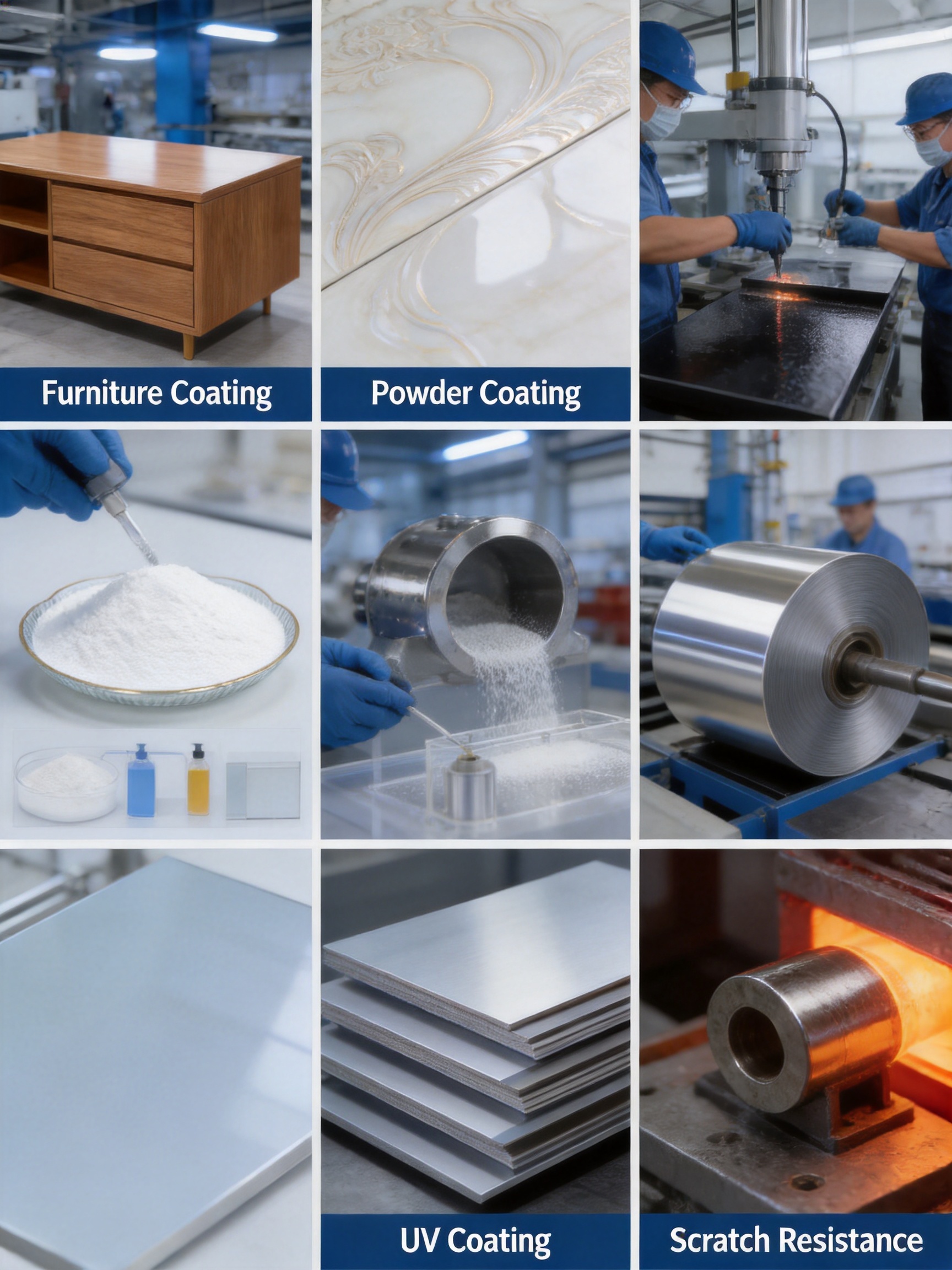
Modern coating formulators are expected to achieve several performance goals at the same time. A coating must often resist scratching and abrasion, provide a smooth and pleasant hand-feel, maintain an attractive appearance, withstand elevated temperatures, and remain stable during storage and application. In many applications, the formulation must also preserve gloss, avoid blocking, disperse uniformly, and work reliably across different resin systems and curing technologies.
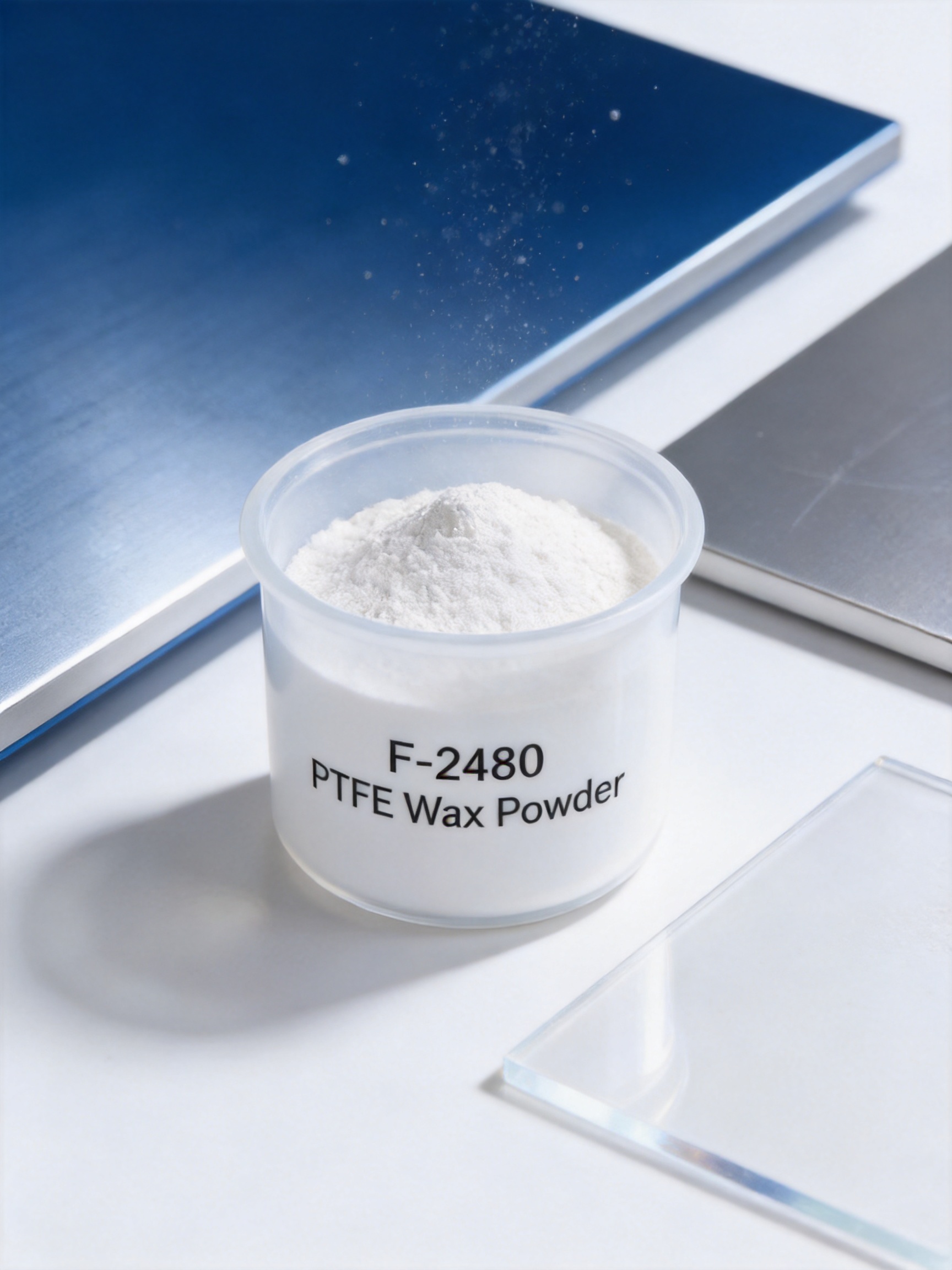
F-2480 Micronized Wax Powder Additive is a pure polytetrafluoroethylene, or PTFE, micronized wax developed to help coating manufacturers address these demands. Through a specialized processing and surface-activation method, the material is modified to improve its usefulness in coating systems while retaining the characteristic advantages associated with PTFE. The product is designed for furniture lacquers, decorative paints, non-stick coatings, industrial coatings, powder coatings, coil coatings, and UV-curable coatings.
Its principal contribution is the introduction of a finely divided, surface-treated PTFE phase into a coating film. Once properly incorporated, the additive can enhance abrasion resistance, scratch resistance, slip, smoothness, anti-blocking behavior, and high-temperature resistance. At the same time, its controlled particle characteristics and good dispersibility are intended to reduce the negative impact on gloss that can occur when wax additives are poorly selected or insufficiently processed.
F-2480 is supplied by Suzhou Qingtian New Material Co., Ltd., a company focused on raw materials for coatings, inks, adhesives, and related industrial applications. The company combines product development, application knowledge, testing capabilities, production resources, and technical service to provide additive solutions for a wide range of demanding markets.
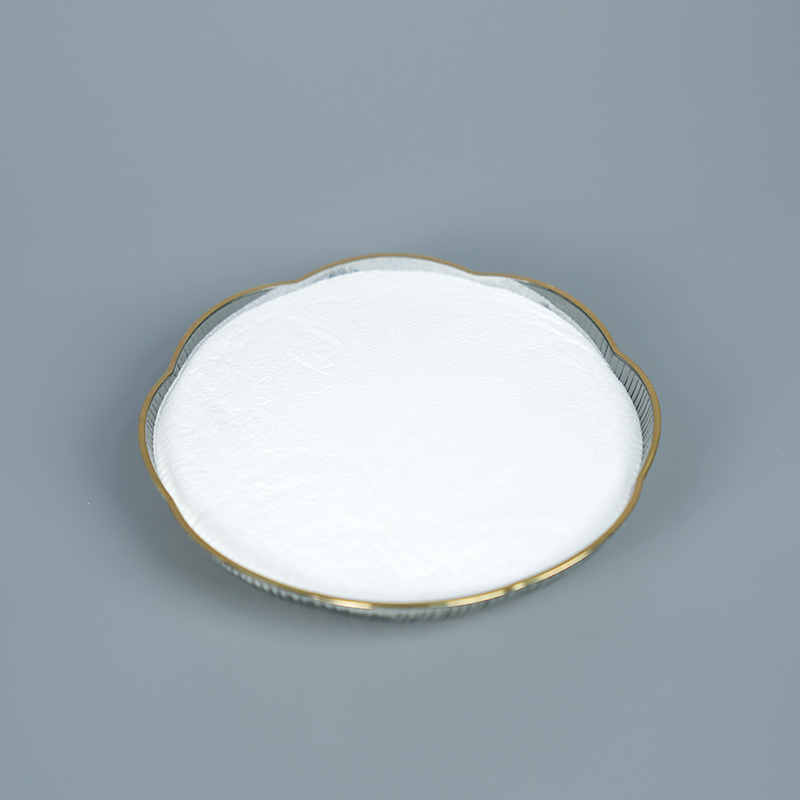
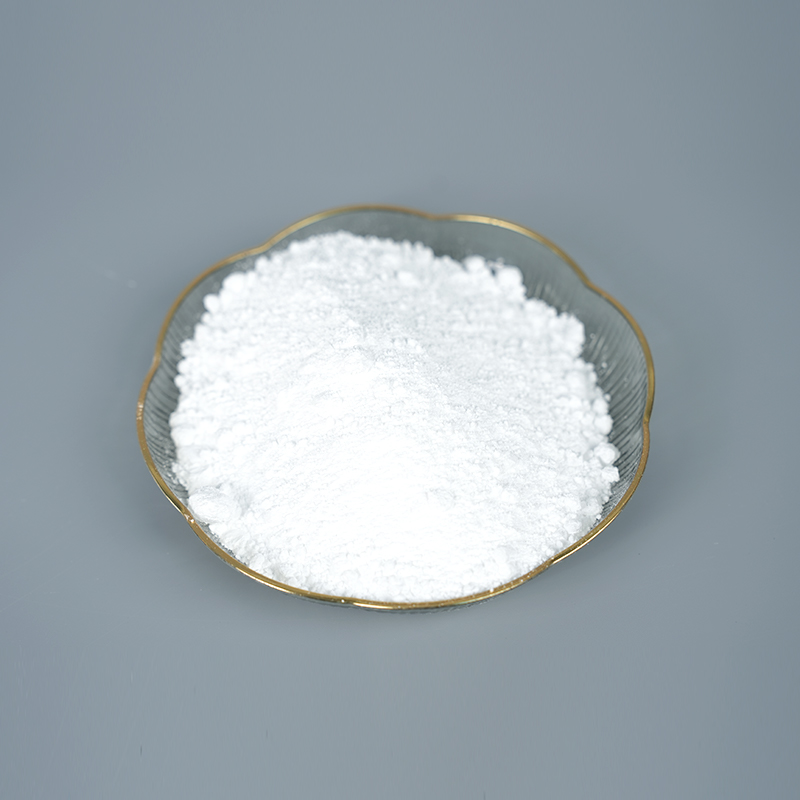
F-2480 Micronized Wax Powder Additive(PTFE)
Wax additives are used in coatings to modify the surface and near-surface behavior of the cured film. Unlike many traditional liquid additives, micronized wax powders are solid particles engineered to become distributed throughout the coating matrix. During drying, curing, or film formation, some of these particles can migrate toward the surface or become positioned close enough to influence friction, wear, and contact behavior.
The effectiveness of a wax powder depends on much more than its chemical identity. Particle size, particle-size distribution, surface condition, compatibility, dispersion quality, dosage, resin chemistry, and curing conditions all influence the final result. A wax that performs well in one coating may deliver a different result in another system if the formulation, application method, or curing profile changes.
PTFE is valued for its low surface energy, chemical resistance, low coefficient of friction, thermal resistance, and resistance to many aggressive environments. In micronized form, PTFE can be incorporated into coatings as a functional additive rather than used only as a bulk polymer. This makes it possible to improve the surface characteristics of a coating without redesigning the entire binder system.
F-2480 is specifically designed as a micronized PTFE wax powder additive. Its purpose is not simply to add a conventional wax component, but to provide a finely distributed performance phase that can help the coating resist mechanical damage and provide a smoother, lower-friction surface.
F-2480 is based on pure PTFE micronized wax. The raw material is surface-activated and modified through special process equipment. This treatment is important because untreated PTFE can be difficult to distribute evenly in some coating systems. PTFE has a naturally low surface energy, which contributes to its excellent slip and non-stick behavior but can also create compatibility and dispersion challenges.
Surface activation and modification are therefore used to improve the way the powder interacts with the surrounding formulation. The objective is to support more uniform incorporation, reduce agglomeration, and make the additive easier to process in suitable coating systems. The processing approach also contributes to consistent particle characteristics and helps control the influence of the additive on the appearance of the final film.
The product is characterized by the following core attributes:
• Pure PTFE micronized wax composition.
• Surface activation and modification through specialized equipment.
• Good transparency in suitable coating systems.
• Smooth and refined hand-feel.
• Support for improved scratch and abrasion resistance.
• Improved slip and anti-blocking performance.
• High-temperature resistance associated with PTFE chemistry.
• Good dispersibility and uniform particle size.
• Relatively low impact on gloss when properly formulated.
These characteristics make F-2480 suitable for coatings where surface durability and tactile quality are both important. The additive can be considered for clear coats, pigmented coatings, decorative finishes, protective industrial films, and systems requiring a combination of durability and low-friction surface behavior.
Many coating additives are selected to provide slip, anti-blocking, or abrasion resistance. However, a conventional wax may offer only one or two of these benefits, or may lose effectiveness when the coating is exposed to heat or mechanical stress. PTFE is widely recognized for combining low friction with strong thermal and chemical resistance. This combination gives a PTFE-based micronized wax a distinctive position among surface-modifying additives.
In practical terms, F-2480 can help reduce the tendency of a coated surface to catch, drag, or develop visible damage during handling. This is valuable for furniture panels, decorative components, metal sheets, industrial parts, and other finished products that may come into contact with tools, packaging materials, stacked surfaces, or end users.
A coating’s resistance to abrasion is a major factor in its service life. Repeated rubbing, cleaning, transportation, assembly, and contact with other surfaces can gradually reduce the appearance and protective function of a film. Scratches may expose the substrate, create visible defects, and reduce customer satisfaction even when the underlying material remains structurally sound.
F-2480 is intended to improve the resistance of the coating film to abrasion and scratching. The finely divided PTFE particles can contribute to a more lubricious surface, reducing friction during contact. This does not mean that the additive replaces the need for a properly designed binder, pigment package, curing system, or substrate preparation. Instead, it works as a functional enhancement within a balanced formulation.
For manufacturers, the advantage is the possibility of improving surface durability without relying exclusively on higher crosslink density or a complete change of resin chemistry. In some systems, this may allow formulators to achieve a more favorable balance between hardness, flexibility, tactile quality, and processability.
Hand-feel is an important quality characteristic in furniture coatings, decorative paints, consumer products, and premium finishes. A surface can be technically durable yet feel rough, sticky, or resistant when touched. A smooth hand-feel often communicates quality and can influence the perceived value of a finished product.
The low-friction nature of PTFE helps F-2480 provide a smoother surface response. It can reduce drag during contact and create a refined tactile effect when the additive is compatible with the coating system and properly dispersed. This feature is especially useful in furniture lacquers, wood coatings, decorative finishes, and products where the user directly handles the coated surface.
The level of smoothness will depend on the resin, solvent or water phase, curing method, surface energy, additive concentration, and application conditions. For this reason, laboratory screening and small-scale application trials remain important. The product provides a technical route to improved hand-feel, while the final result depends on the complete formulation.
One of the challenges of using solid wax additives is the possibility of reducing gloss or producing haze. Large particles, uneven particle distribution, agglomerates, or poor compatibility can scatter light and affect the visual appearance of the film. This is particularly important in clear coats, high-gloss decorative finishes, and premium surfaces.
F-2480 is processed to provide good dispersibility and uniform particle size. These features help reduce the risk of large, visible defects and support a more consistent film structure. The product is described as having a relatively low impact on gloss compared with less controlled wax additives when used appropriately.
“Relatively low impact” does not mean that gloss is unaffected under every formulation condition. The final appearance depends on loading level, film thickness, resin compatibility, surface roughness, curing speed, and application method. Nevertheless, controlled particle characteristics give the formulator a stronger starting point than an unrefined powder with broad particle distribution.
Transparency is essential in clear lacquers, wood finishes, decorative protective coatings, and selected UV-curable formulations. A wax additive that creates visible cloudiness or excessive haze may not be suitable for these applications, even if it provides good slip and abrasion resistance.
F-2480 is designed to provide excellent transparency in suitable coating systems. The combination of micronized particle structure, surface modification, and good dispersion can help the additive remain visually unobtrusive in the film. This allows formulators to pursue tactile and durability improvements while maintaining the intended appearance of the coating.
Transparency should always be evaluated in the actual formulation. A clear resin, pigment, solvent package, or curing system can change the optical result. Testing should include both wet and cured-film observations, as well as evaluation at the intended film thickness.
Coatings used in industrial, automotive-related, appliance, metal, coil, and non-stick applications may encounter elevated temperatures during processing or service. A surface additive that softens excessively, migrates unpredictably, or loses its function at higher temperatures may provide limited long-term value.
PTFE is known for its high-temperature resistance. F-2480 uses this property to support coating systems where the surface must retain functional performance under heat exposure. The exact service temperature and thermal behavior will depend on the complete coating formulation and the substrate, so application-specific validation is necessary.
For coil coatings and industrial finishes, thermal stability can be particularly important because coated materials may pass through heating zones, forming operations, or demanding service environments. A PTFE-based powder additive may help maintain low-friction and wear-resistant surface properties more effectively than a wax selected only for room-temperature slip.
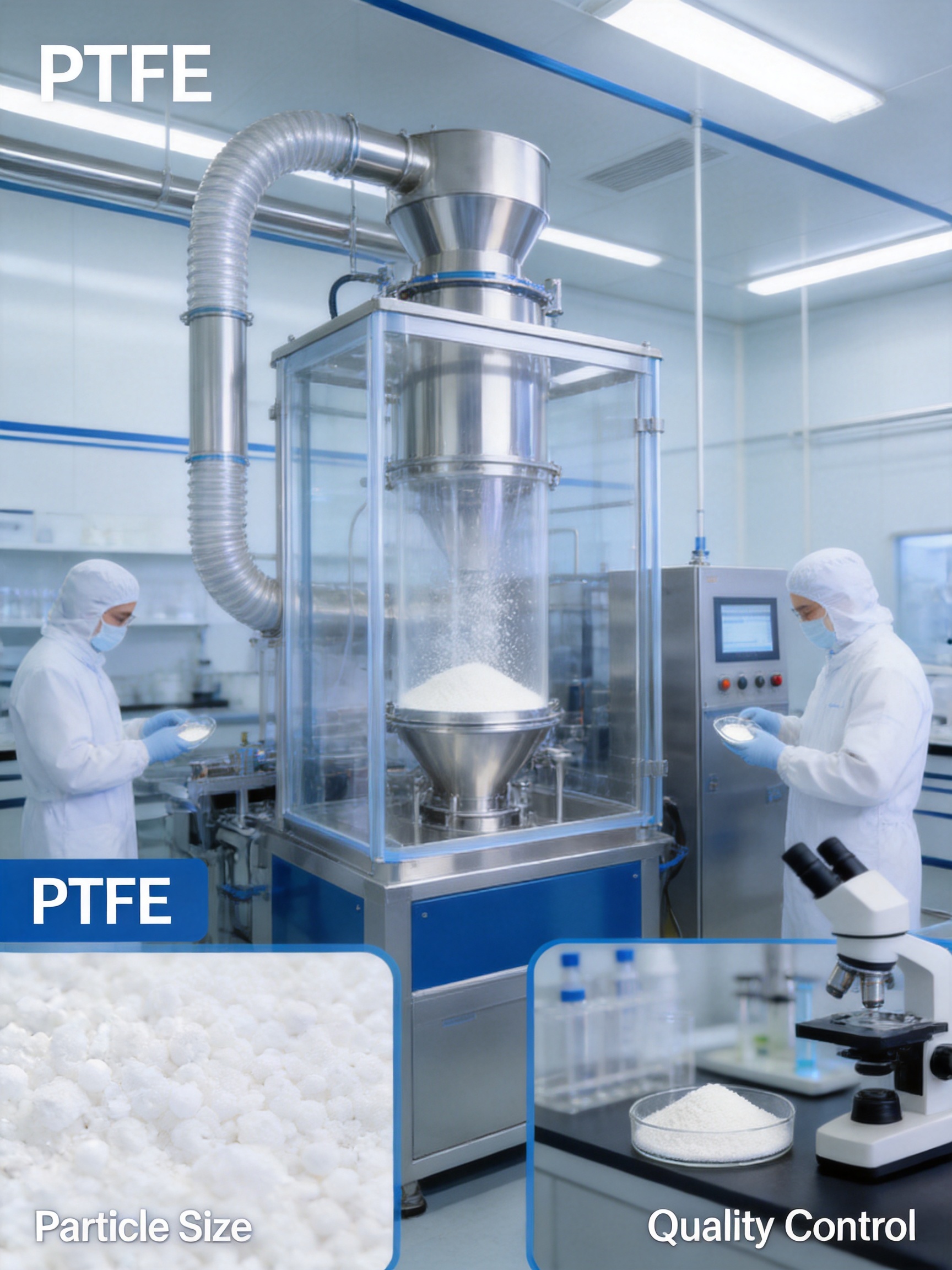
The performance of a micronized wax additive begins with the manufacturing process. A product based on the correct polymer chemistry can still underperform if the particle structure is inconsistent, the powder contains excessive agglomerates, or the surface treatment is not adequately controlled. F-2480 is manufactured through a specialized process that includes micronization, surface activation, and modification.
Micronization reduces the PTFE material to a fine powder suitable for incorporation into coating formulations. The objective is to obtain particles that can be distributed throughout the coating rather than remaining as large visible domains. Fine and consistent particles can improve the uniformity of the surface effect and reduce the likelihood of roughness or visible defects.
Particle size must be considered together with the coating system. Very large particles can negatively affect surface appearance and gloss, while particles that are too fine may behave differently during dispersion, storage, or film formation. A controlled micronization process therefore supports the balance between performance, handling, dispersion, and visual quality.
PTFE’s low surface energy is valuable for slip and release performance, but it can make the powder difficult to wet or disperse in some binders. Surface activation is used to modify the interaction between the PTFE particles and the surrounding coating medium. This helps the additive become more compatible with the practical requirements of coating production.
The purpose of activation is not to remove the essential characteristics of PTFE. Rather, it is intended to improve the powder’s usefulness in a formulation environment. Better surface interaction can support more uniform distribution, reduce floating or settling problems, and improve the reproducibility of the final film.
F-2480 is surface-activated and modified through special process equipment. Specialized equipment allows the manufacturer to manage the treatment conditions more consistently than a basic blending process. Although specific machine configurations and operating parameters are proprietary, the use of dedicated processing resources demonstrates the importance of controlled powder preparation.
Process control is especially important for functional additives because small changes in particle morphology or surface condition can affect dispersion, gloss, slip, and abrasion performance. The manufacturing approach behind F-2480 is intended to provide a repeatable material that can be evaluated and incorporated by professional coating formulators.
Uniform particle size is one of the product’s stated advantages. A narrower and more controlled particle population can help reduce the formation of coarse particles and agglomerates. This is beneficial for film smoothness, appearance, and consistent performance across a production batch.
Good dispersibility also supports manufacturing efficiency. When the powder can be incorporated more evenly, formulators may experience fewer issues related to localized concentration, surface defects, uneven slip, or inconsistent abrasion resistance. The exact dispersion procedure will vary according to whether the coating is solventborne, waterborne, powder-based, or UV-curable.
Furniture surfaces require a combination of attractive appearance, pleasant touch, scratch resistance, and resistance to repeated handling. A coating may be exposed to sliding objects, cleaning, hand contact, packaging, and daily use. F-2480 can be considered for furniture lacquers where improved smoothness, abrasion resistance, and anti-blocking behavior are desired.
In clear wood finishes, transparency and gloss retention are important. The product’s micronized structure and dispersion characteristics can help formulators pursue a smooth film without introducing unnecessary visual disturbance. The final result should be assessed on the target wood substrate because porosity, staining, grain structure, and sealer selection all influence appearance.
Decorative coatings often need to combine appearance with tactile differentiation. A smooth, silky, or low-friction surface can provide a premium effect. F-2480 may be used in selected decorative systems to improve surface feel and resistance to contact-related damage.
Its use can be particularly relevant in coatings that must remain attractive after repeated touching or cleaning. Depending on the desired finish, the formulator may adjust the additive level to balance gloss, transparency, texture, and slip.
PTFE is naturally associated with non-stick behavior. F-2480 can support coating formulations that require low surface adhesion and easy release characteristics. Its use should be evaluated alongside the primary binder, reinforcement materials, curing conditions, and end-use requirements of the non-stick coating.
In such systems, dispersion quality is critical. A uniform distribution of the PTFE phase can help reduce local weak points and improve the consistency of surface performance. The additive should be selected as part of a complete coating design rather than treated as an isolated solution.
Industrial coatings are often exposed to impact, friction, cleaning, handling, and harsh operating conditions. The ability to improve abrasion resistance and slip can extend the useful appearance and functionality of coated components. F-2480 may be suitable for industrial formulations where surface durability and low-friction contact are required.
Applications may include equipment surfaces, protective parts, machinery components, storage systems, and other manufactured goods. The additive can be considered for both decorative and functional layers, subject to compatibility and performance testing.
Powder coatings require additives that can withstand the processing route and become effectively distributed during melt flow and curing. A micronized PTFE wax may contribute to surface slip, abrasion resistance, anti-blocking properties, and tactile improvement.
In powder coatings, the timing and method of incorporation are important. The additive may be introduced during premixing, extrusion, or another suitable production step depending on the formulation design. The formulator must evaluate extrusion behavior, melt dispersion, surface appearance, cure response, and final mechanical properties.
Coil-coated metal is processed at high speed and may be subjected to forming, stacking, transportation, and installation. Coatings must often provide a balance of flexibility, hardness, scratch resistance, slip, and appearance. F-2480 can be considered for coil coating systems where a durable and smoother surface is desired.
The anti-blocking function may be useful when coated sheets are stacked or handled. Improved slip can also support forming and contact behavior, although the complete system must be evaluated to ensure that the additive does not interfere with adhesion, flexibility, or downstream fabrication.
UV-curable coatings are valued for rapid curing and high productivity. They are used in furniture, flooring, plastics, decorative products, and industrial applications. Because these coatings cure quickly, additives must disperse efficiently and remain compatible with the reactive formulation.
F-2480 can support UV-curable systems that require improved abrasion resistance, hand-feel, slip, or anti-blocking performance. The formulator should assess the influence of the additive on cure depth, surface cure, transparency, gloss, leveling, and final hardness. Proper pre-dispersion or incorporation procedures may be necessary to obtain uniform results.
F-2480 should be treated as a performance additive rather than a universal replacement for other coating ingredients. Its benefits are most effectively realized when it is selected according to the resin type, coating purpose, application method, and desired surface profile.
Compatibility should be evaluated in the actual binder system. Solventborne, waterborne, powder, and radiation-curable coatings have different dispersion environments and processing conditions. A simple laboratory compatibility screening can help identify changes in viscosity, haze, sedimentation, gloss, and surface appearance.
The dispersion method can influence the result significantly. The additive should be introduced using equipment and shear conditions appropriate for the coating system. Excessive shear may not always improve the final result, while insufficient mixing may leave agglomerates or create uneven performance.
For high-quality production, the formulator should monitor powder wetting, mixing time, dispersion uniformity, viscosity change, and storage stability. The best incorporation sequence may differ according to whether the additive is added to the mill base, let-down phase, or another stage of production.
The appropriate dosage depends on the desired balance between scratch resistance, slip, gloss, transparency, texture, and cost. A higher additive level does not automatically produce a better coating. Excessive loading may influence viscosity, surface appearance, adhesion, hardness, or intercoat bonding.
A stepwise laboratory study is recommended. Several addition levels can be compared using the same resin, pigment, film thickness, curing schedule, and test method. This approach allows the formulator to identify the point at which the desired performance is achieved without unnecessary additive use.
Film thickness influences both appearance and mechanical performance. A thin film may not contain enough additive to produce the desired effect, while an overly thick film can change gloss, transparency, and surface texture. Curing conditions also influence particle positioning and the final hardness of the coating.
Testing should therefore be conducted at the intended production film thickness and under realistic curing conditions. For UV-curable systems, lamp intensity, exposure time, and substrate speed should be controlled. For powder coatings, melt temperature and cure schedule should reflect actual production conditions.
When comparing F-2480 with other wax additives, buyers and formulators should evaluate more than a single property. A low-cost additive may provide basic slip but perform poorly in transparency, abrasion resistance, thermal stability, or gloss retention. A high-performance additive should be assessed according to the complete set of technical and commercial requirements.
| Evaluation Factor | F-2480 PTFE Wax Powder | Why It Matters |
|---|---|---|
| Primary chemistry | Pure micronized PTFE | Supports low friction, thermal resistance, and surface durability. |
| Surface treatment | Surface-activated and modified | Helps improve incorporation and dispersion in suitable coating systems. |
| Particle characteristics | Micronized with uniform particle size | Supports smoother films and more consistent performance. |
| Scratch and abrasion resistance | Designed to enhance resistance | Helps protect appearance during handling, use, and contact. |
| Slip and hand-feel | Designed to improve smoothness and low-friction behavior | Provides a refined tactile surface and can reduce drag. |
| Transparency | Excellent transparency in suitable systems | Important for clear and decorative coatings. |
| Gloss influence | Relatively low impact when properly formulated | Allows performance improvement with better retention of appearance. |
| Temperature performance | High-temperature resistance associated with PTFE | Useful for demanding processing and service conditions. |
| Application range | Furniture, decorative, non-stick, industrial, powder, coil, and UV coatings | Enables use across multiple coating technologies. |
This comparison is not intended to replace application testing. Different wax families, including polyethylene, polypropylene, amide, Fischer-Tropsch, and hybrid waxes, may be appropriate for different objectives. F-2480 is particularly attractive when the formulator needs a combination of PTFE-based slip, abrasion resistance, tactile quality, thermal resistance, and controlled visual impact.
Suzhou Qingtian New Material Co., Ltd. specializes in raw materials for coatings, inks, and adhesives. Since its establishment in 2012, the company has developed an experienced team that includes research and development personnel, sales professionals, and technical staff. This structure supports communication between product development and customer application requirements.
The company operates with modern production resources and advanced testing equipment. For a micronized functional additive, testing capability is essential. Product quality may depend on powder fineness, particle uniformity, dispersion behavior, appearance, and application performance. Access to suitable testing resources allows the manufacturer to evaluate materials more systematically and improve product consistency.
The company’s product portfolio includes dispersants, leveling agents, defoamers, adhesion promoters, anti-settling agents, cooling agents, conductive agents, orange peel texture agents, texture powders, and wax powders. This broad portfolio gives the company a broader understanding of formulation interactions. Customers using F-2480 may also require other additives to optimize wetting, leveling, foam control, adhesion, and storage stability.
The company has developed products for steel and aluminum coil coatings, plastic coatings, UV curing, anti-corrosion coatings, wood coatings, glass coatings, epoxy flooring, printing inks, power batteries, photovoltaic panels, and other industrial fields. This application diversity indicates an ability to address different substrate, processing, and performance requirements.
Its development milestones include the creation of a China-made ice flower resin in 2016, recognition as a National High-Tech Enterprise in 2020, and relocation to Lingrui Intelligent Manufacturing Park in Zhangjiagang High-Tech Zone in 2021. These milestones reflect an ongoing focus on research, manufacturing capability, and product development.
Using a specialized PTFE wax additive can simplify the development process when the formulation target includes multiple surface properties. Instead of separately addressing slip, hand-feel, abrasion, and anti-blocking with several unrelated materials, the formulator can evaluate one multifunctional additive as part of the formulation strategy.
This does not guarantee that one additive will meet every requirement, but it can reduce the number of initial development paths. A focused screening program can compare F-2480 at several levels and in combination with the existing resin and additive package.
In competitive coating markets, surface feel and durability can distinguish one product from another. A smoother, more refined, and more scratch-resistant finish may provide a meaningful advantage in furniture, decorative, and industrial products. F-2480 can help manufacturers develop coatings with a more noticeable tactile and functional profile.
Performance additives often create trade-offs. Increasing surface durability may reduce gloss, while improving slip may reduce adhesion or transparency. F-2480 is designed to support a more balanced result through controlled particle size, surface modification, and good dispersibility.
The actual balance must be determined by testing, but the product’s design gives formulators a strong basis for pursuing durability without accepting excessive visual change.
The product is recommended for several coating technologies rather than one narrow application. This gives manufacturers flexibility when developing solventborne, powder, coil, non-stick, furniture, decorative, or UV-curable products. A common additive platform can also simplify internal evaluation and purchasing when several product lines require related surface improvements.
A practical evaluation program should begin by defining the desired result. The target may be improved dry scratch resistance, lower friction, better anti-blocking, smoother hand-feel, improved abrasion resistance, or a combination of these properties. The formulation team should also define acceptable limits for gloss change, transparency, viscosity, adhesion, and cure response.
The next step is to prepare a small series of samples using different F-2480 addition levels. All other variables should remain constant. Each sample should be mixed using a controlled procedure, applied at a consistent film thickness, and cured under the intended conditions.
Visual evaluation should include gloss, haze, transparency, surface smoothness, leveling, pinholes, craters, and visible particles. Mechanical evaluation may include scratch resistance, abrasion resistance, mar resistance, coefficient-of-friction comparison, blocking resistance, and repeated-contact testing.
Thermal evaluation can be included where the end use involves heat exposure. Depending on the application, testing may examine appearance retention, surface slip after heating, dimensional behavior, adhesion, and resistance to repeated thermal cycling.
Storage stability should also be considered. The finished coating should be observed for settling, viscosity change, separation, skin formation, and re-dispersibility. The powder itself should be stored and handled according to the supplier’s technical and safety guidance.
As with all fine powders, F-2480 should be handled using appropriate industrial hygiene and dust-control practices. Operators should follow the product’s safety data sheet, local regulations, and facility procedures. Suitable ventilation, personal protective equipment, and careful transfer methods should be used where necessary.
Packaging should remain closed when the product is not in use. Storage conditions should be selected to protect the powder from contamination, moisture, and unnecessary heat. Before large-scale production, the customer should confirm the recommended storage period and handling instructions with the supplier.
Technical support is especially valuable when using a functional PTFE additive because the optimum result depends on formulation details. Suzhou Qingtian New Material Co., Ltd. can support customers evaluating F-2480 for coatings, inks, and adhesive-related applications. Useful information for technical consultation may include resin type, solvent or water phase, pigment content, curing method, target gloss, film thickness, current wax additive, and required performance improvement.
F-2480 offers a combination of characteristics that can be difficult to obtain from a basic wax powder. Its pure PTFE chemistry provides a foundation of low friction, thermal resistance, and surface durability. Micronization supports incorporation into coating films, while surface activation and modification are intended to improve dispersion and compatibility.
The product is also designed with appearance in mind. Good transparency, uniform particle size, and relatively low gloss impact make it relevant to clear, decorative, and premium coatings where visual quality cannot be sacrificed. These features distinguish it from additives that may provide slip but cause excessive haze, roughness, or gloss reduction.
Its broad application range is another advantage. Furniture lacquers, decorative paints, non-stick coatings, industrial coatings, powder coatings, coil coatings, and UV-curable coatings can all benefit from a carefully selected PTFE wax additive. The same product can therefore be evaluated across several product categories and manufacturing processes.
Behind the product is a manufacturer with experience in coating additives and related functional materials. The company’s research resources, testing equipment, production facilities, broad additive portfolio, and application-oriented service model support customers seeking reliable industrial chemical solutions rather than a commodity powder alone.
F-2480 is a pure PTFE micronized wax powder additive. It is surface-activated and modified through special process equipment for use in coating formulations.
The main benefits include improved abrasion and scratch resistance, smoother hand-feel, enhanced slip, anti-blocking performance, high-temperature resistance, good transparency, and relatively low impact on gloss when properly formulated.
F-2480 is recommended for furniture lacquers, decorative paints, non-stick coatings, industrial coatings, powder coatings, coil coatings, and UV-curable coatings. Compatibility should be confirmed through application testing in the specific formulation.
PTFE has low surface energy, which contributes to excellent slip but can make dispersion difficult in some coating systems. Surface activation and modification are intended to improve interaction with the coating medium and support more uniform distribution.
Yes, it is designed to provide excellent transparency in suitable coating systems. However, the actual optical result depends on the resin, film thickness, curing method, additive level, and dispersion quality. Clear-coat trials are recommended.
The product is processed to provide good dispersibility and uniform particle size, which helps keep the impact on gloss relatively low. Nevertheless, gloss behavior depends on the complete formulation and should be checked at the intended dosage and film thickness.
No. F-2480 is a functional surface additive. It is intended to enhance selected properties of a coating film and must be used together with an appropriate binder, pigment system, curing package, and other formulation components.
The correct level should be determined through laboratory testing. A stepwise dosage study should compare scratch resistance, abrasion resistance, slip, gloss, transparency, viscosity, adhesion, and other relevant properties.
Yes. It is recommended for powder coating applications. The incorporation method, extrusion conditions, cure schedule, and compatibility with the powder resin should be optimized through testing.
F-2480 is recommended for improving anti-blocking behavior. Its effectiveness will depend on the coating chemistry, surface hardness, storage pressure, temperature, and contact conditions.
Yes. It can be evaluated in UV-curable coatings where abrasion resistance, hand-feel, slip, and anti-blocking performance are required. The formulator should confirm that the additive does not adversely affect surface cure, transparency, or gloss.
F-2480 combines PTFE chemistry with micronized particle structure and surface activation. This combination is intended to provide a broader performance profile, including low friction, abrasion resistance, high-temperature resistance, transparency, and controlled visual impact.
F-2480 is manufactured and supplied by Suzhou Qingtian New Material Co., Ltd., a Chinese supplier specializing in raw materials and additive solutions for coatings, inks, adhesives, and related industries.
Useful information includes the coating type, resin chemistry, solvent or water phase, pigment concentration, application method, curing conditions, target gloss, current additive package, desired improvement, and any known compatibility concerns.
F-2480 Micronized Wax Powder Additive is a specialized PTFE-based solution for coating manufacturers that need to improve surface durability and tactile performance without creating unnecessary visual compromise. Its pure PTFE composition provides the foundation for low friction, slip, high-temperature resistance, and non-stick behavior. Micronization, surface activation, modification, and controlled particle characteristics support its use in demanding coating systems.
The additive is suitable for a broad range of applications, including furniture lacquers, decorative paints, non-stick coatings, industrial coatings, powder coatings, coil coatings, and UV-curable coatings. Its key advantages include abrasion and scratch resistance, smooth hand-feel, anti-blocking performance, transparency, good dispersibility, and relatively low gloss impact when appropriately formulated.
Its value is strengthened by the manufacturing and technical capabilities of Suzhou Qingtian New Material Co., Ltd. The company’s experience in coating additives, modern production resources, advanced testing equipment, research and development team, and application-focused product portfolio provide a foundation for consistent industrial supply and technical cooperation.
For formulators seeking a multifunctional wax powder with PTFE-based surface performance, F-2480 is a strong candidate for laboratory screening and production evaluation. The best results will come from controlled testing, careful dispersion, suitable dosage selection, and close alignment between the additive and the final coating’s performance requirements.
1. Product information supplied for F-2480 Micronized Wax Powder Additive.
2. Product information supplied by Suzhou Qingtian New Material Co., Ltd.
3. General technical literature on polytetrafluoroethylene, surface energy, friction reduction, and thermal resistance.
4. General coating technology references covering micronized wax additives, dispersion, gloss, abrasion resistance, and anti-blocking behavior.
5. General industrial guidance on evaluating scratch resistance, abrasion resistance, gloss, transparency, and coating compatibility.
6. General formulation references for furniture lacquers, decorative coatings, powder coatings, coil coatings, non-stick coatings, and UV-curable coatings.
 Wholesale Paint/ Coating Additives Manufacturers
Custom Industrial Chemical Solutions Suppliers